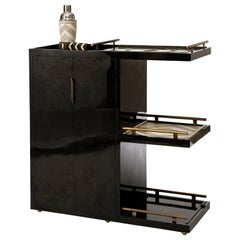
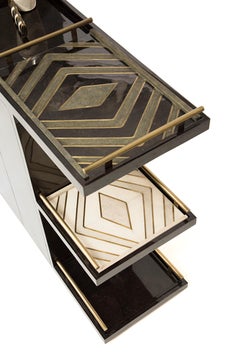
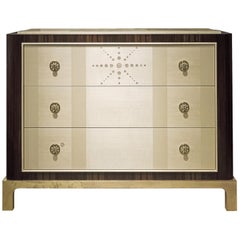
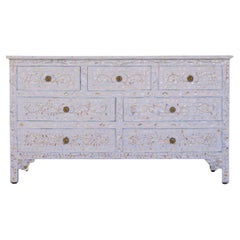
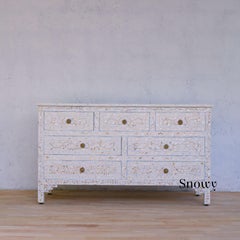
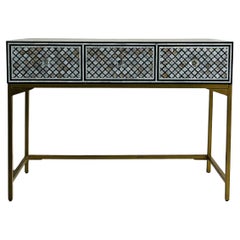
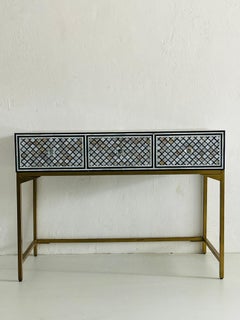
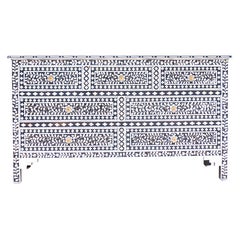
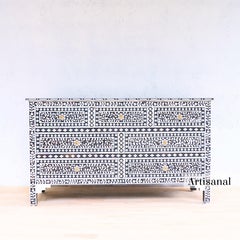
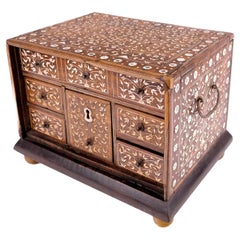
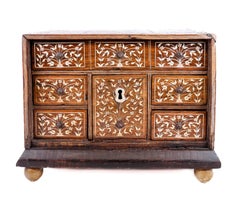
Elevate your home with House of Jaipur's exquisite black mother of pearl seven - drawer inlay chest—a stunning addition that seamlessly blends timeless craftsmanship with modern sophistication.
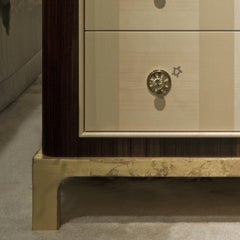
Adorned with intricate foliate motifs patterns, this dresser showcases the artistry of traditional mother of pearl inlay, honouring the ancient craft of decorated furniture. Finished with sleek glass knobs, it exudes a contemporary charm while retaining its classic allure
How It’s Made:
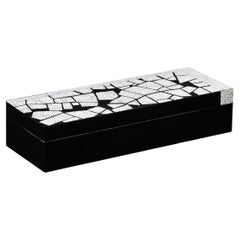
Handcrafted with meticulous care, each piece is a true masterpiece, created through a traditional inlay process. It features over 2,000 small pieces of mother of pearl, carefully shaped into leaf or custom patterns. Each piece is precisely glued onto the surface to form the intricate design, followed by the application of color to enhance its beauty.
Handcrafted in India by the artisans of House of Jaipur.
For added safety during transit, we pack the legs and knobs separately, ensuring your chest arrives in pristine condition.
Indulge in luxury and elevate your space with our mother of pearl inlay chest...
Category
21st Century and Contemporary Indian Anglo-Indian Shell Furniture
MaterialsMother-of-Pearl, Wood