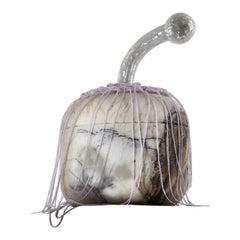
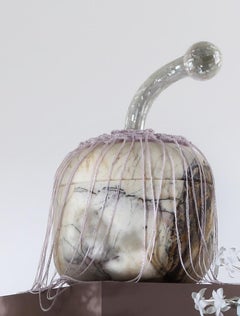
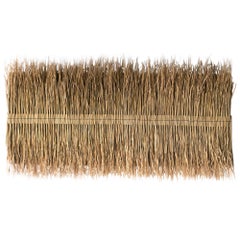
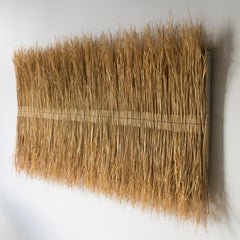
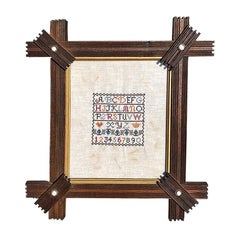
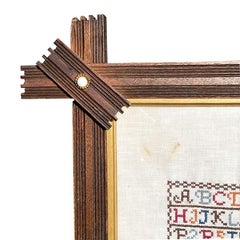
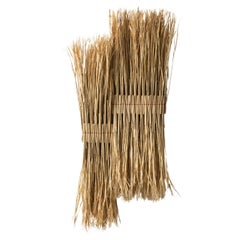
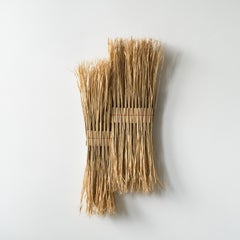
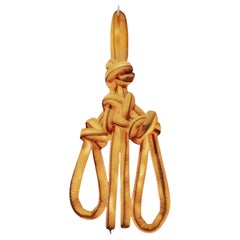
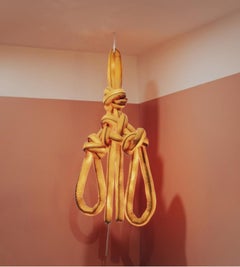
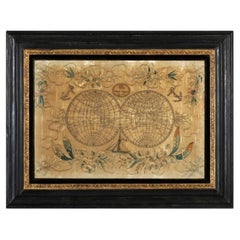
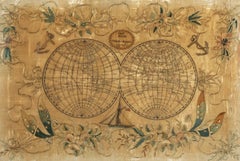
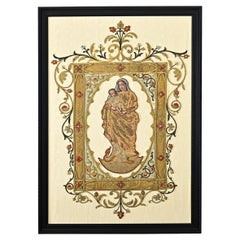
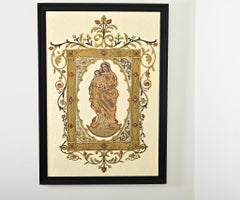
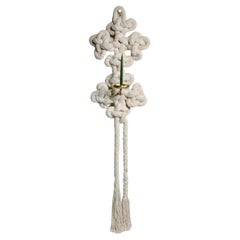
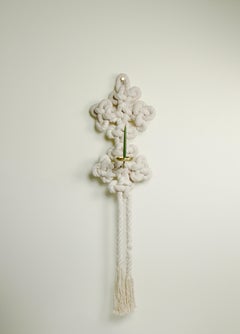
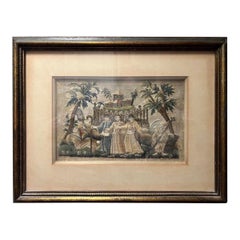
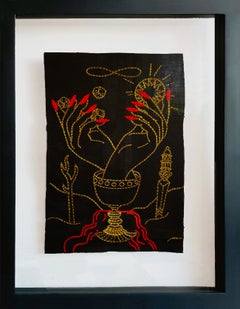
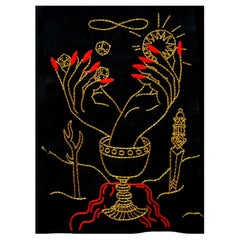
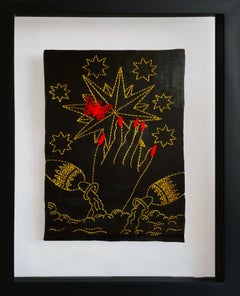
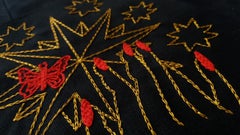
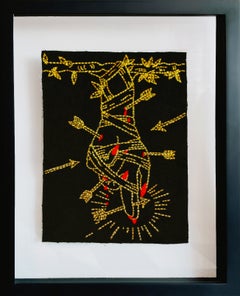
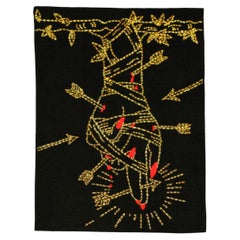
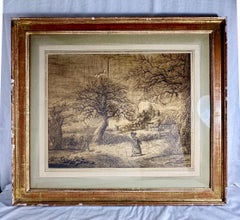
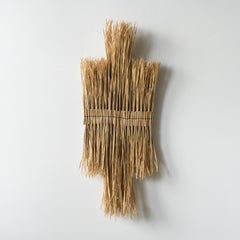
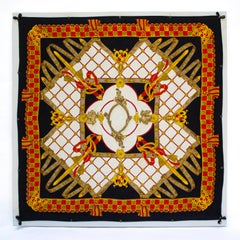
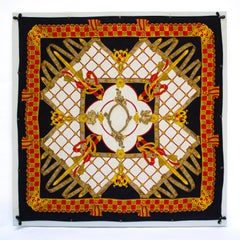
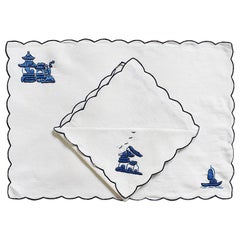
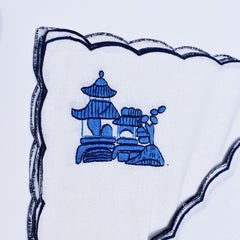
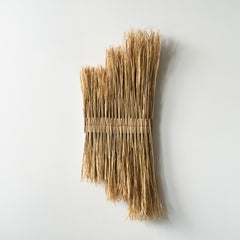
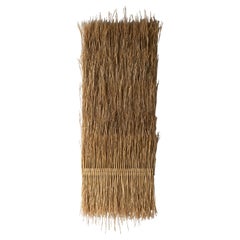
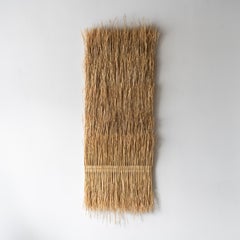
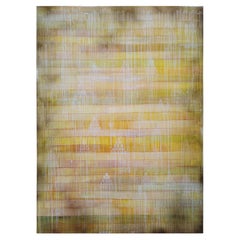
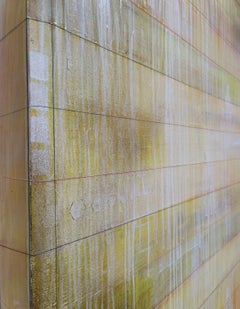
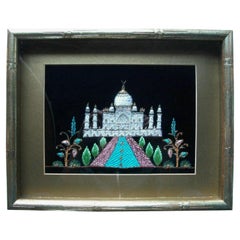
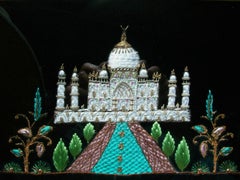
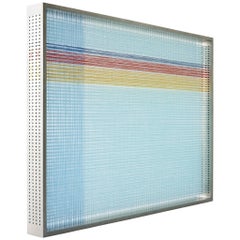
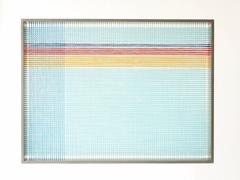
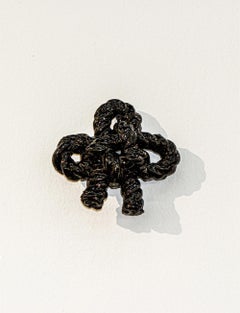
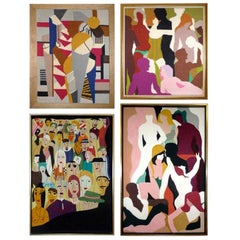
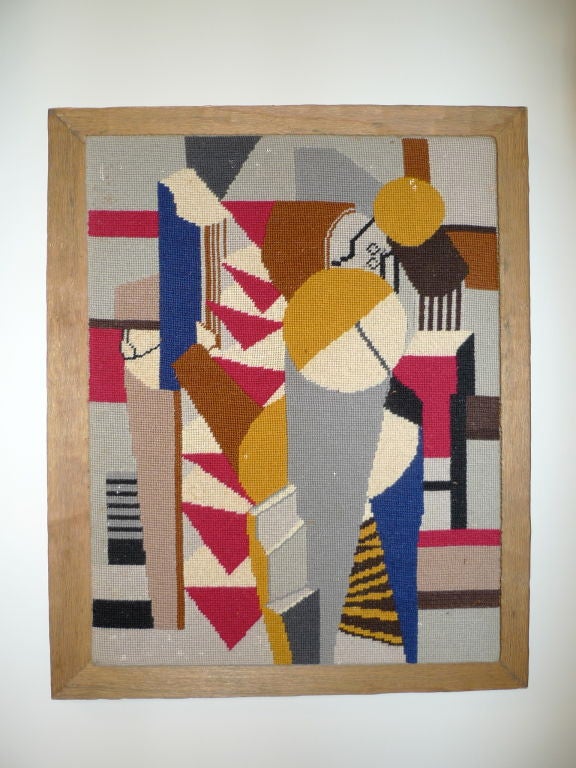
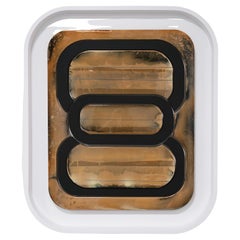
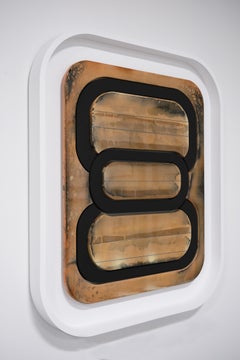
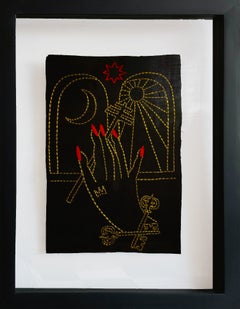
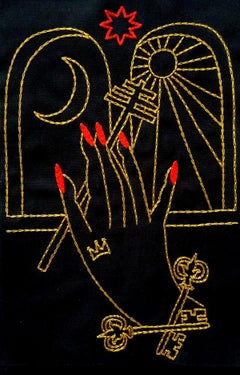
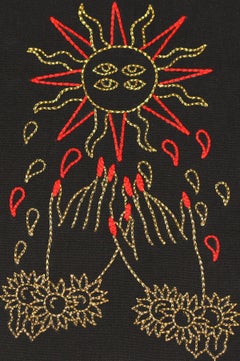
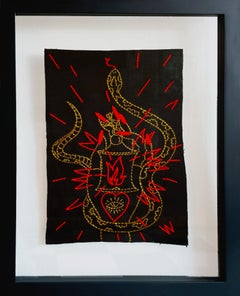
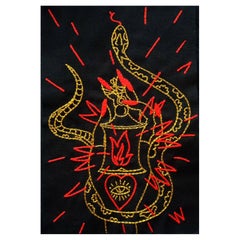
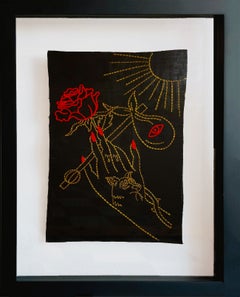
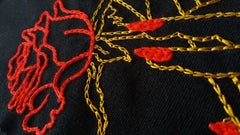
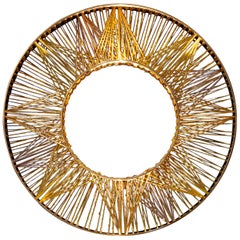
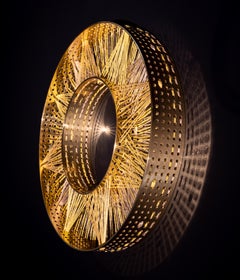
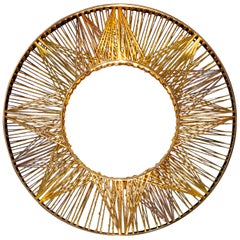
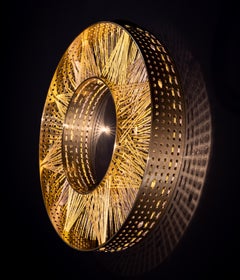
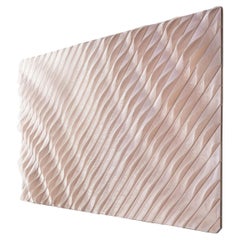
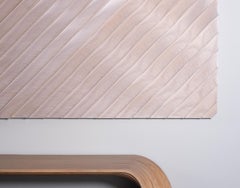
El Sumo Sacerdote. From The Ventura Series. Embroidery thread on canvas. Framed
By Maria Jose Franco Maldonado
Located in Miami Beach, FL
El Sumo Sacerdote, 2019 by Maria Jose Franco Maldonado
From The Ventura Series.
Embroidery thread on canvas
Image size: 27 cm H x 17 cm W
Frame size: 40 cm H x 30 cm W x 3 cm D
Unique
Blackwood frame with plexiglass
___
Maria Jose Franco Maldonado’s family was her art school by the hand of Georgia O`Keefe, Elaine de Kooning, Lee Krasner, Artemisia Gentileschi, Matisse, Leonor Fini, Leonora Carrington, Louise Bourgeois, Maripaz Jaramillo, Judy Chicago, Basquiat, and so many others. She then formalized her studies in art direction and advertising in Buenos Aires, Argentina. In 2015, she showed her work for the very first time in three group exhibitions around New York at Shervin's Café Gallery, Brooklyn Fireproof Gallery, and Greenpoint Gallery. That same year her illustrations accompanied Pilar Gualco`s literary work in Buenos Aires at Fauna Estudio Taller.
In 2017, she fell in love with embroidery. Slowly, she connected techniques and in the process dressed up a lot of weird humans. She showed her work in 2019 at Noches San Felipe and Open San Felipe with SGR and Bandy Bandy galleries in Bogotá, Colombia. Her series AFFAIR was shown at Noches del Millón, from Feria del Millón in Medellín, Colombia at the end of 2019. Closing 2019 she was lucky to have her own exhibition alongside Daniela Moreno, a great Colombian textile...
Category
2010s Colombian Other Thread Furniture
MaterialsTextile, Canvas, Thread