Lapis Lazuli Cabinets

4 Results
to
Height
to
Width
to
Depth
to
2
1
3
1
1
3
464
11,501
4,868
2,087
2,028
2
1
1
1
1
4
2
2
1
Material: Lapis Lazuli
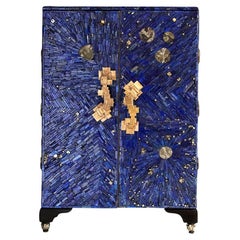
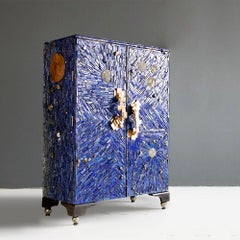
Unique Rectangular Deep Blue Brass Cabinet with Two Doors by Christopher Boots

Unique Rectangular Deep Blue Brass Cabinet with Two Doors by Christopher Boots

By Christopher Boots

Located in Geneve, CH

Curiosity Cabinet by Christopher Boots Unique Piece Dimensions: D 50 x W 97 x H 140 cm. Materials: Reclaimed oak, cast bronze, clear quartz, smoky quartz, lapis lazuli, pyrite, indus...

Category

2010s Australian Post-Modern Lapis Lazuli Cabinets

Materials

Lapis Lazuli, Quartz, Pyrite, Brass, Bronze

DLL Lapis Lazuli knobs By Phoenix

DLL Lapis Lazuli knobs By Phoenix

Located in New York, NY

Diamond cut Lapis Lazuli knobs with polished brass decoration, created by Phoenix Metal finish and custom size upon request.

Category

21st Century and Contemporary Lapis Lazuli Cabinets

Materials

Lapis Lazuli

Related Items
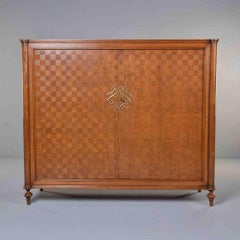
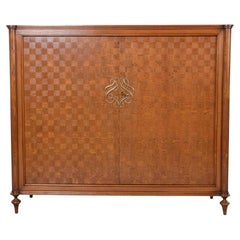
French Art Deco Cabinet with Parquetry Veneer, Attributed to Jules Leleu

French Art Deco Cabinet with Parquetry Veneer, Attributed to Jules Leleu

By Jules Leleu

Located in Troy, MI

Two-door cabinet featuring striking checkerboard parquetry veneer across the front doors. Distinguished by ornate brass scrollwork pull centered on doors; original key included. Inte...

Category

1940s French Art Deco Vintage Lapis Lazuli Cabinets

Materials

Brass

Pair Of French Modern Cerused Oak Cabinets Attributed To Jules Leleu

Pair Of French Modern Cerused Oak Cabinets Attributed To Jules Leleu

Pair Of French Modern Cerused Oak Cabinets Attributed To Jules Leleu. This rare pair of French Art Deco cerused carved and painted cabinets have two doors above two drawers on shapel...

Category

1940s French Art Deco Vintage Lapis Lazuli Cabinets

Materials

Bronze

Chinese Two Door Side Cabinet

Chinese Two Door Side Cabinet

$1,280

H 31.75 in W 29.5 in D 18 in

Chinese Two Door Side Cabinet

Located in Chicago, IL

This two-door side cabinet has a classic, square-corner design with clean lines and minimal decoration. The small cabinet is crafted of elm with traditional joinery methods, faced wi...

Category

20th Century Chinese Minimalist Lapis Lazuli Cabinets

Materials

Elm

Chinese Two Door Keeper's Cabinet, c. 1850

Chinese Two Door Keeper's Cabinet, c. 1850

$3,480

H 31 in W 37 in D 17 in

Chinese Two Door Keeper's Cabinet, c. 1850

Located in Chicago, IL

This 19th-century locking cabinet from Shanxi province is the perfect place to stow household odds and ends. Crafted with traditional joinery, the small cabinet has an overhung top, ...

Category

Mid-19th Century Chinese Qing Antique Lapis Lazuli Cabinets

Materials

Elm

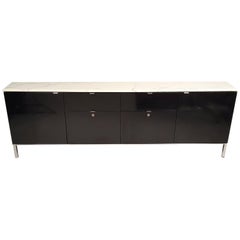
Florence Knoll Style Credenza with Matching File Cabinet by by Giacomo Buzzitta

Florence Knoll Style Credenza with Matching File Cabinet by by Giacomo Buzzitta

By Stow Davis

Located in Dallas, TX

Beautiful credenza with matching file cabinet designed by Giacomo Buzzittan for Stow Davis. The matching set is constructed of Carrara marble, black lacquer with chromed steel legs a...

Category

Mid-20th Century American Mid-Century Modern Lapis Lazuli Cabinets

Materials

Marble, Steel

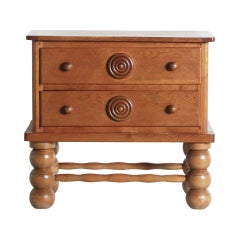
Oak Cabinet / Chest Attributed to Charles Dudouyt, France, 1930s/40s

Oak Cabinet / Chest Attributed to Charles Dudouyt, France, 1930s/40s

By Charles Dudouyt

Located in Lewes, East Sussex

Superb oak cabinet / dresser / chest attributed to Charles Dudouyt, France, 1930s/40s. Structurally sound and ready to use. Fast shipping worldwide.

Category

Early 20th Century French Art Deco Lapis Lazuli Cabinets

Materials

Wood

Vintage Raw Industrial Metal Factory Cabinet with Shelves, 1950s

Vintage Raw Industrial Metal Factory Cabinet with Shelves, 1950s

$2,646Sale Price|20% Off

H 53.55 in W 25.6 in D 14.18 in

Vintage Raw Industrial Metal Factory Cabinet with Shelves, 1950s

Located in Warszawa, Mazowieckie

This industrial factory cabinet was produced during the 1950s. It is made of metal. It has four shelves closed with a magnetic latch. All shelves has been cleaned and finished in bla...

Category

1950s Unknown Industrial Vintage Lapis Lazuli Cabinets

Materials

Metal

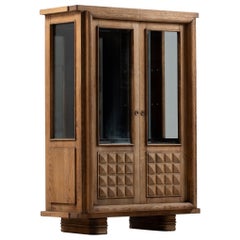
Oak Cabinet Attributed to Charles Dudouyt, France, 1940s

Oak Cabinet Attributed to Charles Dudouyt, France, 1940s

$5,142

H 59.85 in W 41.74 in D 18.12 in

Oak Cabinet Attributed to Charles Dudouyt, France, 1940s

By Charles Dudouyt

Located in Kaštel Sućurac, HR

Attributed to Charles Dudouyt, cabinet, solid oak, France, 1940s. An oak cabinet attributed to Charles Dudouyt, the French designer celebrated for furniture of direct material prese...

Category

1940s French French Provincial Vintage Lapis Lazuli Cabinets

Materials

Oak

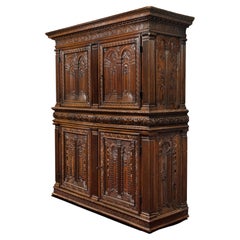
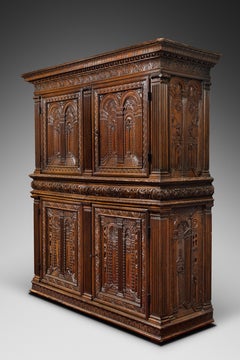
Important Renaissance Cabinet from Lyon 'France' with a Decor of Perspectives

Important Renaissance Cabinet from Lyon 'France' with a Decor of Perspectives

Located in Saint-Ouen, FR

As soon as 1540 France's second Renaissance is in the making, intimately linked to the rediscovery of the Antique world. The development of the printing and engraving industry allows the spread of artworks and models in many cities and countries. The Italian influence can be perceived in every artistic field. While the French king entrust the most talented Italian artists with major projects such as Il Rosso or Primaticcio in Fontainebleau, French artists also travel to Italy to form themselves to this new style. In Italy they get acquainted with the work of Leo Battista Alberti the first to theorize perspective (De Pictura, 1435-36) and architecture (De re oedificatoria, 1541). Those two publications would have a revolutionary impact on arts. Furniture is marked by the work of the most famous Italian architects of the time as well as French architects. Indeed Philibert de l'Orme competes with Alberti and by the end of his life publishes several treaties including one devoted to a theory of architecture (1567). Unfortunately he would not live to complete the second volume. In this treaty he expresses his interest for mathematical norms applied to architecture, copied from the Antique. His journeys in Italy allowed him to accumulate the most sophisticated references. Jean Bullant, another architect of great talent also theorizes his practice. He establishes rules characterizing Greco-Roman art staying faithful to Vitruvius. Following this new inspiration the structure of furniture evolves. From then on appear columns, capitals, cornices, friezes and architraves. The ornamentation uses this inspiration as well with egg-and-dart, palm leaf and rose adorning the most beautiful pieces. In Lyon, crossroad where meet merchants from everywhere those new experiments are welcomed. Lyon florishing printing industry allows the spreading of models and treaties essential to the artist's work. Thus the first publication of Vitruvius' De Architectura in France would be printed in Lyon in 1532. Artists from Lyon rediscover and familiarize themselves with the Antique knowledge very early. They adopt those new ideas and use them in their own creations. Lyon cabinet-makers re interpret Antique architecture and Italian Renaissance palaces to give their pieces a pure and harmonious architectural structure. Grooved pilasters are particularly favored. They are topped by capitals of diverse orders always respecting the sequencing with simpler ones for the lower levels and the richest ones on the higher levels. As for the ornamentation, one of the great distinctiveness of Lyon workshops remains the architectural perspective illusions, drawing inspiration from Tuscany. True masterpiece of the Second French Renaissance this important cabinet illustrates Lyon workshops' taste for fine Italian architecture inspired by Antiquity. An architectural perspective of great quality is treated in symmetry on each panel. This two-bodied cabinet without recess stands on four rectangular feet. The base comprises a molding, a palm leaf frieze and is bordered by a braid. The lower body is divided by three grooved pilasters with Tuscan capitals framing two door-leaves. The two panels are encircled by a moudled frame with palm leaves. They are finely carved with a decor of fantasized architecture depicting an Italian Renaissance palace erected symmetrically on each side of a grooved pilaster. On the ground floor a door opens through a stilted arch while the stories are opened with mullioned windows, dormers and occuli. Two large pegged-boss cladded pillars support the entablature enriched by a palm leaf frieze upon which stands an arch whose coffered intrados is centred by a rose. Behind this arch a pyramid appears, standing in front of a second facade with a window topped by a broken curvilinear pediment under a cul-de-four with a shell. The checker flooring gives depth to the low-reliefs creating vanishing points structuring the panels and guiding the eye of the observer. A thin laurel braid highlights the belt of the cabinet where are located two drawers. Their facades are adorned by palm leaves in hoops. The upper body is encircled with palm leaves. The same ternary division as in the lower body appears. However, the pilasters are topped by Ionic capitals with volutes and egg-and-dart. The door-leaves are framed with flowers. On the panels the artist has designed another architectural decor. On the foreground open two arches on top of grooved pilasters with rectangular capitals adorned with palm leaves. The arches are enriched with braids and the coffered intrados bears a decor of roses. The spandrels also bear a flower decor. In the background another arcature hosts a fluted grooved column topped with double basket acanthus capital, characteristic of Corinthian order. The triangular pediment is interrupted by a choux bourguignon. A large cornice crowns the cabinet. It stands on pilasters and forms an entablature comprising a palm leaf frieze and an egg-and-dart, triglyph and palm leaf cornice. The cabinet's sides have also been carefully considered. The lower body's panels are enriched with an arch rising above a broken pediment portico hosting a twisted column. Flowers garnish the spandrels. An architectural facade completes the decor. The upper body's panels present two arches supported by a facade opened with dormers and mullioned windows as well as cartouches (one bears the inscription 1580 dating the cabinet) suggesting the interior of an Italian Renaissance palace, confirmed by the chandeliers. The flooring leads our gaze to a second arch with a broken curvilinear pediment where stands a flower vase. This arch opens onto a perspective of another facade along a road. Inside the cabinet, on the lower body door-leaves appear two designs. On the right door is depicted a Crucifixion. Saint Mary and Saint John flank the Christ on the cross. In the bottom part is inscribed « Dure uiator abis nihil haec spectacula curas / Pendenti cum sis unica cura Deo. / Tota suo moriente dolet natura Magistro. / Nil qui solus eras caussa dolenda doles. ». The signature [Christoff Swartz Monachiensis pinx[it] / Ioa[nnes] Sadeler sculp[it]] tells us it was made by Johan Sadeler I (1550-1600) after Christoph Schwartz (1548-1592). This engraving belongs to an ensemble depicting the Passion of Christ Johan Sadeler executed in 1589 after an altar piece painted by Christoph Schwartz for the private chapel of Renée of Loraine, wife of Duke William V of Bavaria. This altar piece made of nine copper panels has been destroyed during the 19th century. The Crucifixion panel once in the centre of the altar piece is the only one that survived and is today kept in Munich's Alte Pinakothek. On the left door appears Saint Francis receiving the stigmata. The inscription says : « Signastidomine Servum Tuum. Franciscum. Signis Redemptionis Nostrae ». This Renaissance cabinet with an architectural decor appearing as much in the structure faithful to Antique rules...

Category

16th Century European Renaissance Antique Lapis Lazuli Cabinets

Materials

Walnut

Modern Chelsea Glass Mosaic Bar Cabinet with Forged Metal Base by Ercole Home

Modern Chelsea Glass Mosaic Bar Cabinet with Forged Metal Base by Ercole Home

By Ercole Home

Located in Brooklyn, NY

The Chelsea bar cabinet by Ercole Home has a 4-door front, with white lacquer wood finish on oak. Hand cut glass mosaics in London grey and icy white decorate the surface in Luis pat...

Category

2010s American Modern Lapis Lazuli Cabinets

Materials

Metal

Previously Available Items
17th-century Italian Baroque Cabinet - Bernini's baldachin, St. Peter's Basilica

17th-century Italian Baroque Cabinet - Bernini's baldachin, St. Peter's Basilica

Located in Porto, PT

A rare and exceptional Italian Baroque cabinet-on-stand, dating to the 17th century, of outstanding architectural conception and remarkable richness of materials. The Cabinet: The fr...

Category

17th Century Portuguese Antique Lapis Lazuli Cabinets

Materials

Agate, Lapis Lazuli

French Bronze Mounted and Inlaid Napoleon III Cabinet/Sideboard

French Bronze Mounted and Inlaid Napoleon III Cabinet/Sideboard

Sold

H 40.56 in W 51.19 in D 15.36 in L 40.56 in

French Bronze Mounted and Inlaid Napoleon III Cabinet/Sideboard

Located in Vilnius, LT

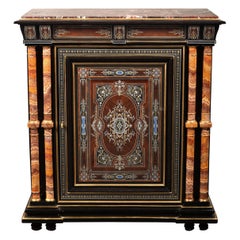
French antique Napoleon III cabinet. Wood is black color polished surface, decorated with inlaid brass stripes, bronze details outside and natural stone lapis lazuli/ lazurite. Insid...

Category

19th Century French Napoleon III Antique Lapis Lazuli Cabinets

Materials

Lapis Lazuli, Marble, Brass, Bronze

Round Wall Cabinet with Lapis Lazuli by Pierre De Valck

Round Wall Cabinet with Lapis Lazuli by Pierre De Valck

Located in Geneve, CH

Round wall cabinet with lapis lazuli by Pierre De Valck. Dimensions: W 90 x D 15 x H 90 cm. Materials: Waxed aluminium with Lapis Lazuli. Weight:...

Category

2010s Belgian Post-Modern Lapis Lazuli Cabinets

Materials

Lapis Lazuli, Aluminum

French Gilt Metal Mounted Lapis Commode in the Empire Style

French Gilt Metal Mounted Lapis Commode in the Empire Style

Located in London, GB

French gilt metal mounted lapis commode in the Empire style French, 20th century Size: Height 94cm, width 147cm, depth 55cm Crafted in the Empire style, this beautiful commode is wr...

Category

20th Century French Empire Lapis Lazuli Cabinets

Materials

Lapis Lazuli, Metal

French 19th Century Napoleon III Cabinet

French 19th Century Napoleon III Cabinet

Sold

H 40.56 in W 51.19 in D 15.36 in

French 19th Century Napoleon III Cabinet

Located in Vilnius, LT

French antique Napoleon III cabinet. Wood is black color polished surface, decorated with inlaid brass stripes, bronze details ourside and natural stone lazurite. Inside the cabine...

Category

19th Century French Napoleon III Antique Lapis Lazuli Cabinets

Materials

Marble, Lapis Lazuli, Bronze, Brass

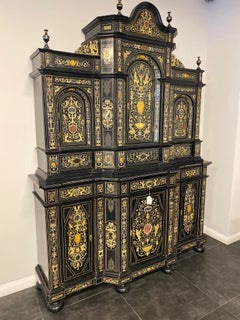
Extremely Fine Italian Baroque Ebonized Wood, Faux Ivory, and Hardstone Cabinet

Extremely Fine Italian Baroque Ebonized Wood, Faux Ivory, and Hardstone Cabinet

Located in Long Island City, NY, NY

Extremely fine Italian Baroque ebonized wood, faux ivory, and hardstone cabinet, Florence, 20th century. Decorated overall with Berainesque (light arabesques and playful grotesques) motifs including rinceaux, putti and mythical birds, and inlaid with various semi-precious stones including lapus lazuli, porphyry, various agates and marbles, the superstructure with domed pediment, the sides decorated with geometric stringing. Very grand cabinet and one of a kind. Please note: We have another cabinet to make a pair. Provenance: Private Castle in Dallas Texas, USA. Purchased in New York in the late 1970s. Measures: 91" high x 68" wide x 20" deep. Comes with keys. Good condition. Normal wear, cracks consistent with age use. Presents well and looks amazing in real life! The present cabinet, featuring an abundance of semi-precious stones amongst stylized faux ivory-inlaid foliage, is inspired by the luxurious inlaid furniture of the Italian High Renaissance. Promoted amongst craftsmen such as Pietro Bertinetti, who often reinterpreted or combined the forms and motifs of both Classical and Renaissance art, the fashion for certosa-style inlay flourished from the mid-nineteenth century. Whilst the quality of construction and execution of the inlay suggests a Florentine origin, the decorative language of the cabinet, with its Cinquecento rinceaux scrolls, amorini and cameos, is modelled on the North Italian workshops. Featuring an eclectic combination of various decorative elements in keeping with the Renaissance Revival, the cabinet’s inlay is quite comparable with the work of subsequent exponents of this technique, such as Giovanni Battista Gatti...

Category

20th Century Italian Baroque Lapis Lazuli Cabinets

Materials

Lapis Lazuli, Marble, Porphyry

Extremely Fine Italian Baroque Ebonized Wood, Faux Ivory, and Hardstone Cabinet

Extremely Fine Italian Baroque Ebonized Wood, Faux Ivory, and Hardstone Cabinet

Located in Long Island City, NY, NY

Extremely fine Italian baroque ebonized wood, faux ivory, and hardstone cabinet, Florence, 20th century. Decorated overall with Berainesque (light arabesques and playful grotesques) motifs including rinceaux, putti and mythical birds, and inlaid with various semi-precious stones including lapus lazuli, porphyry, various agates and marbles, the superstructure with domed pediment, the sides decorated with geometric stringing. Very grand cabinet and one of a kind. Please note: We have another cabinet to make a pair. Please see our other listings for the mate to this cabinet. Provenance: Private Castle in Dallas Texas, USA. Purchased in New York in the late 1970's. Measures: 91" high x 68" wide x 20" deep. Comes with keys. Good condition. Normal wear, cracks consistent with age use. Presents well and looks amazing in real life! The present cabinet, featuring an abundance of semi-precious stones amongst stylized faux ivory-inlaid foliage, is inspired by the luxurious inlaid furniture of the Italian High Renaissance. Promoted amongst craftsmen such as Pietro Bertinetti, who often reinterpreted or combined the forms and motifs of both classical and Renaissance art, the fashion for certosa-style inlay flourished from the mid-19th century. Whilst the quality of construction and execution of the inlay suggests a Florentine origin, the decorative language of the cabinet, with its Cinquecento rinceaux scrolls, amorini and cameos, is modelled on the North Italian workshops. Featuring an eclectic combination of various decorative elements in keeping with the Renaissance revival, the cabinet’s inlay is quite comparable with the work of subsequent exponents of this technique, such as Giovanni Battista Gatti...

Category

20th Century Italian Baroque Lapis Lazuli Cabinets

Materials

Lapis Lazuli, Marble, Porphyry
17th Century Cabinet of Curiosities

17th Century Cabinet of Curiosities

Sold

H 73.25 in W 43.63 in D 20.75 in

17th Century Cabinet of Curiosities

Located in New Orleans, LA

Magnificent artistry, exotic materials and a bit of intrigue combine in this Italian Baroque-era cabinet of curiosities. Once a term used to des...

Category

17th Century Italian Renaissance Antique Lapis Lazuli Cabinets

Materials

Lapis Lazuli, Bronze

19th Century Florentine Pietra Dura Cabinet

19th Century Florentine Pietra Dura Cabinet

Located in New York, NY

Pietra Dura Florentine Cabinet ebonised wood and gilt wood base H 62 in. (157.5cm); W 31 in. (78.7cm); D 14 in. (35.6cm) Cabinet made of softwood w...

Category

19th Century Italian Antique Lapis Lazuli Cabinets

Materials

Agate, Amethyst, Lapis Lazuli

Romeo Paris Cabinet - Drinks Cabinet

Romeo Paris Cabinet - Drinks Cabinet

Sold

H 60 in W 44 in D 22 in

Romeo Paris Cabinet - Drinks Cabinet

By Romeo Paris

Located in New York, NY

Exceptional cabinet or drinks cabinet by Romeo Paris. The body is encrusted in lapis lazuli and rosewood; the hinges and corners are brass. The foot is in lucite. Good condition

Category

Late 20th Century French Mid-Century Modern Lapis Lazuli Cabinets

Materials

Lapis Lazuli, Brass