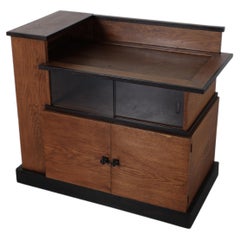
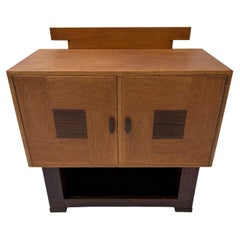
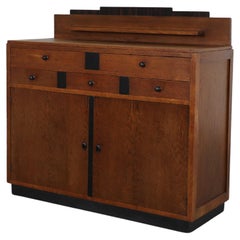
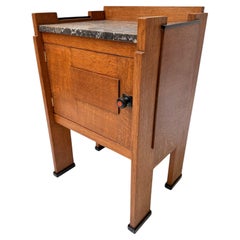
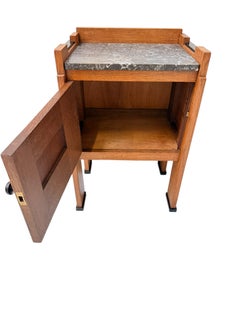
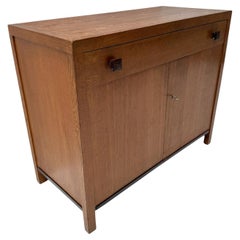
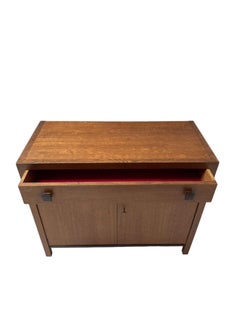
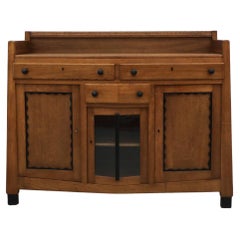
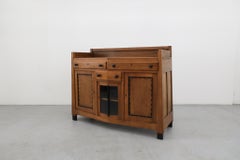
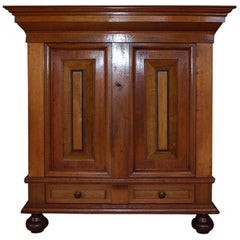
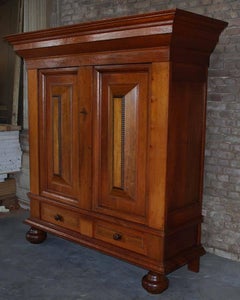
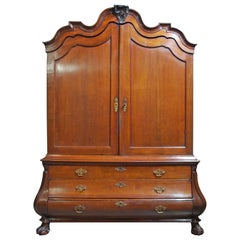
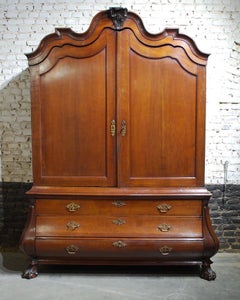
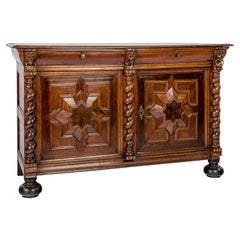
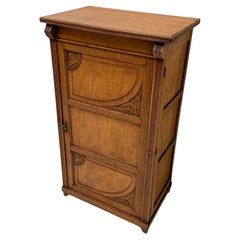
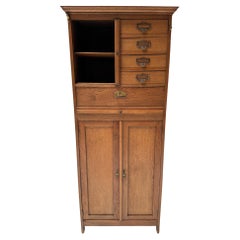
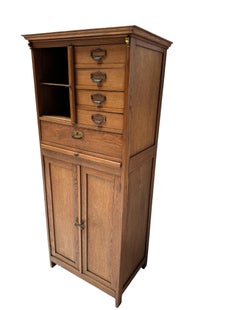
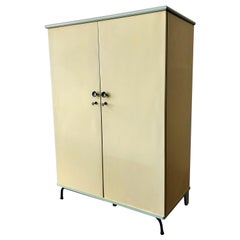
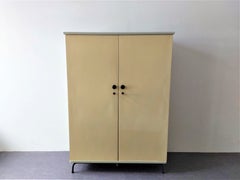
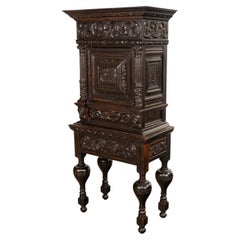
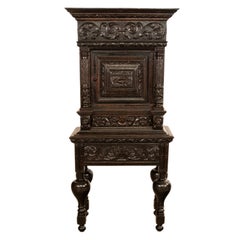
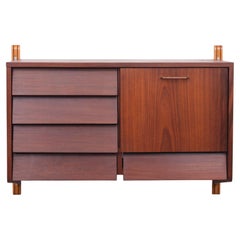
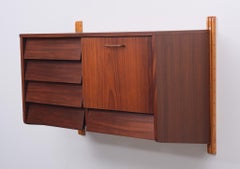
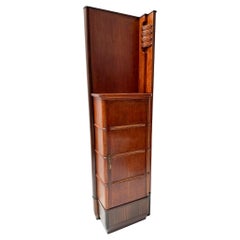
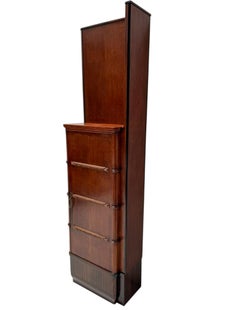
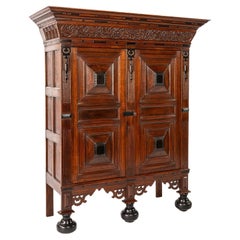
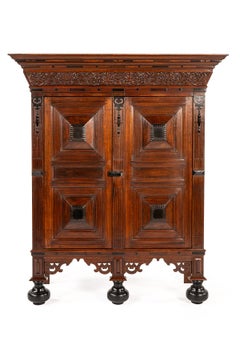
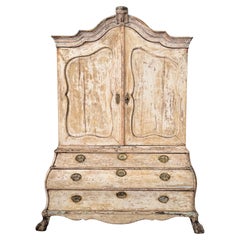
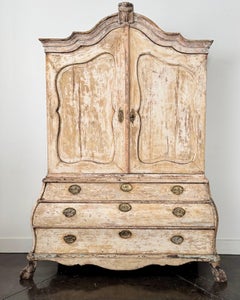
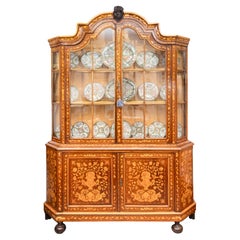
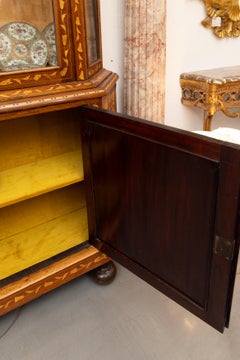
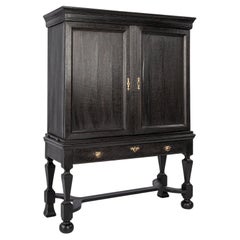
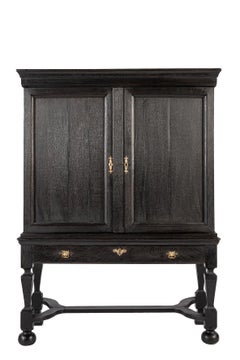
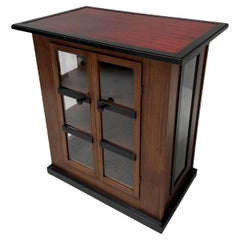
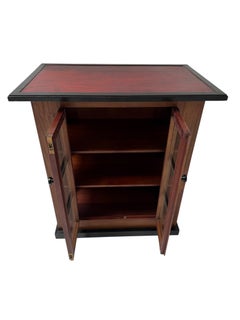
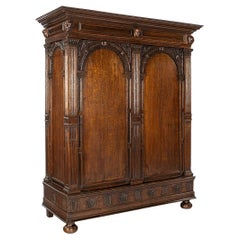
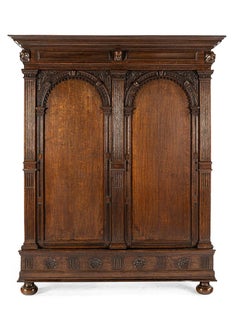
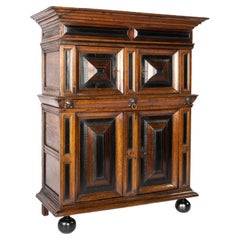
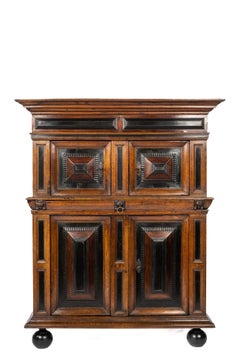
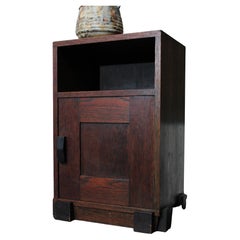
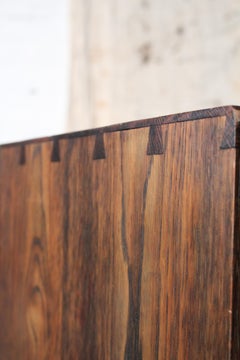
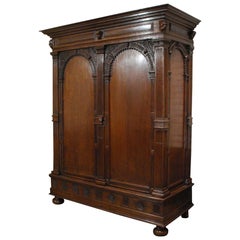
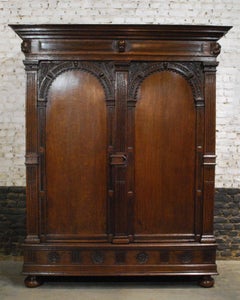
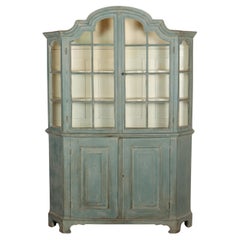
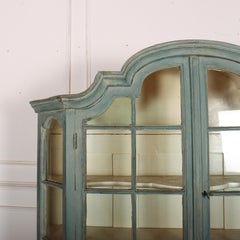
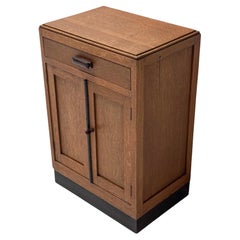
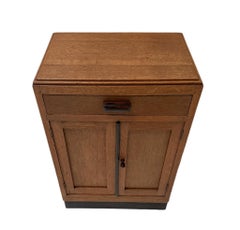
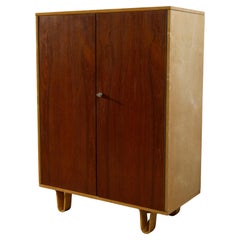
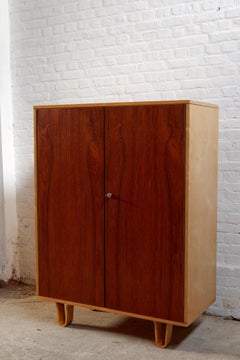
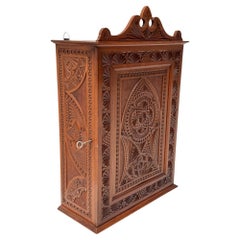
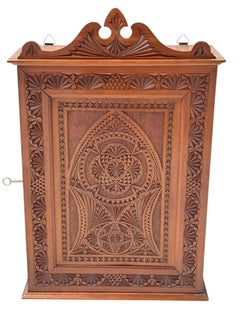
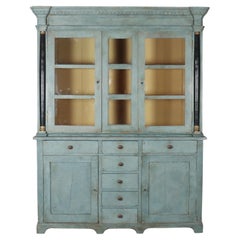
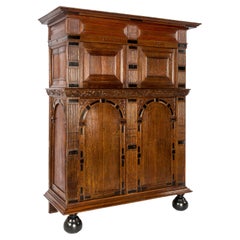
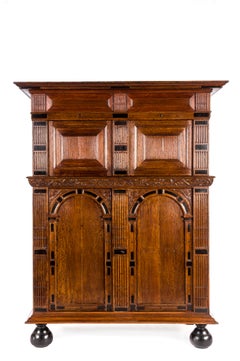
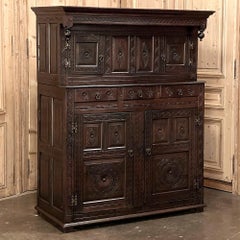
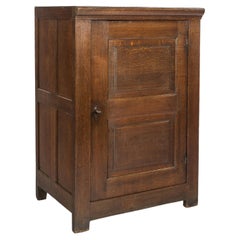
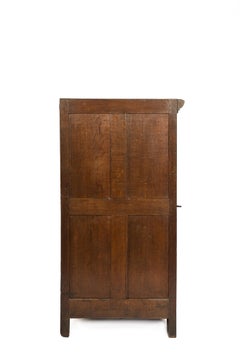
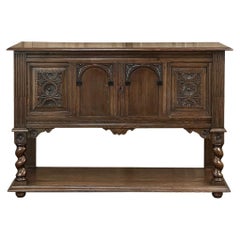
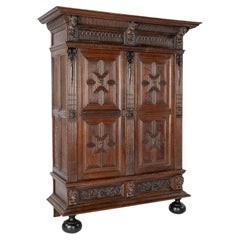
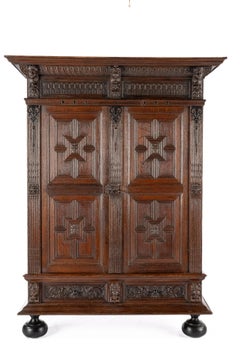
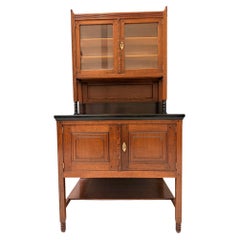
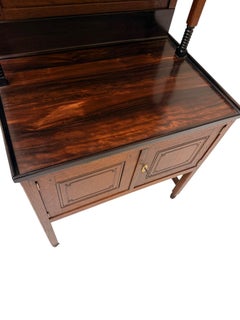
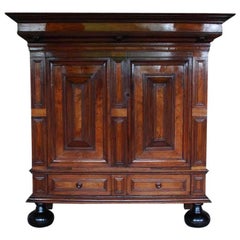
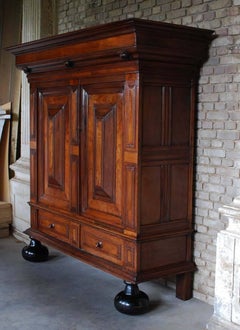
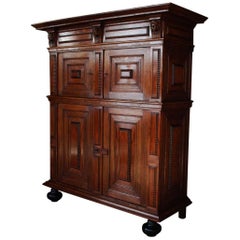
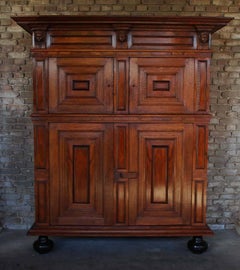
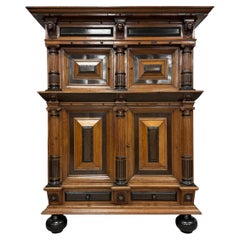
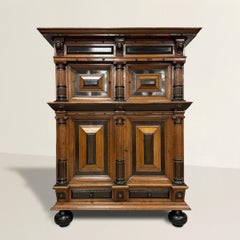
This Dutch table cabinet, also known as a cross-legged cabinet, is made of oak and has a deep, almost black finish, which suggests a traditional treatment such as ebonized stain or dark varnish. The cabinet stands on a distinctive base with four turned and faceted legs, connected by an elegantly curved stretcher and ending in ball feet. This type of base is characteristic of cross-legged cabinets. The upper section features two doors with molded panels and a cornice with a clean yet subtle profile. The gilded hardware on the drawers and doors adds a stately and luxurious appearance. The cabinet is removable, making transport and installation significantly easier. Additionally, its design makes it particularly suitable for housing a television. Thanks to the special hinges and their strategic placement, the doors can be fully opened without obstructing the view. Inside, there is space for a television with a maximum width of 48.2 inches and a height of 27 inches. The interior is finished in the same deep, dark color as the exterior, ensuring a uniform and elegant appearance. This cabinet was crafted in the Dutch Baroque style and is likely from the period between 1680 and 1720. The Dutch Baroque style is characterized by a restrained yet elegant design, where functionality and durability go hand in hand with refined details. This piece exhibits typical Baroque features such as the heavily molded cornice, the solid presence of the upper section, the use of dark wood tones, and the expressive shape of the base. This type of cabinet was made during the late Dutch Golden Age, a time when prosperity still had a significant influence on furniture design. During this period, cross-legged cabinets were highly sought after by the affluent bourgeoisie and institutions such as city halls and council offices, where they were used for securely storing important documents, money chests, and administrative records. Dutch furniture makers were among the most influential in Europe at the time, exporting their craftsmanship to countries like England and Germany. The use of dark oak furniture...
Category
Early 18th Century Baroque Antique Dutch Cabinets