By Vico Magistretti, Poggi
Located in Cascina, Pisa
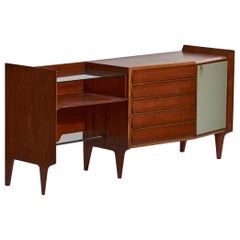
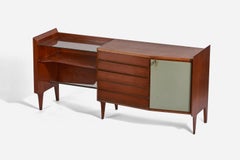
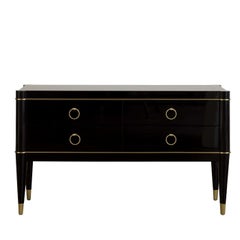
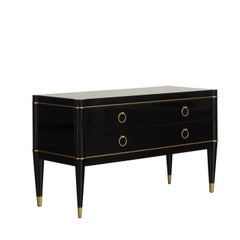
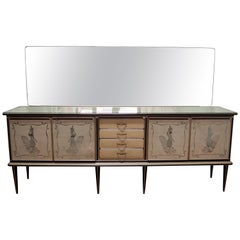
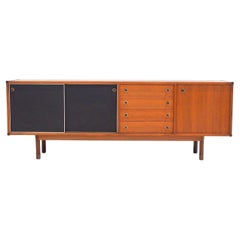
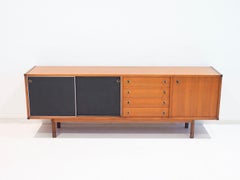
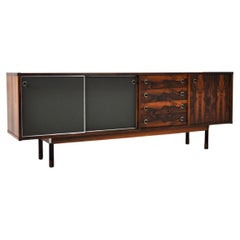
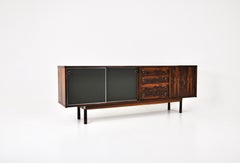
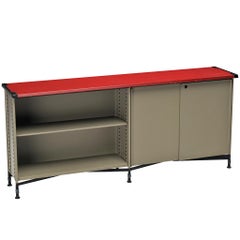
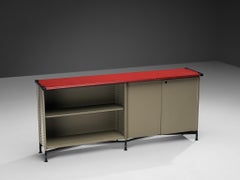
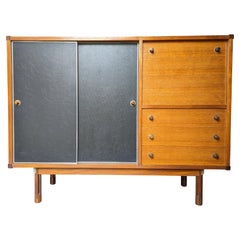
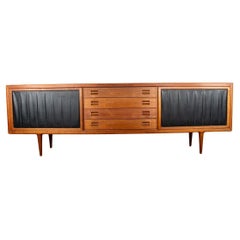
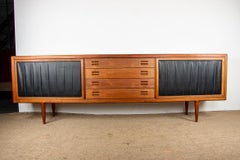
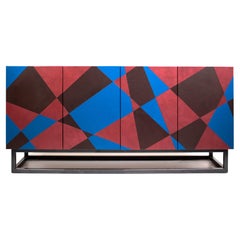
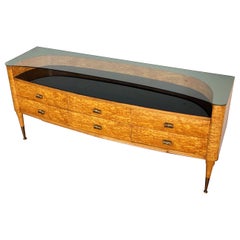
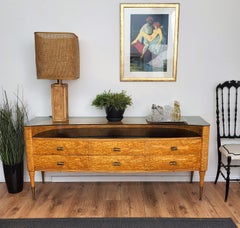
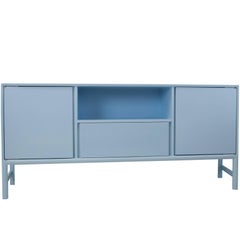
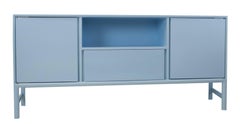
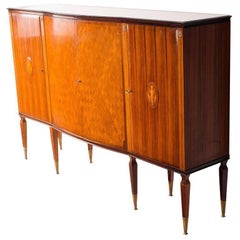
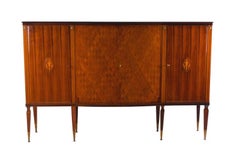
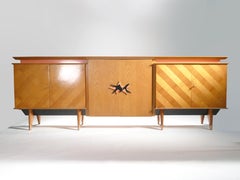
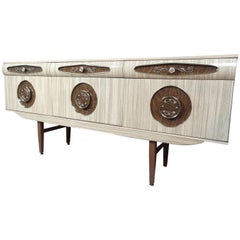
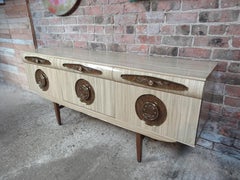
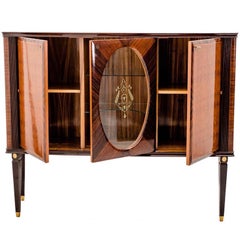
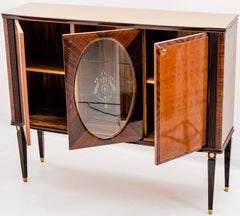
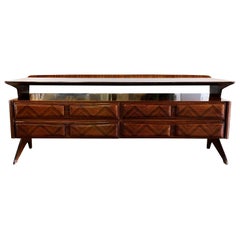
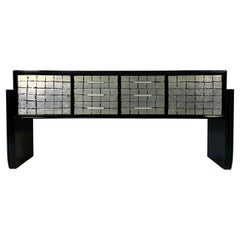
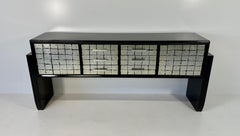
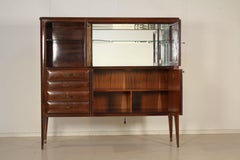
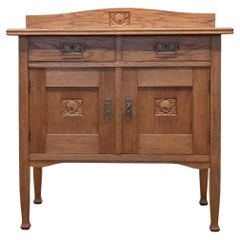
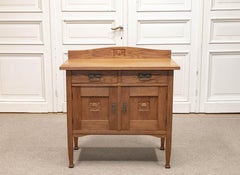
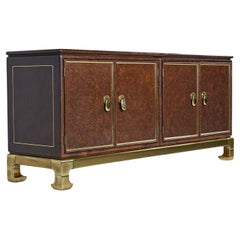
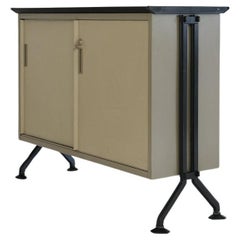
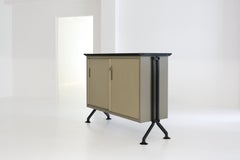
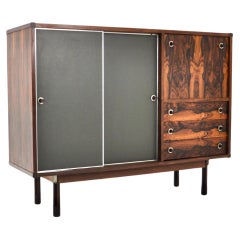
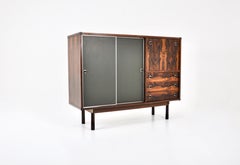
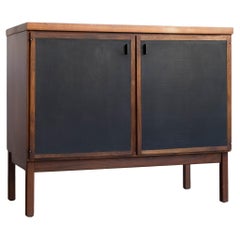
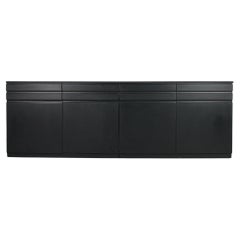
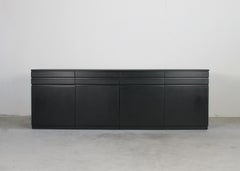
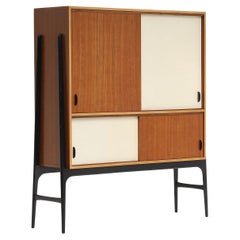
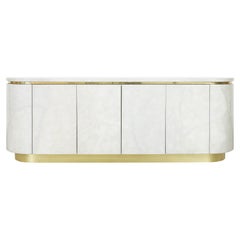
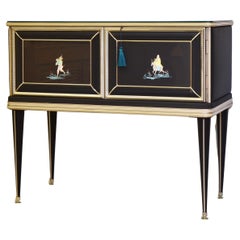
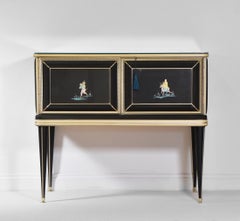
Samarcanda or CS49 sideboard composed of two modules in black lacquered beech plywood and top in wood covered with black skai.
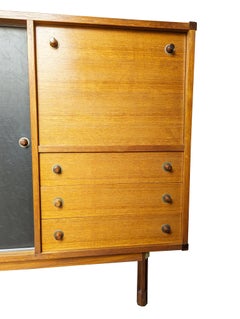
This Samarcanda sideboards presents frontal drawers and doors revealing inner shelves.
Designed by Vico Magistretti and produced by Poggi in 1970s
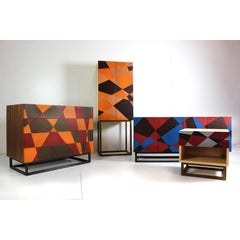
Samarcanda is an easily stackable system of drawers and containers that can compose living-room furniture, chests of drawers, tables and desks. It is a system of self-standing drawers made of beech multi-layered plywood lacquered with polyurethane paint in black and white that can be freely stacked and combined.
Licterature:
R. Dulio, F. Marino, S.A. Poli, Il mondo di Poggi. L'officina del design e delle arti, Electa, Milano 2019, p. 129
Domus 1971, 497
Ludovico Magistretti was born in Milan on 6 October 1920. He went to Parini High School and in autumn 1939 enrolled in the Faculty of Architecture at the Royal Polytechnic in Milan.
After 8 September 1943, to avoid being deported to Germany, he left Italy during his military service and moved to Switzerland, where he took some academic courses at the Champ Universitaire Italien in Lausanne, taught at the local university.
During his stay in the Swiss city he met Ernesto Nathan Rogers, the founder of the BBPR firm who had taken refuge in Switzerland after racist laws were passed in Italy. This was a key encounter in Magistretti’s intellectual and professional development, since the architect from Trieste turned out to be his maestro.
He returned to Milan in 1945, where he graduated in Architecture at the Polytechnic on 2 August. He then immediately began his career working with the architect Paolo Chessa at the firm owned and run by his father, who died prematurely that same year.
Here, in his father’s small firm, he spent his entire career in partnership with Franco Montella.
During reconstruction operations in Milan from 1949-59, Magistretti designed and constructed about 14 projects for INA-Casa in conjunction with other architects.
He was involved with Mario Tedeschi in the joint project for the QT8 neighbourhood, designing houses for veterans from the African campaign and also Santa Maria Nascente Church.
In 1946 he participated in the R.I.M.A. exhibition (Italian Assembly for Furniture Exhibitions), held at the Palazzo dell’Arte, designing some small almost self-made pieces of furniture and then, in 1947 and 1948, he took part together with Castiglioni, Zanuso, Gardella, Albini and others in the exhibitions organized by Fede Cheti, a furniture fabric maker, held at her own workshop.
The young architect was involved in plenty of activities and came up with lots of new ideas and proposals in the 1950s.
Over the following years he also designed a number of other important projects, including the Towers in piazzale Aquileia (1961-64), Bassetti House in Azzate (1960-62), Cassina House in Carimate (1964-65), and the house in via Conservatorio in Milan (1963-66).
In 1956 he was one of the founding members of the ADI, Industrial Design Association, and during the same year he was a member of the panel of judges for the Golden Compass Award for the first time.
His work as an architect was almost totally focused on the issue of housing and living from the 1960s onwards, as he developed his own extremely expressive idiom, which, even though it was heavily criticised at times, made a real impression on the architectural scene in Lombardy during that period, making him one of its leading figures.
This is the context in which he took part in the CIAM Congress (International Modern Architecture Congress) held in Otterlo in the Netherlands in 1959, during which the Italians presented Velasca Tower designed by the BBPR, the Olivetti canteen designed by Ignazio Gardella, Arosio house designed by Vico Magistretti (1956-59), and the houses in Matera designed by Giancarlo De Carli...
Category
1970s Italian Post-Modern Vintage Faux Leather Sideboards
MaterialsFaux Leather, Wood