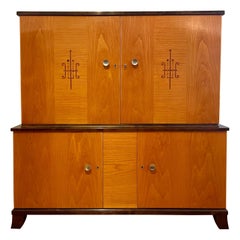
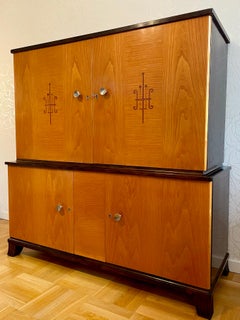
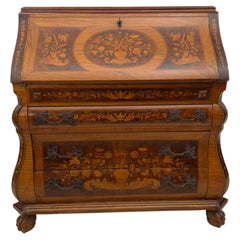
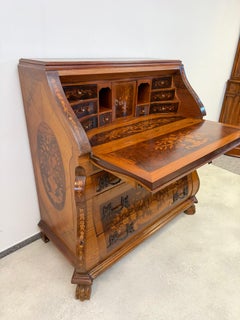
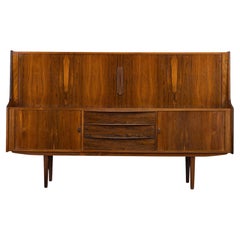
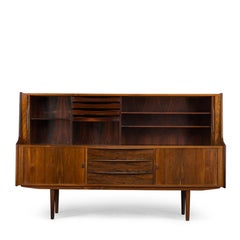
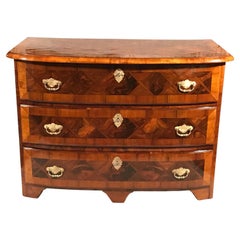
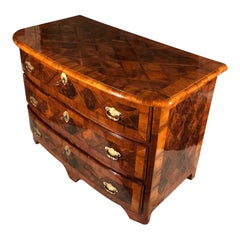
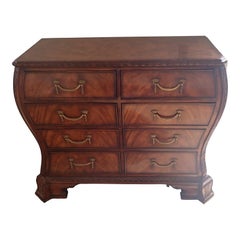
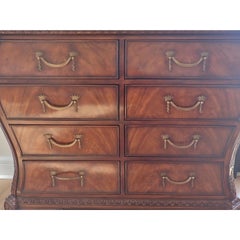
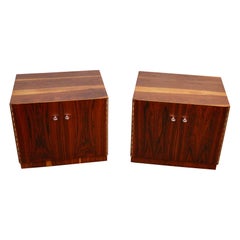
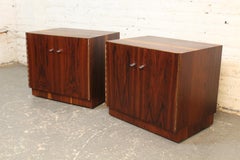
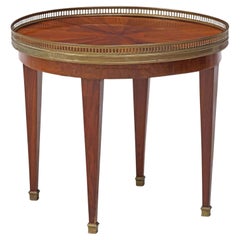
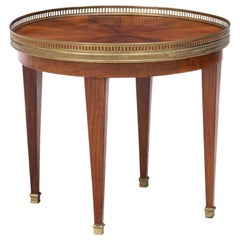
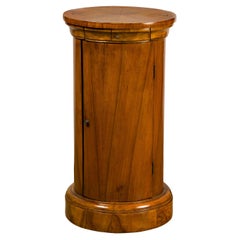
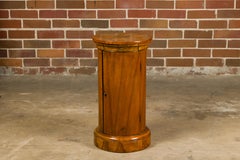
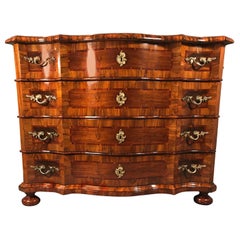
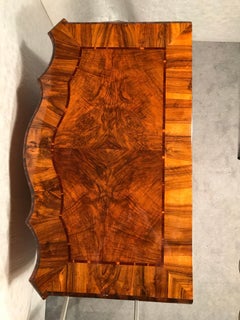
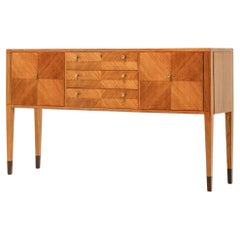
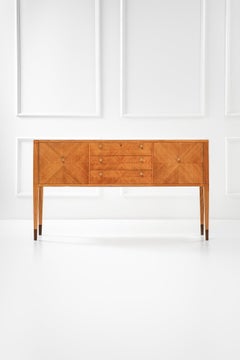
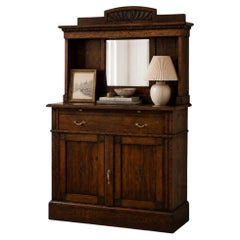
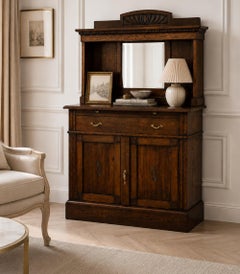
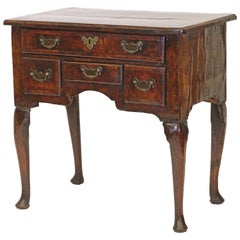
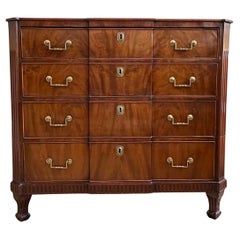
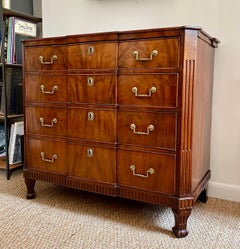
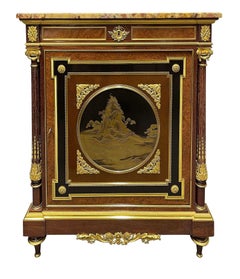
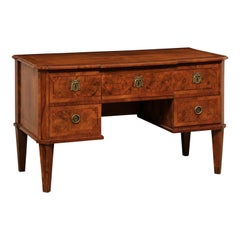
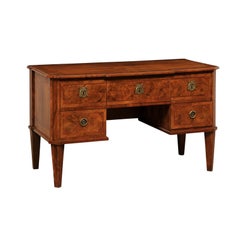
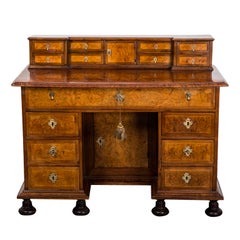
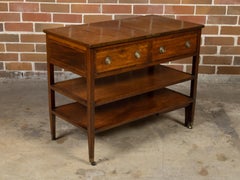
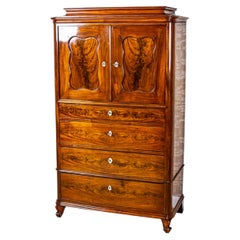
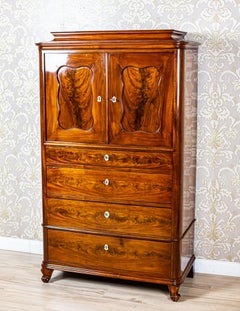
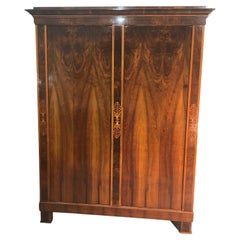
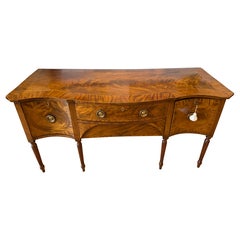
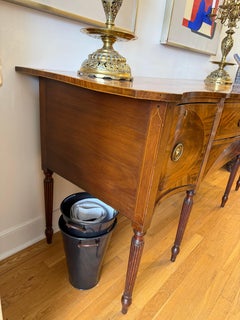
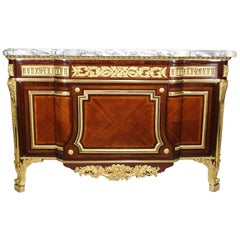
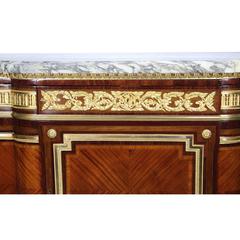
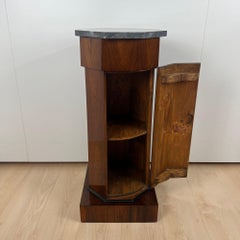
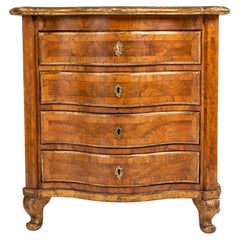
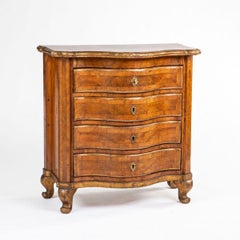
This mahogany commode has the fluted rails and canted corners typical of case furniture made along the coasts of the Baltic and North Seas around 1800. More difficult to pinpoint, however, is the exact place of its making, since this geographical region stretches from Germany to Russia, and north from Poland to Scandinavia. That said, a strikingly similar, if slightly plainer commode in a private German collection bears an old paper label that identifies it as having been made in the city of Altona. It also bears the seal of King Christian VII of Denmark who reigned until 1808. At the time, Altona was in the independent Duchy of Schleswig-Holstein, located between Denmark and Prussia. Both nations tried to annex the Duchy, and in 1848 it was ceded to Prussia, which became part of Germany in 1871.
A North Sea port, Altona was a member of the Hanseatic League, an association of seaports that was established in the 14th century to foster trade and police the high seas. Around 1800, the aforementioned King Christian of Denmark, who was also the Duke of Schleswig-Holstein, allowed Jews to freely settle in Altona to increase the tax base. This allowed them to conduct business in neighboring Hamburg, a larger financial hub that maintained quotas. The prosperous Jewish families of Altona built villas there, and decorated them with furnishings that were made locally and imported. Many of those makers owned copies of furniture-pattern books, which were widely disseminated among these seaports, accounting for the difficulty in determining if a piece was made in Altona, Stockholm, or St. Petersburg.
We can’t trace our commode to a Danish king or a known Altona merchant, but we can link it to the New World empire builders...
Category
Early 1800s German Neoclassical Antique Veneer Furniture