String Paintings

21 Results
to
20
1
4

Use search to find more

3
1
1
20
1
3
14
3
2
2
3
2
1
171
10,039
9,342
8,880
7,416

Use search to find more

17
17
1
1

Use search to find more

Material: String
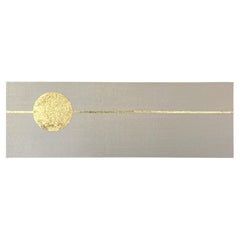
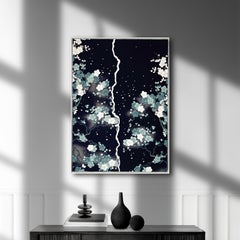
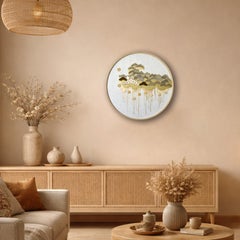
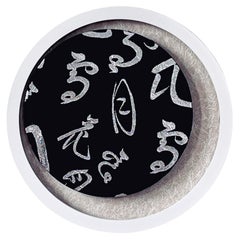
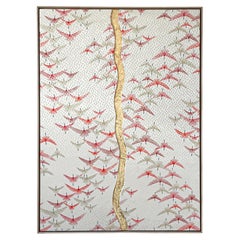
Vintage kimono textile art "Snow in Moonlight ~Kintsugi~" by ikasu Japan

Vintage kimono textile art "Snow in Moonlight ~Kintsugi~" by ikasu Japan

By Kimono ikasu, Lena Okamoto

Located in Setagaya City, JP

Certified Kimono Meister work / Certificate of Authenticity included. One-of-a-kind Japanese textile art made from vintage kimono fabrics. Sustainable artwork for modern interiors, ...

Category

Mid-20th Century Japanese Japonisme String Paintings

Materials

Gold Leaf

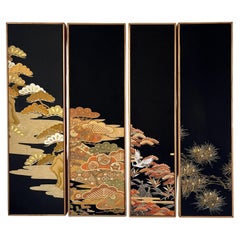
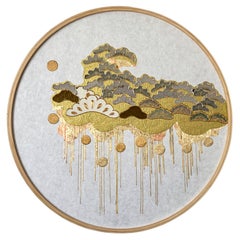
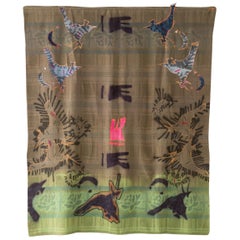
Vintage obi textile art " Pines Through Seasons " by ikasu Black Beige Japan

Vintage obi textile art " Pines Through Seasons " by ikasu Black Beige Japan

By Kimono ikasu, Lena Okamoto

Located in Setagaya City, JP

Certified Kimono Meister work / Certificate of Authenticity included. One-of-a-kind Japanese textile art made from vintage kimono fabrics. Sustainable artwork for modern interiors, ...

Category

1950s Japanese Japonisme Vintage String Paintings

Materials

Silk, Wood, Fabric, Textile, String, Thread, Yarn, Reclaimed Wood

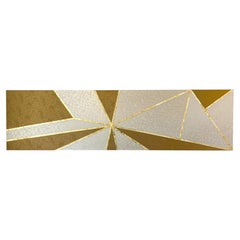
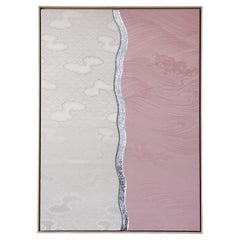
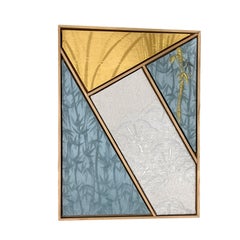
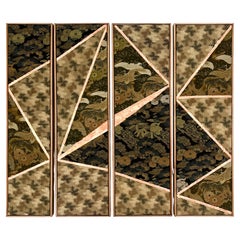
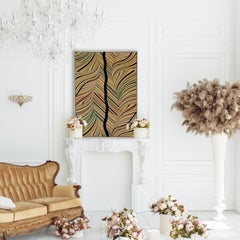
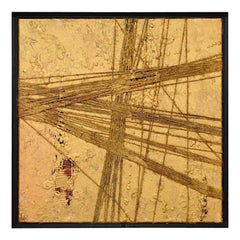
Antique kimono textile art "Geometry ~Kintsugi~" by ikasu Japan

Antique kimono textile art "Geometry ~Kintsugi~" by ikasu Japan

By Lena Okamoto, Kimono ikasu

Located in Setagaya City, JP

Certified Kimono Meister work / Certificate of Authenticity included. One-of-a-kind Japanese textile art made from vintage kimono fabrics. Sustainable artwork for modern interiors, ...

Category

Mid-20th Century Japanese Japonisme String Paintings

Materials

Gold Leaf

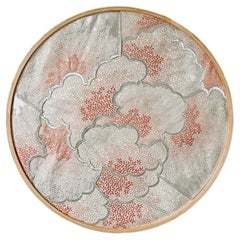
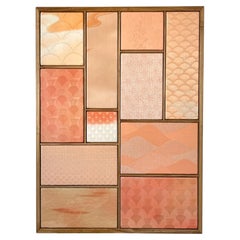
Early 20th Century kimono textile art "Sakura ~Ephemerality~" by ikasu Japan

Early 20th Century kimono textile art "Sakura ~Ephemerality~" by ikasu Japan

By Lena Okamoto, Kimono ikasu

Located in Setagaya City, JP

Certified Kimono Meister work / Certificate of Authenticity included. One-of-a-kind Japanese textile art made from vintage kimono fabrics. Sustainable artwork for modern interiors, ...

Category

1950s Japanese Japonisme Vintage String Paintings

Materials

Silk, Wood, Fabric, Textile, String, Thread, Yarn

Antique kimono textile art " Kobachi ~Coral Collection~ II" by ikasu Japan

Antique kimono textile art " Kobachi ~Coral Collection~ II" by ikasu Japan

By Lena Okamoto, Kimono ikasu

Located in Setagaya City, JP

Certified Kimono Meister work / Certificate of Authenticity included. One-of-a-kind Japanese textile art made from vintage kimono fabrics. Sustainable artwork for modern interiors, ...

Category

Mid-20th Century Japanese Japonisme String Paintings

Materials

Silk, Wood, Fabric, Textile, String, Thread, Yarn, Reclaimed Wood

Antique kimono textile art "Geometry ~Colors of Desert~ II" by ikasu Japan

Antique kimono textile art "Geometry ~Colors of Desert~ II" by ikasu Japan

By Kimono ikasu, Lena Okamoto

Located in Setagaya City, JP

Certified Kimono Meister work / Certificate of Authenticity included. One-of-a-kind Japanese textile art made from vintage kimono fabrics. Sustainable artwork for modern interiors, ...

Category

Mid-20th Century Japanese Japonisme String Paintings

Materials

Fabric, Textile, Silk, String, Thread, Yarn, Wood

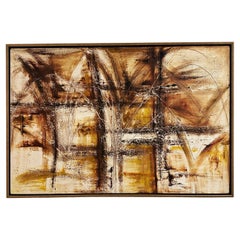
Lee Porzio Mixed Media Painting Midcentury Scottsdale Arizona Artist

Lee Porzio Mixed Media Painting Midcentury Scottsdale Arizona Artist

By Lee Porzio

Located in Cathedral City, CA

Lee Porzio, Untitled, Oil on Gesso Board with String, ca 1960s. Painting measures 32: high x 48" wide; with frame painting measures 33-1/2 high x 49-3/4" wide. Painting is in good vintage condition with new gold wood frame. LEE PORZIO (1913-2004) Lee was born in Paterson, New Jersey in September 1913 to Italian immigrant parents. Growing up in nearby Hawthorne, New Jersey, Lee met first husband Angelo di Benedetto, by then a well-known artist in his own right. They married in 1942 while Angelo was serving in the Air Force. In 1946, when he was discharged, they remained in Colorado, where he had been stationed, settling in Central City near Denver. Apparently, Angelo’s years-long obsession with turning a warehouse into a giant art studio created tension in their relationship ending in their divorce. By 1953, Lee had met Allen Ditson and moved to Arizona; they married in 1954. Once in Arizona, they began building their reputations as artists able to work in various media. Allen was a sculptor in metal and wood and a furniture designer. Lee was known for her skill as a graphic artist and could execute her designs in clay, oils, fabrics and fibers. Her work was sold at fine galleries nationwide. Together, their commissions include works of dramatic size and scope in the architectural and commercial field throughout the United States as well as intimate pieces for homes and small offices. Their work adorned numerous banks, offices, restaurants, churches and university buildings all over Phoenix, Arizona. Lee passed away in Paradise Valley, Arizona in 2004. Allen died in 2007. Exhibitions: - Syracuse Ceramic National Exhibition, 1948 - Art Institute of Chicago, 25th Annual Exhibition by the Society for Contemporary American Art...

Category

Mid-20th Century American Mid-Century Modern String Paintings

Materials

Gesso, String, Masonite, Wood, Paint

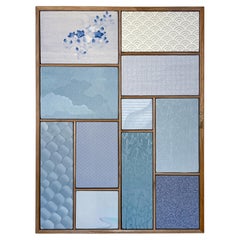
Japanese vintage kimono textile art " Kobachi" blue white wall art by ikasu

Japanese vintage kimono textile art " Kobachi" blue white wall art by ikasu

By Kimono ikasu, Lena Okamoto

Located in Setagaya City, JP

Certified Kimono Meister work / Certificate of Authenticity included. One-of-a-kind Japanese textile art made from vintage kimono fabrics. Sustainable artwork for modern interiors, ...

Category

Mid-20th Century Japanese Japonisme String Paintings

Materials

Fabric, Textile, Silk, String, Thread, Yarn, Wood, Reclaimed Wood

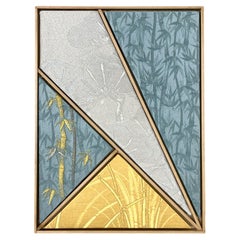
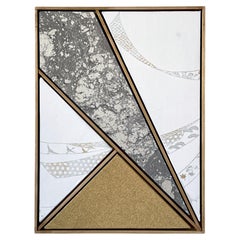
VIntage kimono textile art " Geometry ~ Marble ~" by ikasu Gold White Grey Japan

VIntage kimono textile art " Geometry ~ Marble ~" by ikasu Gold White Grey Japan

By Kimono ikasu, Lena Okamoto

Located in Setagaya City, JP

Certified Kimono Meister work / Certificate of Authenticity included. One-of-a-kind Japanese textile art made from vintage obi fabrics. Sustainable artwork for modern interiors, col...

Category

1960s Japanese Folk Art Vintage String Paintings

Materials

Silk, Wood, Fabric, Textile, String, Thread, Yarn, Reclaimed Wood, Compo...

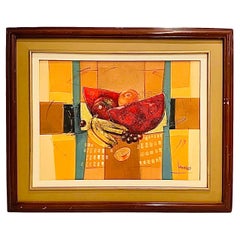
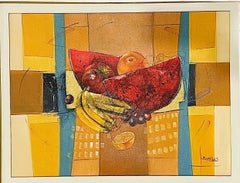
XL Mid Century Cubist Mixed Media Still Life Fruit Painting after Cezanne D. Fox

XL Mid Century Cubist Mixed Media Still Life Fruit Painting after Cezanne D. Fox

By Paul Cézanne

Located in St.Petersburg, FL

Exquisite, elegant, large format mid century mixed media cubist still life signed Morales, after Paul Cezanne and David Fox. . The artwork features a bowl of fruit, including a lar...

Category

Mid-20th Century American Mid-Century Modern String Paintings

Materials

String, Glass, Wood, Paint

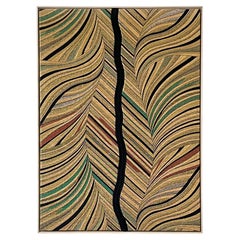
Large Mid Century Modern by Modernist Schreiber

Large Mid Century Modern by Modernist Schreiber

By Schreiber

Located in Lambertville, NJ

Good condition Ready to hang Signed lower Right Mixed media - paper, burlap, string Estate of Artist See bio in the photograph section Sight Size 29x39

Category

1970s Mid-Century Modern Vintage String Paintings

Materials

Paper, Burlap, String

Vintage obi textile art " Broken Vase ~ kintsugi ~" by ikasu Black Gold Japan

Vintage obi textile art " Broken Vase ~ kintsugi ~" by ikasu Black Gold Japan

By Lena Okamoto, Kimono ikasu

Located in Setagaya City, JP

Certified Kimono Meister work / Certificate of Authenticity included. One-of-a-kind Japanese textile art made from vintage obi fabrics. Sustainable artwork for modern interiors, collectors, boutique hotels, and lovers of Japanese aesthetics. [Story behind the work] This work uses a vintage obi dated around 1980ies, with a feather motif, and arranges it so that it looks like a vase. Antique obi, just as it is a broken vase, is united back again with black obijime - a string used to tie up obi when it’s worn. Framed in kiritansu (antique chest) paulownia wood. It is elegantly framed with paulownia wood originally used for kimono chest-of-drawers, and is filled with storytelling and sense of luxury. I used pieces of kimono that could no longer be used as clothing and kiritansu chest-of-drawers that would normally be discarded to create the ultimate upcycled piece. [Explanation and meaning of pattern and colors] Feathers hold various meanings and symbolism in Japanese traditional culture, often reflecting themes of spirituality, symbolism, and folklore. Here are some of the meanings associated with feathers in Japanese tradition: ・Divine Protection: Feathers are often seen as symbols of divine protection and spiritual guidance. Feathers, especially those from birds, are considered to be imbued with the protective energy, offering spiritual guardianship and safeguarding against negative forces. ・Connection to the Spirit World: Feathers are sometimes associated with the spirit world and the realm of the divine. In folklore and mythology, feathers are depicted as messengers between the earthly realm and the celestial realms. ・Symbol of Beauty and Elegance: Feathers are admired for their natural beauty, grace, and elegance. In traditional Japanese arts such as Noh theater, Kabuki, and dance performances like Kagura, actors and performers often use feathered costumes or accessories to enhance their appearance and convey a sense of refinement and sophistication. ・Sign of Good Luck and Prosperity: In Japanese folklore, certain birds like cranes and pheasants are considered symbols of good fortune, longevity, and prosperity. Feathers from these birds are often depicted in art and craftwork as auspicious symbols believed to bring blessings and positive energy to the bearer. [About the frame] Kiritansu - chest-of-drawers for kimono, is traditionally made from paulownia wood, a uniquely Japanese material closely tied to the world of kimonos. Paulownia wood is known as the lightest wood in Japan, prased for its natural luster, resistance to moisture, and resilience against cracking. Since ancient times, it has been used in crafting furniture, chests, and musical instruments. During the Edo period, it became customary to store cherished kimonos in paulownia chests...

Category

1980s Japanese Japonisme Vintage String Paintings

Materials

Silk, Wood, Fabric, Textile, String, Thread, Yarn, Reclaimed Wood, Compo...

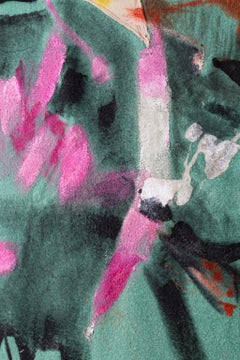
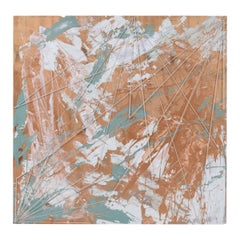
Emily Tan Copper and Sage Green Abstract Drip Painting with String

Emily Tan Copper and Sage Green Abstract Drip Painting with String

By (after) Jackson Pollock

Located in Chattanooga, TN

Suspended between cosmic energy and tactile abstraction, this striking mixed-media artwork by Tampa-based artist Emily Tan transcends the ordinary. Executed on thick, handcrafted plywood—reflecting her deeply personal process—copper and sage green pigments erupt across the surface in dynamic drips and pours, as though capturing the first seconds of creation itself. The composition vibrates with an elemental force, a visual echo of the "Big Bang...

Category

21st Century and Contemporary American Modern String Paintings

Materials

Plywood, Paint, String

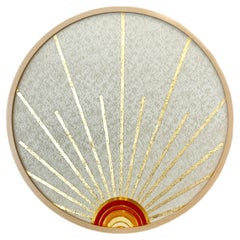
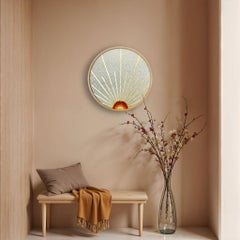
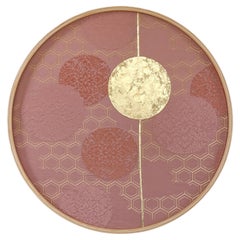
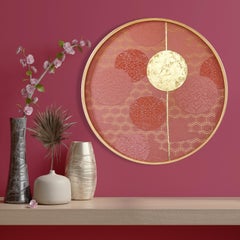
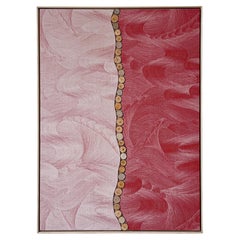
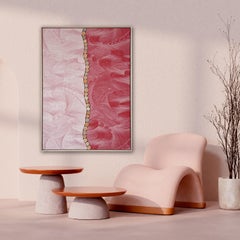
Vintage kimono textile art " Sunset Timelapse ~ Ephemerality ~" ikasu Red Japan

Vintage kimono textile art " Sunset Timelapse ~ Ephemerality ~" ikasu Red Japan

By Kimono ikasu, Lena Okamoto

Located in Setagaya City, JP

Certified Kimono Meister work / Certificate of Authenticity included. One-of-a-kind Japanese textile art made from vintage obi fabrics. Sustainable artwork for modern interiors, collectors, boutique hotels, and lovers of Japanese aesthetics. [Story behind the work] The art piece uses two sides - front and reverse - of the same kimono, to show beautiful sea surrounding Japan, in hues and in late sunset, as a timelapse. The frame for this work is made of paulownia wood taken from antique Kiritansu - chest-of-drawers for kimono. I use antique kiritansu that can’t be used as furniture anymore to create basis and frames for my works. It adds them even more authentic atmosphere of traditional wabisabi spirit. Can you feel it? [Period / Story] The kimono used in this piece was originally crafted during the late Showa period (1960-80ies). [Explanation and meaning of pattern and colors] Sea waves, depicted in two color variations here, are a symbol of transience and Impermanence in Japanese culture. The ebb and flow of the tides, the ever-changing currents, and the relentless motion of the waves serve as reminders of the fleeting nature of life. This artwork featuring the sea convey themes of impermanence, reminding viewers to cherish the present moment and appreciate the beauty of life's fleeting moments. The theme of impermanence is strengthen by two colors of the sea - the lighter in early hues and the darker when the sun is just about to set in the sea. [About the frame] This artwork frame is crafted from paulownia wood, a uniquely Japanese material closely tied to the world of kimonos, and it serves to convey the refined beauty of Japanese nature. Paulownia wood is known as the lightest wood in Japan, prased for its natural luster, resistance to moisture, and resilience against cracking. Since ancient times, it has been used in crafting furniture, chests, and musical instruments. Paulownia wood is closely linked to kimono culture. During the Edo period (17th cent.~), it became customary to store cherished kimonos in paulownia chests...

Category

1960s Japanese Japonisme Vintage String Paintings

Materials

Gold Leaf, Silver Leaf
Related Items
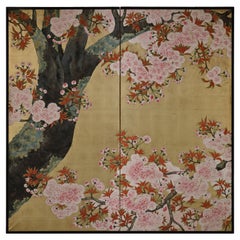
Early 20th Century Japanese Cherry Blossom Screen by Kano Sanrakuki

Early 20th Century Japanese Cherry Blossom Screen by Kano Sanrakuki

Located in Kyoto, JP

Cherry Blossoms Kano Sanrakuki (1898-1981) Showa period, circa 1930 2-panel Japanese Screen Color, gofun and gold leaf on paper Against a backdrop of gold-leafed ground, the lichen covered trunk and branches of the life-sized cherry blossom tree reach out and beyond the confines of the pictorial surface. The overall composition has a feeling of flatness which draws emphasis to the surface and the three-dimensionality of the cherry blossoms. Painstakingly built-up layers of thickly applied shell-white gofun detail the voluminous blossoms and cover large areas of this tour-de-force of Japanese Nihonga painting. By simplifying the background, minimizing the number of colors and depicting the blossoms with such heavy relief, the artist has emphasized the stunning presence of the cherry tree. The type of tree depicted is the Yae-Zakura; a double-layered type of cherry blossom famed for its beauty and strength. When we think of Japanese cherry blossoms, the first thing that comes to mind is Somei Yoshino variety, which has a single flower with five almost white petals. This type is fragile and easily blown away by strong wind or rain. Most of the double-flowered cherry blossoms begin to bloom when the Somei-Yoshino falls, and the flowering period lasts longer than that of the Somei-Yoshino. Kano Sanrakuki originally studied painting at the Kyoto City Arts and Crafts School under the tutelage of Yamamoto Shunkyo...

Category

Early 20th Century Japanese Showa String Paintings

Materials

Gold Leaf

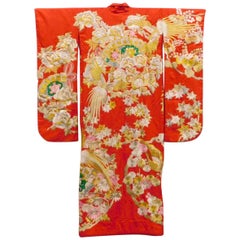
Exceptional Embroidered Japanese Ceremonial Kimono

Exceptional Embroidered Japanese Ceremonial Kimono

Located in Atlanta, GA

A visually striking antique Uchikake Wedding Kimono/Robe for ceremonial occasion, circa end of Meiji to Taisho period 1910s-1930s. This bridal outer garment is of a bright red color ...

Category

20th Century Japanese Japonisme String Paintings

Materials

Brocade, Silk

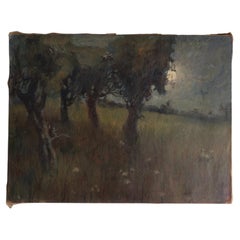
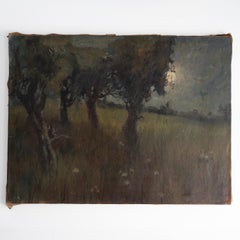
Italian Moonlight Landscape By Alberto Cecconi, Vintage Original Oil Painting

Italian Moonlight Landscape By Alberto Cecconi, Vintage Original Oil Painting

Located in Bristol, GB

VINTAGE ORIGINAL IMPRESSIONIST OIL ON CANVAS PAINTING BY ALBERTO CECCONI, (ITALIAN 1897-1971) Depicting a rural landscape at night with the full moon ...

Category

Early 20th Century Italian Rustic String Paintings

Materials

Canvas, Wood, Paint

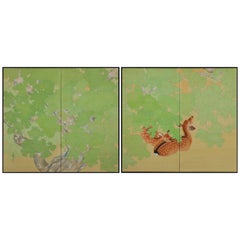
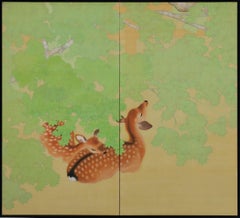
Early 20th Century Pair of Japanese Folding Screens, Deer Under Maple Trees

Early 20th Century Pair of Japanese Folding Screens, Deer Under Maple Trees

Located in Kyoto, JP

Deer under maples Late Taisho period, circa 1925-1930 Pair of two-panel screens. Ink and pigment on silk. Signature: Goho Seal: Goho A pair of two-fold Japanese silk screens...

Category

1920s Japanese Taisho Vintage String Paintings

Materials

Wood, Paper, Silk

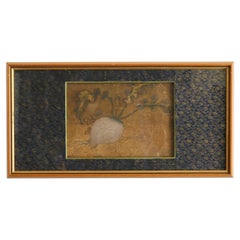
Antique Japanese turnip painting fragment / Pre-Edo / Wabi-sabi framed art

Antique Japanese turnip painting fragment / Pre-Edo / Wabi-sabi framed art

Located in Sammu-shi, Chiba

This piece is a fragment of an old Japanese painting, cut out and mounted in a frame. It is thought to have originally been part of a folding screen or hanging scroll, and depicts a ...

Category

19th Century Japanese Edo Antique String Paintings

Materials

Wood, Paper

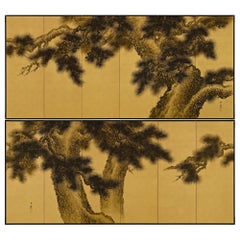
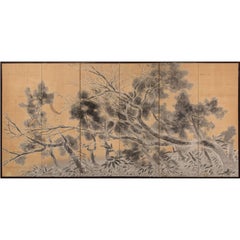
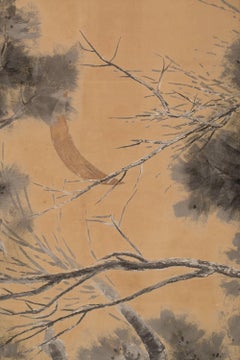
Early 20th Century Japanese Screen Pair - Ink Pine Trees on Gold

Early 20th Century Japanese Screen Pair - Ink Pine Trees on Gold

Located in Kyoto, JP

Imao Keisho (1902-1993) Pine Trees Early 20th Century, Circa 1930 Pair of six-panel Japanese screens. Ink on silk and gold leaf. Dimensions: Each screen H. 67.5” x 148” (172 cm x 376 cm) A pair of monumental six-panel Japanese pine screens by the renowned Nihonga artist Imao Keisho. Here Keisho entirely removed the background and brought the pine trees to the surface of the painting. This simplification of the elements makes the scene exceptionally direct and compelling and injects a very modern...

Category

Early 20th Century Japanese Showa String Paintings

Materials

Gold Leaf

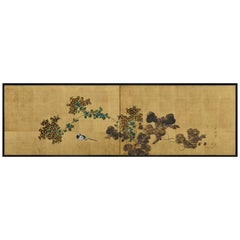
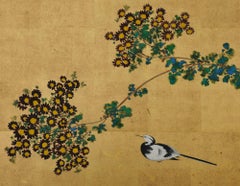
Japanese Screen, Early 20th Century Wagtail & Chrysanthemum by Ishizaki Koyo

Japanese Screen, Early 20th Century Wagtail & Chrysanthemum by Ishizaki Koyo

Located in Kyoto, JP

Ishizaki Koyo (1884-1947) Wagtail & Chrysanthemum Early 20th century Folding screen in two-panels. Ink, pigments and gofun on gold leaf. Sign: Koyo Seal: Koyo This ...

Category

Early 20th Century Japanese Taisho String Paintings

Materials

Gold Leaf

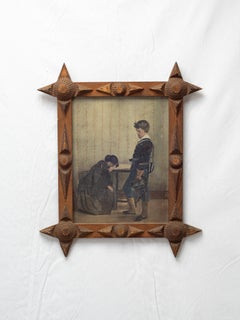
Early American Late 19th Early 20th Century Folk Art Painting in Tramp Art Frame

Early American Late 19th Early 20th Century Folk Art Painting in Tramp Art Frame

Located in Fort Collins, CO

Exceptional and never before seen Early American folk art oil painting. The scene appears to depict a man telling a woman bad news, presumably of her husband's passing. The subject p...

Category

Early 20th Century American Folk Art String Paintings

Materials

Wood, Paint

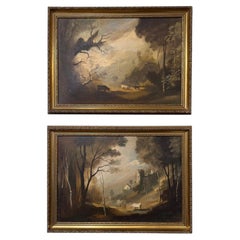
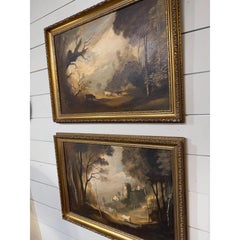
Pair of Early 20th Century Oil Paintings

Pair of Early 20th Century Oil Paintings

$2,475 / set

H 17 in W 23 in D 1 in

Pair of Early 20th Century Oil Paintings

Located in Nashville, TN

Attrib. Philip Hugh Padwick ROI RBA (1876-1958) - Oil - "Cows Grazing" An atmospheric landscape study attributed to the artist Philip Hugh Padwick ROI RBA (1876-1958). Rendered with ...

Category

Early 20th Century English String Paintings

Materials

Canvas, Hardwood

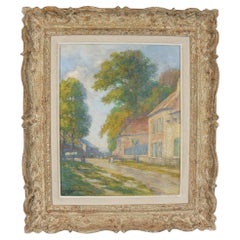
'Entrée de Chateau à Bonneuil' Early 20th Century

'Entrée de Chateau à Bonneuil' Early 20th Century

$2,206

H 22.84 in W 19.69 in D 1.58 in

'Entrée de Chateau à Bonneuil' Early 20th Century

Located in Forest Row, East Sussex

An early 20th century impressionist painting depicting the entrance of the chateau in Bonneuil, Paris. Set in a decorative Montparnasse frame. Signed 'A Delhomme' to lower left. To t...

Category

Early 20th Century French String Paintings

Materials

Wood, Paint

'Under Storm Stripes' Quilt Painting Wool Tapestry Textile Art, in Stock

'Under Storm Stripes' Quilt Painting Wool Tapestry Textile Art, in Stock

By Fort Makers, Naomi Clark

Located in Brooklyn, NY

Under the Blanket Project, Naomi Clark creates what she titles Quilt Paintings. She breathes new life into old wool and cotton camping blankets culled from EBay, flea markets and gar...

Category

2010s American String Paintings

Materials

Wool, Cotton, Acrylic

Six Panel Japanese Screen: Winter Scene of Pine, Plum, and Bamboo

Six Panel Japanese Screen: Winter Scene of Pine, Plum, and Bamboo

Located in Hudson, NY

Japanese Six Panel Screen: Winter Scene of Pine, Plum, and Bamboo Under Crescent Moon. Pine, plum and bamboo are known as the three friends of winter, because they all thrive and bl...

Category

Early 20th Century Japanese Taisho String Paintings

Materials

Paper, Wood

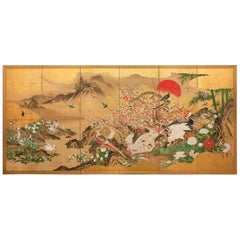
Japanese Screen: Animals and Flowers in a Landscape with Rising Sun

Japanese Screen: Animals and Flowers in a Landscape with Rising Sun

Located in Hudson, NY

Edo period (c. 1800) screen, beautifully painted with excellent details. Kano School painting at its best. An exuberant Audobon landscape being observed by a cat and her kitten. A...

Category

Early 19th Century Japanese Edo Antique String Paintings

Materials

Gold Leaf

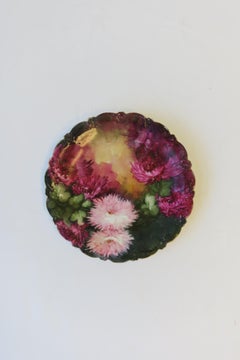
French Limoges Wall Art Painted Plate, Early-20th Century

French Limoges Wall Art Painted Plate, Early-20th Century

$540Sale Price|43% Off

H 1 in Dm 8.5 in

French Limoges Wall Art Painted Plate, Early-20th Century

By T&V Limoges

Located in New York, NY

An early-20th century French hand-painted plate by T & V, Limoges, France. Plates' design is beautiful fuchsia-purple and pink mum flowers and green leaves, finished with a gold gilt...

Category

Early 20th Century French Rococo String Paintings

Materials

Porcelain

Previously Available Items
Vintage kimono textile art " Cranes ~ Kintsugi ~ II" White Red Gold Japan

Vintage kimono textile art " Cranes ~ Kintsugi ~ II" White Red Gold Japan

By Kimono ikasu

Located in Setagaya City, JP

Certified Kimono Meister work / Certificate of Authenticity included. One-of-a-kind Japanese textile art made from vintage obi fabrics. Sustainable artwork for modern interiors, collectors, boutique hotels, and lovers of Japanese aesthetics. [Size] 73 x 53 x 5 cm [Materials] Silk for the outside layer, wooden frame for the under layer, and gold leaf [Story behind the work] This is the second version of "Cranes: Kintsugi," created from the same kimono using a different section of the textile. Each artwork is handmade, and no two pieces are identical. The frame for this work is made of paulownia wood taken from antique Kiritansu, which are traditional chests of drawers for kimonos. I use antique kiritansu that can no longer be used as furniture to create the basis and frames for my works. It adds an even more authentic atmosphere of the traditional wabi-sabi spirit. Can you feel it? The piece uses the concept of kintsugi. It unites the pieces of antique kimono back together with golden leaf to give it a second wind as an artwork. [Period and Story] The kimono used in this piece was originally crafted during the late Showa period, around the 1960s to 1980s. [Explanation and meaning of pattern and colors] The Japanese saying goes, "A crane lives a thousand years, a tortoise lives ten thousand years," making cranes a symbol of longevity. Cranes are also known for staying with the same partner for their entire lives, which is why they are often used at weddings and other celebrations to symbolize marital bliss and the desire for harmony between husband and wife. On this particular piece, cranes are flying through snow woven on the fabric, as if they are overcoming all disasters to get to their beloved ones. The color scarlet, or deeply dyed red, used for most of the cranes here, has long been associated with the meaning of warding off evil. It is believed to possess the power to repel malevolent forces and invite good fortune. During the Heian period, from 794 to 1185, scarlet was reserved for sacred buildings and ceremonial objects that held great significance. Ordinary people were prohibited from wearing scarlet red kimonos, which made it a highly special color. [Characteristics of the fabric] Cranes, going up and down, are generously decorated by kimpaku here. Kimpaku refers to gold leaf or foil in Japanese. Gold leaf is a traditional material used in various aspects of Japanese culture, including art, crafts, and even in culinary applications. In traditional Japanese art, gold leaf is often applied to religious objects, sculptures, paintings, and lacquerware to create a luxurious and decorative effect. The use of gold leaf in art dates back centuries and is associated with a sense of wealth, prestige, and the divine. Traditional kimpaku technique is used here to make an accent decoration in the middle. [About the frame] This artwork frame is crafted from paulownia wood, a uniquely Japanese material closely tied to the world of kimonos, and it serves to convey the refined beauty of Japanese nature. Paulownia wood is known as the lightest wood in Japan, praised for its natural luster, resistance to moisture, and resilience against cracking. Since ancient times, it has been used in crafting furniture, chests, and musical instruments. Paulownia wood is closely linked to kimono culture. During the Edo period, it became customary to store cherished kimonos in paulownia chests...

Category

Late 20th Century Japanese Japonisme String Paintings

Materials

Gold Leaf, Silver Leaf
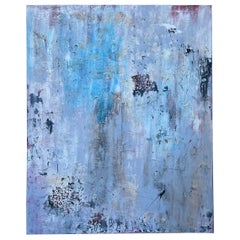
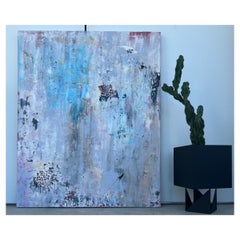
2022 Abstract Expressionist Mixed-Media Painting

2022 Abstract Expressionist Mixed-Media Painting

Located in Raleigh, NC

Highly textured new abstract artwork. Mixed media: acrylic, India ink, and cotton string. Neutral color story with pops of color.

Category

2010s American Other String Paintings

Materials

Gesso, Canvas, String, Acrylic

Healing Process Diptych, Framed Mixed-Media on Canvas, 2015

Healing Process Diptych, Framed Mixed-Media on Canvas, 2015

By Ramon Aular

Located in Miami Beach, FL

Healing process by Ramon Aular Oil paint, string and 18-karat gold leaf on canvas Overall size: 19.5 in. H x 39 in. W x 2 in. D Individual canvas size: 17.5 in. H x 17.5 in. W Indivi...

Category

2010s American Other String Paintings

Materials

Gold Leaf
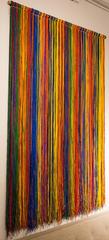
David Roth String Painting, Program #5

David Roth String Painting, Program #5

Sold

H 72 in W 48 in D 2.5 in

David Roth String Painting, Program #5

By David Roth

Located in New York, NY

String painting by David Roth titled "The Passage of the Spectrum Through each Color, woven with its Complimentary Inversion" This is the second version, executed in 2000, based on Program #5 from 1970. Roth (b. 1942) studied with Aaron Siskind and Harry Callahan at the Illinois Institute of Technology's Institute of Design in the early 1960s. He was represented by New York City's Robert Elkon Gallery in the 1970s and his works are in numerous museums, including the Philadelphia Museum of Art, the Brooklyn Museum, and the Albright Knox Museum, as well as in corporate and private collections. String Paintings consist of acrylic painted cotton strings that hang from a horizontal support, conforming to the flat rectangular illusion of the traditionally constructed ‘painting’. This example was exhibited at Moderne Gallery...
Category

Early 2000s American Minimalist String Paintings

Materials

String

Mixed Media Collage "Splashdown"

Mixed Media Collage "Splashdown"

Sold

H 40 in W 19.25 in D 2.5 in

Mixed Media Collage "Splashdown"

By Victor Candell

Located in New York, NY

Mixed media collage on canvas titled "Splashdown" and dated July 24, 1969--the day Apollo 11 returned to Earth. By Hungarian-American artist Victo...

Category

1960s American Mid-Century Modern Vintage String Paintings

Materials

String, Wood

Pair Of Mixed Media Art Works  By Tracy Wise

Pair Of Mixed Media Art Works By Tracy Wise

Sold

H 22 in W 28 in D 1.25 in

Pair Of Mixed Media Art Works By Tracy Wise

By Tracy Wise

Located in Chicago, IL

Pair of abstract works by artist Tracy Wise titled "Neutral Folds 1 & 2". Striking mixed media assemblages incorporating paper and textiles.

Category

20th Century American String Paintings

Materials

Wood, String

Jeff Koons- RUDOLPH THE RED-NOSED REINDEER PADDLE BALL

Jeff Koons- RUDOLPH THE RED-NOSED REINDEER PADDLE BALL

Located in NYC, NY

Jeff Koons
Title: Rudolph the Red-Nosed Reindeer paddle ball game
Medium: thermoprint on birchwood with painted metal and string
Size...

Category

Late 20th Century German String Paintings

Materials

Metal