Located in Northampton, MA
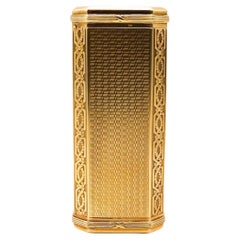
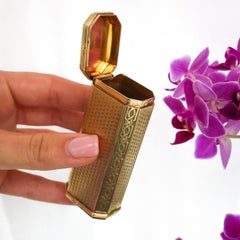
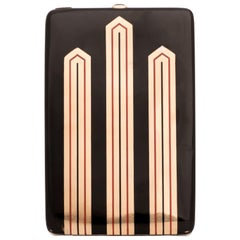
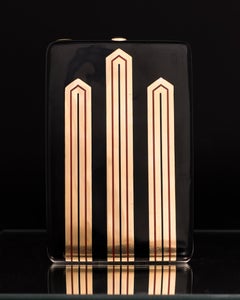
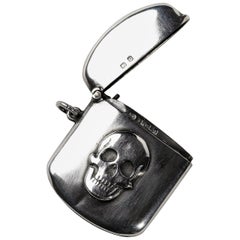
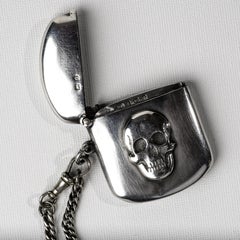
Created —and fully hallmarked— in Birmingham, England in 1913 by the venerable silversmith, Robert Chandler, this is an original and extremely rare moment mori vesta case with a fully-functional hinged top, a built-in striker for your wooden matches, and a highly-detailed scull decorating the front.
It is pictured (and ships with) a mid-Victorian-era (circa 1850) steel longuard chain with a dog clip to which you can attach the Vesta case. The chain is marked for John Round. It is weighty and substantial as well as being the perfect color-match for the patinaed silver case. It glides through the fingers so smoothly, it will pull whatever it's attached to right out of your hand if you aren't careful.
Of course, today there may be other things besides wooden matches you'd like to carry in this case and it is more than up to the task.
The 'Vesta Case' was named after the Roman goddess of the hearth, which is to say the cooking fire. Vesta Cases were designed to be weather-resistant, carry-with-you-everywhere containers where you could store your newfangled wooden matches and light a fire whenever the need arose. Vesta Cases were invented shortly after the invention of the wooden friction match in 1826. These cases were quite necessary as early striker matches would burst into flames if you looked at them the wrong way.
Memento mori jewelry came into being in the sixteenth-century. It featured sculls, sculls and crossbones, caskets, urns, and many other symbols to represent death. As macabre as this seems today, at the time it was a reminder that death is the only sure thing in life for all of us so we must each make the very most out of every single day. Far from being gloomy doomsday jewels, memento mori (Latin: remember you must die) jewelry was actually a celebration of life. Memento mori jewelry was enormously popular in the 18th-century as well. And reproduction memento mori jewelry continues to be made today.
Antique memento mori jewelry...
Category
1910s Vintage Steel Boxes and Cases