By David Andersen
Located in Miami, FL
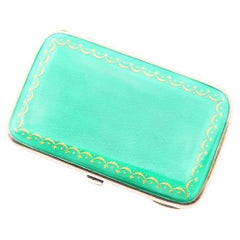
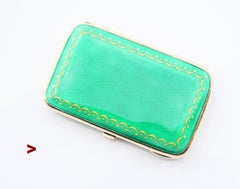
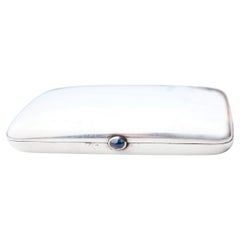
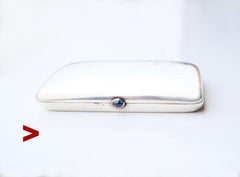
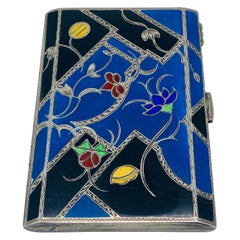
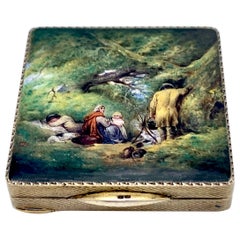
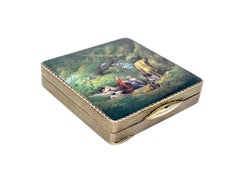
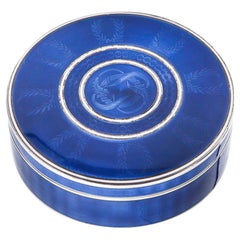
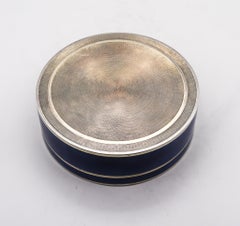
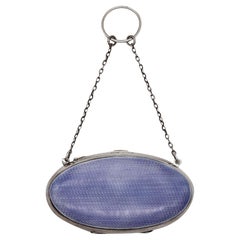
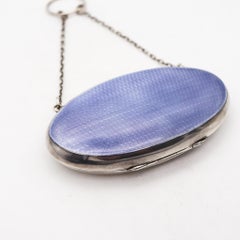
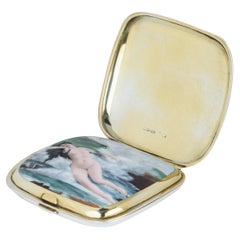
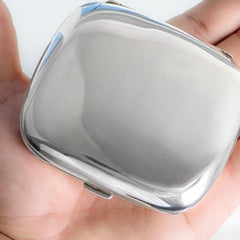
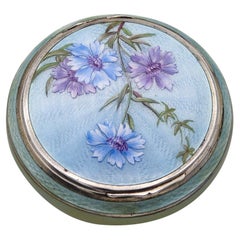
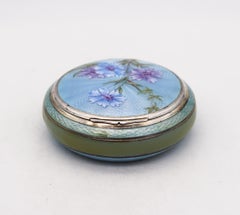
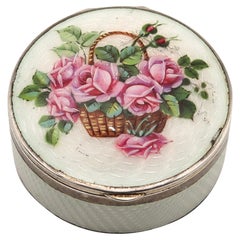
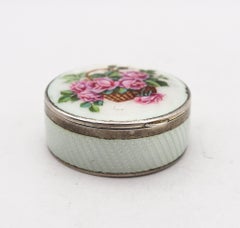
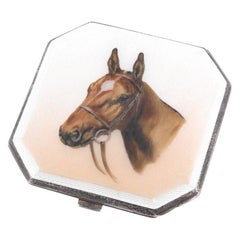
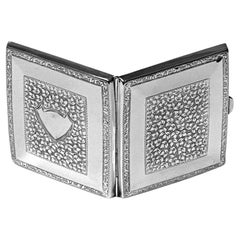
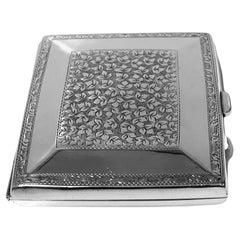
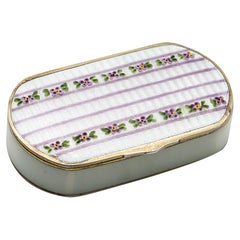
A guilloche enameled pill box designed by David Andersen.
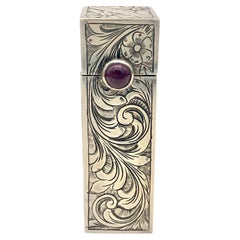
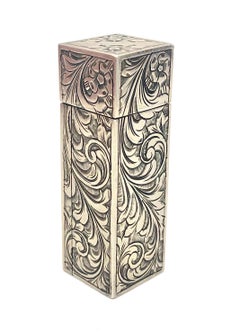
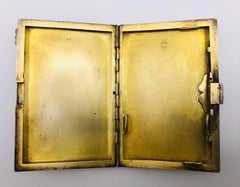
Extremely rare early 20th century enamel pill-box, created in Norway during the late Edwardian and art nouveau period at the workshop of David Andersen, circa 1910. This beautiful box was carefully crafted with impeccable details in solid .925/.999 standard silver with gilded interiors finish. Made of rectangular form with curved edges and fitted with a five barrels hinged lid, that can be raised by a simple thumbpiece. Engine turned guilloche decoration topped with applications of translucent silvered-white and light purple enamels and finally embellished with tiny flowers motifs decorations in high relief.
Weight: 59.40 Grams, (38.08 Dwt).
Measurements: 65 mm by 38 mm and a height of 13 mm (2.56 x 1.50 x 0.51 Inches).
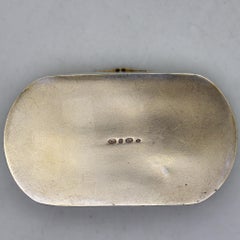
Hallmarks: Stamped with French and Norwegian marks, the maker's mark associated to David Andersen inside a cartouche, the mark for the assay of the silver S .925 and stamped twice with the French import mark of the swan, for importation. Very interesting exports and imports marks.
Note: The hallmark of a swan facing to the left inside an oval (Osprey-124), was introduced in 1893 for small silver items imported into France. The silver product need to have at least a standard assay of .800/999 or over. The swan mark indicates that the item was produced in a non-treaty country and served as an import identification. The swan mark used until 1970.
David Andersen
David Andersen was born in 1843 in Østre Toten, Innlandet to Anders Svendsen and Anne Margrethe Gulbrandsdatter, and was the father of goldsmith Arthur David-Andersen. He was one of the most important Norwegian goldsmiths. From 1859 he was in apprenticeship with the jeweler Jacob Tostrup in Christiania (now called Oslo). He spent several periods abroad, in Berlin, Stockholm, Paris and London. During his stay in London he also imported Norwegian filigree works to the United Kingdom. He established his own goldsmith workshop in Christiania 1876, which eventually became a leading company in the goldsmith industry in Norway. A significant part of his filigree works was exported to Great Britain. As of 1899 his company employed 92 men...
Category
Norwegian Art Nouveau Vintage 1910s Objets d'Art and Vertu
MaterialsGold, Silver, Sterling Silver, Enamel