Cleveland

to
105
1,000,502
727,761
416
238
180
178
123
86
65
45
44
40
37
28
28
26
24
22
18
14
11
8
8
5
4
3
2
2
1
1
1
60
50
35
31
29
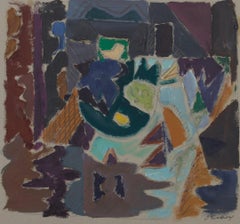
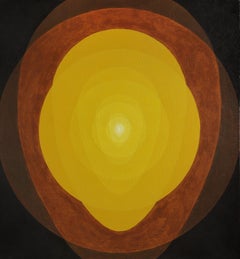
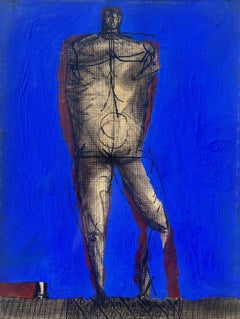
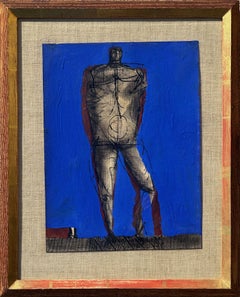
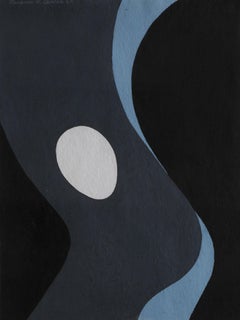
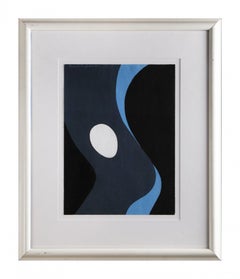
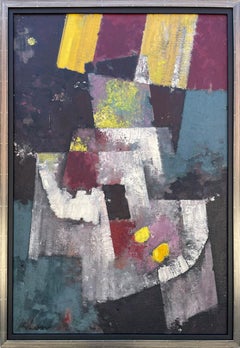
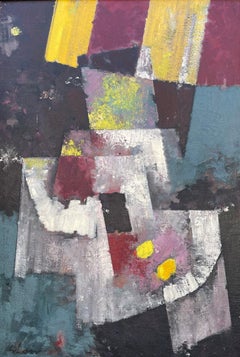
Meditation on African Sculpture, mid-century figural abstract painting

Meditation on African Sculpture, mid-century figural abstract painting

By Beni E. Kosh

Located in Beachwood, OH

Beni E. Kosh/Charles Elmer Harris (American, 1917-1993) Meditation on African Sculpture, 1957 Oil on found wood panel Signed and dated lower left 20 x 15 inches Charles Elmer Harris...

Category

1950s Modern Cleveland

Materials

Oil

Mirror, abstract expressionist painting by Cleveland School artist

Mirror, abstract expressionist painting by Cleveland School artist

By Richard Andres

Located in Beachwood, OH

Richard Andres American, 1927-2013 Mirror, 1984 acrylic and ink on paper mounted on canvas signed lower right, dated and titled verso 12 x 12 inches Richard Andres was born in Buff...

Category

1980s Abstract Expressionist Cleveland

Materials

Ink, Acrylic

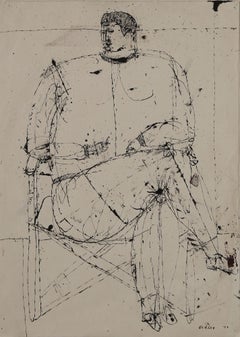
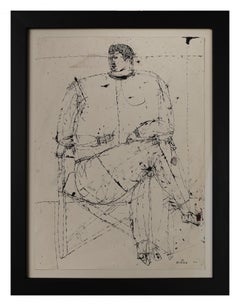
Seated Figure, 20th century figural abstract expressionist ink drawing

Seated Figure, 20th century figural abstract expressionist ink drawing

By Joseph Glasco

Located in Beachwood, OH

Joseph Glasco (American, 1925-1996) Seated Figure 1970 India ink on paper Signed and dated lower right 16 x 11.5 inches 19.5 x 15 inches, framed Joseph Glasco was born in Paul’s Val...

Category

1970s Abstract Expressionist Cleveland

Materials

India Ink

Naval Occurrence, orange, blue & green mid-century, abstract geometrical work

Naval Occurrence, orange, blue & green mid-century, abstract geometrical work

By Richard Andres

Located in Beachwood, OH

Richard Andres (American, 1927-2013) Naval Occurrence, c. 1963 oil on canvas signed and titled verso 24 x 32 inches Richard Andres was born in Buffalo, New York in 1927. A graduate of the Cleveland Institute of Art in 1950, he was immediately drafted and served for two years in the army as a mural painter. He received his Master of Arts from Kent State in 1961. A frequent exhibitor at galleries and museums and winner of multiple May Show prizes, Andres taught art in the Cleveland Public Schools for 28 years, as well as teaching the University of Buffalo, the Cleveland Institute of Art and the Western Reserve University. Very little in Richard Andres’ childhood would have predicted his love of classical music, mid-century-modern architecture and certainly not his lifelong passion for art and in particular abstract art. Richard’s father, Raymond, had no more than a third-grade education, and his mother, Clara, was one of thirteen children – only three of whom lived into adulthood and none of whom attended high school. They lived, when Richard was a boy, in a dingy area of Buffalo, NY in a walk-up apartment situated above a tavern. Raymond and Clara supplemented the income from their factory jobs in the bar downstairs with Raymond playing ragtime on the piano and Clara serving drinks. This often left Richard and his two older brothers at home alone to fend for themselves. The two older boys, Raymond and Russell, were - unlike Richard- rather rough and tumble and entertained themselves with stickball, boxing and the like. Richard, on the other hand, from a very young age liked to draw, or better yet even, to paint with the small set of watercolors he received for Christmas one year. Paper, however, at the height of the depression, was hard to come by. Luckily, Clara used paper doilies as decoration for the apartment and Richard would contentedly paint and then cut up doilies, gluing the pieces together to create collages. At eight-years-old, he discovered the Albright-Knox Museum (then known as the Albright Art Gallery) and spent several hours a week there studying the paintings. He was particularly fond of Charles Burchfield‘s landscapes, enamored with their ‘messiness’ and thinking that they somehow captured more ‘feeling’ than works he was previously familiar with. For his tenth Christmas, he asked for and received a ‘how-to’ paint book by Elliot O’Hare. Through this self-teaching, he assembled the portfolio needed for acceptance to Buffalo Technical High School where he studied Advertising Arts. In his Junior year, he was encouraged to enter a watercolor painting, “Two Barns,” in the national 1944-45 Ingersoll Art Award Contest and was one of twelve grand prize winners – each one winning one hundred dollars. More importantly the painting was exhibited at the Carnegie Institute Galleries, which resulted in his winning a national scholarship to the Cleveland School of Art (The Cleveland Art Institute). He flourished at the art school under the tutelage of faculty members such as Carl Gaertner, as well as that of visiting artists such as William Sommer and Henry George Keller. He would say in later years that Gaertner, in particular, influenced his attitude toward life as well as art. “Gaertner,” Andres said, “believed that there was no need to be a ‘tortured artist’, that an artist should rather enjoy beauty, family, and life in general.” Free to spend his days as he chose, he wandered the Cleveland Art Museum for most of the hours he was not attending classes or painting; the remaining time was spent drinking coffee at a local hangout with art school friends – which is where he met fellow Henry Keller scholarship winner, Avis Johnson. Richard was immediately smitten with Avis, but being rather shy, it took him the entire summer of 1948 to build up his courage to ask her out. Over that summer he ‘thought about Avis’ and worked in a diner to save money. He also used the hundred-dollar prize money won in High School to visit the first Max Beckmann retrospective in the United States at the City Art Museum in St. Louis. Over a half century later he spoke of that exhibit with a reverence usually reserved for spiritual matters, “I walked in and it was like nothing I had ever seen before... the color...It just glowed.” Returning to campus in the Fall, the first thing he did was go to the coffee shop in hopes of finding Avis. He did, and she, upon seeing him, realized that she was also smitten with him. They quickly became known as ‘the couple’ on campus, and a year later, with Richard being drafted for the Korean war, they were quickly married by a Justice of the Peace, celebrating after with family at Avis’s Cleveland home. As a gift, faculty member John Paul Miller designed and made the simple gold wedding ring Avis wore for their 65 years of marriage. During those 65 years neither wavered in their mutual love, nor in the respect they shared for one another’s art. The couple lived in a converted chicken coop in Missouri while Richard was in boot camp. At the camp, he would volunteer for any job offered and one of those jobs ended up being painting road signs. His commander noticed how quickly and neatly he worked and gave him more painting work to do - eventually recommending him for a position painting murals for Army offices in Panama. Until her dying day, Avis remained angry that “The army got to keep those fabulous murals and they probably didn’t even know how wonderful they were.” In Panama, their first son, Mark, was born. After Richard’s discharge in 1953, they moved back to the Cleveland area and used the GI bill to attend Kent State gaining his BA in education. The small family then moved briefly to Buffalo, where Richard taught at the Albright Art School and the University of Buffalo – and their second son, Peter, was born. Richard had exhibited work in the Cleveland May Show and the Butler Art Museum during his art school years, and during the years in Buffalo, his work was exhibited at the gallery he had so loved as a child, the Albright Art Gallery. In 1956, the family moved back to the Cleveland area and Richard began teaching art at Lincoln West High School during the day while working toward his MA in art at Kent State in the evenings. Avis and Richard, with the help of an architect, designed their first home - a saltbox style house in Hudson, Ohio, and in 1958, their third son, Max (after Max Beckmann) was born. Richard enjoyed the consistency of teaching high school as well as the time it gave him to paint on the weekends and during the summer months. In 1961, he received his MA and his daughter, Claire, was born. With a fourth child, the house was much too small, and Avis and Richard began designing their second home. An admirer of MCM architecture, Richard’s favorite example of the style was the Farnsworth house – he often spoke of how the concepts behind this architectural style, particularly that of Mies van der Rohe, influenced his painting. Andres described himself as a 1950’s...

Category

1960s Abstract Geometric Cleveland

Materials

Oil

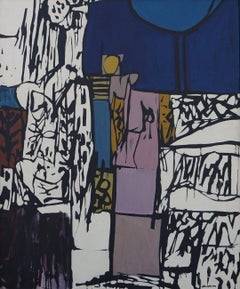
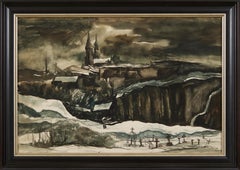
Panama Garden, Mid-century abstract expressionist modern work

Panama Garden, Mid-century abstract expressionist modern work

By Richard Andres

Located in Beachwood, OH

Richard Andres (American, 1927-2013) Panama Garden, c. 1964 acrylic on canvas signed lower right, signed and titled verso 46 x 38 inches Richard Andres was born in Buffalo, New York in 1927. A graduate of the Cleveland Institute of Art in 1950, he was immediately drafted and served for two years in the army as a mural painter. He received his Master of Arts from Kent State in 1961. A frequent exhibitor at galleries and museums and winner of multiple May Show prizes, Andres taught art in the Cleveland Public Schools for 28 years, as well as teaching the University of Buffalo, the Cleveland Institute of Art and the Western Reserve University. Very little in Richard Andres’ childhood would have predicted his love of classical music, mid-century-modern architecture and certainly not his lifelong passion for art and in particular abstract art. Richard’s father, Raymond, had no more than a third-grade education, and his mother, Clara, was one of thirteen children – only three of whom lived into adulthood and none of whom attended high school. They lived, when Richard was a boy, in a dingy area of Buffalo, NY in a walk-up apartment situated above a tavern. Raymond and Clara supplemented the income from their factory jobs in the bar downstairs with Raymond playing ragtime on the piano and Clara serving drinks. This often left Richard and his two older brothers at home alone to fend for themselves. The two older boys, Raymond and Russell, were - unlike Richard- rather rough and tumble and entertained themselves with stickball, boxing and the like. Richard, on the other hand, from a very young age liked to draw, or better yet even, to paint with the small set of watercolors he received for Christmas one year. Paper, however, at the height of the depression, was hard to come by. Luckily, Clara used paper doilies as decoration for the apartment and Richard would contentedly paint and then cut up doilies, gluing the pieces together to create collages. At eight-years-old, he discovered the Albright-Knox Museum (then known as the Albright Art Gallery) and spent several hours a week there studying the paintings. He was particularly fond of Charles Burchfield‘s landscapes, enamored with their ‘messiness’ and thinking that they somehow captured more ‘feeling’ than works he was previously familiar with. For his tenth Christmas, he asked for and received a ‘how-to’ paint book by Elliot O’Hare. Through this self-teaching, he assembled the portfolio needed for acceptance to Buffalo Technical High School where he studied Advertising Arts. In his Junior year, he was encouraged to enter a watercolor painting, “Two Barns,” in the national 1944-45 Ingersoll Art Award Contest and was one of twelve grand prize winners – each one winning one hundred dollars. More importantly the painting was exhibited at the Carnegie Institute Galleries, which resulted in his winning a national scholarship to the Cleveland School of Art (The Cleveland Art Institute). He flourished at the art school under the tutelage of faculty members such as Carl Gaertner, as well as that of visiting artists such as William Sommer and Henry George Keller. He would say in later years that Gaertner, in particular, influenced his attitude toward life as well as art. “Gaertner,” Andres said, “believed that there was no need to be a ‘tortured artist’, that an artist should rather enjoy beauty, family, and life in general.” Free to spend his days as he chose, he wandered the Cleveland Art Museum for most of the hours he was not attending classes or painting; the remaining time was spent drinking coffee at a local hangout with art school friends – which is where he met fellow Henry Keller scholarship winner, Avis Johnson. Richard was immediately smitten with Avis, but being rather shy, it took him the entire summer of 1948 to build up his courage to ask her out. Over that summer he ‘thought about Avis’ and worked in a diner to save money. He also used the hundred-dollar prize money won in High School to visit the first Max Beckmann retrospective in the United States at the City Art Museum in St. Louis. Over a half century later he spoke of that exhibit with a reverence usually reserved for spiritual matters, “I walked in and it was like nothing I had ever seen before... the color...It just glowed.” Returning to campus in the Fall, the first thing he did was go to the coffee shop in hopes of finding Avis. He did, and she, upon seeing him, realized that she was also smitten with him. They quickly became known as ‘the couple’ on campus, and a year later, with Richard being drafted for the Korean war, they were quickly married by a Justice of the Peace, celebrating after with family at Avis’s Cleveland home. As a gift, faculty member John Paul Miller...

Category

1960s Abstract Expressionist Cleveland
Materials

Acrylic

Montana Blue Sapphire 14 Karat Gold Formation Triangle Mini Stud

Montana Blue Sapphire 14 Karat Gold Formation Triangle Mini Stud

By Wesley Kloss Fine Jewelry

Located in Cleveland, OH

Sometimes the best things in life are the accents, the small gestures and textural pieces that add intentionality to our days. These Mini Formation Studs can pair well with larger earrings or stand well alone. The ethically mined Montana Blue Sapphire...

Category

2010s American Contemporary Cleveland

Materials

Blue Sapphire, 14k Gold

Cows by Woodland Pond, Toledo, Ohio, Early 20th Century Cleveland School

Cows by Woodland Pond, Toledo, Ohio, Early 20th Century Cleveland School

By Frank Wilcox

Located in Beachwood, OH

Frank Nelson Wilcox (American, 1887-1964) Cows by Woodland Pond, Toledo, Ohio, c. 1920 Watercolor and graphite on board Signed lower right 22 x 30 inches 24.75 x 32.75 inches, framed Frank Nelson Wilcox (October 3, 1887 – April 17, 1964) was a modernist American artist and a master of watercolor. Wilcox is described as the "Dean of Cleveland School painters," though some sources give this appellation to Henry Keller or Frederick Gottwald. Wilcox was born on October 3, 1887 to Frank Nelson Wilcox, Sr. and Jessie Fremont Snow Wilcox at 61 Linwood Street in Cleveland, Ohio. His father, a prominent lawyer, died at home in 1904 shortly before Wilcox' 17th birthday. His brother, lawyer and publisher Owen N. Wilcox, was president of the Gates Legal Publishing Company or The Gates Press. His sister Ruth Wilcox was a respected librarian. In 1906 Wilcox enrolled from the Cleveland School of Art under the tutelage of Henry Keller, Louis Rorimer, and Frederick Gottwald. He also attended Keller's Berlin Heights summer school from 1909. After graduating in 1910, Wilcox traveled and studied in Europe, sometimes dropping by Académie Colarossi in the evening to sketch the model or the other students at their easels, where he was influenced by French impressionism. Wilcox was influenced by Keller's innovative watercolor techniques, and from 1910 to 1916 they experimented together with impressionism and post-impressionism. Wilcox soon developed his own signature style in the American Scene or Regionalist tradition of the early 20th century. He joined the Cleveland School of Art faculty in 1913. Among his students were Lawrence Edwin Blazey, Carl Gaertner, Paul Travis, and Charles E. Burchfield. Around this time Wilcox became associated with Cowan Pottery. In 1916 Wilcox married fellow artist Florence Bard, and they spent most of their honeymoon painting in Berlin Heights with Keller. They had one daughter, Mary. In 1918 he joined the Cleveland Society of Artists, a conservative counter to the Bohemian Kokoon Arts Club, and would later serve as its president. He also began teaching night school at the John Huntington Polytechnic Institute at this time, and taught briefly at Baldwin-Wallace College. Wilcox wrote and illustrated Ohio Indian Trails in 1933, which was favorably reviewed by the New York Times in 1934. This book was edited and reprinted in 1970 by William A. McGill. McGill also edited and reprinted Wilcox' Canals of the Old Northwest in 1969. Wilcox also wrote, illustrated, and published Weather Wisdom in 1949, a limited edition (50 copies) of twenty-four serigraphs (silk screen prints) accompanied by commentary "based upon familiar weather observations commonly made by people living in the country." Wilcox displayed over 250 works at Cleveland's annual May Show. He received numerous awards, including the Penton Medal for as The Omnibus, Paris (1920), Fish Tug on Lake Erie (1921), Blacksmith Shop (1922), and The Gravel Pit (1922). Other paintings include The Trailing Fog (1929), Under the Big Top (1930), and Ohio Landscape...

Category

1920s American Modern Cleveland

Materials

Graphite, Watercolor

Night Garden, mid-century figural surrealist acrylic painting, Cleveland School

Night Garden, mid-century figural surrealist acrylic painting, Cleveland School

By Clarence Holbrook Carter

Located in Beachwood, OH

Clarence Holbrook Carter (American, 1904-2000) Night Garden, 1972 Acrylic on scintilla Signed and dated lower right 21.5 x 21.5 inches 24.25 x 24.25 inches, framed Clarence Holbroo...

Category

1970s American Modern Cleveland

Materials

Acrylic

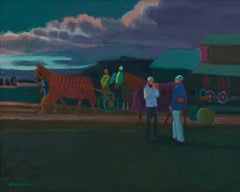
Horses Prepared to Perform and Circus Truck, Contemporary American Modern

Horses Prepared to Perform and Circus Truck, Contemporary American Modern

By Joseph O'Sickey

Located in Beachwood, OH

Work sold to benefit the CLEVELAND INSTITUTE OF ART Joseph B. O’Sickey (American, 1918–2013) Horses Prepared to Perform and Circus Truck, Circus Series, 1991 Oil on canvas Signed an...

Category

1990s Post-Impressionist Cleveland

Materials

Oil

Beachside Village, Maine, 20th century landscape watercolor, Cleveland School

Beachside Village, Maine, 20th century landscape watercolor, Cleveland School

By George Adomeit

Located in Beachwood, OH

George Gustav Adomeit (American, 1879-1967) Beachside Village, Maine Watercolor on paper Signed lower right 10 x 14 inches 17.75 x 21.75 inches, framed A major painter of American ...

Category

Mid-20th Century American Modern Cleveland

Materials

Watercolor

Mayan, Large 20th Century Watercolor, Cleveland School, Viktor Schreckengost

Mayan, Large 20th Century Watercolor, Cleveland School, Viktor Schreckengost

By Viktor Schreckengost

Located in Beachwood, OH

Viktor Schreckengost (American, 1906-2008) Mayan Watercolor heightened with gouache over pencil on paper Signed lower right 39 x 29 inches 45.5 x 35.5 inches, framed Registered with The Viktor Schreckengost foundation, stock no. 6891 The son of a commercial potter in Sebring, Ohio, Viktor Schreckengost learned the craft of sculpting in clay from his father. In the mid-1920s, he enrolled at the Cleveland School of Art (now the Cleveland Institute of Art, or CIA) to study cartoon making, but after seeing an exhibition at the Cleveland Museum of Art he changed his focus to ceramics. Upon graduation in 1929, he studied ceramics in Vienna, Austria, where he began to build a reputation, not only for his art, but also as a jazz saxophonist. A year later, at the age of 25, he became the youngest faculty member at the CIA. In 1931, Schreckengost won the first of several awards for excellence in ceramics at the Cleveland Museum of Art, and his works were shown at the Metropolitan Museum of Art, the Art Institute of Chicago, the Panama-Pacific Exposition in San Francisco, and elsewhere. By the mid-1930s, Schreckengost had begun to pursue his interest in industrial design. For American Limoges...

Category

20th Century American Modern Cleveland

Materials

Gouache, Watercolor

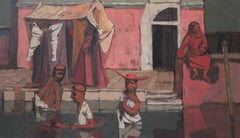
20th century painting of monks in Venice, Italian pink figural work

20th century painting of monks in Venice, Italian pink figural work

By Louis Bosa

Located in Beachwood, OH

Louis Bosa (Italian-American, 1905–1981) Island of the Monks, c. 1930 Oil on masonite Signed lower right 14 x 24 inches 23 x 33 inches, framed Born in Codroipo, a small village only...

Category

1930s Expressionist Cleveland

Materials

Oil

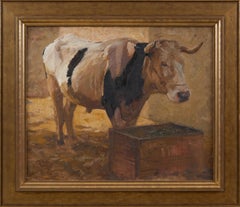
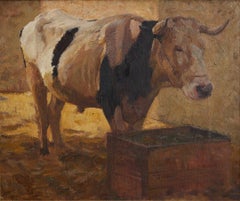
Cattle Series Study, Early 20th Century Bovine/Cow, Cleveland School artist

Cattle Series Study, Early 20th Century Bovine/Cow, Cleveland School artist

By Henry George Keller

Located in Beachwood, OH

Henry George Keller (American, 1868-1949) Cattle Series Study, 1901 Oil on canvas Signed verso 22 x 26 inches 28.5 x 33 inches, framed Keller, a leading painter in Cleveland, was born at sea, off Nova Scotia on April 3, 1869. His earliest training was in Karlsruhe, Germany under Hermann Baisch (1846-1894), then at the Cleveland School of Art...

Category

Early 1900s Cleveland

Materials

Oil

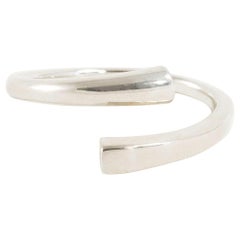
Black Diamond 14 Karat Gold Formation Circle Mini Stud

Black Diamond 14 Karat Gold Formation Circle Mini Stud

By Wesley Kloss Fine Jewelry

Located in Cleveland, OH

Sometimes the best things in life are the accents, the small gestures and textural pieces that add intentionality to our days. These Mini Formation Studs can pair well with larger ea...

Category

2010s American Contemporary Cleveland

Materials

Diamond, Black Diamond, 14k Gold

Medieval Heads, mid-century figural surrealist acrylic painting

Medieval Heads, mid-century figural surrealist acrylic painting

By Clarence Holbrook Carter

Located in Beachwood, OH

Clarence Holbrook Carter (American, 1904-2000) Cicada, c. 1960s Watercolor on scintilla 30 x 20 inches Clarence Holbrook Carter achieved a level of national artistic success that wa...

Category

1960s American Modern Cleveland

Materials

Acrylic

Portrait of a Startled Woman, 20th Century Monumental Oil Painting

Portrait of a Startled Woman, 20th Century Monumental Oil Painting

Located in Beachwood, OH

Robert Brooks (American, 1922-1992) Portait of a Startled Woman Monumental oil on canvas Signed lower right 80 x 42 inches Born in Fall River, Massachusetts in 1922, Robert Brooks embarked on his art career by winning modeling clay as a reward for good attendance at primary school. He became known for embellishing the margins of his school books with sketches of his friends and maybe teachers. He operated his own sign making business as a teenager, which supplied little money but lots of experience. Brooks also entered every poster and drawing competition in sight. Saturday morning classes at the Swain School of Design provided him with sound instructions in the principles of art, and as a high school senior in 1941, Brooks was awarded a scholarship to Boston's Vesper George School of art in a annual state-wide competition. During this year in Boston, he specialized in design, color and the theater arts and discovered "watercolor" as his favorite medium. At the end of his year Brooks was awarded a scholarship to continue by the Vesper George School but returned to New Bedford before the second year was out in order to work in the design department of a large textile printing concern. He was called to serve his country and after basic training, casual detachments and port of embarkation, he made his own private beachhead on New Caledonia in 1943, where he served as staff artist for The South Pacific Daily News. Brooks painted sketches and watercolors of the local scene during his daytime off-duty hours and won fast acclaim for his crisp, clean paintings...

Category

20th Century Cleveland

Materials

Oil

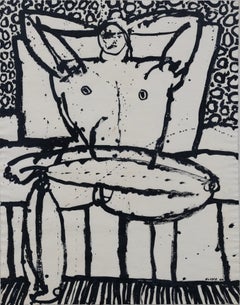
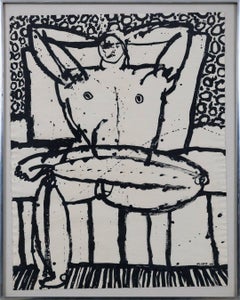
Reclining Nude Male Figure, figural expressionist New York artist ink drawing

Reclining Nude Male Figure, figural expressionist New York artist ink drawing

By Joseph Glasco

Located in Beachwood, OH

Joseph Glasco (American, 1925-1996) Reclining Figure, facing right (Nikos) 1971 India ink on paper Signed and dated middle right 26 x 38.25 inches In original frame. Joseph Glasco ...

Category

1970s Abstract Expressionist Cleveland
Materials

India Ink

Terror of History No. 1, Mid-Century Abstract Acrylic & Sand, Blue and Yellow

Terror of History No. 1, Mid-Century Abstract Acrylic & Sand, Blue and Yellow

By Clarence Holbrook Carter

Located in Beachwood, OH

Clarence Holbrook Carter (American, 1904-2000) Terror of History No. 1, 1962 Acrylic and sand on scintilla Signed and dated upper left 23 x 30 inches See photos for condition. Clarence Holbrook Carter achieved a level of national artistic success that was nearly unprecedented among Cleveland School artists of his day, with representation by major New York dealers...

Category

1960s American Modern Cleveland

Materials

Acrylic

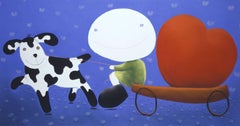
Blind Faith Ticket by Markus Pierson

Blind Faith Ticket by Markus Pierson

By Markus Pierson

Located in Woodmere, OH

Markus Pierson's work includes a vast array of paintings, drawings, sculpture, hand-pulled serigraphs and original found-object works. Framed Whimsical Markus Pierson print. Editio...

Category

Early 2000s Contemporary Cleveland

Materials

Color

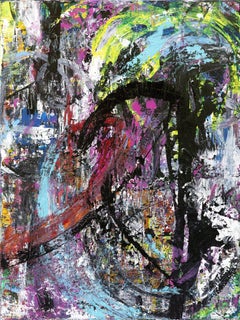
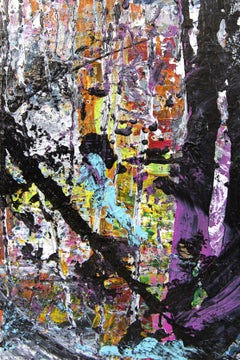
Hot Time, Painting, Acrylic on Canvas

Hot Time, Painting, Acrylic on Canvas

By Robert Musser

Located in Yardley, PA

Layers of bright color clash into black with motion and intent. :: Painting :: Abstract :: This piece comes with an official certificate of authenticity signed by the artist :: Ready...

Category

2010s Abstract Cleveland

Materials

Acrylic

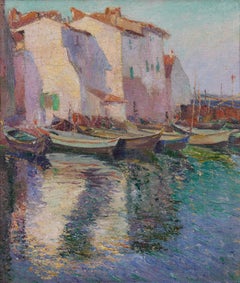
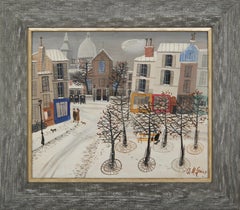
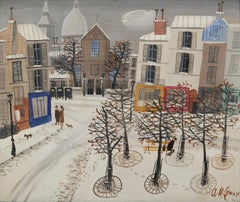
Boulevard de Strasbourg, Sunset on a Parisian Street, French Cityscape

Boulevard de Strasbourg, Sunset on a Parisian Street, French Cityscape

By Eugene Galien-Laloue

Located in Beachwood, OH

Eugène Galien Laloue (French, 1854-1941) Boulevard de Strasbourg Gouache on board Signed lower left 8 x 12.75 inches 13 x 18 inches, framed Some artists or writers are content to ha...

Category

Late 19th Century Cleveland

Materials

Gouache

Dueling Franz - Diptych (Two Paintings), Painting, Acrylic on Canvas

Dueling Franz - Diptych (Two Paintings), Painting, Acrylic on Canvas

By Robert Musser

Located in Yardley, PA

I have recently been studying the artist Franz Kline and produced this art to get closer to his process. Two black and white paintings can hang separate or together. :: Painting :: A...

Category

2010s Abstract Cleveland

Materials

Acrylic

Amazons Studio

Amazons Studio

By Hunt Slonem

Located in Woodmere, OH

This is an original work by world famous artist Hunt Slonem.

Category

2010s Modern Cleveland

Materials

Oil

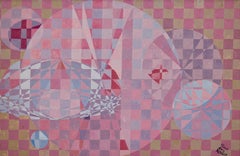
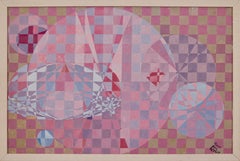
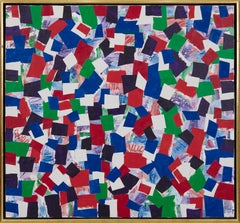
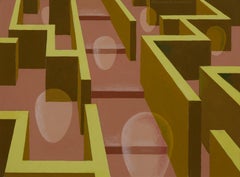
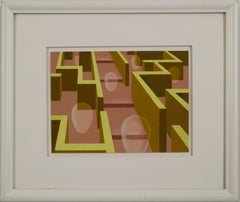
Pieces Collage, vibrant mid-century abstract expressionist black, pink & red

Pieces Collage, vibrant mid-century abstract expressionist black, pink & red

By Richard Andres

Located in Beachwood, OH

Richard Andres (American, 1927-2013) Pieces Collage, c. 1965 collage on paper 14 x 18 inches Richard Andres was born in Buffalo, New York in 1927. A graduate of the Cleveland Institute of Art in 1950, he was immediately drafted and served for two years in the army as a mural painter. He received his Master of Arts from Kent State in 1961. A frequent exhibitor at galleries and museums and winner of multiple May Show prizes, Andres taught art in the Cleveland Public Schools for 28 years, as well as teaching the University of Buffalo, the Cleveland Institute of Art and the Western Reserve University. Very little in Richard Andres’ childhood would have predicted his love of classical music, mid-century-modern architecture and certainly not his lifelong passion for art and in particular abstract art. Richard’s father, Raymond, had no more than a third-grade education, and his mother, Clara, was one of thirteen children – only three of whom lived into adulthood and none of whom attended high school. They lived, when Richard was a boy, in a dingy area of Buffalo, NY in a walk-up apartment situated above a tavern. Raymond and Clara supplemented the income from their factory jobs in the bar downstairs with Raymond playing ragtime on the piano and Clara serving drinks. This often left Richard and his two older brothers at home alone to fend for themselves. The two older boys, Raymond and Russell, were - unlike Richard- rather rough and tumble and entertained themselves with stickball, boxing and the like. Richard, on the other hand, from a very young age liked to draw, or better yet even, to paint with the small set of watercolors he received for Christmas one year. Paper, however, at the height of the depression, was hard to come by. Luckily, Clara used paper doilies as decoration for the apartment and Richard would contentedly paint and then cut up doilies, gluing the pieces together to create collages. At eight-years-old, he discovered the Albright-Knox Museum (then known as the Albright Art Gallery) and spent several hours a week there studying the paintings. He was particularly fond of Charles Burchfield‘s landscapes, enamored with their ‘messiness’ and thinking that they somehow captured more ‘feeling’ than works he was previously familiar with. For his tenth Christmas, he asked for and received a ‘how-to’ paint book by Elliot O’Hare. Through this self-teaching, he assembled the portfolio needed for acceptance to Buffalo Technical High School where he studied Advertising Arts. In his Junior year, he was encouraged to enter a watercolor painting, “Two Barns,” in the national 1944-45 Ingersoll Art Award Contest and was one of twelve grand prize winners – each one winning one hundred dollars. More importantly the painting was exhibited at the Carnegie Institute Galleries, which resulted in his winning a national scholarship to the Cleveland School of Art (The Cleveland Art Institute). He flourished at the art school under the tutelage of faculty members such as Carl Gaertner, as well as that of visiting artists such as William Sommer and Henry George Keller. He would say in later years that Gaertner, in particular, influenced his attitude toward life as well as art. “Gaertner,” Andres said, “believed that there was no need to be a ‘tortured artist’, that an artist should rather enjoy beauty, family, and life in general.” Free to spend his days as he chose, he wandered the Cleveland Art Museum for most of the hours he was not attending classes or painting; the remaining time was spent drinking coffee at a local hangout with art school friends – which is where he met fellow Henry Keller scholarship winner, Avis Johnson. Richard was immediately smitten with Avis, but being rather shy, it took him the entire summer of 1948 to build up his courage to ask her out. Over that summer he ‘thought about Avis’ and worked in a diner to save money. He also used the hundred-dollar prize money won in High School to visit the first Max Beckmann retrospective in the United States at the City Art Museum in St. Louis. Over a half century later he spoke of that exhibit with a reverence usually reserved for spiritual matters, “I walked in and it was like nothing I had ever seen before... the color...It just glowed.” Returning to campus in the Fall, the first thing he did was go to the coffee shop in hopes of finding Avis. He did, and she, upon seeing him, realized that she was also smitten with him. They quickly became known as ‘the couple’ on campus, and a year later, with Richard being drafted for the Korean war, they were quickly married by a Justice of the Peace, celebrating after with family at Avis’s Cleveland home. As a gift, faculty member John Paul Miller designed and made the simple gold wedding ring Avis wore for their 65 years of marriage. During those 65 years neither wavered in their mutual love, nor in the respect they shared for one another’s art. The couple lived in a converted chicken coop in Missouri while Richard was in boot camp. At the camp, he would volunteer for any job offered and one of those jobs ended up being painting road signs. His commander noticed how quickly and neatly he worked and gave him more painting work to do - eventually recommending him for a position painting murals for Army offices in Panama. Until her dying day, Avis remained angry that “The army got to keep those fabulous murals and they probably didn’t even know how wonderful they were.” In Panama, their first son, Mark, was born. After Richard’s discharge in 1953, they moved back to the Cleveland area and used the GI bill to attend Kent State gaining his BA in education. The small family then moved briefly to Buffalo, where Richard taught at the Albright Art School and the University of Buffalo – and their second son, Peter, was born. Richard had exhibited work in the Cleveland May Show and the Butler Art Museum during his art school years, and during the years in Buffalo, his work was exhibited at the gallery he had so loved as a child, the Albright Art Gallery. In 1956, the family moved back to the Cleveland area and Richard began teaching art at Lincoln West High School during the day while working toward his MA in art at Kent State in the evenings. Avis and Richard, with the help of an architect, designed their first home - a saltbox style house in Hudson, Ohio, and in 1958, their third son, Max (after Max Beckmann) was born. Richard enjoyed the consistency of teaching high school as well as the time it gave him to paint on the weekends and during the summer months. In 1961, he received his MA and his daughter, Claire, was born. With a fourth child, the house was much too small, and Avis and Richard began designing their second home. An admirer of MCM architecture, Richard’s favorite example of the style was the Farnsworth house – he often spoke of how the concepts behind this architectural style, particularly that of Mies van der Rohe, influenced his painting. Andres described himself as a 1950’s...

Category

1960s Abstract Geometric Cleveland

Materials

Acrylic

19th Century Burmese School Buddha Head of the Shan (Tai Yai) Style

19th Century Burmese School Buddha Head of the Shan (Tai Yai) Style

Located in Beachwood, OH

Burmese School, 19th Century Buddha Head of the Shan (Tai Yai) Style Wood with red lacquered pigment 25 x 13 x 10 inches dry lacquer form with finely sculpted features such as the e...

Category

19th Century Cleveland

Materials

Lacquer, Wood

Jackie Kennedy by Harry Benson

Jackie Kennedy by Harry Benson

By Harry Benson

Located in Woodmere, OH

Harry Benson was born near Glasgow, Scotland. The photographer was assigned to travel with the Beatles on their first American tour in 1964. His iconic photograph shows the band in a gleeful pillow fight in a hotel room. Benson has photographed every U.S. president from Eisenhower to Barack Obama. He was feet away when Bobby Kennedy was assassinated; in the room when Nixon resigned; with Martin Luther King, Jr. on the Meredith march; and with Coretta Scott King...

Category

1960s Cleveland

Materials

Archival Pigment

Beatles Pillow Fight by Harry Benson

Beatles Pillow Fight by Harry Benson

By Harry Benson

Located in Woodmere, OH

Harry Benson was born near Glasgow, Scotland. The photographer was assigned to travel with the Beatles on their first American tour in 1964. His iconic photograph shows the band in a gleeful pillow...

Category

1960s Cleveland

Materials

Archival Pigment

Refract Midwest, Painting, Acrylic on Canvas

Refract Midwest, Painting, Acrylic on Canvas

By Robert Musser

Located in Yardley, PA

Deep blue floats above a dry brush color field composition. :: Painting :: Abstract :: This piece comes with an official certificate of authenticity signed by the artist :: Ready to...

Category

2010s Abstract Cleveland

Materials

Acrylic

Still Life with Apples and Green Vase, Cleveland School

Still Life with Apples and Green Vase, Cleveland School

By Adam Lehr

Located in Beachwood, OH

Adam Lehr (American, 1853-1924) Still Life with Apples and Green Vase, 1902 Oil on canvas Signed and dated lower right 12 x 18 inches 15 x 21 inches, framed Known primarily as a sti...

Category

Early 1900s Cleveland

Materials

Oil

Zoar, Ohio Landscape w/ Tree, Early 20th Century Midwest Town

Zoar, Ohio Landscape w/ Tree, Early 20th Century Midwest Town

By Adam Lehr

Located in Beachwood, OH

Adam Lehr (American, 1853-1924) Zoar Landscape Oil on board Signed lower right 20.75 x 27.75 inches 30 x 37 inches, framed Known primarily as a still-life and landscape painter, Ada...

Category

Early 20th Century Cleveland

Materials

Oil

French Faience Tuilerie Normande Mesnil de Bavent Ceramic Figure of a Lion

French Faience Tuilerie Normande Mesnil de Bavent Ceramic Figure of a Lion

Located in Beachwood, OH

French Faience Tuilerie Normande Mesnil de Bavent Figure of a Lion, 19th Century Ceramic on a rectangular plinth Impressed 'TN Bavent' to underside 8 x 8 x 14 inches Tuilerie Normande Mesnil de Bavent is a French pottery factory. The first pottery factory here was set up in 1842 by industrialist Maurice Comptet. He bought a bit of production organization to an artisanal craft, enabling mass production of tiles, pots and architectural ornaments. The Tuilerie du Mesnil de Bavent (tuilerie means tile) business flourished and his sons inherited. One stayed in Bavent to make pots, the other developed a factory mainly producing pots, in Caen. Bavent pottery...

Category

19th Century Cleveland

Materials

Ceramic

Washer, Painting, Acrylic on Canvas

Washer, Painting, Acrylic on Canvas

By Robert Musser

Located in Yardley, PA

Swirling blues accented with primaries and black. White space on the edges makes color leap off the canvas. :: Painting :: Abstract :: This piece comes with an official certificate o...

Category

2010s Abstract Cleveland

Materials

Acrylic

Connor's Brook, Maine, 19th Century New England Landscape

Connor's Brook, Maine, 19th Century New England Landscape

Located in Beachwood, OH

William L. Sonntag (American, 1822-1900) Connor's Brook, Maine Oil on canvas Signed lower right 20 x 31 inches 24.5 x 35.5 inches, framed William Louis Sonntag was born to a family ...

Category

Mid-19th Century Cleveland

Materials

Oil

Winter Landscape w/ Red Barn, 20th Century Cleveland School Artist

Winter Landscape w/ Red Barn, 20th Century Cleveland School Artist

By Carl Frederick Gaertner

Located in Beachwood, OH

Carl Frederick Gaertner (American, 1898–1952) Red Barn Oil on canvas board Signed lower right 11 x 13.5 inches 15.5 x 17.75 inches, framed Carl Gaertner was one of the greatest pain...

Category

Early 20th Century Cleveland

Materials

Oil

Herbert Davidson Magical Realism Boy Finds Nude Woman Sand Sculpture Beach 1970s

Herbert Davidson Magical Realism Boy Finds Nude Woman Sand Sculpture Beach 1970s

Located in Rancho Santa Fe, CA

An amazing, magical realism painting by renowned artist, Herbert Laurence Davidson (1930-2018). This painting depicts a young boy’s innocent discovery on the beach of a sand sculptur...

Category

Late 20th Century American Realist Cleveland

Materials

Cotton Canvas, Oil

Waterfalls II, Painting, Oil on Canvas

Waterfalls II, Painting, Oil on Canvas

By Joey Thate

Located in Yardley, PA

My beautiful Ideas of Wonderful Waterfalls. :: Painting :: Abstract :: This piece comes with an official certificate of authenticity signed by the artist :: Ready to Hang: No :: Sig...

Category

2010s Abstract Cleveland

Materials

Oil

Crucifixion, 20th Century Figural Expressionist Artist

Crucifixion, 20th Century Figural Expressionist Artist

By Robert Carroll

Located in Beachwood, OH

Robert Carroll (American, 1934-2016) Crucifixion Oil on paper Signed lower right 19.5 x 13.5 inches 25.25 x 19.5 inches, framed Robert Carroll was an American artist born in 1934. ...

Category

Late 20th Century Expressionist Cleveland
Materials

Oil

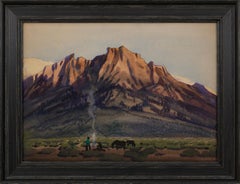
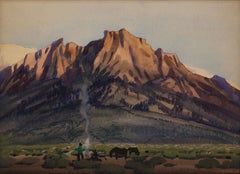
On the Top, People Crossing the Mountains, Montana Western Landscape

On the Top, People Crossing the Mountains, Montana Western Landscape

By Frank Wilcox

Located in Beachwood, OH

Frank Nelson Wilcox (American, 1887–1964) On the Top, Montana, 1952 Watercolor and gouache on board Signed and dated lower right 22 x 30 inches 25.5 x 34 inches framed Frank Nelso...

Category

1950s American Modern Cleveland
Materials

Watercolor, Gouache

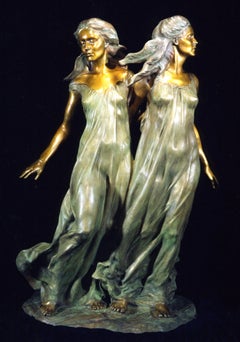
Companion 4 by Thomas Scoon

Companion 4 by Thomas Scoon

By Thomas Scoon

Located in Woodmere, OH

Can be sold as a pair with Companion 4 (RIGHT SIDE OF PICTURE)

Category

2010s Cleveland
Materials

Granite

Diamond Gold Triangle Stud Earrings

Diamond Gold Triangle Stud Earrings

By Wesley Kloss Fine Jewelry

Located in Cleveland, OH

The Formation Triangular Stud earrings in 14k gold fold inward reflecting a 3mm conflict-free diamond at their center. These stud earrings are the building blocks of our Classic Transformations Collection — the foundational forms. Crafted in solid 14k gold the Formation Triangle Studs...

Category

2010s American Contemporary Cleveland
Materials

Diamond, White Diamond, 14k Gold

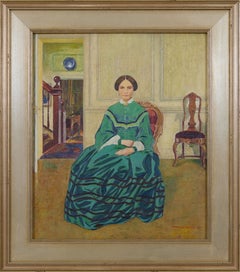
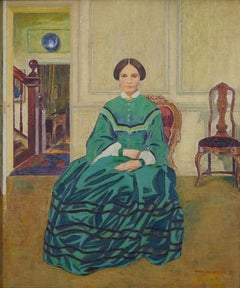
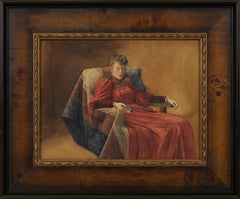
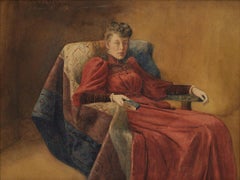
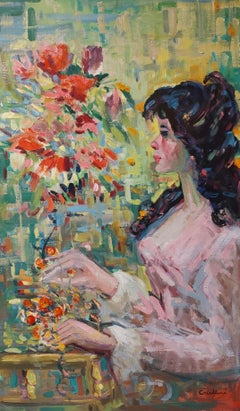
Lady in a Green Gown Portrait, Early 20th Century Interior Scene

Lady in a Green Gown Portrait, Early 20th Century Interior Scene

Located in Beachwood, OH

Ora Coltman (American, 1858-1940) Interior Scene with Lady in Green Gown, 1935 Oil on canvasboard Signed and dated lower right 19 x 16 inches 24.25 x 21.25 inches, framed Ora Coltma...

Category

1930s Cleveland
Materials

Oil

Headland & Rocks, White Island, Maine, early 20th century watercolor

Headland & Rocks, White Island, Maine, early 20th century watercolor

By Frank Wilcox

Located in Beachwood, OH

Frank Nelson Wilcox (American, 1887-1964) Headland & Rocks, White Island, Maine, c. 1923 Watercolor on paper Signed lower left 15 x 19.5 inches Frank Nelson Wilcox (October 3, 1887 – April 17, 1964) was a modernist American artist and a master of watercolor. Wilcox is described as the "Dean of Cleveland School painters," though some sources give this appellation to Henry Keller or Frederick Gottwald. Wilcox was born on October 3, 1887 to Frank Nelson Wilcox, Sr. and Jessie Fremont Snow Wilcox at 61 Linwood Street in Cleveland, Ohio. His father, a prominent lawyer, died at home in 1904 shortly before Wilcox' 17th birthday. His brother, lawyer and publisher Owen N. Wilcox, was president of the Gates Legal Publishing Company or The Gates Press. His sister Ruth Wilcox...
Category

1920s American Modern Cleveland
Materials

Watercolor

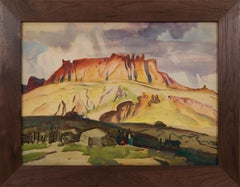
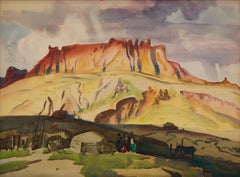
Two Old Pecan Trees, Early 20th Century Landscape, 1st Place May Show Winner

Two Old Pecan Trees, Early 20th Century Landscape, 1st Place May Show Winner

By Frank Wilcox

Located in Beachwood, OH

Frank Nelson Wilcox (American, 1887–1964) Two Old Pecan Trees, 1932 Watercolor on paper mounted on board Signed lower right 21 x 28.25 inches 27 x 35.25 inches, as framed Exhibited: 1932 May Show (1st Place) Cleveland Museum of Art; Poetics of Place: Charles Burchfield and His Contemporaries, 2001 Cleveland Artist's Foundation. Frank Nelson Wilcox (October 3, 1887 – April 17, 1964) was a modernist American artist and a master of watercolor. Wilcox is described as the "Dean of Cleveland School painters," though some sources give this appellation to Henry Keller or Frederick Gottwald. Wilcox was born on October 3, 1887 to Frank Nelson Wilcox, Sr. and Jessie Fremont Snow Wilcox at 61 Linwood Street in Cleveland, Ohio. His father, a prominent lawyer, died at home in 1904 shortly before Wilcox' 17th birthday. His brother, lawyer and publisher Owen N. Wilcox, was president of the Gates Legal Publishing Company or The Gates Press. His sister Ruth Wilcox was a respected librarian. In 1906 Wilcox enrolled from the Cleveland School of Art under the tutelage of Henry Keller, Louis Rorimer, and Frederick Gottwald. He also attended Keller's Berlin Heights summer school from 1909. After graduating in 1910, Wilcox traveled and studied in Europe, sometimes dropping by Académie Colarossi in the evening to sketch the model or the other students at their easels, where he was influenced by French impressionism. Wilcox was influenced by Keller's innovative watercolor techniques, and from 1910 to 1916 they experimented together with impressionism and post-impressionism. Wilcox soon developed his own signature style in the American Scene or Regionalist tradition of the early 20th century. He joined the Cleveland School of Art faculty in 1913. Among his students were Lawrence Edwin Blazey, Carl Gaertner, Paul Travis, and Charles E. Burchfield. Around this time Wilcox became associated with Cowan Pottery. In 1916 Wilcox married fellow artist Florence Bard, and they spent most of their honeymoon painting in Berlin Heights with Keller. They had one daughter, Mary. In 1918 he joined the Cleveland Society of Artists, a conservative counter to the Bohemian Kokoon Arts Club, and would later serve as its president. He also began teaching night school at the John Huntington Polytechnic Institute at this time, and taught briefly at Baldwin-Wallace College. Wilcox wrote and illustrated Ohio Indian Trails in 1933, which was favorably reviewed by the New York Times in 1934. This book was edited and reprinted in 1970 by William A. McGill. McGill also edited and reprinted Wilcox' Canals of the Old Northwest in 1969. Wilcox also wrote, illustrated, and published Weather Wisdom in 1949, a limited edition (50 copies) of twenty-four serigraphs (silk screen prints) accompanied by commentary "based upon familiar weather observations commonly made by people living in the country." Wilcox displayed over 250 works at Cleveland's annual May Show. He received numerous awards, including the Penton Medal for The Omnibus, Paris (1920), Fish Tug on Lake Erie (1921), Blacksmith Shop (1922), and The Gravel Pit (1922). Other paintings include The Trailing Fog (1929), Under the Big Top (1930), and Ohio Landscape...
Category

1930s Cleveland
Materials

Watercolor