The Hamptons

to
5,214
974,774
729,048
5,840
3,942
1,621
1,299
1,263
1,242
1,164
713
634
572
487
378
333
201
100
86
57
31
26
23
19
19
19
16
16
10
9
6
4
4
4
3
3
3
2
2
1
307
206
169
102
76
Andre Derain, Port of Collioure, from 1880-1954, 1961 (after)

Andre Derain, Port of Collioure, from 1880-1954, 1961 (after)

By André Derain

Located in Southampton, NY

This exquisite lithograph and pochoir after Andre Derain (1880–1954), titled Port de Collioure (Port of Collioure), from the folio Andre Derain 1880 - 1954, 1961, originates from the...

Category

1960s Fauvist The Hamptons

Materials

Lithograph, Stencil

Salvador Dali, Gala, My Sistine Madonna, from Don Quichotte de la Manche, 1957

Salvador Dali, Gala, My Sistine Madonna, from Don Quichotte de la Manche, 1957

By Salvador Dalí­

Located in Southampton, NY

This exquisite lithograph by Salvador Dali (1904–1989), titled Gala, ma Madonna sistine (Gala, My Sistine Madonna), from the folio Pages choisies de Don Quichotte de la Manche (Selec...

Category

1950s Surrealist The Hamptons

Materials

Lithograph

Rene Magritte, My Mother Goose, 1968 (after)

Rene Magritte, My Mother Goose, 1968 (after)

By René Magritte

Located in Southampton, NY

This exquisite lithograph after Rene Magritte (1898–1967), titled Ma Mere lOye (My Mother Goose), from the folio Les Enfants Trouves de Magritte (The Found Children of Magritte), 1968, originates from the edition published by A.C. Mazo et Cie, Paris, and printed by Mourlot Freres, Paris, on November 20, 1968. The work embodies Magrittes sustained inquiry into semiotics and visual epistemology, translating his characteristic strategies of displacement, symbolic inversion, and conceptual ambiguity into an image that operates as both a poetic metaphor and a philosophical proposition concerning the instability of meaning. Executed as a lithograph on grand velin dArches paper, this work measures 17.5 x 23.5 inches (44.5 x 59.7 cm). Signed in the plate by the artist; hand signed by Fernand Mourlot, Editeur. The edition exemplifies the technical mastery of the Mourlot atelier. Artwork Details: Artist: After Rene Magritte (1898–1967) Title: Ma Mere lOye (My Mother Goose), from the folio Les Enfants Trouves de Magritte (The Found Children of Magritte) Medium: Lithograph on grand velin dArches paper Dimensions: 17.5 x 23.5 inches (44.5 x 59.7 cm) Inscription: Signed in the plate by the artist; hand signed by Fernand Mourlot, Editeur Date: 1968 Publisher: A.C. Mazo et Cie, Paris Printer: Mourlot Freres, Paris Catalogue Raisonne: Magritte, Rene, et al. Rene Magritte: Catalogue Raisonne, Vol. 3. Menil Foundation; Philip Wilson Publishers; Distributed in the USA and Canada by Rizzoli International, 1992, nos. 791–792 and 1056; vol. 5, p. 218, Bibliography entry 68.28. Condition: Well preserved, consistent with age and medium Provenance: From the folio Les Enfants Trouves de Magritte, 1968 Notes: Excerpted from the folio (translated from French), Finished printing in Paris on November 20, 1968, on the presses of Mourlot, for the lithographs. The unpublished text by Louis Scutenaire was composed in Elzevir Casion corps 28 and printed by Fequet et Baudier, typographers. The unpublished compositions numbered from I to IV were specially made by Rene Magritte for this album. The compositions of the Enchanted Domain, are the renderings of the eight paintings of the mural of the Casino de Knokke. They were printed with the benevolent authorization of Mr. Gustave J. Nellens. Justification of the draw, this album was taken from CCCL examples on grand velin dArches numbered from I to CCCL, plus a few examples for collaborators and assistants. About the Publication: Les Enfants Trouves de Magritte (The Found Children of Magritte), published in 1968 by A.C. Mazo et Cie, Paris, represents one of the most significant late life print projects devoted to Rene Magrittes work. Conceived as both a literary and visual tribute, the folio pairs texts by the Belgian writer Louis Scutenaire, Magrittes close friend and fellow Surrealist, with lithographic interpretations produced at the Mourlot atelier, the premier lithographic workshop of twentieth century France. The album includes compositions by Magritte alongside lithographic renderings of the celebrated Enchanted Domain mural from the Casino de Knokke, printed with the authorization of Gustave J. Nellens, who commissioned the original mural. Issued in a single edition of CCCL examples on grand velin dArches, the folio stands as a testament to the collaboration between artist, writer, publisher, and master printer, and remains one of the most culturally important Surrealist print albums of the post war era. About the Artist: Rene Magritte (1898–1967) was a Belgian Surrealist painter whose visionary, intellectual, and poetic imagery redefined twentieth century art and forever changed how the world perceives reality and illusion. Celebrated for his calm precision and thought provoking juxtapositions of ordinary objects in extraordinary contexts, Magritte used painting as a philosophical tool, transforming the everyday into visual paradoxes that challenged the boundaries between what is seen and what is known. Born in Lessines, Belgium, and trained at the Academie Royale des Beaux Arts in Brussels, he absorbed early influences from Cubism, Futurism, and Symbolism before embracing Surrealism, where he found his true voice. In Paris, he became part of the avant garde circle that included Pablo Picasso, Alexander Calder, Alberto Giacometti, Salvador Dali, Joan Miro, Wassily Kandinsky, Marcel Duchamp, and Man Ray—all artists whose radical ideas helped him forge his distinctive synthesis of logic and mystery. Unlike Dalis dream...

Category

1960s Surrealist The Hamptons

Materials

Lithograph

Jean Cocteau, Untitled, from Recipes for a Friend, 1964

Jean Cocteau, Untitled, from Recipes for a Friend, 1964

By Jean Cocteau

Located in Southampton, NY

This exquisite lithograph by Jean Cocteau (1889–1963), titled Sans titre (Untitled), originates from the 1964 album Recettes pour un ami, illustrations de Jean Cocteau (Recipes for a...

Category

1960s Modern The Hamptons

Materials

Lithograph

Georges Braque, Untitled, from Birds, Saint-John Perse, 1966 (after)

Georges Braque, Untitled, from Birds, Saint-John Perse, 1966 (after)

By Georges Braque

Located in Southampton, NY

This exquisite collotype after Georges Braque (1882–1963), titled Sans titre (Untitled), from the album Birds, Saint-John Perse, originates from the 1966 edition published by the Bol...

Category

1960s Cubist The Hamptons

Materials

Lithograph

Henri Matisse, Mrs. M.P., from Portraits by Henri Matisse, 1954 (after)

Henri Matisse, Mrs. M.P., from Portraits by Henri Matisse, 1954 (after)

By Henri Matisse

Located in Southampton, NY

This exquisite lithograph after Henri Matisse (1869–1954), titled Madame M.P. (Mrs. M.P.), from the album Portraits par Henri Matisse (Portraits by Henri Matisse), originates from th...

Category

1950s Fauvist The Hamptons

Materials

Lithograph

Jim Bird, Untitled, from Ediciones Poligrafa, 1979

Jim Bird, Untitled, from Ediciones Poligrafa, 1979

By Jim Bird

Located in Southampton, NY

This exquisite lithograph by Jim Bird (1937–2010), titled Untitled (Untitled), from the album Ediciones Poligrafa, Barcelona - Redfern Gallery, London, originates from the 1979 editi...

Category

1970s Op Art The Hamptons

Materials

Lithograph

Marc Chagall, Tribe of Benjamin, from The Jerusalem Windows, 1962 (after)

Marc Chagall, Tribe of Benjamin, from The Jerusalem Windows, 1962 (after)

By Marc Chagall

Located in Southampton, NY

This exquisite lithograph after Marc Chagall (1887–1985), titled Tribe of Benjamin, from the album Marc Chagall, The Jerusalem Windows, originates from the 1962 edition published by ...

Category

1960s Expressionist The Hamptons

Materials

Lithograph

Henri Matisse, Blue Nude VI, from Last Works of Matisse, 1958 (after)

Henri Matisse, Blue Nude VI, from Last Works of Matisse, 1958 (after)

By Henri Matisse

Located in Southampton, NY

This exquisite lithograph after Henri Matisse (1869–1954), titled Nu Bleu VI (Blue Nude VI), from Dernieres Oeuvres de Matisse 1950-1954 (Last Works of Matisse 1950-1954), Verve: Rev...

Category

1950s Fauvist The Hamptons

Materials

Lithograph

Marc Chagall, Tribe of Asher, from The Jerusalem Windows, 1962 (after)

Marc Chagall, Tribe of Asher, from The Jerusalem Windows, 1962 (after)

By Marc Chagall

Located in Southampton, NY

This exquisite lithograph after Marc Chagall (1887–1985), titled Tribe of Asher, from the album Marc Chagall, The Jerusalem Windows, originates from the 1962 edition published by And...

Category

1960s Expressionist The Hamptons

Materials

Lithograph

Marc Chagall, The Lion of Judah and the Tablets of the Law, 1962

Marc Chagall, The Lion of Judah and the Tablets of the Law, 1962

By Marc Chagall

Located in Southampton, NY

This exquisite lithograph by Marc Chagall (1887–1985), titled Le lion de Juda et les Tables de la Loi (The Lion of Judah and the Tablets of the Law), from the album Marc Chagall, The...

Category

1960s Expressionist The Hamptons

Materials

Lithograph

Set of 10 Vipp Chairs '451' in Sand Colored Leather Upholstery

Set of 10 Vipp Chairs '451' in Sand Colored Leather Upholstery

By Vipp

Located in Southampton, NY

Vipp Chair 451 in Sand Colored Leather Upholstery The Vipp chair is suitable for the dining or living room and is the first chair introduced in Vipp's portfolio of furniture. The cha...

Category

21st Century and Contemporary Danish The Hamptons

Materials

Aluminum

Andrew Wyeth, Burning Off, from The Four Seasons (after)

Andrew Wyeth, Burning Off, from The Four Seasons (after)

By Andrew Wyeth

Located in Southampton, NY

This exquisite lithograph after Andrew Wyeth (1917–2009), titled Burning Off, originates from the distinguished 1962 folio The Four Seasons: Paintings and Drawings by Andrew Wyeth. Published and printed by Art in America Company, Inc., New York, the edition captures Wyeth’s poetic meditation on atmosphere and transformation. Burning Off depicts a summer morning’s sea fog gradually lifting from the landscape, revealing the tranquil geometry of field and horizon. Through restrained tonal contrasts and delicate textural nuance, Wyeth conveys both the mystery and stillness of the natural world in transition. Executed on velin paper, this lithograph measures 17 x 13 inches (43.2 x 33 cm). As issued, it is signed in the plate and unnumbered, representing the folio’s authentic format. The Four Seasons series was conceived by the editors of Art in America in collaboration with Andrew and Betsy Wyeth, who selected drawings from the artist’s studio and personal collection to embody the cyclical poetry of the seasons. Each image reflects Wyeth’s profound sensitivity to light, time, and emotion—his ability to evoke the spiritual essence of landscape through quiet realism. Artwork Details: Artist: After Andrew Wyeth (1917–2009) Title: Burning Off, from The Four Seasons, Paintings and Drawings by Andrew Wyeth, 1962 Medium: Lithograph on velin paper Dimensions: 17 x 13 inches (43.2 x 33 cm) Inscription: Signed in the plate and unnumbered, as issued Date: 1962 Publisher: Art in America Company, Inc., New York Printer: Art in America Company, Inc., New York Condition: Well preserved, consistent with age and medium Provenance: From the 1962 folio The Four Seasons, Paintings and Drawings by Andrew Wyeth, published and printed by Art in America Company, Inc., New York Notes: Excerpted from the 1962 folio: "In 1962 the editors of Art in America proposed to Wyeth a portfolio of images of his recent dry-brush drawings. The artist and his wife suggested the theme, 'The Four Seasons,' because of the essential role played in his work by the cycle of the seasons. The drawings were selected by Andrew and Betsy Wyeth from works in the house and studio at Chadds Ford, supplemented by some owned by friends. With a few exceptions they had never been exhibited or reproduced. The plates were made directly from the originals. In these drawings Wyeth's loving concentration on the object is fully revealed. But as always in his work, this concern with the tangible is balanced by sensibility to mood, to the emotion arising from the actual. They are pervaded with a sense of the season—the exact time of year, the hour of the day, the quality of the light. To the truth and subtlety with which he captures these intangible factors, these drawings owe their poignant poetry." About the Artist: Andrew Wyeth (1917–2009) was an American visual artist and one of the best-known painters of the mid-20th century. Although he considered himself an abstractionist, Wyeth’s work is characterized by a meticulous realism imbued with psychological depth and atmosphere. He often painted the landscapes and people surrounding his homes in Chadds Ford, Pennsylvania, and Cushing, Maine, creating an intimate record of American rural life. The son of the celebrated illustrator N. C. Wyeth, Andrew trained under his father before developing his own deeply personal visual language inspired by Winslow Homer, Henry David Thoreau, and King Vidor. His wife, Betsy Wyeth, was both his muse and career manager, while his son Jamie Wyeth continued the family’s artistic legacy. Among Wyeth’s best-known works is Christina’s World (1948), housed in the Museum of Modern Art, New York—a quintessential image of 20th-century American art. His other notable series include The Helga Pictures and his window studies, each reflecting a profound meditation on solitude, memory, and perception. Wyeth was the first painter to receive both the Presidential Medal of Freedom and the Congressional Gold Medal, and was elected to the French Académie des Beaux-Arts in 1980. In 2022, Andrew Wyeth's painting Day Dream sold for USD 23.29 million at Christie’s New York, setting a world record for the artist. Andrew Wyeth lithograph...

Category

1960s American Realist The Hamptons

Materials

Lithograph

Andrew Wyeth, May Day, from The Four Seasons (after)

Andrew Wyeth, May Day, from The Four Seasons (after)

By Andrew Wyeth

Located in Southampton, NY

This exquisite lithograph after Andrew Wyeth (1917–2009), titled May Day, originates from the distinguished 1962 folio The Four Seasons: Paintings and Drawings by Andrew Wyeth. Published and printed by Art in America Company, Inc., New York, the edition embodies Wyeth’s lyrical study of springtime renewal and human connection to the land. May Day captures a tender seasonal moment—nature reawakening beneath soft light—rendered with Wyeth’s quiet precision and emotional restraint that elevate the ordinary into the timeless. Executed on velin paper, this lithograph measures 17 x 13 inches (43.2 x 33 cm). As issued, it is unsigned and unnumbered, representing the folio’s authentic format. The Four Seasons series was conceived by the editors of Art in America in collaboration with Andrew and Betsy Wyeth, who selected drawings from the artist’s studio and private collection to express the cyclical harmony between nature and spirit. Each image reflects Wyeth’s devotion to atmosphere and the fragile poetry of the passing year. Artwork Details: Artist: After Andrew Wyeth (1917–2009) Title: May Day, from The Four Seasons, Paintings and Drawings by Andrew Wyeth, 1962 Medium: Lithograph on velin paper Dimensions: 17 x 13 inches (43.2 x 33 cm) Inscription: Unsigned and unnumbered, as issued Date: 1962 Publisher: Art in America Company, Inc., New York Printer: Art in America Company, Inc., New York Condition: Well preserved, consistent with age and medium Provenance: From the 1962 folio The Four Seasons, Paintings and Drawings by Andrew Wyeth, published and printed by Art in America Company, Inc., New York Notes: Excerpted from the 1962 folio: "In 1962 the editors of Art in America proposed to Wyeth a portfolio of images of his recent dry-brush drawings. The artist and his wife suggested the theme, 'The Four Seasons,' because of the essential role played in his work by the cycle of the seasons. The drawings were selected by Andrew and Betsy Wyeth from works in the house and studio at Chadds Ford, supplemented by some owned by friends. With a few exceptions they had never been exhibited or reproduced. The plates were made directly from the originals. In these drawings Wyeth's loving concentration on the object is fully revealed. But as always in his work, this concern with the tangible is balanced by sensibility to mood, to the emotion arising from the actual. They are pervaded with a sense of the season—the exact time of year, the hour of the day, the quality of the light. To the truth and subtlety with which he captures these intangible factors, these drawings owe their poignant poetry." About the Artist: Andrew Wyeth (1917–2009) was an American visual artist and one of the best-known painters of the mid-20th century. Although he considered himself an abstractionist, Wyeth’s work is characterized by a meticulous realism imbued with psychological depth and atmosphere. He often painted the landscapes and people surrounding his homes in Chadds Ford, Pennsylvania, and Cushing, Maine, creating an intimate record of American rural life. The son of the celebrated illustrator N. C. Wyeth, Andrew trained under his father before developing his own deeply personal visual language inspired by Winslow Homer, Henry David Thoreau, and King Vidor. His wife, Betsy Wyeth, was both his muse and career manager, while his son Jamie Wyeth continued the family’s artistic legacy. Among Wyeth’s best-known works is Christina’s World (1948), housed in the Museum of Modern Art, New York—a quintessential image of 20th-century American art. His other notable series include The Helga Pictures and his window studies, each reflecting a profound meditation on solitude, memory, and perception. Wyeth was the first painter to receive both the Presidential Medal of Freedom and the Congressional Gold Medal, and was elected to the French Académie des Beaux-Arts in 1980. In 2022, Andrew Wyeth's painting Day Dream sold for USD 23.29 million at Christie’s New York, setting a world record for the artist. Andrew Wyeth lithograph...

Category

1960s American Realist The Hamptons

Materials

Lithograph

Alexander Calder, Untitled, from Derriere le miroir, 1966

Alexander Calder, Untitled, from Derriere le miroir, 1966

By Alexander Calder

Located in Southampton, NY

This exquisite lithograph by Alexander Calder (1898–1976), titled Sans titre (Untitled), from the album Lithographies et eaux-fortes originales, livres illustres originaux, affiches,...

Category

1960s Modern The Hamptons

Materials

Lithograph

Alexander Calder, Rings on Black, from Derriere le Miroir, 1973

Alexander Calder, Rings on Black, from Derriere le Miroir, 1973

By Alexander Calder

Located in Southampton, NY

This exquisite lithograph by Alexander Calder (1898–1976), titled Anneaux sur noir (Rings on Black), originates from the historic 1973 folio Derriere le Miroir, No. 201. Published by...

Category

1970s Modern The Hamptons

Materials

Lithograph

Alfred Stieglitz, Georgia O'Keeffe Hands with Thimble, 1947 (after)

Alfred Stieglitz, Georgia O'Keeffe Hands with Thimble, 1947 (after)

By Alfred Stieglitz

Located in Southampton, NY

This exquisite halftone print after Alfred Stieglitz (1864–1946), titled Georgia O'Keeffe Hands with Thimble, originates from the 1947 folio Stieglitz Memorial Portfolio, 1864–1946. ...

Category

1940s American Modern The Hamptons

Materials

Offset

Bernard Buffet, The Swimming Pool, from Lithographs II, 1987

Bernard Buffet, The Swimming Pool, from Lithographs II, 1987

By Bernard Buffet

Located in Southampton, NY

This exquisite lithograph by Bernard Buffet (1928–1999), titled La piscine (The Swimming Pool), originates from the 1987 album Bernard Buffet, Lithographe II (Bernard Buffet, Lithogr...

Category

1980s Modern The Hamptons

Materials

Lithograph

Edgar Degas, Dancer, from Dance Drawings, 1936 (after)

Edgar Degas, Dancer, from Dance Drawings, 1936 (after)

By Edgar Degas

Located in Southampton, NY

This exquisite engraving after Edgar Degas (1834–1917), titled Danseuse (Dancer), originates from the celebrated album Degas Danse dessin (Degas Dance Drawings), published by Ambrois...

Category

1930s Impressionist The Hamptons
Materials

Engraving

Georges Braque, Untitled, from Birds, Saint-John Perse, 1966 (after)

Georges Braque, Untitled, from Birds, Saint-John Perse, 1966 (after)

By Georges Braque

Located in Southampton, NY

This exquisite collotype after Georges Braque (1882–1963), titled Sans titre (Untitled), from the album Birds, Saint-John Perse, originates from the 1966 edition published by the Bol...

Category

1960s Cubist The Hamptons

Materials

Lithograph

Marc Chagall, Nocturne at Vence, from Chagall Lithographer II, 1963

Marc Chagall, Nocturne at Vence, from Chagall Lithographer II, 1963

By Marc Chagall

Located in Southampton, NY

This exquisite lithograph by Marc Chagall (1887–1985), titled Nocturne at Vence (Nocturne at Vence), from Chagall Lithographe II (Chagall Lithographer II), originates from the Septem...

Category

1960s Expressionist The Hamptons

Materials

Lithograph

Lucio Fontana, Concetto Spaziale, from XXe siecle, 1959

Lucio Fontana, Concetto Spaziale, from XXe siecle, 1959

By Lucio Fontana

Located in Southampton, NY

This exquisite lithograph and pochoir by Lucio Fontana (1899–1968), titled Concetto Spaziale (Spatial Concept), from the album XXe siecle, Nouvelle serie, XXIe Annee, No. 12, Mai-Jui...

Category

1950s Modern The Hamptons

Materials

Lithograph

Jean Cocteau, Scene XII, The Infernal Machine, from Theatre, 1957

Jean Cocteau, Scene XII, The Infernal Machine, from Theatre, 1957

By Jean Cocteau

Located in Southampton, NY

This exquisite lithograph by Jean Cocteau (1889–1963), titled Scene XII, La Machine Infernale (Scene XII, The Infernal Machine), originates from the 1957 album Jean Cocteau de l'Acad...

Category

1950s Modern The Hamptons

Materials

Lithograph

Joan Miro, Untitled, from Derriere le miroir, 1967

Joan Miro, Untitled, from Derriere le miroir, 1967

By Joan Miró

Located in Southampton, NY

This exquisite lithograph by Joan Miro (1893–1983), titled Sans titre (Untitled), originates from the 1967 folio Derriere le miroir, L'oiseau solaire, l'oiseau lunaire, etin-celles (...

Category

1960s Surrealist The Hamptons

Materials

Lithograph

Lucio Fontana, Concetto Spaziale, from San Lazzaro et ses Amis, 1975 (after)

Lucio Fontana, Concetto Spaziale, from San Lazzaro et ses Amis, 1975 (after)

By Lucio Fontana

Located in Southampton, NY

This exquisite lithograph after Lucio Fontana (1899–1968), titled Concetto Spaziale (Spatial Concept), from the album San Lazzaro et ses Amis, Hommage au fondateur de la revue XXe si...

Category

1970s Modern The Hamptons

Materials

Lithograph

Nicolas de Stael, Sky at Honfleur, from Painters of Today, 1960 (after)

Nicolas de Stael, Sky at Honfleur, from Painters of Today, 1960 (after)

By Nicolas de Staël

Located in Southampton, NY

This exquisite heliogravure after Nicolas de Stael (1914–1955), titled Ciel a Honfleur (Sky at Honfleur), from the folio Nicolas de Stael, Peintres d'aujourd'hui (Nicolas de Stael, P...

Category

1960s Modern The Hamptons

Materials

Lithograph

Wassily Kandinsky, Komposition, from XXe siecle, 1939

Wassily Kandinsky, Komposition, from XXe siecle, 1939

By Wassily Kandinsky

Located in Southampton, NY

This exquisite woodcut by Wassily Kandinsky (1866–1944), titled Komposition (Composition), from the album XXe siecle, Chroniques du jour, 13 rue Valette (5e), Directeur G. di San Laz...

Category

1930s Modern The Hamptons

Materials

Woodcut

Marc Chagall, The Horsewoman with the Red Horse, from XXe Siecle, 1957

Marc Chagall, The Horsewoman with the Red Horse, from XXe Siecle, 1957

By Marc Chagall

Located in Southampton, NY

This exquisite lithograph and pochoir by Marc Chagall (1887–1985), titled L'ecuyere au cheval rouge (The Horsewoman with the Red Horse), from the album XXe Siecle, Nouvelle serie No....

Category

1950s Expressionist The Hamptons

Materials

Lithograph

Marc Chagall, The Painter and his Double, from Derriere le miroir, 1981

Marc Chagall, The Painter and his Double, from Derriere le miroir, 1981

By Marc Chagall

Located in Southampton, NY

This exquisite lithograph by Marc Chagall (1887–1985), titled Le Peintre et son Double (The Painter and his Double), from the folio Derriere le miroir, No. 246, originates from the 1...

Category

1980s Expressionist The Hamptons

Materials

Lithograph

Marc Chagall, The Celebration, from Homer, The Odyssey, 1989 (after)

Marc Chagall, The Celebration, from Homer, The Odyssey, 1989 (after)

By Marc Chagall

Located in Southampton, NY

This exquisite lithograph after Marc Chagall (1887–1985), titled Das Fest (The Celebration), from Homer, Die Odyssee (The Odyssey), originates from the 1989 German-language folio published by Daco-Verlag Gunter Blase, Stuttgart, and printed by Lichtdruck AG, Zurich, Dielsdorf, September 1989. This authorized edition, issued under the direction of Vava Chagall, presents one of Chagall’s most joyful and expressive interpretations of Homer’s epic. In Das Fest, Chagall transforms the revelry of ancient feasts into a luminous vision of human connection, music, and harmony, rendered with his signature lyricism and dreamlike color palette. Executed on 250 g/m² Butten Papierwerke Miliani AG, Fabriano paper, this lithograph measures 14.88 x 11.69 inches. Unsigned and unnumbered, as issued. The edition exemplifies the exceptional quality and precision of Lichtdruck AG’s craftsmanship, reproducing the depth and richness of Chagall’s original lithographs with remarkable fidelity. Artwork Details: Artist: After Marc Chagall (1887–1985) Title: Das Fest (The Celebration), from Homer, Die Odyssee (The Odyssey), 1989 Medium: Lithograph on 250 g/m² Butten Papierwerke Miliani AG, Fabriano paper Dimensions: 14.88 x 11.69 inches Inscription: Unsigned and unnumbered, as issued Date: 1989 Publisher: Daco-Verlag Gunter Blase, Stuttgart Printer: Lichtdruck AG, Zurich, Dielsdorf Condition: Well preserved, consistent with age and medium Provenance: From the folio Homer, Die Odyssee (The Odyssey), Daco-Verlag Gunter Blase, Stuttgart, 1989 Notes: Excerpted from the folio (translated from German), Imprint—The French edition, L'Odyssée, with the original lithographs by Marc Chagall was published in 1974/75 in a CCL-example edition by Fernand Mourlot, Paris. In 1989, with the authorization of Mrs. Vava Chagall, the German-language edition of the Odyssey in two volumes was published by Daco-Verlag Gunter Blase, Stuttgart. Volume I contains the songs I - XII with XX color plates, including IV on double pages and XIX gray printed reproductions in the text. Volume II contains the songs XIII - XXIV with XXIII color plates, including II on double pages and XX gray printed reproductions in the text. For the German text, the prose translation by Wolfgang Schadewaldt was chosen with the permission of Rowohlt Taschenbuch Verlag, Reinbek near Hamburg. Set design in the Berthold Garamond Antiqua by F+M Bauer...

Category

1980s Expressionist The Hamptons

Materials

Lithograph

Henri Matisse, Creole Dancer, from Last Works of Matisse, 1958 (after)

Henri Matisse, Creole Dancer, from Last Works of Matisse, 1958 (after)

By Henri Matisse

Located in Southampton, NY

This exquisite lithograph after Henri Matisse (1869–1954), titled Danseuse Creole (Creole Dancer), from Dernieres Oeuvres de Matisse 1950-1954 (Last Works of Matisse 1950-1954), Verve: Revue Artistique et Litteraire, Vol. IX, No. 35-36, originates from the July 28, 1958 issue published by Editions de la revue Verve, Paris, under the direction of Teriade, Editeur, Paris, and printed by Mourlot Freres, Paris, 1958. This visionary composition reflects Matisse’s late mastery of form and color, translating his celebrated cut-out aesthetic into the lithographic medium with remarkable clarity and vibrancy. Executed as a lithograph on velin du Marais paper, this work measures 14 x 10.5 inches (35.56 x 26.67 cm). Signed in the plate and unnumbered as issued. The edition exemplifies the superb craftsmanship of the Mourlot Freres atelier, renowned for its collaborations with the greatest modern masters of the 20th century. Artwork Details: Artist: After Henri Matisse (1869–1954) Title: Danseuse Creole (Creole Dancer) Medium: Lithograph on velin du Marais paper Dimensions: 14 x 10.5 inches (35.56 x 26.67 cm) Inscription: Signed in the plate and unnumbered as issued Date: 1958 Publisher: Editions de la revue Verve, Paris, under the direction of Teriade, Editeur, Paris Printer: Mourlot Freres, Paris Catalogue raisonne references: Duthuit, Claude. Henri Matisse: Catalogue raisonne des ouvrages illustres. Editions Claude Duthuit, Paris, 1988, illustration 139. Condition: Well preserved, consistent with age and medium Provenance: From Dernieres Oeuvres de Matisse 1950-1954 (Last Works of Matisse 1950-1954), Verve: Revue Artistique et Litteraire, Vol. IX, No. 35-36, published by Editions de la revue Verve, Paris, 1958 Notes: Excerpted from the folio (translated from French), This double issue of VERVE is entirely devoted to the last works of Henri Matisse-1950-1954. These works, rendered in color litbography, were made by the artist, in gouache papers, cut with scissors and glued. They are accompanied by drawings executed during the same period or before. Matisse specially composed the cover of this album. Under his direction were drawn, during the year 1954, the first of these lithographic plates. The work was completed on July 28, 1958 by Mourlot Freres for lithography and by Master Printers Draeger Freres for heliogravures and typography. About the Publication: Dernieres Oeuvres de Matisse 1950-1954 (Last Works of Matisse 1950-1954), published as Verve Vol. IX, No. 35-36 on July 28, 1958, represents one of the most important posthumous tributes to Henri Matisse’s final period of artistic production. Conceived and directed by the visionary publisher Teriade, this issue of Verve is entirely dedicated to the works Matisse created between 1950 and 1954, a period defined by his pioneering cut-out technique. Produced in Paris with exceptional technical precision, the publication brings together color lithographs faithfully reproducing Matisse’s gouache cut-outs alongside a selection of drawings executed during the same period or earlier. The lithographs were printed by Mourlot Freres, while Draeger Freres oversaw the heliogravures and typography, ensuring the highest level of craftsmanship. The project was initiated under Matisse’s direct supervision in 1954, with the artist guiding the early stages of translation from original cut paper compositions into lithographic form. As part of the broader legacy of Verve, one of the most influential artistic and literary publications of the twentieth century, this issue stands as a monumental record of Matisse’s final innovations, preserving the essence of his late style and affirming his enduring impact on modern art. About the Artist: Henri Matisse (1869–1954) was a French painter, sculptor, draughtsman, and printmaker whose revolutionary vision redefined modern art through his daring use of color, line, and form. Celebrated as one of the greatest artists of the 20th century, Matisse led the Fauvist movement and devoted his life to the pursuit of balance, beauty, and emotional expression in visual art. His early works burst with vibrant hues and liberated brushwork, while his later “cut-out” compositions achieved a poetic simplicity that transformed the relationship between color and space. Deeply influenced by the work of Paul Cezanne, Vincent van Gogh, and Georges Seurat, as well as by the rhythmic patterns of Islamic art, Byzantine mosaics, and Japanese prints, Matisse forged a new visual language that celebrated joy, movement, and serenity. He was part of an extraordinary generation of artists who shaped the evolution of modernism, maintaining lifelong dialogue and friendly rivalry with contemporaries such as Pablo Picasso, Georges Braque, Marc Chagall, Andre Derain, Albert Marquet, and Raoul Dufy—peers who, like him, sought to expand the expressive potential of color and composition. Matisses influence extended across generations, inspiring modern and contemporary masters including Alexander Calder, Alberto Giacometti, Salvador Dali, Joan Miro, Wassily Kandinsky, Marcel Duchamp, and Man Ray, each of whom drew upon his fearless experimentation and refined visual harmony. His paintings, sculptures, and works on paper are held in the most prestigious museums in the world, including the Museum of Modern Art, the Centre Pompidou, the Tate, and the Hermitage Museum, where his art continues to symbolize the essence of creativity and human emotion. The highest price ever paid for a Henri Matisse artwork is approximately 80.8 million USD, achieved in 2018 at Christies New York for Odalisque couchee aux magnolias (1923). Henri Matisse Danseuse...

Category

1950s Fauvist The Hamptons

Materials

Lithograph

Jean Cocteau, Untitled, from Recipes for a Friend, 1964

Jean Cocteau, Untitled, from Recipes for a Friend, 1964

By Jean Cocteau

Located in Southampton, NY

This exquisite lithograph by Jean Cocteau (1889–1963), titled Sans titre (Untitled), originates from the 1964 album Recettes pour un ami, illustrations de Jean Cocteau (Recipes for a...

Category

1960s Modern The Hamptons

Materials

Lithograph

Wifredo Lam, Untitled, from Ediciones Poligrafa, 1979

Wifredo Lam, Untitled, from Ediciones Poligrafa, 1979

By Wifredo Lam

Located in Southampton, NY

This exquisite lithograph by Wifredo Lam (1902–1982), titled Sin titulo (Untitled), from the album Ediciones Poligrafa, Barcelona - Redfern Gallery, London, originates from the 1979 ...

Category

1970s Surrealist The Hamptons

Materials

Lithograph

Marc Chagall, The Horseman and the Bird, from Tales of Boccaccio, 1950

Marc Chagall, The Horseman and the Bird, from Tales of Boccaccio, 1950

By Marc Chagall

Located in Southampton, NY

This exquisite lithograph by Marc Chagall (1887–1985), titled Le Cavalier et l’oiseau (The Horseman and the Bird), from Contes de Boccace, peintures du manuscrit des ducs de Bourgogn...

Category

1950s Expressionist The Hamptons

Materials

Lithograph

Henri Matisse, Miss M.A., from Portraits by Henri Matisse, 1954 (after)

Henri Matisse, Miss M.A., from Portraits by Henri Matisse, 1954 (after)

By Henri Matisse

Located in Southampton, NY

This exquisite heliogravure after Henri Matisse (1869–1954), titled Mademoiselle M.A. (Miss M.A.), from the album Portraits par Henri Matisse (Portraits by Henri Matisse), originates...

Category

1950s Fauvist The Hamptons

Materials

Lithograph

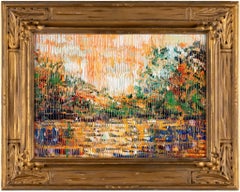
“Fall Landscape”
“Fall Landscape”

“Fall Landscape”

Located in Southampton, NY

Original oil on canvas board painting of a fall landscape by the American artist, Arthur Mitchell. Signed lower left by the artist. Circa 1890. Condition is very good. The paintin...

Category

1890s American Impressionist The Hamptons
Materials

Oil, Board, Canvas

Umberto Brunelleschi, Untitled, from The Tales of Boccaccio, 1934 (after)

Umberto Brunelleschi, Untitled, from The Tales of Boccaccio, 1934 (after)

By Umberto Brunelleschi

Located in Southampton, NY

This exquisite lithograph and pochoir after Umberto Brunelleschi (1879–1949), titled Sans titre (Untitled), originates from the celebrated album Les contes de Boccace (The Tales of B...

Category

1930s Art Deco The Hamptons

Materials

Lithograph, Stencil

Marino Marini, Untitled, from XXe Siecle, 1955

Marino Marini, Untitled, from XXe Siecle, 1955

By Marino Marini

Located in Southampton, NY

This exquisite lithograph by Marino Marini (1901–1980), titled Sans titre (Untitled), from the album XXe Siecle, Nouvelle serie, No. 5 (double), Juin 1955, originates from the 1955 e...

Category

1950s Modern The Hamptons

Materials

Lithograph

“Country Sunset”
“Country Sunset”

“Country Sunset”

By Joseph Thors

Located in Southampton, NY

Here for your consideration is a brilliant sunset over a bucolic county landscape painting. The artist is the very well known Dutch victorian artist, Joseph Thors. Signed verso by th...

Category

1880s Victorian The Hamptons

Materials

Oil, Wood Panel

Marc Chagall, Spring, from Verve, Revue Artistique, 1938

Marc Chagall, Spring, from Verve, Revue Artistique, 1938

By Marc Chagall

Located in Southampton, NY

This exquisite lithograph by Marc Chagall (1887–1985), titled Printemps (Spring), from Verve, Revue Artistique et Litteraire, Vol. I, No. 3, originat...

Category

1930s Expressionist The Hamptons

Materials

Lithograph

Wassily Kandinsky, Two Riders Against Red, from XXe siecle, 1938

Wassily Kandinsky, Two Riders Against Red, from XXe siecle, 1938

By Wassily Kandinsky

Located in Southampton, NY

This exquisite woodcut by Wassily Kandinsky (1866–1944), titled Zwei Reiter vor Rot (Two Riders Against Red), from the album XXe siecle, Chroniques du jour, 13 rue Valette (5e), Dire...

Category

1930s Modern The Hamptons

Materials

Woodcut

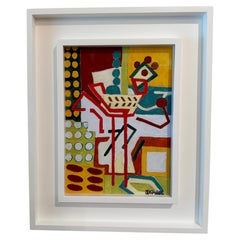
“Female Nude in Autumn”

“Female Nude in Autumn”

By Norwood Hodge MacGilvary

Located in Southampton, NY

Beautiful impressionist painting of a young nude female figure alongside a river in autumn by the American artist, Norwood Hodge MacGilvary. Very much the Art Nouveau style. Unsigne...

Category

Early 1900s American Impressionist The Hamptons
Materials

Oil, Canvas

Alexander Calder, Orange Sun, from Derriere le miroir, 1954

Alexander Calder, Orange Sun, from Derriere le miroir, 1954

By Alexander Calder

Located in Southampton, NY

This exquisite lithograph by Alexander Calder (1898–1976), titled Soleil orange (Orange Sun), from the folio Derriere le miroir, No. 69–70, originates from the 1954 edition published by Maeght Editeur, Paris, and printed by Mourlot Freres, Paris, 1954. This work captures Calder’s mastery of motion, balance, and vibrant color through the spontaneous energy of his abstract forms, embodying the rhythmic harmony and visual poetry that defined his art. Executed as a lithograph on velin paper, this work measures 15 x 11 inches. Unsigned and unnumbered as issued. The edition exemplifies the superb craftsmanship of Mourlot Freres, Paris. Artwork Details: Artist: Alexander Calder (1898–1976) Title: Soleil orange (Orange Sun), from the folio Derriere le miroir, No. 69–70 Medium: Lithograph on velin paper Dimensions: 15 x 11 inches (38.1 x 27.9 cm) Inscription: Unsigned and unnumbered as issued Date: 1954 Publisher: Maeght Editeur, Paris Printer: Mourlot Freres, Paris Condition: Well preserved, consistent with age and medium Provenance: From the folio Derriere le miroir, No. 69–70, published by Maeght Editeur, Paris; printed by Mourlot Freres, Paris, 1954 About the Publication: Derriere le miroir (Behind the Mirror) was one of the most important art publications of the 20th century, created and published by Maeght Editeur in Paris from 1946 to 1982. Founded by the visionary art dealer and publisher Aime Maeght, the series served as both an exhibition catalogue and a work of art in its own right, uniting original lithographs by leading modern and contemporary artists with critical essays, poetry, and design of the highest quality. Printed by master lithographers such as Mourlot Freres and Arte, Derriere le miroir became synonymous with the artistic vanguard of postwar Europe. Each issue was devoted to a single artist or theme and published to accompany exhibitions at the Galerie Maeght in Paris, featuring works by Pablo Picasso, Henri Matisse, Georges Braque, Joan Miro, Marc Chagall, Alexander Calder, Fernand Leger, and Alberto Giacometti, among others. The publication reflected Maeght’s belief that art should be both accessible and elevated—an ideal realized through its luxurious production values, meticulous printing, and collaboration with the greatest creative minds of its time. About the Artist: Alexander Calder (1898–1976) was an American sculptor, painter, and printmaker whose pioneering innovations in kinetic art revolutionized 20th-century sculpture and transformed modern visual language. Born in Lawnton, Pennsylvania, into a family of artists, Calder initially trained as a mechanical engineer at the Stevens Institute of Technology before turning to art at the Art Students League in New York—a combination of technical precision and creative imagination that defined his career. Moving to Paris in 1926, he immersed himself in the avant-garde and formed friendships with Pablo Picasso, Alberto Giacometti, Joan Miro, Wassily Kandinsky, Salvador Dali, Marcel Duchamp, and Man Ray, whose ideas profoundly shaped his artistic philosophy. From Picasso, he absorbed structural invention; from Miro, lyrical abstraction; from Kandinsky, spiritual geometry; and from Duchamp and Man Ray, the courage to merge intellect and play. In Paris, Calder created his famous Cirque Calder, a miniature mechanical circus that introduced motion and performance as central components of sculpture, and by the early 1930s, he invented the mobile—a term coined by Duchamp—to describe his delicately balanced, moving sculptures that responded to air currents. Later, Jean Arp would name his stationary counterparts stabiles. These two inventions—sculptures that could either float and spin gracefully or stand monumentally still—transformed art into a dynamic dialogue between movement, balance, and space. Calder’s signature forms, painted in vivid reds, blacks, blues, and yellows, embodied both joy and precision, creating an art that was at once abstract, organic, and deeply human. Like Kandinsky and Miro, he viewed art as a form of rhythm and emotion; like Duchamp, he embraced innovation and humor; and like Giacometti and Dali, he was fascinated by perception, structure, and the unseen forces of motion. His monumental public sculptures—such as La Grande Vitesse (1969) in Grand Rapids and Flamingo (1973) in Chicago—redefined public art as a symbol of civic optimism and modern progress. A key bridge between European modernism and American abstraction, Calder’s influence extended to artists including Jean Tinguely, George Rickey, Donald Judd, Ellsworth Kelly, Richard Serra, and Olafur Eliasson, whose works in kinetic and spatial art continue to echo his vision. His gouaches, prints, and jewelry carried the same balance and movement as his sculptures, revealing a unified language of rhythm across media. Represented in every major modern museum—including MoMA, the Guggenheim, the Tate, and the Centre Pompidou—Calder remains celebrated for merging engineering, color, and poetry into an art of pure equilibrium. Standing alongside Pablo Picasso, Alexander Calder, Alberto Giacometti, Salvador Dali, Joan Miro, Wassily Kandinsky, Marcel Duchamp, and Man Ray, he remains one of the cornerstones of modern art—a visionary whose works breathe with motion, grace, and joy. His highest auction record was achieved by Poisson Volant (Flying Fish) (1957), which sold for $25.9 million at Christie’s, New York, on May 15, 2014, reaffirming Alexander Calder’s enduring legacy as one of the most inventive, dynamic, and collectible artists in the history of modern art. Alexander Calder Soleil...

Category

1950s Modern The Hamptons

Materials

Lithograph

Marc Chagall, The Angel, from Chagall Lithographer I, 1960

Marc Chagall, The Angel, from Chagall Lithographer I, 1960

By Marc Chagall

Located in Southampton, NY

This exquisite lithograph by Marc Chagall (1887–1985), titled L'Ange (The Angel), from Chagall Lithographe I (Chagall Lithographer I), originates from the October 1960 issue publishe...

Category

1960s Expressionist The Hamptons
Materials

Lithograph

Jean Lurcat, Persian Octopus, from Animal Geography, 1975 (after)

Jean Lurcat, Persian Octopus, from Animal Geography, 1975 (after)

By Jean Lurçat

Located in Southampton, NY

This exquisite lithograph after Jean Lurcat (1892–1966), titled Pieuvre Persique (Persian Octopus), from Geographie animale (Animal Geography), originates from the January 22, 1975 issue published by Production Edito-Service S.A., Geneve in collaboration with Andre Gonin, Lausanne, and M. Jean Graven, Paris, and printed by Edito-Service S.A., Italy, 1975. This visionary composition reflects Lurcats mastery of the lithographic medium, embodying his poetic imagination through fluid line, expressive form, and a luminous sense of movement. The work conveys the artists unique ability to merge symbolism, nature, and emotion into a cohesive visual language, transforming even the simplest subject into a deeply evocative and dreamlike image. Infused with lyricism and spiritual resonance, the composition exemplifies Lurcats enduring exploration of mythology, cosmic order, and the transcendent power of art. The piece forms part of Geographie animale (Animal Geography), a landmark publication that documents and celebrates one of the most significant aspects of his graphic oeuvre. Executed as a lithograph on bouffant des Papeteries de Hauteville paper, this work measures 12.4 x 9.37 inches (31.5 x 23.8 cm). Unsigned and unnumbered as issued. The edition exemplifies the superb craftsmanship of the Edito-Service atelier, renowned for its refined European printing collaborations. Artwork Details: Artist: After Jean Lurcat (1892–1966) Title: Pieuvre Persique (Persian Octopus), from Geographie animale (Animal Geography), January 22, 1975 Medium: Lithograph on bouffant des Papeteries de Hauteville paper Dimensions: 12.4 x 9.37 inches (31.5 x 23.8 cm) Inscription: Unsigned and unnumbered as issued Date: 1975 Publisher: Production Edito-Service S.A., Geneve in collaboration with Andre Gonin, Lausanne, and M. Jean Graven, Paris Printer: Edito-Service S.A., Italy Condition: Well preserved, consistent with age and medium Provenance: From Geographie animale (Animal Geography), published by Production Edito-Service S.A., Geneve, 1975 Notes: Excerpted from the folio (translated from French), This edition of the Animal Geography by Jean Lurcat was established by publisher Andre Gonin in Lausanne, with the collaboration of Mr. Jean Graven. The lithographs were taken in the workshops of the Graphic Arts J.- E. Wolfensberger in Zurich, under the personal direction of the artist. The stones were sanded after the draw. The text, in Caslon character, body twenty, was composed and printed in Geneva, on velin pur fil a la forme des papeteries du Marais, by the master printer Andre Kundig with the help of Marc Barraud and Auguste Griess. The final to shot was given the iron June 1948. This second edition, 23.8 x 31.5 cm, was drawn with the authorization of Andre Gonin on Velin bouffant des Papeteries de Hauteville. About the Publication: Geographie animale (Animal Geography) stands as one of the most imaginative printed projects associated with Jean Lurcat, uniting visual invention, literary wit, and refined European craftsmanship in a richly conceived publication devoted to the symbolic world of animals. Originally conceived under the guidance of publisher Andre Gonin and later issued in this authorized 1975 edition by Production Edito-Service S.A. of Geneve in collaboration with partners in Lausanne and Paris, the publication reflects the enduring appeal of Lurcats bestiary imagery and philosophical approach to nature. The lithographs were prepared in the workshops of J.- E. Wolfensberger in Zurich under the artists personal supervision, demonstrating the close relationship between artist and printer that characterized the finest twentieth century illustrated editions. More than a portfolio of images, Geographie animale (Animal Geography) is a meditation on the animal kingdom as metaphor, presenting creatures as emblems of instinct, wisdom, humor, vigilance, and cosmic order. Through its union of image, typography, and material elegance, the publication remains an important testament to the vitality of postwar European graphic art and to Lurcats singular ability to merge intellect, decoration, and poetic symbolism. About the Artist: Jean Lurcat (1892–1966) was a pioneering French painter, ceramicist, and tapestry master who transformed the ancient art of tapestry into a modern, intellectual, and spiritual medium, establishing himself as one of the most original and influential artists of the 20th century. Born in Bruyeres, France, Lurcat studied in Nancy and Paris, where he became part of the avant-garde circle that included Pablo Picasso, Alexander Calder, Alberto Giacometti, Salvador Dali, Joan Miro, Wassily Kandinsky, Marcel Duchamp, and Man Ray. His early paintings reflected the influence of Post-Impressionism, Cubism, and Symbolism, but his true innovation came when he reimagined tapestry as a form of monumental art rather than decorative craft. Profoundly inspired by the medieval Apocalypse of Angers tapestry, he sought to revive the grandeur of weaving by fusing ancient techniques with modernist abstraction and symbolism. In the 1930s, working with the Aubusson and Gobelins workshops, Lurcat revolutionized the process of tapestry-making by introducing a precise color notation system and standardizing thread palettes, allowing artists to maintain creative control from conception to completion. His bold compositions radiant with color, geometric rhythm, and allegorical imagery embodied a philosophy of cosmic balance and human resilience. After World War II, Lurcats work deepened in moral and spiritual scope, culminating in his monumental cycle Le Chant du Monde (The Song of the World, 1957–1965), a humanist response to the destruction of war and one of the greatest artistic achievements of the postwar era. His art, characterized by suns, moons, mythic creatures, and symbolic geometry, reflected his belief that art should harmonize intellect, craft, and emotion while reconnecting humanity to the natural and divine order. A contemporary and peer of Pablo Picasso, Alexander Calder, Alberto Giacometti, Salvador Dali, Joan Miro, Wassily Kandinsky, Marcel Duchamp, and Man Ray, Lurcat shared their passion for abstraction and innovation while extending it into the tactile, enduring world of textile art. His influence resonated with later artists and designers such as Fernand Leger, Sonia Delaunay, Le Corbusier, and Victor Vasarely, whose integration of color and geometry echoed his ideas. His work is preserved in major collections including the Musee Jean Lurcat et de la Tapisserie Contemporaine in Angers, the Musee d’Art Moderne de Paris, and the Centre Pompidou. The highest auction record for Jean Lurcat was achieved by Apocalypse Tapestry, which sold for $290,500 USD at Sotheby’s, Paris, on May 29, 2014, underscoring his enduring legacy as the visionary who redefined tapestry as a cornerstone of modern art. Jean Lurcat Pieuvre Persique, Lurcat Geographie animale, Jean Lurcat lithograph...

Category

1970s Modern The Hamptons

Materials

Lithograph

“Shipping in Southampton Water”

“Shipping in Southampton Water”

By Ebenezer Colls

Located in Southampton, NY

Original oil on canvas painting of a large sailing vessel traveling through Southampton waters in England in a dramatic sunset. The artist is the well known British marine artist Ebe...

Category

1850s Academic The Hamptons

Materials

Canvas, Oil

Marc Chagall, Angel of Paradise, from Drawings for the Bible, 1956

Marc Chagall, Angel of Paradise, from Drawings for the Bible, 1956

By Marc Chagall

Located in Southampton, NY

This exquisite lithograph by Marc Chagall (1887–1985), titled Ange du Paradis (Angel of Paradise), from Marc Chagall, Dessins Pour La Bible (Drawings for the Bible), Verve: Revue Art...

Category

1950s Expressionist The Hamptons
Materials

Lithograph

Phil, Rubber Stamp Portfolio, Chuck Close

Phil, Rubber Stamp Portfolio, Chuck Close

By Chuck Close

Located in Southampton, NY

Printer’s ink from rubber stamp on vélin Strathmore 3-ply paper. Paper Size: 8 x 8 inches. Inscription: Unsigned, as issued. Notes: From the folio, Rubber Stamp Portfolio, 1977. Publ...

Category

1970s Minimalist The Hamptons

Materials

Printer's Ink

Alexander Calder, Untitled, from Derriere le miroir, 1966

Alexander Calder, Untitled, from Derriere le miroir, 1966

By Alexander Calder

Located in Southampton, NY

This exquisite lithograph by Alexander Calder (1898–1976), titled Sans titre (Untitled), from the folio Derriere le miroir, No. 156, originates from the 1966 edition published by Mae...

Category

1960s Modern The Hamptons

Materials

Lithograph

Joan Miro, Lithograph XI, from Lithographs I, 1972

Joan Miro, Lithograph XI, from Lithographs I, 1972

By Joan Miró

Located in Southampton, NY

This exquisite lithograph by Joan Miro (1893–1983), titled Lithograph XI, from the album Joan Miro Lithographs, Volume I, originates from the 1972 edition published by Tudor Publishi...

Category

1970s Surrealist The Hamptons

Materials

Lithograph

Library Desk Lamp by ILUM - Argentina

Library Desk Lamp by ILUM - Argentina

Located in North Miami, FL

This industrial period (WWII era) desk lamp in matte black features a swing arm and all original brass fittings and details. The shade has been restored but the rest of this lamp sho...

Category

1940s Argentine Industrial Vintage The Hamptons

Materials

Aluminum, Brass

Georges Braque, Study of Birds, from Le Solitaire, XXe siecle, 1959 (after)

Georges Braque, Study of Birds, from Le Solitaire, XXe siecle, 1959 (after)

By Georges Braque

Located in Southampton, NY

This exquisite lithograph and pochoir after Georges Braque (1882–1963), titled Etude oiseaux (Study of Birds), from the album Georges Braque, Le Solitaire (The Solitary), originates ...

Category

1950s Cubist The Hamptons

Materials

Lithograph

Man Ray, Pablo Picasso, Picasso 1930-1935, Cahiers d'Art (after)

Man Ray, Pablo Picasso, Picasso 1930-1935, Cahiers d'Art (after)

By Man Ray

Located in Southampton, NY

Lithograph on vélin paper. Stamp-signed and unnumbered, as issued. Good condition. Notes: From the album, Picasso 1930-1935, 1936. Published and printed by Éditions des Cahiers d'Art...

Category

1930s Modern The Hamptons

Materials

Lithograph

Composition (Vallier 137), Résurrection de l'oiseau, Georges Braque

Composition (Vallier 137), Résurrection de l'oiseau, Georges Braque

By Georges Braque

Located in Southampton, NY

Lithograph on vélin vélin de Rives paper. Inscription: unsigned and unnumbered, as issued. Good condition. Notes: from the folio, Résurrection de l'oiseau, Georges Braque, 1958. Publ...

Category

1950s Modern The Hamptons

Materials

Lithograph

Joan Mitchell, Sans titre, In Memory of My Feelings (after)

Joan Mitchell, Sans titre, In Memory of My Feelings (after)

By Joan Mitchell

Located in Southampton, NY

Lithograph on vélin Mohawk Superfine Smooth paper. Paper Size: 11.937 x 8.96 inches. Inscription: Unsigned and unnumbered, as issued. Notes: From the folio, In Memory of My Feelings,...

Category

1960s Abstract Expressionist The Hamptons
Materials

Lithograph

Andrew Wyeth, Teel’s Island, from The Four Seasons (after)

Andrew Wyeth, Teel’s Island, from The Four Seasons (after)

By Andrew Wyeth

Located in Southampton, NY

This exquisite lithograph after Andrew Wyeth (1917–2009), titled Teel’s Island, originates from the distinguished 1962 folio The Four Seasons: Paintings and Drawings by Andrew Wyeth....

Category

1960s American Realist The Hamptons

Materials

Lithograph

Marc Chagall, The Tribe of Levi, from XXe siecle, 1983 (after)

Marc Chagall, The Tribe of Levi, from XXe siecle, 1983 (after)

By Marc Chagall

Located in Southampton, NY

This exquisite lithograph after Marc Chagall (1887–1985), titled La Tribu de Levi (The Tribe of Levi), from the special issue of the XXe Siecle Review, Chagall in Jerusalem, originat...

Category

1980s Expressionist The Hamptons
Materials

Lithograph

Pablo Picasso, 11.3.59., from Bulls and Bullfighters, 1961 (after)

Pablo Picasso, 11.3.59., from Bulls and Bullfighters, 1961 (after)

By Pablo Picasso

Located in Southampton, NY

This exquisite heliogravure after Pablo Picasso (1881–1973), titled 11.3.59., from the album Pablo Picasso, Toros y Toreros (Bulls and Bullfighters), originates from the 1961 edition...

Category

1960s Cubist The Hamptons
Materials

Lithograph

Francis Bacon, Three Studies for Portrait of Lucian Freud, 1966 (after)

Francis Bacon, Three Studies for Portrait of Lucian Freud, 1966 (after)

By Francis Bacon

Located in Southampton, NY

This exquisite lithograph after Francis Bacon (1909–1992), titled Three Studies for Portrait of Lucian Freud, originates from the historic 1966 folio Derriere le Miroir, No. 162. Pub...

Category

1960s Modern The Hamptons
Materials
Lithograph