Vermont - Native American Objects

to
9
14
697
22
14
8
4
2
13
4
2
1
14
14
14
14
14
Item Ships From: Vermont
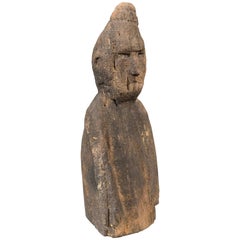
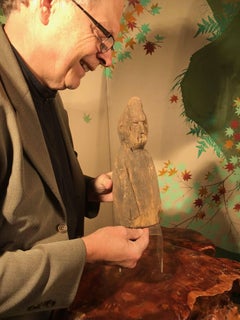
Fine America’s Chieftain Ceremonial Figure

Fine America’s Chieftain Ceremonial Figure

Located in South Burlington, VT

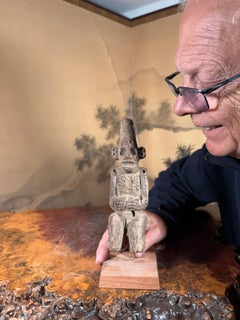
Pre-Columbian style , Hispaniola, Arawak Peoples, Taino Native Indians This is a finely carved Taino Cacique Chief's hand carved hard wood figure- a superb ancestor style ceremonial...

Category

20th Century American Pre-Columbian Vermont - Native American Objects

Materials

Wood

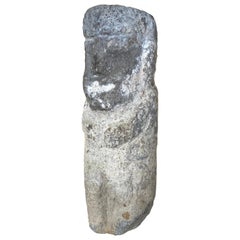
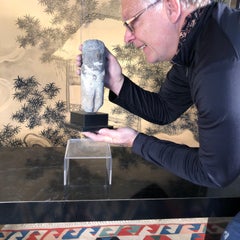
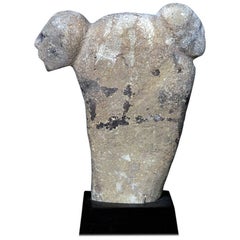
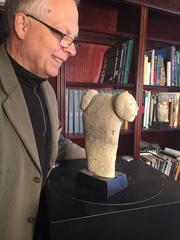
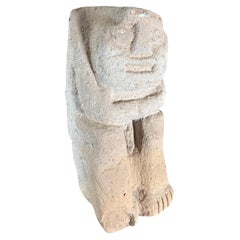
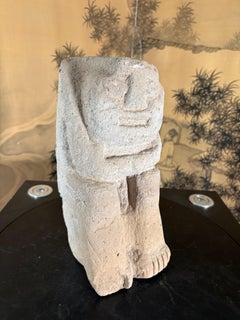
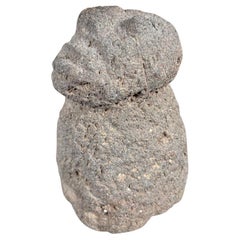
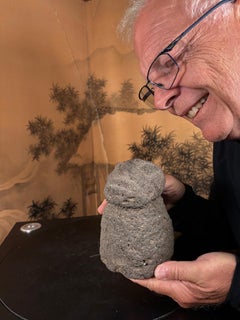
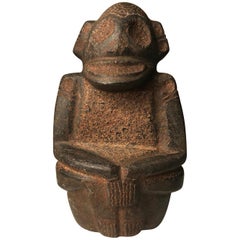
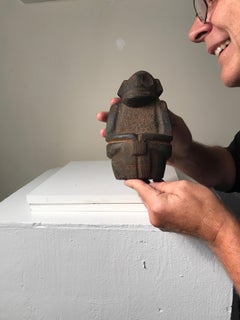
Important Ancient Hawaiian Aumakua Stone Sculpture with Provenance

Important Ancient Hawaiian Aumakua Stone Sculpture with Provenance

Located in South Burlington, VT

A rare and monumental Hawaiian hand carved stone "Aumakua" abstract sculpture of a male carved from Vesicular Basalt. An Aumakua is a Hawaiian ancestral spirit guardian—a family de...

Category

19th Century American Antique Vermont - Native American Objects

Materials

Stone

Columbia River Massive  Pre Contact Carved Stone Nine Effigies Ceremonial Mortar

Columbia River Massive Pre Contact Carved Stone Nine Effigies Ceremonial Mortar

Located in South Burlington, VT

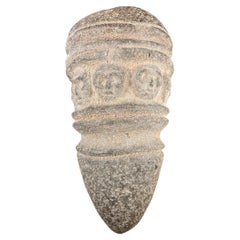
From Native America's Northwest Columbia River area comes this substantial and unique ancient hand carved basalt stone ceremonial bowl or mortar possessing nine (9) human like heads within a circular double band, Columbia River. It comes from a private Colorado collection. The stone hand carved from a large basalt...

Category

15th Century and Earlier American Native American Antique Vermont - Native American Objects

Materials

Stone

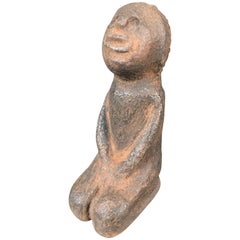
American "Human Effigy" Female Stone Sculpture, Tennessee, 1000 AD

American "Human Effigy" Female Stone Sculpture, Tennessee, 1000 AD

Located in South Burlington, VT

A Native American Human Effigy female statue, Holliston Mills Site, Tennessee , sandstone, circa 1000 AD Dimensions: 11.75 inches tall and 3.75 inches width 5.75 diameter All stone carvings from America's Prehistoric past are scarce. The majority of known carved stones come from the far western Mimbres, Hohokam or Casas cultures. This sculpture is unique. Quality: fine original condition with varigated patina as found. Notice the detail of the carved ear spools...

Category

15th Century and Earlier American Antique Vermont - Native American Objects

Materials

Sandstone

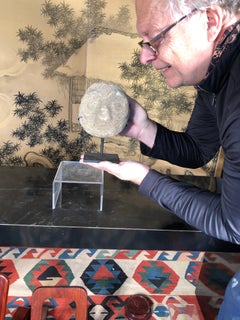
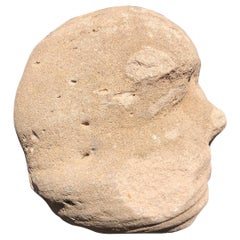
Native America Antique Hand Carved Granite Human Head

Native America Antique Hand Carved Granite Human Head

Located in South Burlington, VT

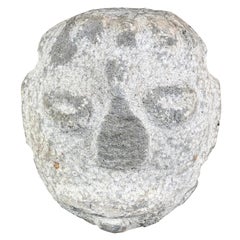
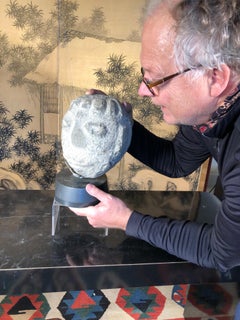
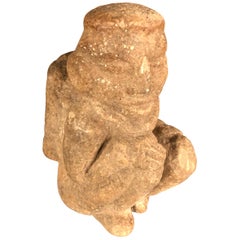
From Native America comes this unique ancient hand carved granite stone head head effigy, attributed to the Yokuts People. It was collected on a private ra...

Category

19th Century American Antique Vermont - Native American Objects

Materials

Granite

Native America Ancient Hand Carved Stone Pipe Idol Sculpture

Native America Ancient Hand Carved Stone Pipe Idol Sculpture

Located in South Burlington, VT

From Native America and a collection dating to 1951, comes this unique old hand carved stone human effigy pipe figure idol , likely Hopewell culture with its bun head and ear spool...

Category

15th Century and Earlier American Antique Vermont - Native American Objects

Materials

Stone

Ancient American "Human Effigy" Stone Pipe, Woodland Period

Ancient American "Human Effigy" Stone Pipe, Woodland Period

Located in South Burlington, VT

Early American Pre-Historic Human Effigy stone pipe, woodland period, 2500 BP Formerly in the Harold French collection, Amboy, Indiana (photo) All st...

Category

15th Century and Earlier American Antique Vermont - Native American Objects

Materials

Stone

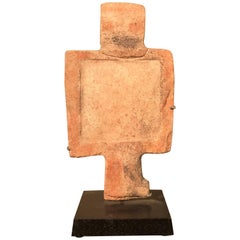
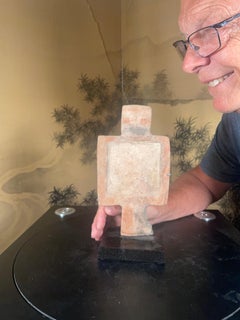
Ancient American "Human Effigy" Stone Paint Pallet, Anasazi Culture 900 AD

Ancient American "Human Effigy" Stone Paint Pallet, Anasazi Culture 900 AD

Located in South Burlington, VT

Early American Pre-Historic Human Effigy Stone Paint Pallet, Anasazi culture 900 AD All stone carvings from America's Prehistoric southwest are scarce. The majority of known carved stones come from the Mimbres, Hohokam or Casas cultures. So examples of stone carvings from the Anasazi culture (circa 900–1300 AD) are rare especially human forms which are the rarest and some consider most desirable. This pallet is likely unique. The distinguishing characteristic of our paint pallet from the Anasazi culture is its creation from red sandstone- a material that was not used by the Mimbres, Hohokam or Casas cultures. Dimensions: 9.25 inches tall, 4.87 inches wide Quality: it exhibits no less than seven distinct pigment colors on the surface. The obverse has a distinctive head with three dimensional eyes and nose; there are four horizontal bands of color: red, white, dark red/white and black. The center of the pallet has a distinctive white pigment and the border is executed in both red and black. There are two well-defined legs, one red and the other black, which terminate in distinctive feet. On the reverse we find in the center seven clearly defined concentric painted rings, each a different color. Provenance: old New England collection Lifetime guarantee of authenticity: All of our works of art come with our lifetime authenticity guarantee. Our gallery has been dealing in authentic Native...

Category

15th Century and Earlier American Antique Vermont - Native American Objects

Materials

Sandstone

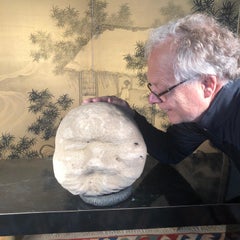
Native America Old Natural Stone Human Head Effigy Sculpture

Native America Old Natural Stone Human Head Effigy Sculpture

Located in South Burlington, VT

From Native America Southwest comes this unique natural stone "human head" effigy. It was discovered in the Tesuque area of New Mexico in 1960. It is a natural sandstone concretion...

Category

20th Century American Vermont - Native American Objects

Materials

Sandstone

American Ancient Anasazi "Human Effigy" Male Stone Sculpture

American Ancient Anasazi "Human Effigy" Male Stone Sculpture

Located in South Burlington, VT

A Native American Human Effigy male statue, El Paso, Texas , sandstone, circa 1500 AD or before (1000-1400 AD) Dimensions: 11.25 inches tall and 4.5 i...

Category

15th Century and Earlier American Antique Vermont - Native American Objects

Materials

Sandstone

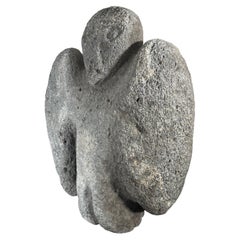
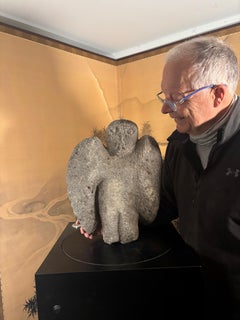
Rare Tall Ancient Hawaiian Stone Owl Aumakua with Provenance

Rare Tall Ancient Hawaiian Stone Owl Aumakua with Provenance

Located in South Burlington, VT

A monumental and rare Hawaiian hand carved stone "Aumakua" owl or bird sculpture carved from a smooth and dense patinated vesicular basalt. It comes from an old Hawaiin collection....

Category

19th Century American Antique Vermont - Native American Objects

Materials

Stone

Early American Plains Stone Buffalo Hunting Talisman

Early American Plains Stone Buffalo Hunting Talisman

Located in South Burlington, VT

Native America Plains hand-carved and hand-painted stone Buffalo Hunting Talisman in the form of a buffalo hoof with human effigy head and tail , granite, 1800-1900 Dimensions: 12 inches high and 9.5 inches wide, Provenance: old mid west collection Hand-carved with great old paint and patina an authentic old work of art that is likely unique Lifetime guarantee of authenticity: All of our works of art come with our lifetime authenticity guarantee. Our gallery has been dealing in authentic Native...

Category

19th Century American Antique Vermont - Native American Objects

Materials

Granite

Related Items
Chinese Carved Soap Stone Sculpture of a Wise Ancient with Dragon

Chinese Carved Soap Stone Sculpture of a Wise Ancient with Dragon

Located in Frankfurt am Main, DE

A finely carved soap stone sculpture of a wise ancient with a dragon on his shoulder standing on a braun soap stone base. In fine original conditi...

Category

Early 20th Century Chinese Vermont - Native American Objects

Materials

Stone

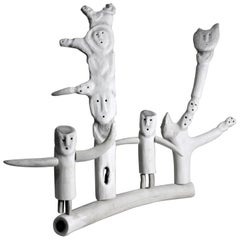
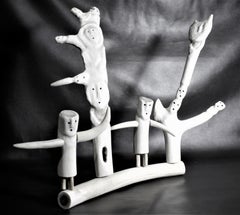
Large Hand Carved Inuit Stylized Figurative Sculpture

Large Hand Carved Inuit Stylized Figurative Sculpture

Located in Hamilton, Ontario

This handcrafted sculpture was made in Northern Canada by an Inuit artisan in circa 1970. This sculpture is a series of two stylized human figures intermixed with two representations of presumably Spirits, which has several carved faces in them. The entire sculpture is composed of hand carved and handcrafted antler, likely Caribou. This sculpture may symbolize a blessing of good fortune for an upcoming hunt. The series of four figures are each pegged on the bottom and fit into holes drilled into the base. The base is numbered on the bottom which identifies that it was registered, and also has a paper label. Due to the composition of this sculpture it may only be shipped within Canada...

Category

Late 20th Century Canadian Native American Vermont - Native American Objects

Materials

Antler

Pictorial Indian Weaving Pillows with Birds

Pictorial Indian Weaving Pillows with Birds

$975 / set

H 17 in W 12 in D 3 in

Pictorial Indian Weaving Pillows with Birds

Located in Los Angeles, CA

This fun group of weaving pillows have the initial E on them and are all have cotton linen backings. Down and feather fill. Sold as a group of three.

Category

Mid-20th Century American Adirondack Vermont - Native American Objects

Materials

Wool

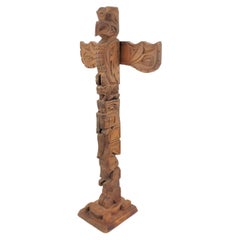
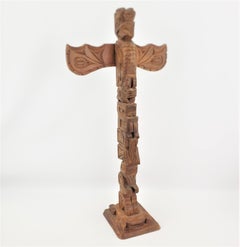
Mid-Century Era Signed West Coast Cedar Haida Indigenous Canadian Totem Pole

Mid-Century Era Signed West Coast Cedar Haida Indigenous Canadian Totem Pole

Located in Hamilton, Ontario

This hand-carved cedar totem is signed by an unknown artist and presumed to have originated from Canada and dating to approximately 1960 and done in the West Coast Indigenous Haida s...

Category

Mid-20th Century Canadian Folk Art Vermont - Native American Objects

Materials

Cedar

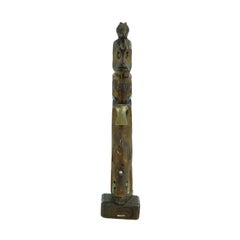
Circa 1900 Salish Totem

Circa 1900 Salish Totem

$2,000

H 15 in W 3 in D 3 in

Circa 1900 Salish Totem

Located in Coeur d'Alene, ID

This old model Salish pole dates to around 1900 and was sold out of the Hudson Bay Fur Trading Co. in Seattle, WA. The pole depicts an inverted killer whale, although the identities of the other figures are unclear. There is a formline human face in profile carved in relief and painted on the front of the base. A rather unusual feature of this pole is the inlaid glass beads in the eyes of the figures and blowhole of the whale. Early model poles sometimes incorporated new, non-traditional materials into their work. A highly unusual and early pole. Northwest Coast cedar totem with original Hudson Bay sticker. Patinated with cabin smoke. 15" PERIOD: Circa 1900 ORIGIN: Northwest Coast SIZE: 15" Family Owned & Operated Cisco’s Gallery deals in the rare, exceptional, and one-of-a-kind pieces that define the history of America and the Old West. Our pieces range from American Indian to Cowboy Western and include original items of everyday life, commerce, art, and warfare that tamed America’s frontier. Our 14,000 square foot gallery opened in 1996 in beautiful Coeur d’Alene, Idaho. Personal Service Cisco’s operates on old fashioned values – honesty and integrity, and all of our items are backed by our money back guarantee. We appreciate the opportunity to earn your business. Whether you desire assistance with a jewelry purchase, choosing a gift, identification, or even selling – we hope to be your trusted source. Totems...

Category

Early 20th Century American Native American Vermont - Native American Objects

Materials

Cedar

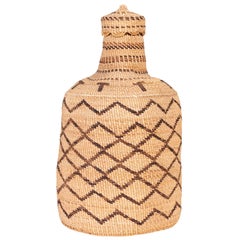
Klamath Basketry Bottle with Lid

Klamath Basketry Bottle with Lid

$1,500

H 10 in Dm 5.5 in

Klamath Basketry Bottle with Lid

Located in Coeur d'Alene, ID

Klamath basketry bottle. Finely woven basket in the shape of a bottle (not over a bottle) with a simple woven diamond pattern, "T" figures on rim and matching lid. Stunning display p...

Category

Early 20th Century American Native American Vermont - Native American Objects

Materials

Other

Pit River Globular Basket

Pit River Globular Basket

$4,600

H 6 in Dm 9 in

Pit River Globular Basket

Located in Coeur d'Alene, ID

Large Pit River globular basket. Period: circa 1900. Origin: California Size: 6" x 9". Family Owned & Operated Cisco’s Gallery deals in the rare, excepti...

Category

1910s American Native American Vintage Vermont - Native American Objects

Materials

Other

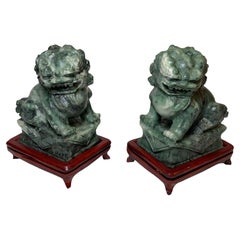
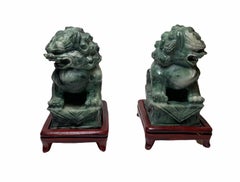
Hand Carved Green Stone Small Chinese Foo-Dogs Sculptures/Figurines

Hand Carved Green Stone Small Chinese Foo-Dogs Sculptures/Figurines

$486Sale Price / set|30% Off

H 4.8 in W 3 in D 2.5 in

Hand Carved Green Stone Small Chinese Foo-Dogs Sculptures/Figurines

Located in Guaynabo, PR

This is a pair of hand carved green stone Chinese Foo-Dog sculptures/figurines. They depict a pair of foo-dogs seated in a rectangular shaped base with a carpet. They are supported b...

Category

20th Century Chinese Chinese Export Vermont - Native American Objects

Materials

Stone

Fine Vintage Native American Navajo Cuff bracelet Silver Turquoise

Fine Vintage Native American Navajo Cuff bracelet Silver Turquoise

Located in London, GB

A Fine Vintage Native American Navajo bracelet Silver Turquoise jewellery A fine quality elegant slender bracelet with turquoise and coral with floral silver embellishments at the ...

Category

20th Century American Vermont - Native American Objects

Materials

Silver

Native American Vintage Mata Ortiz Fine Geometric design pottery pot

Native American Vintage Mata Ortiz Fine Geometric design pottery pot

Located in London, GB

Native American Nice vintage Mata Ortiz pottery pot with superbly executed super fine geometric designs. Stunning piece, unsigned Circa 1970. H 18 W 16 cm 7 x 6 inch approx.

Category

1970s American Vintage Vermont - Native American Objects

Materials

Ceramic

Large Japanese Old Hand-Carved Wooden Bear 1950s-1970s / Primitive Sculpture

Large Japanese Old Hand-Carved Wooden Bear 1950s-1970s / Primitive Sculpture

Located in Chōsei District Nagara, JP

This is a large, old Japanese hand-carved wooden bear. With its dignified stance and overwhelming presence, it is a sculptural work that leaves a strong impression simply by being pl...

Category

Late 20th Century Japanese Primitive Vermont - Native American Objects

Materials

Wood

Southwestern Native American Hopi Hand Carved Child Cradle Kachina Katsina Doll

Southwestern Native American Hopi Hand Carved Child Cradle Kachina Katsina Doll

Located in Studio City, CA

A wonderfully hand-painted and decorated Native American Hopi Kachina Katsina doll. We believe this was a child's cradle first Kachina doll. It is hand carved from light wood (likel...

Category

20th Century American Native American Vermont - Native American Objects

Materials

Wood, Paint

Previously Available Items
Ancient American Human Effigy Stone Star Gazer, Hohokam Culture

Ancient American Human Effigy Stone Star Gazer, Hohokam Culture

Located in South Burlington, VT

Early American Pre-Historic Human Effigy Stone Star Gazer, Hohokam culture All stone carvings from America's Prehistoric southwest are scarce. The majo...

Category

15th Century and Earlier American Antique Vermont - Native American Objects

Materials

Stone

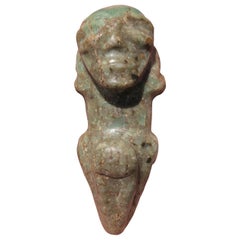
America’s Taino People Jade  Pendant God

America’s Taino People Jade Pendant God

Sold

H 3.1 in W 1.25 in D 1 in

America’s Taino People Jade Pendant God

Located in South Burlington, VT

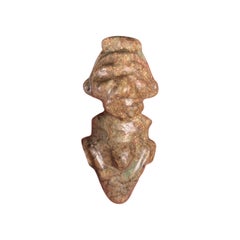
Hispaniola, Arawak peoples, Taino native Indians This is a fine hand carved jade ancestor sculpture fashioned as a pendant from the Arawak Peoples of the Greater Antilles Islands, Dominican Republic. It is a good example and is accompanied by a certificate of authenticity as photographed. Taino jades are extremely uncommon due to lack of local island jade cobble resources. Jade was likely traded into this country hundreds of years ago and this work of art is just one of a small collection found in a cave in La Altagracia Province, Dominican Republic in 1958. Taino Jade Anthropic Pendant of a female figure, 20th century or earlier Dimensions: 3.1 inches high, 8 cm Sometimes described as a jade -cemi- this work of art belongs to a broader category of Taino art also called -zemis-. This term refers to the physical incarnation of a Taino god, spirit or ancestor. This figure may represent a Taino in trance and a similar might have adorned Cohoba ceremonies where hallucinogenic substances like cohoba were consumed to induce trances to communicate with the gods. While the precise function of such objects remain somewhat a mystery- they continue to impress us with their bold abstract form and magical associations. This remarkable sculpture figure is carved in a medium green jade with brown inclusions. This example has a large triangular carved head, slanted eyes, hands to its sides prominent nasal, open mouth, and pointed base. As chieftains and important shamans were deified after death this sculpture may represent a cacique chief or high status member of Taino Community. The arrangement of the figure’s limbs is an elaboration of the ritual squatting position that zemis assume in surviving stone amulets. In this case the legs are held up vertically with the feet resting under the waist. Both the face and in particular, the back of the body, are skeletal in appearance with prominent hollow joints. The wide eye-sockets and gaping jaw are deeply carved and both the forehead and the chin project outwards at a sharp angle. The emaciated look on the reverse, is carved in the half round. Both the ribs and the spine are indicated, set between elaborate geometric motifs which may indicate the presence of tattoos. The figure appears to rests on a simply carved pedestal. To western sensibilities there is an obvious contradiction between the figure’s reverse skeletal form, suggestive of mortality. Although Taino left no written documents, Spanish settlers did record native practices and one account refers to special structures in which chieftains stored their Trove of zemi carvings. The Taino believed in existence of afterlife and Shamanic ability to communicate with the dead. This sculpture may well have been present and on display in such a ceremony or perhaps a focus of ancestor worship. Hand carved and scarce work of art from America's Caribbean islands. Provenance: 1958 find, La Altagracia Provonce, Dominican Republic. A "Certificate of Authenticity" accompanies Taino History: The Taino flourished from 1200-1500. When Columbus arrived in America, the first people he encountered were the Taino People- inhabitants of the islands of the northern Caribbean Sea, known as Hispaniola. They were Arawakan-speaking people who at the time of Christopher Columbus’s exploration inhabited Cuba, Jamaica, Hispaniola (Haiti and the Dominican Republic), Puerto Rico, and the Virgin Islands. Once the most numerous indigenous people of the Caribbean, the Taino may have numbered several million at the time of the Spanish conquest in the late 15th century. Their highly developed belief system focused on zemi ancestor or god worship. A zemi was the physical manifestation of a god, spirit or ancestor. The chieftain -caciques- encouraged ancestor worship and were often deified after death. The religious leaders or shamans were thought to be able to communicate with the souls of the dead when intoxicated by the hallucinogenic cohoba. A preoccupation with death is evident in many Taino art-forms and partly explains the prevalence of zoomorphic images. Bats, owls and frogs were all popular motifs and were regarded as harbingers of life after death. The Taino believed that the dead could be reborn in animal form and some believe animals were their earliest ancestors in Taino creation myth. Hence we find their zoomorphic sculptures as combinations of human and animal forms particularly provocative and great conversational art...

Category

20th Century American Pre-Columbian Vermont - Native American Objects
Materials

Jade

America’s First “Spirit God” Ancestor

America’s First “Spirit God” Ancestor

Located in South Burlington, VT

Pre-Columbian, Hispaniola, Arawak Peoples, Taino Native Indians, early 20th century or older This is an ancestor sculpture from the Arawak Peoples of the Greater Antilles Islands. Sometimes described to a broader category of Taino art...

Category

Early 20th Century American Pre-Columbian Vermont - Native American Objects
Materials

Stone

Native America Ancient Hand Carved Stone Shaman's Mask "Tsagagial"

Native America Ancient Hand Carved Stone Shaman's Mask "Tsagagial"

Located in South Burlington, VT

From Native America's Northwest coast comes this unique ancient hand carved granite stone head effigy, attributed to the Wasco culture, Columbia River, nea...

Category

15th Century and Earlier American Antique Vermont - Native American Objects

Materials

Stone

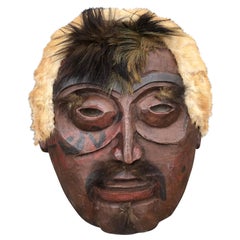
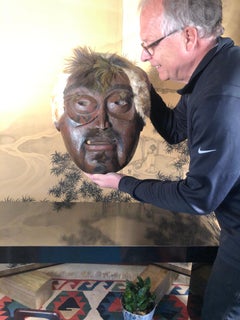
Native American Inuit Eskimo Antique Dance Mask, 1900

Native American Inuit Eskimo Antique Dance Mask, 1900

Located in South Burlington, VT

From our recent Acquisitions Across America - a fresh find from a California estate This finely hand carved and hand painted Alaskan Inuit antique wooden dance mask is a superb example of Eskimo culture. It's character and creation was inspired by native cultural vision and tradition. It is a Fine 120 year old hand carved example that would be a provocative accent to the most discerning collection. Measurements: Large 17.5 inches long and 13 inches at widest The Purpose of Inuit Masks...

Category

Early 20th Century Canadian Native American Vermont - Native American Objects

Materials

Wood

America’s Treasure Jade Find Hallucinogenic Pendant God, 500 Years Old #1

America’s Treasure Jade Find Hallucinogenic Pendant God, 500 Years Old #1

Located in South Burlington, VT

Pre-Columbian, Hispaniola, Arawak peoples, Taino native Indians, 1000-1500 CE. This is a fine and important hand carved jade ancestor sculpture fashioned as a pendant from the Arawak Peoples of the Greater Antilles Islands, Dominican Republic. It is a rare, choice example and is accompanied by a certificate of authenticity as photographed. Taino jades are extremely uncommon due to lack of local island jade cobble resources. Jade was likely traded into this country hundreds of years ago and this work of art is just one of a small collection found in a cave in LaAltagracia Provonce, Dominican Republic in 1958. Taino Jade Anthropic Pendant of a female figure, 1000-1500 AD "Certificate of Authenticity". Dimensions: 3.1 inches high, 8 cm Sometimes described as a jade -cemi- this work of art belongs to a broader category of Taino art...

Category

15th Century and Earlier American Pre-Columbian Antique Vermont - Native American Objects

Materials

Jade

America Ancient Stone Game Ball "Batey", 500 Years Old

America Ancient Stone Game Ball "Batey", 500 Years Old

Located in South Burlington, VT

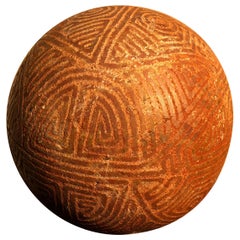
Pre-Columbian, Hispaniola, Arawak Peoples, Taino Native Indians, 1000-1500 CE. This is a fine and important hand carved/pecked stone game ball (batey) from the Arawak Peoples of the Greater Antilles Islands. It is a choice and large example. It is finely incised on all planes with multiple stylized geometric motifs representing tattooing or scarification and faces, adding to the impressive aesthetic presence of this piece. Batey (game) Batéy was the name given to a special plaza around which the Caribbean Taino built their settlements. It was usually a rectangular area surrounded by stones with carved symbols. The batey was the area in which batey events (e.g. ceremonies, the ball game, etc.) took place. This form might have served as a marker or trophy symbol in a Taino inter- village ball game and ceremony. The exact purpose of ball games remain a mystery but they may have served to settle political disputes. While the precise function of such objects remain somewhat a mystery- they continue to impress us with their bold abstract form and magical associations. This remarkable sculpture is carved in a light colored iron rich hard stone like limestone. On the surfaces are finely incised stylized geometric motifs representing tattooing or scarification, adding to the impressive aesthetic presence of this piece. A carving of this complexity, quality and size must have belonged to a chieftain or ranking member of the royal household. Although Taino left no written documents, Spanish settlers did record native practices and one account refers to special structures in which chieftains stored their Trove of zemi and other important carvings. The Taino believed in existence of afterlife and Shamanic ability to communicate with the dead. This sculpture may well have been present and on display in such a ceremony or perhaps a focus of ancestor worship. This remarkably evocative work allows us to peak into ancient splendors of their remarkable civilization. Dimensions: 8.5 inches diameter Hand-carved/pecked. Venerated. An important and scarce work of art from America's Caribbean islands. Provenance: Old Puerto Rico collection collected 1950s-1960s, Frank Vasquez Taino History: The Taino flourished from 1200-1500. When Columbus arrived in America, the first people he encountered were the Taino People- inhabitants of the islands of the northern Caribbean Sea, known as Hispaniola. They were Arawakan-speaking people who at the time of Christopher Columbus’s exploration inhabited Cuba, Jamaica, Hispaniola (Haiti and the Dominican Republic), Puerto Rico, and the Virgin Islands. Once the most numerous indigenous people of the Caribbean, the Taino may have numbered several million at the time of the Spanish conquest in the late 15th century. Their highly developed belief system focused on zemi ancestor or god worship. A zemi was the physical manifestation of a god, spirit or ancestor. The chieftain -caciques- encouraged ancestor worship and were often deified after death. The religious leaders or shamans were thought to be able to communicate with the souls of the dead when intoxicated by the hallucinogenic cohoba. A preoccupation with death is evident in many Taino art-forms and partly explains the prevalence of zoomorphic images. Bats, owls and frogs were all popular motifs and were regarded as harbingers of life after death. The Taino believed that the dead could be reborn in animal form and some believe animals were their earliest ancestors in Taino creation myth. Hence we find their zoomorphic sculptures as combinations of human and animal forms particularly provocative and great conversational art...

Category

15th Century and Earlier American Pre-Columbian Antique Vermont - Native American Objects

Materials

Stone

America’s Ancestor Hallucinogenic God, 500 Years Old

America’s Ancestor Hallucinogenic God, 500 Years Old

Located in South Burlington, VT

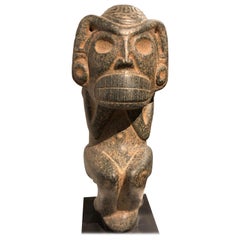
Pre-Columbian, Hispaniola, Arawak Peoples, Taino Native Indians, 1000 to 1500 CE. This is a fine and important hand carved/pecked ancestor sculpture from the Arawak Peoples of the Greater Antilles Islands. It is a choice example. Sometimes described as a -cemi- this work of art belongs to a broader category of Taino art...

Category

15th Century and Earlier American Pre-Columbian Antique Vermont - Native American Objects

Materials

Stone

Fine America’s Chieftain Ceremonial Wood Seat “Duho”

Fine America’s Chieftain Ceremonial Wood Seat “Duho”

Located in South Burlington, VT

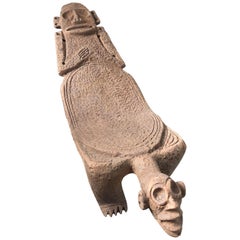
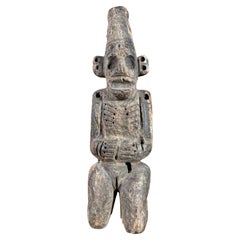
Pre-Columbian style , Hispaniola, Arawak Peoples, Taino Native Indians This is a finely carved Taino Cacique Chief's hand carved hard wood seat -Duho- a superb ancestor style ceremonial sculpture from the Arawak Peoples of the Greater Antilles Islands. It comes from a Florida collection. This Duho or seat made from a single piece of wood, representing an anthropomorphic figure with sculptured head and finely engraved with a large Cacique face and linear motifs on the main flat top, and in ancient times similar would have been used by the principal practitioner of the cohoba ritual. In ancient times, Duhos were used by the Cacique while observing the ball games commonly played by the Taino's. circa 1200-1550 A.D. While the precise ancient function of such objects remains somewhat a mystery- they continue to impress us with their bold abstract form and magical associations. In the seminal book Taino, Pre-Columbian Art & Culture from the Caribbean published by the El Museo del Barrio, ancient duho are discussed at length as private power-objects used in egalitarian tribes and used in public ritual to legitimize the hierarchical social structure of complex chiefdoms. Please also refer to the excellent publication March 1994 seminal article Tribal Arts: The Sculptural Ancestry of the Taino- masterpieces from the Pre-Columbian West Indies. (photos). This remarkable sculpture includes a Zemi figure face which was meticulously incised with round deep-socketed eyes, prominent nasal cavities, drilled ear lobes possibly for feather fetishes...

Category

20th Century American Pre-Columbian Vermont - Native American Objects
Materials

Wood

America’s First Columbus Ancestor 500 Years Old

America’s First Columbus Ancestor 500 Years Old

Located in South Burlington, VT

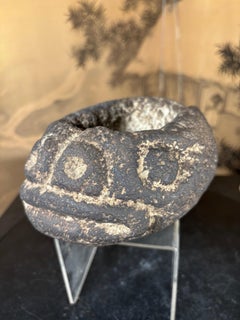
Pre-Columbian, Hispaniola, Arawak Peoples, Taino Native Indians, 1000 to 1500 CE. This is a fine and important ancestor sculpture from the Arawak Peoples of the Greater Antilles Islands. It is a choice example. Sometimes described as a -cemi- this work of art belongs to a broader category of Taino art...

Category

15th Century and Earlier American Pre-Columbian Antique Vermont - Native American Objects
Materials

Stone

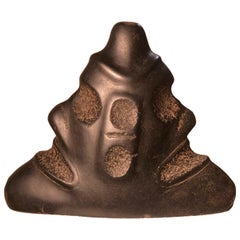
America’s First “Spirit God” Double Headed Ancestor 500 Years Old

America’s First “Spirit God” Double Headed Ancestor 500 Years Old

Located in South Burlington, VT

Pre-Columbian, Hispaniola, Arawak Peoples, Taino Native Indians, 1000-1500 CE. This is a fine and important ancestor sculpture from the Arawak Peoples of the Greater Antilles Islands. It is as nice as one will ever find. Sometimes described as a -three-pointer stone or - trigonolitos- this work of art belongs to a broader category of Taino art...

Category

15th Century and Earlier American Pre-Columbian Antique Vermont - Native American Objects
Materials

Stone

Native America Antique Seated Human Effigy "Star Gazer"

Native America Antique Seated Human Effigy "Star Gazer"

Located in South Burlington, VT

Native America seated human effigy "Star Gazer", 14cm, 5.6” high, 19th century or earlier. The seated earth mother posed figure fashioned from a dense ...

Category

19th Century American Antique Vermont - Native American Objects
Materials
Clay