186 results for ""albert einstein""

to
9
134
30
92
91
59
39
32
17
13
10
8
7
6
6
4
3
2
2
1
1
1
1
15
9
8
6
6
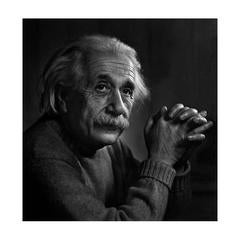
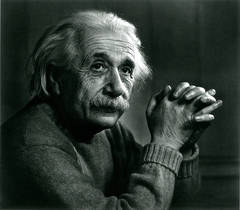
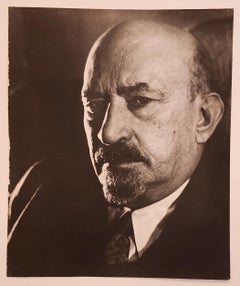
Albert Einstein
Albert Einstein

Albert Einstein

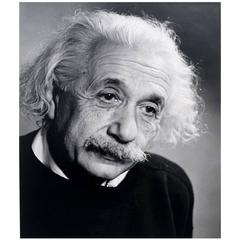
By Yousuf Karsh

Located in Santa Monica, CA

Karsh is a master 20th Century photographer. Karsh is known for his portraits of authors, scientists, artists, statesmen, musicians, and other dis...

Category

1940s Portrait Photography

Materials

Silver Gelatin

Albert Einstein
Albert Einstein

Albert Einstein

By Marcel Sternberger

Located in Toronto, ON

20" x 16" Unframed Limited Edition Estate Photograph of 20 Hand Signed by Marcel Sternberger

Category

21st Century and Contemporary Portrait Photography

Materials

Archival Pigment

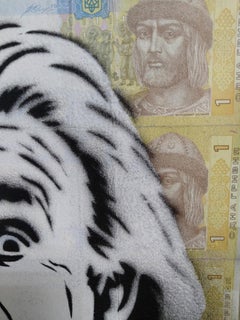
"Albert Einstein"
"Albert Einstein"

"Albert Einstein"

By Kyrylo Bondarenko

Located in Edinburgh, GB

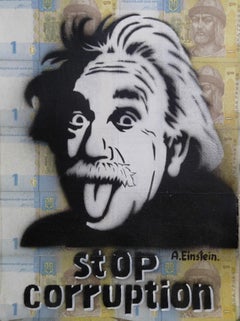
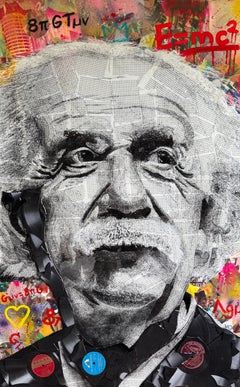
The picture was painted in Ukrainian hryvnia. This is a new world direction in art. In 40 countries of the world. My paintings are in the collections of world museums. This is an exc...

Category

21st Century and Contemporary Abstract Portrait Paintings

Materials

Spray Paint, Acrylic

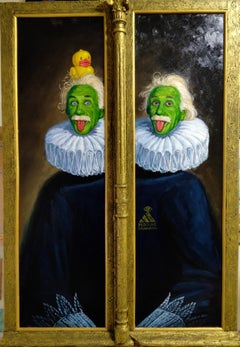
"Albert Einstein Conjoined twins"

"Albert Einstein Conjoined twins"

By Kyrylo Bondarenko

Located in Edinburgh, GB

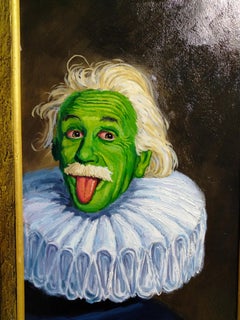
Albert Einstein. New Syria paintings .. Siamese Masons .. The apocalypse has come, humanity has lost all the resources on the planet. Humanity has plunged into the Middle Ages, in...

Category

21st Century and Contemporary Realist Portrait Paintings

Materials

Oil

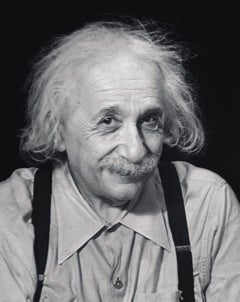
Iconic Limited Edition Fred Stein Photo of Albert Einstein

Iconic Limited Edition Fred Stein Photo of Albert Einstein

Located in New York, NY

Stunning large gelatin silver limited edition photograph; one of the most iconic images of the 20th century. One of only 450 in the edition. “In 1946, when Albert Einstein was in residence at Princeton University, Fred Stein...

Category

Vintage 1940s Books

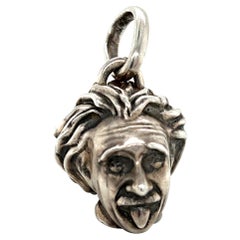
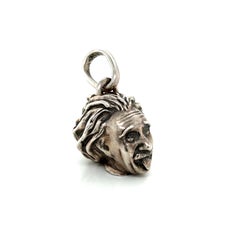
Sterling Silver "Albert Einstein" Key Ring/Pill Box/Pendant

Sterling Silver "Albert Einstein" Key Ring/Pill Box/Pendant

Located in New York, NY

Sterling Silver with Brass Accents "Albert Einstein" Key Ring/Pill Box/Hidden Compartment that Opens and Closes with Magnetic System. Could Be Worn as a Pendant or a Key Chain. This ...

Category

21st Century and Contemporary American Boxes and Cases

Materials

Sterling Silver

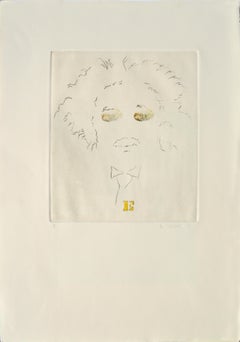
"E" Albert Einstein Portrait #10

"E" Albert Einstein Portrait #10

By Lilya Vorobey

Located in Soquel, CA

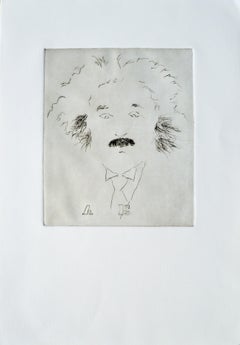
Albert Einstein portrait, "E", a collotype print, watercolor by Lilya Vorobey (American, 21st C). Unsigned. From a collection of her works. On mat board. Image, 9.75"H x 7.75"W. Full...

Category

1980s American Modern Figurative Prints

Materials

Etching, Printer's Ink

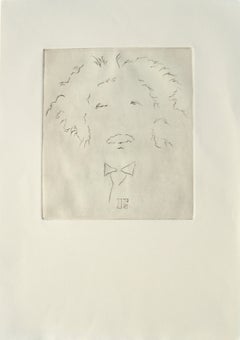
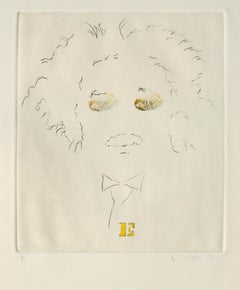
"E"  Albert Einstein, Modern Portrait

"E" Albert Einstein, Modern Portrait

By Lilya Vorobey

Located in Soquel, CA

Albert Einstein "E", a color collotype print, watercolor modern portrait by Lilya Vorobey (American, 20th C). Titled "E" lower left, signed and dated "L. Vorobey '89" lower right. On...

Category

1980s American Modern Figurative Prints

Materials

Watercolor, Color, Etching

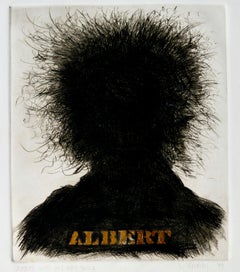
"Albert" Albert Einstein Portrait #5

"Albert" Albert Einstein Portrait #5

By Lilya Vorobey

Located in Soquel, CA

Albert Einstein portrait, "Albert", a color collotype print, watercolor by Lilya Vorobey (American, 21st C). Titled "Albert with his wry smile and electrifying white hair" lower righ...

Category

1980s American Modern Figurative Prints

Materials

Watercolor, Color, Etching

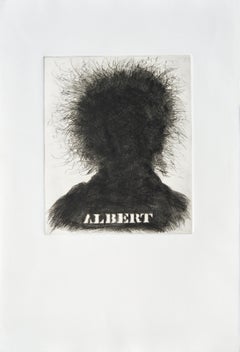
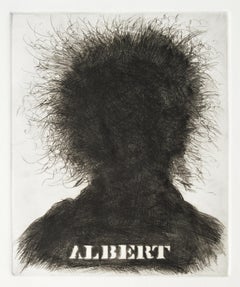
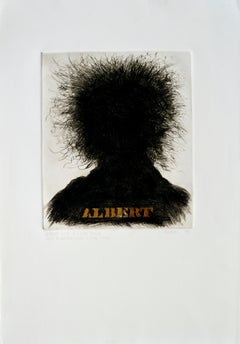
"Albert",  Albert Einstein Portrait Silhouette

"Albert", Albert Einstein Portrait Silhouette

By Lilya Vorobey

Located in Soquel, CA

Albert Einstein silhouetted portrait, a collotype print, watercolor by Lilya Vorobey (American, 21st C). Unsigned. From a collection of her works. Image, 9.75"H x 5.88"W. Full Sheet...

Category

1980s American Modern Figurative Prints

Materials

Watercolor, Color, Etching

Albert Einstein "E=mc2"

Albert Einstein "E=mc2"

By Ben Riley

Located in Toronto, ON

Original mixed media artwork by British artist, Ben Riley. Created from actual broken, ground down and powdered vinyl and Bakelite records, Ben has mas...

Category

21st Century and Contemporary Mixed Media

Materials

Canvas

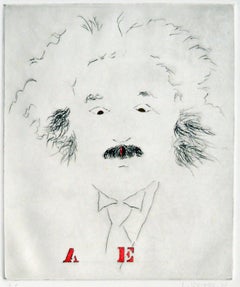
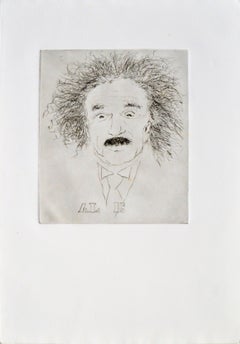
"A E" Albert Einstein Portrait #7

"A E" Albert Einstein Portrait #7

By Lilya Vorobey

Located in Soquel, CA

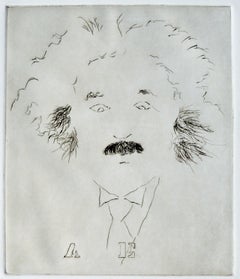
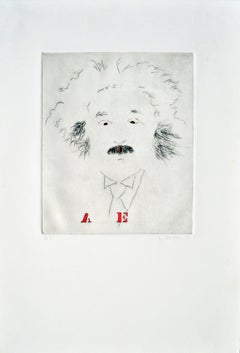
Albert Einstein portrait, "A E", a black and white collotype print by Lilya Vorobey (American, 21st C). Unsigned. From a collection of her works. On mat board. Image, 9.75"H x 7.75"W...

Category

1980s American Modern Portrait Prints

Materials

Watercolor, Etching

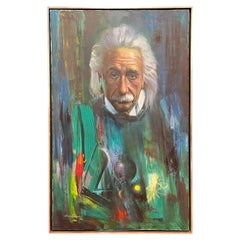
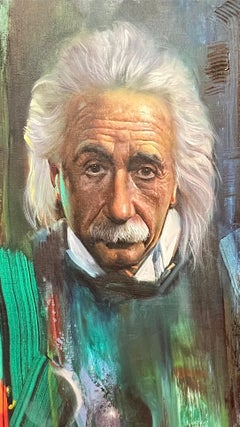
Cyrus Afsary Portrait of Albert Einstein

Cyrus Afsary Portrait of Albert Einstein

Located in New York, NY

Portrait of Albert Einstein by Cyrus Afsary (1941- ), oil on canvas. Signed and dated 1980, mounted in simple wooden frame measuring 31.5 by 49 by 1 7/8 inches.

Category

Late 20th Century Paintings

Materials

Canvas

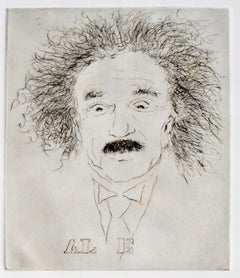
"A L E" Albert Einstein Portrait #9

"A L E" Albert Einstein Portrait #9

By Lilya Vorobey

Located in Soquel, CA

Albert Einstein portrait, "A L E", a color collotype print, watercolor by Lilya Vorobey (American, 20th C). Unsigned. From a collection of her works. On mat board. Image, 9.75"H x 7....

Category

1980s American Modern Figurative Prints

Materials

Watercolor, Color, Etching

"A E", Albert Einstein Portrait #8

"A E", Albert Einstein Portrait #8

By Lilya Vorobey

Located in Soquel, CA

Albert Einstein portrait, "A E", a color collotype print, watercolor by Lilya Vorobey (American, 20th C). Titled "AE" lower left. Signed "L. Vorobey" and dated "89" lower right. On m...

Category

1980s American Modern Portrait Prints

Materials

Watercolor, Color, Etching

Rare Lifesize Albert Einstein Statue w/ Storage Cabinet in Fiberglass, USA, 1980

Rare Lifesize Albert Einstein Statue w/ Storage Cabinet in Fiberglass, USA, 1980

Located in Deland, FL

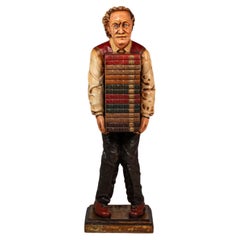
Introducing a rare, hand-made sculpture depicting the iconic theoretical physicist Albert Einstein carrying a large stack of books. The book stack is actually a hidden wooden storage...

Category

Vintage 1980s American Mid-Century Modern Figurative Sculptures

Materials

Fiberglass

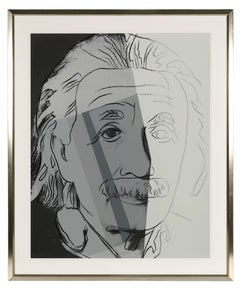
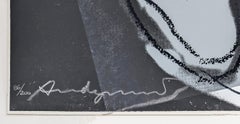
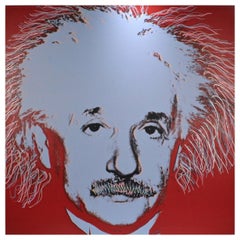
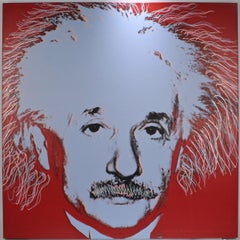
Albert Einstein Screen Print on Lenox Museum Board, Signed, 86/200

Albert Einstein Screen Print on Lenox Museum Board, Signed, 86/200

By Andy Warhol

Located in Aventura, FL

Screen print on Lenox Museum Board. Hand signed lower right by Andy Warhol. Hand numbered 86/200 on lower right (there are also 30 APs, 5 PPs, and 3 HCs). Artwork size: 40 x 32 in...

Category

1980s Pop Art Figurative Prints

Materials

Board, Screen

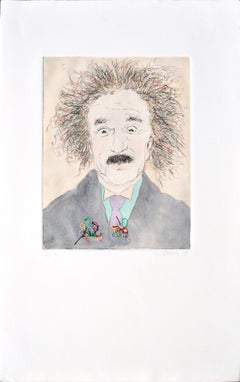
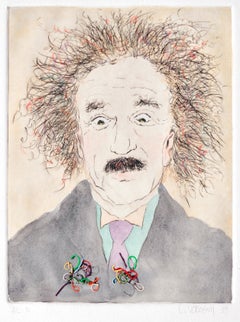
Portrait of Albert Einstein with Multi-Colored Wires

Portrait of Albert Einstein with Multi-Colored Wires

By Lilya Vorobey

Located in Soquel, CA

Portrait of Albert Einstein, a color collotype print, watercolor with electric wires, by Lilya Vorobey (American, 20th Century). Signed and dated "L. Vorobey '89" lower right. On mat...

Category

1980s American Modern Figurative Prints

Materials

Wire

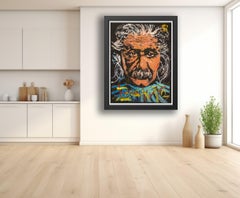
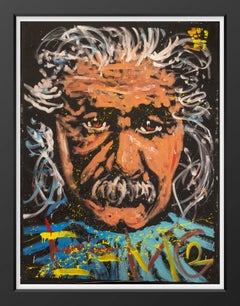
Denny Dent Albert Einstein Large 74.5” Original Canvas Painting

Denny Dent Albert Einstein Large 74.5” Original Canvas Painting

By Denny Dent

Located in Minneapolis, MN

Artist: Denny Dent Title: Albert Einstein Medium: Original Oil on Canvas Painting Size: 74.5" x 53" Date: C. 1990s Denny Dent's Albert Einstein is a commanding tribute to one of the...

Category

1990s Portrait Paintings

Materials

Oil, Paper

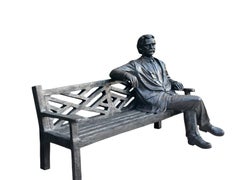
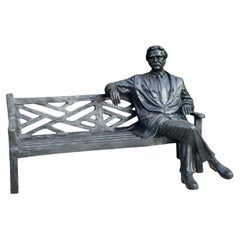
Vintage Life Size Bronze of Albert Einstein on a Garden Bench 20th Century

Vintage Life Size Bronze of Albert Einstein on a Garden Bench 20th Century

Located in London, GB

This is a spectacular vintage larger than life-size bronze statue of the German-born theoretical physicist, Albert Einstein, sitting in a relaxed and informal way on a wodden outdoor...

Category

Late 20th Century Benches

Materials

Bronze

Einstein State I, a Pop-Art Screen-Print of Albert Einstein by Sak Steve Kaufman

Einstein State I, a Pop-Art Screen-Print of Albert Einstein by Sak Steve Kaufman

By Steve Kaufman

Located in Philadelphia, PA

Title: Einstein State I (with embellishments). By: Steve Kaufman. Date: 1990s. A limited edition screen-print on canvas with hand embellishments (in oil). Depicting Alber...

Category

Late 20th Century American Post-Modern Paintings

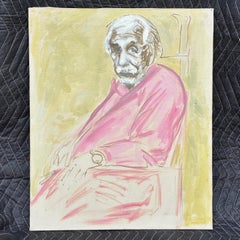
Mid-Century Stylized Portrait of Albert Einstein Original Oil Painting on Canvas

Mid-Century Stylized Portrait of Albert Einstein Original Oil Painting on Canvas

Located in West Chester, PA

Very nice original vintage painting of Albert Einstein in pink with light green background - does not appear to be signed anywhere.

Category

Mid-20th Century American Mid-Century Modern Paintings

Materials

Canvas, Wood, Paint

Albert Einstein
Albert Einstein

Albert Einstein

By Andy Warhol

Located in New York, NY

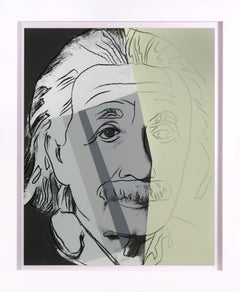
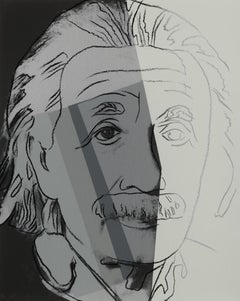
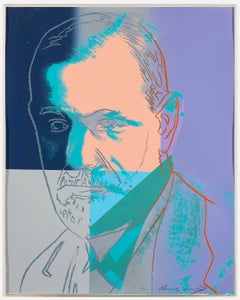
Created as part of the artist's Ten Portraits of Jews of the Twentieth Century portfolio, Albert Einstein was created by Andy Warhol in 1980 as an original screenprint on Lenox Museu...

Category

20th Century Pop Art Portrait Prints

Materials

Screen

Albert Einstein

Albert Einstein

By Yousuf Karsh

Located in New York, NY

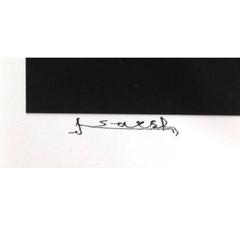
Signed by the photographer in ink on the mount

Materials

Silver Gelatin

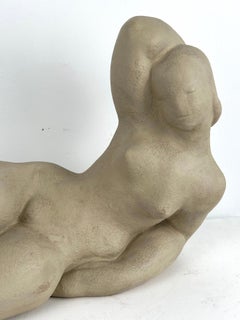
Relining Nude (WG6)
Relining Nude (WG6)

Relining Nude (WG6)

By Waylande Gregory

Located in Wilton Manors, FL

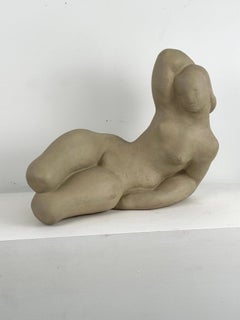
Waylande Gregory (1905-1971). Nude Reclining, ca. 1950's. Painted composite cast from original sculpted in 1930's. Casting sanctioned and approved by the artist during his lifetime in partnership with MPI, Museum Pieces Incorporated. Very few examples were produced and even fewer survive. Waylande Gregory was considered a major American sculptor during the 1930's, although he worked in ceramics, rather than in the more traditional bronze or marble. Exhibiting his ceramic works at such significant American venues for sculpture as the Whitney Museum of American Art in New York City and at the venerable Pennsylvania Academy of the Fine Arts in Philadelphia, he also showed his ceramic sculptures at leading New York City galleries. Gregory was the first modern ceramist to create large scale ceramic sculptures, some measuring more than 70 inches in height. Similar to the technique developed by the ancient Etruscans, he fired his monumental ceramic sculptures only once. Gregory was born in 1905 in Baxter Springs, Kansas and was something of a prodigy. Growing up on a ranch near a Cherokee reservation, Gregory first became interested in ceramics as a child during a native American burial that he had witnessed. He was also musically inclined. In fact, his mother had been a concert pianist and had given her son lessons. At eleven, he was enrolled as a student at the Kansas State Teacher's College, where he studied carpentry and crafts, including ceramics. Gregory's early development as a sculptor was shaped by the encouragement and instruction of Lorado Taft, who was considered both a major American sculptor as well as a leading American sculpture instructor. In fact, Taft's earlier students included such significant sculptors as Bessie Potter Vonnoh and Janet Scudder. But, Taft and his students had primarily worked in bronze or stone, not in clay; and, Gregory's earliest sculptural works were also not in ceramics. In 1924, Gregory moved to Chicago where he caught the attention of Taft. Gregory was invited by Taft to study with him privately for 18 months and to live and work with him at his famed "Midway Studios." The elegant studio was a complex of 13 rooms that overlooked a courtyard. Taft may have been responsible for getting the young man interested in creating large scale sculpture. However, by the 1920's, Taft's brand of academic sculpture was no longer considered progressive. Instead, Gregory was attracted to the latest trends appearing in the United States and Europe. In 1928 he visited Europe with Taft and other students. "Kid Gregory," as he was called, was soon hired by Guy Cowan, the founder of the Cowan Pottery in Cleveland, Ohio, to become the company's only full time employee. From 1928 to 1932, Gregory served as the chief designer and sculptor at the Cowan Pottery. Just as Gregory learned about the process of creating sculpture from Taft, he literally learned about ceramics from Cowan. Cowan was one of the first graduates of Alfred, the New York School of Clayworking and Ceramics. Alfred had one of the first programs in production pottery. Cowan may have known about pottery production, but he had limited sculptural skills, as he was lacking training in sculpture. The focus of the Cowan Pottery would be on limited edition, table top or mantle sculptures. Two of the most successful of these were Gregory's Nautch Dancer, and his Burlesque Dancer. He based both sculptures on the dancing of Gilda Gray, a Ziegfield Follies girl. Gilda Gray was of Polish origin and came to the United States as a child. By 1922, she would become one of the most popular stars in the Follies. After losing her assets in the stock market crash of 1929, she accepted other bookings outside of New York, including Cleveland, which was where Gregory first saw her onstage. She allowed Gregory to make sketches of her performances from the wings of the theatre. She explained to Gregory, "I'm too restless to pose." Gray became noted for her nautch dance, an East Indian folk dance. A nautch is a tight, fitted dress that would curl at the bottom and act like a hoop. This sculpture does not focus on Gray's face at all, but is more of a portrait of her nautch dance. It is very curvilinear, really made of a series of arches that connect in a most feminine way. Gregory created his Burlesque Dancer at about the same time as Nautch Dancer. As with the Nautch Dancer, he focused on the movements of the body rather than on a facial portrait of Gray. Although Gregory never revealed the identity of his model for Burlesque Dancer, a clue to her identity is revealed in the sculpture's earlier title, Shimmy Dance. The dancer who was credited for creating the shimmy dance was also Gilda Gray. According to dance legend, Gray introduced the shimmy when she sang the Star Spangled Banner and forgot some of the lyrics, so, in her embarrassment, started shaking her shoulders and hips but she did not move her legs. Such movement seems to relate to the Burlesque Dancer sculpture, where repeated triangular forms extend from the upper torso and hips. This rapid movement suggests the influence of Italian Futurism, as well as the planar motion of Alexander Archipenko, a sculptor whom Gregory much admired. The Cowan Pottery was a victim of the great depression, and in 1932, Gregory changed careers as a sculptor in the ceramics industry to that of an instructor at the Cranbrook Academy in Bloomfield Hills, Michigan. Cranbrook was perhaps the most prestigious place to study modern design in America. Its faculty included the architect Eliel Saarinen and sculptor Carl Milles. Although Gregory was only at Cranbrook for one and one half years, he created some of his finest works there, including his Kansas Madonna. But, after arriving at Cranbrook, the Gregory's had to face emerging financial pressures. Although Gregory and his wife were provided with complimentary lodgings, all other income had to stem from the sale of artworks and tuition from students that he, himself, had to solicit. Gregory had many people assisting him with production methods at the Cowan Pottery, but now worked largely by himself. And although he still used molds, especially in creating porcelain works, many of his major new sculptures would be unique and sculpted by hand, as is true of Kansas Madonna. The scale of Gregory's works were getting notably larger at Cranbrook than at Cowan. Gregory left the surface of Kansas Madonna totally unglazed. Although some might object to using a religious title to depict a horse nursing its colt, it was considered one of Gregory's most successful works. In fact, it had a whole color page illustration in an article about ceramic sculpture titled, "The Art with the Inferiority Complex," Fortune Magazine, December, 1937. The article notes the sculpture was romantic and expressive and the sculpture was priced at $1,500.00; the most expensive sculpture...

Category

1950s Art Deco Figurative Sculptures

Materials

Plaster

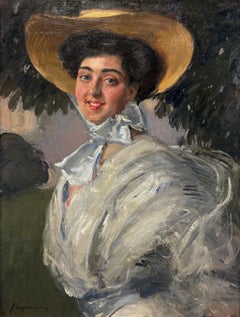
“Portrait of a Lady in White, c. 1905-10” Impressionist Edwardian Belle Époque

“Portrait of a Lady in White, c. 1905-10” Impressionist Edwardian Belle Époque

Located in Yardley, PA

“Portrait of a Lady in White, c. 1905-10” by Joseph Oppenheimer (1876-1966). An exceptional portrait by Oppenheimer of a spirited young woman turned in half-profile. This work exemp...

Category

Early 20th Century Impressionist Portrait Paintings

Materials

Canvas, Oil

Musicians. By Constantin Selihanov. Bronze.

Musicians. By Constantin Selihanov. Bronze.

Located in Riga, LV

Konstantin Vladimirovich Selikhanov (born June 18, 1967, Minsk) is a Belarusian sculptor, artist, and graphic artist, the grandson of sculptor S. I. Selikhanov. The alley leading to ...

Category

Early 2000s Surrealist Abstract Sculptures

Materials

Bronze

Mr Brainwash - Love Catcher (Blue), Street Art

Mr Brainwash - Love Catcher (Blue), Street Art

By Mr. Brainwash

Located in London, GB

Mr. Brainwash Love Catcher - Blue, 2023 Screenprint on Archival paper 22 × 22 in 55.9 × 55.9 cm Frame included Edition of 75 Mr. Brainwash, the pseudonym of Thierry Guetta, is a Fr...

Category

2010s Street Art Figurative Prints

Materials

Screen

Snail. By Constantin Selihanov. Bronze. 19x29x10 cm

Snail. By Constantin Selihanov. Bronze. 19x29x10 cm

Located in Riga, LV

Konstantin Vladimirovich Selikhanov (born June 18, 1967, Minsk) is a Belarusian sculptor, artist, and graphic artist, the grandson of sculptor S. I. Selikhanov. The alley leading to ...

Category

Early 2000s Surrealist Abstract Sculptures

Materials

Bronze

Mr. Brainwash - World Class 13 color silkscreen with paint Unique variant Signed

Mr. Brainwash - World Class 13 color silkscreen with paint Unique variant Signed

By Mr. Brainwash

Located in New York, NY

Mr. Brainwash World Class, 2009 Thirteen color silkscreen on hand stained archival art paper. Individually finished with spray paint and stencil balloon; unique variant Hand signed t...

Category

Early 2000s Street Art Portrait Prints

Materials

Stencil, Screen, Archival Paper, Spray Paint

Early 20th Century Ceramic Sculpture of a Polo Player and Horse

Early 20th Century Ceramic Sculpture of a Polo Player and Horse

By Waylande Gregory

Located in Beachwood, OH

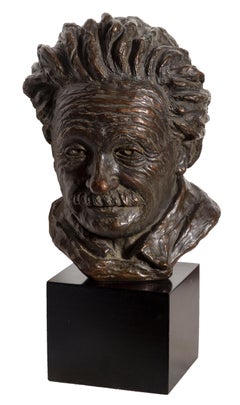
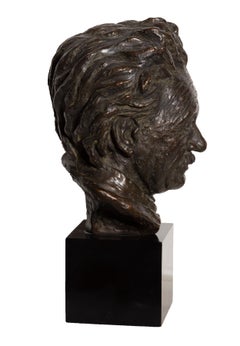
Waylande Gregory (American, 1905-1971) Polo Player, c. 1930s Ceramic Inscribed signature on bottom 11 x 8.5 inches Waylande Gregory was considered a major American sculptor during the 1930's, although he worked in ceramics, rather than in the more traditional bronze or marble. Exhibiting his ceramic works at such significant American venues for sculpture as the Whitney Museum of American Art in New York City and at the venerable Pennsylvania Academy of the Fine Arts in Philadelphia, he also showed his ceramic sculptures at leading New York City galleries. Gregory was the first modern ceramist to create large scale ceramic sculptures, some measuring more than 70 inches in height. Similar to the technique developed by the ancient Etruscans, he fired his monumental ceramic sculptures only once. Gregory was born in 1905 in Baxter Springs, Kansas and was something of a prodigy. Growing up on a ranch near a Cherokee reservation, Gregory first became interested in ceramics as a child during a native American burial that he had witnessed. He was also musically inclined. In fact, his mother had been a concert pianist and had given her son lessons. At eleven, he was enrolled as a student at the Kansas State Teacher's College, where he studied carpentry and crafts, including ceramics. Gregory's early development as a sculptor was shaped by the encouragement and instruction of Lorado Taft, who was considered both a major American sculptor as well as a leading American sculpture instructor. In fact, Taft's earlier students included such significant sculptors as Bessie Potter Vonnoh and Janet Scudder. But, Taft and his students had primarily worked in bronze or stone, not in clay; and, Gregory's earliest sculptural works were also not in ceramics. In 1924, Gregory moved to Chicago where he caught the attention of Taft. Gregory was invited by Taft to study with him privately for 18 months and to live and work with him at his famed "Midway Studios." The elegant studio was a complex of 13 rooms that overlooked a courtyard. Taft may have been responsible for getting the young man interested in creating large scale sculpture. However, by the 1920's, Taft's brand of academic sculpture was no longer considered progressive. Instead, Gregory was attracted to the latest trends appearing in the United States and Europe. In 1928 he visited Europe with Taft and other students. "Kid Gregory," as he was called, was soon hired by Guy Cowan, the founder of the Cowan Pottery in Cleveland, Ohio, to become the company's only full time employee. From 1928 to 1932, Gregory served as the chief designer and sculptor at the Cowan Pottery. Just as Gregory learned about the process of creating sculpture from Taft, he literally learned about ceramics from Cowan. Cowan was one of the first graduates of Alfred, the New York School of Clayworking and Ceramics. Alfred had one of the first programs in production pottery. Cowan may have known about pottery production, but he had limited sculptural skills, as he was lacking training in sculpture. The focus of the Cowan Pottery would be on limited edition, table top or mantle sculptures. Two of the most successful of these were Gregory's "Nautch Dancer," (fig. 1) and his "Burlesque Dancer," (fig. 2). He based both sculptures on the dancing of Gilda Gray, a Ziegfield Follies girl. Gilda Gray was of Polish origin and came to the United States as a child. By 1922, she would become one of the most popular stars in the Follies. After losing her assets in the stock market crash of 1929, she accepted other bookings outside of New York, including Cleveland, which was where Gregory first saw her onstage. She allowed Gregory to make sketches of her performances from the wings of the theatre. She explained to Gregory, "I'm too restless to pose." Gray became noted for her nautch dance, an East Indian folk dance. A nautch is a tight, fitted dress that would curl at the bottom and act like a hoop. This sculpture does not focus on Gray's face at all, but is more of a portrait of her nautch dance. It is very curvilinear, really made of a series of arches that connect in a most feminine way. Gregory created his "Burlesque Dancer" at about the same time as "Nautch Dancer." As with the "Nautch Dancer," he focused on the movements of the body rather than on a facial portrait of Gray. Although Gregory never revealed the identity of his model for "Burlesque Dancer," a clue to her identity is revealed in the sculpture's earlier title, "Shimmy Dance." The dancer who was credited for creating the shimmy dance was also Gilda Gray. According to dance legend, Gray introduced the shimmy when she sang the "Star Spangled Banner" and forgot some of the lyrics, so, in her embarrassment, started shaking her shoulders and hips but she did not move her legs. Such movement seems to relate to the "Burlesque Dancer" sculpture, where repeated triangular forms extend from the upper torso and hips. This rapid movement suggests the influence of Italian Futurism, as well as the planar motion of Alexander Archipenko, a sculptor whom Gregory much admired. The Cowan Pottery was a victim of the great depression, and in 1932, Gregory changed careers as a sculptor in the ceramics industry to that of an instructor at the Cranbrook Academy in Bloomfield Hills, Michigan. Cranbrook was perhaps the most prestigious place to study modern design in America. Its faculty included the architect Eliel Saarinen and sculptor Carl Milles. Although Gregory was only at Cranbrook for one and one half years, he created some of his finest works there, including his "Kansas Madonna" (fig. 3). But, after arriving at Cranbrook, the Gregory's had to face emerging financial pressures. Although Gregory and his wife were provided with complimentary lodgings, all other income had to stem from the sale of artworks and tuition from students that he, himself, had to solicit. Gregory had many people assisting him with production methods at the Cowan Pottery, but now worked largely by himself. And although he still used molds, especially in creating porcelain works, many of his major new sculptures would be unique and sculpted by hand, as is true of "Kansas Madonna." The scale of Gregory's works were getting notably larger at Cranbrook than at Cowan. Gregory left the surface of "Kansas Madonna" totally unglazed. Although some might object to using a religious title to depict a horse nursing its colt, it was considered one of Gregory's most successful works. In fact, it had a whole color page illustration in an article about ceramic sculpture titled, "The Art with the Inferiority Complex," Fortune Magazine, December, 1937. The article notes the sculpture was romantic and expressive and the sculpture was priced at $1,500.00; the most expensive sculpture in the article. Gregory was from Kansas, and "Kansas Madonna" should be considered a major sculptural document of Regionalism. Gregory and his wife Yolande moved to New Jersey in the summer of 1933. And the artist began construction on his new home in the Watchung Mountains of Bound Brook (Warren today) in 1938. His enormous, custom kiln was probably constructed at the start of 1938. Gregory's new sculptures were the largest ceramic sculptures in western art, in modern times. To create these works of ceramic virtuosity, the artist developed a "honeycomb" technique, in which an infrastructure of compartments was covered by a ceramic "skin." Science and atomic energy were a theme in Gregory's most significant work, the "Fountain of the Atom" (fig. 4), at the 1939 New York's World Fair. This major work included twelve monumental ceramic figures at the fairground entrance from the newly constructed railway entrance, giving the work great visibility and prominence. The framework of the fountain itself was of steel and glass bricks. It consisted of a bluish green pool which was sixty five feet in diameter. Above it were two concentric circular tiers, or terraces, as Gregory called them; the first wider than the second. On the first terrace were eight "Electrons," comprised of four male and four female terra cotta figures, each approximately 48 inches high. These relate to the valance shell of the atom. Above them on a narrower terrace, were the much larger and heavier terra cotta figures depicting the four elements, each averaging about 78 inches in height and weighing about a ton and a half. Of the four, "Water" and "Air" were male, while "Earth" and "Fire" were female. This terrace represents the nucleus of the atom. In the center of the fountain, above the "Elements," was a central shaft comprised of sixteen glass tubes from which water tumbled down from tier to tier. At the top, a colorful flame burned constantly. The glass block tiers were lit from within, the whole creating a glowing and gurgling effect. Since the fair was temporary, the figures could be removed after its closing. But the credit for the design of the structure of the fountain belongs to collaborator Nembhard Culin, who was responsible for several other structures on the fair grounds as well. Although Gregory created a figure of "Fire" for the "Fountain of the Atom," he also executed a second, slightly smaller but more defined version which he exhibited at various locations (including Cranbrook, Baltimore Museum, etc.) in 1940-1941, during the second year of the fair (fig.5). Measuring 61 inches in height, "Fire" may be a metaphor for sexual energy, as well as atomic energy. Gregory stated, "Fire is represented by an aquiline female figure being consumed in endless arabesques of flame." Portraiture was also a significant focus of Gregory's sculpture. Gregory produced many commissioned portraits of local people as well as celebrities. He created Albert Einstein's portrait from life (fig. 6, ca. 1940) after Einstein had seen Gregory's "Fountain of the Atom." He also sculpted some of the leading figures in entertainment, including 2 sculptures of Henry Fonda, who became a personal friend. Gregory also sculpted a series of idealized female heads, both in terra cotta and in porcelain. These include "Girl with Olive" (ca. 1932) and "Cretan Girl;"(ca. 1937) both are very reductive and almost abstract works that call to mind Constantine Brancusi's "Mademoiselle Pogany" (1912, Philadelphia Museum of Art). But perhaps one of his most original female heads is "Head of a Child" (fig. 7, ca. 1933), a sensitive white glazed terra cotta portrayal with elaborately crafted braded hair, was originally created as one of a pair. Gregory also produced sculptural works for the Works Progress Administration. The WPA was a work relief project that greatly helped artists during the great depression. Founded by the Federal Government in 1935, an estimated 2500 murals were produced. Among these public works were the iconic post office murals. But, among the painted murals were also sculptural relief murals including Gregory's "R.F.D.," 1938, for the Columbus, Kansas Post Office. But, Gregory's largest WPA relief...

Category

1930s Figurative Sculptures

Materials

Ceramic

British Sad Clown Boy Oil Painting on Canvas Barry Leighton Jones Circus Scene

British Sad Clown Boy Oil Painting on Canvas Barry Leighton Jones Circus Scene

By Barry Leighton-Jones

Located in Surfside, FL

Frame: 27 X 21 Image: 23.5 X 17.5 Barry Leighton-Jones was born in London, England in 1932 and is a direct descendant of the Victorian artist and President of the Royal Academy, Lor...

Category

20th Century Contemporary Portrait Paintings

Materials

Canvas, Oil

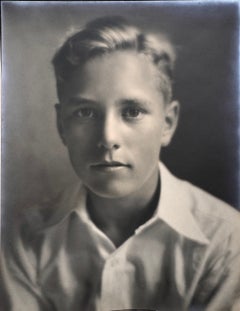
"Portrait of Blonde Youth", 1931 Hagemeyer Photo of Orrick Law Firm Relation

"Portrait of Blonde Youth", 1931 Hagemeyer Photo of Orrick Law Firm Relation

Located in Philadelphia, PA

This bold, strong view of a blonde youth -- his name was Daniel Orrick -- was made by Johan Hagemeyer, an important California photographer who was encouraged to pursue his work by n...

Category

Vintage 1930s American Art Deco Photography

Materials

Paper

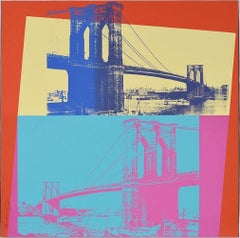
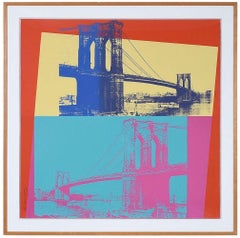
Brooklyn Bridge, FS 11.290

Brooklyn Bridge, FS 11.290

By Andy Warhol

Located in Miami, FL

TECHNICAL INFORMATION: Andy Warhol Brooklyn Bridge, FS 11.290 1983 Screenprint on Lenox Museum Board 39 1/4 x 39 1/4 in. Edition of 200 Pencil signed & numbered Condition: This...

Category

1980s Pop Art Landscape Prints

Materials

Screen

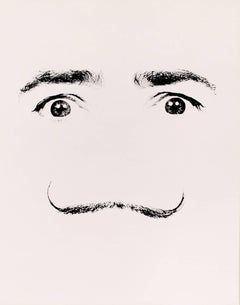
The Essence of Dali
The Essence of Dali

The Essence of Dali

By Salvador Dali and Philippe Halsman

Located in Buffalo, NY

The work offered for sale here is an original vintage silver gelatin print hand created by Halsman hand signed and exhibited at the International Center for Photography. Philippe Halsman was at one point considered the best photo-portraitist in France. He had an incessant interest in faces: “Every face I see seems to hide—and sometimes fleetingly reveal—the mystery of another human being.” Halsman’s photographs of politicians, celebrities, and intellectuals were featured widely in magazines like LIFE and Vogue. His more famous subjects included the likes of Marc Chagall, Le Corbusier, Audrey Hepburn, and Albert Einstein. He also had a 37-year collaboration with Salvador Dalí, which resulted in several famous surrealist series including the “Dalí’s Mustache” portraits...

Category

1950s Surrealist Portrait Photography

Materials

Silver Gelatin

Brazilian Modernist Abstract Oil Painting Latin American Expressionist Concreta

Brazilian Modernist Abstract Oil Painting Latin American Expressionist Concreta

Located in Surfside, FL

Abstract oil on canvas painting by Ivan Freitas. 25" x 31" inch canvas, framed to 30" x 36". It is signed at the lower right. Bearing a Barcinski Art Gallery label verso and a second label stating that the painting was sold in 1961 at a benefit auction for the Albert Einstein Hospital held at the Museum of San Paulo. Ivan Freitas was a Brazilian Postwar & Contemporary painter and Muralist (1932-2006) Son of muralist Severino Araújo, Ivan started painting as a self-taught artist. His first individual exhibition was at the Public Library, in 1957. With the success of the exhibition, he was able to move to Rio de Janeiro the following year, in 1958, where he came into contact with the work of artists such as Salvador Dali and Rene Magritte who influenced him. Between 1962 and 1963 he resided as a fellow in Paris. Between 1969 and 1972, he was on his second tour abroad, in New York City and commissioned by the International Telephone and Telegraph Corporation. Back in Brazil, he painted a mural of over a thousand square meters on the external wall of the National School of Music in Rio de Janeiro in 1984 - the first of the Arte nos Muros Project. Still in the 70s, he married Dalva Mendes Gall whom he left after his death in 200, an extensive collection where one can find all the best works of this renowned Paraiba artist in Brazil and abroad. The stay in New York, from 1969 to 1972, was perhaps the greatest turning point in Ivan's career. Until then, according to art critic Roberto Pontual, the plastic artist followed "a phase of abstraction close to the informal". In the United States , with so much technological influence around him, Ivan becomes interested in the machine and its movement mechanisms and inserts these perceptions in his works, as kinetic constructions with small motors hidden in boxes as Pontual defines, and also and triggering light patterns in cyclic and repeated series. (similar to the Op Art works of Julio le Parc and works by Yves Tinguely being shown at Rene Denis Gallery in Paris In 1968, the magazine Galeria de Arte Moderna (GAM), published an article entitled Ivan Freitas and the Cosmic Space. In the Brazilian Dictionary of Plastic Artists , the Italian art critic Giuseppe Marchiori refers to Ivan Frentas as someone who "controls and dominates each part of the painting with a desire to deepen the image that surprises and enchants". Still according to the critic, Ivan is someone who preserves the mystery in the harmony between lines and the colorful atmosphere, where he creates pauses and rhythms for the reading of his "secret structures". Arte Neo Concreta artists Lygia Clark, Helio Oiticica and Lygia Pape, were all contemporaries The poet Ferreira Gullar writes: "Freitas does not turn to the subjective world, does not inquire into the arcana of the unconscious; he inquires into the future and, in the solitude of his paintings, promises us a serene and orderly world. And, if in his landscapes man does not appear, it is not that this order excludes him - it is that he has not yet reached it. " Selec Solo Exhibitions 1957 - João Pessoa Public Library; João Pessoa, PB. 1960 - Ivan Freitas: Painting Exhibitions , at the Penguin Gallery; Rio de Janeiro - RJ. 1961 - MAM-BA , Salvador , BA. 1962 - Rubbers Gallery; Buenos Aires , Argentina . 1962 - La Cabana Galeria; Trieste , Italy . 1962 - Brazil-United States Cultural Institute; Rio de Janeiro - RJ. 1962 - Brazil-Uruguay Institute; Montevideo , Uruguay . 1962 - Barcinski Gallery; Rio de Janeiro - RJ. 1963 - Galleria Del Canale, Naples , Italy. 1963 - Ivan Freitas: Paris 1963, at the Barcinski Gallery ; Rio de Janeiro - RJ. 1964 - Barcinski Gallery; Rio de Janeiro - RJ. 1966 - Relief Gallery; Rio de Janeiro - RJ. 1968 - Relief Gallery; Rio de Janeiro - RJ. 1969 - Pan American Union; Washington , United States. 1971 - Miramar Gallery; New York, United States. 1971 - Bloomingdale's Art Gallery; New York, United States. 1973 - Individual, at Galeria Bonino; Rio de Janeiro - RJ. 1973 - Galeria Collection; São Paulo , SP. 1974 - Ivan Freitas: Paintings / Objectives , at the Rio de Janeiro Art Exchange; Rio de Janeiro - RJ. 1975 - Arte Global Gallery; São Paulo-SP. 1976 - Ivan Freitas: Paintings / Space / Movement , at Galeria Ipanema; Sao Paulo-SP. 1977 - Paulo Prado Gallery; Sao Paulo-SP. 1978 - Paraíba State Cultural Foundation; João Pessoa, PB. 1979 - Gallery B. 75 Concorde; Rio de Janeiro - RJ. 1980 - Individual, at Galeria do Sesi; Sao Paulo-SP. 1980 - Paulo Prado Gallery; Sao Paulo-SP. 1986 - Ivan Freitas: The Reinvented Landscape , at Galeria Arte Aplicada; Sao Paulo-SP. 1987 - Applied Art Gallery; Sao Paulo-SP. 1989 - Evasion Arte Gallery; Sao Paulo-SP. 1994 - GB Arte Gallery; Rio de Janeiro - RJ. Select Group Exhibitions 1959 - 8th National Salon of Modern Art; Rio de Janeiro - RJ. 1960 - 9th National Salon of Modern Art; Rio de Janeiro - RJ. 1961 - 10th National Salon of Modern Art - jury exemption and critical award; Rio de Janeiro - RJ. 1961 - 6th São Paulo International Art Biennial , at the Ciccilo Matarazzo Pavilion; Sao Paulo-SP. 1963 - Art from America and Spain; Europe . 1963 - 2nd Youth Biennial; Paris, France. 1963 - 7th São Paulo International Art Biennial, at the Fundação Bienal; ; Sao Paulo-SP. 1964 - 2nd Art Summary of Jornal do Brasil, at MAM-RJ; Rio de Janeiro - RJ. 1965 - Current Brazilian Art; Bonn , Germany . 1965 - Current Brazilian Art; London , England . 1965 - 1st Esso Young Artists Salon, at MAM-RJ; Rio de Janeiro - RJ. 1965 - Opinion 65, at MAM / RJ; Rio de Janeiro - RJ. 1965 - 1st Esso Salon of Young Artists, at MAC / USP; Sao Paulo-SP. 1965 - 8th São Paulo International Art Biennial, at the Fundação Bienal; Sao Paulo-SP.* 1965 - Current Brazilian Art; Vienna , Austria . 1966 - 5 Contemporary Painters from Brazil; Buenos Aires, Argentina. 1966 - 5 Contemporary Painters from Brazil; Montevideo, Uruguay. 1966 - 1st National Biennial of Plastic Arts; Salvador BA. 1967 - 9th Bienal Internacional de Arte de São Paulo, at the Bienal Foundation; Sao Paulo-SP. 1968 - 2nd Esso Young Artists Salon, at MAM / RJ; Rio de Janeiro - RJ. 1969 - 7th JB Art Summary, at MAM-RJ ; Rio de Janeiro - RJ. Local de realização:(Brasil / Rio de Janeiro / Rio de Janeiro) Instituição de realização:Museu de Arte Moderna do Rio de Janeiro, Ficha Técnicado evento Resumo de Arte JB Artista participante: Anna Letycia, Darel, Farnese de Andrade, Fayga Ostrower, Flexor, Frans Krajcberg, Ione Saldanha...

Category

1960s Abstract Expressionist Abstract Paintings

Materials

Canvas, Oil

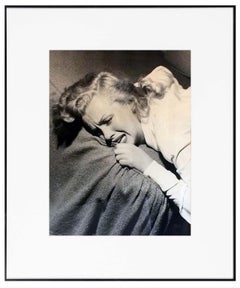
Marilyn Crying (1950)

Marilyn Crying (1950)

By Philippe Halsman

Located in Buffalo, NY

The work offered for sale here is an original vintage silver gelatin print hand created by Halsman in 1950. This work comes in an archival frame presentation. The image alone is approximately 13 x 9. The work was acquired directly from the artist and comes with a COA and lifetime guarantee. Philippe Halsman was at one point considered the best photo-portraitist in France. He had an incessant interest in faces: “Every face I see seems to hide—and sometimes fleetingly reveal—the mystery of another human being.” Halsman’s photographs of politicians, celebrities, and intellectuals were featured widely in magazines like LIFE and Vogue. His more famous subjects included the likes of Marc Chagall, Le Corbusier, Audrey Hepburn, and Albert Einstein. He also had a 37-year collaboration with Salvador Dalí, which resulted in several famous surrealist series including the “Dalí’s Mustache” portraits...

Category

1950s Modern Portrait Photography

Materials

Photographic Paper, Silver Gelatin

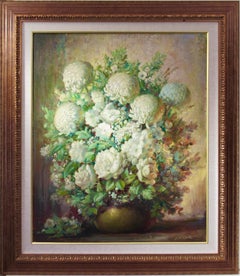
Still life Flowers in a Vase

Still life Flowers in a Vase

Located in San Francisco, CA

This artwork "Still Life Flowers in a Vase" c.1960 is an oil painting on canvas by noted California artist John William Orth, 1889-1976. It is signed at the lower right corner by the artist. The canvas size is 36 x 30 inches, framed size is 46.5 x 40.5 inches. Custom framed in a wooden gold with brown patina frame, with fabric and gold liner. It is in excellent condition. About the artist: John W. Orth was born in Bavaria in 1889. He sold his first painting, a water color, when he was 13. At age 15 studied under a scholarship at Nuremberg's College of Fine Arts. Three years later, again on a scholarship, he attended Munich's Academy of Fine Arts. From there he went on to study at the Art Academy Julien in Paris and then traveled throughout Europe, studying work by the Old Masters. For Nuremberg's Albrecht Durer Museum, he was commissioned to reproduce a number of Durer's paintings, and representatives of The Rhineland's Barmen Museum purchased his painting of The Prodigal Son. In 1922, Louis Mayer, an accomplished artist himself, purchased Orth's The Prophet from among thousands of paintings displayed at Munich's Glas Palast. He declared Orth's painting "the work of a genius," and for three years The Prophet was hung, by invitation, in the Brooklyn Art Museum. Already an established artist at age 34, Orth left his troubled country in 1923 to escape certain persecution for his outspoken liberal views on race, religion and politics. He came to America to start anew. Here, he felt certain, his restless spirit could continue to grow, his career to flourish in an environment of freedom, which encouraged individual expression and unrestrained thought. In the United States, John Orth did portraits of notables including Winston Churchill, Albert Einstein, John F. Kennedy, Richard M. Nixon, Marian Anderson...

Category

Mid-20th Century American Impressionist Still-life Paintings

Materials

Oil

Pair of French Mid-Century Modern Gilt Iron Table Lamps attr. to Jacques Quinet

Pair of French Mid-Century Modern Gilt Iron Table Lamps attr. to Jacques Quinet

By Jacques Quinet

Located in New York, NY

Pair of French Midcentury Modern Gilt Wrought Iron Table Lamps in an Abstract Form Attributed to Jacques Quinet, France, circa 1960. An iconic pair of sculptural table lamps represen...

Category

Mid-20th Century French Mid-Century Modern Table Lamps

Materials

Wrought Iron

Marilyn From the Reverse

Marilyn From the Reverse

By Philippe Halsman

Located in Buffalo, NY

The work offered for sale here is an original vintage silver gelatin print hand created by Halsman in 1953. Philippe Halsman was at one point considered the best photo-portraitist in France. He had an incessant interest in faces: “Every face I see seems to hide—and sometimes fleetingly reveal—the mystery of another human being.” Halsman’s photographs of politicians, celebrities, and intellectuals were featured widely in magazines like LIFE and Vogue. His more famous subjects included the likes of Marc Chagall, Le Corbusier, Audrey Hepburn, and Albert Einstein. He also had a 37-year collaboration with Salvador Dalí, which resulted in several famous surrealist series including the “Dalí’s Mustache...

Category

1950s Modern Portrait Photography

Materials

Photographic Paper, Silver Gelatin

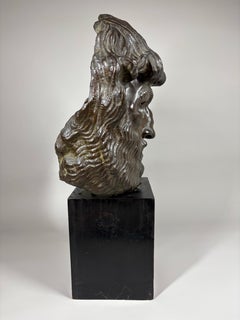
Juan Carlos Iramain (1900-1973), Bronze relief of bearded man

Juan Carlos Iramain (1900-1973), Bronze relief of bearded man

Located in Sleepy Hollow, NY

A striking bronze relief featuring a bearded man, reminiscent of Antiquity's 'death masks', signed Juan Carlos Iramain (1900-1973). Set onto an ebonized square base. Also inscribed w...

Category

Vintage 1940s Argentine Busts

Materials

Bronze

Original Vintage Poster Man As Industrial Palace Body Steampunk Fritz Kahn

Original Vintage Poster Man As Industrial Palace Body Steampunk Fritz Kahn

By Fritz Kahn

Located in London, GB

Original vintage poster for the graphic analogy - Der Mensch Als Industriepalast / Man As Industrial Palace - by the German physician, scientist and illustrator Fritz Kahn (1888-1968...

Category

Vintage 1920s German Posters

Materials

Paper

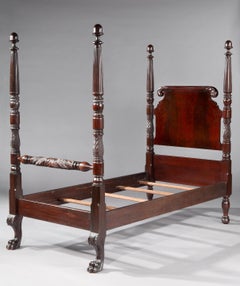
Pair Beds Tester 19c American Colonial-Style Mahogany Douglas Fairbanks Pickfair

Pair Beds Tester 19c American Colonial-Style Mahogany Douglas Fairbanks Pickfair

Located in BUNGAY, SUFFOLK

This pair of half-tester beds were acquired for the guest suite at Douglas Fairbanks Sr and Mary Pickford’s Beverly Hills estate, Pickfair, which housed a collection of early 18th century English and French period furniture, in the 1920s. Life Magazine described Pickfair as 'a gathering place only slightly less important than the White House, and much more fun.' The beds passed by descent to Douglas Fairbanks Jr. and in family tradition were used as the main guest beds at his farm in Virginia, subsequently his home in Washington, then Westridge in Pacific Palisades, Los Angles until 1948 when the family moved to No 8 The Boltons in London and finally in 1973 to the ‘Vicarage’ in Palm Beach. They were inherited by his daughter Daphne in 1988 who continued the family tradition using them as guestbeds at her homes in London and Suffolk. Daphne is now 73 and when she downsized she gave the beds to her granddaughter AIslinn, the great, great grandaugher of Douglas Fairbanks Sr, who had “always loved these beds”. There is a photograph of the beds at Pickfair amongst the family papers which they are trying to locate. Daphne Fairbanks has written a letter discussing their history and some of the stars who slept on them which will pass with the beds : ‘I should think almost every well known person in the film industry slept on these beds ‘ Aside from being exceptionally rare as antiques, these beds represent a unique opportunity to acquire an iconic piece of history from the golden age of movie making having been owned the “King of Hollywood” and slept on by countless stars, politicians, royalty and socialites. They have passed through 5 generations of the Fairbanks dynasty who have continued the family tradition of using them as their main guestbeds. The turned posts are surmounted by finials and have fine, reeding and carved decoration. The shaped headboards have scroll crestings above strikingly, beautiful, figured veneers The rails are also veneered The ends have a finely, carved turned rail. The beds stand on lion's paw feet. Two of the original castors remain. The colour and patina are exceptional. These pieces do not require a Cites certificate, they are not made from Swietenia humilis. Measures: Height to top of finials 193 cm., 76 in., to top of siderails 18 in., to mattress slats 14 ½ in. Overall Length 213 cm. 84 in., internal headboard to footboard 77 ½ in, internal to siderail & corner cut-out 75 ¼ in., Overall Width 109 cm., 43 in., outside rail to outside rail 41 ¾, internal width 39 3/8 in Pickfair, 1143 Summit Drive, Beverly Hills, California, 90210 In the 1920s, the two most famous homes in America were Pickfair and the White House. Silent film superstars Mary Pickford, 'America's Sweetheart,' and dashing Douglas Fairbanks were the original Hollywood super couple. Individually, they were wildly famous the world over, even more so when they fell in love and married. Douglas had bought the property in the Hollywood hills which they made their home and which the press christened Pickfair, combining their last names, which stuck. They created a romantic legend that drew a steady stream of international royalty, politicians, scientists and artists. An invitation to the Pickfair mansion meant you had made it in Hollywood. Located at 1143 Summit Drive, in San Ysidro Canyon in Beverly Hills, the property was a hunting lodge when purchased by Fairbanks in 1919 for his bride, Mary Pickford. The newlyweds extensively renovated the lodge, transforming it into a 4-story, 25-room mansion complete with stables, servants quarters, tennis courts, a large guest wing, and garages. Remodeled by Wallace Neff in a mock tudor style, it took 5 years to complete. Ceiling frescos, parquet flooring, wood panelled halls of fine mahogany and bleached pine, gold leaf and mirrored decorative niches, all added to the authentic charm of Pickfair. The property was said to have been the first private home in the Los Angeles area to include an in-ground swimming pool, in which Pickford and Fairbanks were famously photographed paddling a canoe. Pickfair featured a collection of early-18th century English and French period furniture, decorative arts and antiques. Notable pieces in the collection included furniture from the Barberini Palace and the Baroness Burdett-Coutts estate in London. The highlight of any visit to Pickfair was a large collection of Chinese Objects d'art collected by Fairbanks and Pickford on their many visits to the Orient. The Pickfair art collection was wide and varied and included paintings by Philip Mercier, Guillaume Seignac, George Romney, and Paul DeLongpre. The beds were acquired for the bedroom suite in a new, guest wing. The mansion also featured an Old West style saloon complete with a burnished ornate mahogany bar obtained from a saloon in Auburn, California as well as paintings by Frederic Remington. In the 1970 Volume 2, Number 10 issue of Mankind Magazine it states there were twelve Remington's from 1907 purchased from the Cosmopolitan Publishing Company that 'were Mary Pickford's gift to her husband, Charles 'Buddy' Rogers.' The interiors of Pickfair were decorated and updated throughout the years by Elsie De Wolfe, Marjorie Requa, Tony Duquette, and Kathryn Crawford. During the 1920s the house became a focal point for Hollywood's social activities, and the couple became famous for entertaining there. An invitation to Pickfair was a sign of social acceptance into the closed Hollywood community. Dinners at Pickfair were legendary; guests included Charlie Chaplin (who also lived next door), the Duke and Duchess of Windsor, Greta Garbo, George Bernard Shaw, Albert Einstein, Elinor Glyn, Helen Keller, H.G. Wells, Lord Louis Mountbatten, Fritz Kreisler, Tony Duquette, Amelia Earhart, F. Scott Fitzgerald, Joan Crawford, Noël Coward, President Franklin D. Roosevelt and Eleanor Roosevelt, Pearl S. Buck, Charles Lindbergh, Max Reinhardt, Sir Arthur Conan Doyle, Thomas Edison, Lillian Gish, Gloria Swanson, the Duke and Duchess of Alba, the King and Queen of Siam, Austen Chamberlain, Vladimir Nemirovich-Danchenko, and Sir Harry Lauder. Lauder's nephew, Matt Lauder Jr., a professional golfer whose family had a property at Eagle Rock, Los Angeles, California, taught Fairbanks to play golf. When Fairbanks and Pickford divorced in January 1936, Pickford resided in the mansion with her third husband, actor and musician Charles 'Buddy' Rogers, until her death in 1979. Pickford received few visitors in her later years, but continued to open up her grand home for charitable organizations and parties. In 1976 Pickford received a second Academy Award for Lifetime Achievement in Film. The Honorary Oscar was presented to her in the formal living room of Pickfair, and televised on the 48th Academy Awards. Introduced and narrated by Gene Kelly, it provided the public a very rare glimpse inside the fabled mansion. Empty for several years after Pickford's death, Pickfair was eventually sold to Los Angeles Lakers owner, Dr. Jerry Buss, who continued to care for the home, updating and preserving much of the unique charm of Pickfair. In 1988 it was purchased by actress Pia Zadora and her husband Meshulam Riklis who demolished Pickfair replacing it with a large 'Venetian style palazzo'. They received harsh criticism from a nostalgic public, including Douglas Fairbanks Jr who was quoted in the LA Times, 'I regret it very much. I wonder, if they were going to demolish it, why they bought it in the first place.'. The only remaining artifacts from the original Pickfair are the gates to the estate, the kidney-shaped pool and pool house, remnants of the living room, as well as the two-bedroom guest wing, which the beds were acquired for and, which played host to visiting royalty and notable film celebrities for over half a century. The guest wing was once used as a honeymoon suite for Lord Louis and Lady Mountbatten...

Category

Antique Mid-19th Century North American American Colonial Beds and Bed F...
Materials

Mahogany

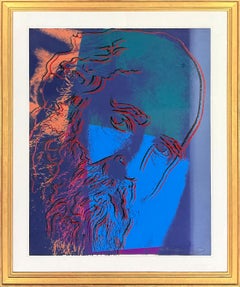
Martin Buber FS II.228 Hand Signed Screen Print, Pop Art, Circa 1980, Framed

Martin Buber FS II.228 Hand Signed Screen Print, Pop Art, Circa 1980, Framed

By Andy Warhol

Located in Aventura, FL

Screen print on Lenox Museum Board. Hand signed lower right by Andy Warhol. Hand numbered 94/200 on lower right (there are also 30 APs, 5 PPs, and 3 HCs). Artwork size: 40 x 32 in...
Category

1980s Pop Art Figurative Prints

Materials

Board, Screen

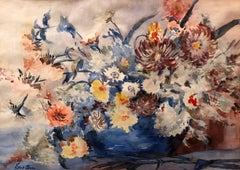
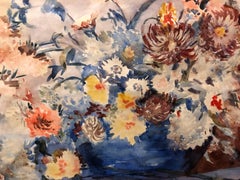
British Modernist Vibrant Watercolor Painting of Flowers, Sir Jacob Epstein

British Modernist Vibrant Watercolor Painting of Flowers, Sir Jacob Epstein

By Sir Jacob Epstein

Located in Surfside, FL

Sir Jacob Epstein KBE (10 November 1880 – 19 August 1959) was an American British sculptor who helped pioneer modern sculpture. He was born in the United States, and moved to Europe ...
Category

1930s Modern Still-life Drawings and Watercolors

Materials

Paper, Watercolor

"Factory Boy with Locomotive" Paul Meltsner, 1930s Working WPA Portrait

"Factory Boy with Locomotive" Paul Meltsner, 1930s Working WPA Portrait

By Paul Meltsner

Located in New York, NY

Paul Meltsner Factory Boy with Locomotive, circa 1935 Signed lower left Watercolor on paper 23 3/4 x 19 1/2 inches Paul Meltsner sold his first painting when he was eight years old...
Category

1930s Realist Figurative Drawings and Watercolors

Materials

Paper, Watercolor

Large Tel Aviv Orchestra Israeli Bezalel School Modernist Painting Moshe Matus

Large Tel Aviv Orchestra Israeli Bezalel School Modernist Painting Moshe Matus

By Moshe Matus (Matusovsky)

Located in Surfside, FL

Moshe (Matusovski) Matus (Polish Israeli , 1908-1958), Depicting an orchestral concert. Hand signed lower right. Dimensions: (Frame) H 31" x W 37", (Sight) H 21" x W 28" Moshe ...
Category

1930s Modern Figurative Paintings

Materials

Paper, Gouache

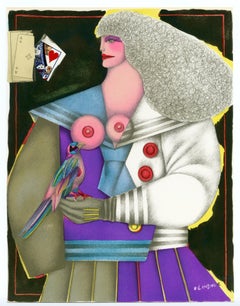
XXe Siecle
XXe Siecle

XXe Siecle

By Richard Lindner

Located in Fairlawn, OH

XXe Siecle Color lithograph, 1974 Signed in the stone on right (see photo) From: XXe Siecle, Volume 42, 1974 Published by G. di San Lazzaro for A. Maeght, Paris Printed by Mourlot, P...
Category

1970s Contemporary Nude Prints

Materials

Lithograph

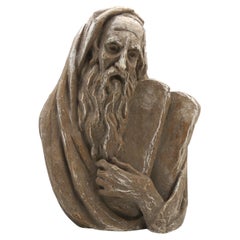
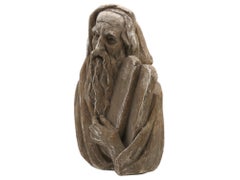
Arnold Henry Bergier Moses Sculpture, 1967

Arnold Henry Bergier Moses Sculpture, 1967

Located in New York, NY

This is a bust of Moses shown carrying two stone Decalogues after the giving of the Torah on Mount Sinai. The piece has a wonderful natural carved appearance that brings out Moses's countenance and attire. Arnold Henry Bergier (1914-2007) * A sculptor, collagist, and caricaturist; his sculptures include portraits from life of prominent persons, works for synagogues and churches, and public buildings. Bergier sang in the Metropolitan Opera chorus as a young man and in 1938 he went to Paris where he studied art with Camilo Egas...
Category

Vintage 1960s American Figurative Sculptures

Materials

Ceramic

Lithuanian French Cubist Modernist Lithograph "Flight" Refugees

Lithuanian French Cubist Modernist Lithograph "Flight" Refugees

By Jacques Lipchitz

Located in Surfside, FL

Actual sheet is 25 X 20 size includes frame. Hand signed and numbered. The Flight exhibition comes from a portfolio of prints organized by Varian Fry in 1964 and completed in 1971. B...

Category

1960s Modern Figurative Prints

Materials

Lithograph

Pop Art Vintage Color Photograph "Course in Miracles" Print  Audrey Flack Photo

Pop Art Vintage Color Photograph "Course in Miracles" Print Audrey Flack Photo

By Audrey Flack

Located in Surfside, FL

Hand signed and titled in ink by the artist from edition of 50 (plus proofs). Color Photo printed at CVI Lab by master printer Guy Stricherz. Published by Prestige Art Ltd. From the color saturated 1980's. "A course in miracles"" The title, taken from the 1976 book on New Age spiritual guidance encourages speculation about each element in this still life. The amount of roses--three--is a significant number in many religions and mythologies. Besides Jesus and Albert Einstein, Flack included the silent mystic Hindu philanthropist Shree Krishnaji, also known as Baba. Flack used the detail of his face with the roses, hovering above the ocean, in her monumental painting, Baba. Following an illness, she turned to mysticism, framing Christian and Hindu images with Jewish ones in A Course of Miracles of 1983: On the “west” side, a photograph of Albert Einstein and a European Jewish candlestick...

Category

1980s Photorealist Color Photography

Materials

Photographic Paper, C Print, Dye Transfer

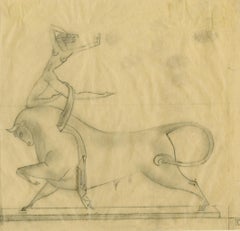
Preliminary study for Cretan Dancer bronze sculpture

Preliminary study for Cretan Dancer bronze sculpture

By Boris Lovet-Lorski

Located in Fairlawn, OH

Preliminary study for Cretan Dancer bronze sculpture Unsigned Graphite on tracing paper, 1930-1934 Sheet size: 6 7/8 x 7 1/8 inches Created while the artist was woring in Paris, c. 1...

Category

1930s Art Deco Figurative Drawings and Watercolors

Materials

Graphite

Musician. By Constantin Selihanov. Bronze.

Musician. By Constantin Selihanov. Bronze.

Located in Riga, LV

Konstantin Vladimirovich Selikhanov (born June 18, 1967, Minsk) is a Belarusian sculptor, artist, and graphic artist, the grandson of sculptor S. I. Selikhanov. The alley leading to ...

Category

Early 2000s Surrealist Abstract Sculptures

Materials

Bronze

Think Punk, Mixed Media on Wood Panel

Think Punk, Mixed Media on Wood Panel

By Greg Beebe

Located in Yardley, PA

Multi layer image of Albert Einstein with base layer representing the crazy, out of the box thinker and the top layer, the plain black and white personality. Collage materials inclu...

Category

2010s Pop Art Mixed Media

Materials

Mixed Media

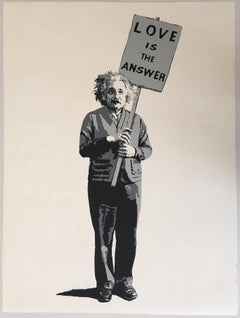
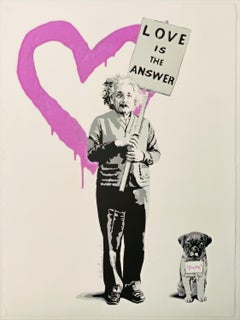
Mr Brainwash -- Love Is The Answer - MC2 (Pink), Hand Signed

Mr Brainwash -- Love Is The Answer - MC2 (Pink), Hand Signed

By Mr. Brainwash

Located in BRUCE, ACT

Mr Brainwash Love Is The Answer - MC2 (Pink), 2012 Screenprint on BFK Rives wove paper, 2012 Hand signed in pencil, dated in red crayon and signed with the artist's inky fingerprint...

Category

2010s Prints and Multiples

Materials

Screen

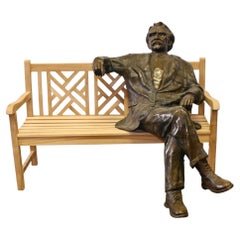
Bronzed Lifesize Sculpture of Einstein Seated on Bench

Bronzed Lifesize Sculpture of Einstein Seated on Bench

By David Einstein

Located in London, GB

A Lovely Life Sized Sculpture of Albert Einstein sitting on a Bench This is a Really Stunning Statue that would enhance Any Garden The Attention to Detail is Second To None with The...

Category

21st Century and Contemporary German Victorian Statues

Materials

Brass