Questions & Answers
Our trusted network of 1stDibs sellers answer common questions

Why are they called Fauves?

1 Answer
Why are they called Fauves?
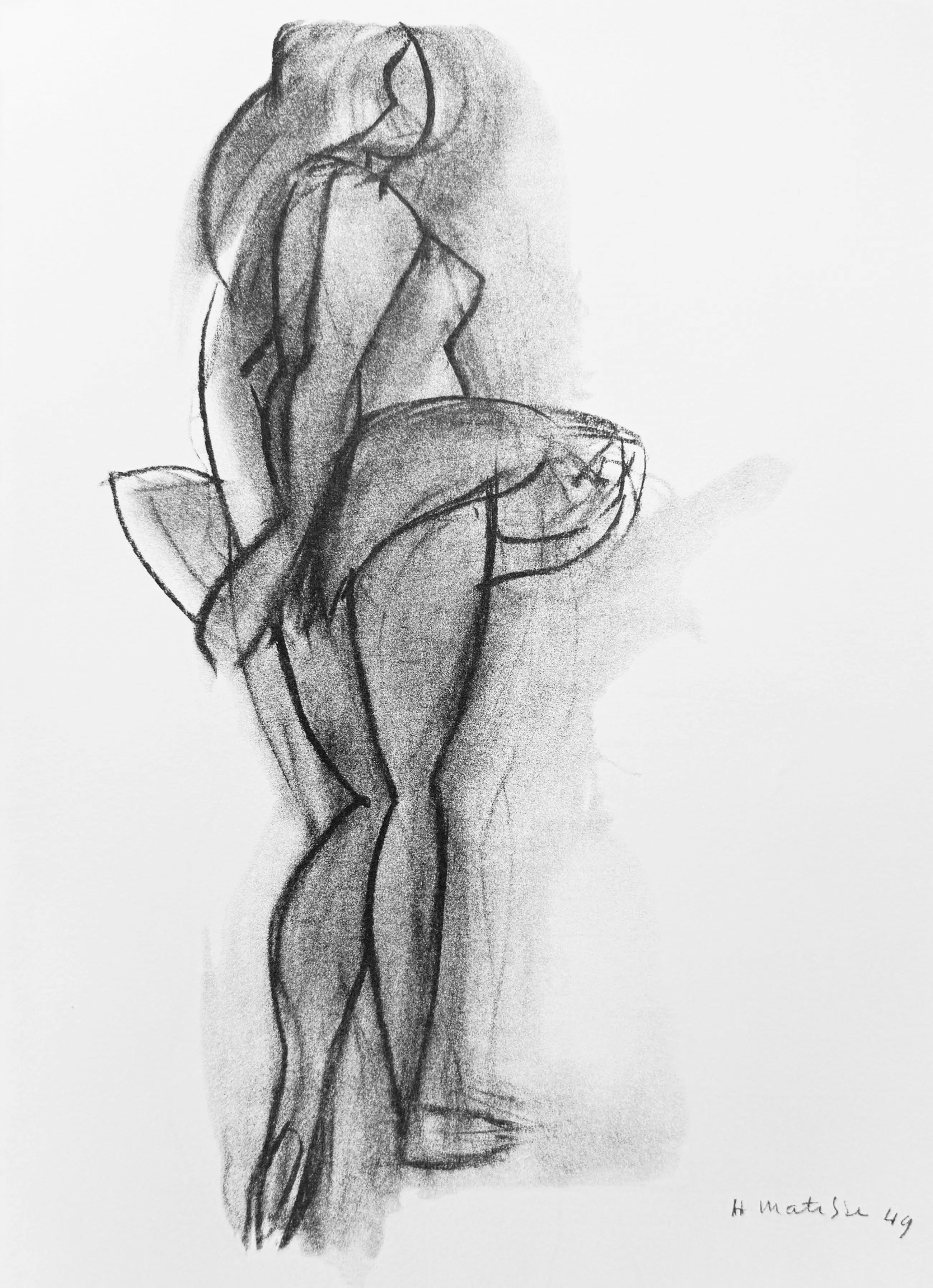
Artists Henri Matisse, André Derain, Albert Marquet, Maurice de Vlaminck, Kees van Dongen and others were called Fauves because of the words of an art critic. After viewing a Fauvist exhibition at the Salon d'Automne in Paris, France, in 1905, critic Louis Vauxcelles wrote a scathing review of the colorful, bold paintings he saw. In it, he called the artists “fauves,” which is French for wild beasts. Although he meant it as an insult, the artists embraced the term, seeing it as a sign that their rejection of the conventions of painting was having the intended effect on viewers. On 1stDibs, shop a selection of Fauvist art.
1stDibs ExpertAugust 15, 2024
Shop for Fauvist Art on 1stDibs
Andre Derain, Hyde Park, from Fauves, VII, 1972 (after)
Located in Southampton, NY
This exquisite lithograph after Andre Derain (1880–1954), titled Hyde Park (Hyde Park), from the folio Fauves, VII, Collection Pierre Levy, 1972, originates from the edition publishe...
Category

1970s Fauvist Landscape Prints

Materials

Lithograph
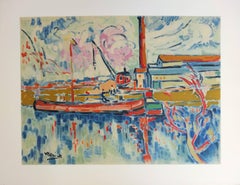
Vintage Landscape Oil Painting on Canvas, French Fauvist Landscape
Located in AIGNAN, FR
Mid-century Fauvist landscape oil painting by French artist Lucien Mainssieux. This is a colourful old painting in its original baroque frame. With hues as vivid today as when the ...
Category

Mid-20th Century Fauvist Landscape Paintings

Materials

Oil

Henri Matisse, Blue Nude IX, from Last Works of Matisse, 1958 (after)
Located in Southampton, NY
This exquisite lithograph after Henri Matisse (1869–1954), titled Nu Bleu IX (Blue Nude IX), from Dernieres Oeuvres de Matisse 1950-1954 (Last Works of Matisse 1950-1954), Verve: Rev...
Category

1950s Fauvist Abstract Prints

Materials

Lithograph

Henri Matisse, Blue Nude XII, from Last Works of Matisse, 1958 (after)
Located in Southampton, NY
This exquisite lithograph after Henri Matisse (1869–1954), titled Nu Bleu XII (Blue Nude XII), from Dernieres Oeuvres de Matisse 1950-1954 (Last Works of Matisse 1950-1954), Verve: R...
Category

1950s Fauvist Abstract Prints

Materials

Lithograph

Henri Matisse, The Swimming Pool II, from Last Works of Matisse, 1958 (after)
Located in Southampton, NY
This exquisite lithograph after Henri Matisse (1869–1954), titled La Piscine II (The Swimming Pool II), from Dernieres Oeuvres de Matisse 1950-1954 (Last Works of Matisse 1950-1954), Verve: Revue Artistique et Litteraire, Vol. IX, No. 35-36, originates from the July 28, 1958 issue published by Editions de la revue Verve, Paris, under the direction of Teriade, Editeur, Paris, and printed by Mourlot Freres, Paris, 1958. This visionary composition reflects Matisse’s late mastery of form and color, translating his celebrated cut-out aesthetic into the lithographic medium with remarkable clarity and vibrancy. Executed as a lithograph on velin du Marais paper, this work measures 14 x 42 inches (35.56 x 106.68 cm), with trifold and stitch perforations as issued. Unsigned and unnumbered as issued. The edition exemplifies the superb craftsmanship of the Mourlot Freres atelier, renowned for its collaborations with the greatest modern masters of the 20th century. Artwork Details: Artist: After Henri Matisse (1869–1954) Title: La Piscine II (The Swimming Pool II) Medium: Lithograph on velin du Marais paper Dimensions: 14 x 42 inches (35.56 x 106.68 cm), with trifold and stitch perforations as issued Inscription: Unsigned and unnumbered as issued Date: 1958 Publisher: Editions de la revue Verve, Paris, under the direction of Teriade, Editeur, Paris Printer: Mourlot Freres, Paris Catalogue raisonne references: Duthuit, Claude. Henri Matisse: Catalogue raisonne des ouvrages illustres. Editions Claude Duthuit, Paris, 1988, illustration 139. Condition: Well preserved, consistent with age and medium Provenance: From Dernieres Oeuvres de Matisse 1950-1954 (Last Works of Matisse 1950-1954), Verve: Revue Artistique et Litteraire, Vol. IX, No. 35-36, published by Editions de la revue Verve, Paris, 1958 Notes: Excerpted from the folio (translated from French), This double issue of VERVE is entirely devoted to the last works of Henri Matisse-1950-1954. These works, rendered in color litbography, were made by the artist, in gouache papers, cut with scissors and glued. They are accompanied by drawings executed during the same period or before. Matisse specially composed the cover of this album. Under his direction were drawn, during the year 1954, the first of these lithographic plates. The work was completed on July 28, 1958 by Mourlot Freres for lithography and by Master Printers Draeger Freres for heliogravures and typography. About the Publication: Dernieres Oeuvres de Matisse 1950-1954 (Last Works of Matisse 1950-1954), published as Verve Vol. IX, No. 35-36 on July 28, 1958, represents one of the most important posthumous tributes to Henri Matisse’s final period of artistic production. Conceived and directed by the visionary publisher Teriade, this issue of Verve is entirely dedicated to the works Matisse created between 1950 and 1954, a period defined by his pioneering cut-out technique. Produced in Paris with exceptional technical precision, the publication brings together color lithographs faithfully reproducing Matisse’s gouache cut-outs alongside a selection of drawings executed during the same period or earlier. The lithographs were printed by Mourlot Freres, while Draeger Freres oversaw the heliogravures and typography, ensuring the highest level of craftsmanship. The project was initiated under Matisse’s direct supervision in 1954, with the artist guiding the early stages of translation from original cut paper compositions into lithographic form. As part of the broader legacy of Verve, one of the most influential artistic and literary publications of the twentieth century, this issue stands as a monumental record of Matisse’s final innovations, preserving the essence of his late style and affirming his enduring impact on modern art. About the Artist: Henri Matisse (1869–1954) was a French painter, sculptor, draughtsman, and printmaker whose revolutionary vision redefined modern art through his daring use of color, line, and form. Celebrated as one of the greatest artists of the 20th century, Matisse led the Fauvist movement and devoted his life to the pursuit of balance, beauty, and emotional expression in visual art. His early works burst with vibrant hues and liberated brushwork, while his later “cut-out” compositions achieved a poetic simplicity that transformed the relationship between color and space. Deeply influenced by the work of Paul Cezanne, Vincent van Gogh, and Georges Seurat, as well as by the rhythmic patterns of Islamic art, Byzantine mosaics, and Japanese prints, Matisse forged a new visual language that celebrated joy, movement, and serenity. He was part of an extraordinary generation of artists who shaped the evolution of modernism, maintaining lifelong dialogue and friendly rivalry with contemporaries such as Pablo Picasso, Georges Braque, Marc Chagall, Andre Derain, Albert Marquet, and Raoul Dufy—peers who, like him, sought to expand the expressive potential of color and composition. Matisses influence extended across generations, inspiring modern and contemporary masters including Alexander Calder, Alberto Giacometti, Salvador Dali, Joan Miro, Wassily Kandinsky, Marcel Duchamp, and Man Ray, each of whom drew upon his fearless experimentation and refined visual harmony. His paintings, sculptures, and works on paper are held in the most prestigious museums in the world, including the Museum of Modern Art, the Centre Pompidou, the Tate, and the Hermitage Museum, where his art continues to symbolize the essence of creativity and human emotion. The highest price ever paid for a Henri Matisse artwork is approximately 80.8 million USD, achieved in 2018 at Christies New York for Odalisque couchee aux magnolias (1923). Henri Matisse La Piscine...
Category

1950s Fauvist Abstract Prints

Materials

Lithograph

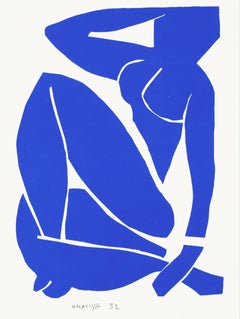
Henri Matisse, Blue Nude III, from Last Works of Matisse, 1958 (after)
Located in Southampton, NY
This exquisite lithograph after Henri Matisse (1869–1954), titled Nu Bleu III (Blue Nude III), from Dernieres Oeuvres de Matisse 1950-1954 (Last Works of Matisse 1950-1954), Verve: R...
Category

1950s Fauvist Abstract Prints

Materials

Lithograph

Shop All