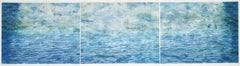
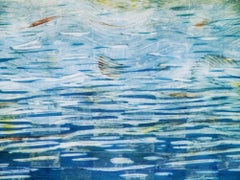
Art by Medium: Monotype

to
201
332
317
363
213
177
Overall Width
to
Overall Height
to
1
496
904
1
4
7
6
2
29
33
16
120
183
461
442
67
50
36
30
20
12
11
7
3
3
1
825
462
113
207
141
123
104
94
82
70
53
49
42
39
38
38
29
27
25
24
24
24
22
1,402
182,376
96,536
79,609
78,511
110
47
44
39
35
205
250
1,103
267
Medium: Monotype
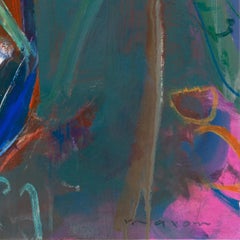
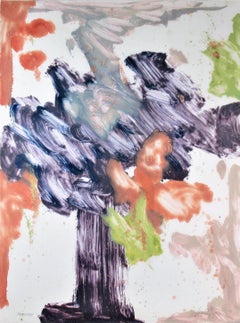
"Reign" Colorful, Abstract Monotype Print

"Reign" Colorful, Abstract Monotype Print

Located in New York, NY

Reign Monotype print Natasha Karpinskaia's paintings are characterized by their vibrant colors, bold shapes, and dynamic compositions. She uses a variety of media, including acrylic...

Category

2010s Abstract Art by Medium: Monotype

Materials

Paint, Paper, Monoprint, Monotype
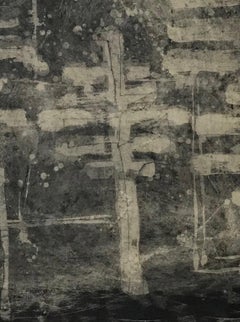
Jane
Jane

Jane

By Kim Frohsin

Located in Burlingame, CA

'Jane' in pink and dark blue. Monotype EV with mixed media hand coloring including ink, gouache, pencils. Ed 1/4. Kim Frohsin, who is often associated with the Bay Area Figurative m...

Category

Early 2000s Contemporary Art by Medium: Monotype

Materials

Color Pencil, Gouache, Ink, Mixed Media, Monotype

Nude with tube. Contemporary Figurative Nude Monotype Print, European artist

Nude with tube. Contemporary Figurative Nude Monotype Print, European artist

By Siergiej Timochow

Located in Warsaw, PL

Contemporary figurative nude monotype print by Belarussian artist, Siergiej Timochow. Print depicts a woman with a tube. The composition is monochromatic in blue. The paper/cardboard...

Category

Early 2000s Contemporary Art by Medium: Monotype

Materials

Cardboard, Monotype

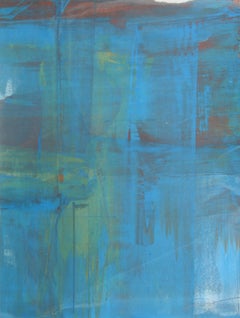
Back Roads
Back Roads

Robert RoachBack Roads, 2012

$400Sale Price|20% Off

Back Roads

By Robert Roach

Located in Palm Springs, CA

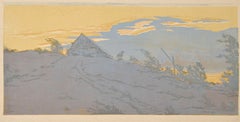
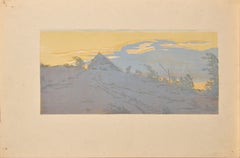
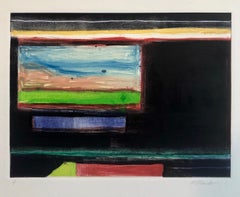
Unique monotype, signed and numbered 1/1. Artist Robert Roach worked in Santa Fe, New Mexico. His one-of-a-kind, abstract monoprints are inspired by the landscape, climate and light...

Category

2010s Abstract Art by Medium: Monotype

Materials

Monotype

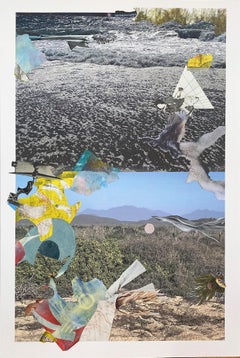
"We didn't take the plane", Surreal, Abstract, Blue, Red, Mixed Media Collage

"We didn't take the plane", Surreal, Abstract, Blue, Red, Mixed Media Collage

By Monica DeSalvo

Located in Franklin, MA

Monica DeSalvo’s “We didn’t take the plane—the plane took us!” is a lively 30 x 22 inch surreal collage on paper. Abstract areas of lime green, red, royal blue, and deep yellow embed...

Category

2010s Contemporary Art by Medium: Monotype

Materials

Paper, Pastel, Mixed Media, Acrylic, Color Pencil, Digital, Monotype

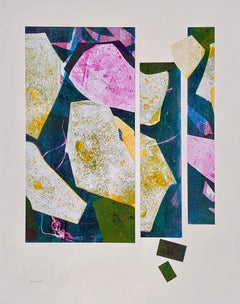
Foundation 12 - Geological Encaustic Monotype Burgundy Red Beige Green, 2017

Foundation 12 - Geological Encaustic Monotype Burgundy Red Beige Green, 2017

By Laura Moriarty

Located in Kent, CT

An encaustic (pigmented beeswax) monotype on Kawashi paper. The monotype may be oriented vertically or horizontally. Price shown is the unframed price. Signed and dated on recto. La...

Category

2010s Contemporary Art by Medium: Monotype

Materials

Encaustic, Archival Paper, Monotype

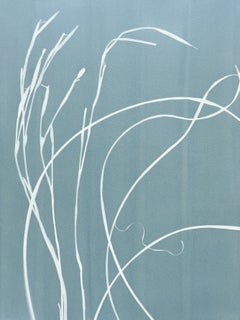
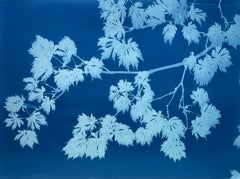
Celadon Agapanthus (16 x 12 inch hand-printed cyanotype)

Celadon Agapanthus (16 x 12 inch hand-printed cyanotype)

Located in Oakland, CA

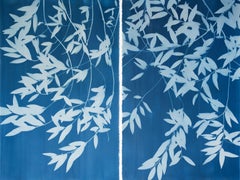
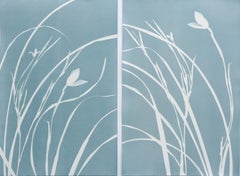
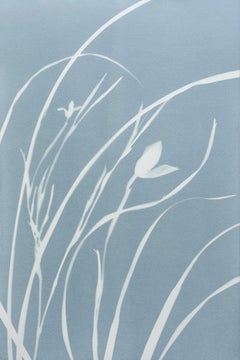
Though this unique monotype looks like a woodcut or linocut, it is not. This is a cyanotype, a kind of lensless photography dating back to the 1800s, but the artist altered the ratio...

Category

2010s Contemporary Art by Medium: Monotype

Materials

Paper, Archival Paper, Rag Paper, Monotype, Photogram

Trees
Trees

Trees

Located in San Francisco, CA

This artwork "Trees " c.1990 in an original monotype on B.F.K Rives paper by American artist Kelly Detweiler. It is hand signed, titled and numbered 1/1 in pencil by the artist. The image size is 17.85 x 15.65 inches, sheet size is 24.25 x 22.25 inches. It is in excellent condition, the colors are fresh and bright, has never been framed. About the artist: Born in Twin Falls Idaho, his family immediately moved to Monte Vista, Colorado where he lived until age 12. Many of the idyllic memories of this childhood inform his imagination and enter into his work. Moving from a very small farming and ranching community, he was plunged into the crazed consumer culture of Southern California. He lived in La Mesa, California and watched as the entire face of America changed with Vietnam, rampant divorce, and then the summer of love. He attended Grossmont College and immersed himself in art. Seeking to escape the drug crazed beach culture, he set out for northern California. Kelly attended Cal State University at Hayward where he studied with Mel Ramos, Raymond Saunders, Harold Schlotzhauer, Misch Kohn, Kenji Nanao and Clayton Bailey...

Category

Late 20th Century American Modern Art by Medium: Monotype

Materials

Monotype

Misty Evening Poppies Cyanotype Monotype on Archival Paper, 14 x 20 inches

Misty Evening Poppies Cyanotype Monotype on Archival Paper, 14 x 20 inches

Located in Oakland, CA

These are the silhouettes of the native Californian Matilija Poppy also known as giant tree poppies and Coulter's Poppy. They grow over 4 feet tall and appear each year in summer. ...

Category

2010s Contemporary Art by Medium: Monotype

Materials

Paper, Archival Paper, Rag Paper, Monotype, Photogram

Landscape #III
Landscape #III

Landscape #III

By Thomas Monaghan

Located in San Francisco, CA

This artwork "Landscape #III' c.2000 is an original color monotype by American artist Thomas (Tom) Monaghan, b. 1961. It is hand signed and numbered 1/1 in pencil by the artist. The image (plate mark) size is 8 x 15.75 inches, the sheet size is 15 x 22 inches. it is in excellent condition, has never been framed. About the artist: Born in Chicago in 1961, Monaghan received his MFA from the University Northern Illinois. He moved west to Sonoma County in his mid-twenties and starting showing in galleries in San Francisco in the early 1990's, his move having a profound impact on his painting. The first impression of that sparkle on water upon the great lakes in Chicago continue his drive to seek out natural beauty in the landscape. Monaghan has had regional acclaim and International showing, include, International Art Fairs in San Francisco in 2011 and 2012. Selected exhibitions 1993 Claudia Chapline Gallery, Stinson Beach, CA., 1993 Heirloom Gallery, Chicago, I., 1994 Marinscapes., 1995 John Mallon, Editions Limited, Indianapolis, IN., 1996 Marinscapes., 1997 John Mallon, Editions Limited, Indianapolis, IN., 1998 Ira Wolk Gallery, St. Helena, CA., 2000 Erickson & Elins Gallery, San Francisco, CA ., 2001 Ira Wolk Gallery, St. Helena, CA, 2002 Ira Wolk Gallery, St. Helena, CA., Erickson Fine Art Gallery 2008. Selected collections The Prudential, Merrill Lynch, LaSalle National Bank, Chicago Mercantile Exchange...

Category

21st Century and Contemporary American Impressionist Art by Medium: Monotype

Materials

Monotype

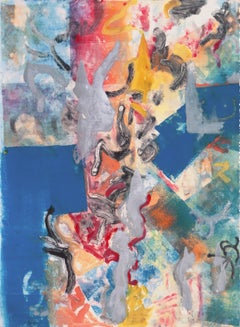
X, Abstract Monotype Print by Margo Margolis

X, Abstract Monotype Print by Margo Margolis

By Margo Margolis

Located in Long Island City, NY

Artist: Margo Margolis (American, 1947-) Title: X Year: 1988 Medium: Monotype, signed in pencil Image Size: 24 x 18 inches Size: 30 x 22 in. (76.2 x 55.88 cm)

Category

1980s Abstract Expressionist Art by Medium: Monotype

Materials

Monotype

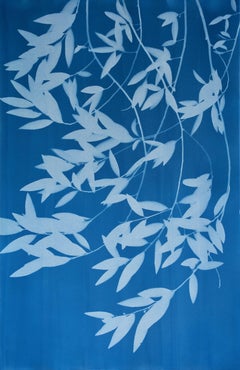
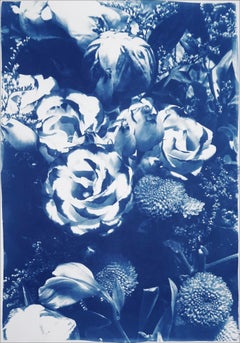
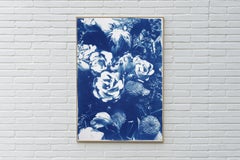
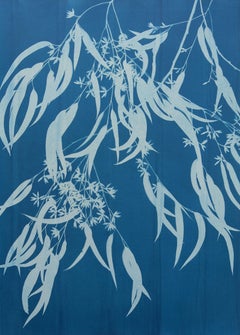
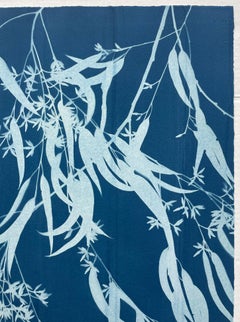
Flowering Eucalyptus Cyanotype Monotype, Hand-Printed, 30x21.5 Inches

Flowering Eucalyptus Cyanotype Monotype, Hand-Printed, 30x21.5 Inches

Located in Oakland, CA

Though this may look like a woodcut or screen print, it is a kind of photography. Cyanotypes are a 19th century alternative (cameraless) photographic process. This monotype was print...

Category

2010s Contemporary Art by Medium: Monotype

Materials

Paper, Archival Paper, Rag Paper, Monotype, Photogram

Pilot 22 - Contemporary Abstract Monotype Blue Yellow Coral Circles Stars, 2001

Pilot 22 - Contemporary Abstract Monotype Blue Yellow Coral Circles Stars, 2001

By David Collins

Located in Kent, CT

In this geometric abstract monotype on paper, colored shapes complement a background that transitions from pale yellow to sky blue. A pointed star shape in dark navy contrasts circul...

Category

Early 2000s Contemporary Art by Medium: Monotype

Materials

Archival Paper, Monotype

Large 3D Cast Paper Abstract Oil Monoprint Unique Monotype Painting John Walker

Large 3D Cast Paper Abstract Oil Monoprint Unique Monotype Painting John Walker

By John Walker

Located in Surfside, FL

John Walker British (b. 1939) Salsipuedes Forms (1991) Monoprint relief print with dry pigment, monotype Hand signed lower right Provenance: Garner Tullis Workshop A monotype is literally one of a kind; it is not a method of multiplication. The artist makes an image with a liquid medium on wood, metal or glass, and paper is laid over the moist image and bonded under pressure the paper is then removed bringing with it the transposed monotype. John Walker (born 1939) is an English painter and printmaker. He has been called "one of the standout abstract painters of the last 50 years." Walker studied in Birmingham at the Moseley School of Art, and later the Birmingham School of Art and Académie de la Grande Chaumière in Paris. Some of his early work was inspired by abstract expressionist art and post-painterly abstraction, and often combined apparently three-dimensional, sculptural shapes with "flatter" elements. These pieces are usually rendered in acrylic paint. In the early 1970s, Walker made a series of large Blackboard Pieces using chalk first exhibited at the opening of Ikon Gallery, in Birmingham Shopping Centre, Birmingham in 1972 and the Juggernaut works which also use dry pigment. From the late 1970s, his work marked allusions to earlier painters, such as Francisco Goya, Edouard Manet and Henri Matisse, either through the quoting of a pictorial motif, or the use of a particular technique. Also during this time, he began to use oil paint more in his work. His paintings of the 1970s are also notable for what has come to be termed canvas collage, the application of glued-on, separately painted patches of canvas to the main canvas. Beginning in the 1970s John Walker was one of the most influential and imitated painters working in the UK; he exhibited alongside Andy Warhol and Roy Lichtenstein, represented his country at the 1972 Venice Biennale, had extensive survey shows at both the Tate and Hayward galleries and was nominated for the Turner Prize in 1985. After spending some time in Australia, Walker got a position at the Victoria College of the Arts in Melbourne. He produced the Oceania series around this time which incorporates elements of native Oceanic art. Walker is currently the head of the graduate painting program at Boston University. Walker won the 1976 John Moores Painting Prize and was nominated for the Turner Prize in 1985. In September 2010, Walker and five other British artists including Howard Hodgkin, John Hoyland, Ian Stephenson, Patrick Caulfield and R.B. Kitaj were included in an exhibition entitled The Independent Eye: Contemporary British Art From the Collection of Samuel and Gabrielle Lurie, at the Yale Center for British Art. His art was influenced by Boston Expressionism. Along with Aaron Fink, Gerry Bergstein, Jon Imber, Michael Mazur, Katherine Porter, Jane Smaldone, John Walker, and Philip Guston. Through Garner Tullis at Experimental Press he met Sean Scully, Friedel Dzubas, Helen Frankenthaler, Sam Francis, William Wiley, and others. Select Group Exhibitions (partial list) 1965 John Moores Liverpool Exhibition. Walker Art Center, Liverpool. 1966 Recent Aspects of British Art. Australia and New Zealand (traveled). 1967 4 Artists. Betty Parsons Gallery, New York. John Walker, Michael Kidner, Bruce Tippett, Michael Tyzack...

Category

1990s Abstract Expressionist Art by Medium: Monotype

Materials

Monoprint, Monotype
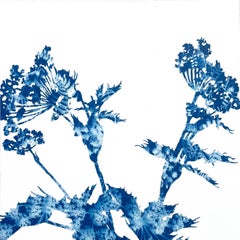
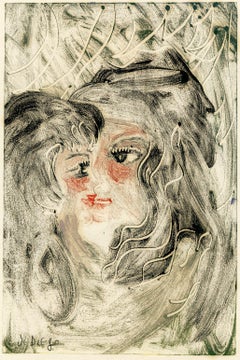
'Woman in a Red Dress', Louvre, Salon d'Automne, Académie Chaumière, LACMA, SFAA

'Woman in a Red Dress', Louvre, Salon d'Automne, Académie Chaumière, LACMA, SFAA

By Victor Di Gesu

Located in Santa Cruz, CA

Stamped, verso, with estate stamp for Victor Di Gesu (American, 1914-1988) and created circa 1950. A sensitively colored and modeled monotype by this Paris-trained, California Post-...

Category

1950s Art by Medium: Monotype

Materials

Paper, Monotype

Large Monotype Monoprint Print Scenic Lake Landscape Susan Hall Woman Artist

Large Monotype Monoprint Print Scenic Lake Landscape Susan Hall Woman Artist

By Susan Hall

Located in Surfside, FL

Monotype Monoprint Hand signed and numbered 1/1 Lake landscape Sheet: 37.5" X 27" Image: 29.5" X 19.75" Susan Hall lives and works in Point Reyes Station, California, a town in the heart of the Point Reyes National Seashore. This pristine wilderness area is dominated by a mosaic of bays and ocean, rolling grass lands and forests. It is inhabited by a diversity of wildlife, including over 450 species of birds, mountains lions, deer, bobcats, foxes, and elk. Ms. Hall who is a native of this area returned after spending twenty years in New York City. In her book, “Painting Point Reyes”, Hall says, “Point Reyes is the center of my painting life. Point Reyes has been my life and when I haven’t lived here, it has been an underground stream that spoke to me in dreams and visions.” While living and painting in New York City, Ms. Hall exhibited her work widely in museums and galleries. Among them are the Whitney Museum of Art; San Francisco Museum of Art; Nancy Hoffman Gallery, Trabia MacAfee Gallery, Phyllis Kind Gallery, Chicago; Ovsey Gallery, Los Angeles. In addition, her work has been featured in group exhibitions throughout the United States and abroad, including in 2020 Bud Shark's Ink: The California Crew at BMoCA, Boulder Museum of Contemporary Art Colorado USA representing the panoply of aesthetics, cultural backgrounds, viewpoints, and talent held within the bounty of art “made in California.” This remarkable grouping of artists, Brad Brown, Enrique Chagoya, Roy De Forest, Amy Ellingson, Susan Hall, Don Ed Hardy, Mildred Howard, Robert Hudson, Hung Liu, Kara Maria, Rex Ray, Alison Saar, Italo Scanga, and William T. Wiley. Women to the Fore, Hudson River Museum Yonkers 2021 A group of women artists working in oil painting and drawing, lithograph prints and photograph, collage and sculpture. Many icons of feminist art history. Judy Chicago, Judy Giera, Marisol, and Shanequa Benitez, Ann McCoy, Anna Walinska, Audrey Flack, Barbara Morgan, Berenice Abbott, Bessie Potter Vonnoh, Georgia O'Keeffe, Hannelore Baron, Harriet, Judy Chicago, Louise Nevelson, Marisol, Mary Frank, Nancy Graves, Susan Hall, Yvonne Thomas...

Category

20th Century Contemporary Art by Medium: Monotype

Materials

Monotype

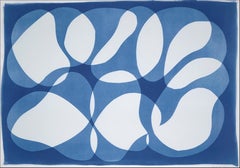
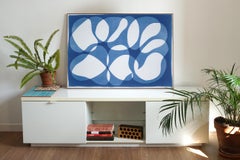
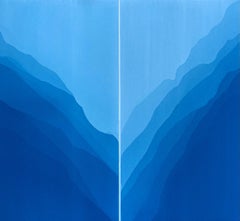
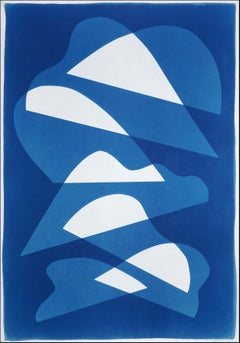
Minimalist Cyanotype Monotype, Wavy Stripes in Blue Tones, Horizon Abstraction

Minimalist Cyanotype Monotype, Wavy Stripes in Blue Tones, Horizon Abstraction

By Kind of Cyan

Located in Barcelona, ES

"Wavy Stripes" is a minimalist cyanotype monotype presents a quiet study of rhythm and balance through softly undulating horizontal forms. Layered blue tonalities—created through the...

Category

2010s Minimalist Art by Medium: Monotype

Materials

Handmade Paper, Monotype

A Mineral Exoskeleton - Contemporary Abstract Geology Encaustic Monotype, 2024

A Mineral Exoskeleton - Contemporary Abstract Geology Encaustic Monotype, 2024

By Laura Moriarty

Located in Kent, CT

In this contemporary encaustic monotype, layers of pigmented beeswax on lightweight paper create an undulating composition suggesting layers of the earth's crust and geological forma...

Category

2010s Contemporary Art by Medium: Monotype

Materials

Encaustic, Archival Paper, Monotype

Factory XI: modernist urban architectural collage on monoprint in red, framed

Factory XI: modernist urban architectural collage on monoprint in red, framed

Located in Bryn Mawr, PA

This framed work is one-of-a-kind colored pencil & collage on archival pigment print. The work itself is 20" x 16", and it is framed to 26" x 20" in a contemporary, simple white wood...

Category

2010s Contemporary Art by Medium: Monotype

Materials

Ink, Archival Paper, Handmade Paper, Monoprint, Monotype
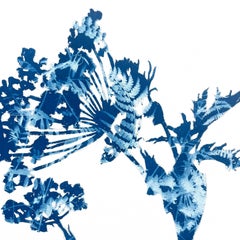
Misty June Wildflowers ( 24 x 18 inch hand-printed cyanotype)

Misty June Wildflowers ( 24 x 18 inch hand-printed cyanotype)

Located in Oakland, CA

The flowers use in this unique monotype are called Coronaria Alba in Latin or by their common name Rose Campion. They grow 2 feet tall with velvety gray-green leaves and white petals...

Category

2010s Contemporary Art by Medium: Monotype

Materials

Paper, Archival Paper, Rag Paper, Monotype, Photogram

Con Suture - Lithograph on Paper by Leo Guida - 1985

Con Suture - Lithograph on Paper by Leo Guida - 1985

By Leo Guida

Located in Roma, IT

Con Suture is an original Contemporary artwork realized in 1985 by the italian artist Leo Guida (1992 - 2017). Original Lithograph and Chalchography, unique specimen. Hand-signed a...

Category

1980s Abstract Art by Medium: Monotype

Materials

Lithograph, Monotype

Spring Clover I (hand-printed botanical cyanotype, 14 x 24 inches)

Spring Clover I (hand-printed botanical cyanotype, 14 x 24 inches)

Located in Oakland, CA

This long narrow blue and white monotype was made by carefully arranging hundreds of individual flowers of fresh-cut Dutch clover growing wild. This unique print is the same size as ...

Category

2010s Contemporary Art by Medium: Monotype

Materials

Paper, Archival Paper, Rag Paper, Monotype, Photogram

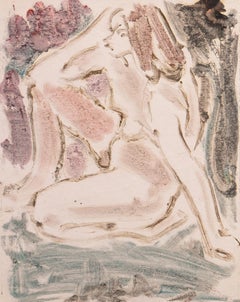
'Seated Nude', Paris, Louvre, Salon d'Automne, Academie Chaumière, LACMA, SFAA

'Seated Nude', Paris, Louvre, Salon d'Automne, Academie Chaumière, LACMA, SFAA

By Victor Di Gesu

Located in Santa Cruz, CA

Stamped, verso, with estate stamp for Victor Di Gesu (American, 1914-1988) and created circa 1955. Winner of the Prix Othon Friesz, Victor di Gesu first attended the Los Angeles Art...

Category

1950s Art by Medium: Monotype

Materials

Paper, Monotype

Embryo, Abstract Expressionist Monotype Etching by Jane Kent

Embryo, Abstract Expressionist Monotype Etching by Jane Kent

By Jane Kent

Located in Long Island City, NY

Jane Kent, American (1952 - ) - Embryo, Year: 1984, Medium: Monotype Etching, signed, numbered and dated in pencil, Edition: Working Proof 1/1, Image Size: 23.75 x 23.75 inches, ...

Category

1980s Abstract Expressionist Art by Medium: Monotype

Materials

Etching, Monotype

Silver Eucalyptus I ( 24 x 18 inch hand-printed cyanotype)

Silver Eucalyptus I ( 24 x 18 inch hand-printed cyanotype)

Located in Oakland, CA

Though this unique monotype looks like a woodcut or linocut, it is not. This is a cyanotype, a kind of lensless photography dating back to the 1800s, but the artist altered the ratio...

Category

2010s Contemporary Art by Medium: Monotype

Materials

Archival Paper, Paper, Rag Paper, Monotype, Photogram

BeingTagged, mixed media, 22 x 30 inches. Neon, abstracted work

BeingTagged, mixed media, 22 x 30 inches. Neon, abstracted work

By Karin Bruckner

Located in New York, NY

Oil Monotype w/ Wool Fiber, Japanese Paper, Ink Transfer, Clothing Tag, Metal Leaf and Coffee Hand pulled on white BFK Rives Printmaking Paper Edition: Unique

Category

2010s Contemporary Art by Medium: Monotype

Materials

Wool, Paper, Coffee, Ink, Mixed Media, Monotype

Day of the Dragon
Day of the Dragon

Day of the Dragon

By Harold Town

Located in Toronto, Ontario

Harold Town (1924-1990) is the best-known and most dynamic artist from the "Painters Eleven" group. His reputation goes beyond his association with the group as arguably one of Can...

Category

1960s Abstract Art by Medium: Monotype

Materials

Intaglio, Monotype

Opus 22, Ukiyo-e monotype landscape print, 2011

Opus 22, Ukiyo-e monotype landscape print, 2011

By Keiji Shinohara

Located in New York, NY

Keiji Shinohara was born and raised in Osaka, Japan. After 10 years as an apprentice to the renowned Keiichiro Uesugi in Kyoto, he became a Master Printmaker and moved to the United ...

Category

2010s Contemporary Art by Medium: Monotype

Materials

Monotype

Atomic Frown  - Contemporary Mixed Media Abstraction With Yellow and Black

Atomic Frown - Contemporary Mixed Media Abstraction With Yellow and Black

By Vivian Liddell

Located in Gilroy, CA

"Atomic Frown," is a contemporary abstraction using mixed media by the American artist Vivian Liddell. This work is reminiscent of traditional landscape scene that has been reimagine...

Category

2010s Contemporary Art by Medium: Monotype

Materials

Spray Paint, Monotype, Ink, Mixed Media

Laurie - Framed Mid 20th Century Monotype, At the Iron Gate

Laurie - Framed Mid 20th Century Monotype, At the Iron Gate

Located in Corsham, GB

Signed in pencil to the lower margin. Number 13/15. Presented in a complimenting red gloss frame with a white card mount. On paper.

Category

20th Century Art by Medium: Monotype

Materials

Monotype

Slowly Transformed - Contemporary Abstract Geology Encaustic Monotype, 2025

Slowly Transformed - Contemporary Abstract Geology Encaustic Monotype, 2025

By Laura Moriarty

Located in Kent, CT

In this contemporary encaustic monotype, layers of pigmented beeswax on lightweight kozo paper create an undulating composition suggesting layers of the earth's crust and geological ...

Category

2010s Contemporary Art by Medium: Monotype

Materials

Encaustic, Archival Paper, Monotype

Fan Series
Fan Series

Fan Series

By Ruth Leaf

Located in San Francisco, CA

This artwork titled "Fan Series" c.1990, is an original monotype, with embossing and collage on thick Wove paper by noted American artist Ruth Leaf, 1923-2015. It is hand signed, ti...

Category

Late 20th Century Abstract Expressionist Art by Medium: Monotype

Materials

Monotype

Holding Together  Torn Apart, mixed media work on paper, pastel pink and silver

Holding Together Torn Apart, mixed media work on paper, pastel pink and silver

By Karin Bruckner

Located in New York, NY

Printmaking composite with Japanese paper, pencil and silver leaf on white BFK Rives Printmaking Paper. Paper: 22" x 22" Frame: 25" x 25" At the core of the dialogue between the a...

Category

2010s Contemporary Art by Medium: Monotype

Materials

Paper, Mixed Media, Monotype, Yarn, Newsprint

Pin, Realist Framed Monotype by John Beerman

Pin, Realist Framed Monotype by John Beerman

By John Beerman

Located in Long Island City, NY

The upper corner of a bowling alley silhouetted against the sky in the fading evening light. Only the word "Pin" and a crowned bowling pin can be seen of the sign on the facade. This...

Category

1990s Art by Medium: Monotype

Materials

Monotype

Snowman with Black Hat

Snowman with Black Hat

By Gail Norfleet

Located in Dallas, TX

Gail Norfleet earned her BFA at The University of Texas at Austin, and her MFA at Southern Methodist University in Dallas. Among others, she has had solo exhibitions in Dallas at The...

Category

21st Century and Contemporary Contemporary Art by Medium: Monotype

Materials

Monotype

Dogwood2, mixed media work on paper, navy blue flower

Dogwood2, mixed media work on paper, navy blue flower

By Karin Bruckner

Located in New York, NY

Leaf collagraph with embossing on white BFK Rives Printmaking Paper. Approx. image size: 3" x 3" Paper size: 10" x 8" At the core of the dialogue between the artist and the work ...

Category

2010s Contemporary Art by Medium: Monotype

Materials

Paper, Mixed Media, Monotype

Green Elderflower I Monotype, Cyanotype on cotton paper, 12 x 12 inches

Green Elderflower I Monotype, Cyanotype on cotton paper, 12 x 12 inches

Located in Oakland, CA

Though these pale mint green botanical monotypes resemble woodcuts or linocuts they are actually cyanotypes, a form of kind of photography dating back to the 1800s, but the artist al...

Category

2010s Contemporary Art by Medium: Monotype

Materials

Paper, Archival Paper, Rag Paper, Monotype, Photogram

Estate No. 054047

Estate No. 054047

By Otto Neumann

Located in New Orleans, LA

Otto Neumann (1895-1975) was a German Expressionist painter and printmaker. His monotypes evolved from sharp, angular, black and whites to late abstract prints in a variety of colors. Neumann lived through revolutionary changes in the art world of prewar and postwar Germany. He was a prolific artist in Germany during a time of the country’s unprecedented academic and intellectual growth. His early work shows the influence of both French masters like Cezanne and the contemporary style that was then being developed by German Expressionists like Kirchner. A master printmaker, Neumann was also inspired by the works of Albrecht Durer, whose allegorical subject-matter and unmatched drawing technique Neumann would emulate throughout his career. A lifetime preoccupation with the human figure informs his work, with frieze-like human figures recalling ancient Greek art...

Category

1960s Expressionist Art by Medium: Monotype

Materials

Monotype

Makes Me Hollar

Makes Me Hollar

By Kathleen Sherin

Located in Buffalo, NY

An original diptych monotype by American contemporary artist Kathleen Sherin from the artist's Knot Series. Each monoprint is 40" x 30".

Category

1990s Contemporary Art by Medium: Monotype

Materials

Monoprint, Monotype
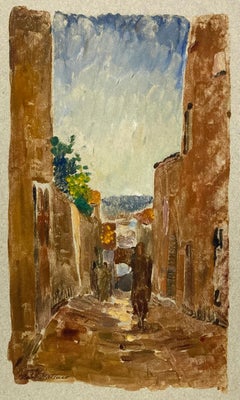
Pink Lake, square abstract monoprint

Pink Lake, square abstract monoprint

By Rachel Burgess

Located in New York, NY

The coastal landscapes of Maine have been the main source of inspiration for Rachel Burgess for many years. Burgess’s ongoing fascination with how land meets water— along rivers, lak...

Category

2010s Contemporary Art by Medium: Monotype

Materials

Paper, Monoprint, Monotype
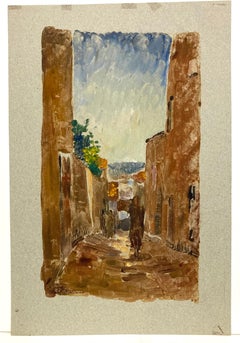
Fog at Dawn
Fog at Dawn

Fog at Dawn

Located in Atlanta, GA

I live in the woods in northern California looking out across the San Francisco Bay towards the hills of Marin, San Francisco and Angel Island. The distant blue hills of my “Faraway ...

Category

2010s Art by Medium: Monotype

Materials

Monotype

Morning Valley Light

Morning Valley Light

Located in Atlanta, GA

I live in the woods in northern California looking out across the San Francisco Bay towards the hills of Marin, San Francisco and Angel Island. The distant blue hills of my “Faraway ...

Category

2010s Art by Medium: Monotype

Materials

Monotype

Italian Contemporary Art by Federica Frati - Eaters 2

Italian Contemporary Art by Federica Frati - Eaters 2

Located in Paris, IDF

Monotype on paper, collage Federica Frati is an Italian artist born in 1977 who lives lives and works in Brecia, Italy. She is graduated from art school Foppa where she learned the ...

Category

2010s Contemporary Art by Medium: Monotype

Materials

Canvas, Monotype
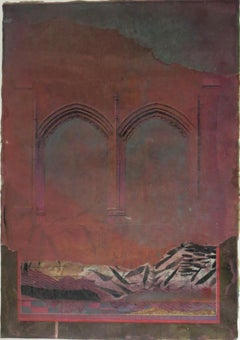
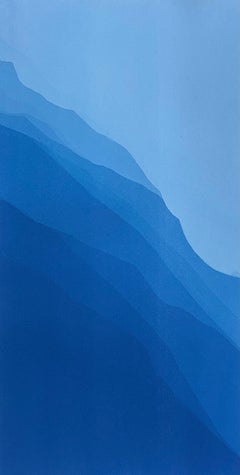
Grand Canyon River, Organic Minimalism, Soft Blue Cyanotype, Abstract Landscape

Grand Canyon River, Organic Minimalism, Soft Blue Cyanotype, Abstract Landscape

By Kind of Cyan

Located in Barcelona, ES

This unique cyanotype monotype transforms organic, river-like forms into a serene field of flowing blues. Soft, undulating shapes echo water, canyon horizons, and desert calm, giving...

Category

2010s Post-Modern Art by Medium: Monotype
Materials

Paper, Lithograph, Monotype
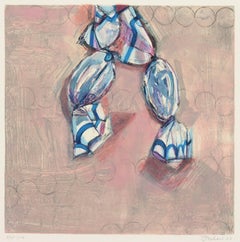
"India, " Abstract Woodcut and Monotype signed by Carol Summers
"India, " Abstract Woodcut and Monotype signed by Carol Summers
By Carol Summers

Located in Milwaukee, WI

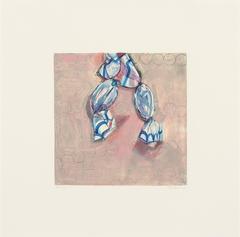
"India" is a woodcut and monotype signed by Carol Summers. Here, Summer's abstract language for landscape imagery is taken to its most extreme: The image offers a view of a highly stylized waterfall, with red water falling down behind green foliage below. A hint of light blue at the lower left suggests a continuation of the water's flow. Above, purples and yellows mist upward from the power of the water. The playfulness of the image is enhanced by Summers' signature printmaking technique, which allows the ink from the woodblock to seep through the paper, blurring the edges of each form. Summers' signature can be found in pencil at the bottom of the rightmost blue form, with the title and edition at the bottom of the leftmost blue form. A copy of this print can be found in the collection of the Fine Arts Museums of San Francisco. 37.25 x 24.88 inches, artwork 48.5 x 35.5 inches, frame Numbered 44 from the edition of 75 Carol Summers (1925-2016) has worked as an artist throughout the second half of the 20th century and into the first years of the next, outliving most of his mid-century modernist peers. Initially trained as a painter, Summers was drawn to color woodcuts around 1950 and it became his specialty thereafter. Over the years he has developed a process and style that is both innovative and readily recognizable. His art is known for it’s large scale, saturated fields of bold color, semi-abstract treatment of landscapes from around the world and a luminescent quality achieved through a printmaking process he invented. In a career that has extended over half a century, Summers has hand-pulled approximately 245 woodcuts in editions that have typically run from 25 to 100 in number. His talent was both inherited and learned. Born in 1925 in Kingston, a small town in upstate New York, Summers was raised in nearby Woodstock with his older sister, Mary. His parents were both artists who had met in art school in St. Louis. During the Great Depression, when Carol was growing up, his father supported the family as a medical illustrator until he could return to painting. His mother was a watercolorist and also quite knowledgeable about the different kinds of papers used for various kinds of painting. Many years later, Summers would paint or print on thinly textured paper originally collected by his mother. From 1948 to 1951, Carol Summers trained in the classical fine and studio arts at Bard College and at the Art Students League of New York. He studied painting with Steven Hirsh and printmaking with Louis Schanker. He admired the shapes and colors favored by early modernists Paul Klee (Sw: 1879-1940) and Matt Phillips (Am: b.1927- ). After graduating, Summers quit working as a part-time carpenter and cabinetmaker (which had supported his schooling and living expenses) to focus fulltime on art. That same year, an early abstract, Bridge No. 1 was selected for a Purchase Prize in a competition sponsored by the Brooklyn Museum. In 1952, his work (Cathedral, Construction and Icarus) was shown the first time at the Museum of Modern Art in New York City in an exhibition of American woodcuts. In 1954, Summers received a grant from the Italian government to study for a year in Italy. Woodcuts completed soon after his arrival there were almost all editions of only 8 to 25 prints, small in size, architectural in content and black and white in color. The most well-known are Siennese Landscape and Little Landscape, which depicted the area near where he resided. Summers extended this trip three more years, a decision which would have significant impact on choices of subject matter and color in the coming decade. After returning from Europe, Summers’ images continued to feature historical landmarks and events from Italy as well as from France, Spain and Greece. However, as evidenced in Aetna’s Dream, Worldwind and Arch of Triumph, a new look prevailed. These woodcuts were larger in size and in color. Some incorporated metal leaf in the creation of a collage and Summers even experimented with silkscreening. Editions were now between 20 and 50 prints in number. Most importantly, Summers employed his rubbing technique for the first time in the creation of Fantastic Garden in late 1957. Dark Vision of Xerxes, a benchmark for Summers, was the first woodcut where Summers experimented using mineral spirits as part of his printmaking process. A Fulbright Grant as well as Fellowships from the Louis Comfort Tiffany Foundation and the Guggenheim Foundation followed soon thereafter, as did faculty positions at colleges and universities primarily in New York and Pennsylvania. During this period he married a dancer named Elaine Smithers with whom he had one son, Kyle. Around this same time, along with fellow artist Leonard Baskin, Summers pioneered what is now referred to as the “monumental” woodcut. This term was coined in the early 1960s to denote woodcuts that were dramatically bigger than those previously created in earlier years, ones that were limited in size mostly by the size of small hand-presses. While Baskin chose figurative subject matter, serious in nature and rendered with thick, striated lines, Summers rendered much less somber images preferring to emphasize shape and color; his subject matter approached abstraction but was always firmly rooted in the landscape. In addition to working in this new, larger scale, Summers simultaneously refined a printmaking process which would eventually be called the “Carol Summers Method” or the “ Carol Summers Technique”. Summers produces his woodcuts by hand, usually from one or more blocks of quarter-inch pine, using oil-based printing inks and porous mulberry papers. His woodcuts reveal a sensitivity to wood especially its absorptive qualities and the subtleties of the grain. In several of his woodcuts throughout his career he has used the undulating, grainy patterns of a large wood plank to portray a flowing river or tumbling waterfall. The best examples of this are Dream, done in 1965 and the later Flash Flood Escalante, in 2003. In the majority of his woodcuts, Summers makes the blocks slightly larger than the paper so the image and color will bleed off the edge. Before printing, he centers a dry sheet of paper over the top of the cut wood block or blocks, securing it with giant clips. Then he rolls the ink directly on the front of the sheet of paper and pressing down onto the dry wood block or reassembled group of blocks. Summers is technically very proficient; the inks are thoroughly saturated onto the surface of the paper but they do not run into each other. The precision of the color inking in Constantine’s Dream in 1969 and Rainbow Glacier in 1970 has been referred to in various studio handbooks. Summers refers to his own printing technique as “rubbing”. In traditional woodcut printing, including the Japanese method, the ink is applied directly onto the block. However, by following his own method, Summers has avoided the mirror-reversed image of a conventional print and it has given him the control over the precise amount of ink that he wants on the paper. After the ink is applied to the front of the paper, Summers sprays it with mineral spirits, which act as a thinning agent. The absorptive fibers of the paper draw the thinned ink away from the surface softening the shapes and diffusing and muting the colors. This produces a unique glow that is a hallmark of the Summers printmaking technique. Unlike the works of other color field artists or modernists of the time, this new technique made Summers’ extreme simplification and flat color areas anything but hard-edged or coldly impersonal. By the 1960s, Summers had developed a personal way of coloring and printing and was not afraid of hard work, doing the cutting, inking and pulling himself. In 1964, at the age of 38, Summers’ work was exhibited for a second time at the Museum of Modern Art. This time his work was featured in a one-man show and then as one of MoMA’s two-year traveling exhibitions which toured throughout the United States. In subsequent years, Summers’ works would be exhibited and acquired for the permanent collections of multiple museums throughout the United States, Europe and Asia. Summers’ familiarity with landscapes throughout the world is firsthand. As a navigator-bombardier in the Marines in World War II, he toured the South Pacific and Asia. Following college, travel in Europe and subsequent teaching positions, in 1972, after 47 years on the East Coast, Carol Summers moved permanently to Bonny Doon in the Santa Cruz Mountains in Northern California. There met his second wife, Joan Ward Toth, a textile artist who died in 1998; and it was here his second son, Ethan was born. During the years that followed this relocation, Summers’ choice of subject matter became more diverse although it retained the positive, mostly life-affirming quality that had existed from the beginning. Images now included moons, comets, both sunny and starry skies, hearts and flowers, all of which, in one way or another, remained tied to the landscape. In the 1980s, from his home and studio in the Santa Cruz mountains, Summers continued to work as an artist supplementing his income by conducting classes and workshops at universities in California and Oregon as well as throughout the Mid and Southwest. He also traveled extensively during this period hiking and camping, often for weeks at a time, throughout the western United States and Canada. Throughout the decade it was not unusual for Summers to backpack alone or with a fellow artist into mountains or back country for six weeks or more at a time. Not surprisingly, the artwork created during this period rarely departed from images of the land, sea and sky. Summers rendered these landscapes in a more representational style than before, however he always kept them somewhat abstract by mixing geometric shapes with organic shapes, irregular in outline. Some of his most critically acknowledged work was created during this period including First Rain, 1985 and The Rolling Sea, 1989. Summers received an honorary doctorate from his alma mater, Bard College in 1979 and was selected by the United States Information Agency to spend a year conducting painting and printmaking workshops at universities throughout India. Since that original sabbatical, he has returned every year, spending four to eight weeks traveling throughout that country. In the 1990s, interspersed with these journeys to India have been additional treks to the back roads and high country areas of Mexico, Central America, Nepal, China and Japan. Travel to these exotic and faraway places had a profound influence on Summers’ art. Subject matter became more worldly and nonwestern as with From Humla to Dolpo, 1991 or A Former Life of Budha, 1996, for example. Architectural images, such as The Pillars of Hercules, 1990 or The Raja’s Aviary, 1992 became more common. Still life images made a reappearance with Jungle Bouquet in 1997. This was also a period when Summers began using odd-sized paper to further the impact of an image. The 1996 Night, a view of the earth and horizon as it might be seen by an astronaut, is over six feet long and only slightly more than a foot-and-a-half high. From 1999, Revuelta A Vida (Spanish for “Return to Life”) is pie-shaped and covers nearly 18 cubic feet. It was also at this juncture that Summers began to experiment with a somewhat different palette although he retained his love of saturated colors. The 2003 Far Side of Time is a superb example of the new direction taken by this colorist. At the turn of the millennium in 1999, “Carol Summers Woodcuts...
Category

1990s Contemporary Art by Medium: Monotype
Materials

Monotype, Woodcut

Third Man 2, black and white, night scene, cityscape
Third Man 2, black and white, night scene, cityscape
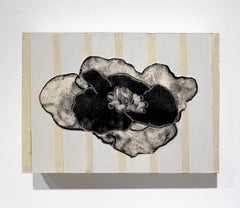
By Tom Bennett

Located in Brooklyn, NY

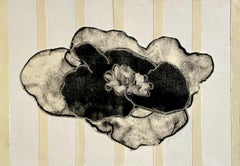
Dramatic imagery from FILM NOIR series of black and white monotypes, blending surreal mindscapes with stark realism About Tom Bennett: With quick brushstrokes, Tom Bennett creates r...

Category

2010s Ashcan School Art by Medium: Monotype

Materials

Archival Paper, Monotype
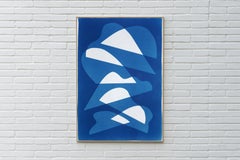
School of Fish, Blue and White, Handmade Cyanotype, Organic Minimalist on Paper

School of Fish, Blue and White, Handmade Cyanotype, Organic Minimalist on Paper

By Kind of Cyan

Located in Barcelona, ES

This one-of-a-kind cyanotype monotype layers soft, sinuous bands of blue to create a serene, wave-like field of motion. The artist shapes light-sensitive chemistry directly on waterc...

Category

2010s Minimalist Art by Medium: Monotype
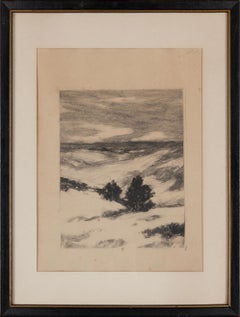
Materials

Paper, Lithograph, Monotype
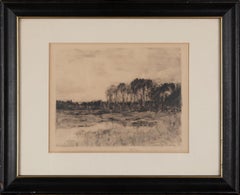
Self Portrait #1, colorful gestural abstracted portrait

Self Portrait #1, colorful gestural abstracted portrait

By Tom Bennett

Located in Brooklyn, NY

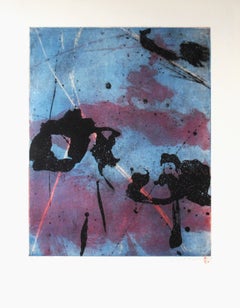
Oil on paper About Tom Bennett: With quick brushstrokes, Tom Bennett creates representational images of human figures and animals, emphasizing movement in a manner reminiscent of Lucien Freud, Edgar Degas and the photographer Eadweard Muybridge. Elongated and blurry, the horse racing up a hill (Canter Fritz, 2002) and the sinister cat landing a leap (Chien Blanc, 1998) elicit a sense of foreboding enhanced by Bennett’s somber palette; his female figures too reflect a grim sense of humor with their distorted nude bodies. The face of Untitled Figure (1997), for example, is obscured by layers of dark paint. Classically trained as a painter, he initially worked in oil on canvas but discovered that monotype printing enabled him to “literally push the image around,” creating an essential element of motion. To overcome the limited scale of monotypes, however, he switched to painting on slick-surfaced plastic. Tom Bennett’s practice is rooted in the classical tradition where painting and drawing from life is highly regarded. Bennett’s work is heavily influenced by Francis Bacon, Frank Auberbauch and foremost his father, Harry Bennett, who was also an artist. Tom’s time living abroad in Spain and traveling through Eastern Europe and Africa provided the artistic freedom to explore many of the techniques and subject matter that continue to define his practice. Bennett was born and raised in Connecticut. His mediums include monotypes, oil on paper, canvas or styrene board. In a technique that Tom started over 4 years ago, several of his monotypes have been painted over with oil paint using a palette knife, brush, or his fingers to re-purpose the underlying image. These works are a testament to Bennett’s ability to quickly and concisely compose an image with expressive brush strokes, foreshortened figures and expertly rendered light. Tom’s work has been featured in group and solo exhibitions worldwide. Bennett lives and works in Brooklyn, New York. He is currently represented by Tabla Rasa...
Category

2010s American Modern Art by Medium: Monotype
Materials

Oil, Paper, Monotype
Monotype art for sale on 1stDibs.
Find a wide variety of authentic Monotype art available on 1stDibs. While artists have worked in this medium across a range of time periods, art made with this material during the 21st Century is especially popular. If you’re looking to add art created with this material to introduce a provocative pop of color and texture to an otherwise neutral space in your home, the works available on 1stDibs include elements of blue, orange, purple, yellow and other colors. There are many well-known artists whose body of work includes ceramic sculptures. Popular artists on 1stDibs associated with pieces like this include Kismine Varner, Carol Summers, Laura Moriarty, and Brad Brown. Frequently made by artists working in the Abstract, Contemporary, all of these pieces for sale are unique and many will draw the attention of guests in your home. Not every interior allows for large Monotype art, so small editions measuring 0.01 inches across are also available