1930s Figurative Sculptures

to
30
69
23
11
5
9
Overall Width
to
Overall Height
to
172
653
2,285
7,497
95
40
100
53
103
220
171
226
280
67
41
21
1
1
79
63
52
50
48
28
14
10
8
8
7
5
5
5
3
3
3
3
3
3
67
58
18
17
11
4
3
3
3
2
68
49
Period: 1930s
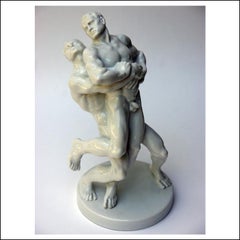
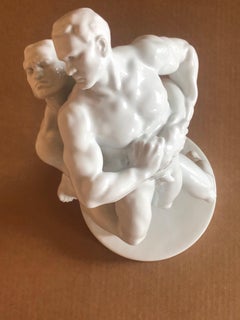
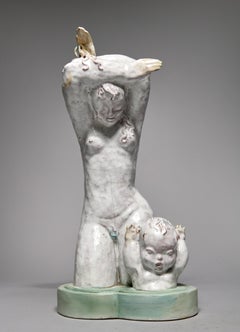
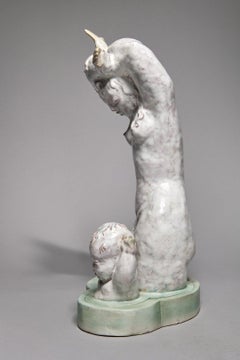
WRESTLERS 1936 Olympics Porcelain Gay Mid-Century Art Deco Modernist LGBT

WRESTLERS 1936 Olympics Porcelain Gay Mid-Century Art Deco Modernist LGBT

By Herend

Located in New York, NY

WRESTLERS 1936 Olympics Porcelain Gay Mid-Century Art Deco Modernist LGBT Herend "Wrestlers" Porcelain, 1936 Stamped P. Farkus on top of base. Stamped Herend on bottom of base. 16...

Category

Modern 1930s Figurative Sculptures

Materials

Porcelain

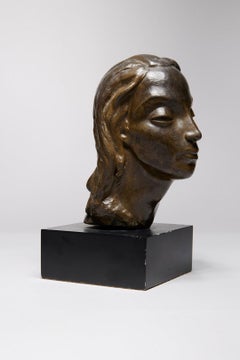
Early 20th Century Ceramic Bust of a Woman, Cleveland School Artist

Early 20th Century Ceramic Bust of a Woman, Cleveland School Artist

Located in Beachwood, OH

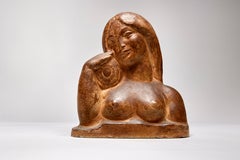
Edris Eckhardt (American, 1905-1998) Bust, 1933 Ceramic Signed and dated base 8.5 x 4.5 x 4.5 inches, including base Minor losses to paint on base. Born in Cleveland, Ohio January ...

Category

1930s Figurative Sculptures

Materials

Ceramic

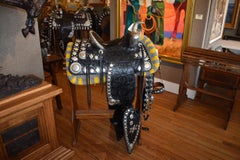
EDWARD BOHLIN 1930s 40s MONTIE MONTANA SILVER ART PARADE SADDLE HOLLYWOOD

EDWARD BOHLIN 1930s 40s MONTIE MONTANA SILVER ART PARADE SADDLE HOLLYWOOD

By Edward H. Bohlin

Located in San Antonio, TX

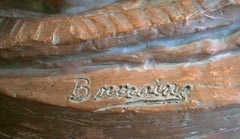
Edward Bohlin Saddle (1895-1980) Hollywood, California Artist / Saddle Maker One of Montie Montana's personal Bohlin Saddles. Movie Star, Trick Rider, Trick Roper Signed. Leather & Sterling Silver #4 "Montie Montana's" Personal Bohlin Parade Saddle Circa Late 1930s - Early 1940s. It is all Bohlin made and marked to include the saddle, the headstall and the breast collar. All made in Hollywood California. Montie Montana (born Owen Harlen Mickel; June 21, 1910 – May 20, 1998) was a rodeo trick rider and trick roper, actor, stuntman and cowboy inducted into the Pro Rodeo Hall of fame in 1994 Biography Montana was born in Wolf Point, Montana, in 1910. He was a perennial participant in the Tournament of Roses Parade until his death in Los Angeles, California, in 1998. Television viewers know him from more than 60 appearances, waving to the crowd from his silver saddle. During the first inauguration of Dwight D. Eisenhower as the 34th President of the United States on January 20, 1953, Montana lassoed the president after his swearing-in. He can be seen as a contestant on the May 7, 1959 television broadcast of You Bet Your Life, along with his horse Rex.Montana would go to elementary schools and perform with Rex. He was at Camellia Avenue Elementary School in North Hollywood, California, in 1959, and he would talk about the rubber horseshoes Rex would be fitted with so Rex would not slip on the asphalt playground while Montie was riding Rex. He performed rope tricks on and off of Rex, and would pass out photos of him and Rex to the students at the end of his show. In 1996, a Golden Palm Star on the Palm Springs, California, Walk of Stars was dedicated to him. He was buried at the Oakwood Memorial Park in Chatsworth, California Filmography Year Title Role Notes 1932 The Saddle Buster Rodeo Performer Uncredited 1934 Stand Up And Cheer! Rope Spinner Uncredited 1935 The Circle of Death Little Buffalo, alias Jim Little 1935 Border Vengeance Montie Montana, Trick Rider Uncredited 1935 Melody Trail Rodeo Rider Uncredited 1936 Comin’ Round the Mountain Roper Uncredited 1936 Gun Smoke 1939 The Kid from Texas Trick Rider Uncredited 1943 Riders of the Deadline Ranger Kelton 1944 Take it Big Show Performer Uncredited 1944 Man from Frisco Montana Uncredited 1949 Down Dakota Way Sheriff Holbrook 1952 The Story of Will Rogers Trick Roping Double for Will Rogers Jr. Uncredited 1954 The Boy from Oklahoma Roper Uncredited 1960 The Rifleman Stage Driver 1962 The Man who shot Liberty Valence Cowboy on Pinto Pony Uncredited 1963 Hud Cowboy Uncredited 1964 Cheyene Autumn Trooper Uncredited 1968 Arizona Bushwackers Stage Driver 1972 The Young Rounders (final film role) Honors 1989 Rodeo Hall of Fame of the National Cowboy and Western Heritage Museum 1990 Pendleton Round-Up and Happy Canyon Hall of Fame 1994 Pro Rodeo Hall of Fame 1997 Ellensburg Rodeo Hall of Fame 2011 Cheyenne Frontier Days Hall of Fame 2015 Montana Cowboy Hall of Fame & Western Heritage THE BOHLIN BRAND IS AS ICONIC AS THE FAMED WESTERN STARS that wore it. The late actor Richard Farnsworth sported a recognizable gold steer-head Bohlin buckle...

Category

Realist 1930s Figurative Sculptures

Materials

Silver

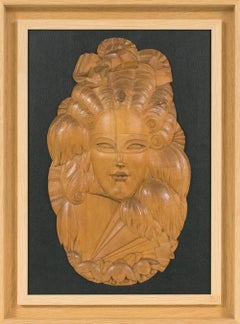
Art Deco Venetian Mask Handcarved Wood Panel Wall Sculpture, circa 1930

Art Deco Venetian Mask Handcarved Wood Panel Wall Sculpture, circa 1930

Located in Atlanta, GA

This extraordinary Art Deco wood panel or wall-mounted sculpture features a spectacular Venetian mask. The rare piece was crafted in France circa 1930. The sculpted panel boasts fine...

Category

Art Deco 1930s Figurative Sculptures

Materials

Wood

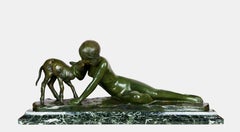
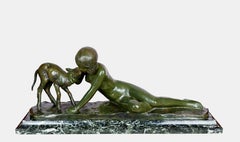
Girl with a Kid / - Caresses of innocence -

Girl with a Kid / - Caresses of innocence -

By Ary Bitter

Located in Berlin, DE

Ary Bitter (1883 Marseille - 1973 Paris), Girl with Kid, around 1930. Green patinated bronze with cast plinth loosely mounted on a white-veined dark green marble base. Dimensions of the plinth: 5 cm (height) x 80 cm (length) x 24 (width), dimensions of the bronze 28 cm (height) x 72 cm (length) x 18 cm (width). Weight of the bronze 18.2 kg, total weight 39.2 kg. Signed “Ary Bitter.” on the plinth and stamped “L N Paris J L” by the foundry Les Neveux de Jacques Lehmann...

Category

Art Deco 1930s Figurative Sculptures

Materials

Bronze

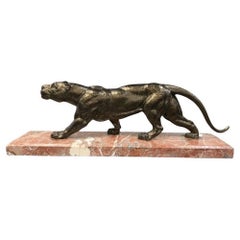
Tigre à l'affût, Art Deco Bronze Sculpture by Georges Lavroff

Tigre à l'affût, Art Deco Bronze Sculpture by Georges Lavroff

By Georges Lavroff

Located in Long Island City, NY

Georges Lavroff, Russian (1895 - 1991) - Tigre à l'affût, Year: circa 1925, Medium: Bronze sculpture on marble base, signature inscribed at base, Size: 4.5 x 21 x 4 in. (11.43 x 5...

Category

Art Deco 1930s Figurative Sculptures

Materials

Marble, Bronze

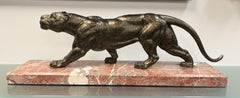
Art Deco Panther Sculpture by D.H. Chiparus

Art Deco Panther Sculpture by D.H. Chiparus

Located in Houston, TX

"PANTHER" Sculpture covered in a cold patina. c.1930 Rests on marble base. Inscribed in script: D. H. Chiparus. Cold patina was very popular in the Art Deco period. The metal: bronze, spelter, etc. would be covered with chemicals to create the brownish tone. Usually ammonium chlorite and cupric chloride was used to achieve the desirable tone. Since the finish was quite fragile and could wear off...

Category

Art Deco 1930s Figurative Sculptures

Materials

Metal

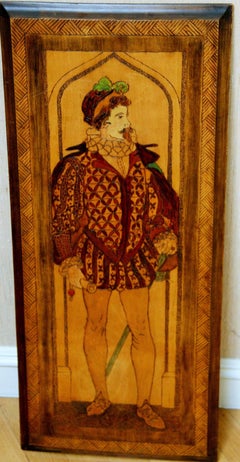
Antique Renaissance Man Carved  and Polychromed Plaque

Antique Renaissance Man Carved and Polychromed Plaque

Located in Douglas Manor, NY

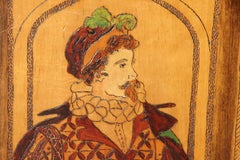
A Renaissance man,circa 1930's polychrome painting on a wood plaque . Artist unknown

Category

1930s Figurative Sculptures

Materials

Wood, Oil

Pyrenean bear sitting

Pyrenean bear sitting

By Georges Lucien Guyot

Located in PARIS, FR

Pyrenean bear sitting by Georges GUYOT (1885-1972) Sculpture in bronze with a nuanced black patina Signed " Guyot " on the base Cast by Martin Canal, without founder mark France circa 1935 Height 18,4 cm Width 17 cm Depth 18 cm Biography : Georges Lucien Guyot (1885-1973) known as Georges Guyot was a French animal artist. From an early age, he showed artistic abilities, but the modest conditions of his parents did not allow him to study art. He was doing his apprenticeship with a woodcarver. Guyot then excelled at copying works of the fifteenth, sixteenth and seventeenth centuries, but soon he showed a special attraction for nature. This attraction led him to the Jardin des Plantes in Paris where he could study wild animals and translated his observations into sculpture and painting. As a famous figure of Montmartre, he was the host of the Bateau-Lavoir from the time of Cubism. In 1931, Georges Guyot joined the group of "The Twelve", created by François Pompon and Jane Poupelet, gathering sculptors like Marcel Lémar, Paul Jouve, André Margat, Jean-Claude de Saint-Marceaux, Georges Hilbert, or even the painter Adrienne Jouclard...

Category

French School 1930s Figurative Sculptures

Materials

Bronze

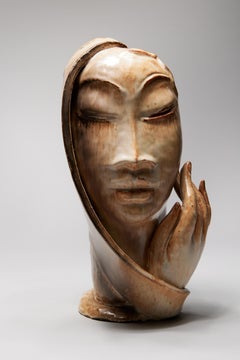
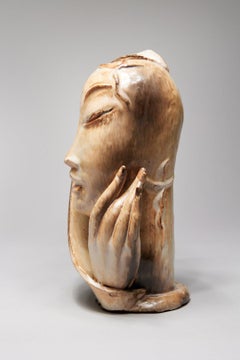
Bust of Josephine Baker, Mid-Century Ceramic Female Face

Bust of Josephine Baker, Mid-Century Ceramic Female Face

By Vally Wieselthier

Located in Beachwood, OH

Attributed to Vally Wieselthier (Austrian-American, 1895-1945) Bust of Josephine Baker, c. 1930 Ceramic Stamped on base 11.5 x 5.5 x 5.5 inches Vally Wieselthier (1895 Vienna--1945 ...

Category

1930s Figurative Sculptures

Materials

Ceramic

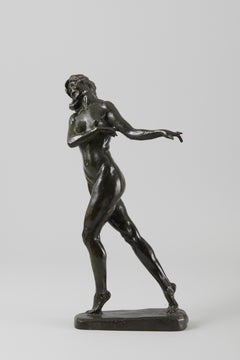
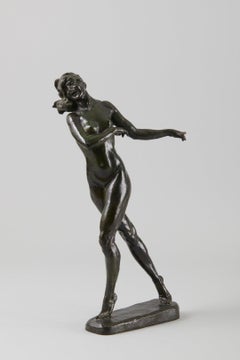
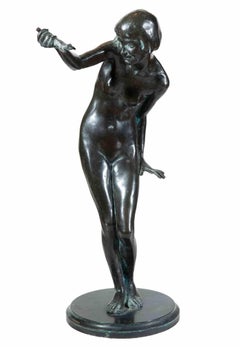
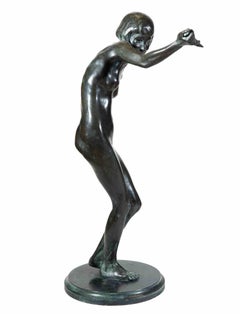
Nude Walking, Early 20th Century Bronze Sculpture, Cleveland School Artist

Nude Walking, Early 20th Century Bronze Sculpture, Cleveland School Artist

By Max Kalish

Located in Beachwood, OH

Max Kalish (American, 1891-1945) Nude Walking, 1930 Bronze Signed and dated on base 17 x 9 x 4 inches Born in Poland March 1, 1891, figurative sculptor Max Kalish came to the United States in 1894, his family settling in Ohio. A talented youth, Kalish enrolled at the Cleveland Institute of Art as a fifteen-year-old, receiving a first-place award for modeling the figure during studies with Herman Matzen. Kalish went to New York City following graduation, studying with Isidore Konti and Herbert Adams...

Category

American Modern 1930s Figurative Sculptures

Materials

Bronze

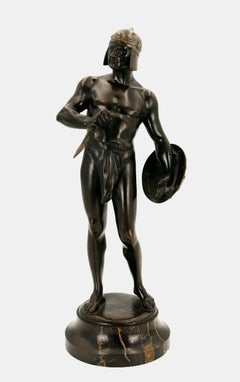
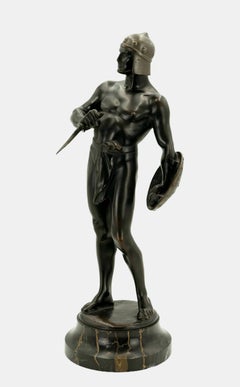
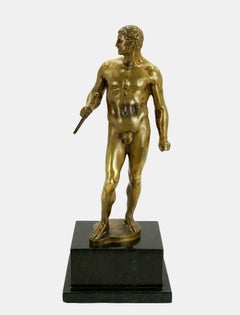
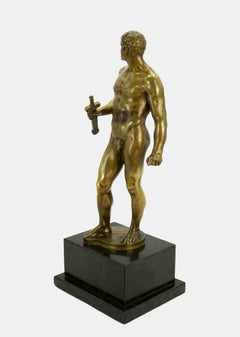
Naked warrior with short sword / - The New Hercules -

Naked warrior with short sword / - The New Hercules -

Located in Berlin, DE

Hermann Volz (1847 Karlsruhe - 1914 ibid.), Naked warrior with short sword, c. 1935. Partially (?) patinated bronze with cast plinth mounted on a black marble base (6.8 cm high). 32....

Category

Art Deco 1930s Figurative Sculptures

Materials

Bronze

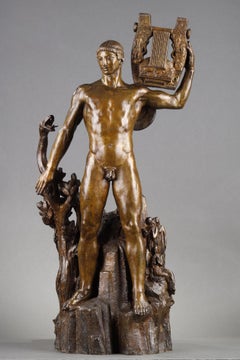
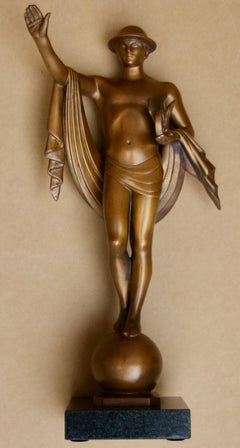
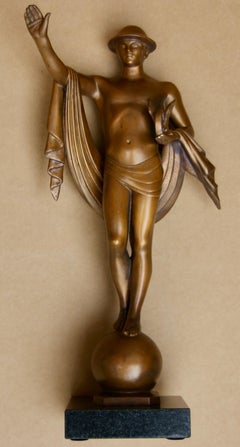
Apollo
Apollo

Henri BouchardApollo, 1937

$158,163Sale Price|20% Off

Apollo

By Henri Bouchard

Located in PARIS, FR

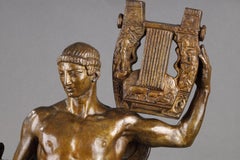
"Apollo" by Henri Bouchard (1875-1960) An Art Deco period masterpiece! Exceptional bronze sculpture with a golden-brown patina Signed " H. Bouchard " Unique piece This work personifies Apollo, god of the Arts. Represented here as Apollo Musagète, leader of the procession of muses and winner of the serpent Python. This subject was commissioned to adorn the entrance to the Palais de Chaillot in Paris, and whose monumental bronze is still exhibited there. To participate in the Venice Biennale in 1938, Henri Bouchard had reduced in 1937 the large Apollo of the Palais de Chaillot, which had not yet been installed. Vintage cast by Bisceglia (cast founder stamp) made during the artist's lifetime. Incised dedication below signature : " à mon cher ami E. Sandoz " This is a unique cast made for the sculptor Edouard-Marcel Sandoz (1881-1971). This cast was exhibited at the 1938 Venice Biennale. France 1937 height : 82 cm width : 45 cm depth : 30 cm weight : 31,2 kgs Stickers under the bronze cast : - Sticker mentioning that this cast has been exhibited at the Venice Biennale of 1938 under the number 354 ("Biennale Internaz. d'Arte Venezia – 1938 – XVI – 354"). - Sticker mentioning that this cast went through Italian customs ("ne – merci – dogana italiana – visitate - 9622") - Damaged Sticker mentioning the name ("A…") and the address ("25…") of the owner of the cast (maybe for the workshop "Atelier Henri Bouchard", 25 rue d’Yvettes, 75016 Paris). Provenance : - Edouard-Marcel Sandoz, Paris, according to the dedication. - Property from the Collection of Seymour Stein (entrepreneur and founder of Sire Records, famous American record label ; and avid collector of 19th and 20th century fine art...

Category

Art Deco 1930s Figurative Sculptures

Materials

Bronze

Gilbert Ledward - 1930s Watercolour Design for a Decorative Sculptural Frieze

Gilbert Ledward - 1930s Watercolour Design for a Decorative Sculptural Frieze

Located in London, GB

GILBERT LEDWARD, RA, PRBS (1888-1960) Tennis, Golf, Shooting, Ice-Skating, Dreaming – Proposed Design for Decorative Frieze in the Italian Drawing Room at Eltham Palace, commissioned by Stephen Courtauld Signed and dated July 9th 1933 Watercolour and pencil 12.5 by 49.5 cm., 5 by 19 ½ in. (frame size 36 by 67 cm., 14 ¼ by 26 ¼ in.) Exhibited: The artist’s daughter; London, The Fine Art Society, A Centenary Tribute, Feb 1988, no. 43. Gilbert Ledward was born in London. He was educated at St Mark’s College, Chelsea. In 1905 he entered the Royal College of Art to study sculpture under Edouard Lanteri and in 1910 he entered the Royal Academy Schools. In 1913 he won the Prix de Rome for sculpture, the Royal Academy’s travelling award and gold medal, which allowed him to travel in Italy until the outbreak of the Wold War I. During the war he served as a lieutenant in the Royal Garrison Artillery and was appointed as an official war artist in 1918. Following the war he was largely occupied as a sculptor of war memorials including the Guards Division memorial in St James’s Park and the Household Division’s memorial in Horse Guards Parade. In 1934, supported by Eric Gill and Edwin Lutyens, he established a company called Sculptured Memorials and Headstones, which promoted better design of memorials in English churchyards. His war memorials after World War II include one in Westminster Abbey to the Submarine Service, Commandos and Airborne Forces. Ledward was Professor of Sculpture at the Royal College of Art (1927-1929) and in 1937 was elected at Royal Academician. He became President of the Royal Society of British Sculptors and a trustee of the Royal Academy. The present work is a design for an intended decorative frieze for the Italian Drawing Room of Eltham Palace. In 1935 the remains of the medieval royal palace of Eltham was rescued from decay by Stephen and Virginia Courtald who built an ultra modern Art Deco house to adjoin the existing Great Hall. They employed the architects John Seeley and Paul Edward Paget and the fashionable Mayfair interior designer the Marchese Peter Malacrida to design the strikingly glamorous 1930s interiors of the new house. The dramatic entrance hall was created by the Swedish designer Rolf Engstromer...

Category

Art Deco 1930s Figurative Sculptures

Materials

Watercolor

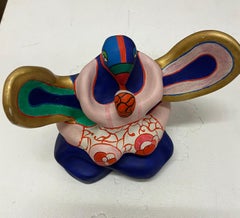
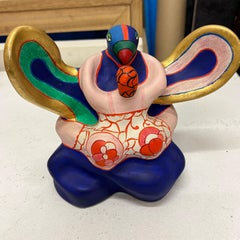
Tantric Couple Sculpture, Resin and Paint, French School, Circa 1930s

Tantric Couple Sculpture, Resin and Paint, French School, Circa 1930s

By Niki de Saint Phalle

Located in PARIS, FR

Rare and beautiful sculpture by Niki de Saint Phalle, certificate by Niki de Saint Phalle Foundation. Some small lacks of gilding on the wings of the bird. Signed and numbered at the...

Category

French School 1930s Figurative Sculptures

Materials

Resin, Paint

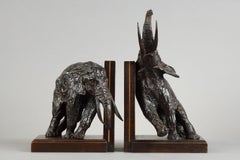
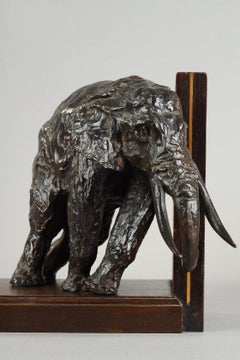
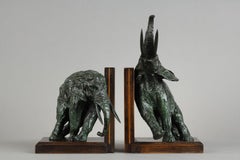
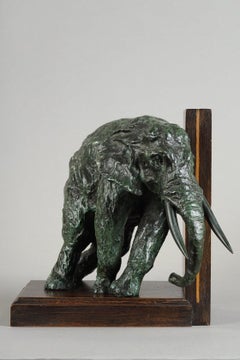
Pair of bookends with Elephants

Pair of bookends with Elephants

By Ary Bitter

Located in PARIS, FR

Pair of bookends with Elephants by Ary BITTER (1883-1973) A very fine pair of bronze sculptures with a nuanced green patina Signed " Ary Bitter Sclp " on an original plaque on one o...

Category

French School 1930s Figurative Sculptures

Materials

Bronze

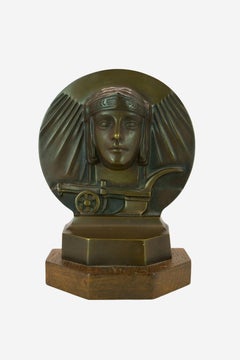
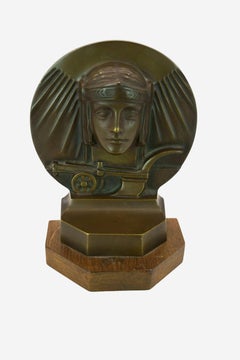
Sun God Ra / - The Light of Knowledge -

Sun God Ra / - The Light of Knowledge -

Located in Berlin, DE

Anonymous, Sun God Ra (bookend), 16 x 13.5 x 6 cm (depiction), 17.5 x 13.5 x 8 cm (with pedestal), patinated brass, c. 1935. - Nose slightly rubbed, otherwise very good condition ...

Category

Art Deco 1930s Figurative Sculptures

Materials

Brass

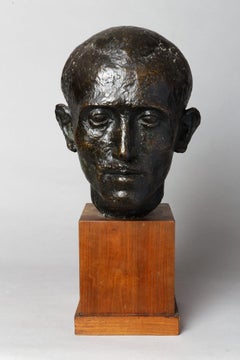
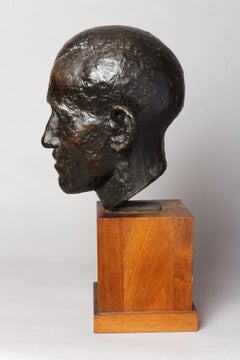
Portrait of a Man
Portrait of a Man

Portrait of a Man

By Marcel GIMOND

Located in PARIS, FR

Portrait of a Man by Marcel GIMOND (1894-1961) Bronze with a very nuanced dark brown patina signed on the neck with the monogram "MG" period cast by "Meroni Radice, cire perdue, Par...

Category

French School 1930s Figurative Sculptures

Materials

Bronze

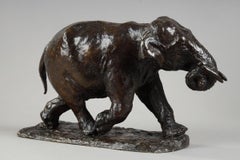
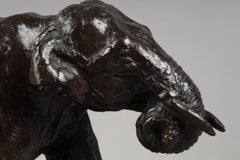
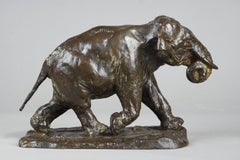
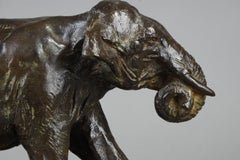
Elephant running with coiled trunk

Elephant running with coiled trunk

By Roger Godchaux 1

Located in PARIS, FR

Elephant running with coiled trunk by Roger GODCHAUX (1878-1958) Sculpture in bronze with a very nuanced brown patina Signed on the base "Roger Godchaux" Cast by "Susse Frs Edts Par...

Category

French School 1930s Figurative Sculptures

Materials

Bronze

Pheasant
Pheasant

François PomponPheasant, circa 1930

$16,946Sale Price|20% Off

Pheasant

By François Pompon

Located in PARIS, FR

Pheasant by François Pompon (1855-1933) Exceptional bronze with old gilded patina Cast by Valsuani Period cast France circa 1930 height 8,2 cm length 14,2 cm width 3,6 cm A similar model is represented in "Pompon, Catalog raisonné", Editions Gallimard, RMN, 1995, page 202, n°95B. Biography: François Pompon (1855-1933) is known for his animal sculptures whose innovative style is characterized by the simplification of shapes and polished surfaces. Pompon entered as an apprentice in the workshop of his father, Alban Pompon (1823-1907) who was a "compagnon du devoir" of the carpenter-cabinetmakers. Thanks to a scholarship obtained by the parish priest, he left in 1870 for Dijon where he became an apprentice stonemason with a marble worker. He attended evening classes at the School of Fine Arts in Dijon, first in architecture and engraving with Célestin Nanteuil, then in sculpture with François Dameron (1835-1900). After a short stint in the army in 1875, Pompon arrived in Paris where he became a marble worker in a funeral business near the Montparnasse cemetery. He attended evening classes at the Petite École, the future National School of Decorative Arts. His teachers were the sculptors Aimé Millet (1819-1891) and Pierre Louis Rouillard (1820-1881), also professor of anatomy, who showed him the menagerie of the Jardin des Plantes. In 1890, François Pompon entered the studio of Auguste Rodin (1840-1917), where he worked as a practitioner at the marble depot, rue de l'Université. He quickly gained the master's confidence since he ran the workshop in 1893. His role then was to pass on the accounts, pay for the marbles and supervise the work. It is in this same workshop that he met Ernest Nivet and Camille Claudel. He worked for a long time as a practitioner for other sculptors such as Jean Dampt...

Category

French School 1930s Figurative Sculptures

Materials

Bronze

Gladiator ready for battle / - Ready for anything -

Gladiator ready for battle / - Ready for anything -

By Bruno Zach

Located in Berlin, DE

Bruno Zach (1891 Zhitomir - 1945 Vienna), Gladiator ready for battle, c. 1930. Blackish patinated bronze with silver-plated helmet, shield rim and shield pommel mounted on a fluted m...

Category

Art Deco 1930s Figurative Sculptures

Materials

Bronze

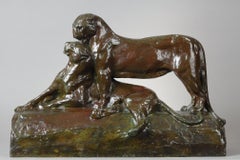
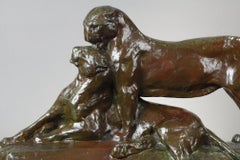
Two panthers
Two panthers

Two panthers

Located in PARIS, FR

Two panthers by Maximilien FIOT (1886-1953) An important bronze group with a nuanced greenish dark brown patina signed on the base " M. Fiot " cast by " Susse Fres Edts Paris " (wi...

Category

French School 1930s Figurative Sculptures

Materials

Bronze

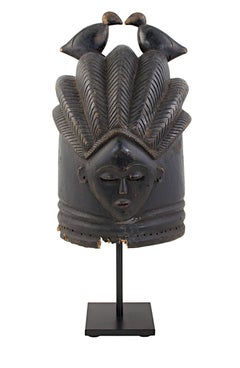
"Mende Mask, " Carved Wooden Mask created in Sierra Leone c. 1930

"Mende Mask, " Carved Wooden Mask created in Sierra Leone c. 1930

Located in Milwaukee, WI

This mask was hand-carved by an unknown artist from the Mende tribe in Sierra Leone, Africa. It depicts a face with its eyes downcast, hair in rows, and two birds on the top. 16" x 10" x 10 1/2" The Mende people (also spelled Mendi) are one of the two largest ethnic groups in Sierra Leone. The Mende are mostly farmers and hunters. Much Mandé art is in the form of jewelry and carvings. The masks associated with the fraternal and sorority associations of the Marka and the Mendé are probably the best-known, and finely crafted in the region. The Mandé also produce beautifully woven fabrics which are popular throughout western Africa, and gold and silver necklaces, bracelets, armlets, and earrings. Masks are the collective Mind of Mende community; viewed as one body, they are the Spirit of the Mende people. The Mende mask...

Category

1930s Figurative Sculptures

Materials

Wood

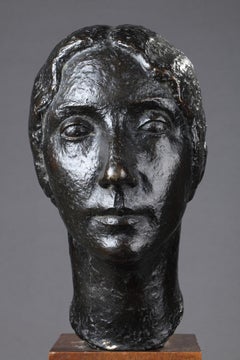
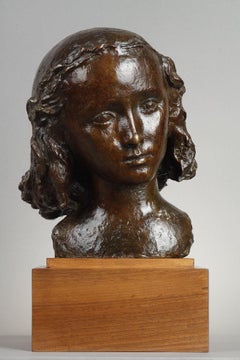
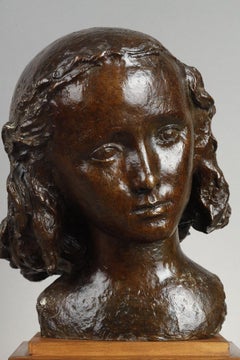
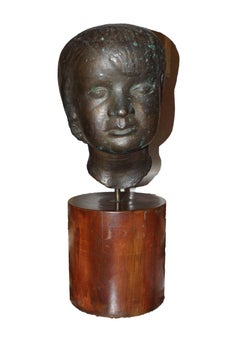
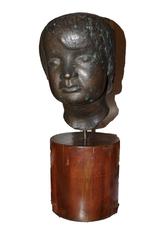
Head of a young girl

Head of a young girl

Located in PARIS, FR

Head of a young girl also known as "Portrait of Jacqueline Hiegel" by Paul BELMONDO (1898-1982) A bronze sculpture with a nuanced brown patina Signed on the back "P. Belmondo" Cast...

Category

Art Deco 1930s Figurative Sculptures

Materials

Bronze

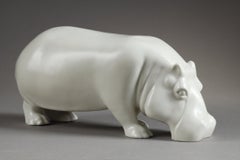
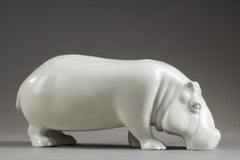
Hippopotamus
Hippopotamus

Hippopotamus

Located in PARIS, FR

Hippopotamus by Armand PETERSEN (1891-1969) Sculpture in dull finish white tender paste porcelain. The bottom signed with the monogram « AP ». Stamped « B - G (for Bing & Grønda...

Category

Art Deco 1930s Figurative Sculptures

Materials

Porcelain

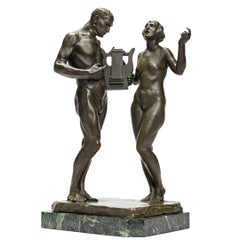
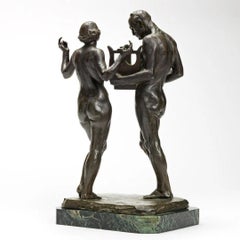
Harmony, 20th century bronze & green marble base, nude man and woman with lyre

Harmony, 20th century bronze & green marble base, nude man and woman with lyre

By Max Kalish

Located in Beachwood, OH

Max Kalish (American, 1891-1945) Harmony, c. 1930 Bronze with green marble base Incised signature on right upper side of base 14 x 9 x 5 inches, excluding base 17 x 10 x 8 inches, including base Born in Poland March 1, 1891, figurative sculptor Max Kalish came to the United States in 1894, his family settling in Ohio. A talented youth, Kalish enrolled at the Cleveland Institute of Art as a fifteen-year-old, receiving a first-place award for modeling the figure during studies with Herman Matzen. Kalish went to New York City following graduation, studying with Isidore Konti...

Category

American Modern 1930s Figurative Sculptures

Materials

Marble, Bronze

Ferdinand Preiss Hoop Girl And Sonny Boy Painted Bronze Figures

Ferdinand Preiss Hoop Girl And Sonny Boy Painted Bronze Figures

By Ferdinand Preiss

Located in Dallas, TX

Ferdinand Preiss (German, 1882 - 1943) Hoop Girl & Sonny Boy Cold-painted bronze Circa 1930, Art Deco Period Dimensions: 8.18 Inches Tall x 4.65 Inches wide x 2.75 inches deep. ...

Category

Art Deco 1930s Figurative Sculptures

Materials

Marble, Bronze

Pair of bookends with Elephants

Pair of bookends with Elephants

By Ary Bitter

Located in PARIS, FR

Pair of bookends with Elephants by Ary BITTER (1883-1973) A very fine pair of bronze sculptures with a nuanced dark brown patina Signed " Ary Bitter Sclp " on an original plaque on ...

Category

French School 1930s Figurative Sculptures

Materials

Bronze

Elephant running with coiled trunk

Elephant running with coiled trunk

By Roger Godchaux 1

Located in PARIS, FR

Elephant running with coiled trunk Roger GODCHAUX (1878-1958) Rare sculpture in bronze with a nuanced dark brown patina cast by SUSSE France circa 1930 height 14,2 cm length 24 cm ...

Category

French School 1930s Figurative Sculptures

Materials

Bronze

Portrait of a woman
Portrait of a woman

Portrait of a woman

By Marcel GIMOND

Located in PARIS, FR

Portrait of a woman by Marcel GIMOND (1894-1961) Bronze with a nuanced dark brown patina signed on the neck with the monogram "MG" period cast by "Meroni Radice, cire perdue, Paris"...

Category

French School 1930s Figurative Sculptures

Materials

Bronze

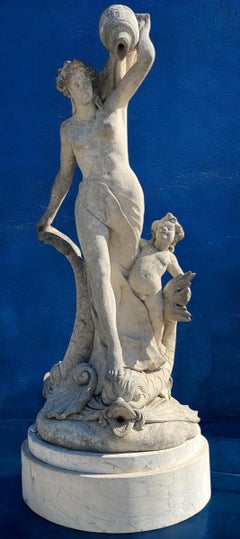
Magnificent Italian Fountain Sculpture of Goddess with Delphines

Magnificent Italian Fountain Sculpture of Goddess with Delphines

Located in Rome, IT

Monumental finely carved limestone fountain sculpture of Goddess with a putto figure and three magnificent dolphins . Proveniente from an important Villa Veneta. Including a round ...

Category

Academic 1930s Figurative Sculptures

Materials

Limestone

Singing
Singing

Singing

By Hubert Yencesse 1

Located in PARIS, FR

Singing by Hubert YENCESSE (1900-1987) A bronze sculpture with a nuanced brown patina signed on the base " H. Yencesse " cast by " A. Rudier fondeur Paris " (with the foundry mark) ...

Category

French School 1930s Figurative Sculptures

Materials

Bronze

Early 20th Century Ceramic Sculpture of a Polo Player and Horse

Early 20th Century Ceramic Sculpture of a Polo Player and Horse

By Waylande Gregory

Located in Beachwood, OH

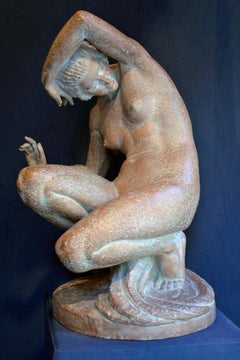
Waylande Gregory (American, 1905-1971) Polo Player, c. 1930s Ceramic Inscribed signature on bottom 11 x 8.5 inches Waylande Gregory was considered a major American sculptor during the 1930's, although he worked in ceramics, rather than in the more traditional bronze or marble. Exhibiting his ceramic works at such significant American venues for sculpture as the Whitney Museum of American Art in New York City and at the venerable Pennsylvania Academy of the Fine Arts in Philadelphia, he also showed his ceramic sculptures at leading New York City galleries. Gregory was the first modern ceramist to create large scale ceramic sculptures, some measuring more than 70 inches in height. Similar to the technique developed by the ancient Etruscans, he fired his monumental ceramic sculptures only once. Gregory was born in 1905 in Baxter Springs, Kansas and was something of a prodigy. Growing up on a ranch near a Cherokee reservation, Gregory first became interested in ceramics as a child during a native American burial that he had witnessed. He was also musically inclined. In fact, his mother had been a concert pianist and had given her son lessons. At eleven, he was enrolled as a student at the Kansas State Teacher's College, where he studied carpentry and crafts, including ceramics. Gregory's early development as a sculptor was shaped by the encouragement and instruction of Lorado Taft, who was considered both a major American sculptor as well as a leading American sculpture instructor. In fact, Taft's earlier students included such significant sculptors as Bessie Potter Vonnoh and Janet Scudder. But, Taft and his students had primarily worked in bronze or stone, not in clay; and, Gregory's earliest sculptural works were also not in ceramics. In 1924, Gregory moved to Chicago where he caught the attention of Taft. Gregory was invited by Taft to study with him privately for 18 months and to live and work with him at his famed "Midway Studios." The elegant studio was a complex of 13 rooms that overlooked a courtyard. Taft may have been responsible for getting the young man interested in creating large scale sculpture. However, by the 1920's, Taft's brand of academic sculpture was no longer considered progressive. Instead, Gregory was attracted to the latest trends appearing in the United States and Europe. In 1928 he visited Europe with Taft and other students. "Kid Gregory," as he was called, was soon hired by Guy Cowan, the founder of the Cowan Pottery in Cleveland, Ohio, to become the company's only full time employee. From 1928 to 1932, Gregory served as the chief designer and sculptor at the Cowan Pottery. Just as Gregory learned about the process of creating sculpture from Taft, he literally learned about ceramics from Cowan. Cowan was one of the first graduates of Alfred, the New York School of Clayworking and Ceramics. Alfred had one of the first programs in production pottery. Cowan may have known about pottery production, but he had limited sculptural skills, as he was lacking training in sculpture. The focus of the Cowan Pottery would be on limited edition, table top or mantle sculptures. Two of the most successful of these were Gregory's "Nautch Dancer," (fig. 1) and his "Burlesque Dancer," (fig. 2). He based both sculptures on the dancing of Gilda Gray, a Ziegfield Follies girl. Gilda Gray was of Polish origin and came to the United States as a child. By 1922, she would become one of the most popular stars in the Follies. After losing her assets in the stock market crash of 1929, she accepted other bookings outside of New York, including Cleveland, which was where Gregory first saw her onstage. She allowed Gregory to make sketches of her performances from the wings of the theatre. She explained to Gregory, "I'm too restless to pose." Gray became noted for her nautch dance, an East Indian folk dance. A nautch is a tight, fitted dress that would curl at the bottom and act like a hoop. This sculpture does not focus on Gray's face at all, but is more of a portrait of her nautch dance. It is very curvilinear, really made of a series of arches that connect in a most feminine way. Gregory created his "Burlesque Dancer" at about the same time as "Nautch Dancer." As with the "Nautch Dancer," he focused on the movements of the body rather than on a facial portrait of Gray. Although Gregory never revealed the identity of his model for "Burlesque Dancer," a clue to her identity is revealed in the sculpture's earlier title, "Shimmy Dance." The dancer who was credited for creating the shimmy dance was also Gilda Gray. According to dance legend, Gray introduced the shimmy when she sang the "Star Spangled Banner" and forgot some of the lyrics, so, in her embarrassment, started shaking her shoulders and hips but she did not move her legs. Such movement seems to relate to the "Burlesque Dancer" sculpture, where repeated triangular forms extend from the upper torso and hips. This rapid movement suggests the influence of Italian Futurism, as well as the planar motion of Alexander Archipenko, a sculptor whom Gregory much admired. The Cowan Pottery was a victim of the great depression, and in 1932, Gregory changed careers as a sculptor in the ceramics industry to that of an instructor at the Cranbrook Academy in Bloomfield Hills, Michigan. Cranbrook was perhaps the most prestigious place to study modern design in America. Its faculty included the architect Eliel Saarinen and sculptor Carl Milles. Although Gregory was only at Cranbrook for one and one half years, he created some of his finest works there, including his "Kansas Madonna" (fig. 3). But, after arriving at Cranbrook, the Gregory's had to face emerging financial pressures. Although Gregory and his wife were provided with complimentary lodgings, all other income had to stem from the sale of artworks and tuition from students that he, himself, had to solicit. Gregory had many people assisting him with production methods at the Cowan Pottery, but now worked largely by himself. And although he still used molds, especially in creating porcelain works, many of his major new sculptures would be unique and sculpted by hand, as is true of "Kansas Madonna." The scale of Gregory's works were getting notably larger at Cranbrook than at Cowan. Gregory left the surface of "Kansas Madonna" totally unglazed. Although some might object to using a religious title to depict a horse nursing its colt, it was considered one of Gregory's most successful works. In fact, it had a whole color page illustration in an article about ceramic sculpture titled, "The Art with the Inferiority Complex," Fortune Magazine, December, 1937. The article notes the sculpture was romantic and expressive and the sculpture was priced at $1,500.00; the most expensive sculpture in the article. Gregory was from Kansas, and "Kansas Madonna" should be considered a major sculptural document of Regionalism. Gregory and his wife Yolande moved to New Jersey in the summer of 1933. And the artist began construction on his new home in the Watchung Mountains of Bound Brook (Warren today) in 1938. His enormous, custom kiln was probably constructed at the start of 1938. Gregory's new sculptures were the largest ceramic sculptures in western art, in modern times. To create these works of ceramic virtuosity, the artist developed a "honeycomb" technique, in which an infrastructure of compartments was covered by a ceramic "skin." Science and atomic energy were a theme in Gregory's most significant work, the "Fountain of the Atom" (fig. 4), at the 1939 New York's World Fair. This major work included twelve monumental ceramic figures at the fairground entrance from the newly constructed railway entrance, giving the work great visibility and prominence. The framework of the fountain itself was of steel and glass bricks. It consisted of a bluish green pool which was sixty five feet in diameter. Above it were two concentric circular tiers, or terraces, as Gregory called them; the first wider than the second. On the first terrace were eight "Electrons," comprised of four male and four female terra cotta figures, each approximately 48 inches high. These relate to the valance shell of the atom. Above them on a narrower terrace, were the much larger and heavier terra cotta figures depicting the four elements, each averaging about 78 inches in height and weighing about a ton and a half. Of the four, "Water" and "Air" were male, while "Earth" and "Fire" were female. This terrace represents the nucleus of the atom. In the center of the fountain, above the "Elements," was a central shaft comprised of sixteen glass tubes from which water tumbled down from tier to tier. At the top, a colorful flame burned constantly. The glass block tiers were lit from within, the whole creating a glowing and gurgling effect. Since the fair was temporary, the figures could be removed after its closing. But the credit for the design of the structure of the fountain belongs to collaborator Nembhard Culin, who was responsible for several other structures on the fair grounds as well. Although Gregory created a figure of "Fire" for the "Fountain of the Atom," he also executed a second, slightly smaller but more defined version which he exhibited at various locations (including Cranbrook, Baltimore Museum, etc.) in 1940-1941, during the second year of the fair (fig.5). Measuring 61 inches in height, "Fire" may be a metaphor for sexual energy, as well as atomic energy. Gregory stated, "Fire is represented by an aquiline female figure being consumed in endless arabesques of flame." Portraiture was also a significant focus of Gregory's sculpture. Gregory produced many commissioned portraits of local people as well as celebrities. He created Albert Einstein's portrait from life (fig. 6, ca. 1940) after Einstein had seen Gregory's "Fountain of the Atom." He also sculpted some of the leading figures in entertainment, including 2 sculptures of Henry Fonda, who became a personal friend. Gregory also sculpted a series of idealized female heads, both in terra cotta and in porcelain. These include "Girl with Olive" (ca. 1932) and "Cretan Girl;"(ca. 1937) both are very reductive and almost abstract works that call to mind Constantine Brancusi's "Mademoiselle Pogany" (1912, Philadelphia Museum of Art). But perhaps one of his most original female heads is "Head of a Child" (fig. 7, ca. 1933), a sensitive white glazed terra cotta portrayal with elaborately crafted braded hair, was originally created as one of a pair. Gregory also produced sculptural works for the Works Progress Administration. The WPA was a work relief project that greatly helped artists during the great depression. Founded by the Federal Government in 1935, an estimated 2500 murals were produced. Among these public works were the iconic post office murals. But, among the painted murals were also sculptural relief murals including Gregory's "R.F.D.," 1938, for the Columbus, Kansas Post Office. But, Gregory's largest WPA relief...

Category

1930s Figurative Sculptures

Materials

Ceramic

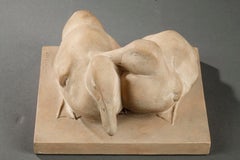
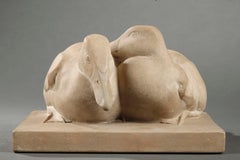
Ducks
Ducks

Ducks

Located in PARIS, FR

Ducks by Josette HEBERT-COEFFIN (1906-1973) Sculpture made in stone signed on the base "J. H. Coëffin" France circa 1930 height 10 cm width 16,5 cm depth 14,1 cm Biography : Jose...

Category

French School 1930s Figurative Sculptures

Materials

Limestone

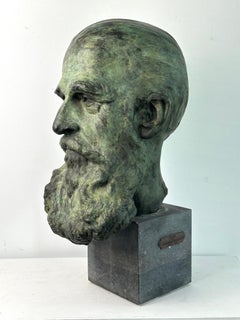
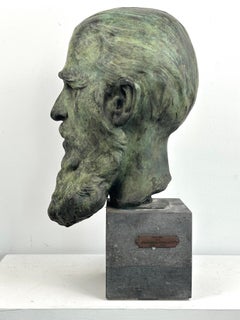
Bronze Portrait Bust of Jonkheer Roelants (Provincial Clerk Netherlands)

Bronze Portrait Bust of Jonkheer Roelants (Provincial Clerk Netherlands)

Located in Wilton Manors, FL

Jan Boedts (1904-1973). Hulde ann Jonkheer Roelants, ca. 1935. Bronze cast mounted to stone base measuring 20.5" h, 10.5" d, 8" w. The piece was commissioned by the court of King ...

Category

Impressionist 1930s Figurative Sculptures

Materials

Bronze

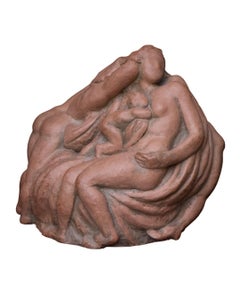
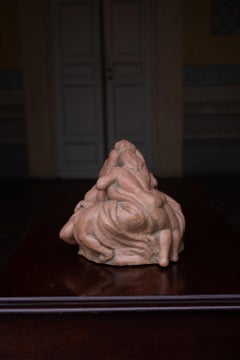
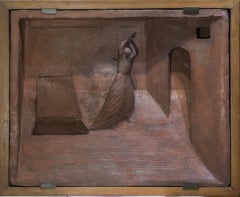
The Trapdoor
The Trapdoor

The Trapdoor

By Arturo Martini

Located in Roma, RM

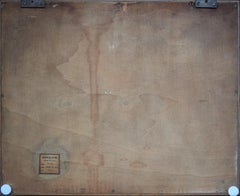
Arturo Martini (Treviso 1889 - Milan 1947), La Botola (1930 / 1933) Terracotta sculpture 34 x 42 x 9 cm signed lower left; label of Galleria del Milione, Milan, on back. Provenance...

Category

Italian School 1930s Figurative Sculptures

Materials

Terracotta

Music (attributed)

Music (attributed)

By Philip Kran Paval

Located in Los Angeles, CA

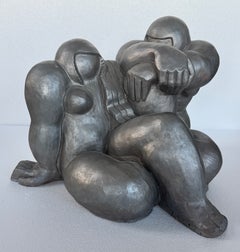
This sculpture is part of our exhibition America Coast to Coast: Artists of the 1930s Music (attributed), brass and wire construction, c. 1936, 28 x 14 x 5 inches; perhaps exhibited at Hollywood Riviera Gallery, 1936 (third prize); provenance includes Estate of Jon Spencer Helfen (Los Angeles, CA About the Sculpture In 1935, Philip Paval bought a box of metal in a “blind auction.” Paval, a painter, sculptor, and jeweler, had hoped the box contained silver. To his dismay, it was brass. Seeing an opportunity, Paval started to make sculptures from the brass sheets. His subjects included Cinema, Hollywood, Radio, Dance, Aviation and Music. The works were well-received with the Hollywood crowd and critically acclaimed. Actor and comedian, Ben Bard, purchased four of them for his theater, and novelist and screenwriter, Vicki Baum ordered four more for her drawing room. Movie director King Vidor also purchased them. Los Angeles Times art critic, Arthur Millier, described Paval’s “contraptions” as “ingenious, decorative, different.” Paval exhibited these works for several years in the late 1930s, including at the American Artists’ Congress Gallery in Los Angeles in an exhibition called Formalism and Abstraction in 1938 and at a solo show at Stendahl Galleries in 1939. The appeal of these works must have been irresistible, as a 1936 Los Angeles Times article noted, “Two feet of brass art has been stolen from the Hollywood Riviera Galleries. The work is an abstraction. It portrays the spirit of music and rested on the grand piano in the main hall. The work of Philip Paval, it won third prize in the current gallery exhibition at the gallery.” One can only wonder whether this is the “contraption” which was pilfered from the gallery nearly one hundred years ago. Given the description of the work, its subject matter and size, it seems likely. About the Artist Philip Paval was a sculptor, painter, and jeweler. Born in Denmark, Paval was apprenticed to a silversmith and studied art in Denmark. He immigrated to the US in 1919 and first worked as a merchant seaman in New York. The following year, Paval settled in Los Angeles where he later opened his own jewelry shop featuring works he designed and produced. Paval became a favorite in the entertainment world, making a good living selling silver...

Category

Art Deco 1930s Figurative Sculptures
Materials

Brass

French Bust of Young Girl Art Deco Sculpture by Bohumil Rezl Circa 1930

French Bust of Young Girl Art Deco Sculpture by Bohumil Rezl Circa 1930

By Bohumil Rezl

Located in Falmouth, GB

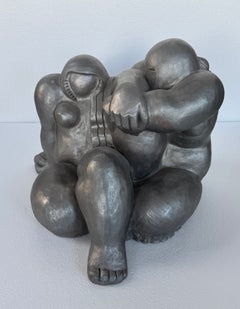
French Bust of Girl c1930 Signed at the back by the artist BOHUMIL REZL With copyright mark Made of a type of Cristaux (French) that is very hard Very good Vintage condition Sculpt...

Category

Art Deco 1930s Figurative Sculptures
Materials

Mixed Media, Other Medium

Ena Rottenberg Glass Sculpture, 1937, Nude Figure “Modell”

Ena Rottenberg Glass Sculpture, 1937, Nude Figure “Modell”

By Ena Rottenberg

Located in Phoenix, AZ

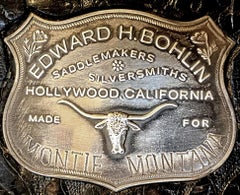
Ena Rottenberg (1893-1952) art glass sculpture titled "Modell.” Made in Czechoslovakia. Marked “Rottenberg” 13" H. This piece was awarded the Grand Prix at the World’s Fair Paris, 19...

Category

Modern 1930s Figurative Sculptures
Materials

Glass

Our Lady of Sorrows
Our Lady of Sorrows

Our Lady of Sorrows

Located in Roma, RM

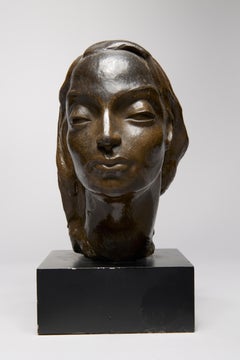
Arrigo Minerbi (Ferrara 1881 – Padua 1960), Our Lady of Sorrows (1936) Glazed terracotta sculpture, 34 x 26 x 26 cm, signed on the inside. This is a detail from the sculpture *La P...

Category

Other Art Style 1930s Figurative Sculptures
Materials
Terracotta