Car Art

4,336 Results
to
349
1,192
943
658
658
913
Overall Width
to
Overall Height
to
30
128
2,016
2,207
2
15
49
174
67
374
325
264
161
141
19
1,403
940
303
144
90
63
58
45
23
14
9
7
3
3
2,639
1,028
647
4,389
157,502
82,984
51,405
43,299
37,446
36,182
30,741
27,519
26,121
24,931
20,945
18,102
16,034
14,807
14,035
13,455
11,544
10,755
10,466
1,270
1,066
903
866
723
342
159
116
66
65
962
1,413
2,516
1,664
Art Subject: Car
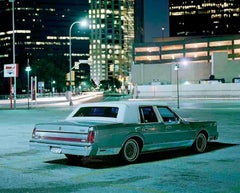
Downtown In New Mexico

Downtown In New Mexico

By Alain Le Garsmeur

Located in London, GB

DOWNTOWN LAS VEGAS, NEW MEXICO, USA 1979 by Alain Le Garsmeur A gorgeously evocative shot taken in the late 1970's by prolific documentary and well known editorial photographer Alain Le Garsmeur. Perhaps one of his most classic of images - it is one of our absolute favourites. Beautiful extra large Oversize C type print 40x30" inches paper size ( 101 x 76 cm's) LIMITED EDITION, unframed. edition size 1 / 100 only (Also available signed - ask us for details) Alain Le Garsmeur was born in France in 1943 and after assisting the likes of Helmut Newton, Guy Bourdin and Donald Silverstein...

Category

1980s Modern Color Photography

Materials

C Print

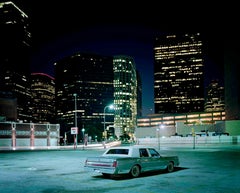
Car, Downtown Car Park, Dallas, Texas - Classic American Automobile Photography

Car, Downtown Car Park, Dallas, Texas - Classic American Automobile Photography

By Samuel Hicks

Located in Brighton, GB

Car, Downtown Car Park, Dallas, Texas is a stunning C-Type Print by contemporary photographer Samuel Hicks. It is available in in this size in an Edition of ...

Category

21st Century and Contemporary Contemporary Landscape Photography

Materials

Photographic Paper, C Print, Digital, Color

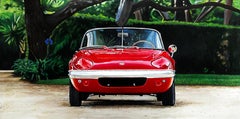
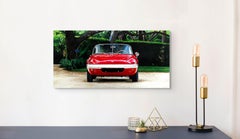
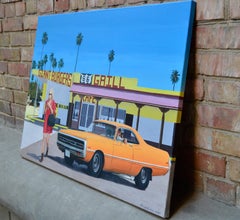
"Lotus Elan" Original Oil Painting 12 in x 24 in

"Lotus Elan" Original Oil Painting 12 in x 24 in

By Megan Eisenberg

Located in Boca Raton, FL

A photorealist painting of a vintage Lotus Elan S2. This classic British sports car was released in 1964 and has a mid century style and shape that I love! Set in Savannah, Georgia t...

Category

2010s Photorealist Landscape Paintings

Materials

Oil

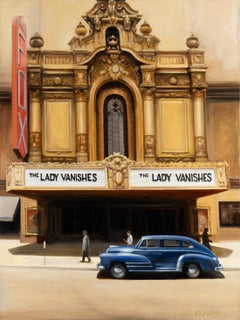
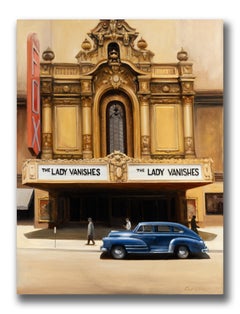
Robert Kenneth White "The Lady Vanishes" Signed Large Realist Oil on Canvas

Robert Kenneth White "The Lady Vanishes" Signed Large Realist Oil on Canvas

By Robert Kenneth White

Located in Miami, FL

ROBERT KENNETH WHITE (b. 1950) – “THE LADY VANISHES” Oil on Canvas ⚜ Hand Signed Lower Right ⚜ Frameless Display A CINEMATIC VISION OF MIDCENTURY GLAMOUR AND URBAN MEMORY In The La...

Category

2010s Realist Landscape Paintings

Materials

Oil, Canvas

Need Loot for Lambo

Need Loot for Lambo

By Werner Bronkhorst

Located in Miami, FL

Werner Bronkhorst is a contemporary artist based in Australia. He is recognised for his two distinctive styles, with the first involving abstract sculptural backgrounds with hyper-re...

Category

2010s Prints and Multiples

Materials

Canvas, Mixed Media, Screen

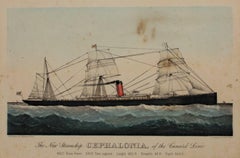
19th century color lithograph seascape boat ship waves maritime landscape

19th century color lithograph seascape boat ship waves maritime landscape

By Currier & Ives

Located in Milwaukee, WI

"The New Steamship Cephalonia, of the Cunard Line" is an original hand-colored lithograph by Currier & Ives. It depicts a large sailing steamship. There is a significant stain in the artwork in the upper center. 12" x 16 3/4" art 21" x 26" frame Nathaniel Currier was a tall introspective man with a melancholy nature. He could captivate people with his piercing stare or charm them with his sparkling blue eyes. Nathaniel was born in Roxbury, Massachusetts on March 27th, 1813, the second of four children. His parents, Nathaniel and Hannah Currier, were distant cousins who lived a humble yet spartan life. When Nathaniel was eight years old, tragedy struck. Nathaniel’s father unexpectedly passed away leaving Nathaniel and his eleven-year-old brother Lorenzo to provide for the family. In addition to their mother, Nathaniel and Lorenzo had to care for six-year-old sister Elizabeth and two-year-old brother Charles. Nathaniel worked a series of odd jobs to support the family, and at fifteen, he started what would become a life-long career when he apprenticed in the Boston lithography shop of William and John Pendleton. A Bavarian gentleman named Alois Senefelder invented lithography just 30 years prior to young Nat Currier’s apprenticeship. While under the employ of the brothers Pendleton, Nat was taught the art of lithography by the firm’s chief printer, a French national named Dubois, who brought the lithography trade to America. Lithography involves grinding a piece of limestone flat and smooth then drawing in mirror image on the stone with a special grease pencil. After the image is completed, the stone is etched with a solution of aqua fortis leaving the greased areas in slight relief. Water is then used to wet the stone and greased-ink is rolled onto the raised areas. Since grease and water do not mix, the greased-ink is repelled by the moisture on the stone and clings to the original grease pencil lines. The stone is then placed in a press and used as a printing block to impart black on white images to paper. In 1833, now twenty-years old and an accomplished lithographer, Nat Currier left Boston and moved to Philadelphia to do contract work for M.E.D. Brown, a noted engraver and printer. With the promise of good money, Currier hired on to help Brown prepare lithographic stones of scientific images for the American Journal of Sciences and Arts. When Nat completed the contract work in 1834, he traveled to New York City to work once again for his mentor John Pendleton, who was now operating his own shop located at 137 Broadway. Soon after the reunion, Pendleton expressed an interest in returning to Boston and offered to sell his print shop to Currier. Young Nat did not have the financial resources to buy the shop, but being the resourceful type he found another local printer by the name of Stodart. Together they bought Pendleton’s business. The firm ‘Currier & Stodart’ specialized in "job" printing. They produced many different types of printed items, most notably music manuscripts for local publishers. By 1835, Stodart was frustrated that the business was not making enough money and he ended the partnership, taking his investment with him. With little more than some lithographic stones, and a talent for his trade, twenty-two year old Nat Currier set up shop in a temporary office at 1 Wall Street in New York City. He named his new enterprise ‘N. Currier, Lithographer’ Nathaniel continued as a job printer and duplicated everything from music sheets to architectural plans. He experimented with portraits, disaster scenes and memorial prints, and any thing that he could sell to the public from tables in front of his shop. During 1835 he produced a disaster print Ruins of the Planter's Hotel, New Orleans, which fell at two O’clock on the Morning of the 15th of May 1835, burying 50 persons, 40 of whom Escaped with their Lives. The public had a thirst for newsworthy events, and newspapers of the day did not include pictures. By producing this print, Nat gave the public a new way to “see” the news. The print sold reasonably well, an important fact that was not lost on Currier. Nat met and married Eliza Farnsworth in 1840. He also produced a print that same year titled Awful Conflagration of the Steamboat Lexington in Long Island Sound on Monday Evening, January 18, 1840, by which melancholy occurrence over One Hundred Persons Perished. This print sold out very quickly, and Currier was approached by an enterprising publication who contracted him to print a single sheet addition of their paper, the New York Sun. This single page paper is presumed to be the first illustrated newspaper ever published. The success of the Lexington print launched his career nationally and put him in a position to finally lift his family up. In 1841, Nat and Eliza had their first child, a son they named Edward West Currier. That same year Nat hired his twenty-one year old brother Charles and taught him the lithography trade, he also hired his artistically inclined brother Lorenzo to travel out west and make sketches of the new frontier as material for future prints. Charles worked for the firm on and off over the years, and invented a new type of lithographic crayon which he patented and named the Crayola. Lorenzo continued selling sketches to Nat for the next few years. In 1843, Nat and Eliza had a daughter, Eliza West Currier, but tragedy struck in early 1847 when their young daughter died from a prolonged illness. Nat and Eliza were grief stricken, and Eliza, driven by despair, gave up on life and passed away just four months after her daughter’s death. The subject of Nat Currier’s artwork changed following the death of his wife and daughter, and he produced many memorial prints and sentimental prints during the late 1840s. The memorial prints generally depicted grief stricken families posed by gravestones (the stones were left blank so the purchasers could fill in the names of the dearly departed). The sentimental prints usually depicted idealized portraits of women and children, titled with popular Christian names of the day. Late in 1847, Nat Currier married Lura Ormsbee, a friend of the family. Lura was a self-sufficient woman, and she immediately set out to help Nat raise six-year-old Edward and get their house in order. In 1849, Lura delivered a son, Walter Black Currier, but fate dealt them a blow when young Walter died one year later. While Nat and Lura were grieving the loss of their new son, word came from San Francisco that Nat’s brother Lorenzo had also passed away from a brief illness. Nat sank deeper into his natural quiet melancholy. Friends stopped by to console the couple, and Lura began to set an extra place at their table for these unexpected guests. She continued this tradition throughout their lives. In 1852, Charles introduced a friend, James Merritt Ives, to Nat and suggested he hire him as a bookkeeper. Jim Ives was a native New Yorker born in 1824 and raised on the grounds of Bellevue Hospital where his father was employed as superintendent. Jim was a self-trained artist and professional bookkeeper. He was also a plump and jovial man, presenting the exact opposite image of his new boss. Jim Ives met Charles Currier through Caroline Clark, the object of Jim’s affection. Caroline’s sister Elizabeth was married to Charles, and Caroline was a close friend of the Currier family. Jim eventually proposed marriage to Caroline and solicited an introduction to Nat Currier, through Charles, in hopes of securing a more stable income to support his future wife. Ives quickly set out to improve and modernize his new employer’s bookkeeping methods. He reorganized the firm’s sizable inventory, and used his artistic skills to streamline the firm’s production methods. By 1857, Nathaniel had become so dependent on Jims’ skills and initiative that he offered him a full partnership in the firm and appointed him general manager. The two men chose the name ‘Currier & Ives’ for the new partnership, and became close friends. Currier & Ives produced their prints in a building at 33 Spruce Street where they occupied the third, fourth and fifth floors. The third floor was devoted to the hand operated printing presses that were built by Nat's cousin, Cyrus Currier, at his shop Cyrus Currier & Sons in Newark, NJ. The fourth floor found the artists, lithographers and the stone grinders at work. The fifth floor housed the coloring department, and was one of the earliest production lines in the country. The colorists were generally immigrant girls, mostly German, who came to America with some formal artistic training. Each colorist was responsible for adding a single color to a print. As a colorist finished applying their color, the print was passed down the line to the next colorist to add their color. The colorists worked from a master print displayed above their table, which showed where the proper colors were to be placed. At the end of the table was a touch up artist who checked the prints for quality, touching-in areas that may have been missed as it passed down the line. During the Civil War, demand for prints became so great that coloring stencils were developed to speed up production. Although most Currier & Ives prints were colored in house, some were sent out to contract artists. The rate Currier & Ives paid these artists for coloring work was one dollar per one hundred small folios (a penny a print) and one dollar per one dozen large folios. Currier & Ives also offered uncolored prints to dealers, with instructions (included on the price list) on how to 'prepare the prints for coloring.' In addition, schools could order uncolored prints from the firm’s catalogue to use in their painting classes. Nathaniel Currier and James Merritt Ives attracted a wide circle of friends during their years in business. Some of their more famous acquaintances included Horace Greeley, Phineas T. Barnum, and the outspoken abolitionists Rev. Henry Ward, and John Greenleaf Whittier (the latter being a cousin of Mr. Currier). Nat Currier and Jim Ives described their business as "Publishers of Cheap and Popular Pictures" and produced many categories of prints. These included Disaster Scenes, Sentimental Images, Sports, Humor, Hunting Scenes, Politics, Religion, City and Rural Scenes, Trains, Ships, Fire Fighters, Famous Race Horses, Historical Portraits, and just about any other topic that satisfied the general public's taste. In all, the firm produced in excess of 7500 different titles, totaling over one million prints produced from 1835 to 1907. Nat Currier retired in 1880, and signed over his share of the firm to his son Edward. Nat died eight years later at his summer home 'Lion’s Gate' in Amesbury, Massachusetts. Jim Ives remained active in the firm until his death in 1895, when his share of the firm passed to his eldest son, Chauncey. In 1902, faced will failing health from the ravages of Tuberculosis, Edward Currier sold his share of the firm to Chauncey Ives...

Category

1870s Other Art Style Prints and Multiples
Materials

Lithograph

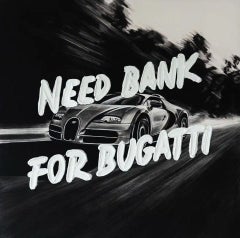
Need Bank for Bugatti

Need Bank for Bugatti

By Werner Bronkhorst

Located in Miami, FL

Werner Bronkhorst is a contemporary artist based in Australia. He is recognised for his two distinctive styles, with the first involving abstract sculptural backgrounds with hyper-re...

Category

2010s Prints and Multiples

Materials

Canvas, Mixed Media, Screen

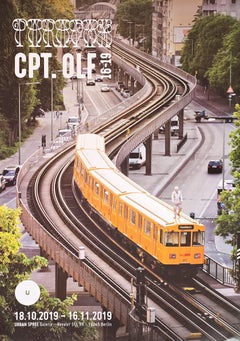
Paradox x CPT.OLF 16-19 (I) - The Exhibition (Urban Art, Snapshot, Exploration)

Paradox x CPT.OLF 16-19 (I) - The Exhibition (Urban Art, Snapshot, Exploration)

Located in Kansas City, MO

CPT.OLF Paradox x CPT.OLF 16-19 (I) - The Exhibition (Urban Art, Snapshot, Exploration) Exhibition Poster for "URBAN SPREE Galerie, Berlin" Year: 2019 Size: 33.07 x 23.62 inches (84...

Category

2010s Street Art Landscape Prints

Materials

Lithograph, Offset

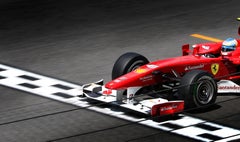
Formula 1 Ferrari - Fernando Alonso, Signed limited edition still life, Race

Formula 1 Ferrari - Fernando Alonso, Signed limited edition still life, Race

By Laurent Campus

Located in Sant Cugat del Vallès, Barcelona

Formula 1 Ferrari - Signed limited edition archival pigment print, 2011 - Edition of 5 Formula 1 , Preseason test, 2011 , Barcelona, Spain. Fernando Alonso for Ferrari Photo/R...

Category

2010s Contemporary Color Photography

Materials

Archival Paper, Photographic Paper, Color, Giclée, Pigment, Archival Pig...

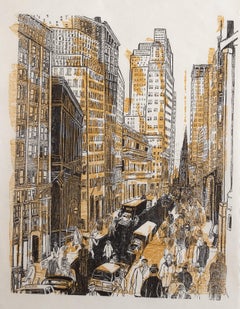
Wall Street, Pop Art Woodcut by Ted Davies

Wall Street, Pop Art Woodcut by Ted Davies

By Ted Davies

Located in Long Island City, NY

Ted Davies, American (1928 - ) - Wall Street, Year: circa 1973, Medium: Woodcut on Japon, Image Size: 29 x 22 inches, Size: 37 x 25 in. (93.98 x 63.5 cm)

Category

1970s Pop Art Landscape Prints

Materials

Gold Leaf

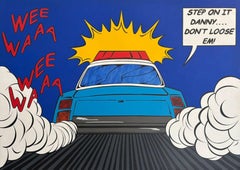
Step On It Danny, Don't Lose Em!

Step On It Danny, Don't Lose Em!

By Deborah Azzopardi

Located in London, GB

Azzopardi created this fun acrylic painting because her neighbour's child, 8 year old Danny, had a new bicycle and would cycle past her home demonstrating this specific police siren,...

Category

Early 2000s Contemporary Figurative Paintings

Materials

Acrylic, Board

Lotus MK 9
Lotus MK 9

Lotus MK 9

By Richard Stacks

Located in San Francisco, CA

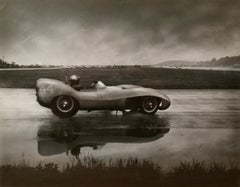
This Photograph titled "Lotus MK 9" c.1960, is a gelatin silver print by noted photographer Richard Stacks, 1930-2015. It has the stamp of the Baltimore Sunpapers and the name of the...

Category

Mid-20th Century Photorealist Black and White Photography

Materials

Silver Gelatin

Desert Steel - Original Signed Acrylic on Canvas Painting, Cowboy & Horse

Desert Steel - Original Signed Acrylic on Canvas Painting, Cowboy & Horse

Located in Palm Desert, CA

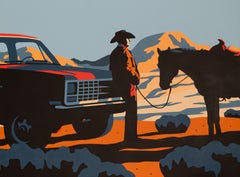
“Desert Steel” (2024) is an acrylic on canvas, contemporary illustrative painting by American artist, Jeremy Booth, depicting a western scene of a truck, cowboy, and horse in a stark...

Category

2010s Contemporary Figurative Paintings

Materials

Canvas, Acrylic

'Hollyweird'

'Hollyweird'

By RICHARDSON RAY

Located in Paris, FR

Ray Richardson is a contemporary British artist known for his cinematic paintings. The artist employs icons of working-class London, including bull terriers, soccer pitches, and grit...

Category

Early 2000s Realist Figurative Paintings

Materials

Oil

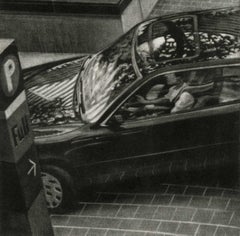
7 A. M. St. Louis
7 A. M. St. Louis

7 A. M. St. Louis

By Art Werger

Located in New Orleans, LA

It's early morning I'm St. Louis in this 2002 mezzotint that is signed and numbered Art Werger’s lyrical suburban scenes are evocative of boyhood summer evenings while his city imag...

Category

21st Century and Contemporary American Modern Figurative Prints

Materials

Mezzotint

Sunday Special

Sunday Special

By Kristin Moore

Located in New Orleans, LA

Archival pigment ink print on Hahnemuhle cotton paper. Each print is uniquely hand embellished by the artist with acrylic paint and prismacolor. Edition 1 of 5. Kristin Moore says o...

Category

21st Century and Contemporary Contemporary Landscape Prints

Materials

Acrylic, Rag Paper, Archival Pigment

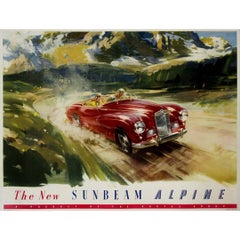
1953 Original advertising poster for The New Sunbeam Alpine - Car

1953 Original advertising poster for The New Sunbeam Alpine - Car

Located in PARIS, FR

In 1953, the automotive world witnessed the introduction of "The New Sunbeam Alpine," a remarkable creation born from the ingenuity of the Rootes Group. This original poster serves a...

Category

1950s Prints and Multiples

Materials

Linen, Paper, Lithograph

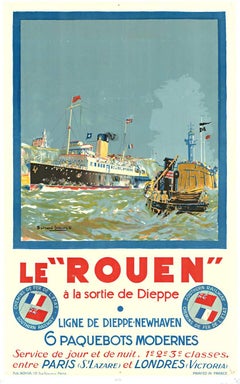
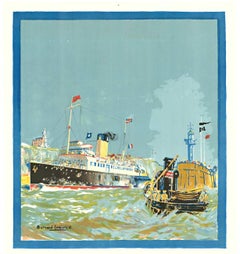
Original Le "Rouen" vintage French / British travel by ship vintage poster

Original Le "Rouen" vintage French / British travel by ship vintage poster

Located in Spokane, WA

Original Le “Rouen” vintage French travel by ship poster. Linen-backed stone lithograph in B condition but ready to frame. The Rouen going out of the Dieppe Harbour, Dieppe - Newhaven Line, 6 moderns boats". This France - England line was joined with the "Chemins de Fer de l'Etat and the Southern Railway from Paris to London". A French original poster printed in stone-lithography. Printed for both the British Southern Railway...

Category

1930s American Modern Landscape Prints

Materials

Lithograph

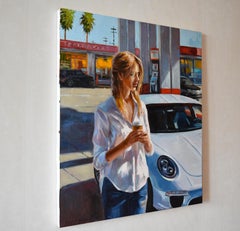
A cup of coffee for a good start II

A cup of coffee for a good start II

By Serghei Ghetiu

Located in Zofingen, AG

In this piece, I captured a quiet moment of reflection, merging realism with impressionistic light to evoke calm and contemplation. The warm glow on her face and the urban backdrop t...

Category

2010s Realist Figurative Paintings

Materials

Canvas, Oil

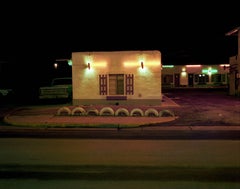
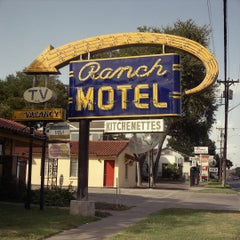
It'll Do Motel, Highway 66, Grants, New Mexico, January 11, 1982

It'll Do Motel, Highway 66, Grants, New Mexico, January 11, 1982

By Steve Fitch

Located in Sante Fe, NM

From the Vanishing Vernacular series. Vanishing Vernacular features a selection of color works by photographer Steve Fitch focusing primarily on the distinctive, idiosyncratic, and ...

Category

Late 20th Century Contemporary Color Photography

Materials

Archival Pigment

1950's French Signed Modernist Oil Painting Large Ship off the Coastline

1950's French Signed Modernist Oil Painting Large Ship off the Coastline

Located in Cirencester, Gloucestershire

Off the French Coast French artist, mid 20th century signed oil on board, unframed board: 18 x 22 inches provenance: private collection, France condition: a few minor scuffs but over...

Category

Mid-20th Century Modern Landscape Paintings

Materials

Oil

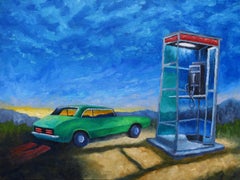
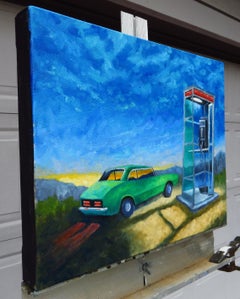
The Mojave Phone Booth, Oil Painting

The Mojave Phone Booth, Oil Painting

By Mitchell Freifeld

Located in San Francisco, CA

Artist Comments
Twelve miles from the nearest paved road, the Mojave phone booth was set up in 1948 for use by the miners in that area. It underwent several upgrades, the las...

Category

21st Century and Contemporary Contemporary Landscape Paintings

Materials

Oil

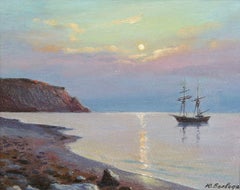
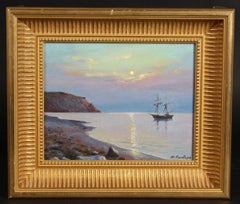
Yuri Voyevoda Sunset Coastal Scene Sailing Ship Moonlight Seascape Oil

Yuri Voyevoda Sunset Coastal Scene Sailing Ship Moonlight Seascape Oil

Located in Cirencester, Gloucestershire

Title Yuri Voyevoda Sunset Coastal Scene Sailing Ship Moonlight Seascape Oil Key Details Artist: Yuri Voyevoda (b.1944), signed lower front Medium: Oil on board Size: 8 x 13.75 inche...

Category

Late 20th Century Impressionist Landscape Paintings

Materials

Oil

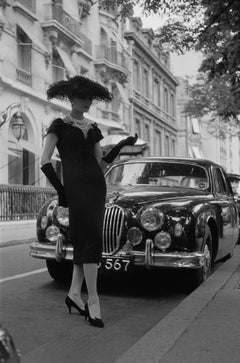
"Elegant Daywear" by Popperfoto

"Elegant Daywear" by Popperfoto

Located in London, GB

"Elegant Daywear" by Popperfoto A young woman modelling an outfit consisting of a three-quarter-length dress, high heeled shoes, hat and gloves, 1957. Unframed Paper Size: 40" x 30'...

Category

1950s Modern Black and White Photography

Materials

Black and White

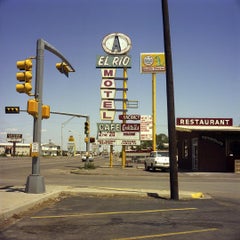
Socorro, New Mexico, July, 1983 #2

Socorro, New Mexico, July, 1983 #2

By Steve Fitch

Located in Sante Fe, NM

In American Motel Signs Steve Fitch crisscrossed the United States documenting the colorful dynamic, advertisements inviting weary traveler to park their car and pack it in for the n...

Category

2010s Contemporary Color Photography

Materials

Photogram, Archival Pigment

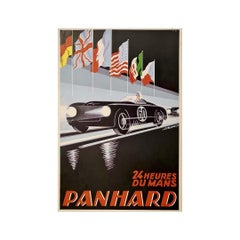
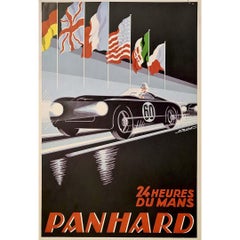
1959 Original poster of Alexis Kow for the 24h of Le Mans - Panhard

1959 Original poster of Alexis Kow for the 24h of Le Mans - Panhard

Located in PARIS, FR

Nice poster of Alexis Kow for the 24h of Le Mans. Alexis Kow said Kow is a French designer, poster artist, illustrator and model maker, born September 17, 1901 in Moscow. As early as...

Category

1950s Prints and Multiples

Materials

Paper, Lithograph

Lagoon: Noon

Lagoon: Noon

By James Abbott McNeill Whistler

Located in New York, NY

James McNeill Whistler (1830-1903), Lagoon: Noon, etching and drypoint, 1879-1880, signed with the butterfly and inscribed “imp” on the tab [also signed with the butterfly in the plate lower left]. Reference: Glasgow 209, third state (of 3), Kennedy 216, third state (of 3); Lochnan 231, 4 7/8 x 7 7/8 inches. A fine impression with very little plate tone, and printed with extraordinary attention to the etching and drypoint details. The printed butterfly, usually only barely visible, is clearly defined in this impression (see detail below). Kennedy mades special note that an impression like this, with the clearly visible butterfly, was in the collection of John H. Wrenn. On a commission from the Fine Arts Society, Whistler created the plates of his Venice series...

Category

1870s Impressionist Landscape Prints

Materials

Drypoint, Etching

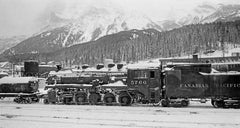
The Canadian Pacific Train (1956-Canada) Large size Black & White Fine Art Print

The Canadian Pacific Train (1956-Canada) Large size Black & White Fine Art Print

By Fabrizio La Torre

Located in Brussels, BE

Artwork # 1 on 5 sold in limited edition in perfect condition This photo was made in 1956, the negative was digitized during the artist's lifetime and the technical parameters (fram...

Category

1950s Photorealist Black and White Photography

Materials

Archival Pigment

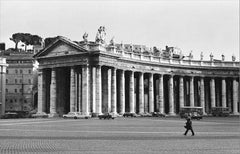
Solitudine Fra Santi e Colonne, Photorealist Print from the 1950s

Solitudine Fra Santi e Colonne, Photorealist Print from the 1950s

By Fabrizio La Torre

Located in Brussels, BE

Artwork # 2 on 5 sold in perfect condition Print called "Art 2014", format 42 x 60 cm. SERIES OF 5 PRINTS + 2 AP Artwork printed on fine art papers later (2014) from black & white ne...

Category

1950s Photorealist Black and White Photography

Materials

Archival Pigment

19th century color lithograph seascape boat ship waves maritime landscape

19th century color lithograph seascape boat ship waves maritime landscape

By Currier & Ives

Located in Milwaukee, WI

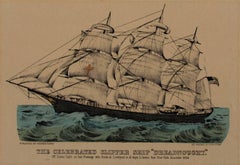
"The Celebrated Clipper Ship Dreadnought" is an original hand-colored lithograph by Currier & Ives. It depicts a sailing ship. 13 1/4" x 17 1/2" art 19" x 23 1/2" frame Nathaniel Currier was a tall introspective man with a melancholy nature. He could captivate people with his piercing stare or charm them with his sparkling blue eyes. Nathaniel was born in Roxbury, Massachusetts on March 27th, 1813, the second of four children. His parents, Nathaniel and Hannah Currier, were distant cousins who lived a humble yet spartan life. When Nathaniel was eight years old, tragedy struck. Nathaniel’s father unexpectedly passed away leaving Nathaniel and his eleven-year-old brother Lorenzo to provide for the family. In addition to their mother, Nathaniel and Lorenzo had to care for six-year-old sister Elizabeth and two-year-old brother Charles. Nathaniel worked a series of odd jobs to support the family, and at fifteen, he started what would become a life-long career when he apprenticed in the Boston lithography shop of William and John Pendleton. A Bavarian gentleman named Alois Senefelder invented lithography just 30 years prior to young Nat Currier’s apprenticeship. While under the employ of the brothers Pendleton, Nat was taught the art of lithography by the firm’s chief printer, a French national named Dubois, who brought the lithography trade to America. Lithography involves grinding a piece of limestone flat and smooth then drawing in mirror image on the stone with a special grease pencil. After the image is completed, the stone is etched with a solution of aqua fortis leaving the greased areas in slight relief. Water is then used to wet the stone and greased-ink is rolled onto the raised areas. Since grease and water do not mix, the greased-ink is repelled by the moisture on the stone and clings to the original grease pencil lines. The stone is then placed in a press and used as a printing block to impart black on white images to paper. In 1833, now twenty-years old and an accomplished lithographer, Nat Currier left Boston and moved to Philadelphia to do contract work for M.E.D. Brown, a noted engraver and printer. With the promise of good money, Currier hired on to help Brown prepare lithographic stones of scientific images for the American Journal of Sciences and Arts. When Nat completed the contract work in 1834, he traveled to New York City to work once again for his mentor John Pendleton, who was now operating his own shop located at 137 Broadway. Soon after the reunion, Pendleton expressed an interest in returning to Boston and offered to sell his print shop to Currier. Young Nat did not have the financial resources to buy the shop, but being the resourceful type he found another local printer by the name of Stodart. Together they bought Pendleton’s business. The firm ‘Currier & Stodart’ specialized in "job" printing. They produced many different types of printed items, most notably music manuscripts for local publishers. By 1835, Stodart was frustrated that the business was not making enough money and he ended the partnership, taking his investment with him. With little more than some lithographic stones, and a talent for his trade, twenty-two year old Nat Currier set up shop in a temporary office at 1 Wall Street in New York City. He named his new enterprise ‘N. Currier, Lithographer’ Nathaniel continued as a job printer and duplicated everything from music sheets to architectural plans. He experimented with portraits, disaster scenes and memorial prints, and any thing that he could sell to the public from tables in front of his shop. During 1835 he produced a disaster print Ruins of the Planter's Hotel, New Orleans, which fell at two O’clock on the Morning of the 15th of May 1835, burying 50 persons, 40 of whom Escaped with their Lives. The public had a thirst for newsworthy events, and newspapers of the day did not include pictures. By producing this print, Nat gave the public a new way to “see” the news. The print sold reasonably well, an important fact that was not lost on Currier. Nat met and married Eliza Farnsworth in 1840. He also produced a print that same year titled Awful Conflagration of the Steamboat Lexington in Long Island Sound on Monday Evening, January 18, 1840, by which melancholy occurrence over One Hundred Persons Perished. This print sold out very quickly, and Currier was approached by an enterprising publication who contracted him to print a single sheet addition of their paper, the New York Sun. This single page paper is presumed to be the first illustrated newspaper ever published. The success of the Lexington print launched his career nationally and put him in a position to finally lift his family up. In 1841, Nat and Eliza had their first child, a son they named Edward West Currier. That same year Nat hired his twenty-one year old brother Charles and taught him the lithography trade, he also hired his artistically inclined brother Lorenzo to travel out west and make sketches of the new frontier as material for future prints. Charles worked for the firm on and off over the years, and invented a new type of lithographic crayon which he patented and named the Crayola. Lorenzo continued selling sketches to Nat for the next few years. In 1843, Nat and Eliza had a daughter, Eliza West Currier, but tragedy struck in early 1847 when their young daughter died from a prolonged illness. Nat and Eliza were grief stricken, and Eliza, driven by despair, gave up on life and passed away just four months after her daughter’s death. The subject of Nat Currier’s artwork changed following the death of his wife and daughter, and he produced many memorial prints and sentimental prints during the late 1840s. The memorial prints generally depicted grief stricken families posed by gravestones (the stones were left blank so the purchasers could fill in the names of the dearly departed). The sentimental prints usually depicted idealized portraits of women and children, titled with popular Christian names of the day. Late in 1847, Nat Currier married Lura Ormsbee, a friend of the family. Lura was a self-sufficient woman, and she immediately set out to help Nat raise six-year-old Edward and get their house in order. In 1849, Lura delivered a son, Walter Black Currier, but fate dealt them a blow when young Walter died one year later. While Nat and Lura were grieving the loss of their new son, word came from San Francisco that Nat’s brother Lorenzo had also passed away from a brief illness. Nat sank deeper into his natural quiet melancholy. Friends stopped by to console the couple, and Lura began to set an extra place at their table for these unexpected guests. She continued this tradition throughout their lives. In 1852, Charles introduced a friend, James Merritt Ives, to Nat and suggested he hire him as a bookkeeper. Jim Ives was a native New Yorker born in 1824 and raised on the grounds of Bellevue Hospital where his father was employed as superintendent. Jim was a self-trained artist and professional bookkeeper. He was also a plump and jovial man, presenting the exact opposite image of his new boss. Jim Ives met Charles Currier through Caroline Clark, the object of Jim’s affection. Caroline’s sister Elizabeth was married to Charles, and Caroline was a close friend of the Currier family. Jim eventually proposed marriage to Caroline and solicited an introduction to Nat Currier, through Charles, in hopes of securing a more stable income to support his future wife. Ives quickly set out to improve and modernize his new employer’s bookkeeping methods. He reorganized the firm’s sizable inventory, and used his artistic skills to streamline the firm’s production methods. By 1857, Nathaniel had become so dependent on Jims’ skills and initiative that he offered him a full partnership in the firm and appointed him general manager. The two men chose the name ‘Currier & Ives’ for the new partnership, and became close friends. Currier & Ives produced their prints in a building at 33 Spruce Street where they occupied the third, fourth and fifth floors. The third floor was devoted to the hand operated printing presses that were built by Nat's cousin, Cyrus Currier, at his shop Cyrus Currier & Sons in Newark, NJ. The fourth floor found the artists, lithographers and the stone grinders at work. The fifth floor housed the coloring department, and was one of the earliest production lines in the country. The colorists were generally immigrant girls, mostly German, who came to America with some formal artistic training. Each colorist was responsible for adding a single color to a print. As a colorist finished applying their color, the print was passed down the line to the next colorist to add their color. The colorists worked from a master print displayed above their table, which showed where the proper colors were to be placed. At the end of the table was a touch up artist who checked the prints for quality, touching-in areas that may have been missed as it passed down the line. During the Civil War, demand for prints became so great that coloring stencils were developed to speed up production. Although most Currier & Ives prints were colored in house, some were sent out to contract artists. The rate Currier & Ives paid these artists for coloring work was one dollar per one hundred small folios (a penny a print) and one dollar per one dozen large folios. Currier & Ives also offered uncolored prints to dealers, with instructions (included on the price list) on how to 'prepare the prints for coloring.' In addition, schools could order uncolored prints from the firm’s catalogue to use in their painting classes. Nathaniel Currier and James Merritt Ives attracted a wide circle of friends during their years in business. Some of their more famous acquaintances included Horace Greeley, Phineas T. Barnum, and the outspoken abolitionists Rev. Henry Ward, and John Greenleaf Whittier (the latter being a cousin of Mr. Currier). Nat Currier and Jim Ives described their business as "Publishers of Cheap and Popular Pictures" and produced many categories of prints. These included Disaster Scenes, Sentimental Images, Sports, Humor, Hunting Scenes, Politics, Religion, City and Rural Scenes, Trains, Ships, Fire Fighters, Famous Race Horses, Historical Portraits, and just about any other topic that satisfied the general public's taste. In all, the firm produced in excess of 7500 different titles, totaling over one million prints produced from 1835 to 1907. Nat Currier retired in 1880, and signed over his share of the firm to his son Edward. Nat died eight years later at his summer home 'Lion’s Gate' in Amesbury, Massachusetts. Jim Ives remained active in the firm until his death in 1895, when his share of the firm passed to his eldest son, Chauncey. In 1902, faced will failing health from the ravages of Tuberculosis, Edward Currier sold his share of the firm to Chauncey Ives...

Category

1870s Other Art Style Prints and Multiples
Materials

Lithograph

Joseph McKeown 'Need for Speed' Grand Prix Archival Photograph by Getty 40x60

Joseph McKeown 'Need for Speed' Grand Prix Archival Photograph by Getty 40x60

By Joseph McKeown

Located in San Rafael, CA

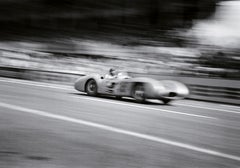
July 17, 1954: Argentinian racer Juan Manuel Fangio (1911 - 1995) chalks up a win for the Mercedes team at the French Grand Prix in Reims. Original Publication: Picture Post - 7209 -...
Category

1950s Contemporary Black and White Photography
Materials

Photographic Paper

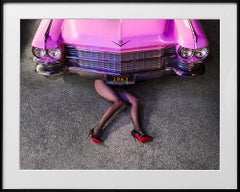
Pink Cadillac
Pink Cadillac

Pink Cadillac

By Tyler Shields

Located in New York City, NY

Los Angeles-based photographer Tyler Shields seeks “beauty in chaos,” capturing both young models and celebrities such as Lindsay Lohan and Mischa Barton. His polished editorial imag...
Category

2010s Contemporary Portrait Photography

Materials

Archival Paper, C Print

The Grand Prix Tours 1923, French Racing 20th Century Painting

The Grand Prix Tours 1923, French Racing 20th Century Painting

Located in London, GB

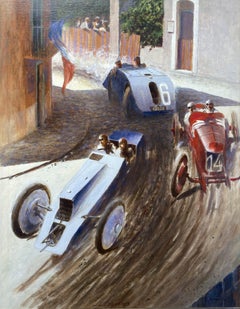
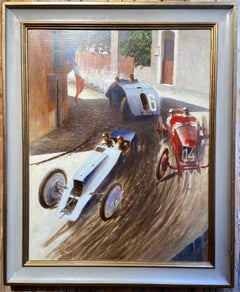
Oil on canvas, signed lower right, entitled and dated lower centre Image size:  32½ x 25 inches (82.5 x 63.5 cm) Hand made frame Art deco style frame This painting depicts the 1923 French Grand Prix, held at Tours on 2 July 2023. This race is notable as the first international Grand Prix to be won by an English driver or an English car...

Category

1920s Modern Landscape Paintings

Materials

Canvas, Oil

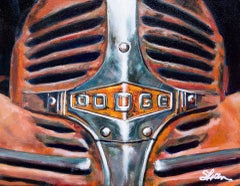
Farmer's Friend - Dodge Truck

Farmer's Friend - Dodge Truck

By Shan Fannin

Located in Denver, CO

Shan Fannin's "Farmer's Friend - Dodge Truck" is an original, handmade acrylic painting that depicts the chrome grill of a vintage orange Dodge Truck.

Category

21st Century and Contemporary Still-life Paintings

Materials

Acrylic, Wood

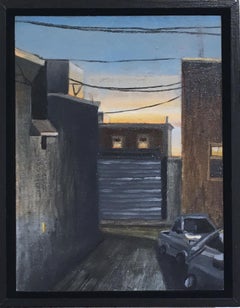
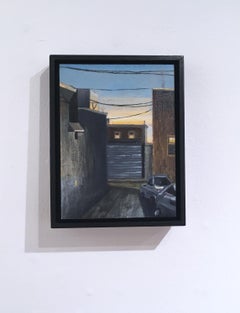
Leaving Orange Pt. 1 (2020) Oil on panel sunrise sunset cityscape urban skyscape

Leaving Orange Pt. 1 (2020) Oil on panel sunrise sunset cityscape urban skyscape

By Francesca Reyes

Located in Jersey City, NJ

"Leaving Orange Pt. 1" (2020) by Francesca Reyes Oil painting on wood panel, urban skyscape, sunrise or sunset Figurative Art / Representations of Architecture / Cityscapes and City Scenes / Dark Colors Small scale vertical contemporary landscape, cityscape. Moody color tones of a Philadelphia...

Category

2010s Contemporary Figurative Paintings

Materials

Pastel, Oil, Wood Panel, Graphite

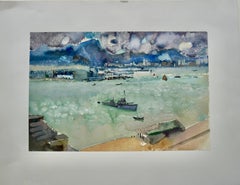
"Hong Kong"
"Hong Kong"

"Hong Kong"

By René Genis

Located in Berlin, MD

Rene Genis (French 1922-2004) “Hong Kong” Harbor view of battle ship and fishing boat with city and mountains in the background. Greys, blues, and gr...

Category

Mid-20th Century Landscape Paintings

Materials

Watercolor

Rotterdam, Maashaven

Rotterdam, Maashaven

Located in San Francisco, CA

This artwork titled "Rotterdam, Maashaven" 1958, is an original color etching with aquatint by noted Dutch artist Hendrikus Elias Roodenburg, 1895-1987. It is hand signed and titled ...

Category

Mid-20th Century Realist Figurative Prints

Materials

Aquatint

Owen Racing No. 8

Owen Racing No. 8

By Nick Holdsworth

Located in Nottingham, GB

Nick Holdsworth creates his artworks through a distinctive mixed‑media process that blends digital design with meticulous hand‑painting. He begins by selecting and retouching an imag...

Category

2010s Contemporary Figurative Paintings

Materials

Spray Paint, Acrylic, Board