Car Art

4,340 Results
to
353
1,195
941
657
662
913
Overall Width
to
Overall Height
to
30
131
2,019
2,205
2
15
48
175
67
375
325
264
161
142
19
1,399
940
306
143
90
63
57
45
23
14
9
7
3
3
2,641
1,031
645
4,393
157,717
83,109
51,453
43,304
37,517
36,414
30,783
27,477
26,148
24,940
21,013
18,044
16,014
14,822
14,069
13,434
11,625
10,774
10,487
1,271
1,063
903
867
727
343
159
116
66
65
968
1,416
2,516
1,665
Art Subject: Car
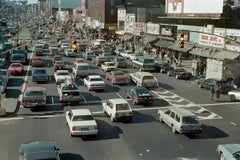
Bridge Traffic on Delancey Street, 1986 - Pigment Print, Limited Edition of 12

Bridge Traffic on Delancey Street, 1986 - Pigment Print, Limited Edition of 12

By Tria Giovan

Located in Brighton, GB

Bridge Traffic on Delancey Street, 1986 by Tria Giovan From a 35mm negative, scanned in 2020 Archival Pigment Print available in this size of 16" x 20" in an Edition of 12 with 3 A...

Category

20th Century American Realist Figurative Photography

Materials

Archival Pigment, Photographic Paper, Color

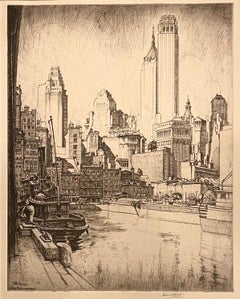
FROM PIER 4 - EAST RIVER

FROM PIER 4 - EAST RIVER

By Ernest David Roth

Located in Portland, ME

Roth, Ernest (American, 1879-1964). FROM PIER 4 - EAST RIVER. Etching, not dated. Edition size not stated. Signed in Pencil, and titled in pencil at the lower edge, and Signed, dated...

Category

Mid-20th Century Landscape Prints

Materials

Etching

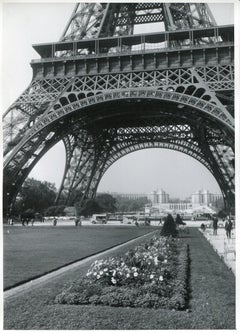
Eifeltower, Paris, 1955

Eifeltower, Paris, 1955

By Erich Andres

Located in Cologne, DE

Silver Gelatine Print by Erich Andres, 1955. Andres was born 1905 in Germany and passed away 1992. He started his career as a photographer in 1920. He was one of the first photograph...

Category

1950s Modern Black and White Photography

Materials

Silver Gelatin

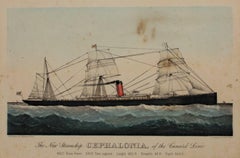
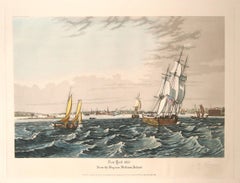
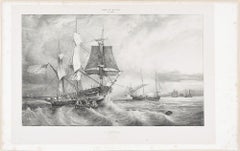
19th century color lithograph seascape boat ship waves maritime landscape

19th century color lithograph seascape boat ship waves maritime landscape

By Currier & Ives

Located in Milwaukee, WI

"The New Steamship Cephalonia, of the Cunard Line" is an original hand-colored lithograph by Currier & Ives. It depicts a large sailing steamship. There is a significant stain in the artwork in the upper center. 12" x 16 3/4" art 21" x 26" frame Nathaniel Currier was a tall introspective man with a melancholy nature. He could captivate people with his piercing stare or charm them with his sparkling blue eyes. Nathaniel was born in Roxbury, Massachusetts on March 27th, 1813, the second of four children. His parents, Nathaniel and Hannah Currier, were distant cousins who lived a humble yet spartan life. When Nathaniel was eight years old, tragedy struck. Nathaniel’s father unexpectedly passed away leaving Nathaniel and his eleven-year-old brother Lorenzo to provide for the family. In addition to their mother, Nathaniel and Lorenzo had to care for six-year-old sister Elizabeth and two-year-old brother Charles. Nathaniel worked a series of odd jobs to support the family, and at fifteen, he started what would become a life-long career when he apprenticed in the Boston lithography shop of William and John Pendleton. A Bavarian gentleman named Alois Senefelder invented lithography just 30 years prior to young Nat Currier’s apprenticeship. While under the employ of the brothers Pendleton, Nat was taught the art of lithography by the firm’s chief printer, a French national named Dubois, who brought the lithography trade to America. Lithography involves grinding a piece of limestone flat and smooth then drawing in mirror image on the stone with a special grease pencil. After the image is completed, the stone is etched with a solution of aqua fortis leaving the greased areas in slight relief. Water is then used to wet the stone and greased-ink is rolled onto the raised areas. Since grease and water do not mix, the greased-ink is repelled by the moisture on the stone and clings to the original grease pencil lines. The stone is then placed in a press and used as a printing block to impart black on white images to paper. In 1833, now twenty-years old and an accomplished lithographer, Nat Currier left Boston and moved to Philadelphia to do contract work for M.E.D. Brown, a noted engraver and printer. With the promise of good money, Currier hired on to help Brown prepare lithographic stones of scientific images for the American Journal of Sciences and Arts. When Nat completed the contract work in 1834, he traveled to New York City to work once again for his mentor John Pendleton, who was now operating his own shop located at 137 Broadway. Soon after the reunion, Pendleton expressed an interest in returning to Boston and offered to sell his print shop to Currier. Young Nat did not have the financial resources to buy the shop, but being the resourceful type he found another local printer by the name of Stodart. Together they bought Pendleton’s business. The firm ‘Currier & Stodart’ specialized in "job" printing. They produced many different types of printed items, most notably music manuscripts for local publishers. By 1835, Stodart was frustrated that the business was not making enough money and he ended the partnership, taking his investment with him. With little more than some lithographic stones, and a talent for his trade, twenty-two year old Nat Currier set up shop in a temporary office at 1 Wall Street in New York City. He named his new enterprise ‘N. Currier, Lithographer’ Nathaniel continued as a job printer and duplicated everything from music sheets to architectural plans. He experimented with portraits, disaster scenes and memorial prints, and any thing that he could sell to the public from tables in front of his shop. During 1835 he produced a disaster print Ruins of the Planter's Hotel, New Orleans, which fell at two O’clock on the Morning of the 15th of May 1835, burying 50 persons, 40 of whom Escaped with their Lives. The public had a thirst for newsworthy events, and newspapers of the day did not include pictures. By producing this print, Nat gave the public a new way to “see” the news. The print sold reasonably well, an important fact that was not lost on Currier. Nat met and married Eliza Farnsworth in 1840. He also produced a print that same year titled Awful Conflagration of the Steamboat Lexington in Long Island Sound on Monday Evening, January 18, 1840, by which melancholy occurrence over One Hundred Persons Perished. This print sold out very quickly, and Currier was approached by an enterprising publication who contracted him to print a single sheet addition of their paper, the New York Sun. This single page paper is presumed to be the first illustrated newspaper ever published. The success of the Lexington print launched his career nationally and put him in a position to finally lift his family up. In 1841, Nat and Eliza had their first child, a son they named Edward West Currier. That same year Nat hired his twenty-one year old brother Charles and taught him the lithography trade, he also hired his artistically inclined brother Lorenzo to travel out west and make sketches of the new frontier as material for future prints. Charles worked for the firm on and off over the years, and invented a new type of lithographic crayon which he patented and named the Crayola. Lorenzo continued selling sketches to Nat for the next few years. In 1843, Nat and Eliza had a daughter, Eliza West Currier, but tragedy struck in early 1847 when their young daughter died from a prolonged illness. Nat and Eliza were grief stricken, and Eliza, driven by despair, gave up on life and passed away just four months after her daughter’s death. The subject of Nat Currier’s artwork changed following the death of his wife and daughter, and he produced many memorial prints and sentimental prints during the late 1840s. The memorial prints generally depicted grief stricken families posed by gravestones (the stones were left blank so the purchasers could fill in the names of the dearly departed). The sentimental prints usually depicted idealized portraits of women and children, titled with popular Christian names of the day. Late in 1847, Nat Currier married Lura Ormsbee, a friend of the family. Lura was a self-sufficient woman, and she immediately set out to help Nat raise six-year-old Edward and get their house in order. In 1849, Lura delivered a son, Walter Black Currier, but fate dealt them a blow when young Walter died one year later. While Nat and Lura were grieving the loss of their new son, word came from San Francisco that Nat’s brother Lorenzo had also passed away from a brief illness. Nat sank deeper into his natural quiet melancholy. Friends stopped by to console the couple, and Lura began to set an extra place at their table for these unexpected guests. She continued this tradition throughout their lives. In 1852, Charles introduced a friend, James Merritt Ives, to Nat and suggested he hire him as a bookkeeper. Jim Ives was a native New Yorker born in 1824 and raised on the grounds of Bellevue Hospital where his father was employed as superintendent. Jim was a self-trained artist and professional bookkeeper. He was also a plump and jovial man, presenting the exact opposite image of his new boss. Jim Ives met Charles Currier through Caroline Clark, the object of Jim’s affection. Caroline’s sister Elizabeth was married to Charles, and Caroline was a close friend of the Currier family. Jim eventually proposed marriage to Caroline and solicited an introduction to Nat Currier, through Charles, in hopes of securing a more stable income to support his future wife. Ives quickly set out to improve and modernize his new employer’s bookkeeping methods. He reorganized the firm’s sizable inventory, and used his artistic skills to streamline the firm’s production methods. By 1857, Nathaniel had become so dependent on Jims’ skills and initiative that he offered him a full partnership in the firm and appointed him general manager. The two men chose the name ‘Currier & Ives’ for the new partnership, and became close friends. Currier & Ives produced their prints in a building at 33 Spruce Street where they occupied the third, fourth and fifth floors. The third floor was devoted to the hand operated printing presses that were built by Nat's cousin, Cyrus Currier, at his shop Cyrus Currier & Sons in Newark, NJ. The fourth floor found the artists, lithographers and the stone grinders at work. The fifth floor housed the coloring department, and was one of the earliest production lines in the country. The colorists were generally immigrant girls, mostly German, who came to America with some formal artistic training. Each colorist was responsible for adding a single color to a print. As a colorist finished applying their color, the print was passed down the line to the next colorist to add their color. The colorists worked from a master print displayed above their table, which showed where the proper colors were to be placed. At the end of the table was a touch up artist who checked the prints for quality, touching-in areas that may have been missed as it passed down the line. During the Civil War, demand for prints became so great that coloring stencils were developed to speed up production. Although most Currier & Ives prints were colored in house, some were sent out to contract artists. The rate Currier & Ives paid these artists for coloring work was one dollar per one hundred small folios (a penny a print) and one dollar per one dozen large folios. Currier & Ives also offered uncolored prints to dealers, with instructions (included on the price list) on how to 'prepare the prints for coloring.' In addition, schools could order uncolored prints from the firm’s catalogue to use in their painting classes. Nathaniel Currier and James Merritt Ives attracted a wide circle of friends during their years in business. Some of their more famous acquaintances included Horace Greeley, Phineas T. Barnum, and the outspoken abolitionists Rev. Henry Ward, and John Greenleaf Whittier (the latter being a cousin of Mr. Currier). Nat Currier and Jim Ives described their business as "Publishers of Cheap and Popular Pictures" and produced many categories of prints. These included Disaster Scenes, Sentimental Images, Sports, Humor, Hunting Scenes, Politics, Religion, City and Rural Scenes, Trains, Ships, Fire Fighters, Famous Race Horses, Historical Portraits, and just about any other topic that satisfied the general public's taste. In all, the firm produced in excess of 7500 different titles, totaling over one million prints produced from 1835 to 1907. Nat Currier retired in 1880, and signed over his share of the firm to his son Edward. Nat died eight years later at his summer home 'Lion’s Gate' in Amesbury, Massachusetts. Jim Ives remained active in the firm until his death in 1895, when his share of the firm passed to his eldest son, Chauncey. In 1902, faced will failing health from the ravages of Tuberculosis, Edward Currier sold his share of the firm to Chauncey Ives...

Category

1870s Other Art Style Prints and Multiples
Materials

Lithograph

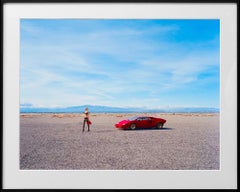
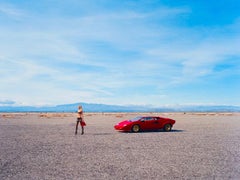
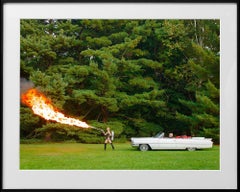
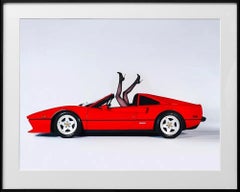
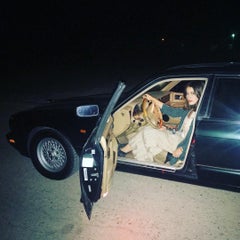
Girl with Lamborghini, Framed Chromogenic Print, Edition of 3

Girl with Lamborghini, Framed Chromogenic Print, Edition of 3

By Tyler Shields

Located in New York City, NY

Los Angeles-based photographer Tyler Shields seeks “beauty in chaos,” capturing both young models and celebrities such as Lindsay Lohan and Mischa Barton. His polished editorial imag...

Category

2010s Contemporary Portrait Photography

Materials

Archival Paper, C Print

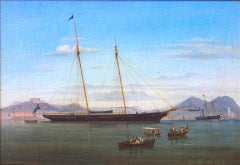
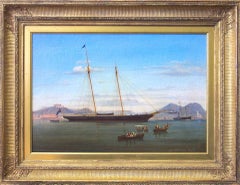
British Schooner Anchored at Naples

British Schooner Anchored at Naples

Located in Costa Mesa, CA

A classic scene of a large mid-Nineteenth Century schooner at rest in the Mediterranean port painted by the Italian countryman Tomaso De Simone. The complete narrative scene around the schooner's broadside is complemented with a British merchant steam/sail ship, local boats and the colorful sky and headland architecture of the ancient city. The vast serenity and unspoiled life of cruising the Mediterranean Ocean...

Category

1860s Realist Paintings

Materials

Canvas, Oil

City landscape, oil/canvas, 61x91 cm

City landscape, oil/canvas, 61x91 cm

Located in Riga, LV

Constantin Kluge was a Russian-born French painter best known for his naturalistic scenes of Paris and French countryside. Kluge was born to a wealthy military family on January 29, ...

Category

1980s Impressionist Paintings

Materials

Canvas, Oil

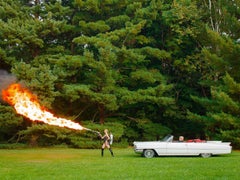
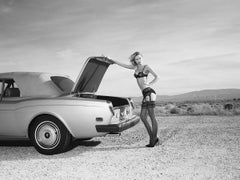
Rolls Royce
Rolls Royce

Rolls Royce

By Tyler Shields

Located in New York City, NY

Los Angeles-based photographer Tyler Shields seeks “beauty in chaos,” capturing both young models and celebrities such as Lindsay Lohan and Mischa Barton. His polished editorial imag...

Category

2010s Contemporary Portrait Photography

Materials

Archival Paper, C Print

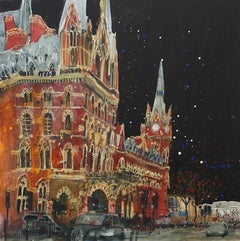
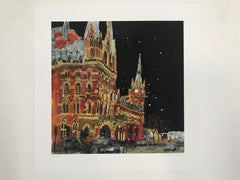
St Pancras, London, Gothic revival, landscape, cityscape, London, cars

St Pancras, London, Gothic revival, landscape, cityscape, London, cars

By Susan Brown

Located in Deddington, GB

Cities 7 - Gothic Revival, St Pancras, London by Susan Brown. Limited edition giclée print - The print edition is 150 The image size of the print is 40cm X 40cm, the overall size is 50cm X 50cm Each print is signed and numbered by Susan Brown Unframed, unmounted. The gothic building of St Pancras, designed in 1874 by George Gilbert Scott...

Category

21st Century and Contemporary Abstract Landscape Prints

Materials

Giclée

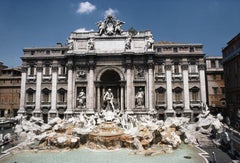
Slim Aarons 'Trevi Fountain, Rome'

Slim Aarons 'Trevi Fountain, Rome'

By Slim Aarons

Located in New York, NY

Slim Aarons Trevi Fountain, Rome 1991 C print Estate stamped and hand numbered edition of 150 with certificate of authenticity from the estate. The Trevi Fountain in the Trevi r...

Category

1970s Modern Landscape Photography

Materials

Lambda

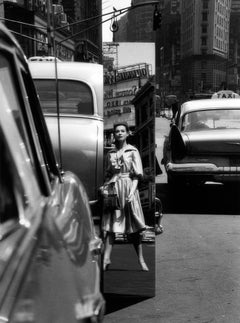
"Times Square Mirror" New York City (VOGUE)

"Times Square Mirror" New York City (VOGUE)

By William Klein

Located in Santa Monica, CA

William Klein 1928-2022 "Times Square Mirror" New York City (VOGUE), 1962 Signed, titled and dated in pencil on verso. Gelatin Silver Print 20 x 16 inches

Category

1960s Black and White Photography

Materials

Silver Gelatin

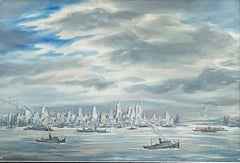
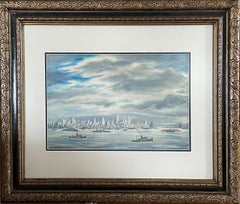
"New York City Skyline View from the East River, " Lionel Reiss, Jewish Artist

"New York City Skyline View from the East River, " Lionel Reiss, Jewish Artist

By Lionel Reiss

Located in New York, NY

Lionel S. Reiss (1894 - 1988) New York City Skyline View from the East River Watercolor on paper 13 x 19 inches Signed lower left In describing his own style, Lionel Reiss wrote, “By nature, inclination, and training, I have long since recognized the fact that...I belong to the category of those who can only gladly affirm the reality of the world I live in.” Reiss’s subject matter was wide-ranging, including gritty New York scenes, landscapes of bucolic Bucks County, Pennsylvania, and seascapes around Gloucester, Massachusetts. However, it was as a painter of Jewish life—both in Israel and in Europe before World War II—that Reiss excelled. I.B. Singer, the Nobel Prize winner for Literature, noted that Reiss was “essentially an artist of the nineteenth century, and because of this he had the power and the courage to tell visually the story of a people.” Although Reiss was born in Jaroslaw, Poland, his family immigrated to the United States in 1898 when he was four years old. Reiss's family settled on New York City’s Lower East Side and he lived in the city for most of his life. Reiss attended the Art Students League and then worked as a commercial artist for newspapers and publishers. As art director for Metro-Goldwyn-Mayer, he supposedly created the studio’s famous lion logo. After World War I, Reiss became fascinated with Jewish life in the ‘Old World.’ In 1921 he left his advertising work and spent the next ten years traveling in Europe, the Middle East, and North Africa. Like noted Jewish photographers Alter Kacyzne and Roman Vishniac, Reiss depicted Jewish life in Poland prior to World War II. He later wrote, “My trip encompassed three main objectives: to make ethnic studies of Jewish types wherever I traveled; to paint and draw Jewish life, as I saw it and felt it, in all aspects; and to round out my work in Israel.” In Europe, Reiss recorded quotidian scenes in a variety of media and different settings such as Paris, Amsterdam, the Venice ghetto, the Jewish cemetery in Prague, and an array of shops, synagogues, streets, and marketplaces in the Jewish quarters of Warsaw, Lodz, Krakow, Lublin, Vilna, Ternopil, and Kovno. He paid great attention to details of dress, hair, and facial features, and his work became noted for its descriptive quality. A selection of Reiss’s portraits appeared in 1938 in his book My Models Were Jews. In this book, published on the eve of the Holocaust, Reiss argued that there was “no such thing as a ‘Jewish race’.” Instead, he claimed that the Jewish people were a cultural group with a great deal of diversity within and between Jewish communities around the world. Franz Boas...

Category

1940s American Modern Landscape Drawings and Watercolors

Materials

Paper, Watercolor

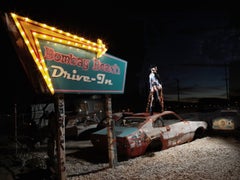
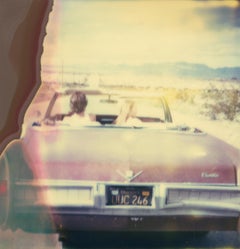
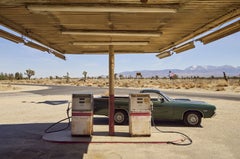
The End - Sidewinder, Artist Proof 2/2, last Edition

The End - Sidewinder, Artist Proof 2/2, last Edition

By Stefanie Schneider

Located in Morongo Valley, CA

The End (Sidewinder) - 2005 128x125cm, sold out Edition of 5, last Artist Proof 2/2. Analog C-Print, hand-printed by the artist on Fuji Crystal Archive Paper, based on the origina...

Category

Early 2000s Contemporary Color Photography

Materials

Archival Paper, Photographic Paper, C Print, Color, Polaroid

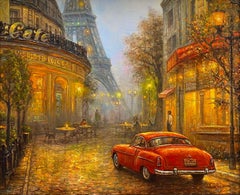
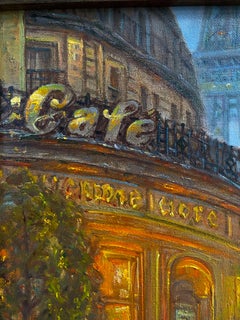
Café Parisien. 2025. Oil on canvas. 50x60 cm

Café Parisien. 2025. Oil on canvas. 50x60 cm

By Igor Maikov

Located in Riga, LV

Igor Maikov (1966) Education: 1981 - 1984 The Art Academy of Latvia 1973 - 1983 Salaspils Primary and Secondary School Exhibitions: 1994 - Group Exhibition «Rol-Art», Latvia ...

Category

2010s Realist Figurative Paintings

Materials

Canvas, Oil

19th century color lithograph seascape boat ship waves maritime landscape

19th century color lithograph seascape boat ship waves maritime landscape

By Currier & Ives

Located in Milwaukee, WI

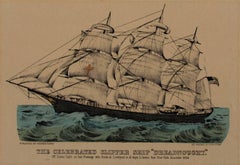
"The Celebrated Clipper Ship Dreadnought" is an original hand-colored lithograph by Currier & Ives. It depicts a sailing ship. 13 1/4" x 17 1/2" art 19" x 23 1/2" frame Nathaniel Currier was a tall introspective man with a melancholy nature. He could captivate people with his piercing stare or charm them with his sparkling blue eyes. Nathaniel was born in Roxbury, Massachusetts on March 27th, 1813, the second of four children. His parents, Nathaniel and Hannah Currier, were distant cousins who lived a humble yet spartan life. When Nathaniel was eight years old, tragedy struck. Nathaniel’s father unexpectedly passed away leaving Nathaniel and his eleven-year-old brother Lorenzo to provide for the family. In addition to their mother, Nathaniel and Lorenzo had to care for six-year-old sister Elizabeth and two-year-old brother Charles. Nathaniel worked a series of odd jobs to support the family, and at fifteen, he started what would become a life-long career when he apprenticed in the Boston lithography shop of William and John Pendleton. A Bavarian gentleman named Alois Senefelder invented lithography just 30 years prior to young Nat Currier’s apprenticeship. While under the employ of the brothers Pendleton, Nat was taught the art of lithography by the firm’s chief printer, a French national named Dubois, who brought the lithography trade to America. Lithography involves grinding a piece of limestone flat and smooth then drawing in mirror image on the stone with a special grease pencil. After the image is completed, the stone is etched with a solution of aqua fortis leaving the greased areas in slight relief. Water is then used to wet the stone and greased-ink is rolled onto the raised areas. Since grease and water do not mix, the greased-ink is repelled by the moisture on the stone and clings to the original grease pencil lines. The stone is then placed in a press and used as a printing block to impart black on white images to paper. In 1833, now twenty-years old and an accomplished lithographer, Nat Currier left Boston and moved to Philadelphia to do contract work for M.E.D. Brown, a noted engraver and printer. With the promise of good money, Currier hired on to help Brown prepare lithographic stones of scientific images for the American Journal of Sciences and Arts. When Nat completed the contract work in 1834, he traveled to New York City to work once again for his mentor John Pendleton, who was now operating his own shop located at 137 Broadway. Soon after the reunion, Pendleton expressed an interest in returning to Boston and offered to sell his print shop to Currier. Young Nat did not have the financial resources to buy the shop, but being the resourceful type he found another local printer by the name of Stodart. Together they bought Pendleton’s business. The firm ‘Currier & Stodart’ specialized in "job" printing. They produced many different types of printed items, most notably music manuscripts for local publishers. By 1835, Stodart was frustrated that the business was not making enough money and he ended the partnership, taking his investment with him. With little more than some lithographic stones, and a talent for his trade, twenty-two year old Nat Currier set up shop in a temporary office at 1 Wall Street in New York City. He named his new enterprise ‘N. Currier, Lithographer’ Nathaniel continued as a job printer and duplicated everything from music sheets to architectural plans. He experimented with portraits, disaster scenes and memorial prints, and any thing that he could sell to the public from tables in front of his shop. During 1835 he produced a disaster print Ruins of the Planter's Hotel, New Orleans, which fell at two O’clock on the Morning of the 15th of May 1835, burying 50 persons, 40 of whom Escaped with their Lives. The public had a thirst for newsworthy events, and newspapers of the day did not include pictures. By producing this print, Nat gave the public a new way to “see” the news. The print sold reasonably well, an important fact that was not lost on Currier. Nat met and married Eliza Farnsworth in 1840. He also produced a print that same year titled Awful Conflagration of the Steamboat Lexington in Long Island Sound on Monday Evening, January 18, 1840, by which melancholy occurrence over One Hundred Persons Perished. This print sold out very quickly, and Currier was approached by an enterprising publication who contracted him to print a single sheet addition of their paper, the New York Sun. This single page paper is presumed to be the first illustrated newspaper ever published. The success of the Lexington print launched his career nationally and put him in a position to finally lift his family up. In 1841, Nat and Eliza had their first child, a son they named Edward West Currier. That same year Nat hired his twenty-one year old brother Charles and taught him the lithography trade, he also hired his artistically inclined brother Lorenzo to travel out west and make sketches of the new frontier as material for future prints. Charles worked for the firm on and off over the years, and invented a new type of lithographic crayon which he patented and named the Crayola. Lorenzo continued selling sketches to Nat for the next few years. In 1843, Nat and Eliza had a daughter, Eliza West Currier, but tragedy struck in early 1847 when their young daughter died from a prolonged illness. Nat and Eliza were grief stricken, and Eliza, driven by despair, gave up on life and passed away just four months after her daughter’s death. The subject of Nat Currier’s artwork changed following the death of his wife and daughter, and he produced many memorial prints and sentimental prints during the late 1840s. The memorial prints generally depicted grief stricken families posed by gravestones (the stones were left blank so the purchasers could fill in the names of the dearly departed). The sentimental prints usually depicted idealized portraits of women and children, titled with popular Christian names of the day. Late in 1847, Nat Currier married Lura Ormsbee, a friend of the family. Lura was a self-sufficient woman, and she immediately set out to help Nat raise six-year-old Edward and get their house in order. In 1849, Lura delivered a son, Walter Black Currier, but fate dealt them a blow when young Walter died one year later. While Nat and Lura were grieving the loss of their new son, word came from San Francisco that Nat’s brother Lorenzo had also passed away from a brief illness. Nat sank deeper into his natural quiet melancholy. Friends stopped by to console the couple, and Lura began to set an extra place at their table for these unexpected guests. She continued this tradition throughout their lives. In 1852, Charles introduced a friend, James Merritt Ives, to Nat and suggested he hire him as a bookkeeper. Jim Ives was a native New Yorker born in 1824 and raised on the grounds of Bellevue Hospital where his father was employed as superintendent. Jim was a self-trained artist and professional bookkeeper. He was also a plump and jovial man, presenting the exact opposite image of his new boss. Jim Ives met Charles Currier through Caroline Clark, the object of Jim’s affection. Caroline’s sister Elizabeth was married to Charles, and Caroline was a close friend of the Currier family. Jim eventually proposed marriage to Caroline and solicited an introduction to Nat Currier, through Charles, in hopes of securing a more stable income to support his future wife. Ives quickly set out to improve and modernize his new employer’s bookkeeping methods. He reorganized the firm’s sizable inventory, and used his artistic skills to streamline the firm’s production methods. By 1857, Nathaniel had become so dependent on Jims’ skills and initiative that he offered him a full partnership in the firm and appointed him general manager. The two men chose the name ‘Currier & Ives’ for the new partnership, and became close friends. Currier & Ives produced their prints in a building at 33 Spruce Street where they occupied the third, fourth and fifth floors. The third floor was devoted to the hand operated printing presses that were built by Nat's cousin, Cyrus Currier, at his shop Cyrus Currier & Sons in Newark, NJ. The fourth floor found the artists, lithographers and the stone grinders at work. The fifth floor housed the coloring department, and was one of the earliest production lines in the country. The colorists were generally immigrant girls, mostly German, who came to America with some formal artistic training. Each colorist was responsible for adding a single color to a print. As a colorist finished applying their color, the print was passed down the line to the next colorist to add their color. The colorists worked from a master print displayed above their table, which showed where the proper colors were to be placed. At the end of the table was a touch up artist who checked the prints for quality, touching-in areas that may have been missed as it passed down the line. During the Civil War, demand for prints became so great that coloring stencils were developed to speed up production. Although most Currier & Ives prints were colored in house, some were sent out to contract artists. The rate Currier & Ives paid these artists for coloring work was one dollar per one hundred small folios (a penny a print) and one dollar per one dozen large folios. Currier & Ives also offered uncolored prints to dealers, with instructions (included on the price list) on how to 'prepare the prints for coloring.' In addition, schools could order uncolored prints from the firm’s catalogue to use in their painting classes. Nathaniel Currier and James Merritt Ives attracted a wide circle of friends during their years in business. Some of their more famous acquaintances included Horace Greeley, Phineas T. Barnum, and the outspoken abolitionists Rev. Henry Ward, and John Greenleaf Whittier (the latter being a cousin of Mr. Currier). Nat Currier and Jim Ives described their business as "Publishers of Cheap and Popular Pictures" and produced many categories of prints. These included Disaster Scenes, Sentimental Images, Sports, Humor, Hunting Scenes, Politics, Religion, City and Rural Scenes, Trains, Ships, Fire Fighters, Famous Race Horses, Historical Portraits, and just about any other topic that satisfied the general public's taste. In all, the firm produced in excess of 7500 different titles, totaling over one million prints produced from 1835 to 1907. Nat Currier retired in 1880, and signed over his share of the firm to his son Edward. Nat died eight years later at his summer home 'Lion’s Gate' in Amesbury, Massachusetts. Jim Ives remained active in the firm until his death in 1895, when his share of the firm passed to his eldest son, Chauncey. In 1902, faced will failing health from the ravages of Tuberculosis, Edward Currier sold his share of the firm to Chauncey Ives...

Category

1870s Other Art Style Prints and Multiples
Materials

Lithograph

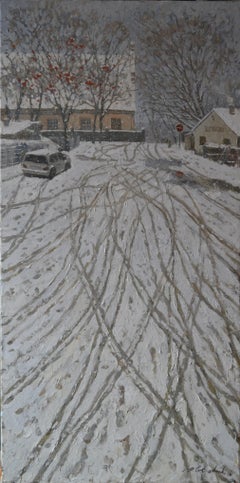
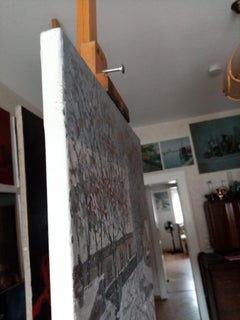
In the vicinity of Main in winter. Large vertical landscape painting, winter

In the vicinity of Main in winter. Large vertical landscape painting, winter

By Dmitry Evtushenko

Located in Oslo, NO

The work is in an unusual vertical format for a landscape. Fallen snow is depicted. A rare phenomenon for Europe. A provincial town in Bavaria on the banks of the Main, to which the ...

Category

2010s Realist Landscape Paintings

Materials

Canvas, Oil

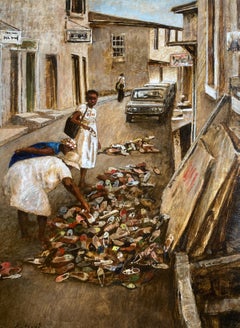
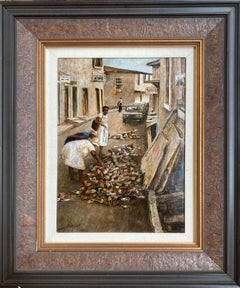
"Shoes" - Renowned Southern Artist, Alabama Scene

"Shoes" - Renowned Southern Artist, Alabama Scene

Located in New Orleans, LA

In addition to having his work in museums and fine corporate collections, Alabama artist Donny Finley showed for years at prestigious Bryant Galleries on ...

Category

Late 20th Century American Realist Landscape Paintings

Materials

Oil

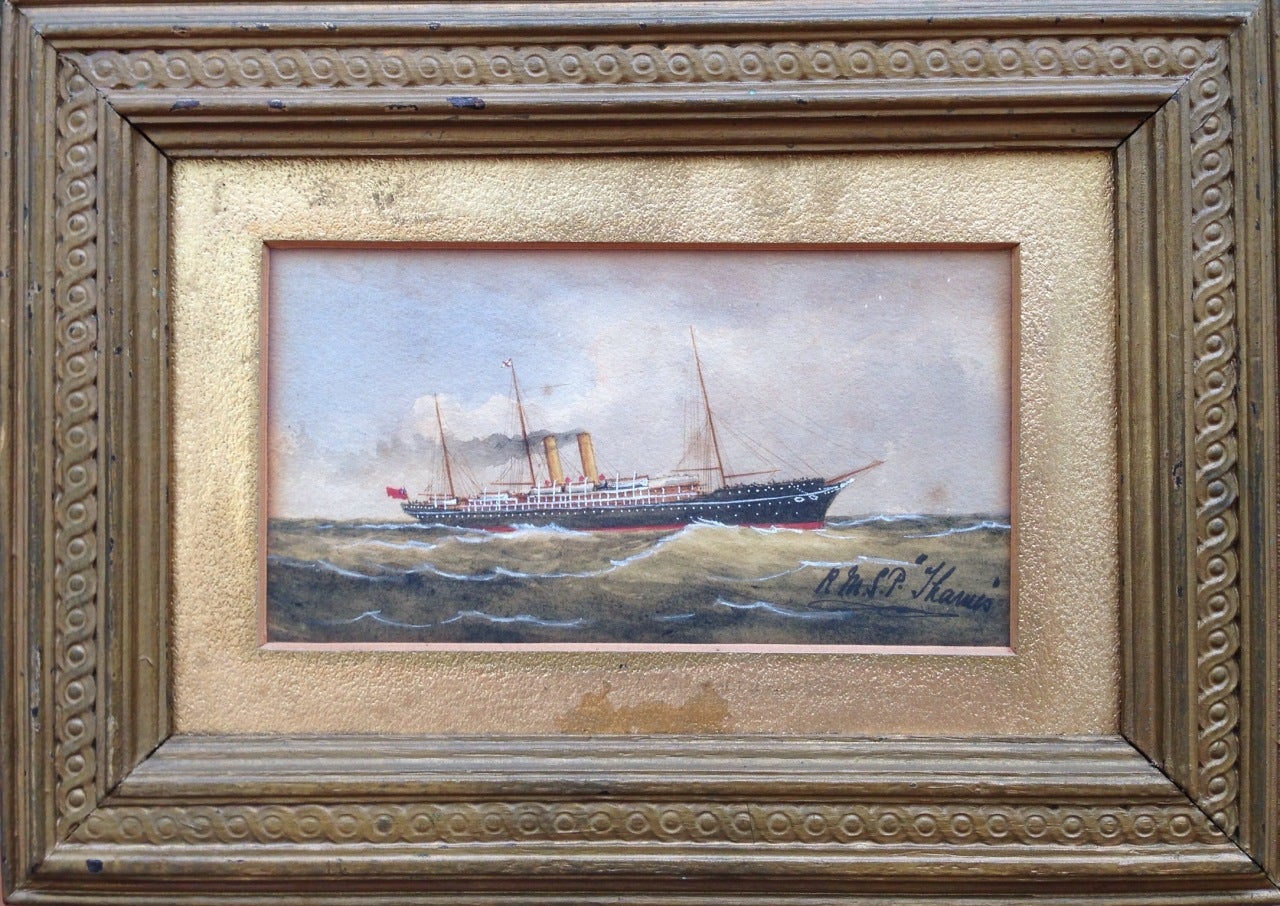
"Royal Mail Steam Packet Thames"

"Royal Mail Steam Packet Thames"

Located in Southampton, NY

Circa 1880 Unsigned Thames was commissioned in 1842 Overall size with frame 8 x 11 in.

Category

1880s Academic Landscape Drawings and Watercolors

Materials

Watercolor, Paper

Durham - Etching by William Ridley - 1860s

Durham - Etching by William Ridley - 1860s

Located in Roma, IT

Durham is a black and White etching realized by William Ridley (1764-1838), and printed in the 1860s.  Titled in the lower. Image size: 13x21. Very good impression with wide margi...

Category

1860s Modern Figurative Prints

Materials

Etching

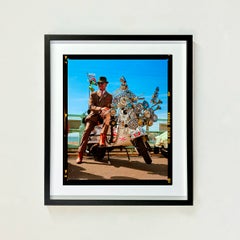
Deaks Vespa, Brighton - Mod Portrait Small Framed Color Photography Print

Deaks Vespa, Brighton - Mod Portrait Small Framed Color Photography Print

By Richard Heeps

Located in Cambridge, GB

Deaks Vespa, portrait photograph by Richard Heeps, released as part of Richard's Brighton Mod Town exhibition at Helm Gallery to celebrate the spirit of the August Bank Holiday Mod W...

Category

2010s Contemporary Color Photography

Materials

Photographic Paper, C Print, Color, Silver Gelatin

"Chevrolet Grille (Car), " Watercolor by Bruce McCombs

"Chevrolet Grille (Car), " Watercolor by Bruce McCombs

By Bruce McCombs

Located in Milwaukee, WI

"Chevrolet Grille" is an original signed watercolor by Bruce McCombs. It depicts the grille of a highly-polished Chevrolet car. This painting displays McCombs' exquisite attention to...

Category

1990s Photorealist Still-life Drawings and Watercolors

Materials

Watercolor

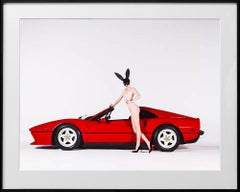
Framed Chromogenic Print: Contemporary Portrait, Edition of 3

Framed Chromogenic Print: Contemporary Portrait, Edition of 3

By Tyler Shields

Located in New York City, NY

Los Angeles-based photographer Tyler Shields seeks “beauty in chaos,” capturing both young models and celebrities such as Lindsay Lohan and Mischa Barton. His polished editorial imag...

Category

2010s Contemporary Portrait Photography

Materials

Archival Paper, C Print

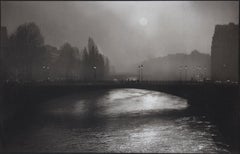
Signed limited edition Landscape, Contemporary, Paris France - Pont d' Arcole

Signed limited edition Landscape, Contemporary, Paris France - Pont d' Arcole

By Ian Sanderson

Located in Sant Cugat del Vallès, Barcelona

An original signed archival pigment print on Hahnemühle Photo Rag® Baryta 315 gsm paper by Scottish artist Ian Sanderson (1951- 2020) titled ‘ Pont d' Arcole ‘, a bridge of Paris, Fr...

Category

Early 2000s Contemporary Black and White Photography

Materials

Archival Paper, Black and White, Giclée, Pigment, Archival Pigment

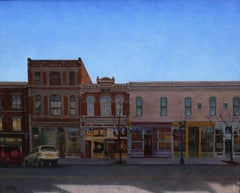
25th Street
25th Street

25th Street

Located in Salt Lake City, UT

25th Street, by Elise Zoller, 24 x 30 in. oil on panel. Elise Zoller has recently embarked on a series of plein air paintings of sites around Salt Lake City and in the smaller towns of Utah from Hurricane to Huntsville. She has enjoyed meeting people along the road and learning about the history of the state. “Plein air work can be physically demanding, but there is no substitute for working from life. Light and shadow dance in subtle ways a photograph cannot capture. Even the wind and the fragrances it carries inform the work. Scenes come alive when you stand in one place for a few hours. You’ve got to get to know a spot,” Elise says. “While I work, all manner of people come up and talk to me about their towns and their lives. I’ve met a downwinder from Enterprise, pie bakers in Veyo, pony cart...

Category

2010s Other Art Style Paintings

Materials

Linen, Birch, Oil

Susanna (Bombay Beach),  21st Century, Figurative Photography

Susanna (Bombay Beach), 21st Century, Figurative Photography

By Tao Ruspoli

Located in Morongo Valley, CA

'Susanna' (Bombay Beach) - 2018 - Edition 1/10, 20x20cm, C-Print, Signature label and Certificate. Not mounted. About Tao Ruspoli (born 7 November 1975) is an Italian-American ...

Category

2010s Contemporary Figurative Photography

Materials

Archival Ink, Archival Paper, Color, Archival Pigment

The Italian Actress Valeria Golino  - Vintage Photo - 1980s

The Italian Actress Valeria Golino - Vintage Photo - 1980s

Located in Roma, IT

Vintage Photo. The Italian Actress Valeria Golina in a scene from the movie "Love Story" by Francesco Maselli.

Category

1980s Contemporary Figurative Photography

Materials

Photographic Paper

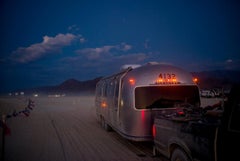
On the Road to Burning Man

On the Road to Burning Man

By Tao Ruspoli

Located in Morongo Valley, CA

'On The Road' (Burning Man) - 2016 Edition of 10, 20x30cm, Color-Print, printed on Velvet Watercolor, 310gsm, Bright White, Acid Free, Signature label and Certificate. Tao Ruspoli (born 7 November 1975) is an Italian-American filmmaker, photographer, and musician. He is the second son of occasional actor and aristocrat Prince Alessandro Ruspoli, 9th Prince of Cerveteri by Austrian-American actress Debra Berger. Tao was born in Bangkok, Thailand and raised in Rome and Los Angeles. He graduated from the University of California, Berkeley with a Bachelor of Arts in Philosophy. Moviemaker magazine singled out Ruspoli as one of the 10 Young Filmmakers To Watch in its spring 2008 issue. His feature narrative debut, Fix, was one of 10 feature films to screen in competition at the 2008 Slamdance Film Festival and soon afterward at the Santa Barbara International Film Festival where Ruspoli was awarded the Heineken Red Star Award for 'most innovative and progressive filmmaker.' Fix also won the Festival Award for Best Film at the 2008 Brooklyn Film Festival, Vail Film Festival and the 2008 Twin Rivers Media Festival, as well as other prizes at several international festivals. His most well-known documentary is Just Say Know, a personal discussion of his family's drug addiction. His other films include Flamenco: A Personal Journey, a feature length documentary about the flamenco way of life as it is lived by Gypsies in the south of Spain. He has directed a number of other short documentaries, including El Cable (also about Flamenco), and This Film Needs No Title: A Portrait of Raymond Smullyan (a portrait of the renowned logician, mathematician and concert pianist Raymond Smullyan). Tao founded LAFCO in 2000. The Los Angeles Filmmakers Cooperative, is a bohemian collective of filmmakers and musicians who work out of a converted school bus. Through LAFCO, Tao has produced several films and helped dozens of filmmakers to make their first films and discover the wonders of digital media. His producing credits include the feature film Camjackers, which he also acted in and co-edited. Camjackers won the best editing award at the 44th Ann Arbor Film Festival. Tao is an accomplished flamenco guitar player, and his first CD, FLAMENCO, was released on Mapleshade Records in 2005. He married actress Olivia Wilde in 2003. They divorced in 2011. He currently lives and works in the High Desert, California. He is the co-founder of the Bombay Beach Biennale. The Exaltation of Imagination Photographs and Musings in Defense of Burning Man by Tao Ruspoli The press around Burning Man had gotten so bad that I almost felt embarrassed to be going this year. Even Daniel Pinchbeck, famed psychonaut and burner par excellence, had written a thoughtful piece explaining why, after 15 consecutive years, he wasn’t going back this year: the festival had changed too much-the rich had taken over, it had gone from a relevant and fascinating social experiment to epitomizing the worst elements of capitalist excess. Besides, he seemed to be saying, the world is going through too many crises, both ecological and humanitarian, to justify the extravagance of an event like this. Keith Spencer...
Category

2010s Contemporary Landscape Photography

Materials

Archival Ink, Archival Paper, Color, Archival Pigment

Praxedes, 21st Century, Portrait Photography, Contemporary, Color

Praxedes, 21st Century, Portrait Photography, Contemporary, Color

By Tao Ruspoli

Located in Morongo Valley, CA

'Praxedes', Edition 1/10, 30x20cm, 2018, C-Print, printed on Velvet Watercolor, 310gsm, Bright White, Acid Free, Signature label and Certificate. About Tao Ruspoli (born 7 November ...

Category

2010s Contemporary Figurative Photography

Materials

Archival Ink, Archival Paper, Color, Archival Pigment

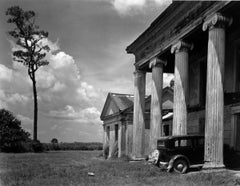
Woodlawn Plantation, Louisiana, 1941

Woodlawn Plantation, Louisiana, 1941

By Edward Weston

Located in Carmel-by-the-Sea, CA

Titled with artist's reference number on back of mount. Stamped, 'Edward Weston printed by' and signed by Cole Weston on back of mount.

Category

20th Century Black and White Photography

This Slap (Movie Stills)

This Slap (Movie Stills)

By Tao Ruspoli

Located in Morongo Valley, CA

'This Slap' (Movie Stills) Edition of 10, 20x30cm, 2008, Archival Print. Signature label and Certificate. Published in Tao Ruspoli's Monography 'Midway...

Category

Early 2000s Contemporary Figurative Photography

Materials

Archival Paper, Color, Archival Pigment, Photographic Paper

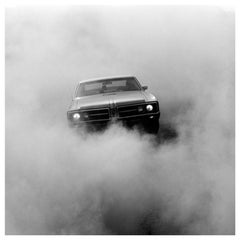
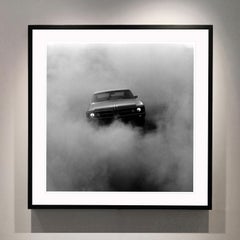
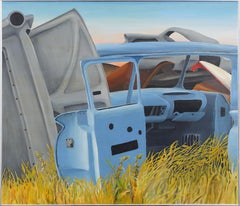
Buick in the Dust, Hemsby - Black and White Square Car Photography

Buick in the Dust, Hemsby - Black and White Square Car Photography

By Richard Heeps

Located in Cambridge, GB

Buick in the Dust, features an American Car, on a British Beach (Hemsby, Norfolk) driven by a German. Richard spent years honing his skills as a drag racing photographer, a sport he ...
Category

Early 2000s Contemporary Black and White Photography

Materials

Photographic Paper, Black and White, C Print, Silver Gelatin

America  - Original Lithograph - 1830

America - Original Lithograph - 1830

Located in Roma, IT

America is an original artwork realized around 1830. Original black and whiteprint Quite good conditions except for foxings especially along the margin. Original title L'America. ...

Category

1930s Modern Figurative Prints

Materials

Lithograph

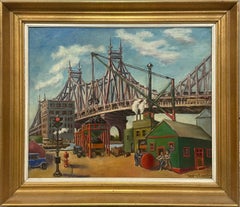
A Vibrant '30s Modern, American Scene Painting, Queesnboro Bridge, New York City

A Vibrant '30s Modern, American Scene Painting, Queesnboro Bridge, New York City

Located in Chicago, IL

A Vibrant, Colorful 1930s Modern, American Scene Painting of the Queesnboro Bridge, New York City by Notable Woman Artist, Lesley Buckland Crawford (Am. 1887-1963). A wonderful example of Crawford's Urban Realism practiced in the 1930s & '40s depicting a busy foreground of industrial dockworkers & laborers with the dynamic, overarching span of the Queensboro Bridge in the background. Artwork size: 18 x 22 inches, oil on canvas (Framed size 23 x 27 inches). Signed "Lesley Crawford", lower right. Born in 1887, Lesley Buckland Crawford graduated from Vassar College in 1908. Crawford attended the Art Student's league of New York City and was a former student of Kimon Nicolaides (1891-1938). The artist was active in New York, Summit, NJ and Springfield, Vermont. She was known for her Urban Realist inspired paintings, watercolors and lithographs, and colorful landscapes of Vermont. She traveled and painted in Guatemala, Italy and Greece. Crawford was one of the founders of the Miller Art Center in Springfield, VT in 1956. She was also associated with the Southern Vermont Art Center in Manchester, VT, and the Summit Art Association, Summit, NJ. A 1940s lithograph...

Category

1930s American Modern Landscape Paintings

Materials

Canvas, Oil

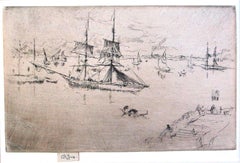
Lagoon: Noon

Lagoon: Noon

By James Abbott McNeill Whistler

Located in New York, NY

James McNeill Whistler (1830-1903), Lagoon: Noon, etching and drypoint, 1879-1880, signed with the butterfly and inscribed “imp” on the tab [also signed with the butterfly in the plate lower left]. Reference: Glasgow 209, third state (of 3), Kennedy 216, third state (of 3); Lochnan 231, 4 7/8 x 7 7/8 inches. A fine impression with very little plate tone, and printed with extraordinary attention to the etching and drypoint details. The printed butterfly, usually only barely visible, is clearly defined in this impression (see detail below). Kennedy mades special note that an impression like this, with the clearly visible butterfly, was in the collection of John H. Wrenn. On a commission from the Fine Arts Society, Whistler created the plates of his Venice series...

Category

1870s Impressionist Landscape Prints

Materials

Drypoint, Etching

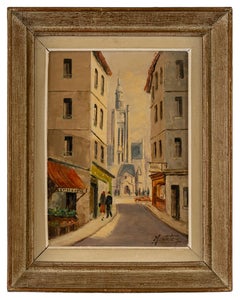
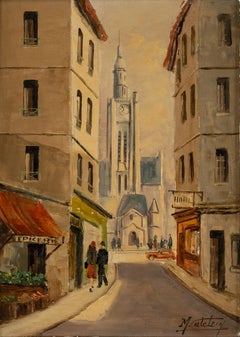
Parisian Street Scene with Eglise St. Etienne du Mont

Parisian Street Scene with Eglise St. Etienne du Mont

Located in Sheffield, MA

Michael Catelein French, born 1907 Parisian Street Scene with Eglise St. Etienne du Mont Oil on canvas 9 ½ by 13 in, w/ frame 13 ¾ by 17 ½ in Signed lower right French artist born ...

Category

Mid-20th Century Impressionist Paintings

Materials

Oil

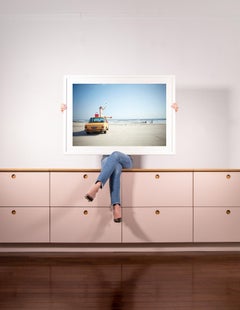
Pinwheel Girl 1
Pinwheel Girl 1

Pinwheel Girl 1

By Liz Von Hoene

Located in New York, NY

ABOUT THIS ARTIST: Liz Von Hoene is an award winning fashion photographer and director known for her immaculate concept driven images that strike the right balance between sophistica...

Category

2010s Color Photography

Materials

Photographic Paper

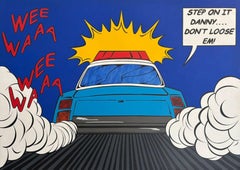
Step On It Danny, Don't Lose Em!

Step On It Danny, Don't Lose Em!

By Deborah Azzopardi

Located in London, GB

Azzopardi created this fun acrylic painting because her neighbour's child, 8 year old Danny, had a new bicycle and would cycle past her home demonstrating this specific police siren,...

Category

Early 2000s Contemporary Figurative Paintings

Materials

Acrylic, Board

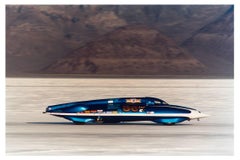
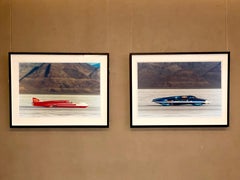
LSR Streamliner II, Bonneville, Utah - Car in Landscape Color Photography

LSR Streamliner II, Bonneville, Utah - Car in Landscape Color Photography

By Richard Heeps

Located in Cambridge, GB

LSR Streamliner II, captured in the iconic home of speed, Bonneville Salt Flats. Just as the mountains contrast with the flatness, Richard Heeps captured this racing car at high spee...

Category

Early 2000s Contemporary Color Photography

Materials

Photographic Paper, C Print, Color, Silver Gelatin

Untitled #1 (Man Smoking), 2018 - Limited Edition Silver Gelatin print

Untitled #1 (Man Smoking), 2018 - Limited Edition Silver Gelatin print

By Giacomo Brunelli

Located in Brighton, GB

Untitled #1 (Man Smoking) from the series New York by Giacomo Brunelli is a Silver Gelatin print in a limited edition of 10. Brunelli shoots uniquely on black and white film with a ...

Category

21st Century and Contemporary Modern Black and White Photography

Materials

Photographic Paper, Silver Gelatin

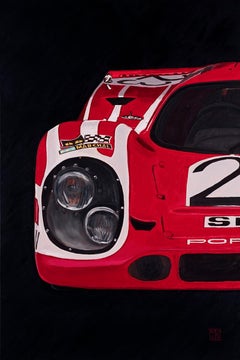
First Blood - Porsche 917K by artist Martin Allen

First Blood - Porsche 917K by artist Martin Allen

By Martin Allen

Located in London, GB

Immerse yourself in the legendary world of motorsport with this 917K art, inspired by the iconic number 23 endurance race car that was the first 917 to conquer Le Mans. This stunning...

Category

2010s Contemporary Figurative Paintings

Materials

Cotton Canvas, Oil

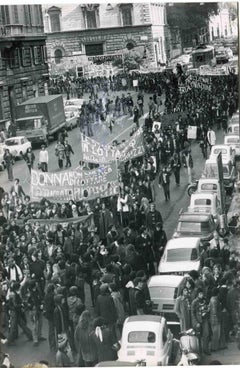
Women Demonstration of Protest - Vintage Photographs of Feminist Movemen - 1980s

Women Demonstration of Protest - Vintage Photographs of Feminist Movemen - 1980s

Located in Roma, IT

Women Demonstration of Protest - Vintage Photographs of Feminist Movement is an original black and white photograph realized by an anonymous photographer. With the hand-note on the ...

Category

1980s Modern Black and White Photography

Materials

Photographic Paper

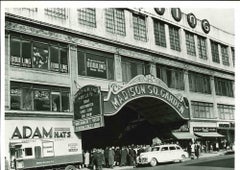
Maison Square Garden - Vintage Photograph - Mid 20th Century

Maison Square Garden - Vintage Photograph - Mid 20th Century

Located in Roma, IT

Maison Square Garden - American Vintage Photograph is an original black and white photograph realized in the U.S in the Mid-20th Century in a series on American life in the 20th Cent...

Category

Mid-20th Century Modern Figurative Photography

Materials

Photographic Paper

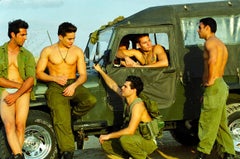
Untitled (Soldiers No. 2)

Untitled (Soldiers No. 2)

By Kobi Israel

Located in New York, NY

Chromogenic print Signed and numbered, verso (Edition of 10) This photograph is offered by ClampArt, located in New York City. About the artist: Born in 1970 in a suburb of Tel-Aviv...

Category

Early 2000s Contemporary Portrait Photography

Materials

C Print