By Marc Chagall
Located in Fairfield, CT
Artist: Marc Chagall (1887–1985)
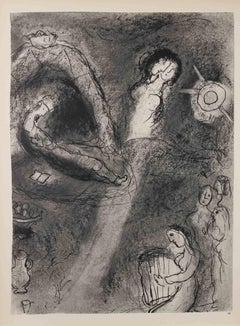
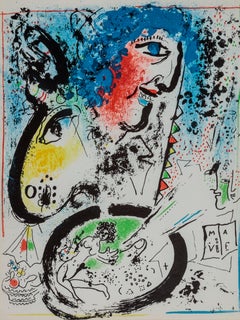
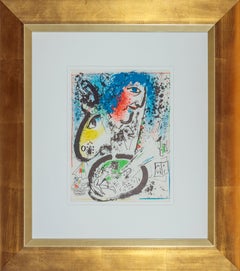
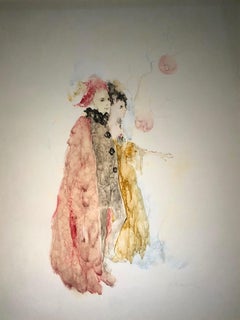
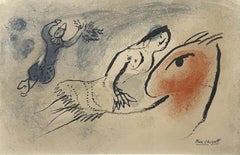
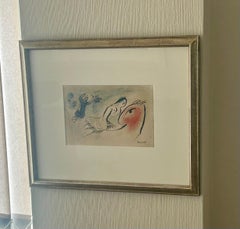
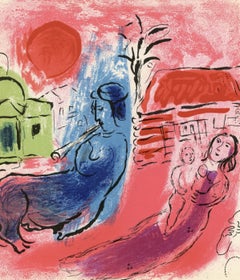
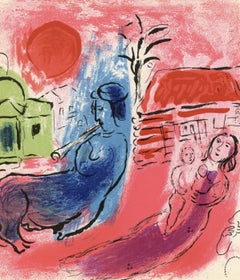
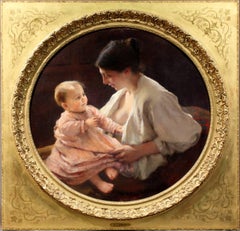
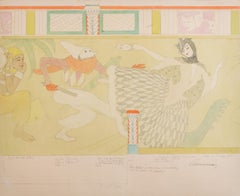
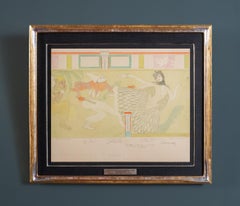
Title: Motherhood with Centaur (Maternite au Centaure)
Year: 1957
Medium: Lithograph on velin paper
Paper Size: 9.06 x 7.875 inches (23.01 x 20 cm)
Condition: Well preserved, consistent with age and medium
Inscription: Unsigned and unnumbered as issued
Publisher: Maeght Editeur, Paris
Printer: Mourlot Freres, Paris
Catalogue raisonne reference: Chagall, Marc, and Julien Cain. Chagall Lithographe. Andre Sauret, Editeur, 1960, illustration 207. Cramer, Patrick, and Meret Meyer. Marc Chagall: Catalogue Raisonne Des Livres Illustres. P. Cramer ed., 1995, illustration 34
Notes: Excerpted from the album (translated from French), This album was printed by Drager Freres in Montrouge on behalf of Maeght Editeur, 13, Rue de Teheran, Paris VIII. The original color lithographs were drawn by Mourlot Freres. The photographs of the works printed are of Y. Hervochon, M. Routhier, Draeger. Copyright 1957.
Additional notes: This exquisite lithograph by Marc Chagall (1887–1985), titled Maternite au Centaure (Motherhood with Centaur), from the album Chagall, originates from the 1957 edition published by Maeght Editeur, Paris, and printed by Mourlot Freres, Paris, 1957. This lyrical composition merges myth and tenderness, portraying the timeless bond of motherhood through Chagall’s poetic imagination. In Maternite au Centaure, a serene maternal figure is juxtaposed with a centaur—an emblem of instinct and vitality—creating a balance between the human and the mythical. The work resonates with Chagall’s fascination with universal themes of creation, nurturing, and love, rendered in his distinctive language of fluid form and radiant color. Through this synthesis of fantasy and emotion, Chagall transforms mythological symbolism into a meditation on the sacred essence of motherhood. The 1957 album Chagall, published by Maeght Editeur, Paris, and printed by Mourlot Freres, represents one of the great achievements in the collaboration between artist and master printer during the postwar period. Each lithograph in the volume reveals Chagall’s expressive range, from intimate reflection to mythic grandeur, united by his radiant use of color and emotional depth. The project brought together the visionary direction of Aimé Maeght and the technical brilliance of the Mourlot studio, producing works that stand as touchstones of 20th-century printmaking. This publication reflects the spirit of the modern livre d’artiste—where painter, poet, and craftsman worked in harmony to create art that transcends the boundaries of the page.
Executed as a lithograph on velin paper, this work measures 9.06 x 7.875 inches (23.01 x 20 cm). Unsigned and unnumbered as issued. The edition exemplifies the superior craftsmanship of the Mourlot Freres atelier, celebrated for its close collaboration with Chagall and its mastery of fine color lithography. The 1957 album Chagall, published by Maeght Editeur, Paris, and printed by Mourlot Freres, represents a landmark collaboration between Marc Chagall and two of the foremost names in 20th-century art publishing and lithography. The album presents a selection of color lithographs that highlight the artist’s poetic vision and technical mastery of the medium. Each work exemplifies Chagall’s distinctive approach to composition—where figures, animals, and symbols of love and faith intertwine in a dreamlike harmony of form and color. The lithographs were printed with exceptional fidelity and brilliance, capturing the immediacy and emotional depth of Chagall’s hand. This publication stands as one of the most significant artistic documents of the postwar period, bridging modernist experimentation and spiritual lyricism through the timeless language of color and imagination.
MARC CHAGALL (1887–1985) was a Belarus-born French painter, printmaker, and designer whose visionary imagination, radiant color, and deeply poetic symbolism made him one of the most beloved and influential artists of the 20th century. Rooted in the imagery of his Jewish heritage and the memories of his childhood in Vitebsk, Chagall’s art wove together themes of faith, love, folklore, and fantasy with a dreamlike modern sensibility. His unique style merging elements of Cubism, Fauvism, Expressionism, and Surrealism defied categorization, transforming ordinary scenes into lyrical meditations on memory and emotion. Influenced by Russian icon painting, medieval religious art, and the modern innovations of artists such as Pablo Picasso, Henri Matisse, and Georges Braque, Chagall developed a profoundly personal visual language filled with floating figures, vibrant animals, musicians, and lovers that symbolized the transcendent power of imagination and love. During his early years in Paris, he became an integral part of the Ecole de Paris circle, forming friendships with Amedeo Modigliani, Fernand Leger, and Sonia Delaunay, and his creative spirit resonated with that of his peers and successors Alexander Calder, Alberto Giacometti, Salvador Dali, Joan Miro, Wassily Kandinsky, Marcel Duchamp, and Man Ray, artists who sought to push the boundaries of perception, emotion, and form. Over a prolific career that spanned painting, printmaking, stained glass, ceramics, and stage design, Chagall brought an unparalleled poetic sensibility to modern art, infusing even the most abstract subjects with human warmth and spiritual depth. His works are held in the most prestigious museums around the world, including the Museum of Modern Art, the Centre Pompidou, the Tate, and the Guggenheim, where they continue to inspire generations of artists and collectors. The highest price ever paid for a Marc Chagall artwork is approximately 28.5 million USD, achieved in 2017 at Sotheby’s New York for Les Amoureux (1928).
Marc Chagall Maternite...
Category
1950s Expressionist Figurative Prints