Face Art
to
6,423
17,283
8,137
6,633
4,699
4,791
Overall Width
to
Overall Height
to
1,338
3,075
21,919
15,421
347
397
1,022
1,147
928
2,147
2,773
2,942
2,446
1,563
852
10,929
8,546
2,273
1,707
1,203
959
897
710
597
420
306
226
83
56
26,431
9,901
3,157
151,082
78,761
50,036
41,777
35,878
33,714
29,410
26,369
25,741
24,244
20,139
17,728
15,519
14,496
13,424
12,908
10,961
10,301
10,093
8,424
14,345
8,440
7,715
6,099
5,622
655
594
462
351
347
8,610
12,039
20,377
16,988
Art Subject: Face
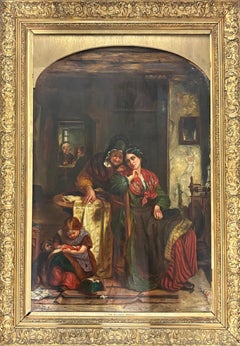
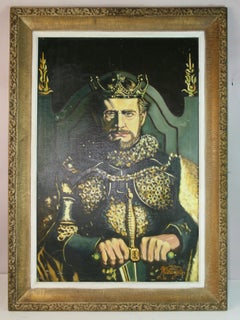
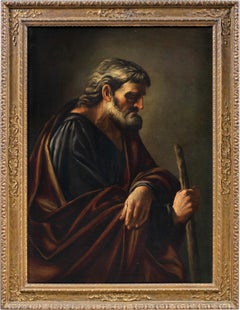
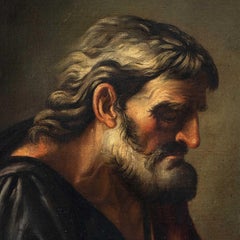
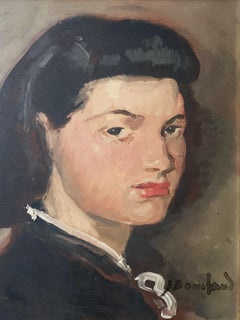
Militar - Óleo sobre tela
Located in Sant Celoni, ES
La obra va firmada en firma apócrifa y fechada del año 1899
La obra se presenta enmarcada (el marco tiene las esquinas un poco separadas y despegadas)
Medidas obra: 55 cm. De altur...
Category
1890s Figurative Paintings
Materials
Oil
Expressionist Ceramic Head Sculpture in Refractory Stoneware – Testa #10
Located in FISTERRA, ES
This large ceramic head sculpture, Testa nº 10, is part of the Testas series, a body of expressionist ceramic heads created in refractory stoneware and fired in reduction. The series...
Category
2010s Expressionist Figurative Sculptures
Materials
Clay, Glaze
"Swan In A Car" by Fox Photos
Located in London, GB
"Swan In A Car" by Fox Photos
6th April 1936: A tame swan named Leila is given a lift in the back of a car.
Unframed
Paper Size: 30" x 40'' (inches)
Printed 2022
Silver Gelatin Fi...
Category
1930s Modern Black and White Photography
Materials
Black and White
Contemporary clowns at the circus of life, The Yellow Flower.
Located in La Canada Flintridge, CA
The painting sighed lower right and the canvas size is 23.5" x 31.5".
Category
Early 2000s Figurative Paintings
Materials
Oil
Classicist Italian artist - 18th century terracotta figure sculpture - Venus
Located in Varmo, IT
Terracotta sculpture - Venus. Italy, 18th century.
27 x 22 x 45 cm.
Made entirely of terracotta. Depicting a bathing Venus (small crack on the foot).
- This item is sold with a c...
Category
Early 18th Century Figurative Sculptures
Materials
Terracotta
Cupids Playing Large Bacchanal Rococo Scene Antique oil painting after Rubens
Located in Cirencester, Gloucestershire
Bacchanal Cupids Playing
French School, early 1900's
after the earlier work by Rubens, unsigned
oil painting on canvas, framed
canvas: 22 x 39 inches
framed: 27 x 44 inches
Large s...
Category
Early 20th Century Rococo Figurative Paintings
Materials
Canvas, Oil
Sexual - Original Etching and Drypoint by Mino Maccari - 1960s
By Mino Maccari
Located in Roma, IT
Image dimensions: 18x11 cm.
Hand signed. Artist's Proof.
Very good conditions.
Category
1960s Figurative Prints
Materials
Etching, Aquatint
Original Vintage 1933 French Automobile Poster – Roby Ranty Marot deco poster
Located in Spokane, WA
Original Vintage 1933 French Automobile Poster – Roby Ranty Marot Art Deco Calendar Art Print Classic Car Advertisement. Archival linen backed in...
Category
1930s Art Deco Figurative Prints
Materials
Lithograph
“French ladies”
Located in Warren, NJ
Charles Levier (French, 1920-2003)- Original Watercolor "French Ladies", Shopping
Frame is 43 x 35 gold metallic frame
Pink matting The painting pops with lively colors .
Painting is...
Category
20th Century Drawings and Watercolor Paintings
Materials
Watercolor
Eugène Laurent (1832-1898), The Beachcomber
Located in Berlin, DE
Eugène Laurent (1832-1898),
The Beachcomber
Inscribed "E. Laurent" on the base plate in the cast.
H 63 cm
Eugène Laurent studied at the École des Beaux-Arts in Paris and was awa...
Category
Early 19th Century Jugendstil Figurative Sculptures
Materials
Bronze
Blue Chroma, Figurative nude. Oil on canvas. Painting
Located in Miami Beach, FL
This series of pieces is the result of an investigation into the use of light as a tool for the representation of reality and image creation. Starting in the 40s, the work of the art...
Category
2010s Contemporary Figurative Paintings
Materials
Canvas, Oil
Keith Haring Exhibition Poster for Tony Shafrazi Gallery
By Keith Haring
Located in New York, NY
Keith Haring
Exhibition Poster for Tony Shafrazi Gallery, 1988
Offset color print
25 x 34 in.
Framed: 29 1/8 x 38 1/4 x 1 in.
Signed and dated in plate at bottom
A Keith Haring exhi...
Category
1980s Pop Art Figurative Prints
Materials
Offset
JACQUELINE KENNEDY I FS II.13
By Andy Warhol
Located in Aventura, FL
Jacqueline Kennedy I, from 11 Pop Artists I. Screenprint in silver, on wove paper. Artist's stamped signature on the reverse and numbered. From the edition of 200. Published by O...
Category
1960s Pop Art Figurative Prints
Materials
Screen
Portrait of Bridget Drury Lady Shaw, formerly Viscountess Kilmorey
Located in London, GB
Sir Peter Lely (Soest 1618 – 1680 London)
Portrait of lady with a crown, possibly Bridget Drury Lady Shaw, formerly Viscountess Kilmorey, later Lady Baber (d.1696) c.1665
Oil on canvas
46 1/2 x 40 3/4 inches, Framed
42 1/4 x 36 1/4 inches, Unframed
Inscribed left [……….]Isabella
James Mulraine wrote the following for this piece:
This portrait dates to the middle of the 1660s, the decade when Lely’s career took off as successor to Sir Anthony van Dyck. At the Restoration Charles II had appointed him Principal Painter to the King and paid a pension £200 per annum ‘as formerly to Sr. Vandyke...’1 Lely had trained in Haarlem and he was in his early twenties when he came to London in 1643. He was an astute businessman and a wise courtier. In 1650 he painted a portrait of Oliver Cromwell (Birmingham Museum and Art Gallery) while maintaining links with the Royalist exiles through the 1650s. He had arrived in England as a painter of small-scale portraits and lush scenes of nymphs in landscapes in a Dutch style. His experience of Van Dyck in English collections transformed his painting. His lavish and alluring vision of Arcadia exactly captured the spirit of the Court and as Principal Painter he dominated English portraiture for the next twenty years. Lely ran a highly efficient studio along Netherlandish lines, employing a team of specialists like the drapery painter John Baptist Gaspars and young artists-in-training like Nicolas de Largilliere. He had numerous rivals during that period, and by 1670 he had introduced numbered standard poses to speed up production, while collaborating with printmakers for further revenue and advertising. He died in 1680 of a stroke while painting, working to the last.
The portrait, painted at a date when Lely’s poses and execution were still individual and inventive shows a lady sitting at three-quarter length facing away from the viewer. She has begun to turn towards the viewer, a pose with a long pedigree in art, first used by Leonardo da Vinci in the Mona Lisa (Louvre). She steadies her blue drapery where it might slip from her arm with the movement, a flash of realism beautifully captured. Like Van Dyck, Lely painted his female sitters in a timeless costume rather than contemporary fashion, showing a loose gown and floating silk draperies. It presented the sitter as a classical ideal. The portrait would not date.
The saffron dress may be the work of a drapery painter but the brown scarf must be by Lely himself, and appears unfinished, broadly sketched in behind the shoulder. The delicate blue glaze and nervous highlights suggest shimmering translucence. Lely was a master of painting hands – his hand studies are marvels of drawing – and the lady’s hands are superb, exactly drawn, delicately modelled and expressive. The fidgety gestures, clutching the gown, fiddling with the edge of the scarf, give the portrait psychological bite, suggesting the personality behind the calm courtier’s expression, adding to the sense shown in the look of the eyes and mouth that the lady is about to speak. The portrait’s language is Vandykian. The inspiration comes directly from Van Dyck’s English portraits of women. Lely owned Van Dyck’s Portrait of Lady Elizabeth Thimbleby and Dorothy Viscountess Andover (National Gallery, London) and the sitter’s costume quotes Lady Andover’s saffron dress and brown scarf. But Lely paints a generation who sat nearer to the ground and through a dialogue of expression and gesture he shows sitters who are more flesh and blood than Van Dyck’s.
The background with a column and curtain is different to those shown in most of Lely’s portraits of women. They tend to include trees or fountains, with a glimpse of landscape. But there are other examples. A portrait of the King’s reigning mistress, Barbara Villiers Duchess of Cleveland...
Category
1660s Portrait Paintings
Materials
Oil
$72,159 Sale Price
20% Off
"Marin sur le pont" by Edmond de Palezieux - Oil on canvas
Located in Geneva, CH
oil on canvas without frame
One point of restoration
Category
1890s French School Portrait Paintings
Materials
Oil
$960 Sale Price
20% Off
Space of my presence
Located in Zofingen, AG
The painting depicts a woman immersed in the stillness of the moment, seated within a tranquil landscape of trees and light. Her posture is soft and open — as if she has merged with ...
Category
2010s Contemporary Landscape Paintings
Materials
Canvas, Acrylic
Fantasy, Classic Art, Figurative, Original oil Painting, Ready to Hang
Located in Granada Hills, CA
Artist: Alexander Litvinov
Work: Original oil painting, handmade artwork, one of a kind
Medium: Oil on Canvas
Style: Classic Figurative
Year: 2001
Title: Fantasy
Size: 27.5" x 20" x...
Category
2010s Impressionist Figurative Paintings
Materials
Canvas, Oil
Flower Market, Lima Peru
Located in Wilton Manors, FL
John Hanlen (1922-2003).
Flower Market, Lima Peru, ca. 1950.
Tempera on paper, sheet measures 14.25 x 22.5 inches. Measurement with matting: 18.5 x 26.5 inches. The piece is unfra...
Category
Mid-20th Century American Realist Figurative Paintings
Materials
Paper, Tempera
Mid Century Fauvist Portrait of Red Headed Woman
Located in Soquel, CA
Striking Fauvist portrait with a vibrant, high voltage color palette, featuring a green woman with red hair by Sydney Helfman (American, 1926-2010). Aut...
Category
1960s American Modern Figurative Paintings
Materials
Linen, Oil, Stretcher Bars
1950s French Post Impressionist Portrait Of A Elegant Lady In Brown Jacket
Located in Cirencester, Gloucestershire
Josine Vignon (French 1922-2022) ...
Category
Mid-20th Century Impressionist Figurative Paintings
Materials
Oil
La femme et la fleur
Located in New York, NY
Signed and numbered in pencil; stamp signed and dated
Category
20th Century Modern Prints and Multiples
Materials
Lithograph
Modern Cafe Scene With Figures Wine Bottles and White Hat French Watercolor
By Pierre Neveu
Located in Cirencester, Gloucestershire
Title: Modern Cafe Scene With Figures Wine Bottles and White Hat French Watercolor
Artist: Pierre Neveu (French b.1929)
Medium: Watercolour and Gouache on card, unframed
Size (H x W)...
Category
Mid-20th Century Post-Impressionist Figurative Drawings and Watercolors
Materials
Watercolor, Gouache
Mathurin Moreau Triumph of Flora Bronze
Located in New York, NY
Mathurin Moreau (French, 1822-1912)
The Triumph of Flora
Female figural statue of Flora and two putti resting on a rouge marble base.
Bronze and Rouge Marble
signed 'Math. Morea...
Category
19th Century Figurative Sculptures
Materials
Bronze
Neoclassical composition of a sculptor kneeling before his statue of the Madonna
Located in Middletown, NY
An allegory of loyalty, with the subject's dog pictured seated, holding his master's chisel in his mouth; fidelity personified.
Italian School, 18th century
Ink wash in gray and bl...
Category
Mid-18th Century Italian School Figurative Paintings
Materials
Laid Paper, Ink, Watercolor
Paul César Helleu "Study of Women" Etching, Hand-Signed, Art Nouveau
Located in Eltville am Rhein, DE
Paul César Helleu
Vannes 1859 - 1927 Paris
"Study of 4 women"
Etching on handmade paper
Signed in pencil lower left
Inscribed lower right with "Unique epreuve, ....."
Rare proof prin...
Category
Early 1900s Art Nouveau Figurative Prints
Materials
Etching
Trois Danseuses (Three Dancers)
Located in San Francisco, CA
This artwork "Trois Danseuses" (Three Dancers) c.1940 is an etching in sepia on Wove paper after French artist Marie Laurencin, 1883-1956. It his signed in the plate as issue. This is a posthumous impression from the canceled plate. The image (plate mark) is 14.60 x 10.75 inches, sheet size is 16.5 x 12.85 inches. It is in excellent condition, hanging tape mark, small piece of tape and 3 small skinned area are visible on the back only.
About the artist:
Marie Laurencin, intimate of Braque, Picasso, Matisse and Appollinaire, was born in 1883. She held a celebrated place in the early part of the 20th century during a period when Art exploded with genius. She lived in the Montmartre District of Paris and became part of the circle revolving around the Steins. Though her early portraits show the imprint of the Fauves and Cubists, her romantic and delicate temperament asserted itself against these schools.
She was prim, conservative and always wore a kitchen apron...
Category
Mid-20th Century Impressionist Figurative Prints
Materials
Etching
Rembrandt Series
Located in Sante Fe, NM
I cherish a the Dutch Old Masters. As a contemporary artist, I work with the female nude and portraiture, so I was enthusiastic when the Rembrandt House approached me to create a new...
Category
2010s Contemporary Color Photography
Materials
Archival Pigment
Los Americanos
Located in Mexico City, CDMX
He refers to the history of art, particularly to pop culture and the social circumstances of its local environment as well as its universal confrontation.
Humor and irony with a crit...
Category
2010s Conceptual Color Photography
Materials
Cotton, Photographic Paper
Portrait of Mrs William Tisdall Elsie Gardiner - British Edwardian oil painting
Located in Hagley, England
This superb large British Edwardian exhibited portrait oil painting is by noted artist George Spencer Watson. It was painted in 1909 and exhibite...
Category
Early 1900s Realist Portrait Paintings
Materials
Oil
Mete Caña , ca. 2020 Mixed media on canvas , 23k Gold leaf edition number: 1/7
Located in San Juan, PR
In this new series Mercado utilizes canvas in big format as a medium to intervene Jack Delano's photographs of Puerto Rican agriculture workers he documented for the FSA in the 1940...
Category
2010s Contemporary Portrait Photography
Materials
Metal, Gold Leaf
A Moon for Children - Etching by Amedeo Tedeschi Toschi - 1990s
Located in Roma, IT
Etching on paper.
Hand signed, titled (original title: una luna per bimbi), and numbered in pencil.
Edition of 90.
Excellent condition.
Category
1990s Contemporary Figurative Prints
Materials
Etching
The Blacksmith of Solingen / - The Double-edged Sword -
Located in Berlin, DE
Wilhelm Albermann (1835 Werden an der Ruhr - 1913 Cologne), The Blacksmith of Solingen, after 1895. Bronze-color patinated zinc cast on plinth, 47 cm (height) x 20 cm (width) x 16 cm (depth), weight 5.5 kg. Signed “Albermann.” on the plinth and identified as a cast by “AKT.[TIEN] GES.[ELLSCHAFT] GLADENBECK BERLIN”. Dedication on the front: “Mr. Ing. F. Kuhlmann to the wedding. Management and officials of the Hannoversche Waggonfabrik. Aircraft construction department".
- The zinc showing through in spots, the patina somewhat stained, the right upper arm under the sleeve retouched in black.
- The Double-edged Sword -
The figure is a reduction of Wilhelm Albermann's 1895 fountain figure of the armourer of Solingen, who has always been identified with the historical blacksmith Peter Hahn. In 1839, Karl Simrock wrote the poem “The Blacksmith of Solingen" and thus coined the legendary figure. The first and penultimate verses read:
A blacksmith spoke to Solingen
With every bayonet,
That came to his diligence:
"Oh, that Fritz had it!"
The war took its course,
Many battles were fought,
Which often made him fearful and anxious
In his soul.
The blacksmith had given up his trade to fight for Frederick the Great. Not least because of his strength and will to fight, the battles were won. With his fountain sculpture, Albermann has given the legendary blacksmith a figurative form and at the same time created a landmark for the city of Solingen, which was once famous for the art of sword forging and today still stands for the production of high-quality knives. During the bombing raid in November 1944, the fountain was destroyed along with the entire old town of Solingen. Only the head remained.
The broad-shouldered blacksmith stands securely behind his anvil, his leather apron tied around him, and has just finished a sword blade with his own "weapon" - the blacksmith's hammer. His entire body shows the strength with which he wields the hammer, but also the strain of this activity, as evidenced by the wide open shirt, the somewhat 'untidy' apron, and especially the furrowed face.
However, the blacksmith does not look at the finished work, but resolutely and at the same time thoughtfully into the distance, in line with the quoted verse from Simrock's poem that the battles "often made him fearful and anxious in his soul". There is certainly something melancholy in his gaze, fed by the knowledge of the necessity of forging swords and taking up arms and their deadly use - experiences Albermann had to make during his own war missions. The flowing full beard gives his gaze into the distance an almost prophetic character.
In keeping with the craft of the perfectly formed art of blacksmithing, the detailed casting reproduces the respective materials depicted in perfect form: the leather apron convincingly conveys the impression of leather and lies - also in the back view - like a second formed layer over the body, while the shirt and trousers illustrate their own textile qualities.
Due to its masterful execution and profound content, the “Blacksmith of Solingen”, which has survived in its cast reproductions, remains Albermann's most famous work to this day.
About the artist
The son of a carpenter, Wilhelm Albermann began an apprenticeship as a joiner, but then followed his artistic calling and trained as a sculptor in Elberfeld. In 1855, at the age of twenty, he was drafted into the army in Berlin, where he served until 1857. Albermann attended the Berlin Art Academy on the side and began regular studies after his service. While still a student, he completed commissioned works for his teachers August Fischer and Hugo Hagen. His first independent commissions followed, enabling him to establish a flourishing sculpture studio in Cologne in 1865. His artistic activities were repeatedly interrupted by military service, and he took part in the German-Danish War in 1864, the war against Austria in 1866, and the Franco-Prussian War in 1870/71. After his last war service, Albermann, already a respected artist, founded a commercial drawing school at the request of the city government, where he taught the modeling class and served as director until 1896. In 1890 he also worked for the "Society for the Promotion of Sculpture in the Rhineland and Westphalia".
Albermann was one of the most prolific sculptors in Cologne in the second half of the 19th century. He created numerous monuments, fountains, tomb sculptures, architectural ornaments, and domestic statues. At its peak, his workshop employed up to thirty sculptors and stonemasons at a time.
GERMAN VERSION
Wilhelm Albermann (1835 Werden an der Ruhr - 1913 Köln), Der Schmied von Solingen, nach 1895. Bronzefarben patinierter Zinkguss auf gegossener Plinthe, 47 cm (Höhe) x 20 cm (Breite) x 16 cm (Tiefe), Gewicht 5,5 kg. Auf der Plinthe mit „Albermann.“ signiert und als Guss der „AKT.[TIEN] GES.[ELLSCHAFT] GLADENBECK BERLIN“ ausgewiesen. Schauseitige Widmung: „Herrn Ing. F. Kuhlmann zur Vermählung. Direktion und Beamte der Hannoverschen Waggonfabrik. Abt. Flugzeugbau“.
- Punktuelles Durchscheinen des Zinks, Patina etwas fleckig, der rechte Oberarm unter dem Ärmel schwarz retuschiert.
- Die Zweischneidigkeit des Schwertes -
Die Figur ist eine Reduktion von Wilhelm Albermanns 1895 geschaffener Brunnenfigur des Waffenschmieds von Solingen, der seit jeher mit dem historischen Schmied Peter Hahn identifiziert wurde. 1839 hatte Karl Simrock das Gedicht „Der Schmied von Solingen“ verfasst und damit die legendäre Figur geprägt. Die erste und die vorletzte Strophe lauten:
Zu Solingen sprach ein Schmied
Bei jedem Bajonette,
Das seinem Fleiß geriet:
»Ach, daß der Fritz es hätte!«
Der Krieg ging seinen Gang,
Man schlug noch viele Schlachten,
Die oft ihm angst und bang'
In seiner Seele machten.
Der Schmied hatte sein Handwerk ruhen lassen, um selbst für Friedrich den Großen zu kämpfen. Nicht zuletzt durch seine Kraft und seinen Kampfeswillen verliefen die Schlachten siegreich. Dem legendären Schmied verlieht Albermann mit seiner Brunnenskulptur eine bildliche Gestalt und schuf damit zugleich ein Wahrzeichen der Stadt Solingen, die einst für die Kunst des Schwerterschmiedens berühmt war und bis heute für die Herstellung qualitätvoller Messer einsteht. Beim Bombenangriff im November 1944 wurde mit der gesamten Solinger Altstadt auch der Brunnen zerstört. Einzig der Kopf blieb erhalten.
Mit sicherem Stand und umgebundener Lederschürze steht der breitschultrige Schmied hinter seinem Amboss und hat gerade mit seiner eigenen ‚Waffe‘ – dem Schmiedehammer – eine Schwertklinge fertiggestellt. Seinem gesamten Körper ist die Kraft abzulesen, mit der er den Hammer führt, aber auch die Anstrengung dieser Tätigkeit, wovon das weit geöffnete Hemd, die etwas ‚unordentlich‘ arrangierte Schürze und vor allem das zerfurchte Gesicht zeugen.
Der Schmied schaut aber nicht auf das vollendete Werk, sondern entschlossen und zugleich sinnierend in die Ferne, entsprechend der zitierten Zeile von Simrocks Gedicht, dass die Schlachten „oft ihm angst und bang‘ in seiner Seele machten“. Der Blick hat durchaus etwas Melancholisches, dass sich aus dem Wissen um die Notwendigkeit, Schwerter zu schmieden und zu den Waffen zu greifen und deren tödlichem Einsatz speist – Erfahrungen, die Albermann bei seinen eigenen Kriegseinsätze machen musste. Der wallende Vollbart verleiht dem in die Ferne schauenden Blick einen beinahe prophetischen Charakter.
Dem Handwerk der formvollendenden Schmiedekunst entsprechend, gibt der detaillierte Guss die jeweils dargestellten Materialien in vollendeter Ausformung wieder: Die Lederschürze vermittelt überzeugend den Eindruck des Leders und liegt – auch in der Rückenansicht – wie eine zweite ausgeformte Schicht über dem Körper, während das Hemd und die Hose...
Category
1890s Realist Figurative Sculptures
Materials
Metal
Female Bather (Nude Women)
Located in Wilton Manors, FL
Ann Brockman (1895–1943) was an American artist who achieved success as a figurative painter following a successful career as an illustrator. Born in California, she spent her childhood in the American Far West and, upon marrying the artist William C. McNulty, relocated to Manhattan at the age of 18 in 1914. She took classes at the Art Students League where her teachers included two realist artists of the Ashcan School, George Luks and John Sloan. Her career as an illustrator began in 1919 with cover art for four issues of a fiction monthly called Live Stories. She continued providing cover art and illustrations for popular magazines and books until 1930 when she transitioned from illustrator to professional artist. From that year until her death in 1943, she took part regularly in group and solo exhibitions, receiving a growing amount of critical recognition and praise. In 1939 she told an interviewer that making money as an illustrator was so easy that it "almost spoiled [her] chances of ever being an artist."[1] In reviewing a solo exhibition of her work in 1939, the artist and critic A.Z Kruse wrote: "She paints and composes with a thorough understanding of form and without the slightest hesitancy about anatomical structure. Add to this a magnificent sense of proportion, and impeccable feeling for color and an unmistakable knowledge of what it takes to balance the elements of good pictorial composition and you have a typical Ann Brockman canvas."[2]
Early life and training
Brockman was born in Northern California in 1895 and spent much of her youth in nearby Oregon, Washington, and Utah.[1][3] She met the artist William C. McNulty in Seattle where he was employed as an editorial cartoonist. They married in March 1914 and promptly moved to Manhattan where he worked as a freelance illustrator.[4][5] At the time of their marriage, Brockman was 18 years old.[6] Over the next few years, her career generally followed that path that her husband had previously taken. His art training had been at the Art Students League beginning in 1908; she began her training there after moving to New York in 1914.[1] After an early career as an editorial cartoonist, he freelanced as a magazine and book illustrator beginning in 1914; she began her career as a magazine and book illustrator in 1919.[7] He embarked on a teaching career in the early 1930s and not long after, she began giving art instruction.[8][9] While they both adhered to the realist tradition in art, their usual subjects were different. His prominently depicted urban cityscapes in the social realist whereas hers generally focused on rural landscapes. He was best known for his etchings and she for her oils and watercolors.[8][10]
Brockman returned to the Art Students League in 1926 to take individual instruction for a month at a time from George Luks and John Sloan.[1] Despite their help, one critic said McNulty's "sympathetic encouragement and guidance" was more important to her development as a professional artist.[11]
Career in art
In the course of her career as illustrator, Brockman would sometimes paint portraits of celebrities before drawing them, as for example in 1923 when she painted the French actress Andrée Lafayette who had traveled to New York to play title role in a film called Trilby.[12] She would also sometimes accept commissions to make portrait paintings and in 1929 painted two Scottish terriers on one such commission.[13] During this time, she also produced landscapes. In 1924 she displayed a New England village street scene painting in the Second Annual Exhibition of Paintings, Watercolors, and Drawings in the J. Wanamaker Gallery of Modern Decorative Art.[14] Available sources show no further exhibitions until in 1930 a critic for the Boston Globe described one of her portraits as "well done" in a review of a Rockport Art Association exhibition held that summer.[15]
Between 1931 and her death in 1943, Brockman participated in over thirty group exhibitions and five solos.[note 1] Her paintings appeared in shows of the artists' associations to which she belonged, including the Rockport Art Association, Salons of America, Society of Independent Artists, and National Association of Women Painters and Sculptors.[17][19]Between 1932 and 1935, her paintings appeared frequently in New York's Macbeth Gallery.[20][23][25][27] She won an award for a painting she showed at the Art Institute of Chicago in 1940.[41] In 1942, the Whitney Museum bought one of the paintings she showed in its Biennial of that year.[10] Critical praise for her work steadily increased during the decade that ended with her untimely death in 1943. In 1932, her painting called "The Camera Man" was called "a clever piece of illustration."[21] Three years later, a painting called "Small Town" gave a critic "the impression of freshness, honesty, and skill".[29] In 1938, a critic described her "Folly Cove" as "masterful" and said "Pigeon Hill Picnic" was "sustained by excellence of execution".[48] At that time, Howard Devree of the New York Times saw "evidence of gathering powers" in her work and wrote "she imparts a dramatic feeling to landscape. She even manages this time to do trees touched by Autumn tints without calendar effect, which is no small praise."[51] Three years later, a Times critic reported Brockman had "set herself a new high" in the watercolors she presented,[52] and another critic said the gallery where she was showing had not "for some time" shown "so outstanding a solo exhibitor as Ann Brockman."[2] Shortly before her death, a critic for Art News maintained that she was "one of America's most talented women painters".[46]
After she had died, a critic said Brockman's paintings "displayed real power", adding that she was "highly rated among the nation's professional artists" and was known to give "aid and encouragement, always with a smile," both artists and to her students.[10] in reviewing the memorial exhibition at the Kraushaar Galleries held in 1945, reviewers wrote about the strength and vibrancy of her personality, the quality of her painting ("every bit as good, possibly better than people had thought"),[53] called her "one of the best of our twentieth century women painters", and credited "her sense of the vividness of life" as a contributor to "the unusual breadth that is so characteristic of her work.[11] One noted that her work was "widely recognized throughout the country" and could be found in the collections of prominent museums, including the Metropolitan Museum of Art, the Whitney Museum of American Art, and the Art Institute of Chicago.[54] Writing in the Times, Devree wrote, "even those who had followed the steady growth of this artist for more than a decade, each successive show being at once an evidence of new achievement and an augury of still better work to come, may well be surprised at the combined impact of the selected paintings in the present showing,"[55] and writing in the Brooklyn Daily Eagle, A.Z Kruse said she had made "extraorginary accomplishments", painted with "inordinate distinction" showing a "lyrical majesty," and possessed "a keen esthetic sense which did not deviate from truth."[54]
Artistic style
(1) Ann Brockman, undated drawing, black chalk on paper, 18 x 22 inches
(2) Ann Brockman, High School Picnic, about 1935, oil on canvas, 34 1/4 x 44 1/4 inches
(3) Ann Brockman, untitled landscape, about 1943, watercolor and pencil on paper, 15 1/4 x 22 1/2 inches
(4) Ann Brockman, North Coast, undated watercolor, 21 1/2 x 30 inches
(5) Ann Brockman, On the Beach, 1942, watercolor on paper, 16 1/2 x 20 inches
(6) Ann Brockman, Lot's Wife, 1942, oil on canvas, 46 x 35 inches
(7) Ann Brockman, New York Harbor, 1934, watercolor on paper, 13 1/2 x 19 1/4 inches
(8) Ann Brockman, Youth, 1942, oil on board, 13 1/2 x 11 1/2 inches
Brockman was a figurative painter whose main subjects were rural landscapes and small-town and coastal scenes. She worked in oils and watercolors, becoming better known for the latter late in her career. Most of her paintings were relatively small. Although she made figure pieces infrequently, the nudes and circus and Biblical scenes she painted were seen to be among her best works. In 1938, Howard Devree wrote: "Her gray-day marines and coast scenes are familiar to gallery goers and are favorites with her fellow artists. Her figure pieces have attained a sculptural quality without losing warmth or taking on stiffness. One spirited circus incident of equestriennes about to enter the big tent compares not unfavorably with many of the similar pictures by a long line of painters who have been fascinated by the theme. She imparts a dramatic feeling to landscape. She even manages this time to do trees touched by Autumn tints without calendar effect, which is no small praise."[51] Similarly, a critic for Art Digest wrote that year: "Fluently and virilely painted, [her] canvases suggest a close affinity between nature and humans. The artist takes her subjects out in the open where they may picnic or bathe with space and air about them. A fast tempo is felt in the compositions of restless horses and nimble entertainers busily alert for the coming performance. Miss Brockman is also interested in portraying frightened groups of people, hurrying to safety or standing half-clad in the lowering storm light."[56]
Her palette ranged from vivid colors in bright sunlight to somber ones in the overcast skies of stormy weather. Of the former, one critic spoke of the rich colors and "sun-drenched rocks" of her coastal scenes and another of her "summery landscapes of coves and picnics."[11][50] Of the latter, Howard Devree said she "painted so many moody Maine coast vignettes of lowering skies and uneasy seas that artists have been heard to refer to an effect as 'an Ann Brockman day'".[57]
Brockman's handling of Biblical subjects can be seen in the oil called "Lot's Wife", shown above, Image No. 6. Her watercolor called "On the Beach" and her oil portrait called "Youth" may both indicate the "sculptural quality" that Devree said was typical of her figure pieces (Image No. 8, above).
An example of Brockman's bright palette in a typical summer theme is the oil painting called "High School Picnic" shown above, Image No. 2. Next to it is a painting, an untitled landscape of about 1943 whose medium, watercolor on paper, shows off the sunny palette she often used (Image No. 3).
Among the darkest of her works was an untitled 1942 drawing she made in black chalk (shown above, Image No. 1). In a book called Drawings by American Artists (1947), the artist and art editor Norman Kent noted that this study influenced her painting through its use of "forms" that were "elastic" and suggested "color". He said its "massing of dark and light" created "a definite mood" that was "impressionistic" and had "the strength of a man's work".[58] Brockman's undated watercolor called "North Coast" (shown above, Image No. 4) is an example of the paintings to which Kent referred.
Illustrator
(9) Ann Brockman, cover, March 12, 1917, Every Week magazine
(10) Illustration of an article, "The Taking of a Salient" by Henry Russell...
Category
1930s American Impressionist Nude Paintings
Materials
Oil
$1,200 Sale Price
20% Off
Late 19th Century Watercolour - Shepherd Boy
Located in Corsham, GB
A charming watercolour study depicting a young shepherd boy with a staff. The artist captures the portrait with cool grey and blue undertones, making for an atmospheric scene. Unsign...
Category
Late 19th Century Portrait Drawings and Watercolors
Materials
Watercolor
Portrait of Picasso
Located in Hollywood, FL
ARTIST: Salvador Dali
TITLE: Portrait of Picasso
MEDIUM: Etching
SIGNED: Hand Signed
EDITION NUMBER: a/b 66/200
MEASUREMENTS: 19" x 31"
YEAR: 1970
FRAMED: No
CONDITION: Exc...
Category
1970s Surrealist Figurative Prints
Materials
Etching
Rêve Familier Lithograph Print, Modern Style, Signed, 1969, 39/50
By Marc Chagall
Located in OPOLE, PL
Marc Chagall (1887-1985) - Rêve familier (Familiar Dream)
Lithograph from 1969.
The edition of 39/50.
Dimensions of work: 48.5 x 63.5 cm.
Hand signed.
Reference: Mourlot 582.
T...
Category
1960s Modern Figurative Prints
Materials
Lithograph
Figures Drinking in a Cosy Wooden Warm Lit Pub British Watercolour Painting
Located in Cirencester, Gloucestershire
Warm Lit Pub Interior
Signed By Tony Herbert (1927-2024)
Medium: Watercolor on artists paper on board, framed - glass covered
Framed: 16 x 18.5 inches
Watercolour: 10 x 12 inches
C...
Category
20th Century Impressionist Figurative Paintings
Materials
Watercolor
Joelle de dos au coussin vert 1995 original lithograph by Jean Jansem handsigned
By Jean Jansem
Located in Les Acacias GE, GE
Jean Jansem (1920-2013)
Joelle de dos au coussin vert, 1995
Lithographie sur papier Arches
Signée et justifiée
56 x 76 cm
Album: La danse, 1999
Imprimeur: Arts-Litho, Paris
Editeur ...
Category
Late 20th Century Expressionist Figurative Prints
Materials
Lithograph
Lady in Aqua-Embossed, Limited Edition Lithograph. Signed by Artist
By Bob Peak
Located in Chesterfield, MI
Embossed, Limited Edition Lithograph, 270/350
Image measures 35.75 x 27 inches, Paper measures 41.5 x 31.5 in
Signed by Artist
Piece shows significant signs of wear due to age and...
Category
Late 20th Century Portrait Prints
Materials
Lithograph
The city, Woman powdering herself - Original lithograph, HANDSIGNED, 1959
Located in Paris, IDF
Fernand Léger
Woman powdering herself, 1959
Original lithograph (Atelier Mourlot)
Signed with the artist's stamp
Limited to 180 copies (Here numbered 160)
On Arches vellum 66 x 50....
Category
1950s Modern Portrait Prints
Materials
Lithograph
17th Century Antique Original Oil Painting on canvas Goddess And Cherub, Framed
Located in Palm Coast, FL
This exquisite oil on canvas depicts a mythological scene rendered with great finesse, likely painted during the late 17th century. A reclining nude female figure, partially draped i...
Category
17th Century Rococo Nude Paintings
Materials
Oil
Portrait of a Man with Bold Features Blue Sketch Original French Artwork
By Robert Ladou
Located in Cirencester, Gloucestershire
Original French Artwork
signed initials by Robert Ladou (French 1929-2014)
original oil pastel painting on artist paper, framed
overall size: 15.5 x 12.5 inches
size: 9.5 x 8 inche...
Category
20th Century Portrait Paintings
Materials
Oil Pastel
Tim Weldon, "10¢ Per Dance" Folk Art Sculpture
Located in San Francisco, CA
San Francisco-based folk artist Tim Weldon, fresh off a showing at Scottsdale’s annual Celebration of Fine Art, is a man in touch with his lovable inner child. He declares himself a ...
Category
Mid-20th Century Folk Art Figurative Sculptures
Materials
Metal
Jason
Located in London, GB
Pastel on paper
Signed and titled (lower right)
84cm × 60cm (87cm × 62cm framed)
Cayford, now retired, was a graphic designer and illustrator working in London in the postwar period...
Category
1980s Contemporary Figurative Drawings and Watercolors
Materials
Paper, Pastel
Finis Saltationis Bronze Sculpture Nude Boy Male Figure Marble Stone
Located in Utrecht, NL
Finis Saltationis Bronze Sculpture Nude Boy Male Figure Marble Stone
This sculpture need to be ordered. We will cast a b...
Category
21st Century and Contemporary Contemporary Nude Sculptures
Materials
Marble, Bronze
A Monumental Patinated Bronze Bust of Jesus Christ by Clesinger and Barbedienne
Located in Queens, NY
A Monumental and Truly Exceptional French Patinated Bronze Bust of Jesus Christ, Circa 1858, Signed J. Clesinger, Rome 1858 & F. Barbedienne Fondeur
This monumental and extraord...
Category
19th Century Figurative Sculptures
Materials
Bronze
'Seated Figure' — American Expressionism
By Max Weber
Located in Myrtle Beach, SC
Max Weber, 'Seated Figure", woodcut, edition not stated, 1919-20, Rubenstein 17. Signed in pencil. A fine impression on cream Japan paper; the full sheet with margins (2 to 3 1/8 in...
Category
1920s Expressionist Figurative Prints
Materials
Woodcut
lithograph
Located in Henderson, NV
Medium: lithograph (after the original menu illustration). Printed in 1897 on smooth wove paper and published in Paris by Librairie Nilsson. Sheet size: 12 1/4 x 9 inches (310 x 230 ...
Category
1890s Prints and Multiples
Materials
Lithograph
Evolution
Located in Zofingen, AG
The painting features two pieces of art. The difference between their creation is about 2000 years. The first is the sculpture, Venus de Milo, the most famous of all ancient Venuses....
Category
2010s Realist Figurative Paintings
Materials
Canvas, Oil
Andy Warhol, Photograph of Ulrik Trojaborg, 1986
By Andy Warhol
Located in Beverly Hills, CA
This is a unique photographic work taken by Andy Warhol. Ulrik Trojaborg was a dancer with the New York City Ballet in the 1980s and among Andy Warhol's circle of dancer friends, which included Heather Watts...
Category
1980s Pop Art Black and White Photography
Materials
Silver Gelatin
"Let Them Eat Cake" (2014) by Suzy Smith, Original Oil Painting, Portrait
By Suzy Smith
Located in Denver, CO
Suzy Smith's "Let Them Eat Cake" is an original, handmade oil painting that depicts a portrait of a female nude with a crown set against a backdrop inspired by a Wayne Thiebaud cake...
Category
2010s Realist Portrait Paintings
Materials
Linen, Oil, Panel
Isolation III. From the Isolation Series
Located in Miami Beach, FL
Starting with photographic base elements, such as the figure or the landscape, Haider transforms the scenery into a surreal world through heavy post-production. She uses photographs,...
Category
2010s Contemporary Color Photography
Materials
Rag Paper, Archival Pigment
Nude - Etching by Carlo Mattioli - 1970s
Located in Roma, IT
Nude is the original etching and aquatint on paper realized by Carlo Mattioli in the 1970s.
Hand-signed on the lower.
Very good conditions.
The artwo...
Category
1970s Contemporary Figurative Prints
Materials
Etching
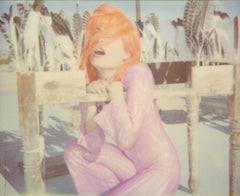
White Trash Beautiful (29 Palms, CA) - Polaroid, Contemporary, 20th Century
Located in Morongo Valley, CA
White Trash Beautiful (29 Palms, CA) - 1999
20x20cm,
Edition of 10, plus 2 Artist Proofs.
Archival C-Print, based on the Polaroid,
Signature label and Certificate.
Artist inven...
Category
1990s Contemporary Nude Photography
Materials
Archival Paper, Photographic Paper, C Print, Color, Polaroid
When there's nobody worth talking to.
Located in Carmel-by-the-Sea, CA
In 1981 Maggie Taylor (b. 1961) began to photograph while she was a student at Yale University majoring in philosophy. She primarily took photographs of suburban landscapes and stran...
Category
21st Century and Contemporary Surrealist Color Photography
Materials
Digital Pigment
Au Bar
Located in Los Angeles, CA
PHILIPPE NOYER
"AU BAR"
WATERCOLOR, SIGNED
FRANCE, C.1960S
25.5 X 19.5 INCHES
Philippe Henri Noyer
1917-1985
Philippe Henri Noyer was born on June 28, 1917 in Lyons, France. After a traditional education at the elite Ecole des Roches, Noyer enrolled in the Ecole des Beaux Arts in Lyon. Next he moved to Paris, where he worked in decorative arts and advertising. It was during this time, he discovered his talent for oil painting, officially starting his painting career in 1943.
That same year, Noyer met the famed Parisian art deal, Emmanuel David, who would promote his work and career. Noyer produced many portraits, for which he quickly gained an international reputation, but he also painted dream figures in rural or maritime settings, compositions that were classical in technique but surreal in concept. In 1947, Noyer held his first one-man show at the prestigious Drouant-David Gallery in Paris.
In 1949 the gallery consigned twenty of Noyer’s paintings to an American art dealer who had agreed to organize an exhibition of them in the United States. However the American dealer sold the paintings at cost, in order cover a gambling debt, to Robert Goldstein...
Category
1960s Art Deco Figurative Paintings
Materials
Watercolor
$1,375 Sale Price
26% Off
Nude Boy In The Forest, 19th Century
By Henry Scott Tuke
Located in Blackwater, GB
Nude Boy In The Forest, 19th Century
inscribed to "TUKE"
Early 20th Century portrait of a nude boy in a forest, oil on canvas inscribed "Tuke" to the plaque. Sunlit woodland sc...
Category
Early 20th Century Nude Paintings
Materials
Oil, Canvas
$3,642 Sale Price
25% Off
Juggler / - Artistic naturalness -
Located in Berlin, DE
Claire Jeanne Robertine Colinet (1880 Brussels - 1950 Asnières-sur-Seine), Juggler, around 1920. Brownish patinated bronze with gilded balls on a round, multi-profiled stone base (10...
Category
1920s Art Deco Nude Sculptures
Materials
Bronze
HYMN SINGER / THE MINSTREL / BURL IVES -- Large Benton
Located in Santa Monica, CA
THOMAS HART BENTON (1890- 1975)
HYMN SINGER / THE MINSTREL (Portrait of Burl Ives) 1950 (Fath 74)
Lithograph signed with full signature “Thomas H. Benton” A large image, 15 ¾ x 12 i...
Category
1950s American Realist Figurative Prints
Materials
Lithograph
Clown, Medrano Circus, France
By Benton Scott
Located in San Francisco, CA
This artwork titled "Clown, Medrano Circus, France" c.1960 is an oil painting on canvas by noted American artist Benton Scott, 1907-1983. It is signed at the lower left side by the a...
Category
Mid-20th Century American Impressionist Figurative Paintings
Materials
Oil