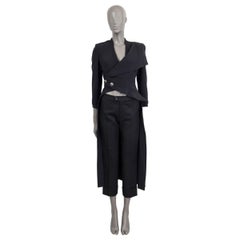
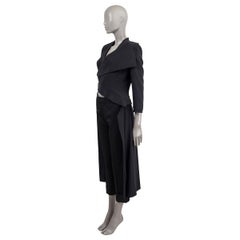
ALEXANDER MCQUEEN black wool ASYMMETRIC TAIL Coat Jacket 40 S
By Alexander McQueen
Located in Zürich, CH
100% authentic Alexander McQueen long asymmetrical tuxedo blazer in black acetate (50%) and viscose
Category
ALEXANDER MCQUEEN black wool ASYMMETRIC TAIL Coat Jacket 40 S
By Alexander McQueen
Located in Zürich, CH
100% authentic Alexander McQueen long asymmetrical tuxedo blazer in black acetate (50%) and viscose
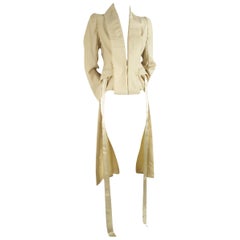
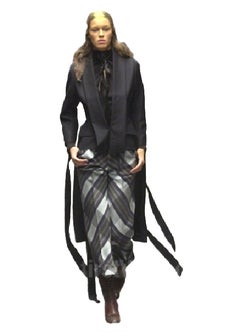
Alexander McQueen 1999 Collection Tail Coat
By Alexander McQueen
Located in Bath, GB
Alexander McQueen 1999 Collection Runway Tail Coat in Ivory Labelled size 42
British fashion designer Lee Alexander McQueen, the original creative engine behind the Alexander McQueen label, was beloved for his expert tailoring and theatrical runway shows. After his suicide in 2010, fans left tributes to the man and his talents outside Alexander McQueen boutiques worldwide. Record-breaking crowds visited the posthumous retrospective of the designer’s work at the Metropolitan Museum of Art in New York City and the Victoria and Albert in London.
The inspirations for vintage Alexander McQueen bags, dresses, jackets and other items came from many quarters — film, music, current events, history, his heritage and fashions of the past. The designer's runway presentations were not just displays of clothing but were personal expressions of the zeitgeist, often touching on our cultural anxieties and concerns. McQueen’s own thoughts and feelings about love, death, gender, genocide, colonialism, global warming and the extinction of species all appear in his pieces.
McQueen certainly shook up fashion; he was a born Rottweiler. His upbringing on a council estate in north London played a part, but his family was close and supportive, not dysfunctional. He was proud of his Scottish heritage: He was a defiant fashion warrior. His historical themes and shows — such as “Highland Rape,” 2002, which was inspired by England’s “rape of Scotland,” as McQueen called it — always invoked powerful reactions from his audience of fashion pros.
“What you see in the work is the person himself. And my heart is in my work,” McQueen told Harper’s Bazaar in 2007.
It is perhaps this heart, and the heart’s exposure, that drew the crowds and made McQueen's creations both popular and emotionally resonant. Because the work was personal and thus layered with feeling, the motifs — decorative embellishments and fabric choices — have meaning. In other words, in McQueen’s oeuvre, plaid is more than simply a pattern.
Find vintage Alexander McQueen fashion and accessories — including the designer's coveted bags and comfortable, stretchy jersey knit dresses and gowns — on 1stDibs.
There is a stylish garment for anywhere in the universe, and on 1stDibs, finding the right vintage and designer coats and outerwear doesn’t have to feel like a journey to the ends of the earth.
Outerwear includes many types of garments aside from the standard coat. From capes, gilets, jackets and cloaks to raincoats and kimonos, fashion designers have long been preparing us for the elements, and outerwear in general has changed and evolved significantly over time.
A lot of the coat styles in our closets, such as the durable Navy-inspired peacoat, were popularized by soldiers who battled aggressive climes in their regulation field jackets and parkas — indeed, keeping troopers comfortable guided the design of the military surplus garments that have often become buzzy fashion trends. Even today, owing to the likes of Burberry, a luxury fashion house that is among the originators of the trench coat worn by British officers during World War I, the trench remains a timeless style, now available in a range of colors that can be worn throughout the year.
While women in late 1700s England donned an adaptation of a men’s jacket called a spencer — the likeness of which could be spotted in Ralph Lauren’s ready-to-wear collections hundreds of years later — designers hadn’t widely been crafting outerwear specifically for women. Generally, the outerwear of choice for the fashionable, well-heeled lady prior to the 1800s usually consisted of capes, shawls and stoles. By the mid-1800s, women were wearing overcoats with multiple layered collars popularized by men (often called a Garrick coat in England), and as women entered the workforce during the 1920s, hemlines climbed, jewelry was prominent and fashion conventions were broken across the board.
Thankfully, the 20th century’s tradition of challenging the norm continues steadfast in today’s outerwear fashions. Contemporary designers certainly find inspiration in 1960s and 1970s coats by Pierre Cardin, Yves Saint Laurent and Bonnie Cashin, but unisex options abound in modern creations that take both function and style into account. Find what inspires you in the full range of vintage and designer coats and outerwear available for sale on 1stDibs.