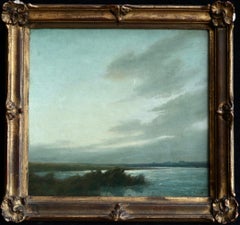
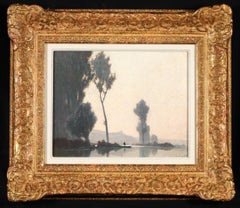
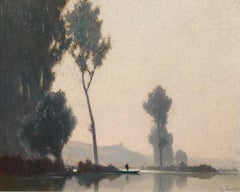
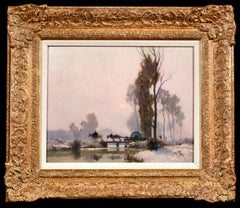
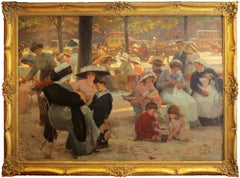
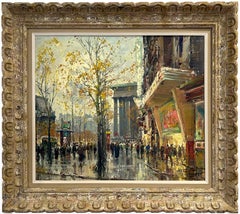
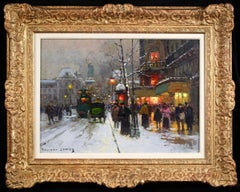
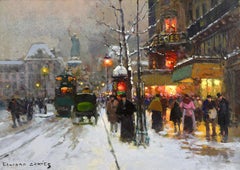
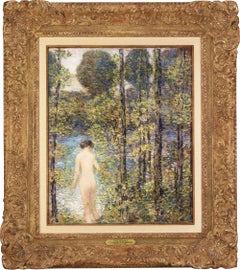
Alexandre Jacob For Sale on 1stDibs
You are likely to find exactly the alexandre jacob you’re looking for on 1stDibs, as there is a broad range for sale. Find
Post-Impressionist versions now, or shop for
Post-Impressionist creations for a more modern example of these cherished works. Adding a alexandre jacob to a room that is mostly decorated in warm neutral tones can yield a welcome change — find a piece on 1stDibs that incorporates elements of
gray,
beige,
black,
brown and more. Artworks like these of any era or style can make for thoughtful decor in any space, but a selection from our variety of those made in
oil paint,
paint and
panel can add an especially memorable touch. If space is limited, you can find a small alexandre jacob measuring 7 high and 6 wide, while our inventory also includes works up to 26 across to better suit those in the market for a large alexandre jacob.
How Much is a Alexandre Jacob?
The average selling price for a alexandre jacob we offer is $6,339, while they’re typically $3,868 on the low end and $14,254 for the highest priced.
Alexandre Louis Jacob for sale on 1stDibs
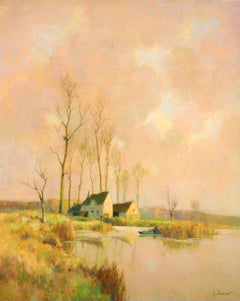
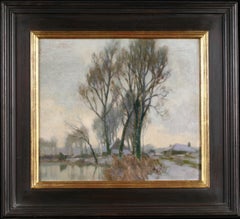
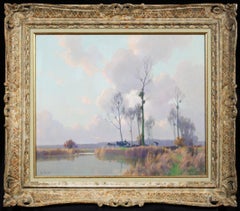
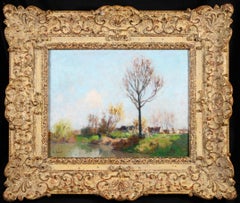
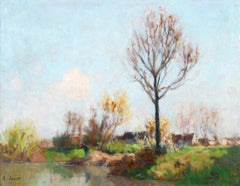
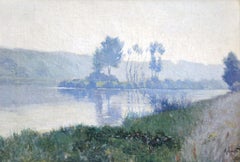
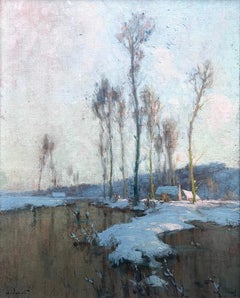
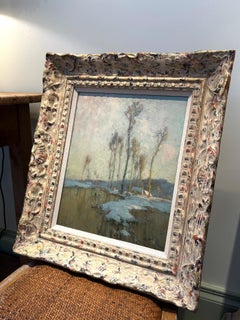
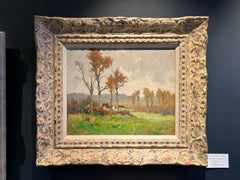
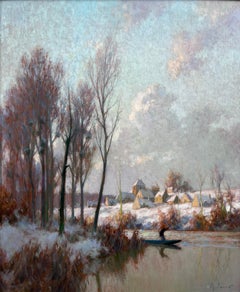
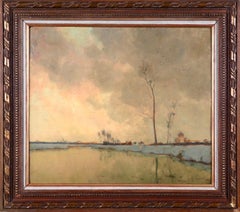
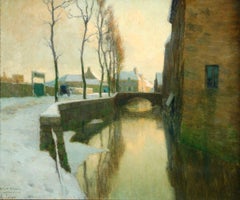
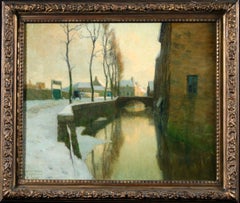
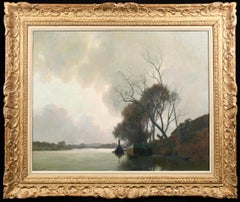
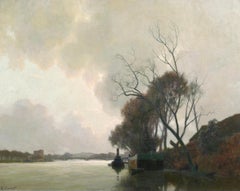
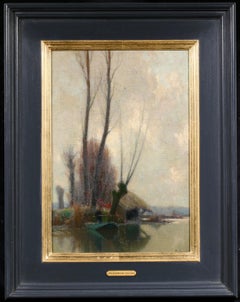
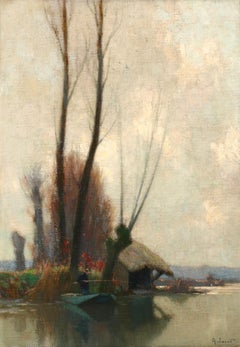
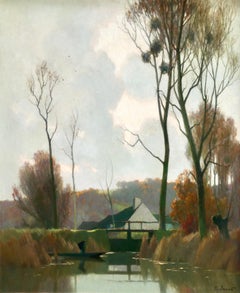
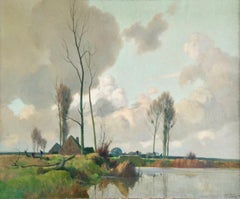
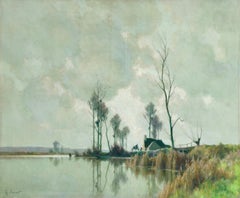
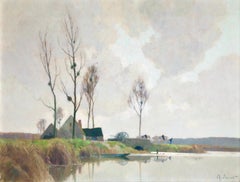
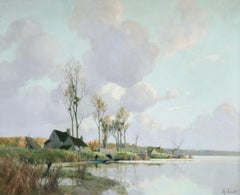
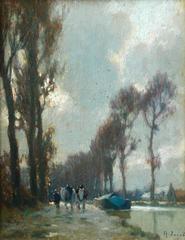
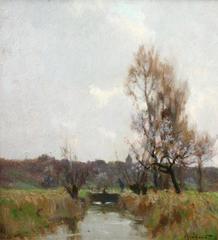
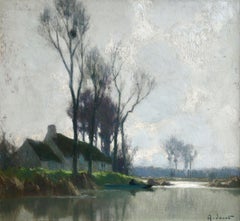
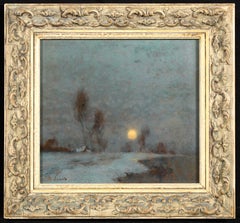
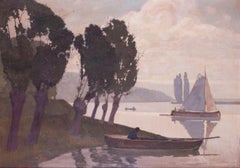
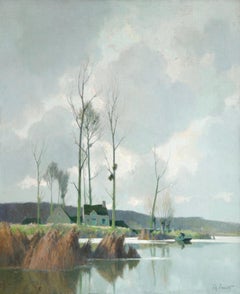
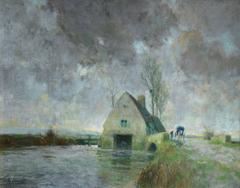
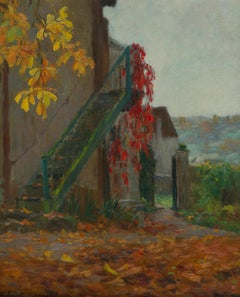
Alexandre Jacob was born in Paris in 1876. He undertook his formal artistic training at the Académie des Beaux-Arts with Eugene Claude. Jacob lived just outside Paris in Asnières-sur-Seine, situated on the banks of the river Seine.
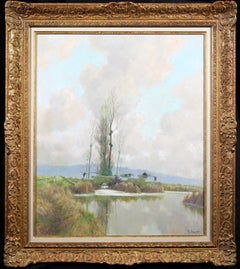
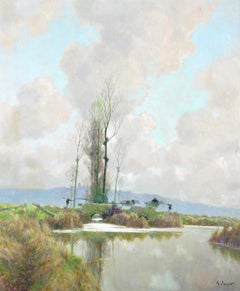
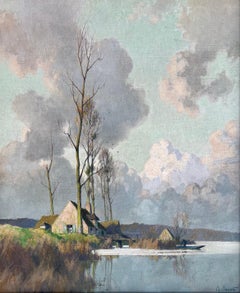
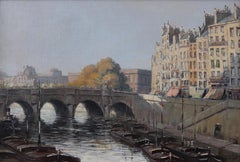
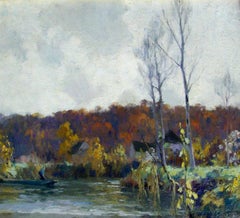
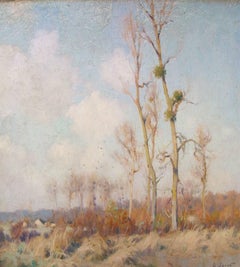
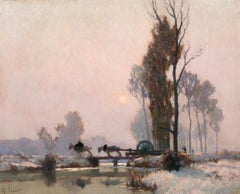
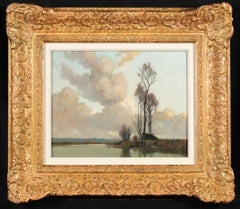
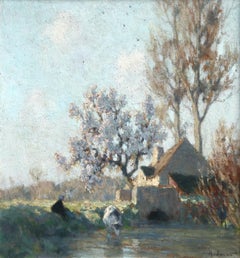
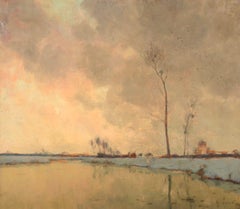
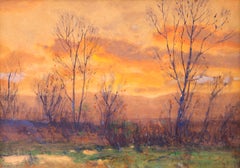
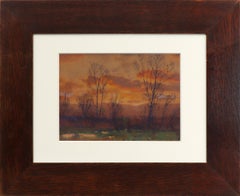
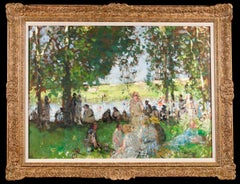
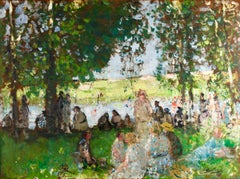
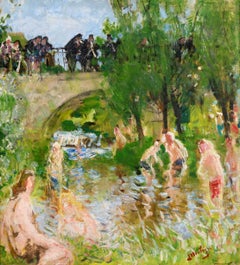
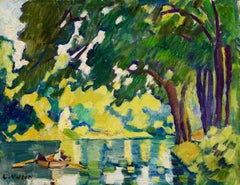
Jacob is best known for his atmospheric and luminous landscapes. He gained his rare understanding and love for nature through studied inspection, transferring his observations skillfully on to canvas. His masterful evocation of light, atmosphere, colour and sense of place are remarkable and have a true ability to transport the viewer to the very banks of the River Seine and River Marne where Jacob would patiently wait, paintbrush poised to capture his unique visions of the French countryside.
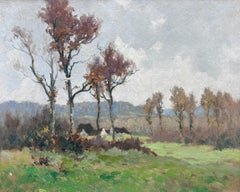
Jacob was a master at capturing the French landscape as it subtly changed between the seasons. In autumn, his paintings contain a golden aura, in winter, a soft creamy light diffuses across the landscape with hues of pinks and blues reflected in snow on the river banks and his depictions of springtime resonate with the crisp morning light. Jacob preferred to paint in the quiet moments after a storm had passed, and each of his landscapes have a unique atmosphere of calm and tranquility, achieved by the still watery reflections in the foreground.
Jacob debuted at the Paris Salon of 1899. He was awarded the Hors Concours at the Salon of 1908 at the Exposition Annuelle des Beaux-Arts and his work was exhibited annually at both the Salon d’Automne and the prestigious Salon d’Hiver, for which he gained numerous awards and distinctions which led to his election as a member of the Jury of the Paris Salon. Along with his close friend Édouard Léon Cortès, Jacob was a member of L’Union des Beaux-Arts de Lagny, formed in 1926.
Herbert Fuller, of Gladwell & Company, London, first came across Jacob’s work in the Paris Salon after the Second World War, and it was at this point that Jacob’s work began to attract the international clientele of this historic art gallery in the City of London. Initially Jacob was represented by Galerie Haussmann in Paris, but as his popularity grew, Gladwell & Company acquired work directly from the artist from the early 1960’s until Jacob’s death in 1972. In recent years, Gladwell & Patterson have had the good fortune to collect some unique drawings by Jacob which the artist would send to his close friends at Christmas and New Year.
Jacob’s work has featured in numerous exhibitions in France, South America, United States and throughout Europe. His paintings have been acquired by the French Government, the City of Paris, The Department Seine and the Conseil General de la Seine. Jacob’s work also features in many distinguished private collections and museums across Europe, including Troyes, St. Etienne, Fougeres, Paris, St. Nazair and St. Quentin.
Since Jacob’s death, three generations of the Fuller family of Gladwell & Patterson have continued to place Jacob’s illuminating oil paintings in illustrious private collections worldwide. In recent years Jacob’s paintings have risen in popularity.
Finding the Right Landscape-paintings for You
It could be argued that cave walls were the canvases for the world’s first landscape paintings, which depict and elevate natural scenery through art, but there is a richer history to consider.
The Netherlands was home to landscapes as a major theme in painting as early as the 1500s, and ink-on-silk paintings in China featured mountains and large bodies of water as far back as the third century. Greeks created vast wall paintings that depicted landscapes and grandiose garden scenes, while in the late 15th century and early 16th century, landscapes were increasingly the subject of watercolor works by the likes of Leonardo da Vinci and Fra Bartolomeo.
The popularity of religious paintings eventually declined altogether, and by the early 19th century, painters of classical landscapes took to painting out-of-doors (plein-air painting). Paintings of natural scenery were increasingly realistic but romanticized too. Into the 20th century, landscapes remained a major theme for many artists, and while the term “landscape painting” may call to mind images of lush, grassy fields and open seascapes, the genre is characterized by more variety, colors and diverse styles than you may think. Painters working in the photorealist style of landscape painting, for example, seek to create works so lifelike that you may confuse their paint for camera pixels. But if you’re shopping for art to outfit an important room, the work needs to be something with a bit of gravitas (and the right frame is important, too).
Adding a landscape painting to your home can introduce peace and serenity within the confines of your own space. (Some may think of it as an aspirational window of sorts rather than a canvas.) Abstract landscape paintings by the likes of Korean painter Seungyoon Choi or Georgia-based artist Katherine Sandoz, on the other hand, bring pops of color and movement into a room. These landscapes refuse to serve as a background. Elsewhere, Adam Straus’s technology-inspired paintings highlight how our extreme involvement with our devices has removed us from the glory of the world around us. Influenced by modern life and steeped in social commentary, Straus’s landscape paintings make us see our surroundings anew.
Whether you’re seeking works by the world’s most notable names or those authored by underground legends, find a vast collection of landscape paintings on 1stDibs.