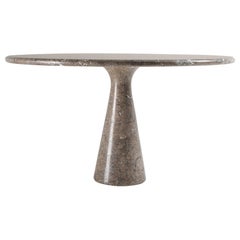
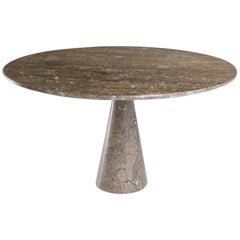
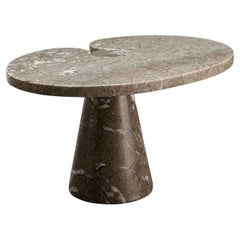
Italian architect, designer, teacher and urban planner Angelo Mangiarotti was a leading light in the international design community from the 1960s onward. While he was an adherent of the rationalist principles of purity of line and simplicity of construction, he sought to imbue his designs for coffee tables, dining chairs, sconces and other furnishings with a sense of character and lightness of spirit that was often lacking in late-20th-century modernist architecture and design.
Born in Milan, Mangiarotti studied architecture at Milan Polytechnic, graduating in 1948. Five years later, he won a visiting professorship at the Illinois Institute of Technology — beginning a peripatetic academic career that would see him teaching in numerous Italian institutions as well as in schools as far afield as Hawaii and Australia. He worked with Bauhaus eminences Ludwig Mies van der Rohe and met such greats as Frank Lloyd Wright and Walter Gropius. He returned to Italy in 1955 and would go on to work on numerous industrial, residential, commercial and civic projects in his home country, most notably a group of six railway stations in Milan.
As a designer, Mangiarotti and the development of his career embodies the evolution of modernism in the latter decades of the 20th century. In the late 1950s and early ’60s, after early experiments in plywood furniture and one-piece foam-core seating — including the 1110 lounge chair for Cassina — Mangiarotti began to design using more classic materials, from delicate, curvaceous blown-glass table lamps for Artemide to chandeliers with crystal links for Vistosi.
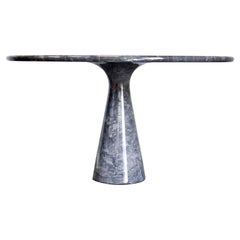
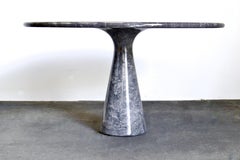
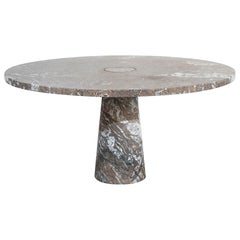
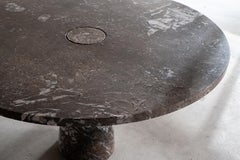
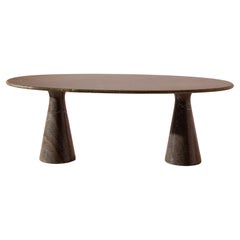
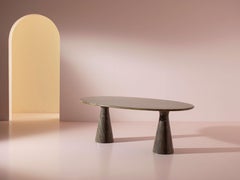
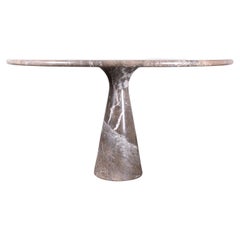
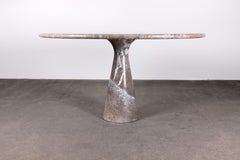
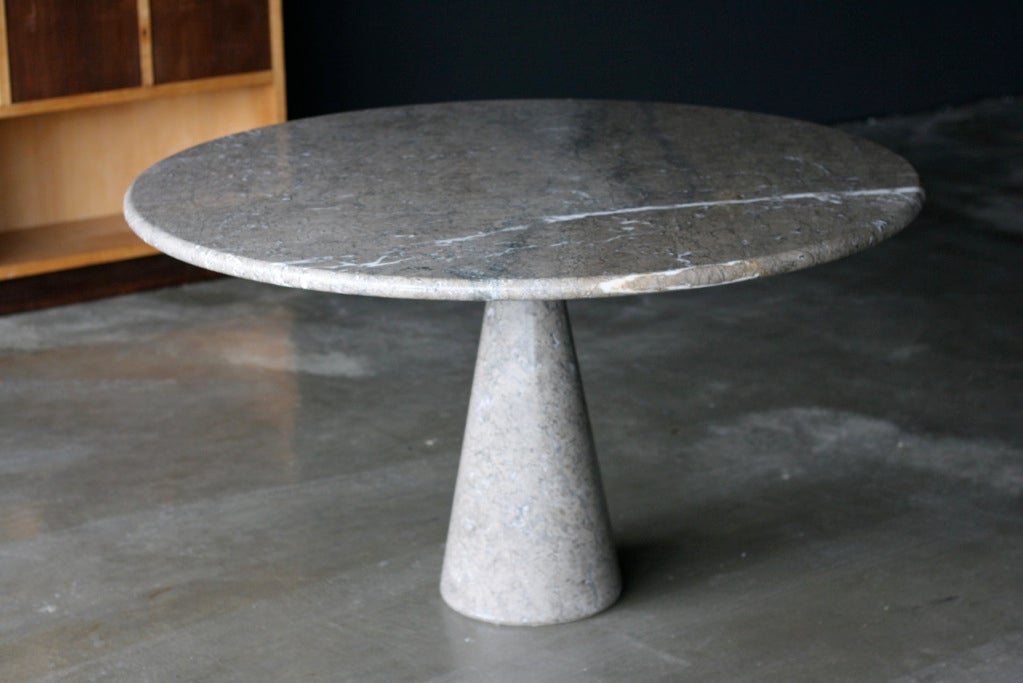
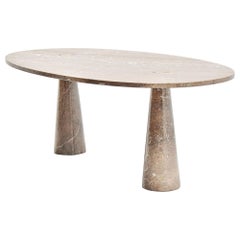
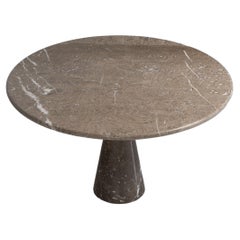
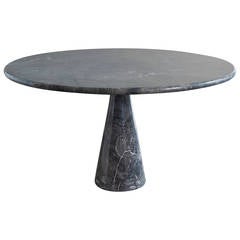
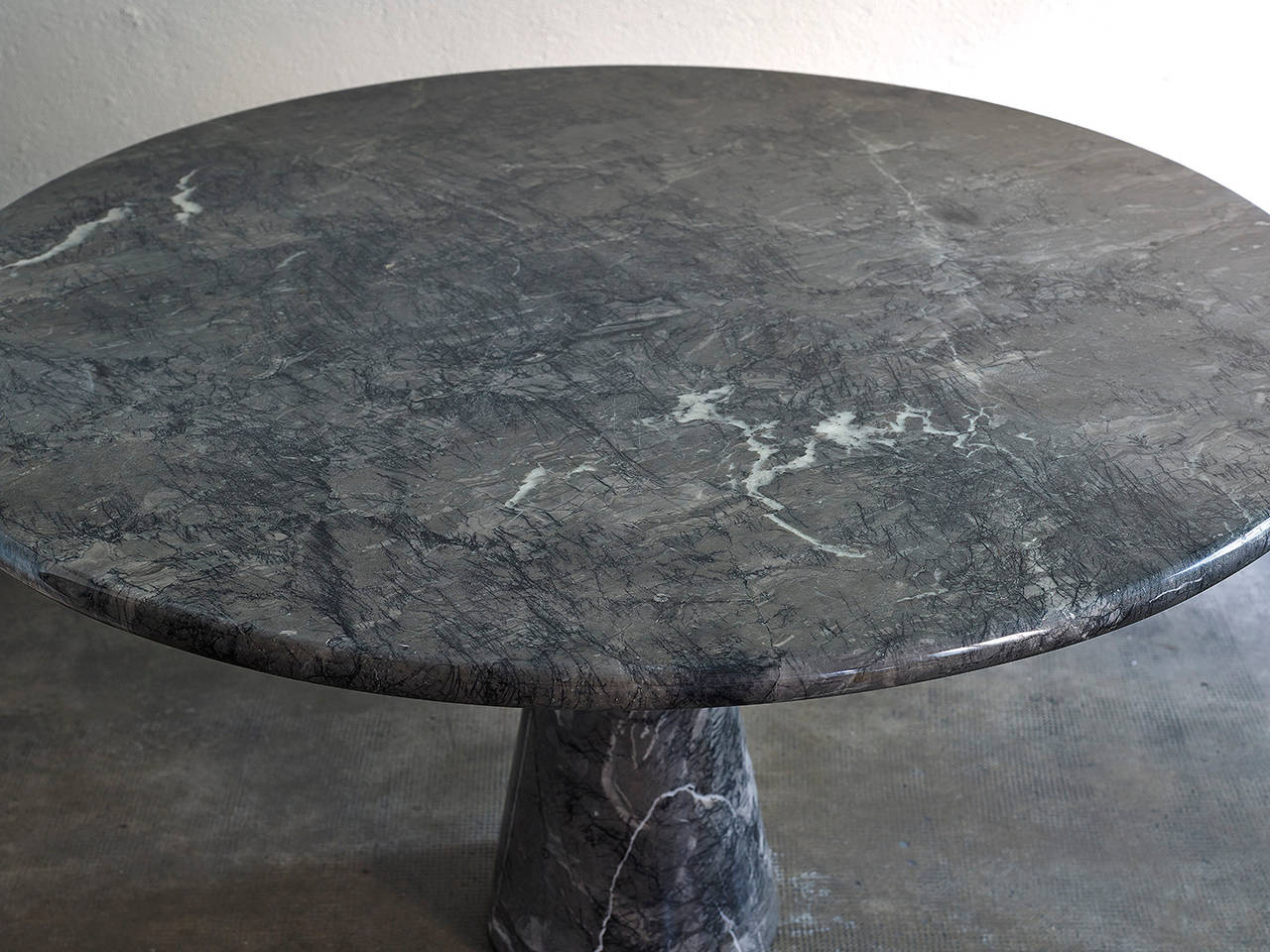
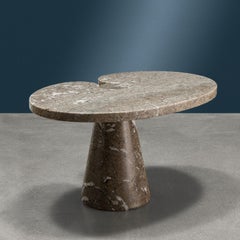
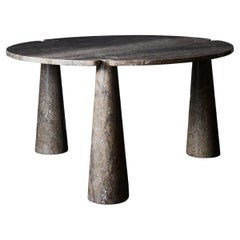
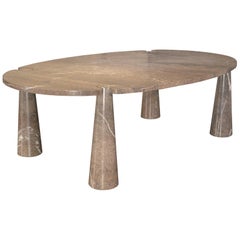
In 1971, Mangiarotti introduced what became his signature designs: a series of tables in marble and other stones that featured “gravity joints,” their legs held in place by the weight of the tabletop. Tables in his Eros collection have muscular proportions that anticipate the robust, overscaled lines of postmodern works that would appear 10 years later: His Eccentrico table, for example, is a striking assemblage in marble featuring a top that is cantilevered dramatically on a canted columnar base.
But simplicity and practicality were consistently the primary watchwords of Mangiarotti’s designs. The purity and elegance of the objects he created offer a graceful counterpoint to a traditional decor, yet they have a singular sculptural presence that allows them to stand out powerfully in a modern interior.
Find vintage Angelo Mangiarotti furniture on 1stDibs.
Antique and vintage dining room tables have long been the anchor of the home's most social room. The round pedestal and long banquet forms most collected today trace back to the 18th and 19th centuries, when the dining room itself first came into fashion.
Styles to Know
Round and oval tables suit smaller or open-plan rooms, while rectangular pedestal and trestle tables remain the standard for larger, more formal spaces. A credenza adds extra serving storage nearby, and a vintage wall mirror overhead opens up the room. For layout ideas, browse 20 dining rooms arranged for entertaining.
How to Choose the Right Vintage Dining Table
A dining table is usually the largest piece in the room, which makes delivery details worth confirming: White Glove service, disassembly options, and the table's full length, leaves included, measured against the space you have. Every table comes from a vetted 1stDibs seller, with era, designer and condition detailed, backed by the 1stDibs Promise.