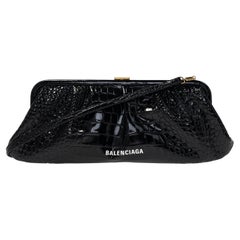
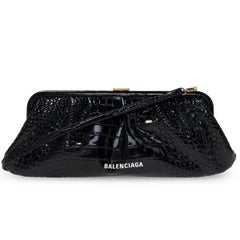
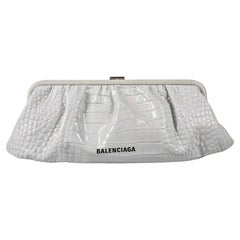
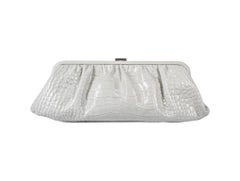
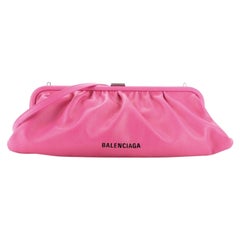
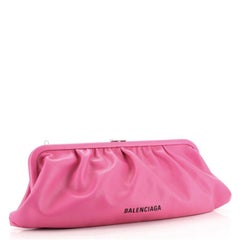
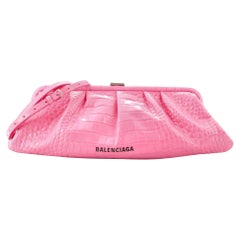
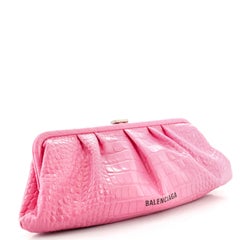
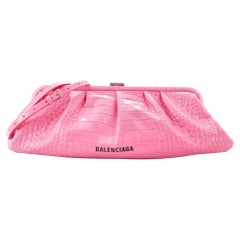
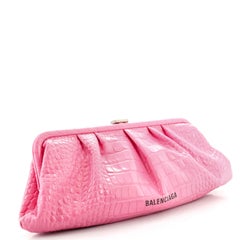
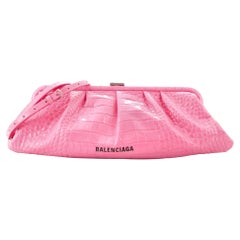
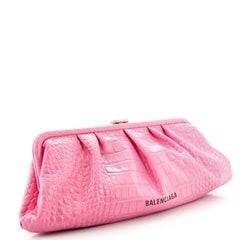
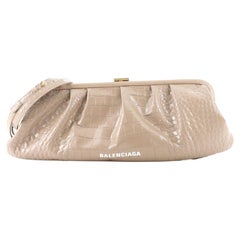
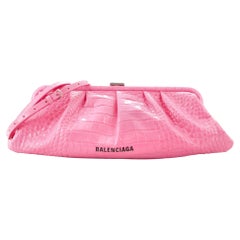
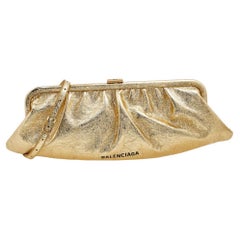
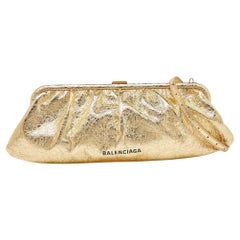
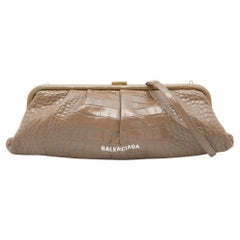
Starting as a modest boutique, Balenciaga evolved to transform the landscape of women’s fashion with shapes and contours during the middle of the 20th century that were nothing less than groundbreaking. Today, the brand is as venturesome as ever and is well known for its shoes, handbags, sneakers, streetwear and other clothing and accessories.
Though he was born in the quiet fishing village of Getaria in Spain’s Basque region, Cristóbal Balenciaga (1895–1972) was destined to reshape modern fashion. As a child, he worked alongside his seamstress mother. Showing immense talent, he earned commissions as a teenager from local patron Marquesa de Casa Torres, who paid for his tailoring education in Madrid. In 1917, he established his first haute couture house — named Eisa, for his mother — in the trendy resort town San Sebastián. He soon followed it with boutiques in Madrid and Barcelona, drawing such clientele as the Spanish royal family.
When the Spanish Civil War put a hold on his prospects in Spain, the designer moved to Paris, opening a house on Avenue Georges V in 1937. There, Balenciaga rubbed elbows with fashion greats like Coco Chanel and Elsa Schiaparelli and quickly won over clients like Gloria Guinness, Pauline de Rothschild and Wallis Simpson, Duchess of Windsor.
As a couturier, Balenciaga drew from his Spanish heritage for ideas, riffing on everything from matador costumes and flamenco dresses to the paintings of Diego Velázquez, whose portraits of Spanish princesses famously inspired Balenciaga’s Infanta gown.
An expert tailor, he experimented with sculptural silhouettes that didn’t follow the body. Some of his notable designs include the 1953 balloon jacket, and from 1957, the cocoon coat, the baby-doll dress and the sack dress, which he popularized with his good friend designer Hubert de Givenchy. All of these could be considered not just the masterpieces of haute couture, but also objets d’art in their own right, leading to Balenciaga’s nickname, “The Master.”
Balenciaga continued designing until 1968, when he retired after three decades of influential work and his fashion house went dormant. The rights to Balenciaga were acquired by Jacques Bogart S.A. in 1986. Under designer Michel Goma, who focused on ready-to-wear, the brand experienced a resurgence, with his first collection introduced in 1987.
The brand returned to high fashion with the arrival of designer Josephus Thimister in 1992. It has since been led by a series of creative directors who have paid homage to Balenciaga’s iconic designs, including Nicolas Ghesquière, Alexander Wang and, most recently, Demna Gvasalia. In 2011, a museum celebrating Balenciaga’s legacy opened in his hometown in Spain, commemorating where it all began.
On 1stDibs, find vintage Balenciaga crossbody bags, tote bags, day dresses, shirts and more.
Vintage and designer clutches are the perfect size to hold exactly what you need. While they’re typically small purses, Chanel clutches, Gucci clutches and other kinds of clutches can make a big impact on an outfit. They also have a fascinating history.
Clutches are handbags without handles that are carried by hand. One of the oldest known clutches was made in Mosul, Iraq, in the 14th century. It was made of brass and inlaid with gold and silver in geometric patterns. Although the loops on the side indicate it likely had handles to wear as a shoulder bag, manuscripts show a similar example being carried by hand.
Fashion designers often made clutches to reflect the wealth of the holder. In Medieval Europe, men and women securely carried items in small bags hidden inside their clothing as tie-on pockets. Women carried their possessions, scented and secreted, in the folds of their voluminous skirts. Pockets eventually became integral to garment design, but bigger sacks were needed to carry books and documents. When women’s clothing became lighter, consisting of fewer layers, it could no longer easily hide their handbags or pockets.
Changes in fashion led to handbags becoming a popular fashion accessory, and today, even as we’re overwhelmed by options from a variety of high-end brands, iconic luxury handbags still rule. The highly decorative bags of the 19th century faded from popularity when women entered the workforce and the clutch became the dominant business accessory. Flappers in the 1920s, clad in the dazzling Art Deco jewelry of the era, also loved the freedom of carrying clutches as they didn’t get in the way of dancing.
The simplicity of the clutch remains stylish today. Once made to be carried on special occasions, they are now an accessory for everyday use. Find a collection of vintage and designer clutches from Dior, Hermès, Louis Vuitton and more on 1stDibs.