Bow Porcelain Orphaned Coffee Cup, Famille Rose Peony, circa 1755
By Bow Porcelain
Located in London, GB
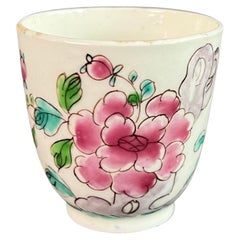
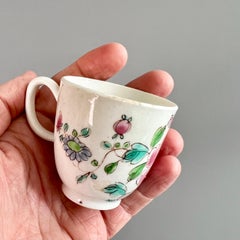
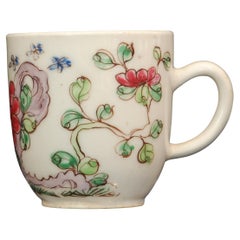
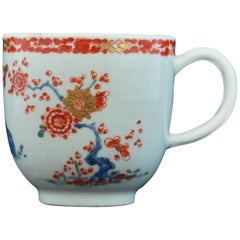
This is a very charming orphaned coffee cup made by the Bow Porcelain factory in about 1755. The
Antique 1750s English Rococo Tea Sets
Porcelain
Bow Porcelain Orphaned Coffee Cup, Famille Rose Peony, circa 1755
By Bow Porcelain
Located in London, GB
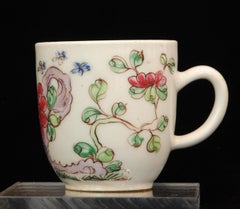
This is a very charming orphaned coffee cup made by the Bow Porcelain factory in about 1755. The
Porcelain
Bow Porcelain Polychrome Coffee Cup
By Bow Porcelain
Located in Leeds, GB
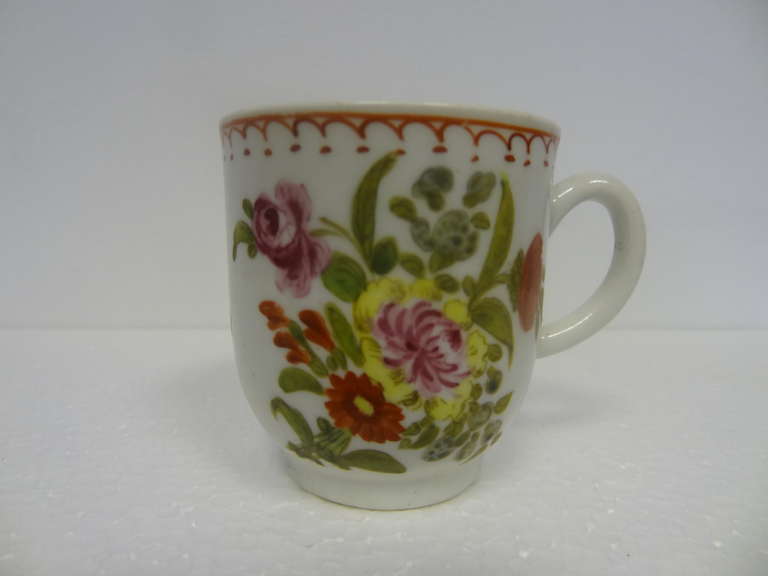
A fine example of a Bow coffee cup, a slightly everted rim, the arcaded border and the vibrantly
Coffee Cup, Bow Porcelain Factory, circa 1749
By Bow Porcelain
Located in Melbourne, Victoria
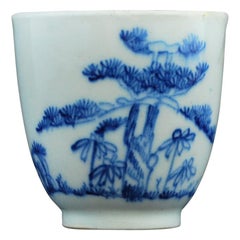
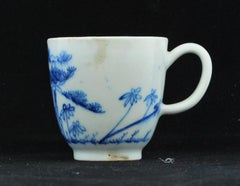
Of Chinese export form with loop handle; the body imaginatively painted in a bright ‘early blue’ underglaze with pine, rock and bamboo after the Chinese. Yellow tinged body; clear gl...
Porcelain
Coffee Cup with Famille Rose decoration, Bow Porcelain, circa 1750
By Bow Porcelain
Located in Melbourne, Victoria
A direct copy of a Chinese shape, decorated with chinoiserie painting of typical motifs in the famille rose palette.
Porcelain
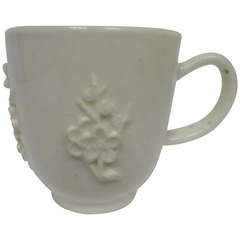
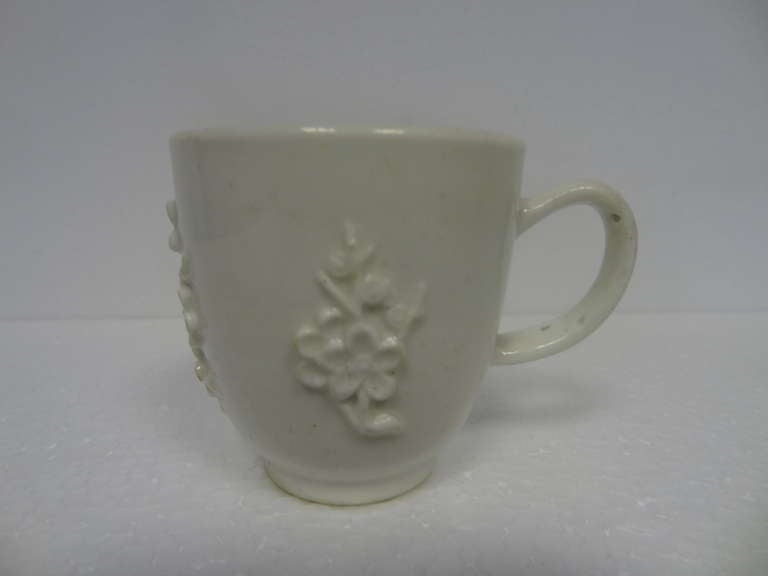
Bow Blanc de Chine Cup
By Bow Porcelain
Located in Leeds, GB
A very elegant Bow blanc de chine coffee cup.The quality of the moulding of the prunus leaf
Coffee Cup, Kakiemon Decoration, Bow Porcelain Factory, circa 1753
By Bow Porcelain
Located in Melbourne, Victoria
A common shape with uncommon decoration a coffee cup, painted after the Kakiemon with the two quail
Porcelain
19th Century French Faience Floral Plate
Located in Pearland, TX
A lovely antique late 18th-century to early 19th-century French faience plate with beautiful hand painted flowers and a scalloped rim. It would look fabulous displayed on a wall or s...
Faience
$1,080Sale Price / set|55% Off
H 7 in W 13.25 in D 10.88 in
Pair of Late 19th Century Meissen Vegetable Tureens
By Meissen Porcelain
Located in Chapel Hill, NC
Pair of covered vegetable tureens with gilt scalloped edges (minor wear) by Meissen in the scattered flowers or streublumen pattern. Acanthus gilt handles and twist tops. Crossed swo...
Ceramic
Blue and White Delft Handled Chinoiserie Vase
By Delft
Located in New York, NY
Blue and white Delft handled chinoiserie vase. Antique Dutch porcelain vase with rich blue flowers and chinoiserie fencing in a lustrous glaze; with scrolled handles at side on shape...
Ceramic
$1,023
H 7.75 in W 10.75 in D 5.5 in
Antique Chinese Export Porcelain Blue White Chien Lung Soup Tureen Centerpiece
Located in Dublin, Ireland
A Very Fine & Rare Example of an Eighteenth-Century Chinese Porcelain Export Circular Lidded twin handle blue and white Deep Dish Tureen or Centerpiece Bowl of generous proportions a...
Ceramic, Porcelain
Early 19th Century, Soup Bowl, French Hand Painted Sèvres Porcelain
By Manufacture Nationale de Sèvres
Located in Lantau, HK
Soup bowl, remarkably hand painted flowers decor with delicate and vibrant colors, elaborate gilded pattern throughout Marked and dated Sèvres, 1834. Measures: Bowl 12.5 x 7.5 cm...
Porcelain
Herend Hungary Porcelain "Printemps Pattern" Tureen with Handles
By Herend
Located in Delft, NL
Herend Hungary Porcelain "Printemps pattern" tureen with handles Herend Hungary tureen, hand painted Porcelain with the Printemps pattern with lemon on top of the lid, floral decor ...
Porcelain
18th Century French Faience Plate from La Rochelle
Located in Winter Park, FL
A good 18th century French Faience from La Rochelle with Primitive hand painted decor. All in good condition with chips around the edges. No hairline and no restorations noted. Circa...
Ceramic
Antique Chinese Export Porcelain Famille Rose Platter
Located in Bradenton, FL
A large Chinese Export Famille Rose charger with pink lotus and other flowers. Painted in bright vivid colors of blues, reds and yellow accents.
Porcelain
Flora Danica Lidded Ginger Jar by Royal Copenhagen
By Royal Copenhagen
Located in New Orleans, LA
Crafted by Royal Copenhagen, this lidded ginger jar features one of the most prestigious porcelain patterns ever produced — the coveted Flora Danica pattern. The jar is rarity in the...
Porcelain
$2,784
H 8.27 in W 7.88 in D 4.73 in
19th Century Meissen Porcelain Figure Group of the Drunken Silenus
By Meissen Porcelain
Located in Brighton, Sussex
A Meissen Porcelain figure group of the Drunken Silenus, late 19th century, after the model by F E Meyer, the slumped figure on the back of an ass supported by a bacchic attendant, a...
Porcelain
Spanish Souvenir- mantilla, peineta, gilet
By Francis Luis Mora
Located in Miami, FL
Spanish Souvenir- mantilla, peineta, by Francis Luis Mora is a painting of beautiful Spanish women in traditional dress with their entourage. It's is a museum-quality work. In fact, ...
Canvas, Oil
Ancient Italian Maiolica Tureen Milano, 1770 circa
By Pasquale Rubati, Felice Clerici
Located in Milano, IT
Maiolica tureen “allo struzzo” (ostrich decoration) Milan, Felice Clerici or Pasquale Rubati factory, circa 1750-1780 Measures: 9.25 in x 12.79 in x 10.23 in (cm 23.5 x cm 32.5 x cm ...
Maiolica
Red Cut-To-Clear Glass Vase By Pairpoint
By Pairpoint Glassworks
Located in New Orleans, LA
This remarkably exquisite cut glass vase was crafted by one of the oldest glassworks firms in the United States, Pairpoint. The elaborate cut-to-clear decoration is brilliantly cut f...
Cut Glass
$544 / set
H 0.79 in Dm 9.85 in
Plates in French Faïence Yellow and Green Color, 19th-18th Century Set of 2
Located in Auribeau sur Siagne, FR
The plates are in Faience. It has been made in France, during the 18th-19th century. The pattern decor are Flowers licorn fruits, and the main colors Blue, green and red.
Faience
Italian Maiolica Cup Ferretti Lodi, circa 1770 - 1780
By Antonio Ferretti
Located in Milano, IT
Maiolica puerperal cup Antonio Ferretti Manufacture Lodi, Circa 1770 - 1780 Maiolica polychrome decorated “a piccolo fuoco” (third fire). It measures: 4.3 x 6.8 x 5.3 in (11 x 17...
Maiolica
Today you’re likely to bring out your antique and vintage porcelain in order to dress up your dining table for a special meal.
Porcelain, a durable and nonporous kind of pottery made from clay and stone, was first made in China and spread across the world owing to the trade routes to the Far East established by Dutch and Portuguese merchants. Given its origin, English speakers called porcelain “fine china,” an expression you still might hear today. "Fine" indeed — for over a thousand years, it has been a highly sought-after material.
Meissen Porcelain, one of the first factories to create real porcelain outside Asia, popularized figurine centerpieces during the 18th century in Germany, while works by Capodimonte, a porcelain factory in Italy, are synonymous with flowers and notoriously hard to come by. Modern porcelain houses such as Maison Fragile of Limoges, France — long a hub of private porcelain manufacturing — keep the city’s long tradition alive while collaborating with venturesome contemporary artists such as illustrator Jean-Michel Tixier.
Porcelain is not totally clumsy-guest-proof, but it is surprisingly durable and easy to clean. Its low permeability and hardness have rendered porcelain wares a staple in kitchens and dining rooms as well as a common material for bathroom sinks and dental veneers. While it is tempting to store your porcelain behind closed glass cabinet doors and reserve it only for display, your porcelain dinner plates and serving platters can safely weather the “dangers” of the dining room and be used during meals.
Add different textures and colors to your table with dinner plates and pitchers of ceramic and silver or a porcelain lidded tureen, a serving dish with side handles that is often used for soups. Although porcelain and ceramic are both made in a kiln, porcelain is made with more refined clay and is stronger than ceramic because it is denser.
On 1stDibs, browse an expansive collection of antique and vintage porcelain made in a variety of styles, including Regency, Scandinavian modern and other examples produced during the mid-century era, plus Rococo, which found its inspiration in nature and saw potters crafting animal figurines and integrating organic motifs such as floral patterns in their work.