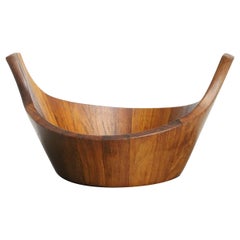
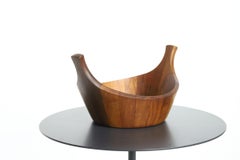
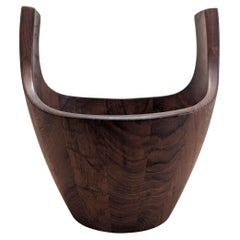
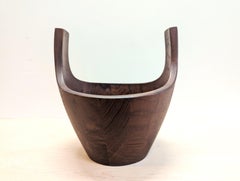
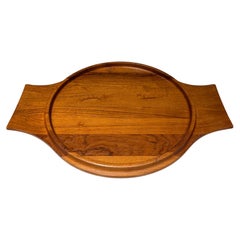
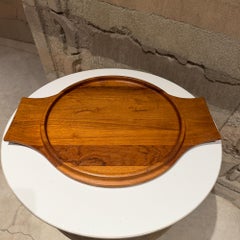
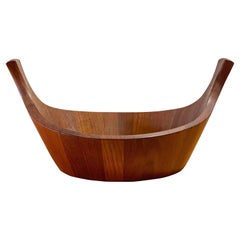
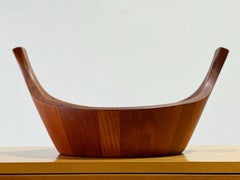
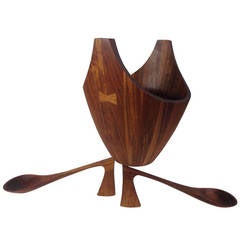
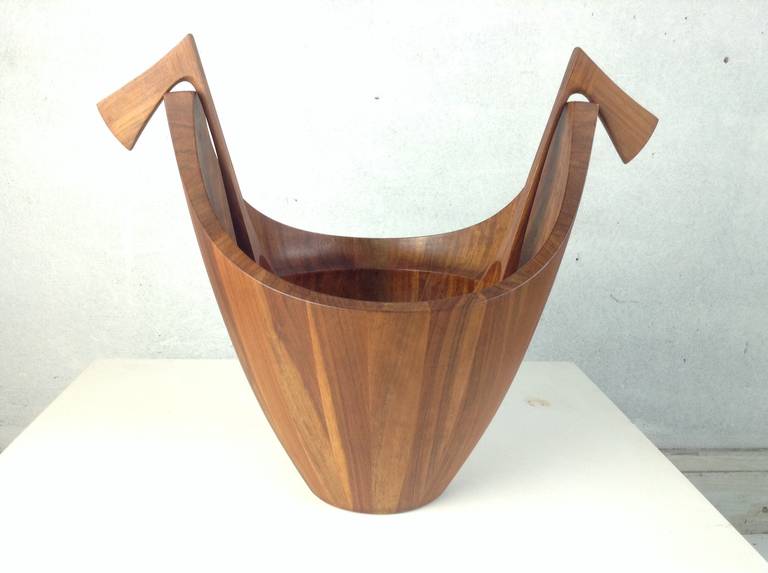
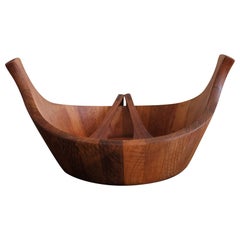
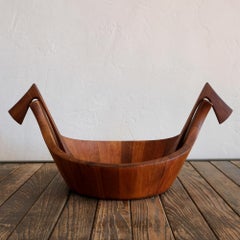
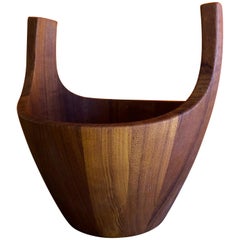
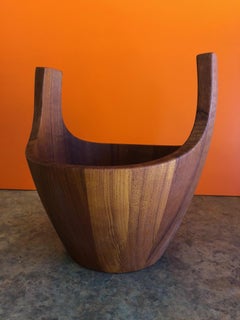
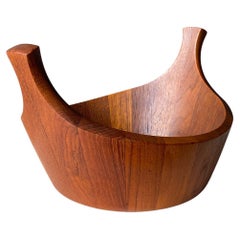
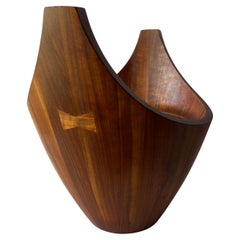
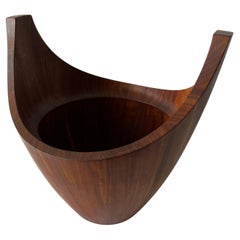
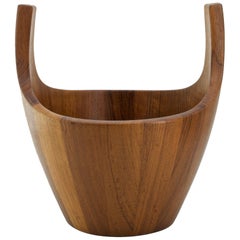
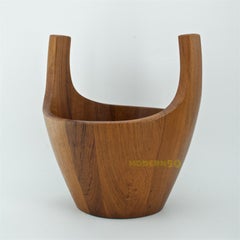
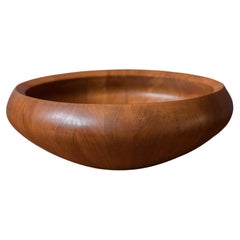
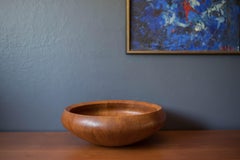
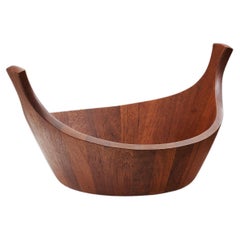
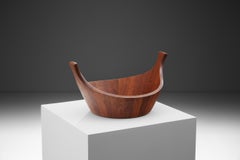
The postwar-era work of Danish sculptor and designer Jens Harald Quistgaard is still exceedingly popular in living rooms, dining rooms and kitchens in the United States, Europe and Japan, particularly in the homes of mid-century design enthusiasts. Having created serving pieces and barware for Dansk Designs for 30 years, Quistgaard produced striking Scandinavian modernist designs that married function with sophisticated form.
After demonstrating artistic talent at a young age, Quistgaard was gifted a forge and anvil so that he could work in his mother’s kitchen. He built toys, jewelry and hunting knives under his father’s tutelage. Later, he spent years learning from local artisans how to produce wood, metal, ceramic and glass models. Quistgaard’s career path solidified during his apprenticeship as a silversmith with legendary Danish silver firm Georg Jensen.
By 1954, Quistgaard had become known for his designs in Denmark when American entrepreneur and businessman, Ted Nierenberg, discovered his work. The two formed a partnership to mass-produce Quistgaard’s wares in New York while the designer remained in Copenhagen.
The long-distance relationship flourished for three decades, during which millions of Quistgaard pieces were manufactured in the factories of Dansk Designs, Nierenberg’s company. Owing primarily to the partnership between Dansk Designs and Quistgaard, many Americans became familiar with Scandinavian modernism. In the postwar era, American tastemakers sold the citizenry on the “Scandinavian dream,” suggesting that, like us, the inhabitants of the Nordic nations valued home, hearth, family and good craftsmanship and design, as well as democracy.
The designs for Quistgaard’s Købenstyle line and other collections during the mid-1950s were revolutionary, with bowls built like barrels and charming, lightweight monochrome tableware in enameled steel. Quistgaard utilized exceptional materials in the creation of his coveted cookware and serving pieces, opting for warm teak and exotic woods and reintroducing steel as a go-to option for kitchen wares.
Quistgaard’s designs won numerous awards and are held in the collections of museums all over the world. His work can be found in the Victoria & Albert Museum, the Louvre, the Museum of Modern Art and elsewhere.
Find vintage Jens Harald Quistgaard decorative objects, serveware and other furniture on 1stDibs.
Your dining room table is a place where stories are shared and personalities shine — why not treat yourself and your guests to the finest antique and vintage glass, silver, ceramics and serveware for your meals?
Just like the people who sit around your table, your serveware has its own stories and will help you create new memories with your friends and loved ones. From ceramic pottery to glass vases, set your table with serving pieces that add even more personality, color and texture to your dining experience.
Invite serveware from around the world to join your table settings. For special occasions, dress up your plates with a striking Imari charger from 19th-century Japan or incorporate Richard Ginori’s Italian porcelain plates into your dining experience. Celebrate the English ritual of afternoon tea with a Japanese tea set and an antique Victorian kettle. No matter how big or small your dining area is, there is room for the stories of many cultures and varied histories, and there are plenty of ways to add pizzazz to your meals.
Add different textures and colors to your table with dinner plates and pitchers of ceramic and silver or a porcelain lidded tureen, a serving dish with side handles that is often used for soups. Although porcelain and ceramic are both made in a kiln, porcelain is made with more refined clay and is more durable than ceramic because it is denser. The latter is ideal for statement pieces — your tall mid-century modern ceramic vase is a guaranteed conversation starter. And while your earthenware or stoneware is maybe better suited to everyday lunches as opposed to the fine bone china you’ve reserved for a holiday meal, handcrafted studio pottery coffee mugs can still be a rich expression of your personal style.
“My motto is ‘Have fun with it,’” says author and celebrated hostess Stephanie Booth Shafran. “It’s yin and yang, high and low, Crate & Barrel with Christofle silver. I like to mix it up — sometimes in the dining room, sometimes on the kitchen banquette, sometimes in the loggia. It transports your guests and makes them feel more comfortable and relaxed.”
Introduce elegance at supper with silver, such as a platter from celebrated Massachusetts silversmith manufacturer Reed and Barton or a regal copper-finish flatware set designed by International Silver Company, another New England company that was incorporated in Meriden, Connecticut, in 1898. By then, Meriden had already earned the nickname “Silver City” for its position as a major hub of silver manufacturing.
At the bar, try a vintage wine cooler to keep bottles cool before serving or an Art Deco decanter and whiskey set for after-dinner drinks — there are many possibilities and no wrong answers for tableware, barware and serveware. Explore an expansive collection of antique and vintage glass, ceramics, silver and serveware today on 1stDibs.