The Hamptons

to
5,214
974,724
729,070
5,840
3,942
1,621
1,299
1,263
1,242
1,164
713
634
572
487
378
333
201
100
86
57
31
26
23
19
19
19
16
16
10
9
6
4
4
4
3
3
3
2
2
1
307
206
169
102
76
Marc Chagall, Paradise II, from Drawings for the Bible, 1960

Marc Chagall, Paradise II, from Drawings for the Bible, 1960

By Marc Chagall

Located in Southampton, NY

This exquisite lithograph by Marc Chagall (1887–1985), titled Paradise II (Paradise II), from Marc Chagall, Dessins Pour La Bible (Drawings for the Bible), Verve: Revue Artistique et...

Category

1960s Expressionist The Hamptons

Materials

Lithograph

Edgar Degas, Dancer at the Barre, 1945 (after)

Edgar Degas, Dancer at the Barre, 1945 (after)

By Edgar Degas

Located in Southampton, NY

This exquisite lithograph after Edgar Degas (1834–1917), titled Danseur au bar (Dancer at the Barre), originates from the 1945 folio Degas, Ten Ballet Sketches. Published by The Stud...

Category

1940s Impressionist The Hamptons

Materials

Lithograph

Andre Derain, Hyde Park, from Fauves, VII, 1972 (after)

Andre Derain, Hyde Park, from Fauves, VII, 1972 (after)

By André Derain

Located in Southampton, NY

This exquisite lithograph after Andre Derain (1880–1954), titled Hyde Park (Hyde Park), from the folio Fauves, VII, Collection Pierre Levy, 1972, originates from the edition publishe...

Category

1970s Fauvist The Hamptons

Materials

Lithograph

Joan Miro, Blue II, from Miro 1959–1960, 1961 (after)

Joan Miro, Blue II, from Miro 1959–1960, 1961 (after)

By Joan Miró

Located in Southampton, NY

This exquisite lithograph and pochoir after Joan Miro (1893–1983), titled Bleu II (Blue II), from the album Miro 1959–1960 (Miro 1959–1960), originates from the 1961 edition publishe...

Category

1960s Surrealist The Hamptons

Materials

Lithograph

Marc Chagall, Place de la Concorde, from Verve, Revue Artistique, 1953

Marc Chagall, Place de la Concorde, from Verve, Revue Artistique, 1953

By Marc Chagall

Located in Southampton, NY

This exquisite lithograph by Marc Chagall (1887–1985), titled Place de la Concorde (Place de la Concorde), from Verve, Revue Artistique et Litteraire, Vol. VII, No. 27–28, originates...

Category

1950s Expressionist The Hamptons

Materials

Lithograph

Marc Chagall, Vision of Paris, from The Lithographs of Chagall I, 1960

Marc Chagall, Vision of Paris, from The Lithographs of Chagall I, 1960

By Marc Chagall

Located in Southampton, NY

This exquisite lithograph by Marc Chagall (1887–1985), titled Vision de Paris (Vision of Paris), from The Lithographs of Chagall I, originates from the October 1960 issue published b...

Category

1960s Expressionist The Hamptons

Materials

Lithograph

Braque, Pélias et Nélée, Œdipe roi de Sophocle (after)

Braque, Pélias et Nélée, Œdipe roi de Sophocle (after)

By Georges Braque

Located in Southampton, NY

Lithograph on grand vélin d'Arches pur chiffon spécialement fabriqués paper. Inscription: signed in the plate and unnumbered, as issued. Good condition. Notes: from the folio, Œdipe ...

Category

1980s Modern The Hamptons

Materials

Lithograph

Andrew Wyeth, Early October, from The Four Seasons (after)

Andrew Wyeth, Early October, from The Four Seasons (after)

By Andrew Wyeth

Located in Southampton, NY

This exquisite lithograph after Andrew Wyeth (1917–2009), titled Early October, originates from the distinguished 1962 folio The Four Seasons: Paintings and Drawings by Andrew Wyeth....

Category

1960s American Realist The Hamptons

Materials

Lithograph

Andrew Wyeth, New Leaves, from The Four Seasons (after)

Andrew Wyeth, New Leaves, from The Four Seasons (after)

By Andrew Wyeth

Located in Southampton, NY

This exquisite lithograph after Andrew Wyeth (1917–2009), titled New Leaves, originates from the distinguished 1962 folio The Four Seasons: Paintings and Drawings by Andrew Wyeth. Pu...

Category

1960s American Realist The Hamptons

Materials

Lithograph

Leonor Fini, Untitled, from Satiricon, 1970

Leonor Fini, Untitled, from Satiricon, 1970

By Leonor Fini

Located in Southampton, NY

This exquisite lithograph by Leonor Fini (1907–1996), titled Sans titre (Untitled), from the album Satiricon, originates from the 1970 edition published by Ariane Lancell, Editeur, P...

Category

1970s Surrealist The Hamptons

Materials

Lithograph

Marc Chagall, Paradise I, from Drawings for the Bible, 1960

Marc Chagall, Paradise I, from Drawings for the Bible, 1960

By Marc Chagall

Located in Southampton, NY

This exquisite lithograph by Marc Chagall (1887–1985), titled Paradise I (Paradise I), from Marc Chagall, Dessins Pour La Bible (Drawings for the Bible), Verve: Revue Artistique et Litteraire, Vol. X, No. 37-38, originates from the July 29, 1960 issue published by Editions de la revue Verve, Paris, under the direction of Teriade, Editeur, Paris, and printed by Mourlot Freres, Paris, 1960. This visionary composition reflects Chagall’s poetic interpretation of the biblical paradise, evoking a realm of harmony, innocence, and divine presence through his luminous color and dreamlike symbolism. The flowing forms and radiant imagery convey a sense of spiritual unity and transcendence, capturing the timeless serenity and mystical beauty of Eden within Chagall’s distinctive visual language. Infused with movement and lyricism, the work transforms sacred narrative into a meditative vision of paradise and the enduring connection between humanity and the divine. The piece forms part of Chagall’s celebrated series of lithographs and drawings created for Dessins Pour La Bible, a monumental project uniting art, scripture, and mysticism in one of the artist’s most important achievements. Executed as a lithograph on velin du Marais paper, this work measures 14 x 10.5 inches (35.56 x 26.67 cm). Unsigned and unnumbered as issued. The edition exemplifies the superb craftsmanship of the Mourlot Freres atelier, renowned for its collaborations with the greatest modern masters of the 20th century. Artwork Details: Artist: Marc Chagall (1887–1985) Title: Paradise I (Paradise I), from Marc Chagall, Dessins Pour La Bible (Drawings for the Bible), Verve: Revue Artistique et Litteraire, Vol. X, No. 37-38, July 29, 1960 Medium: Lithograph on velin du Marais paper Dimensions: 14 x 10.5 inches (35.56 x 26.67 cm) Inscription: Unsigned and unnumbered as issued Date: 1960 Publisher: Editions de la revue Verve, Paris, under the direction of Teriade, Editeur, Paris Printer: Mourlot Freres, Paris Catalogue raisonne references: Chagall, Marc, et al. Chagall Lithographe. Andre Sauret, 1960-1986, illustration 230-276. Cramer, Patrick, and Meret Meyer. Marc Chagall: Catalogue Raisonne des Livres Illustres. P. Cramer ed., 1995, illustration 42. Condition: Well preserved, consistent with age and medium Provenance: From Marc Chagall, Dessins Pour La Bible (Drawings for the Bible), Verve: Revue Artistique et Litteraire, Vol. X, No. 37-38, published by Editions de la revue Verve, Paris, 1960 Notes: Excerpted from the folio (translated from French), This double issue of Verve includes the drawings that Marc Chagall executed in 1958 and 1959 on biblical themes that he had not generally dealt with in his illustration for the Bible, engraved with etching and which were included in issue 33/34 of Verve. This album has 96 renderings in black and 24 color litbographies as well as the cover that were specially made for this album. It was completed printing on July 29, 1960 by Draeger Freres for black gravures and by Mourlot Freres for color lithography. About the Publication: Marc Chagall, Dessins Pour La Bible (Drawings for the Bible), published as Verve Vol. X, No. 37-38 on July 29, 1960, represents a significant continuation and expansion of Chagall’s profound engagement with biblical imagery and spiritual narrative. Conceived and directed by the visionary publisher Teriade, the publication builds upon the earlier Verve issue devoted to Chagall’s Bible illustrations by presenting a new body of work executed in 1958 and 1959, exploring themes and episodes that had not been fully addressed in the initial series. Printed in Paris by Draeger Freres for black gravures and Mourlot Freres for color lithography, the edition demonstrates an exceptional level of technical refinement and artistic collaboration. The publication includes an extensive suite of ninety six black reproductions and twenty four color lithographs, as well as specially created cover imagery, reflecting Chagall’s continued innovation in translating sacred themes into graphic form. As part of the broader tradition of Verve, one of the most important artistic and literary publications of the twentieth century, this issue exemplifies the fusion of text, image, and craftsmanship at the highest level. Today, Verve Vol. X, No. 37-38 stands as a major achievement within Chagall’s graphic oeuvre, reaffirming his role as one of the foremost interpreters of biblical narrative in modern art. About the Artist: Marc Chagall (1887–1985) was a Belarus-born French painter, printmaker, and designer whose visionary imagination, radiant color, and deeply poetic symbolism made him one of the most beloved and influential artists of the 20th century. Rooted in the imagery of his Jewish heritage and the memories of his childhood in Vitebsk, Chagall’s art wove together themes of faith, love, folklore, and fantasy with a dreamlike modern sensibility. His unique style merging elements of Cubism, Fauvism, Expressionism, and Surrealism defied categorization, transforming ordinary scenes into lyrical meditations on memory and emotion. Influenced by Russian icon painting, medieval religious art, and the modern innovations of artists such as Pablo Picasso, Henri Matisse, and Georges Braque, Chagall developed a profoundly personal visual language filled with floating figures, vibrant animals, musicians, and lovers that symbolized the transcendent power of imagination and love. During his early years in Paris, he became an integral part of the Ecole de Paris circle, forming friendships with Amedeo Modigliani, Fernand Leger, and Sonia Delaunay, and his creative spirit resonated with that of his peers and successors Alexander Calder, Alberto Giacometti, Salvador Dali, Joan Miro, Wassily Kandinsky, Marcel Duchamp, and Man Ray, artists who sought to push the boundaries of perception, emotion, and form. Over a prolific career that spanned painting, printmaking, stained glass, ceramics, and stage design, Chagall brought an unparalleled poetic sensibility to modern art, infusing even the most abstract subjects with human warmth and spiritual depth. His works are held in the most prestigious museums around the world, including the Museum of Modern Art, the Centre Pompidou, the Tate, and the Guggenheim, where they continue to inspire generations of artists and collectors. The highest price ever paid for a Marc Chagall artwork is approximately 28.5 million USD, achieved in 2017 at Sotheby’s New York for Les Amoureux (1928). Marc Chagall Paradise...
Category

1960s Expressionist The Hamptons

Materials

Lithograph

Henri Matisse, Blue Nude IX, from Last Works of Matisse, 1958 (after)

Henri Matisse, Blue Nude IX, from Last Works of Matisse, 1958 (after)

By Henri Matisse

Located in Southampton, NY

This exquisite lithograph after Henri Matisse (1869–1954), titled Nu Bleu IX (Blue Nude IX), from Dernieres Oeuvres de Matisse 1950-1954 (Last Works of Matisse 1950-1954), Verve: Rev...

Category

1950s Fauvist The Hamptons

Materials

Lithograph

Henri Matisse, Blue Nude XII, from Last Works of Matisse, 1958 (after)

Henri Matisse, Blue Nude XII, from Last Works of Matisse, 1958 (after)

By Henri Matisse

Located in Southampton, NY

This exquisite lithograph after Henri Matisse (1869–1954), titled Nu Bleu XII (Blue Nude XII), from Dernieres Oeuvres de Matisse 1950-1954 (Last Works of Matisse 1950-1954), Verve: R...

Category

1950s Fauvist The Hamptons

Materials

Lithograph

Henri Matisse, The Swimming Pool II, from Last Works of Matisse, 1958 (after)

Henri Matisse, The Swimming Pool II, from Last Works of Matisse, 1958 (after)

By Henri Matisse

Located in Southampton, NY

This exquisite lithograph after Henri Matisse (1869–1954), titled La Piscine II (The Swimming Pool II), from Dernieres Oeuvres de Matisse 1950-1954 (Last Works of Matisse 1950-1954), Verve: Revue Artistique et Litteraire, Vol. IX, No. 35-36, originates from the July 28, 1958 issue published by Editions de la revue Verve, Paris, under the direction of Teriade, Editeur, Paris, and printed by Mourlot Freres, Paris, 1958. This visionary composition reflects Matisse’s late mastery of form and color, translating his celebrated cut-out aesthetic into the lithographic medium with remarkable clarity and vibrancy. Executed as a lithograph on velin du Marais paper, this work measures 14 x 42 inches (35.56 x 106.68 cm), with trifold and stitch perforations as issued. Unsigned and unnumbered as issued. The edition exemplifies the superb craftsmanship of the Mourlot Freres atelier, renowned for its collaborations with the greatest modern masters of the 20th century. Artwork Details: Artist: After Henri Matisse (1869–1954) Title: La Piscine II (The Swimming Pool II) Medium: Lithograph on velin du Marais paper Dimensions: 14 x 42 inches (35.56 x 106.68 cm), with trifold and stitch perforations as issued Inscription: Unsigned and unnumbered as issued Date: 1958 Publisher: Editions de la revue Verve, Paris, under the direction of Teriade, Editeur, Paris Printer: Mourlot Freres, Paris Catalogue raisonne references: Duthuit, Claude. Henri Matisse: Catalogue raisonne des ouvrages illustres. Editions Claude Duthuit, Paris, 1988, illustration 139. Condition: Well preserved, consistent with age and medium Provenance: From Dernieres Oeuvres de Matisse 1950-1954 (Last Works of Matisse 1950-1954), Verve: Revue Artistique et Litteraire, Vol. IX, No. 35-36, published by Editions de la revue Verve, Paris, 1958 Notes: Excerpted from the folio (translated from French), This double issue of VERVE is entirely devoted to the last works of Henri Matisse-1950-1954. These works, rendered in color litbography, were made by the artist, in gouache papers, cut with scissors and glued. They are accompanied by drawings executed during the same period or before. Matisse specially composed the cover of this album. Under his direction were drawn, during the year 1954, the first of these lithographic plates. The work was completed on July 28, 1958 by Mourlot Freres for lithography and by Master Printers Draeger Freres for heliogravures and typography. About the Publication: Dernieres Oeuvres de Matisse 1950-1954 (Last Works of Matisse 1950-1954), published as Verve Vol. IX, No. 35-36 on July 28, 1958, represents one of the most important posthumous tributes to Henri Matisse’s final period of artistic production. Conceived and directed by the visionary publisher Teriade, this issue of Verve is entirely dedicated to the works Matisse created between 1950 and 1954, a period defined by his pioneering cut-out technique. Produced in Paris with exceptional technical precision, the publication brings together color lithographs faithfully reproducing Matisse’s gouache cut-outs alongside a selection of drawings executed during the same period or earlier. The lithographs were printed by Mourlot Freres, while Draeger Freres oversaw the heliogravures and typography, ensuring the highest level of craftsmanship. The project was initiated under Matisse’s direct supervision in 1954, with the artist guiding the early stages of translation from original cut paper compositions into lithographic form. As part of the broader legacy of Verve, one of the most influential artistic and literary publications of the twentieth century, this issue stands as a monumental record of Matisse’s final innovations, preserving the essence of his late style and affirming his enduring impact on modern art. About the Artist: Henri Matisse (1869–1954) was a French painter, sculptor, draughtsman, and printmaker whose revolutionary vision redefined modern art through his daring use of color, line, and form. Celebrated as one of the greatest artists of the 20th century, Matisse led the Fauvist movement and devoted his life to the pursuit of balance, beauty, and emotional expression in visual art. His early works burst with vibrant hues and liberated brushwork, while his later “cut-out” compositions achieved a poetic simplicity that transformed the relationship between color and space. Deeply influenced by the work of Paul Cezanne, Vincent van Gogh, and Georges Seurat, as well as by the rhythmic patterns of Islamic art, Byzantine mosaics, and Japanese prints, Matisse forged a new visual language that celebrated joy, movement, and serenity. He was part of an extraordinary generation of artists who shaped the evolution of modernism, maintaining lifelong dialogue and friendly rivalry with contemporaries such as Pablo Picasso, Georges Braque, Marc Chagall, Andre Derain, Albert Marquet, and Raoul Dufy—peers who, like him, sought to expand the expressive potential of color and composition. Matisses influence extended across generations, inspiring modern and contemporary masters including Alexander Calder, Alberto Giacometti, Salvador Dali, Joan Miro, Wassily Kandinsky, Marcel Duchamp, and Man Ray, each of whom drew upon his fearless experimentation and refined visual harmony. His paintings, sculptures, and works on paper are held in the most prestigious museums in the world, including the Museum of Modern Art, the Centre Pompidou, the Tate, and the Hermitage Museum, where his art continues to symbolize the essence of creativity and human emotion. The highest price ever paid for a Henri Matisse artwork is approximately 80.8 million USD, achieved in 2018 at Christies New York for Odalisque couchee aux magnolias (1923). Henri Matisse La Piscine...
Category

1950s Fauvist The Hamptons

Materials

Lithograph

Henri Matisse, Miss D.A., from Portraits by Henri Matisse, 1954 (after)

Henri Matisse, Miss D.A., from Portraits by Henri Matisse, 1954 (after)

By Henri Matisse

Located in Southampton, NY

This exquisite heliogravure after Henri Matisse (1869–1954), titled Mademoiselle D.A. (Miss D.A.), from the album Portraits par Henri Matisse (Portraits by Henri Matisse), originates...

Category

1950s Fauvist The Hamptons

Materials

Lithograph

Georges Braque, Untitled, from The Intimate Sketchbooks, 1955 (after)

Georges Braque, Untitled, from The Intimate Sketchbooks, 1955 (after)

By Georges Braque

Located in Southampton, NY

This exquisite lithograph after Georges Braque (1882-1963), titled Sans titre (Untitled), from Carnets Intimes de G. Braque, Verve: Revue Artistique et Litteraire, Vol. VIII, No. 31-...

Category

1950s Cubist The Hamptons

Materials

Lithograph

Georges Braque, Untitled, from The Intimate Sketchbooks, 1955 (after)

Georges Braque, Untitled, from The Intimate Sketchbooks, 1955 (after)

By Georges Braque

Located in Southampton, NY

This exquisite heliogravure after Georges Braque (1882-1963), titled Sans titre (Untitled), from Carnets Intimes de G. Braque, Verve: Revue Artistique et Litteraire, Vol. VIII, No. 3...

Category

1950s Cubist The Hamptons

Materials

Lithograph

Henri Matisse, Blue Nude III, from Last Works of Matisse, 1958 (after)

Henri Matisse, Blue Nude III, from Last Works of Matisse, 1958 (after)

By Henri Matisse

Located in Southampton, NY

This exquisite lithograph after Henri Matisse (1869–1954), titled Nu Bleu III (Blue Nude III), from Dernieres Oeuvres de Matisse 1950-1954 (Last Works of Matisse 1950-1954), Verve: R...

Category

1950s Fauvist The Hamptons

Materials

Lithograph

Kees van Dongen, Montmartre, from Views of Paris, 1963

Kees van Dongen, Montmartre, from Views of Paris, 1963

By Kees van Dongen

Located in Southampton, NY

This exquisite lithograph by Kees van Dongen (1877–1968), titled Montmartre (Montmartre), from Regards Sur Paris (Views of Paris), originates from the January 22, 1963 issue publishe...

Category

1960s Fauvist The Hamptons

Materials

Lithograph

Marc Chagall, Place de la Concorde, from Views of Paris, 1963

Marc Chagall, Place de la Concorde, from Views of Paris, 1963

By Marc Chagall

Located in Southampton, NY

This exquisite lithograph by Marc Chagall (1887–1985), titled Place de la Concorde (Place de la Concorde), from Regards Sur Paris (Views of Paris), originates from the January 22, 19...

Category

1960s Expressionist The Hamptons

Materials

Lithograph

Marc Chagall, Excursion Boat with Bouquet, from Views of Paris, 1963

Marc Chagall, Excursion Boat with Bouquet, from Views of Paris, 1963

By Marc Chagall

Located in Southampton, NY

This exquisite lithograph by Marc Chagall (1887–1985), titled Bateau-Mouche au Bouquet (Excursion Boat with Bouquet), from Regards Sur Paris (Views of Paris), originates from the Jan...

Category

1960s Expressionist The Hamptons

Materials

Lithograph

Georges Braque, Untitled, from The Intimate Sketchbooks, 1955 (after)

Georges Braque, Untitled, from The Intimate Sketchbooks, 1955 (after)

By Georges Braque

Located in Southampton, NY

This exquisite lithograph after Georges Braque (1882-1963), titled Sans titre (Untitled), from Carnets Intimes de G. Braque, Verve: Revue Artistique et Litteraire, Vol. VIII, No. 31-...

Category

1950s Cubist The Hamptons

Materials

Lithograph

Marc Chagall, Vision of Paris, from Chagall Lithographer I, 1960

Marc Chagall, Vision of Paris, from Chagall Lithographer I, 1960

By Marc Chagall

Located in Southampton, NY

This exquisite lithograph by Marc Chagall (1887–1985), titled Vision de Paris (Vision of Paris), from Chagall Lithographe I (Chagall Lithographer I), originates from the October 1960...

Category

1960s Expressionist The Hamptons

Materials

Lithograph

Marc Chagall, The Candelabrum, from The Jerusalem Windows, 1962

Marc Chagall, The Candelabrum, from The Jerusalem Windows, 1962

By Marc Chagall

Located in Southampton, NY

This exquisite lithograph by Marc Chagall (1887–1985), titled Le Chandelier (The Candelabrum), from the album Marc Chagall, The Jerusalem Windows, originates from the 1962 edition pu...

Category

1960s Expressionist The Hamptons

Materials

Lithograph

Marc Chagall, The Lover's Heaven, from Chagall Lithographer II, 1963

Marc Chagall, The Lover's Heaven, from Chagall Lithographer II, 1963

By Marc Chagall

Located in Southampton, NY

This exquisite lithograph by Marc Chagall (1887–1985), titled Le paradis de l'amoureux (The Lover's Heaven), from Chagall Lithographe II (Chagall Lithographer II), originates from th...

Category

1960s Expressionist The Hamptons

Materials

Lithograph

Marc Chagall, The Ceiling of the Paris Opera, 1965 (after)

Marc Chagall, The Ceiling of the Paris Opera, 1965 (after)

By Marc Chagall

Located in Southampton, NY

This exquisite lithograph after Marc Chagall (1887–1985), titled Le Plafond de l’Opera de Paris (The Ceiling of the Paris Opera), from the album Le plafond de l’Opera de Paris par Ma...

Category

1960s Expressionist The Hamptons

Materials

Lithograph

Salvador Dali, Untitled, from The Three-Cornered Hat, 1958

Salvador Dali, Untitled, from The Three-Cornered Hat, 1958

By Salvador Dalí­

Located in Southampton, NY

This exquisite engraving by Salvador Dali (1904–1989), titled Sans titre (Untitled), from the folio Le Tricorne (The Three-Cornered Hat), originates from the 1958 edition published b...

Category

1950s Surrealist The Hamptons

Materials

Engraving

L'aquarium sur la caisse, Une Aventure méthodique, Georges Braque

L'aquarium sur la caisse, Une Aventure méthodique, Georges Braque

By Georges Braque

Located in Southampton, NY

Lithograph on vélin d'Arches paper. Inscription: Unsigned and unnumbered. Good condition. Notes: From the folio, Une Aventure méthodique, 1950; published by Fernand Mourlot, Paris, a...

Category

1950s Modern The Hamptons

Materials

Lithograph

Georges Braque, Untitled, from The Intimate Sketchbooks, 1955 (after)

Georges Braque, Untitled, from The Intimate Sketchbooks, 1955 (after)

By Georges Braque

Located in Southampton, NY

This exquisite heliogravure after Georges Braque (1882-1963), titled Sans titre (Untitled), from Carnets Intimes de G. Braque, Verve: Revue Artistique et Litteraire, Vol. VIII, No. 3...

Category

1950s Cubist The Hamptons

Materials

Lithograph

Salvador Dali, Untitled, from The Three-Cornered Hat, 1958

Salvador Dali, Untitled, from The Three-Cornered Hat, 1958

By Salvador Dalí­

Located in Southampton, NY

This exquisite engraving by Salvador Dali (1904–1989), titled Sans titre (Untitled), from the folio Le Tricorne (The Three-Cornered Hat), originates from the 1958 edition published b...

Category

1950s Surrealist The Hamptons

Materials

Engraving

Wassily Kandinsky, Green, from Derriere le miroir, 1957 (after)

Wassily Kandinsky, Green, from Derriere le miroir, 1957 (after)

By Wassily Kandinsky

Located in Southampton, NY

This exquisite lithograph after Wassily Kandinsky (1866–1944), titled Grun (Green), from the folio Derriere le miroir, No. 101–103, originates from the 1957 edition published by Maeg...

Category

1950s Modern The Hamptons

Materials

Lithograph

Ellsworth Kelly, Untitled, from Derriere le miroir, 1966

Ellsworth Kelly, Untitled, from Derriere le miroir, 1966

By Ellsworth Kelly

Located in Southampton, NY

This exquisite lithograph by Ellsworth Kelly (1923–2015), titled Sans titre (Untitled), from the album Lithographies et eaux-fortes originales, livres illustres originaux, affiches, ...

Category

1960s Minimalist The Hamptons

Materials

Lithograph

Salvador Dali, Untitled, from The Three-Cornered Hat, 1958

Salvador Dali, Untitled, from The Three-Cornered Hat, 1958

By Salvador Dalí­

Located in Southampton, NY

This exquisite engraving by Salvador Dali (1904–1989), titled Sans titre (Untitled), from the folio Le Tricorne (The Three-Cornered Hat), originates from the 1958 edition published b...

Category

1950s Surrealist The Hamptons

Materials

Engraving

Jean Cocteau, Untitled, from Recipes for a Friend, 1964

Jean Cocteau, Untitled, from Recipes for a Friend, 1964

By Jean Cocteau

Located in Southampton, NY

This exquisite lithograph by Jean Cocteau (1889–1963), titled Sans titre (Untitled), originates from the 1964 album Recettes pour un ami, illustrations de Jean Cocteau (Recipes for a...

Category

1960s Modern The Hamptons

Materials

Lithograph

Pablo Picasso, Head, from Not Wanting, 1942

Pablo Picasso, Head, from Not Wanting, 1942

By Pablo Picasso

Located in Southampton, NY

This exquisite zincograph by Pablo Picasso (1881–1973), titled Tete (Head), from the album Non vouloir (Not Wanting), originates from the 1942 edition published by Editions Jeanne Bu...

Category

1940s Cubist The Hamptons

Materials

Lithograph

Marc Chagall, Inspiration, from Chagall Lithographer II, 1963

Marc Chagall, Inspiration, from Chagall Lithographer II, 1963

By Marc Chagall

Located in Southampton, NY

This exquisite lithograph by Marc Chagall (1887–1985), titled L'Inspire (Inspiration), from Chagall Lithographe II (Chagall Lithographer II), originates from the September 1963 issue...

Category

1960s Expressionist The Hamptons

Materials

Lithograph

Jean-Edouard Vuillard, Vuillard's Bedroom at Clayes, 1966 (after)

Jean-Edouard Vuillard, Vuillard's Bedroom at Clayes, 1966 (after)

By Edouard Vuillard

Located in Southampton, NY

This exquisite lithograph and pochoir after Jean-Edouard Vuillard (1868-1940), titled La chambre de Vuillard aux Clayes (Vuillard's Bedroom at Clayes), from the folio Vuillard, Douze...

Category

1960s Post-Impressionist The Hamptons

Materials

Lithograph, Stencil

Salvador Dali, Untitled, from The Three-Cornered Hat, 1958

Salvador Dali, Untitled, from The Three-Cornered Hat, 1958

By Salvador Dalí­

Located in Southampton, NY

This exquisite engraving by Salvador Dali (1904–1989), titled Sans titre (Untitled), from the folio Le Tricorne (The Three-Cornered Hat), originates from the 1958 edition published b...

Category

1950s Surrealist The Hamptons

Materials

Engraving

Henri Matisse, Mrs. Mary Hutchinson, Portraits by Henri Matisse, 1954 (after)

Henri Matisse, Mrs. Mary Hutchinson, Portraits by Henri Matisse, 1954 (after)

By Henri Matisse

Located in Southampton, NY

This exquisite heliogravure after Henri Matisse (1869–1954), titled Madame Mary Hutchinson (Mrs. Mary Hutchinson), from the album Portraits par Henri Matisse (Portraits by Henri Mati...

Category

1950s Fauvist The Hamptons

Materials

Lithograph

Henri Matisse, Mrs. Monique Mercier, Portraits by Henri Matisse, 1954 (after)

Henri Matisse, Mrs. Monique Mercier, Portraits by Henri Matisse, 1954 (after)

By Henri Matisse

Located in Southampton, NY

This exquisite heliogravure after Henri Matisse (1869–1954), titled Mme Monique Mercier (Mrs. Monique Mercier), from the album Portraits par Henri Matisse (Portraits by Henri Matisse...

Category

1950s Fauvist The Hamptons

Materials

Lithograph

Marc Chagall, Tribe of Dan, from The Jerusalem Windows, 1962 (after)

Marc Chagall, Tribe of Dan, from The Jerusalem Windows, 1962 (after)

By Marc Chagall

Located in Southampton, NY

This exquisite lithograph after Marc Chagall (1887–1985), titled Tribe of Dan, from the album Marc Chagall, The Jerusalem Windows, originates from the 1962 edition published by Andre...

Category

1960s Expressionist The Hamptons

Materials

Lithograph

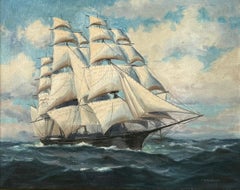
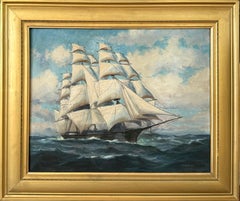
“Clipper Ship under Full Sail”

“Clipper Ship under Full Sail”

Located in Southampton, NY

Original oil on canvas painting of a clipper ship under full sail. Signed “T. Bailey” lower right. Condition is good. Original gold frame with wear consistent with age. Overall frame...

Category

1920s Academic The Hamptons

Materials

Canvas, Oil

Edgar Degas, Woman Washing in Her Bathtub, from Dance Drawings, 1936 (after)

Edgar Degas, Woman Washing in Her Bathtub, from Dance Drawings, 1936 (after)

By Edgar Degas

Located in Southampton, NY

This exquisite engraving after Edgar Degas (1834–1917), titled Femme se lavant dans sa baignoire (Woman Washing in Her Bathtub), originates from the celebrated album Degas Danse dess...

Category

1930s Impressionist The Hamptons

Materials

Engraving

Marc Chagall, Couple Before the Tree, from Chagall Lithographer I, 1960

Marc Chagall, Couple Before the Tree, from Chagall Lithographer I, 1960

By Marc Chagall

Located in Southampton, NY

This exquisite lithograph by Marc Chagall (1887–1985), titled Couple devant l’arbre (Couple Before the Tree), from Chagall Lithographe I (Chagall Lithographer I), originates from the October 1960 issue published by Andre Sauret, Editeur, Monte-Carlo, and printed by Mourlot Freres, Paris, 1960. This visionary composition reflects Chagall’s mastery of the lithographic medium, embodying his poetic imagination through fluid line, expressive form, and a luminous sense of movement. The work conveys the artist’s unique ability to merge memory, symbolism, and emotion into a cohesive visual language, transforming even the simplest subject into a deeply evocative and dreamlike image. Infused with lyricism and spiritual resonance, the composition exemplifies Chagall’s enduring exploration of identity, mythology, and the transcendent power of art. The piece forms part of Chagall Lithographe I, a landmark publication that documents and celebrates the artist’s achievements in lithography, offering insight into one of the most significant aspects of his graphic oeuvre. Executed as a lithograph on velin paper, this work measures 12.5 x 9.625 inches (31.75 x 24.45 cm). Unsigned and unnumbered as issued. The edition exemplifies the superb craftsmanship of the Mourlot Freres atelier, renowned for its collaborations with the greatest modern masters of the 20th century. Artwork Details: Artist: Marc Chagall (1887–1985) Title: Couple devant l’arbre (Couple Before the Tree), from Chagall Lithographe I (Chagall Lithographer I), October 1960 Medium: Lithograph on velin paper Dimensions: 12.5 x 9.625 inches (31.75 x 24.45 cm) Inscription: Unsigned and unnumbered as issued Date: 1960 Publisher: Andre Sauret, Editeur, Monte-Carlo Printer: Mourlot Freres, Paris Catalogue raisonne references: Chagall, Marc, et al. Chagall Lithographe. Andre Sauret, 1960-1986, illustration 281-292. Cramer, Patrick, and Meret Meyer. Marc Chagall: Catalogue Raisonne des Livres Illustres. P. Cramer ed., 1995, illustration 43. Condition: Well preserved, consistent with age and medium Provenance: From Chagall Lithographe I (Chagall Lithographer I), published by Andre Sauret, Editeur, Monte-Carlo, 1960 Notes: Excerpted from the album (translated from French), This work, which was designed and compiled by Fernand Mourlot and Andre Sauret, was finished in October 1960. The reproductions were printed on the presses of Draeger Freres, and the original lithographs on the presses of Mourlot Freres. The Imprimerie Nationale de France is responsible for the typography. Of this work it was shot, apart, CL examples on Grand Velin d'Arches, numbered to the press from I to CL, signed by the artist and the publisher, including, in addition, two original lithographs specially made for this separate draw. About the Publication: Chagall Lithographe I (Chagall Lithographer I), published in October 1960 by Andre Sauret in Monte-Carlo and printed by Mourlot Freres, represents a foundational survey of Marc Chagall’s lithographic production. Conceived in close collaboration with master printer Fernand Mourlot, the publication serves as both a catalogue and a celebration of the artist’s exploration of lithography from the late 1940s through the 1950s. It documents the technical and artistic evolution of Chagall’s printmaking, highlighting the innovative approaches he developed in partnership with the Mourlot atelier, whose expertise allowed for the translation of his painterly vision into the lithographic medium with extraordinary fidelity. The publication includes numerous reproductions alongside original lithographs, offering a comprehensive overview of themes central to Chagall’s work, including biblical narratives, folklore, and personal symbolism. Widely regarded as an essential reference in the study of Chagall’s graphic oeuvre, Chagall Lithographe I stands as a testament to the enduring collaboration between artist and printer, and to the importance of lithography within the broader trajectory of 20th century modern art. About the Artist: Marc Chagall (1887–1985) was a Belarus-born French painter, printmaker, and designer whose visionary imagination, radiant color, and deeply poetic symbolism made him one of the most beloved and influential artists of the 20th century. Rooted in the imagery of his Jewish heritage and the memories of his childhood in Vitebsk, Chagall’s art wove together themes of faith, love, folklore, and fantasy with a dreamlike modern sensibility. His unique style—merging elements of Cubism, Fauvism, Expressionism, and Surrealism—defied categorization, transforming ordinary scenes into lyrical meditations on memory and emotion. Influenced by Russian icon painting, medieval religious art, and the modern innovations of artists such as Pablo Picasso, Henri Matisse, and Georges Braque, Chagall developed a profoundly personal visual language filled with floating figures, vibrant animals, musicians, and lovers that symbolized the transcendent power of imagination and love. During his early years in Paris, he became an integral part of the Ecole de Paris circle, forming friendships with Amedeo Modigliani, Fernand Leger, and Sonia Delaunay, and his creative spirit resonated with that of his peers and successors—Alexander Calder, Alberto Giacometti, Salvador Dali, Joan Miro, Wassily Kandinsky, Marcel Duchamp, and Man Ray—artists who, like Chagall, sought to push the boundaries of perception, emotion, and form. Over a prolific career that spanned painting, printmaking, stained glass, ceramics, and stage design, Chagall brought an unparalleled poetic sensibility to modern art, infusing even the most abstract subjects with human warmth and spiritual depth. His works are held in the most prestigious museums around the world, including the Museum of Modern Art, the Centre Pompidou, the Tate, and the Guggenheim, where they continue to inspire generations of artists and collectors. The highest price ever paid for a Marc Chagall artwork is approximately $28.5 million USD, achieved in 2017 at Sotheby’s New York for Les Amoureux (1928). Marc Chagall Couple...

Category

1960s Expressionist The Hamptons

Materials

Lithograph

Edgar Degas, Dancers at the Opera, from Dance Drawings, 1936 (after)

Edgar Degas, Dancers at the Opera, from Dance Drawings, 1936 (after)

By Edgar Degas

Located in Southampton, NY

This exquisite engraving after Edgar Degas (1834–1917), titled Danseuses a lOpera (Dancers at the Opera), originates from the celebrated album Degas Danse dessin (Degas Dance Drawing...

Category

1930s Impressionist The Hamptons

Materials

Engraving

Marc Chagall, The Lovers in the Red Sun, from Chagall Lithographer I, 1960

Marc Chagall, The Lovers in the Red Sun, from Chagall Lithographer I, 1960

By Marc Chagall

Located in Southampton, NY

This exquisite lithograph by Marc Chagall (1887–1985), titled Les Amoureux au Soleil Rouge (The Lovers in the Red Sun), from Chagall Lithographe I (Chagall Lithographer I), originate...

Category

1960s Expressionist The Hamptons

Materials

Lithograph

“Sur la Plage, a Bernival”

“Sur la Plage, a Bernival”

By Pierre Auguste Renoir

Located in Southampton, NY

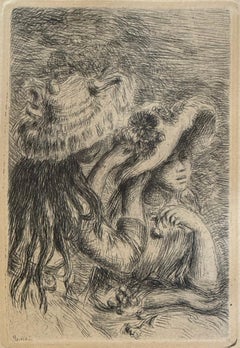
One of the founders of Impressionism and certainly one of its greatest masters, Pierre-Auguste Renoir (1841 - 1919) was not a prolific printmaker, but he explored several different m...

Category

1890s Impressionist The Hamptons

Materials

Etching, Archival Paper, Drypoint

Paul Klee, Plan of a Machine Installation, from 12 Watercolors, 1964 (after)

Paul Klee, Plan of a Machine Installation, from 12 Watercolors, 1964 (after)

By Paul Klee

Located in Southampton, NY

This exquisite lithograph and pochoir after Paul Klee (1879–1940), titled Plan ciner Maschinenanlage (Plan of a Machine Installation), from the folio Paul Klee, 12 aquarelles (Paul K...

Category

1960s Modern The Hamptons

Materials

Lithograph, Stencil

Ellsworth Kelly, Yellow Shape, from Derriere le Miroir, 1958

Ellsworth Kelly, Yellow Shape, from Derriere le Miroir, 1958

By Ellsworth Kelly

Located in Southampton, NY

This exquisite lithograph by Ellsworth Kelly (1923–2015), titled Forme Jaune (Yellow Shape), originates from the historic 1958 folio Derriere le Miroir, No. 110. Published by Maeght ...

Category

1950s Hard-Edge The Hamptons

Materials

Lithograph

Marc Chagall, Eve Cursed by God, from Drawings for the Bible, 1960

Marc Chagall, Eve Cursed by God, from Drawings for the Bible, 1960

By Marc Chagall

Located in Southampton, NY

This exquisite lithograph by Marc Chagall (1887–1985), titled Eve maudite par Dieu (Eve Cursed by God), from Marc Chagall, Dessins Pour La Bible (Drawings for the Bible), Verve: Revue Artistique et Litteraire, Vol. X, No. 37-38, originates from the July 29, 1960 issue published by Editions de la revue Verve, Paris, under the direction of Teriade, Editeur, Paris, and printed by Mourlot Freres, Paris, 1960. This visionary composition reflects Chagall’s poetic interpretation of the biblical moment of divine judgment following the Fall, evoking themes of transgression, consequence, and spiritual awakening through his luminous color and dreamlike symbolism. The flowing forms and expressive imagery convey a sense of tension and emotional gravity, capturing Eve’s moment of reckoning and its enduring resonance within Chagall’s distinctive visual language. Infused with movement and lyricism, the work transforms sacred narrative into a meditative vision of loss, accountability, and the origins of human suffering. The piece forms part of Chagall’s celebrated series of lithographs and drawings created for Dessins Pour La Bible, a monumental project uniting art, scripture, and mysticism in one of the artist’s most important achievements. Executed as a lithograph on velin du Marais paper, this work measures 14 x 10.5 inches (35.56 x 26.67 cm). Unsigned and unnumbered as issued. The edition exemplifies the superb craftsmanship of the Mourlot Freres atelier, renowned for its collaborations with the greatest modern masters of the 20th century. Artwork Details: Artist: Marc Chagall (1887–1985) Title: Eve maudite par Dieu (Eve Cursed by God), from Marc Chagall, Dessins Pour La Bible (Drawings for the Bible), Verve: Revue Artistique et Litteraire, Vol. X, No. 37-38, July 29, 1960 Medium: Lithograph on velin du Marais paper Dimensions: 14 x 10.5 inches (35.56 x 26.67 cm) Inscription: Unsigned and unnumbered as issued Date: 1960 Publisher: Editions de la revue Verve, Paris, under the direction of Teriade, Editeur, Paris Printer: Mourlot Freres, Paris Catalogue raisonne references: Chagall, Marc, et al. Chagall Lithographe. Andre Sauret, 1960-1986, illustration 230-276. Cramer, Patrick, and Meret Meyer. Marc Chagall: Catalogue Raisonne des Livres Illustres. P. Cramer ed., 1995, illustration 42. Condition: Well preserved, consistent with age and medium Provenance: From Marc Chagall, Dessins Pour La Bible (Drawings for the Bible), Verve: Revue Artistique et Litteraire, Vol. X, No. 37-38, published by Editions de la revue Verve, Paris, 1960 Notes: Excerpted from the folio (translated from French), This double issue of Verve includes the drawings that Marc Chagall executed in 1958 and 1959 on biblical themes that he had not generally dealt with in his illustration for the Bible, engraved with etching and which were included in issue 33/34 of Verve. This album has 96 renderings in black and 24 color litbographies as well as the cover that were specially made for this album. It was completed printing on July 29, 1960 by Draeger Freres for black gravures and by Mourlot Freres for color lithography. About the Publication: Marc Chagall, Dessins Pour La Bible (Drawings for the Bible), published as Verve Vol. X, No. 37-38 on July 29, 1960, represents a significant continuation and expansion of Chagall’s profound engagement with biblical imagery and spiritual narrative. Conceived and directed by the visionary publisher Teriade, the publication builds upon the earlier Verve issue devoted to Chagall’s Bible illustrations by presenting a new body of work executed in 1958 and 1959, exploring themes and episodes that had not been fully addressed in the initial series. Printed in Paris by Draeger Freres for black gravures and Mourlot Freres for color lithography, the edition demonstrates an exceptional level of technical refinement and artistic collaboration. The publication includes an extensive suite of ninety six black reproductions and twenty four color lithographs, as well as specially created cover imagery, reflecting Chagall’s continued innovation in translating sacred themes into graphic form. As part of the broader tradition of Verve, one of the most important artistic and literary publications of the twentieth century, this issue exemplifies the fusion of text, image, and craftsmanship at the highest level. Today, Verve Vol. X, No. 37-38 stands as a major achievement within Chagall’s graphic oeuvre, reaffirming his role as one of the foremost interpreters of biblical narrative in modern art. About the Artist: Marc Chagall (1887–1985) was a Belarus-born French painter, printmaker, and designer whose visionary imagination, radiant color, and deeply poetic symbolism made him one of the most beloved and influential artists of the 20th century. Rooted in the imagery of his Jewish heritage and the memories of his childhood in Vitebsk, Chagall’s art wove together themes of faith, love, folklore, and fantasy with a dreamlike modern sensibility. His unique style merging elements of Cubism, Fauvism, Expressionism, and Surrealism defied categorization, transforming ordinary scenes into lyrical meditations on memory and emotion. Influenced by Russian icon painting, medieval religious art, and the modern innovations of artists such as Pablo Picasso, Henri Matisse, and Georges Braque, Chagall developed a profoundly personal visual language filled with floating figures, vibrant animals, musicians, and lovers that symbolized the transcendent power of imagination and love. During his early years in Paris, he became an integral part of the Ecole de Paris circle, forming friendships with Amedeo Modigliani, Fernand Leger, and Sonia Delaunay, and his creative spirit resonated with that of his peers and successors Alexander Calder, Alberto Giacometti, Salvador Dali, Joan Miro, Wassily Kandinsky, Marcel Duchamp, and Man Ray, artists who sought to push the boundaries of perception, emotion, and form. Over a prolific career that spanned painting, printmaking, stained glass, ceramics, and stage design, Chagall brought an unparalleled poetic sensibility to modern art, infusing even the most abstract subjects with human warmth and spiritual depth. His works are held in the most prestigious museums around the world, including the Museum of Modern Art, the Centre Pompidou, the Tate, and the Guggenheim, where they continue to inspire generations of artists and collectors. The highest price ever paid for a Marc Chagall artwork is approximately 28.5 million USD, achieved in 2017 at Sotheby’s New York for Les Amoureux (1928). Marc Chagall Eve...

Category

1960s Expressionist The Hamptons

Materials

Lithograph

Ellsworth Kelly, Lotus, from Derriere le Miroir, 1982

Ellsworth Kelly, Lotus, from Derriere le Miroir, 1982

By Ellsworth Kelly

Located in Southampton, NY

This exquisite lithograph by Ellsworth Kelly (1923–2015), titled Lotus, originates from the historic 1982 folio Derriere le Miroir, No. 250, Hommage a Aime et Marguerite Maeght (Trib...

Category

1980s Hard-Edge The Hamptons

Materials

Lithograph

Pablo Picasso, Untitled, from Carmen, 1949

Pablo Picasso, Untitled, from Carmen, 1949

By Pablo Picasso

Located in Southampton, NY

This exquisite engraving by Pablo Picasso (1881–1973), titled Sans titre (Untitled), from the folio Picasso, Carmen (Picasso, Carmen), originates from the 1949 edition published by L...

Category

1940s Cubist The Hamptons

Materials

Engraving

Edgar Degas, Three Dancers, 1945 (after)

Edgar Degas, Three Dancers, 1945 (after)

By Edgar Degas

Located in Southampton, NY

This exquisite lithograph after Edgar Degas (1834–1917), titled Trois danseurs (Three Dancers), originates from the 1945 folio Degas, Ten Ballet Sketches. Published by The Studio Publications, Inc., New York, rendered and printed by Albert Carman, City Island, 1945, this work reflects Degas’s sensitive mastery of line, movement, and the intimate psychological nuances of the ballet studio. Executed as a lithograph and pochoir on velin paper, this work measures 13 x 17 inches (33.02 x 43.18 cm). Signed in the plate and unnumbered as issued. Rendered and printed by Albert Carman, City Island. Artwork Details: Artist: After Edgar Degas (1834–1917) Title: Trois danseurs (Three Dancers), from Degas, Ten Ballet Sketches, 1945 Medium: Lithograph and pochoir on velin paper Dimensions: 13 x 17 inches (33.02 x 43.18 cm) Inscription: Signed in the plate and unnumbered as issued Date: 1945 Publisher: The Studio Publications, Inc., New York Printer: Albert Carman, City Island Condition: Well preserved, consistent with age and medium Provenance: From the 1945 folio Degas, Ten Ballet Sketches, published by The Studio Publications, Inc., New York Notes: Excerpted from the album, Born in Paris in 1834, Edgar Degas lived, and surely loved the life of that city during most of his years. These continued somewhat sadly beyond those of most of his friends— into the debacle of the first World War, during which he died in 1917. Judging by the frequency with which he used them as models, he must have had an especial admiration for the ballet girls who followed a profession that at the time brought none of the glory and prosperity which attend it today. New aspects of the human body, revealed in movement, fascinated him. But his occupation with the simply anatomical side of his subjects never resulted in a cold interpretation. On the contrary there is a warmth and sympathy that pervades all of his work. The drawings here represent the painter in one important phase of his multi-sensitive view of life; and permit an insight which a more ambitious work might not do-into the operation of the creative process, the artist's transformation of reality as it passes through the mesh of his sensibilities. The Edition of this Portfolio is limited to MMMD examples. Rendered by Albert Carman. About the Publication: Degas, Ten Ballet Sketches (1945) is one of the earliest and most significant American postwar fine art portfolios devoted to Edgar Degas’s intimate works on paper. Published by The Studio Publications, Inc., New York, and rendered and printed by Albert Carman at City Island, the album sought to faithfully reproduce a group of Degas’s ballet-related drawings through a combination of lithography and hand-applied pochoir coloring. This hybrid technique allowed the edition to preserve the immediacy, tonal subtlety, and gestural delicacy central to Degas’s draftsmanship. Conceived as a fine art publication rather than a commercial book, the portfolio provided American audiences unprecedented access to Degas’s private, spontaneous studies—images that reveal the artist’s fascination with movement, anatomy, and the psychological atmosphere of the rehearsal studio. The album exemplifies the mid-20th-century revival of pochoir as a means of recreating the texture and coloristic nuance of original works on paper, and it remains an important document of how Degas’s legacy was translated into high-quality printed form for collectors, museums, and connoisseurs. About the Artist: Edgar Degas (1834–1917) was a French painter, draughtsman, printmaker, and sculptor whose groundbreaking fusion of classical draftsmanship, modern experimentation, and psychological depth helped define the trajectory of Western art, positioning him as one of the most influential figures of the nineteenth and early twentieth centuries; renowned for his depictions of ballet dancers, racehorses, theater scenes, cafe life, domestic interiors, milliners, laundresses, and women at their toilette, Degas reimagined observational realism through radical compositional innovation—employing extreme cropping, asymmetrical framing, oblique viewpoints, and dramatic lighting that anticipated photographic and cinematic language long before these technologies shaped visual culture, and although associated with Impressionism, he rejected plein-air spontaneity in favor of studio-based discipline rooted in the linear precision of Jean-Auguste-Dominique Ingres, the expressive chromaticism of Eugene Delacroix, and the modernity of Edouard Manet while also drawing inspiration from Japanese ukiyo-e prints, classical sculpture, and early photography; his independent artistic philosophy resonated with and helped shape the innovations of Pablo Picasso, Alexander Calder, Alberto Giacometti, Salvador Dali, Joan Miro, Wassily Kandinsky, Marcel Duchamp, and Man Ray, whose explorations of movement, form, dream logic, abstraction, and conceptualism all find antecedents in Degas’s investigations into seriality, temporality, and the fragmented figure, and his pioneering use of pastel, monotype, and wax sculpture fundamentally transformed each medium, influencing artists from Henri Matisse, Francis Bacon, Lucian Freud, and Giacomo Manzu to Paula Rego, contemporary realists, experimental photographers, and choreographers; his works are held in nearly every major museum collection worldwide—including the Musee dOrsay, the Louvre, the Metropolitan Museum of Art, the National Gallery of Art, the Art Institute of Chicago, the Courtauld Institute, and the National Gallery, London—affirming his central place in the history of art, and the highest auction record for Degas was achieved at Sothebys London on February 3, 2015, when Danseuses en Bleu sold for 37,033,000 GBP, cementing his status as one of the most sought-after and enduringly significant artists of the Western canon. Degas pochoir, Degas lithograph...

Category

1940s Impressionist The Hamptons

Materials

Lithograph

Keith Haring, Untitled, from Against All Odds, 1990

Keith Haring, Untitled, from Against All Odds, 1990

By Keith Haring

Located in Southampton, NY

This exquisite lithograph by Keith Haring (1958–1990), titled Untitled, from the album Against All Odds, 20 drawings - Oct. 3, 1989 (Against All Odds, 20 drawings - Oct. 3, 1989), originates from the 1990 edition published by Publishing House Bebert, Rotterdam, in collaboration with Mera Rubell, New York, and Donald Rubell, New York, and printed by Nieuwe Grafische, Rotterdam, Spring, 1990. Untitled embodies Haring’s signature visual vocabulary—dynamic lines, rhythmic energy, and universal symbolism—infused with the social urgency and optimism that defined his generation. Executed as a lithograph on velin acid-free Rivoli paper, this work measures 8.5 x 10.3 inches. Unsigned and unnumbered as issued. The edition exemplifies the refined craftsmanship of Nieuwe Grafische, Rotterdam, and the bold spirit of Bebert’s late twentieth-century artist collaborations. Artwork Details: Artist: Keith Haring (1958–1990) Title: Untitled, from the album Against All Odds, 20 drawings - Oct. 3, 1989 (Against All Odds, 20 drawings - Oct. 3, 1989) Medium: Lithograph on velin acid-free Rivoli paper Dimensions: 8.5 x 10.3 inches (21.59 x 26.16 cm) Inscription: Unsigned and unnumbered as issued Date: 1990 Publisher: Publishing House Bebert, Rotterdam, in collaboration with Mera Rubell, New York, and Donald Rubell, New York Printer: Nieuwe Grafische, Rotterdam Condition: Well preserved, consistent with age and medium Provenance: From the album Against All Odds, 20 drawings - Oct. 3, 1989 (Against All Odds, 20 drawings - Oct. 3, 1989), Bebert, Rotterdam, 1990 Notes: Excerpted from the album, 20 drawings - Oct. 3, 1989 was published with the collaboration of Mera and Donald Rubell by Bebert Publishing House in Spring 1990. The edition consists of MMD hard cover examples, of which D are numbered (I/D - D/D) and signed by the artist. The edition was printed on acid-free Rivoli paper by Nieuwe Grafische in Rotterdam. and bound by Stokkink B.V. in Amsterdam. ©Keith Haring, M.Y.6. 1990. Mera + Don Rubell, NYC 1990. Bebert Publishing House. Westersingel 22-3014 GP, Rotterdam, Holland - 1990. About the Publication: Against All Odds is both an artist’s album and memorial publication comprising twenty lithographs created by Keith Haring on October 3, 1989, just months before his death in February 1990. Conceived in collaboration with Mera and Donald Rubell and published by Bebert Publishing House, Rotterdam, the album encapsulates Haring’s final creative statement. Haring’s accompanying handwritten foreword and brief text meditate on the fragility of human life, ecological collapse, and the artist’s struggle to preserve hope “against all odds.” The drawings—executed in Haring’s immediately recognizable graphic line—depict writhing figures, embryos, skeletons, animals, and cosmic symbols that echo his lifelong concern with birth, death, sexuality, and transcendence. Together, the images and text form a narrative of resistance and endurance amid personal illness and global crisis. The album’s title encapsulates Haring’s sense of perseverance: humanity’s and the planet’s fight for survival despite overwhelming forces of destruction. Published posthumously in spring 1990, Against All Odds stands as a poignant summation of his ethos—celebrating vitality and compassion in the face of mortality and despair. About the Artist: Keith Haring (1958–1990) was an American artist, activist, and cultural innovator whose bold visual language and socially engaged practice redefined contemporary art and the role of the artist in society. Born in Reading, Pennsylvania, and raised in Kutztown, Haring was inspired from an early age by comic art, calligraphy, and graphic design, influences that would later shape his instantly recognizable style of radiant lines, rhythmic movement, and universal symbols. After moving to New York City in 1978 to study at the School of Visual Arts, he immersed himself in the downtown art scene, drawing influence from modernist pioneers such as Pablo Picasso, Alexander Calder, Alberto Giacometti, Salvador Dali, Joan Miro, Wassily Kandinsky, Marcel Duchamp, and Man Ray, whose innovations in form, abstraction, and conceptual art informed his radical approach to public expression. Haring began creating chalk drawings in the New York subway system, transforming urban walls into democratic spaces for creativity and communication. His imagery—radiant babies, barking dogs, flying saucers, and dancing figures—spoke a universal visual language that combined accessibility with profound emotional and political resonance. He became a leading figure in 1980s New York, working alongside Jean-Michel Basquiat, Andy Warhol, and Kenny Scharf to bridge the worlds of street art, pop culture, and fine art. Influenced by Picasso’s expressive energy, Calder’s movement, Miro’s playfulness, and Duchamp’s conceptual wit, Haring developed an art of optimism, immediacy, and activism that addressed issues of love, unity, social justice, and human rights. His work carried urgent commentary on apartheid, AIDS awareness, drug abuse, and inequality, while radiating the joy and vitality of life. In 1986, he opened the Pop Shop, a groundbreaking experiment in making art accessible to all, selling affordable objects featuring his designs without compromising his artistic vision. His monumental public murals, including Crack Is Wack in Harlem and Tuttomondo in Pisa, Italy, continue to stand as symbols of art’s power to educate and inspire collective action. Haring’s dynamic compositions merged the energy of graffiti with the structural clarity of modernism, synthesizing the spiritual abstraction of Kandinsky, the surreal imagination of Dali, and the sensual immediacy of Man Ray. His work influenced generations of artists, including Banksy, Shepard Fairey, KAWS, Takashi Murakami, and RETNA, who continue to echo his fusion of activism and aesthetics. Despite his untimely death from AIDS at age 31, Haring’s impact on art and culture endures globally through the Keith Haring Foundation, which supports children’s programs and HIV/AIDS research. His works are housed in major museums such as the Museum of Modern Art, the Whitney Museum of American Art, the Centre Pompidou, and the Tate Modern, affirming his legacy as a cornerstone of twentieth-century art. The highest auction record for Keith Haring was achieved with Untitled (1982), which sold for $6.5 million USD at Sotheby’s, New York, on May 16, 2017, solidifying his status as one of the most influential, beloved, and enduring artists of the modern era. Keith Haring Untitled Against All Odds 20 drawings Oct 3 1989 Bebert Publishing House Rotterdam 1990 lithograph...

Category

1990s Pop Art The Hamptons

Materials

Lithograph

Georges Braque, Untitled, from Birds, Saint-John Perse, 1966 (after)

Georges Braque, Untitled, from Birds, Saint-John Perse, 1966 (after)

By Georges Braque

Located in Southampton, NY

This exquisite collotype after Georges Braque (1882–1963), titled Sans titre (Untitled), from the album Birds, Saint-John Perse, originates from the 1966 edition published by the Bol...

Category

1960s Cubist The Hamptons

Materials

Lithograph

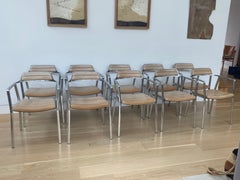
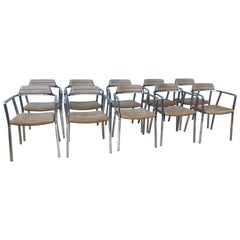
Set of 10 Vipp Chairs '451' in Sand Colored Leather Upholstery

Set of 10 Vipp Chairs '451' in Sand Colored Leather Upholstery

By Vipp

Located in Southampton, NY

Vipp Chair 451 in Sand Colored Leather Upholstery The Vipp chair is suitable for the dining or living room and is the first chair introduced in Vipp's portfolio of furniture. The cha...

Category

21st Century and Contemporary Danish The Hamptons

Materials

Aluminum

Marc Chagall, Tribe of Asher, from The Jerusalem Windows, 1962 (after)

Marc Chagall, Tribe of Asher, from The Jerusalem Windows, 1962 (after)

By Marc Chagall

Located in Southampton, NY

This exquisite lithograph after Marc Chagall (1887–1985), titled Tribe of Asher, from the album Marc Chagall, The Jerusalem Windows, originates from the 1962 edition published by And...

Category

1960s Expressionist The Hamptons

Materials

Lithograph

Henri Matisse, Mrs. M.P., from Portraits by Henri Matisse, 1954 (after)

Henri Matisse, Mrs. M.P., from Portraits by Henri Matisse, 1954 (after)

By Henri Matisse

Located in Southampton, NY

This exquisite lithograph after Henri Matisse (1869–1954), titled Madame M.P. (Mrs. M.P.), from the album Portraits par Henri Matisse (Portraits by Henri Matisse), originates from th...

Category

1950s Fauvist The Hamptons

Materials

Lithograph

Andre Derain, Port of Collioure, from 1880-1954, 1961 (after)

Andre Derain, Port of Collioure, from 1880-1954, 1961 (after)

By André Derain

Located in Southampton, NY

This exquisite lithograph and pochoir after Andre Derain (1880–1954), titled Port de Collioure (Port of Collioure), from the folio Andre Derain 1880 - 1954, 1961, originates from the...

Category

1960s Fauvist The Hamptons

Materials

Lithograph, Stencil