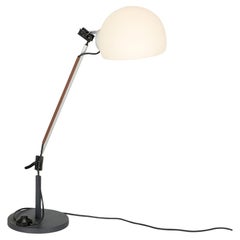
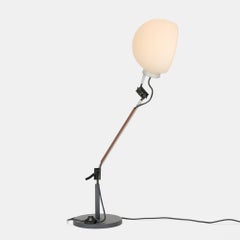
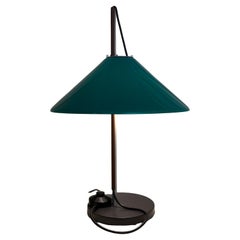
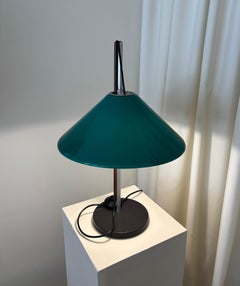
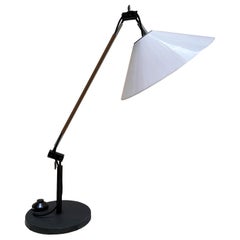
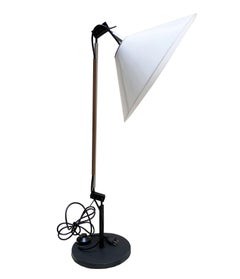
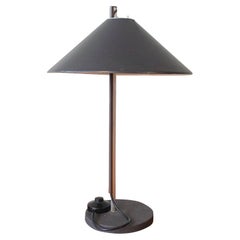
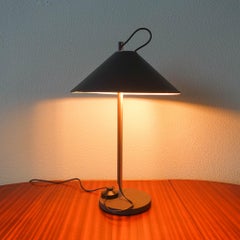
Enzo Mari was an influential industrial designer and a beloved curmudgeon who revered Marxism. His vintage mid-century modern designs are simple, functional and poetic. Widely known Mari-designed objects include desk accessories, such as the Formosa perpetual wall calendar, vases, cocktail tables and chandeliers.
Enzo Mari's work is embedded within the city of Milan, the Italian capital of all things design. In fact, the traffic bollards he devised are part of the city itself: Shaped like "panettone" cakes, they simultaneously direct traffic and provide seating for pedestrians.
In 1974, Mari published Autoprogettazione? (roughly translated as self-design), a Marx-inspired, anti-industrial, do-it-yourself handbook for the everyday person to use to build furniture without the assistance of a glitzy designer or knowledge of complex joinery. Mari’s intent with the publication was to remove the alienation of the creator and manufacturer from the end product by teaching anyone to develop a critical eye for production.
Artek relaunched kits based on the blueprints in the manual in an exhibition at Spazio Rossana Orlandi in 2010. The subsequent collectability of his work was reportedly irksome for Mari because he abhorred the industrial production for which he was becoming known.
Mari’s meager upbringing heavily influenced his politics, and even in childhood, he would come up with ingenious ways to support the family financially. As a designer, the desire to envision and build significant pieces was more important to Mari than devising new marketing and retail sales tactics. He optimistically believed objects could change the world. This view went against the rising consumer mania for every next trend that surfaced in the late 20th century. Not surprisingly, his ecological and economical stance led him to produce fewer objects.
Mari's philosophy did not stop people from desiring his creations, nor prevent other designers from wanting to collaborate with him. Following World War II, he worked for companies like Danese, Olivetti, Artemide, Driade and Alessi, who brought his prodigious designs to the public, and Mari’s work was widely celebrated.
The Golden Compass, Italy's highest honor for industrial design, was awarded to Mari four times before he died from COVID in 2020, and New York’s Museum of Modern Art has a permanent collection of his objects on display.
On 1stDibs, find a collection of Enzo Mari decorative objects, folk art and serveware.
Antique table lamps became a category of their own once electricity moved light off the wall and onto furniture. The form split quickly: task-driven designs like the Anglepoise on one side, decorative ceramic and glass on the other.
Styles to Know
Base material shapes the light as much as the shade does: ceramic and glass diffuse a softer glow, while brass and metal read more directional. Layer the look with a mid-century modern floor lamp for ambient light, or set a pair on a mid-century modern nightstand for a bedroom.
How to Choose the Right Vintage Table Lamp
Buying individually rather than as a pair allows more flexibility when mixing eras across a room. For those shopping by name rather than by shape, the history of the Anglepoise lamp is worth a read. Each piece comes from a vetted 1stDibs seller, with era, designer and condition detailed, and the 1stDibs Promise stands behind every purchase.