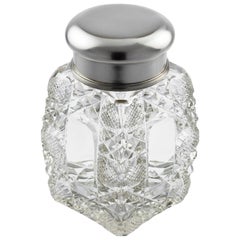
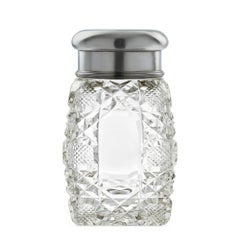
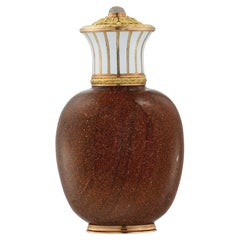
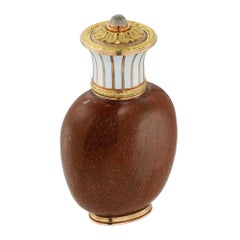
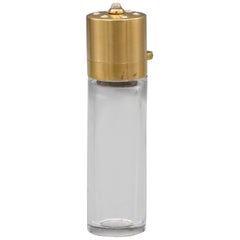
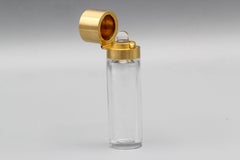
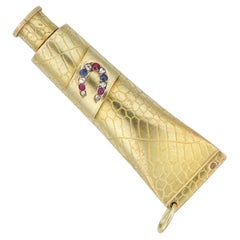
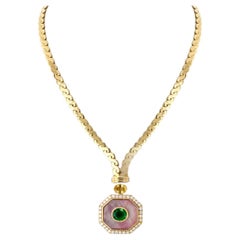
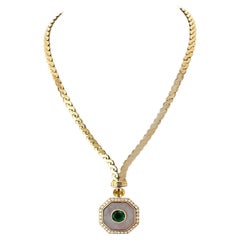
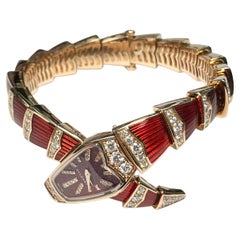
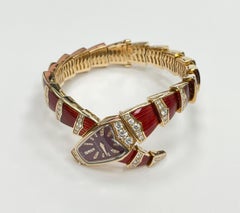
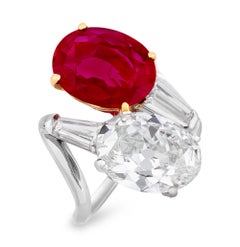
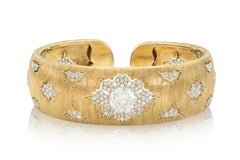
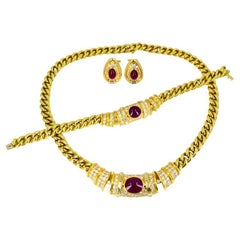
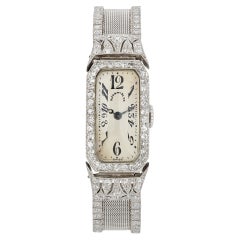
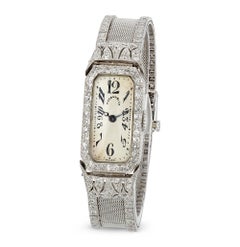
On 1stDibs, you can find the most appropriate faberge bottle for your needs in our varied inventory. Frequently made of
silver,
gold and
18k gold, this item was constructed with great care. Find an antique version now, or shop for 5 vintage or 6 modern creation for a more contemporary example of these cherished accessories. If you’re looking for a faberge bottle from a specific time period, our collection is diverse and broad-ranging, and you’ll find at least one that dates back to the 19th Century while another version may have been produced as recently as the 21st Century. Finding an appealing faberge bottle — no matter the origin — is easy, but
K-OVER,
Fabergé and
Victor Mayer each produced a popular version that is worth a look. A faberge bottle can be a stylish choice for most occasions, but
diamond rings, from our inventory of 3, can add a particularly distinctive touch to your look, day or night. Today, if you’re looking for a
brilliant cut version of this piece and are unable to find the perfect match, our selection also includes
round cut and
single cut alternatives. When shopping for a faberge bottle, you’ll find that there are less available pieces for unisex or
men today than there are for
women.
While the House of Fabergé is best known for creating the lavishly ornate and intricately devised Imperial Easter eggs given by the last czars to their families as annual holiday gifts, it was the most prestigious Russian luxury goods maker of the late 19th and early 20th centuries.
Serving the aristocracy and the well-to-do through stores in St. Petersburg, Moscow and as far afield as London, Fabergé crafted a wide range of brooches and other jewelry, clock cases, silver and myriad objets de vertu that included picture frames, cigarette cases, cufflinks and carved hardstone floral and animal figurines. Following the revolution, the firm was closed by the Soviet state in 1918.
Master goldsmith Gustav Fabergé, a descendant of Huguenot emigrées, founded the company in St. Petersburg in 1842. The firm did a brisk trade among the lesser nobility and the merchant class, but it flourished under the guidance of Gustav’s eldest son Peter Carl Fabergé — known also as Karl Gustavovich Fabergé — who took over in 1872.
Cosmopolitan, widely-traveled and himself a master goldsmith — he was sent on a Grand Tour in the 1860s — the younger Fabergé drew early design inspiration when he volunteered to catalogue and restore pieces in the imperial jewelry collection in the Hermitage.
Fabergé pieces based on historical jewelry from the Hermitage caught the attention of Czar Alexander III at a Moscow exhibition in 1882, and three years later he commissioned the first Imperial Easter egg as a gift for the czarina. Czar Nicholas II continued the tradition, presenting two eggs each Easter — one for his wife and one for his mother.
Relatively simple in design compared to the complex cloisonné-adorned eggs that followed, the first Fabergé egg was a white-enameled ovoid containing a gold “yolk” that held a gold hen, which in turn contained a replica of the imperial crown from which hung an egg-shaped ruby pendant.
As the appointed goldsmith to the royal court, the House of Fabergé became the darling of Russian aristocrats as well as wealthy patrons across Europe. Many and varied objets — hundreds of thousands by one count — were made to meet their demand. The firm employed some 500 craftsmen and designers when it was shuttered.
After the Russian Revolution, the Fabergé name and trademark endured a checkered passage through the 20th century.
Family members left their homeland in 1918 and set up a new business in Paris that was mainly concerned with repairing and restoring earlier-made wares. The name was adopted by an American fragrance and beauty products maker in the late 1930s, and later authorized by the family in a 1951 agreement. The trademark has been subsequently sold several times, and attached to numerous products including jewelry.
Fabergé pieces are richly redolent of a romantic past, and a source of thorough delight — for connoisseurs, true Fabergé refers to items made in the firm’s brief, golden decades from 1885 to 1917.
Collectors are advised to make a study of Fabergé works in museum collections such as the Victoria & Albert and the Royal Collection in London to gain an understanding of the quality of genuine goods made by the original firm, and then to purchase only from reputable and reliable dealers, such those at 1stDibs.
Find Fabergé eggs for sale and other objects and vintage jewelry on 1stDibs.