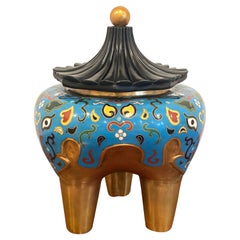
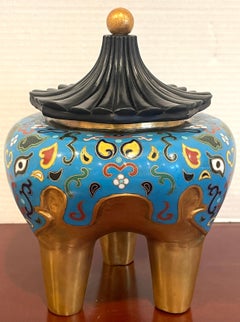
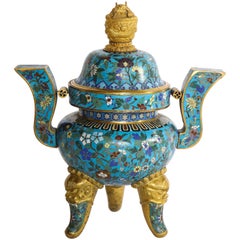
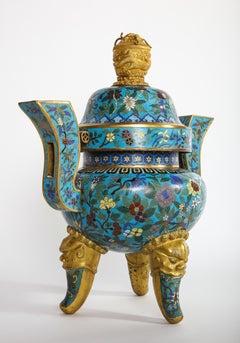
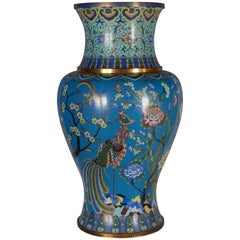
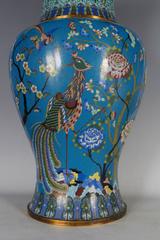
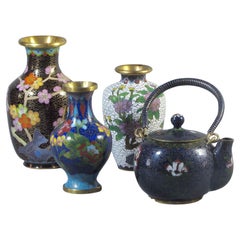
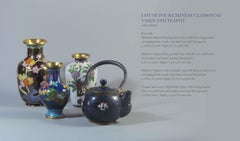
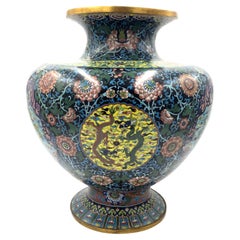
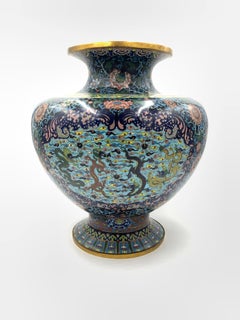
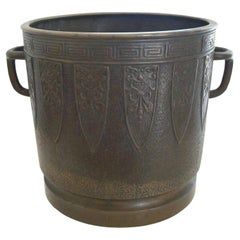
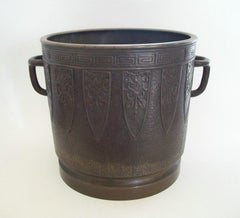
Expanded trade between Europe and East Asia, starting in the 16th century, led to a booming market for exported goods, particularly furniture. This was bolstered by the establishment of the Dutch and English East India Companies at the beginning of the 17th century. From folding screens and chairs to lacquer tables and silver, Chinese Export furniture was in demand and regularly copied and imitated, leading to styles like chinoiserie and Chinese Chippendale.
The expansion of exporting that had strengthened the arts during the Ming dynasty continued into the Qing dynasty era — Chinese designers made many furniture pieces specifically for export, resulting in distinctive designs that mixed traditional techniques with forms appealing to foreign buyers. For instance, cabinetmakers in Canton (modern-day Guangzhou) were prolific in crafting hardwood furniture for export in European styles that involved the expert joinery techniques of Chinese furniture. Designs for Chinese Export porcelain, cabinets, decorative objects and other furniture were often more ornately adorned than they would be for a local audience, such as with mother-of-pearl overlays or surfaces featuring lavish pictorial scenes or gold on black motifs. Some were even commissioned by wealthy European families to be adorned with their coat of arms.
Because lacquer furniture was especially prized, and the resin used to create it was difficult to import as it would harden during the long voyage, artisans in China and Japan exported numerous lacquer pieces. Long before lacquer made its way to Japan, the Chinese treated the material differently. They used it to create smooth, glossy surfaces, but also for carving, an art that began in the 12th century and is exclusively Chinese. These pieces are called cinnabar lacquer after the powdered mercury sulfide (cinnabar) employed to produce their characteristic red hue. A popular form for export was a compact cabinet with drawers, usually displayed on a small table. Undecorated furniture built in Europe was also shipped to China to be lacquered. The international exchange of design would influence furniture into the 19th century and later, informing styles such as Art Deco and Art Nouveau.
Find a collection of antique Chinese Export tables, beds, cupboards, table lamps and more furniture on 1stDibs.
Whether it’s a Chinese Han dynasty glazed ceramic wine vessel, a work of Murano glass or a hand-painted Scandinavian modern stoneware piece, a fine vase brings a piece of history into your space as much as it adds a sophisticated dynamic.
Like sculptures or paintings, antique and vintage vases are considered works of fine art. Once offered as tributes to ancient rulers, vases continue to be gifted to heads of state today. Over time, decorative porcelain vases have become family heirlooms to be displayed prominently in our homes — loved pieces treasured from generation to generation.
The functional value of vases is well known. They were traditionally utilized as vessels for carrying dry goods or liquids, so some have handles and feature an opening at the top (where they flare back out). While artists have explored wildly sculptural alternatives over time, the most conventional vase shape is characterized by a bulbous base and a body with shoulders where the form curves inward.
Owing to their intrinsic functionality, vases are quite possibly versatile in ways few other art forms can match. They’re typically taller than they are wide. Some have a neck that offers height and is ideal for the stems of cut flowers. To pair with your mid-century modern decor, the right vase will be an elegant receptacle for leafy snake plants on your teak dining table, or, in the case of welcoming guests on your doorstep, a large ceramic floor vase for long tree branches or sticks — perhaps one crafted in the Art Nouveau style — works wonders.
Interior designers include vases of every type, size and style in their projects — be the canvas indoors or outdoors — often introducing a splash of color and a range of textures to an entryway or merely calling attention to nature’s asymmetries by bringing more organically shaped decorative objects into a home.
On 1stDibs, you can browse our collection of vases by material, including ceramic, glass, porcelain and more. Sizes range from tiny bud vases to massive statement pieces and every size in between.