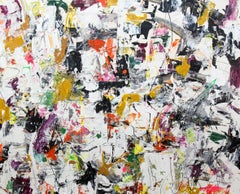
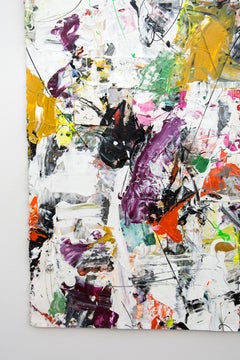
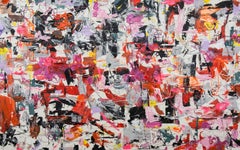
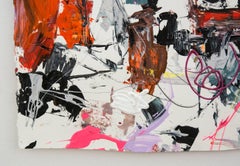
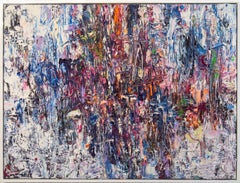
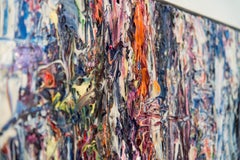
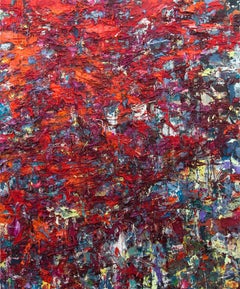
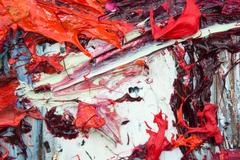
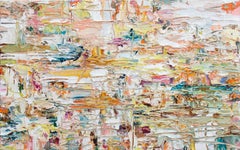
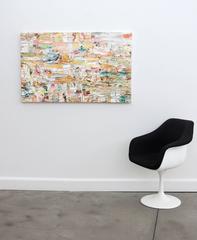
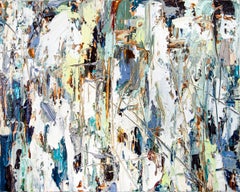
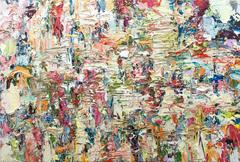
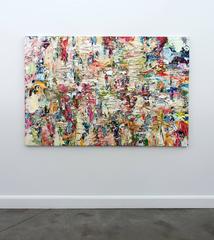
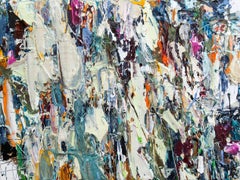
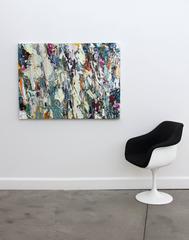
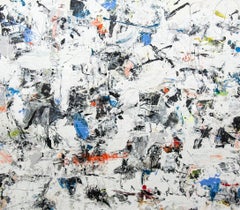
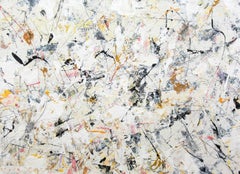
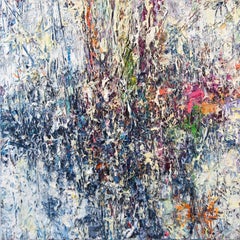
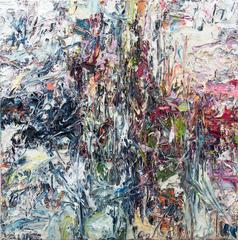
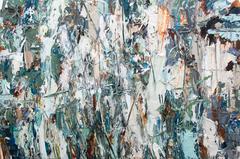
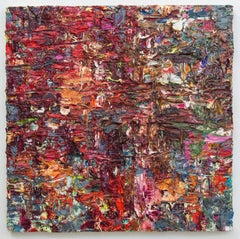
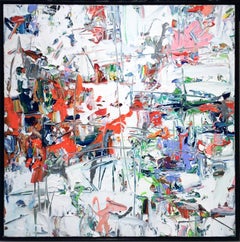
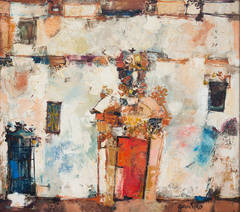
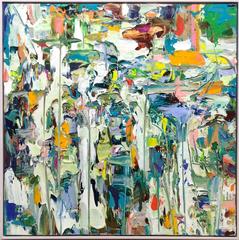
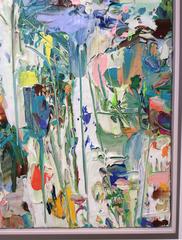
Adam Cohen is a New York based abstract artist whose work combines color and texture to endow the canvas with dream-like intensity; with lush, intricate layers of pigment, he creates paintings alive with gestural energy.
Born in the United States in 1959, Cohen started painting at the age of 12, studying with Lilian Marzell, a respected teacher, artist and friend of Willem de Kooning, Jackson Pollock and other key figures of the Abstract Expressionist generation, who later became a huge influence on Cohen’s work. He went on to study at Temple University’s Tyler School of Art in Philadelphia, which included a year living and painting in Rome.
Upon graduation, Cohen moved to New York City, where he studied at the School of Visual Arts while taking classes at the Art Students League and Parsons School of Design. Ahead of his time, he was one of the first artists to use computers and Photoshop in a creative context, which helped launch his career as a top illustrator, working for the likes of Disney, Coca Cola, Visa and the New York Times, amongst many others.
After a 10-year break, Cohen returned to painting and moved from New York City to the Catskills, specializing in figurative work, which ultimatley led to his discovery and love of abstract painting.
In 2012 Adam started applying pigment in wide, vigorous strokes, creating intricate colorful abstract tapestries with sharp contrasts of black and white. The textures of his paintings have changed over the years as black has almost disappeared. He now cuts the still-wet paint with a palette knife and other instruments to create intricate, almost vascular patterns. The results of these developments are paradoxical, for Cohen’s imagery is now more vibrantly physical than ever and, at the same time, more richly atmospheric.
Now firmly established as an abstract painter, Cohen has exhibited extensively in the US, Europe and Asia, most recently at the Morren Gallery in Amsterdam and the Galleria Ravagnon in Venice.
Bring audacious experiments with color and textures to your living room, dining room or home office. Abstract paintings, large or small, will stand out in your space, encouraging conversation and introducing a museum-like atmosphere that’s welcoming and conducive to creating memorable gatherings.
Abstract art has origins in 19th-century Europe, but it came into its own as a significant movement during the 20th century. Early practitioners of abstraction included Wassily Kandinsky, although painters were exploring nonfigurative art prior to the influential Russian artist’s efforts, which were inspired by music and religion. Abstract painters endeavored to create works that didn’t focus on the outside world’s conventional subjects, and even when artists depicted realistic subjects, they worked in an abstract mode to do so.
In 1940s-era New York City, a group of painters working in the abstract mode created radical work that looked to European avant-garde artists as well as to the art of ancient cultures, prioritizing improvisation, immediacy and direct personal expression. While they were never formally affiliated with one another, we know them today as Abstract Expressionists.
The male contingent of the Abstract Expressionists, which includes Jackson Pollock, Willem de Kooning and Robert Motherwell, is frequently cited in discussing leading figures of this internationally influential postwar art movement. However, the women of Abstract Expressionism, such as Helen Frankenthaler, Lee Krasner, Joan Mitchell and others, were equally involved in the art world of the time. Sexism, family obligations and societal pressures contributed to a long history of their being overlooked, but the female Abstract Expressionists experimented vigorously, developed their own style and produced significant bodies of work.
Draw your guests into abstract oil paintings across different eras and countries of origin. On 1stDibs, you’ll find an expansive range of abstract paintings along with a guide on how to arrange your wonderful new wall art.
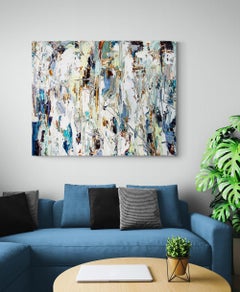
If you’re working with a small living space, a colorful, oversize work can create depth in a given room, but there isn’t any need to overwhelm your interior with a sprawling pièce de résistance. Colorful abstractions of any size can pop against a white wall in your living room, but if you’re working with a colored backdrop, you may wish to stick to colors that complement the decor that is already in the space. Alternatively, let your painting make a statement on its own, regardless of its surroundings, or group it, gallery-style, with other works.