Jack Kay For Sale on 1stDibs
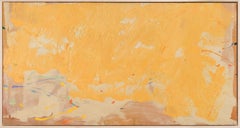
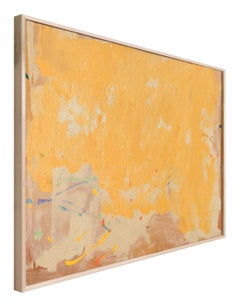
You are likely to find exactly the jack kay you’re looking for on 1stDibs, as there is a broad range for sale. There are many
abstract,
contemporary and
Pop Art versions of these works for sale. Making the right choice when shopping for a jack kay may mean carefully reviewing examples of this item dating from different eras — you can find an early iteration of this piece from the 20th Century and a newer version made as recently as the 21st Century. On 1stDibs, the right jack kay is waiting for you and the choices span a range of colors that includes
gray,
black,
beige and
gold. Finding an appealing jack kay — no matter the origin — is easy, but
Mark Whitmarsh,
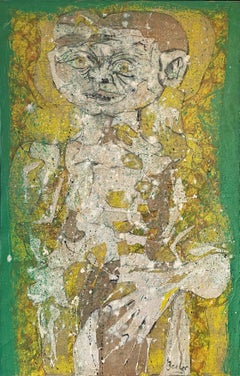
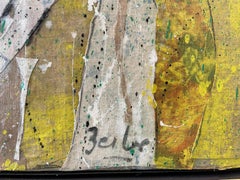
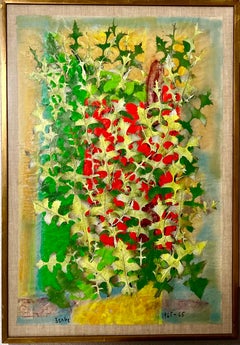
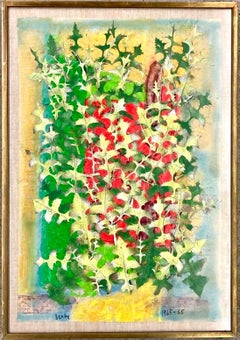
Karl Zerbe,
Cayla Birk,
Frederic Henri Kay Henrion and
Jack Mitchell each produced popular versions that are worth a look. Frequently made by artists working in
paint,
acrylic paint and
synthetic resin paint, these artworks are unique and have attracted attention over the years. A large jack kay can be an attractive addition to some spaces, while smaller examples are available — approximately spanning 8 high and 10 wide — and may be better suited to a more modest living area.
How Much is a Jack Kay?
The price for a jack kay in our collection starts at $500 and tops out at $6,000 with the average selling for $4,000.
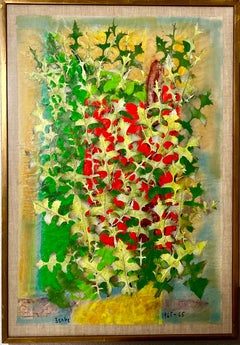
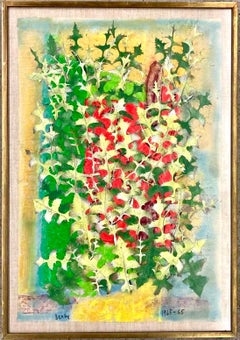
Karl Zerbe for sale on 1stDibs
Karl Zerbe was born on September 16, 1903 in Berlin, Germany. The family lived in Paris, France from 1904–1914, where his father was an executive in an electrical supply concern. In 1914 they moved to Frankfurt, Germany where they lived until 1920. Karl Zerbe studied chemistry in 1920 at the Technische Hochschule in Friedberg, Germany.
From 1921 until 1923 he lived in Munich, where he studied painting at the Debschitz School, mainly under Josef Eberz. From 1924 until 1926 Karl Zerbe worked and traveled in Italy on a fellowship from the City of Munich. In 1932 his oil painting titled, ‘’Herbstgarten’’ (autumnal garden), of 1929, was acquired by the National-Galerie, Berlin; in 1937, the painting was destroyed by the Nazis as "Degenerate art."
From 1937 until 1955, Karl Zerbe was the head of the Department of Painting, School of the Museum of Fine Arts, Boston.
In 1939 Karl Zerbe became a U.S. citizen and the same year for the first time he used encaustic. He joined the faculty in the Department of Art and Art History at Florida State University in 1955, where he taught until his death.
He was grouped together with the Boston artists Kahlil Gibran (sculptor), Jack Levine and Hyman Bloom as a key member of the Boston Expressionist school of painting,[5] and through his teaching influenced a generation of painters, including, among others, David Aronson, Bernard Chaet, Reed Kay, Arthur Polonsky, Jack Kramer, Barbara Swan, Andrew Kooistra, and Lois Tarlow.
His works are thought significant because they record "the response of a distinguished artist of basically European sensibility to the physical and cultural scene of the New World"
Finding the Right Abstract-paintings for You
Bring audacious experiments with color and textures to your living room, dining room or home office. Abstract paintings, large or small, will stand out in your space, encouraging conversation and introducing a museum-like atmosphere that’s welcoming and conducive to creating memorable gatherings.
Abstract art has origins in 19th-century Europe, but it came into its own as a significant movement during the 20th century. Early practitioners of abstraction included Wassily Kandinsky, although painters were exploring nonfigurative art prior to the influential Russian artist’s efforts, which were inspired by music and religion. Abstract painters endeavored to create works that didn’t focus on the outside world’s conventional subjects, and even when artists depicted realistic subjects, they worked in an abstract mode to do so.
In 1940s-era New York City, a group of painters working in the abstract mode created radical work that looked to European avant-garde artists as well as to the art of ancient cultures, prioritizing improvisation, immediacy and direct personal expression. While they were never formally affiliated with one another, we know them today as Abstract Expressionists.
The male contingent of the Abstract Expressionists, which includes Jackson Pollock, Willem de Kooning and Robert Motherwell, is frequently cited in discussing leading figures of this internationally influential postwar art movement. However, the women of Abstract Expressionism, such as Helen Frankenthaler, Lee Krasner, Joan Mitchell and others, were equally involved in the art world of the time. Sexism, family obligations and societal pressures contributed to a long history of their being overlooked, but the female Abstract Expressionists experimented vigorously, developed their own style and produced significant bodies of work.
Draw your guests into abstract oil paintings across different eras and countries of origin. On 1stDibs, you’ll find an expansive range of abstract paintings along with a guide on how to arrange your wonderful new wall art.
If you’re working with a small living space, a colorful, oversize work can create depth in a given room, but there isn’t any need to overwhelm your interior with a sprawling pièce de résistance. Colorful abstractions of any size can pop against a white wall in your living room, but if you’re working with a colored backdrop, you may wish to stick to colors that complement the decor that is already in the space. Alternatively, let your painting make a statement on its own, regardless of its surroundings, or group it, gallery-style, with other works.