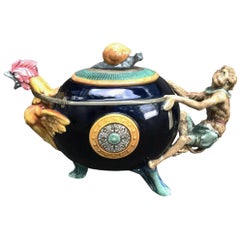
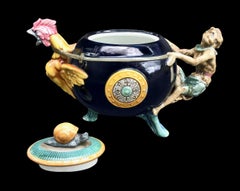
Majolica "Cockerel & Monkey" Teapot by Minton
By Minton
Located in Paris, FR
"Cockerel & Monkey Minton Majolica Teapot the protrusive cockerel head with forming the spout, a
Category
Late 20th Century English Victorian Tea Sets
Materials
Majolica
Majolica "Cockerel & Monkey" Teapot by Minton
By Minton
Located in Paris, FR
"Cockerel & Monkey Minton Majolica Teapot the protrusive cockerel head with forming the spout, a
Majolica
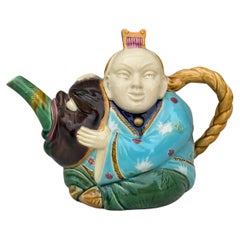
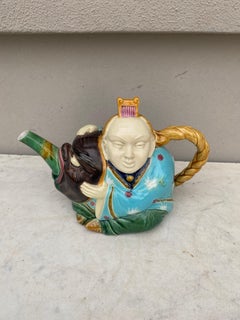
19th-Century Majolica Minton Chinaman Teapot
By Minton
Located in Austin, TX
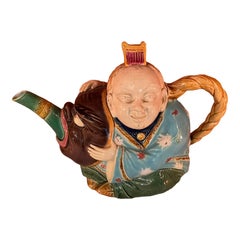
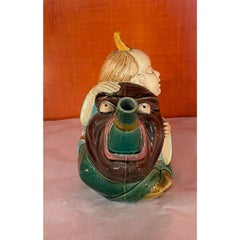
Majolica figural teapot signed Minton. Modeled as a Chinaman , the tail formed as the Chinaman’s
Ceramic
19th-Century Majolica Minton Chinese Man Figural Teapot
By Minton
Located in LOS ANGELES, CA
19th-Century Majolica Minton Chinese man figural teapot. It is wonderfully whimsical and features a
Pottery
19th-Century Majolica Minton Chinaman Teapot
By Minton
Located in Austin, TX
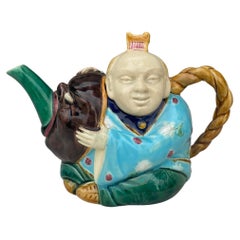
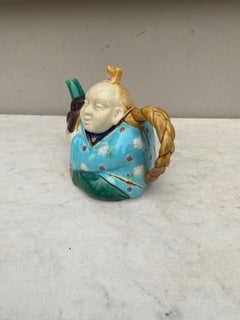
Majolica figural teapot signed Minton. Modeled as a Chinaman , the tail formed as the Chinaman’s
Ceramic
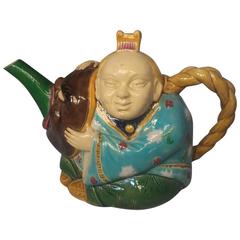
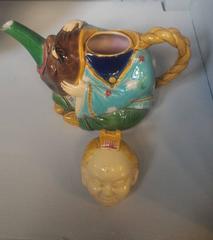
Minton Majolica Oriental Teapot, circa 1870
By Minton
Located in Paris, FR
This charming little teapot realized by the famous manufactory of Minton in England, reflects all
Majolica
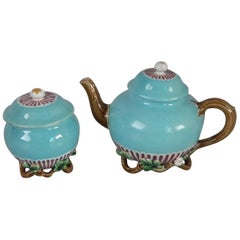
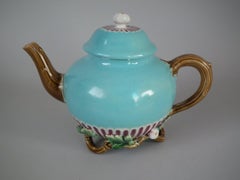
Rare Victorian Minton Majolica Teapot And Sugar Pot
By Minton
Located in Chelmsford, Essex
Minton Majolica teapot, sugar pot and creamer which features branch, leaf and blossom bases and a
Majolica

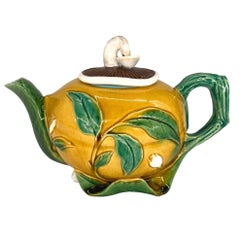
A Minton Majolica Teapot, Gourd-Form with Mushroom Lid, English, Dated 1861
By Minton
Located in Banner Elk, NC
A Minton Majolica Novelty Teapot formed as a yellow-glazed gourd with blossoms on raised leaves and
Majolica
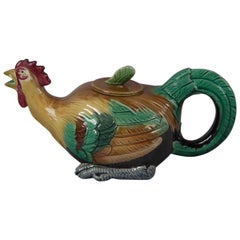
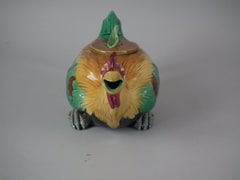
Small Minton Majolica Cockerel Teapot
By Minton
Located in Chelmsford, Essex
Minton Majolica teapot which features a cockerel. Coloration: brown, green, puce, are predominant
Majolica
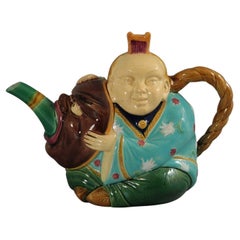
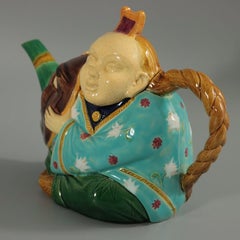
Minton Majolica Oriental Figure Teapot
By Minton
Located in Chelmsford, Essex
Minton Majolica teapot which features an oriental man, dressed in a floral robe, holding a Noh mask
Majolica
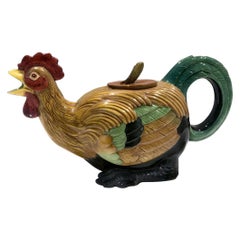
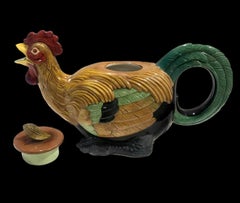
Majolica "Cockerel" Teapot by Minton
By Minton
Located in Paris, FR
Cockerel Majolica Teapot. He is singing and its beak is open and forms the spout. Its legs are
Majolica
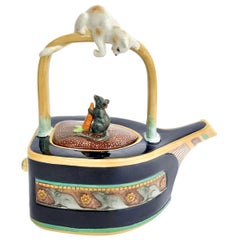
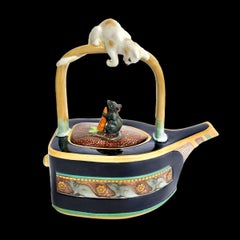
Majolica "Cat & Mouse" Teapot by Minton
By Minton
Located in Paris, FR
"Cat & Mouse" Majolica teapot, blue Drakkar-shaped. The bow of the boat forming the spout, the boat
Majolica
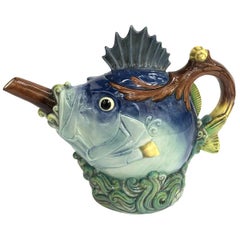
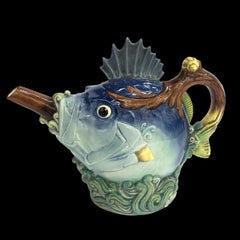
Majolica "Fish Teapot by Minton limited edition
By Minton
Located in Paris, FR
Blue "Fish" Majolica teapot sea bream shaped on waves, with a protrusive wood branch forming the
Majolica
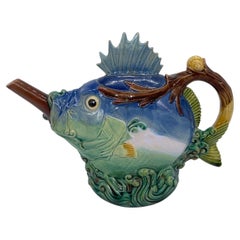
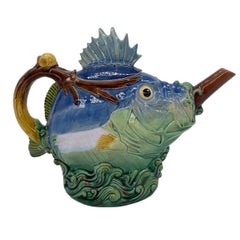
Minton Majolica Spiky Fish Teapot, English, Dated 1878
By Minton
Located in Banner Elk, NC
Minton Majolica Fish Teapot, modeled as a stylized fish in waves, the seaweed-formed handle
Majolica
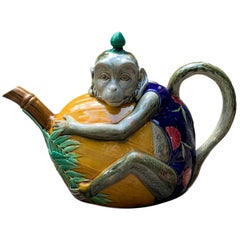

Minton Majolica Monkey Teapot, English, dated 1879
By Minton
Located in Banner Elk, NC
Minton Majolica monkey teapot, circa 1879, "Monkey grasping a coconut teapot" in wonderful
Majolica
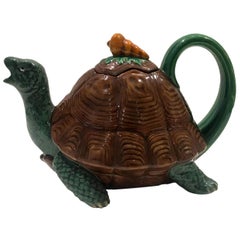
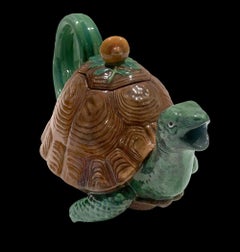
Minton Majolica Tortoise Teapot limited edition signed
By Minton
Located in Paris, FR
Tortoise Majolica Teapot, with its head protruding from the shell to form the spout, the tail
Majolica


$23,055
H 58 in W 48.5 in
Huge 1700's Florentine Old Master Oil Painting Eros Triumph over Pan Male Nudes
Located in Cirencester, Gloucestershire
The Triumph of Eros over Pan Florentine School, early 1700's period, unsigned oil on canvas, framed framed: 58 x 48.5 inches canvas: 50 x 40 inches Provenance: private collection, Pa...
Oil
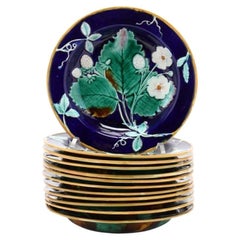
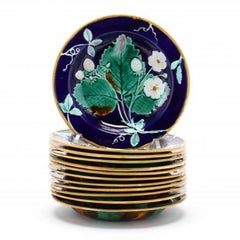
Wedgwood Majolica Dish with Strawberries on a Cobalt Ground, 1870, 12 Available
By Wedgwood
Located in Banner Elk, NC
Wedgwood Majolica Strawberry dish, naturalistically relief-modeled with strawberries, leaves, and blossoms, the lip with strawberry leaves and tendrils, with a yellow-glazed rim, on ...
Majolica
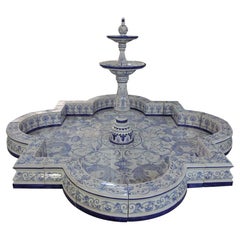
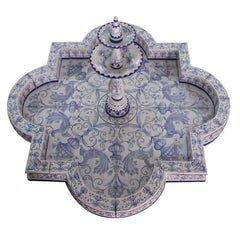
Large Water Fountain in Ceramic Mineral Finish
Located in Madrid, ES
Water fountain in hand painted ceramic. Decorative ceramic fountain antique finish.
Ceramic
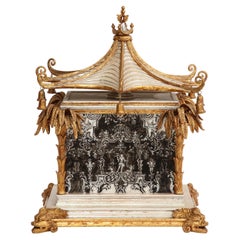
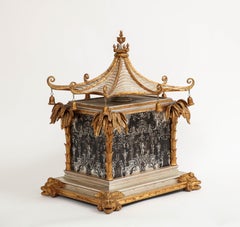
$9,850
H 20 in W 16 in D 12 in
A 1930's French Gilt Lacquered Wood Pagoda Form Chinoiserie Platinum Painted Box
By Maison Jansen
Located in New York, NY
A 1930's French Gilt Lacquered Wood Pagoda Form Chinoiserie Platinum Painted Box, Attributed to Jansen. At first glance, the box's visual allure is simply breathtaking. Adorned with ...
Wood
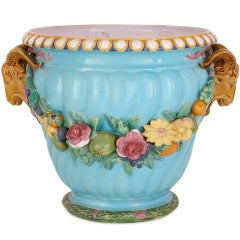
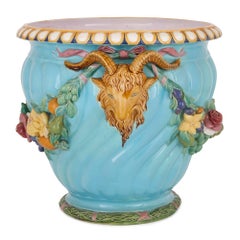
19th Century Majolica Jardinière by Minton and Carlo Marochetti
By Minton
Located in London, GB
This exquisite jardinière was manufactured by the celebrated English company Minton, who are famous for their ceramics. It was designed by Baron Carlo Marochetti (1805-1867), an Ital...
Majolica
$22,413
H 28.75 in W 15.75 in D 8.67 in
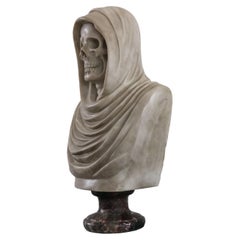
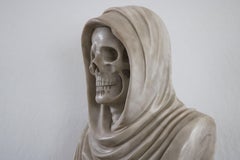
Rare 19th Century Italian Memento Mori Bust / Sculpture Carrara Marble Vanitas
Located in Ijzendijke, NL
Masterfully carved Italian Vanitas / Memento Mori bust in solid marble from late 19th century. White Carrara marble skull combined with masterfully carved hood & robes all from one...
Carrara Marble
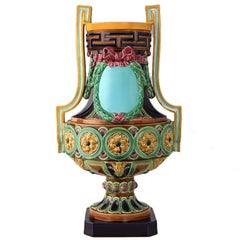
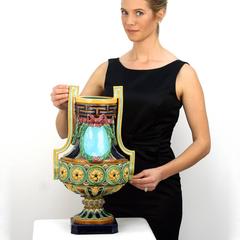
Huge Minton Majolica Vase
By Minton
Located in Litchfield, CT
Circa 1870, by Minton, England. A gorgeous example of English porcelain, this monumental vase is a Victorian Aesthetic movement tour de force. Majolica by Minton is known for its del...
Porcelain
$271,397
H 6.3 in W 9.69 in D 6.34 in
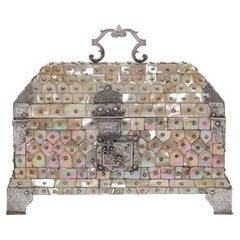
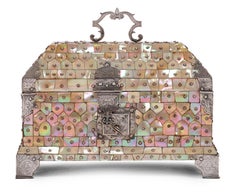
16th-Century Indo-Portuguese Colonial Mother-of-pearl Gujarat Casket
Located in Amsterdam, NL
An exceptional Indo-Portuguese colonial mother-of-pearl veneered casket with silver mounts India, Gujarat, 2nd half of the 16th century, the silver mounts Goa or probably Lisbon ...
Silver
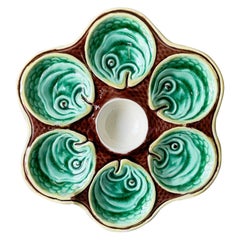
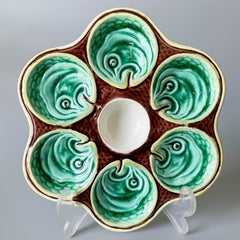
19th Century Wedgwood Majolica Fish Heads Oyster Plate
By Wedgwood
Located in Winter Park, FL
A small 19th century English Wedgwood majolica oyster plate having six wells with green fish head motif surrounding a central white well. Brown ground molded as fish scales with yell...
Majolica
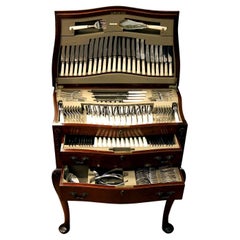
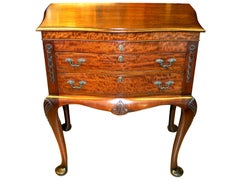
Antique Sterling Silver Canteen of Cutlery for Twelve Persons
By Viners 1
Located in Jesmond, Newcastle Upon Tyne
A magnificent, fine and impressive, comprehensive antique George V English sterling silver Sandringham pattern flatware service for twelve persons - boxed; an addition to our canteen...
Silver, Sterling Silver
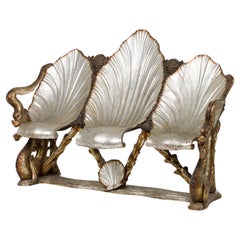
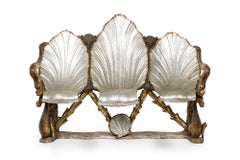
Italian Venetian Grotto Seashell Settee
By Pauly et Cie
Located in Queens, NY
Italian Venetian Grotto (19th cent.) silver gilt settee with triple seashell seat and dolphin & seahorse motif (att: Pauly et Cie, Venice)
Silver Leaf
$290,000
H 136 in Dm 108 in
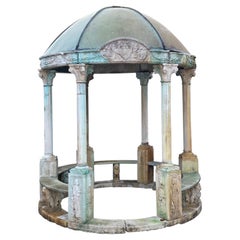
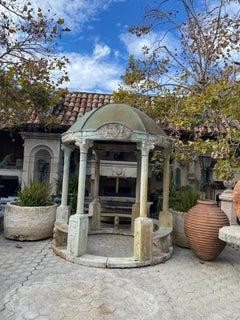
Exquisite Rotunda Structure Kiosk Copper & Carved Stone Bench Seating Columns
Located in West Hollywood, CA
Exquisite Rotunda Structure Kiosk Copper & Carved Stone Bench Seating Columns . Monumental Exquisite refined work King Charles X Period Rotunda rotundus building structure with a...
Stone, Copper
$2,985
H 6 in W 10.5 in D 10 in
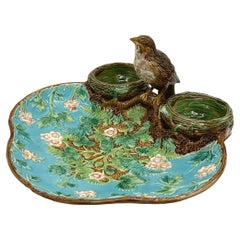
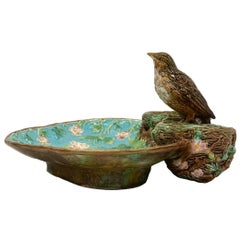
George Jones Majolica Strawberry Server Mounted by a Bird, English, circa 1870
By George Jones
Located in Banner Elk, NC
George Jones Majolica Strawberry Server, ca. 1870, the trefoil dish naturalistically moldelled with blossoming strawberry plants and ferns on a turquoise and rustic ground, surmounte...
Majolica
$75,000 / set
H 1.25 in Dm 8.5 in
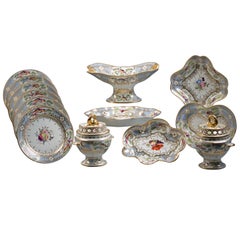
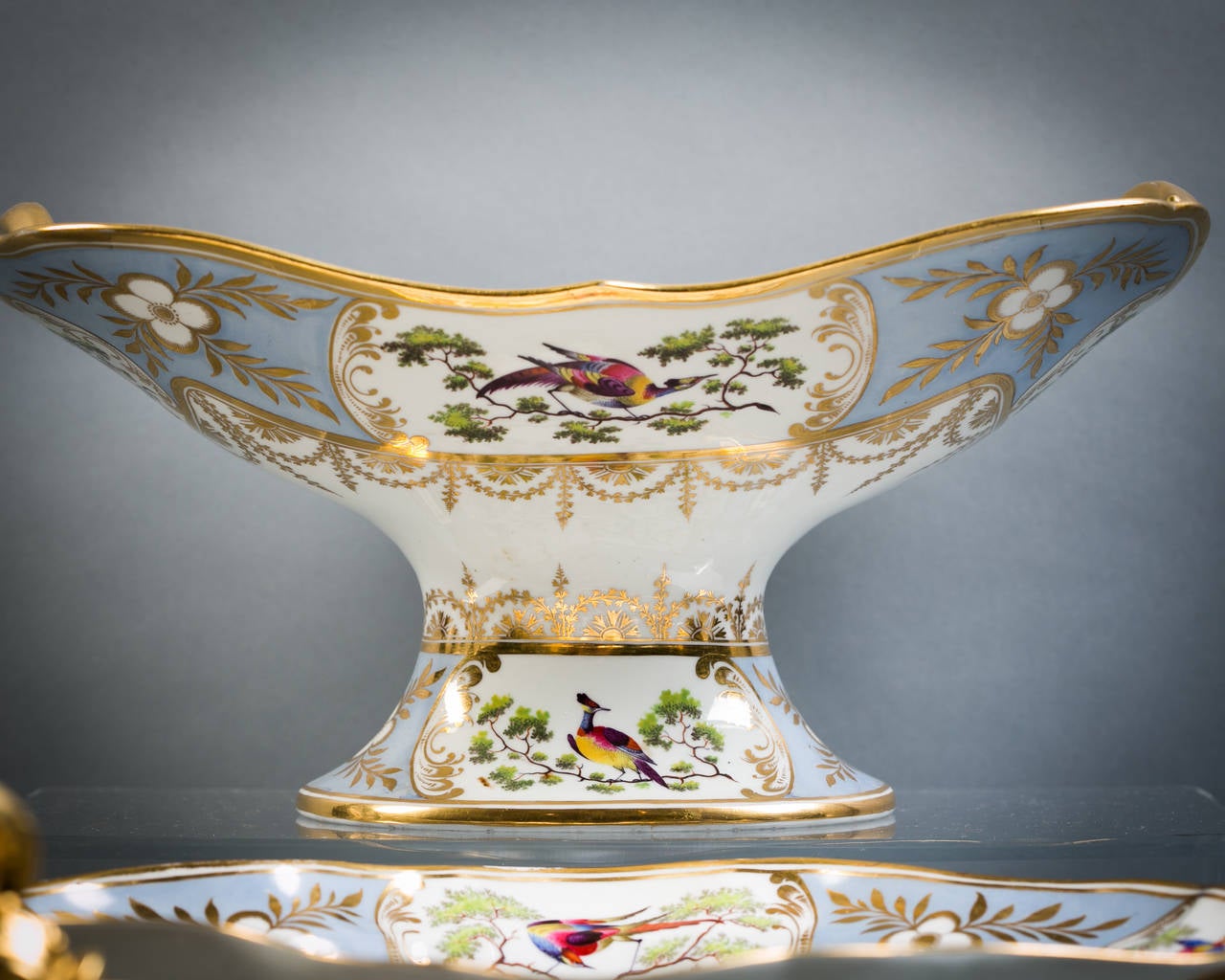
English Chamberlain Worcester Porcelain Part Dessert Service, circa 1815
Located in New York, NY
Comprising footed compote, pair of covered sauce tureens, one gallery (partially restored), pair of lozenge-shaped dishes, pair of kidney-shaped dishes, four shell dishes, four squar...
Porcelain
$61,359Sale Price|20% Off
H 104.34 in W 153.55 in D 19.69 in
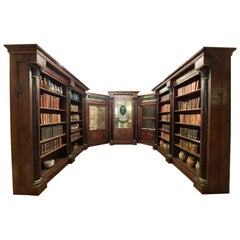
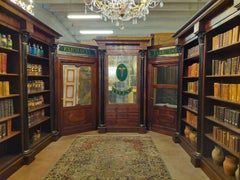
Antique Pharmacy Cabinet, Walnut Bookcases and Glass Doors with Sign, '800 Italy
Located in Cuneo, Italy (CN)
Complete antique pharmacy cabinet, with 3 open bookcases on the sides, 1 bookcase with drawers and 2 original doors with glass and enameled mirror sign. Built in the mid-19th century...
Glass, Walnut
$34,081
H 70.87 in W 73.23 in D 88.19 in
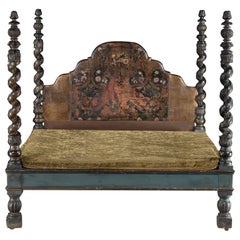
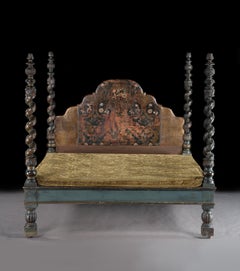
Bed Tester Spanish Baroque Carved Dark Green & Gilded Leather Superking 6ft180cm
Located in BUNGAY, SUFFOLK
Rare, Spanish Demi-Tester, Baroque Bed With Carved, Green Painted & Gilded Posts 181cm, 6ft High, Floral Painted Leather Headboard, sold with custom made box spring mattress base, ac...
Giltwood, Paint
Pottery is one of the oldest decorative art forms, and Minton is one of its historical masters. For more than 250 years, the English company was a premier producer of porcelain and ceramic wares. Its factory was known for detailed and brightly colored Victorian tableware, including dinner plates and serving pieces.
Thomas Minton founded the Minton factory in 1793 in Stoke-upon-Trent, England. It initially made earthenware but introduced bone china in 1798. When Minton died in 1836, the company passed to his son, Herbert Minton. The younger Minton was a savvy businessman with an eye for design. He introduced glossy majolica earthenware to the factory’s repertoire and hired skilled artists and designers like Augustus Welby Northmore Pugin and Albert-Ernest Carrier-Belleuse, boosting the company’s reputation.
In 1851, Minton debuted its majolica at the Great Exhibition in London. It became a royal family favorite and was even used to tile the Royal Dairy at Windsor Home Park. Minton majolica was also displayed on the monumental Saint George and the dragon fountain at the 1862 London International Exhibition.
Colin Minton Campbell, a nephew of Herbert Minton, took over the family business in 1858. He led the company to the head of the 1870s English art pottery movement. In the 1890s, French porcelain artist Marc-Louis Solon helped modernize Minton with his Art Nouveau designs.
Minton ceased operating as an independent company when it merged with Royal Doulton Tableware Ltd. in 1968. It was the end of an era, but not the end of widespread appreciation for Minton ceramics.
In 1982, the ”English Majolica” exhibition at the Cooper Hewitt, Smithsonian Design Museum featured 75 Minton pieces. When the Metropolitan Museum of Art reopened its British Galleries in 2020, it included a display of three colorful Minton majolica bird sculptures. Minton pottery was also on display from September 2021 to January 2022, along with other English pottery, at the Bard Graduate Center’s ”Majolica Mania” exhibition.
On 1stDibs, find exquisite Minton serveware, decorative objects, wall decorations and more.
Ready to serve high tea and brunch for your family and friends? Start with the right antique, new or vintage tea set.
Tea is a multicultural, multinational beverage and isn’t confined to any particular lifestyle or age group. It has humble beginnings, and one of its best-known origin stories places the first cups of tea in 2700 B.C. in China, where it was recognized for its medicinal properties. Jump ahead to 17th-century England, when Chinese tea began to arrive at ports in London. During the early 1800s, tea became widely affordable, and the concept of teatime took shape all over England. Today, more than 150 million people reportedly drink tea daily in the United States.
Early tea drinkers enjoyed their beverage in a bowl, and English potters eventually added a handle to the porcelain bowls so that burning your fingers became less of a teatime hazard. With the rise in the popularity of teatime, tea sets, also referred to as tea service, became a hot commodity.
During Queen Victoria’s reign, teakettles and coffeepots were added to tea services that were quite large — indeed, small baked goods were served with your drink back then, and a tea set could include many teacups and saucers, a milk pot and other accessories.
During the early 1920s, a sterling-silver full tea service and tray designed by Tiffany & Co. might include a hot-water kettle on a stand, a coffeepot, teapot, a creamer with a small lip spout, a waste bowl and a bowl for sugar, which the British were stirring into tea as early as the 18th century.
But you don’t have to limit your tea set to Victorian or Art Deco styles — shake up teatime with an artful contemporary service. If the bold porcelain cups and saucers by Italian brand Seletti are too unconventional for your otherwise subdued tea circle, find antique services on 1stDibs from Japan, France and other locales as well as vintage mid-century modern tea sets and neoclassical designs.