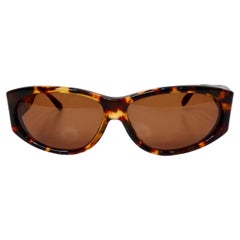
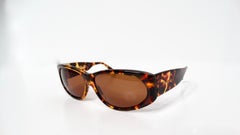
Gucci Chunky Tortoise Style Sunglasses circa 1990s
By Gucci
Located in Scottsdale, AZ
classic Chanel tailored blazer, a sleek Louis Vuitton leather handbag, or a pair of Prada silk scarves
Category
Gucci Chunky Tortoise Style Sunglasses circa 1990s
By Gucci
Located in Scottsdale, AZ
classic Chanel tailored blazer, a sleek Louis Vuitton leather handbag, or a pair of Prada silk scarves
$5,500
H 5.5 in W 2 in L 8.5 in
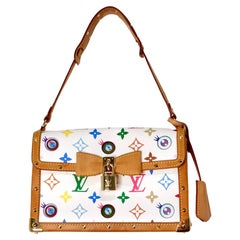
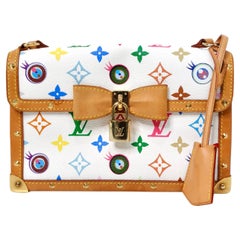
Tagashi Murakami x Louis Vuitton "Eye Miss You" Multicolor Monogram Bag Y2K
By Takashi Murakami, Louis Vuitton
Located in Scottsdale, AZ
beautifully with high-end designer items such as Gucci’s colorful silk scarves, Prada’s sleek leather jackets
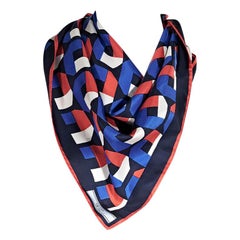
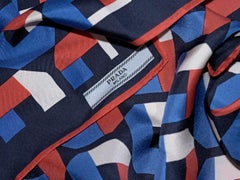
Multicolor Prada Geometric Silk Scarf
By Prada
Located in New York, NY
Product details: Multicolor geometric-printed silk scarf by Prada. 24" square. Condition: Pre
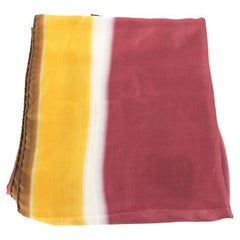
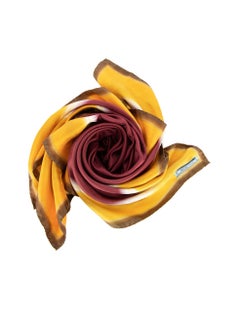
Prada Women's Gradient Colour Silk Scarf
By Prada
Located in London, GB
CONDITION is Very good. Hardly any visible wear to scarf is evident on this used Prada designer
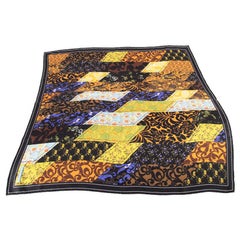
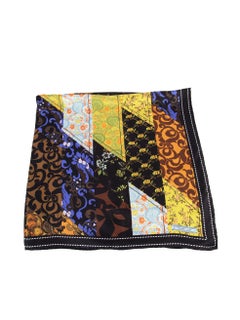
Prada Abstract Floral Silk Foulard Scarf
By Prada
Located in London, GB
CONDITION is Very good. Hardly any visible wear to scarf is evident on this used Prada designer
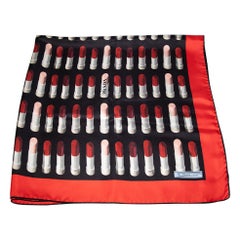
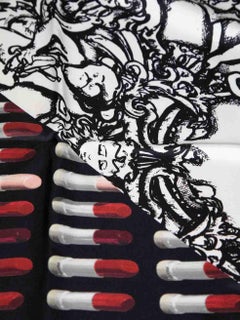
Prada Lipstick Pattern Silk Square Scarf
By Prada
Located in London, GB
side and bottom right corner. The brand label has detached on one side on this used Prada designer
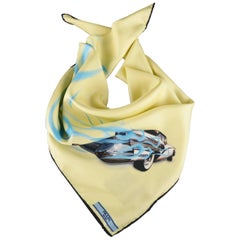
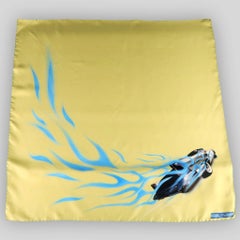
PRADA Yellow & Blue Silk Spring 2015 Car Flame Scarf
By Prada
Located in San Francisco, CA
PRADA scarf comes in light yellow silk twill and features Spring 2015 blue car and flame graphic
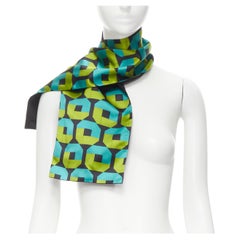
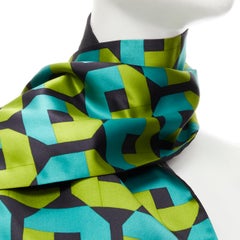
PRADA Duchess silk blue green geometric print black lining scarf
By Prada
Located in Hong Kong, NT
PRADA Duchess silk blue green geometric print black lining scarf Reference: MAWG/A00072 Brand
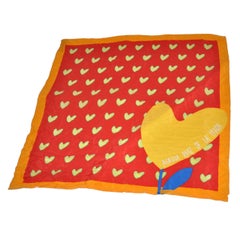
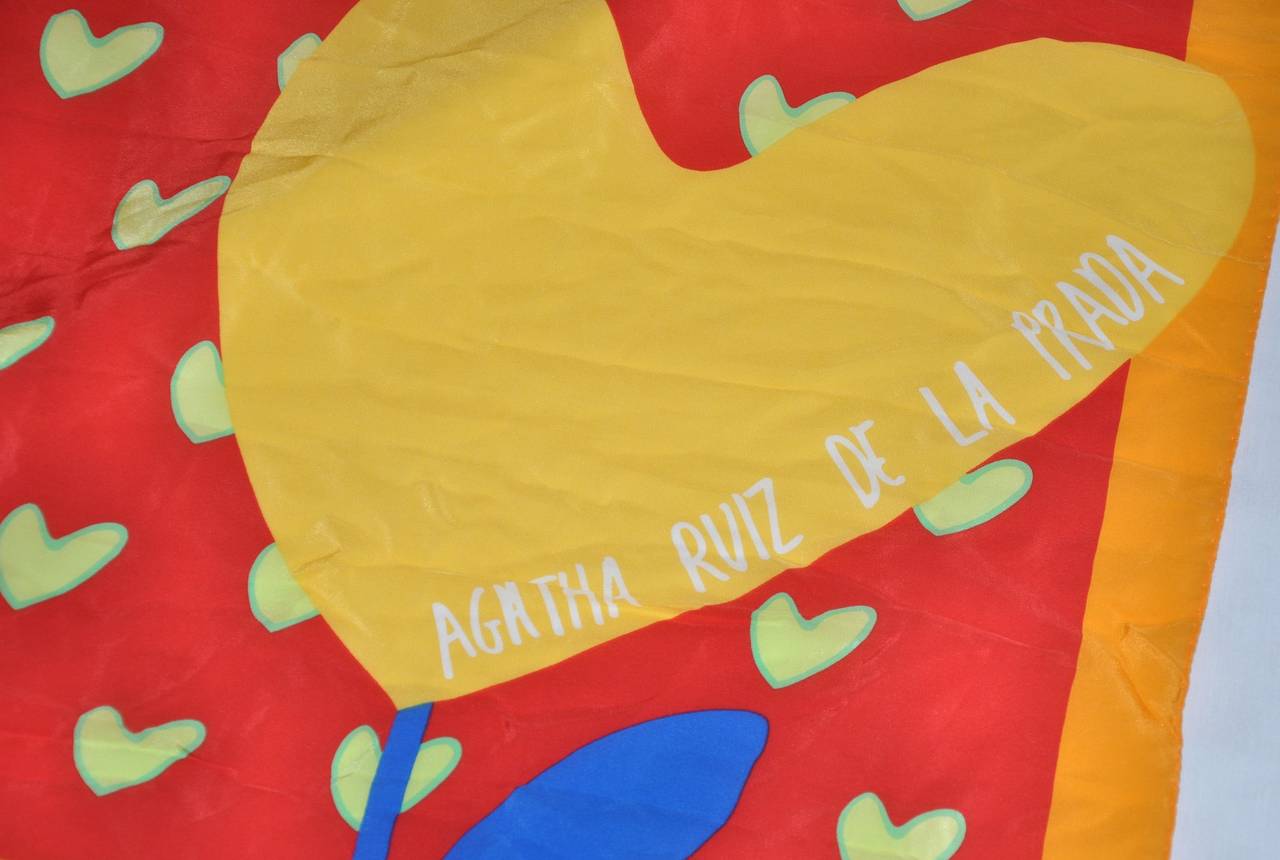
Agatha Ruiz de la Prada "Hearts" Silk Scarf
By Prada
Located in New York, NY
Agatha Ruiz de la Prada "Hearts" silk scarf is finished with hand-rolled edges and measures 34" x
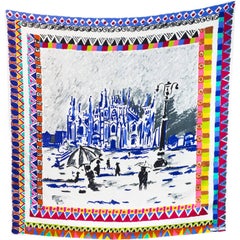

Prada Multi-Color Street Scene Silk Scarf with Box
By Prada
Located in New York, NY
Prada Multi-Color Street Scene Silk Scarf Limited Edition scarf Made In: Italy Color: White
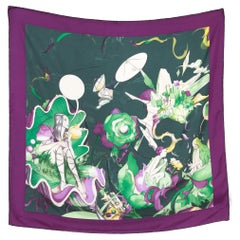
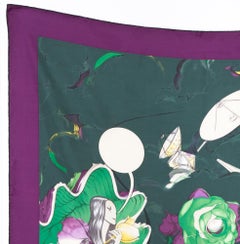
2008 Prada James Jean Fairy Print Throughout Silk Scarf
By Prada
Located in Paris, FR
2008 James Jean Fairy Prada silk scarf featuring a James Jean Fairy print throughout and a Prada
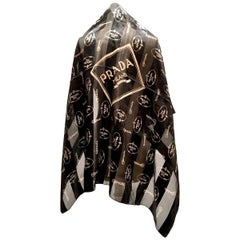

Vintage Prada Milano Logo Stripled Black & Gold Silk Chiffon Scarf
By Prada
Located in West Palm Beach, FL
Rare Black & Gold Silk Chiffon Stripe Prada Logo Scarf.This dramatic black and gold striped
$16,378
Size: Equivalent size 36 France
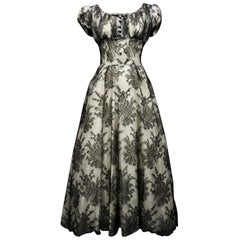
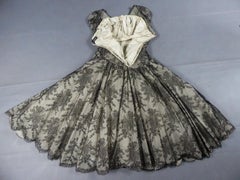
A Christian Dior Lace Couture Gown Collection Ligne Oblique (?) Circa 1950
By Christian Dior
Located in Toulon, FR
Ligne Oblique Collection (?) Circa 1948/1950 Paris France A Collectible Calais black lace cocktail or ceremonial dress by Christian Dior. Black and white transparency effect obtained...
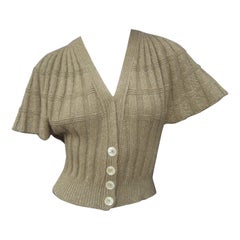
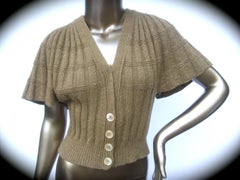
Louis Vuitton Paris Italian Knit Brown Cardigan c 21st c
By Louis Vuitton
Located in University City, MO
Louis Vuitton Paris Italian knit brown cardigan sweater Size M The chic Italian knit cardigan is designed with a muted light brown shade; accented with subtle gold metallic knit band...
$4,913
H 35.44 in W 14.97 in D 11.03 in
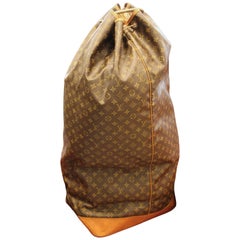
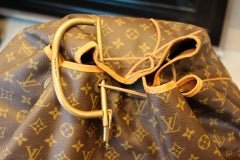
Extra Large Louis Vuitton Marin Bag Louis Vuitton Bag, Louis Vuitton Duffle Bag
By Louis Vuitton
Located in Saint-ouen, FR
This impressive 1970s Louis Vuitton bag features monogram canvas in very good condition, its leather part has very few stains and scratches. Its interior is in very good condition to...
$14,920
H 5.5 in W 10.5 in L 5.5 in
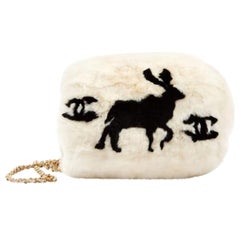
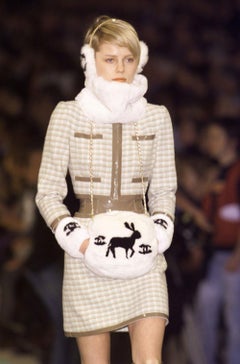
Chanel Cc Logo Reindeer Muff Vintage Rare Limited Edition White Fur Satchel
By Chanel
Located in Miami, FL
Chanel' White CC Reindeer Rabbit Muff 2001 {VINTAGE 21 Years} CC Logo with reindeer Gold hardware Detachable brushed-gold interwoven chain White rabbit fur Filled with down Black sa...

$12,920
W 17 in D 4 in L 13 in
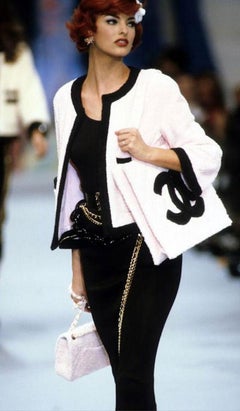
Chanel Timeless Vintage Cc Tote Towel Rare Piece Black Terry Cloth Beach Bag
By Chanel
Located in Miami, FL
Chanel Vintage Beach Bag CC Tote Towel Rare Piece 1989 {VINTAGE 33 Years} White terry "CC" lettering stitched on one side Black leather lined interior Interior zippered and open poc...
$10,502
Size: FR 34 - UK 6 - IT 38 - US 0
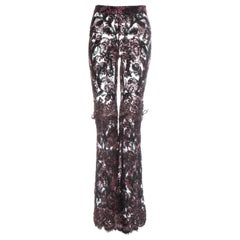
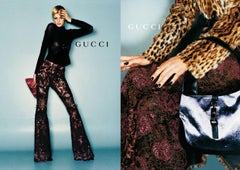
Gucci by Tom Ford purple embroidered lace flared evening pants, fw 1999
By Gucci, Tom Ford for Gucci
Located in London, GB
Gucci by Tom Ford purple embroidered lace and silk flared evening pants with leather ribbon bows on knees Fall-Winter 1999
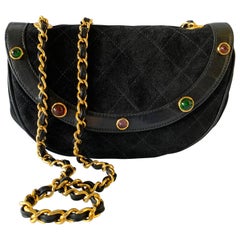
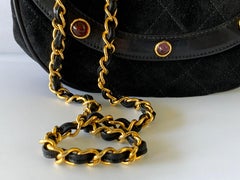
Chanel Quilted Gilt Gripoix Cross-body Vintage Handbag
By Chanel
Located in Palm Springs, CA
One of the most scarce Coco Chanel handbags - black quilted suede and kidskin lamb leather in a half-moon shape, with a gilt-metal woven leather chain. The chic bag is adorned by lar...
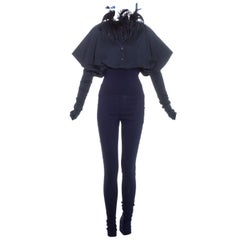
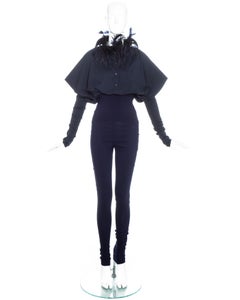
Dolce & Gabbana navy feathered pant suit, fw 1990
By Dolce & Gabbana
Located in London, GB
Dolce & Gabbana navy cotton spandex pant suit comprising: wide cut button up blouse with fitted sleeves and feathered collar, and fitted high waisted pants. Fall-Winter 1990

$5,654
Size: FR 38 - IT 42 - UK 10 - US 6
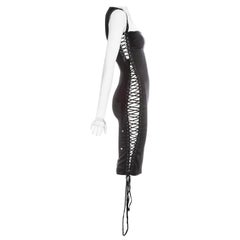
Dolce & Gabbana black silk spandex and leather lace up dress, ss 2003
By Dolce & Gabbana
Located in London, GB
Dolce & Gabbana; black silk spandex figure hugging evening dress. - Lambskin leather grommet trim - Open on both sides with lace up fastenings - Invisible side zip closure ...
$10,502
Size: Modern day UK 10 - FR 38
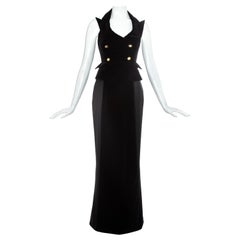
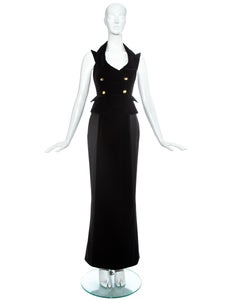
Vivienne Westwood black velvet corset waistcoat and maxi skirt, c. 1995-7
By Vivienne Westwood
Located in London, GB
Vivienne Westwood black velvet evening ensemble. Halter neck double breasted waistcoat with built in corset and signature gold orb buttons, and fishtail maxi skirt. c. 1995-7
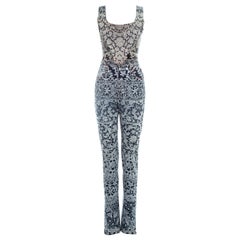
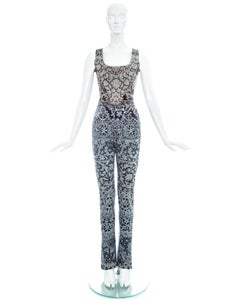
Vivienne Westwood lace screen printed denim corset and jeans, fw 1992
By Vivienne Westwood
Located in London, GB
Vivienne Westwood lace screen printed denim corset and high rise slim jeans Fall-Winter 1992

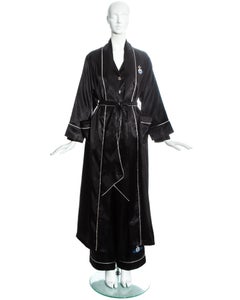
Vivienne Westwood black embroidered 3 piece pyjama suit, ss 1993
By Vivienne Westwood
Located in London, GB
Vivienne Westwood black polyester 3 piece pyjama suit with three large embroidered orbs and silver lurex piping. Loose fit robe with matching belt and two front pockets, loose fit bl...
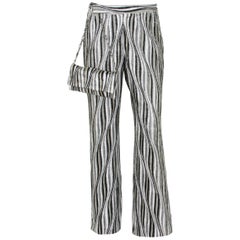
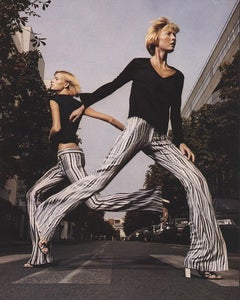
Tom Ford for Gucci S/S 2000 Fully Beaded Pants + Matching Beaded Bag It. 42 US 6
By Gucci, Tom Ford for Gucci
Located in Montgomery, TX
Tom Ford for Gucci Fully Beaded Women's Evening Pants with Matching Beaded Shoulder Bag S/S 2000 Collection Designer size 42 - US 6 100% Silk, Zebra Design, Fully Beaded in Black, Gr...
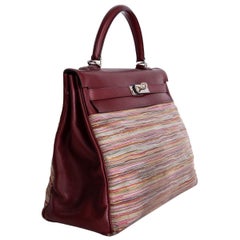
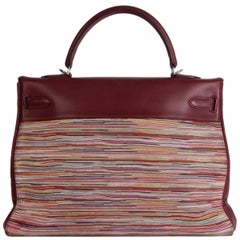
HERMES Rouge H burgundy leather VIBRATO KELLY 35 RETOURNE Bag
By Hermès
Located in Zürich, CH
Hermes 'Kelly II 35 Retourne Vibrato' bag in Rouge H (burgund) Veau Evercalf leather with multicolor Vibrato panel. Rare limited edition. Lined in Rouge H Chèvre (goat skin) with two...
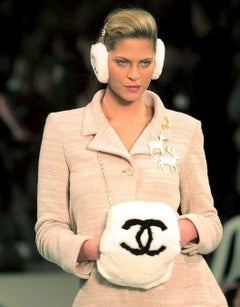
$12,920
H 5.5 in W 10.5 in L 5.5 in
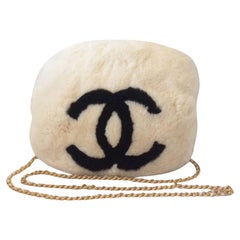
Chanel Cc Logo Muff Vintage Rare Limited Edition White Fur Satchel
By Chanel
Located in Miami, FL
Chanel' White CC Rabbit Muff CC Logo Gold hardware Detachable brushed-gold interwoven chain White rabbit fur Filled with down Black satin lining Chain drop: 19" inches Made in Italy
$16,920
H 14.6 in W 8.7 in L 21.7 in
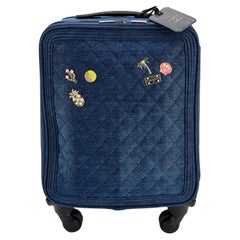
Chanel Coco Charm Denim Jean Trolley Travel Luggage Rolling Carry On Bag
By Chanel
Located in Miami, FL
Chanel Coco Charm Denim Trolley Travel Luggage Rolling Carry On Chanel Cruise 2017 Dark wash blue denim Silver-tone hardware Retractable handle dual flat handles at top and side Whe...
The House of Savoy coat of arms and knotted rope on Prada’s seal herald that the iconic Italian luxury fashion house was named Official Supplier to the Italian Royal Household in 1919. Started in 1913 by Mario Prada, the brand’s original shop in Milan’s Galleria Vittorio Emanuele II still has the mahogany shelves that displayed its early wares such as travel items and handbags. Today, these fine leather goods are joined by the clothing, wallets and other various accessories that keep the brand on the cutting edge of fashion.
When Mario Prada’s granddaughter, Miuccia Prada (b. 1949), inherited the business from her mother in the late 1970s, Prada was recognized for its quality craftsmanship, yet it was still a modest-sized company. Miuccia, an enthusiast of unconventional Italian filmmakers who’d earned a Ph.D. in political science, introduced the concept of using pocone — a military-grade water-resistant nylon that feels like silk.
Nylon revolutionized the fashion house’s business, with the first Prada nylon backpack released to universal acclaim in 1984. Soon the durable, water-resistant material was incorporated into Prada’s ready-to-wear collections for both men and women. No one had previously considered nylon a part of luxury fashion, and it wasn’t long before the family-owned company best known for its luggage was leading modern style that emphasized function as much as form.
Characterized by clean lines and a refined elegance that signaled the new direction of the legacy brand, Miuccia Prada debuted her first ready-to-wear collection for women in Fall/Winter 1988. More inventive fashion would follow in the ensuing years, such as the 1993 launch of the more affordable, more playful Miu Miu line, which was aimed at a younger audience, and the introduction of Prada Sport in 1997 — a collection now widely seen as prescient for its embrace of athleisure.
Prada has regularly gone against the grain to elevate styles that have long been out of fashion. In 1996, there were dresses and skirts in clashing patterns and muted earth tones that seemed flat and outdated, all worn with chunky high wedge sandals. Fanny packs followed three years later, and elaborate lace in 2008. Each season continues to bring new eye-catching innovations for the historic brand, including enhanced attention to sustainability with Prada Re-Nylon, a new line of bags created from recycled ocean plastic.
Today, find a wide variety of vintage Prada evening dresses, bags and other items on 1stDibs.
We’ve long had a love affair with vintage and designer scarves. Every glamorous go-to ensemble deserves the lightweight finishing touch that can be added with this stylish, versatile accessory.
Scarves have held a distinctive place in the evolution of formal and casual wear for centuries. And although now firmly entrenched in western culture, the origins of this neckwear are global.
Egyptian Queen Nefertiti is known to have worn a finely woven scarf with a headdress, and Emperor Cheng of the Chinese Han dynasty presided over an army of warriors whose scarves denoted their rank. The idea of scarves as status symbols still persists; for example, silk scarves, which were favored by the upper class during the reign of Queen Victoria, are an out-of-reach luxury item, cost prohibitive for many consumers. However, the increasing diversity of available materials over the years has rendered this adornment more accessible since their early days.
Luxury houses and various designers helped elevate scarves and long, flowing wraps as a desirable fashion accessory during the 20th century.
Visionary Italian designer Emilio Pucci — the first fashion designer to enter the lifestyle market — introduced abstractions and dazzling psychedelic elements to scarves, while mid-century era multidisciplinary American artist Vera Neumann drew on Japanese techniques to create exuberant textile designs based on her paintings and drawings.
Established in Paris in 1837, Hermès didn’t start creating their famously decorative scarves until 100 years later, in 1937. Before long, the Hermès scarf, then crafted from strong imported Chinese silk, became an iconic work favored by actresses such as Audrey Hepburn and Grace Kelly, a lifetime enthusiast of the family-owned brand. Hermès has produced over 2,000 different scarf designs in the decades since Robert Dumas, Émile-Maurice Hermès’s son-in-law, crafted the first one.
On 1stDibs, find a broad selection of vintage scarves that includes flamboyant and colorful accessories designed by Chanel, Yves Saint Laurent and more.