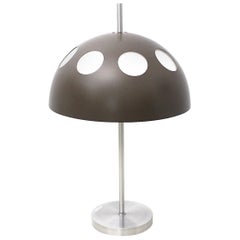
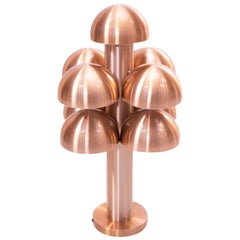
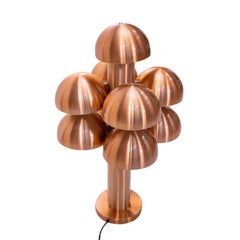
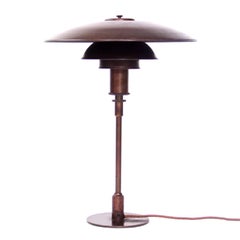
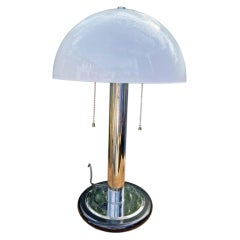
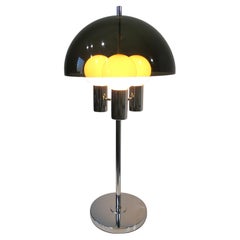
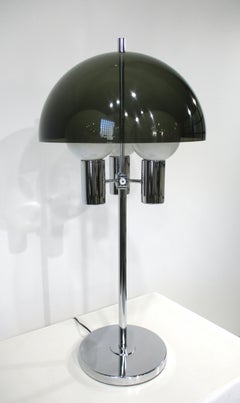
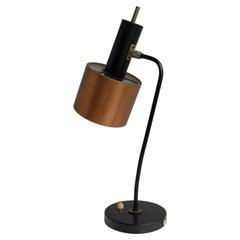
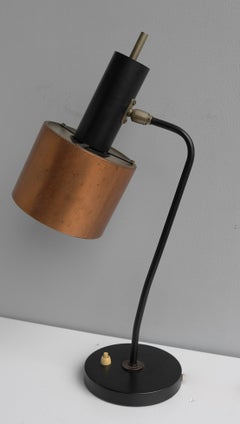
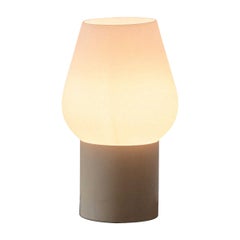
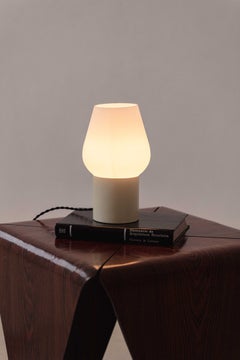
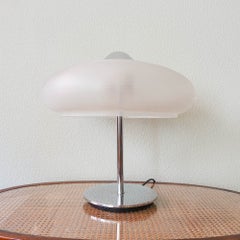
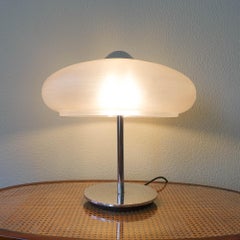
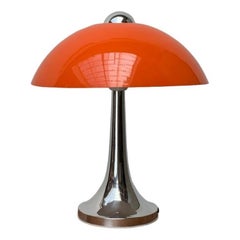
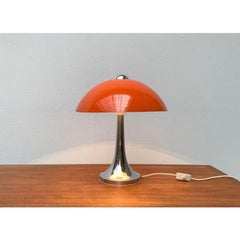
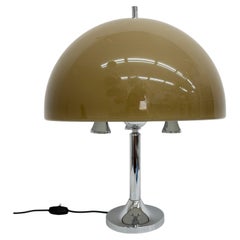
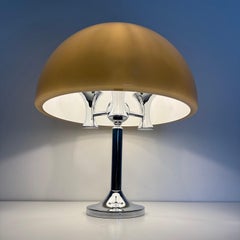
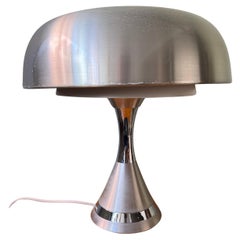
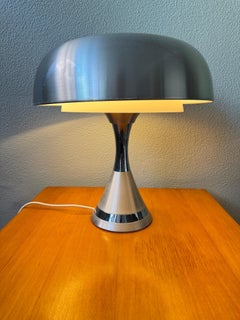
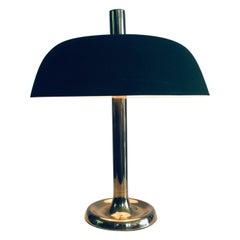
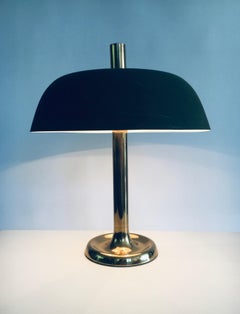
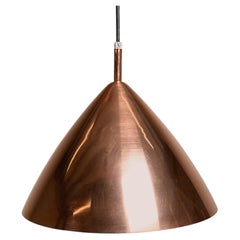
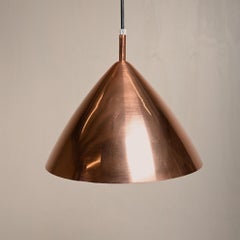
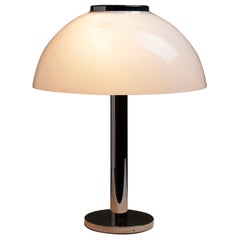
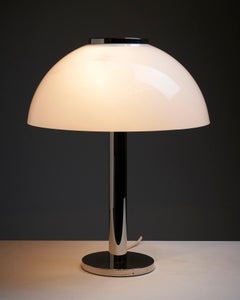
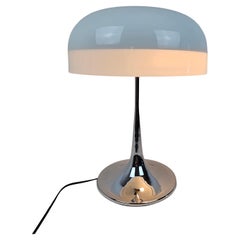
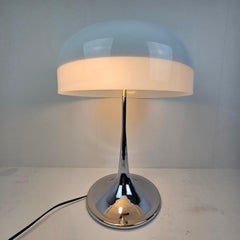
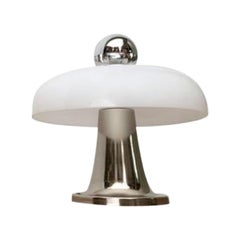
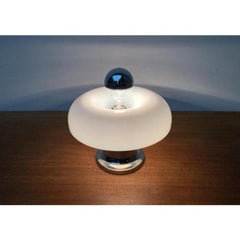
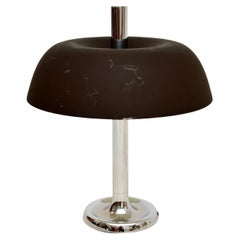
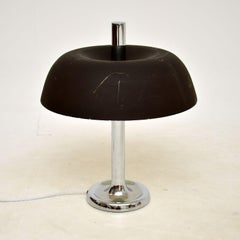
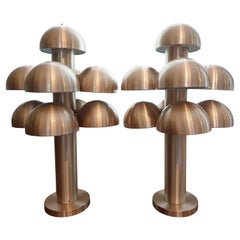
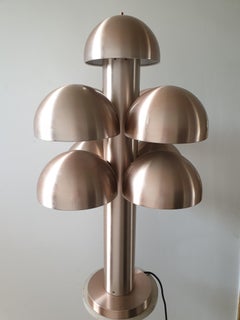
In Dutch, “raak” means “to hit” or “to hit the nail on the head.” Lighting company RAAK certainly accomplished that with its unique mid-century modern designs of futuristic, Space Age metal lamps, pendants and other lighting creations.
RAAK was founded in 1954 by Carel O. Lockhorn (1923–2004), a former employee of the Philips Lighting company in Eindhoven, the Netherlands. Under the tagline “Illuminated Architecture,” RAAK focused on producing elegant, sophisticated and modern lighting that would blend seamlessly with high-concept interiors.
During the 1960s, one of RAAK’s most well-known designs came from its in-house designer, Frank Ligtelijn, who created the Globe 2000 series of glass and chrome floor lamps, pendants and wall lights. Another key collaboration was with Dutch artist and glassmaker Willem van Oyen, who produced the iconic Chartres wall lights in 1964. Van Oyen’s Brutalist design evoked melted paintings and was inspired by the stained glass windows in the Chartres Cathedral in France.
In the 1970s, RAAK worked with several influential international artists, such as Italian designers Sergio Asti, Giotto Stoppino and Cesare Casati and Emanuele Ponzio, and Finnish designers Maija Liisa Komulainen (best known for her metallic, cylindrical Fuga lamp) and Tapio Wirkkala, creator of the handblown crystal Suomi pendant lamps.
Through the 1960s, 1970s and 1980s, RAAK enjoyed enormous success throughout Europe and worldwide for its modern lamps and decorative lighting. In 1974, Lockhorn sold RAAK to the furniture company ITT but remained its director until 1977. In 1980, RAAK merged with BIS Lighting and was renamed BISRAAK. Then, in 1999, the company entered into another merger, this time with Artilite B.V. and Indoor B.V., and became the Center for Light Architecture. It declared bankruptcy in 2011.
RAAK lighting continues to be highly coveted today among interior designers and avid vintage furniture collectors.
On 1stDibs, discover a range of vintage RAAK lighting, decorative objects and more.
Antique table lamps became a category of their own once electricity moved light off the wall and onto furniture. The form split quickly: task-driven designs like the Anglepoise on one side, decorative ceramic and glass on the other.
Styles to Know
Base material shapes the light as much as the shade does: ceramic and glass diffuse a softer glow, while brass and metal read more directional. Layer the look with a mid-century modern floor lamp for ambient light, or set a pair on a mid-century modern nightstand for a bedroom.
How to Choose the Right Vintage Table Lamp
Buying individually rather than as a pair allows more flexibility when mixing eras across a room. For those shopping by name rather than by shape, the history of the Anglepoise lamp is worth a read. Each piece comes from a vetted 1stDibs seller, with era, designer and condition detailed, and the 1stDibs Promise stands behind every purchase.