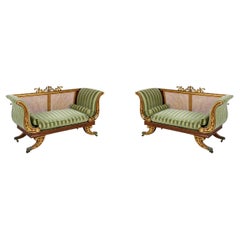
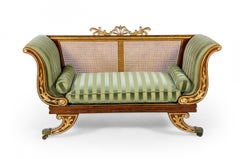
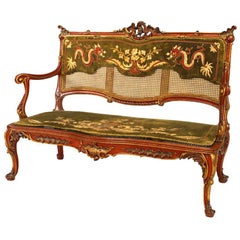
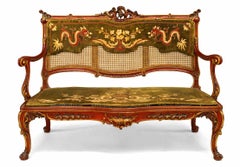
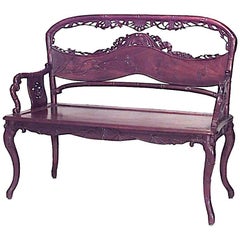
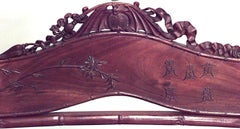
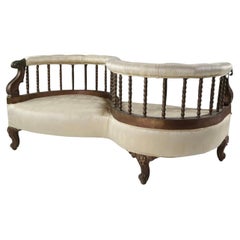
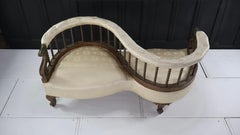
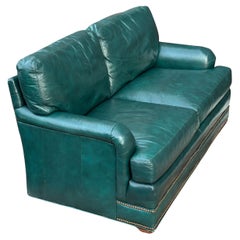
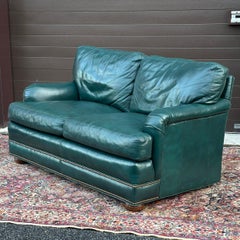
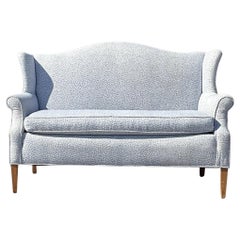
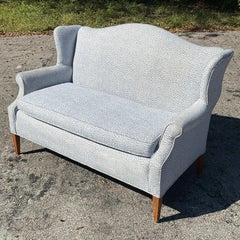
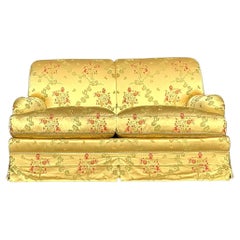
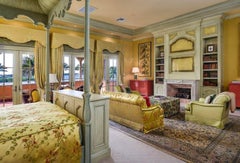
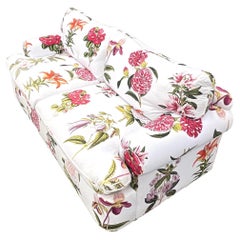
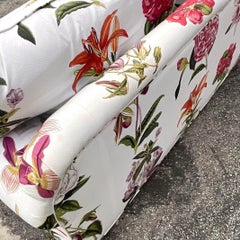
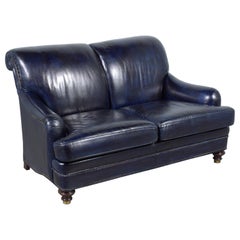
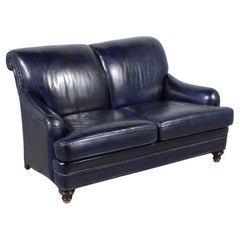
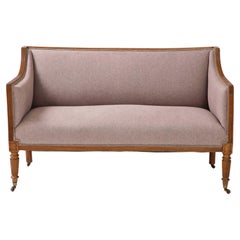
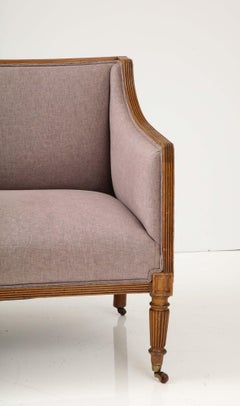
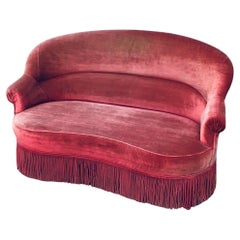
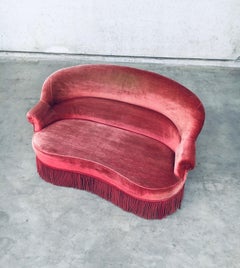
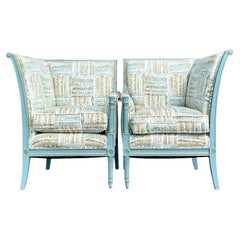
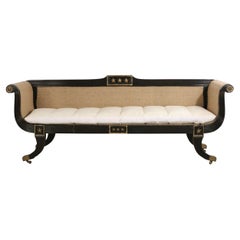
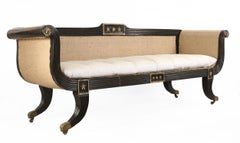
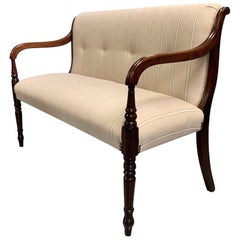
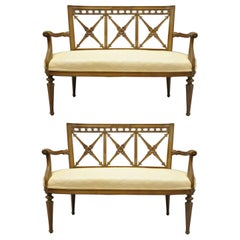
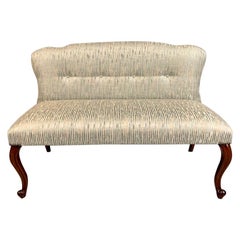
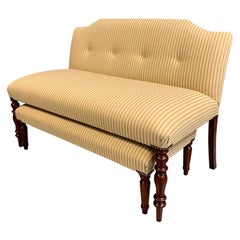
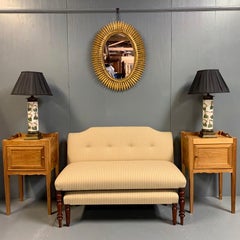
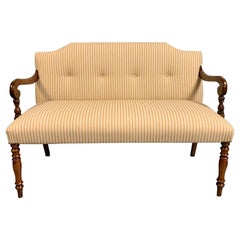
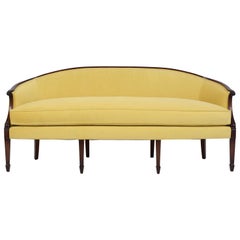
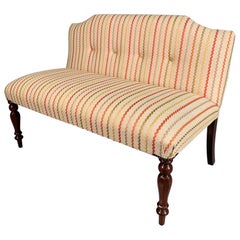
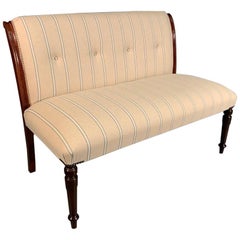
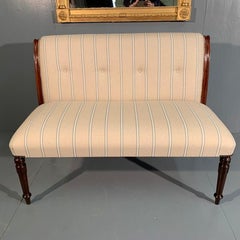
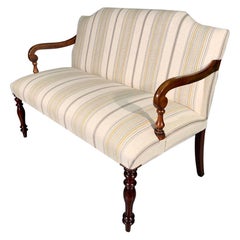
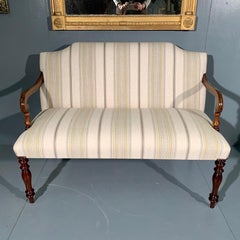
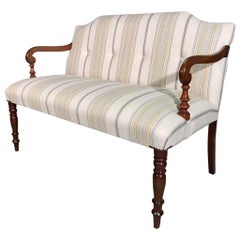
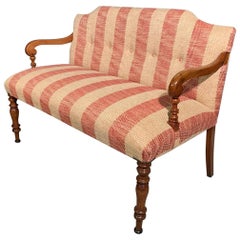
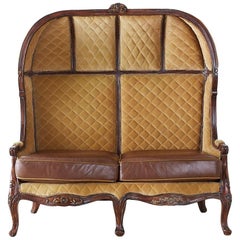
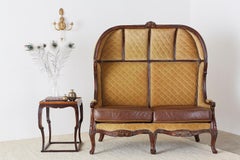
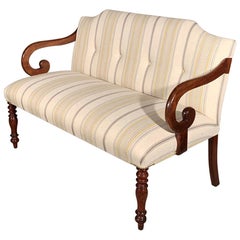
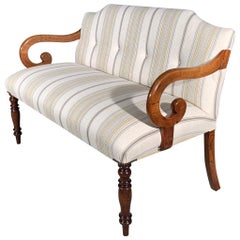
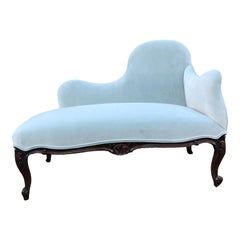
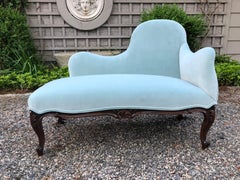
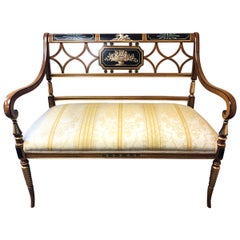
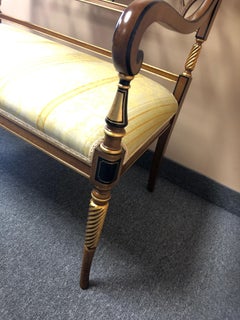
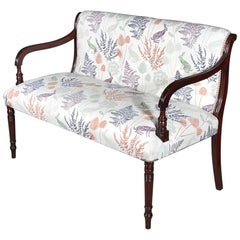
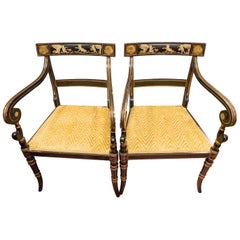
At 1stDibs, there are several options of regency wood loveseats available for sale. Regency wood loveseats have been produced for many years, with earlier versions available from the 19th Century and newer variations made as recently as the 20th Century. Some regency wood loveseats are too large for some spaces — a variety of smaller regency wood loveseats, measuring 20.87 inches across, are available at 1stDibs. There have been many well-made regency wood loveseats over the years, but those made by
Century Furniture and
Galimberti Lino are often thought to be among the most beautiful.
Like France’s Empire style, Regency-style furniture was rooted in neoclassicism; the characteristics of its bedroom furniture, armchairs, dining room tables and other items include clean lines, angular shapes and elegant details.
Dating roughly from the 1790s to 1830s, antique Regency-style furniture gets its name from Prince George of Wales — formally King George IV — who became Prince Regent in 1811 after his father, George III, was declared unfit to rule. England’s Regency style is one of the styles represented in Georgian furniture.
George IV’s arts patronage significantly influenced the development of the Regency style, such as the architectural projects under John Nash, which included the renovation of Buckingham House into the formidable Buckingham Palace with a grand neoclassical facade. Celebrated designers of the period include Thomas Sheraton, Henry Holland and Thomas Hope. Like Nash, Hope instilled his work with classical influences, such as saber-legged chairs based on the ancient Greek klismos. He is credited with introducing the term “interior decoration” to English with the 1807 publishing of Household Furniture and Interior Decoration.
Although more subdued than previous styles like Rococo and Baroque, Regency interiors incorporated copious use of chintz fabrics and wallpaper adorned in chinoiserie-style art. Its furniture featured fine materials and luxurious embellishments. Furniture maker George Bullock, for instance, regularly used detailed wood marquetry and metal ornaments on his pieces.
Archaeological discoveries in Egypt and Greece informed Regency-era details, such as carved scrollwork, sphinxes and palmettes, as well as the shape of furniture. A Roman marble cinerary chest, for example, would be reinterpreted into a wooden cabinet. The Napoleonic Wars also inspired furniture, with martial designs like tented beds and camp-style chairs becoming popular. While the reddish-brown mahogany was prominent in this range of pieces, imported woods like zebrawood and ebony were increasingly in demand.
Find a collection of antique Regency tables, seating, decorative objects and other furniture on 1stDibs.
Antique and vintage loveseats are functional and totally charming furniture in homes large and small these days. They first appeared in the 17th and 18th centuries, though they were not yet known by this endearing term.
These petite, two-seat sofas were originally intended to comfortably sit a woman clad in what were the era’s large and elaborate dresses — ornate hooped garments with copious folds of fabric, embroidery and lace. However, because the original seats featured just enough space for two, they quickly became popular for couples that were courting. Loveseats meant that the couples could engage in close conversation, but furniture makers ensured that there was enough space between sitters to prioritize modesty.
In the early days of loveseats, the furnishings were minimalist in appearance and could often be found in an s-shape, with the two sides facing each other. The spare seating was initially little more than a wooden bench, as loveseats weren’t yet upholstered or cushioned. Design of the seating evolved over time, and this wide chair was eventually padded and tufted for comfort. During the 1800s, loveseats were a luxurious addition to the homes of the wealthy, and even today, antique 19th-century loveseats are still quite alluring. In any lavishly decorated parlor of the Victorian era, you might find a pair of partygoers tucked into a particularly plush iteration of these cozy perches, one boasting arched crests of carved mahogany over its sculpted seats, with front cabriole legs resolving in paw feet.
In modern homes, loveseats — even antique Victorian loveseats — pair well with oversize sofas or are ideal replacements for sofas, particularly if you’re working on organizing and furnishing a smaller space. A loveseat is a stylish addition to a home library or a reading nook and can easily be situated at the foot of the bed in your bedroom. In the living room, you may wish to position your vintage loveseat and couch around a central focal point, such as a distinguishing architectural feature or a fireplace. But be sure to leave some walking room between your seating and any nearby coffee tables or side tables. Allow for around two feet for guests to pass between a couch and chair or loveseat and at least a foot between a loveseat and coffee table.
Find a wide variety of antique, new and vintage loveseats today on 1stDibs.