Roden Crater For Sale on 1stDibs
Surely you’ll find the exact roden crater you’re seeking on 1stDibs — we’ve got a vast assortment for sale. Find
contemporary versions now, or shop for
contemporary creations for a more modern example of these cherished works. If you’re looking for a roden crater from a specific time period, our collection is diverse and broad-ranging, and you’ll find at least one that dates back to the 20th Century while another version may have been produced as recently as the 21st Century. Adding a roden crater to a room that is mostly decorated in warm neutral tones can yield a welcome change — find a piece on 1stDibs that incorporates elements of
brown,
beige,
gray,
red and more. Artworks like these — often created in
cotton,
fabric and
glue — can elevate any room of your home.
How Much is a Roden Crater?
The price for a roden crater in our collection starts at $600 and tops out at $32,000 with the average selling for $2,800.
Fusako Ekuni for sale on 1stDibs
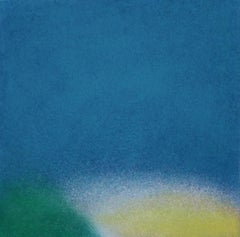
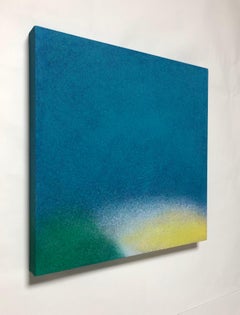
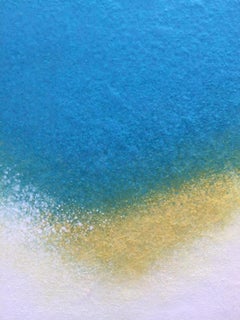
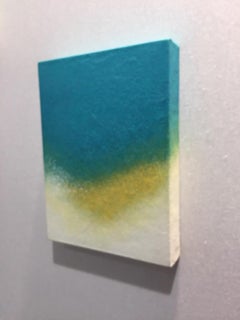
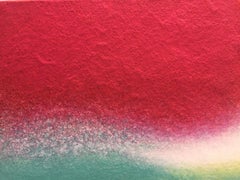
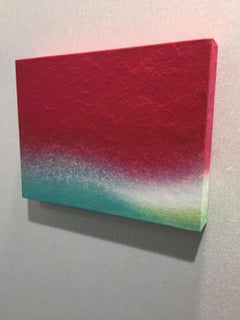
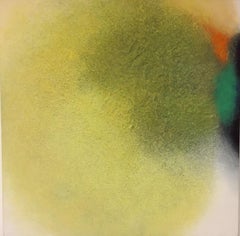
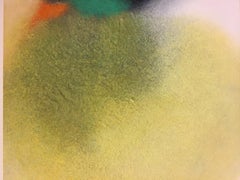
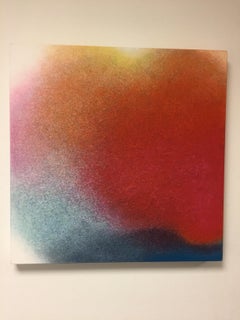
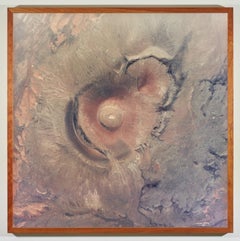
Fusako Ekuni is a Japanese artist born in 1947 and who lives & works in Tokyo, Japan. The artist is graduated from Musashino Art University, Faculty of Visual Communication Design and Musashino Gakuen, the faculty of Japanese Art Style Painting. She is a great contemplative artist who fuses light with colour, Fusako Ekuni has taken on the challenge of projecting our soul's eternal perceptual connectivity to something very simple – light. Colours are treated with an instinct, the ritual inherent to Fusako Ekuni's paintings involve the physics of the process itself. The slow process, the seeming point of emergence or disappearance these perpetual, eternal, changeable colour flows embody are less like paintings than beatific slow motion reifications of the physics of life…These paintings are homages to the pre-verbal universe, where the invisible forces of life - colour and light – interact magically, seemingly invisibly. The artist is the medium. Like the Spanish Surrealist Juan Miro, Fusako Ekuni is producing several paintings simultaneously. At different stages of completion, each painting can take months until the colours complete their harmonic journey into completion. The artist is an eternal seeker. For 18 years, Fusako Ekuni has moved from a traditional Japanese art style to explore a more fluid process that involves layering pure dry pigment and glue, placing these elements intuitively onto board to produce works that embody a feeling of slow flow… The colours relate as people do, one to the other, in a perpetual slow flow. A particular particularized, sub-atomic beingness associated with light is what results. This interest in the physics of light is ever present in Fusako Ekuni's Into the Light series. Like James Turrell's Roden Crater project in the Arizona Desert, the content in Fusako Ekuni's art is ultimately this existential interaction between our eye's perception and colour light compositions that always seem to be at a point of change. Fusako's sense of light and colours as elements in and for themselves an artist works with recall the American painter Richard Pousette-Dart's painterly explorations. Art becomes a source where the ideas are simply phenomena, visual and colourful. Light is the binding medium the colours interact with. The sense of simple presence and absence, of feelings and emotions likewise recalls Mark Rothko's contemplative colour compositions. One colour next to another colour, overlapping or meeting, becomes a topography of feelings, of placement, it is all in these words, Fusako Ekuni's sense of immediacy, of the moment, of how colour is perceived before we read its forms – as colour - in light.
A Close Look at Abstract Art
Beginning in the early 20th century, abstract art became a leading style of modernism. Rather than portray the world in a way that represented reality, as had been the dominating style of Western art in the previous centuries, abstract paintings, prints and sculptures are marked by a shift to geometric forms, gestural shapes and experimentation with color to express ideas, subject matter and scenes.
Although abstract art flourished in the early 1900s, propelled by movements like Fauvism and Cubism, it was rooted in the 19th century. In the 1840s, J.M.W. Turner emphasized light and motion for atmospheric paintings in which concrete details were blurred, and Paul Cézanne challenged traditional expectations of perspective in the 1890s.
Some of the earliest abstract artists — Wassily Kandinsky and Hilma af Klint — expanded on these breakthroughs while using vivid colors and forms to channel spiritual concepts. Painter Piet Mondrian, a Dutch pioneer of the art movement, explored geometric abstraction partly owing to his belief in Theosophy, which is grounded in a search for higher spiritual truths and embraces philosophers of the Renaissance period and medieval mystics. Black Square, a daringly simple 1913 work by Russian artist Kazimir Malevich, was a watershed statement on creating art that was free “from the dead weight of the real world,” as he later wrote.
Surrealism in the 1920s, led by artists such as Salvador Dalí, Meret Oppenheim and others, saw painters creating abstract pieces in order to connect to the subconscious. When Abstract Expressionism emerged in New York during the mid-20th century, it similarly centered on the process of creation, in which Helen Frankenthaler’s expressive “soak-stain” technique, Jackson Pollock’s drips of paint, and Mark Rothko’s planes of color were a radical new type of abstraction.
Conceptual art, Pop art, Hard-Edge painting and many other movements offered fresh approaches to abstraction that continued into the 21st century, with major contemporary artists now exploring it, including Anish Kapoor, Mark Bradford, El Anatsui and Julie Mehretu.
Find original abstract paintings, sculptures, prints and other art on 1stDibs.