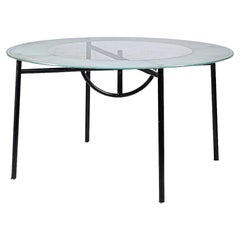
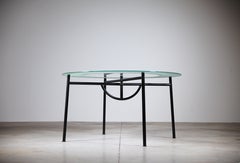
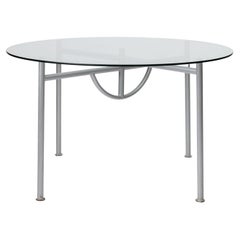
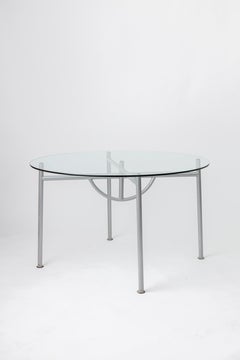
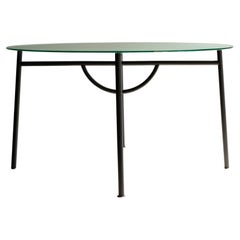
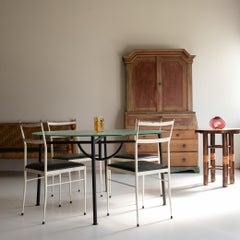
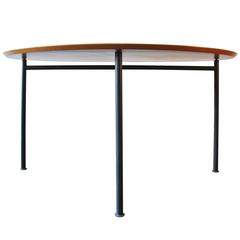
A ubiquitous name in the world of contemporary architecture and design, Philippe Starck has created everything from hotel interiors and luxury yachts to toothbrushes and teakettles. Yet for every project in his diverse portfolio, Starck has maintained an instantly recognizable signature style: a look that is dynamic, sleek, fluid and witty.
The son of an aircraft engineer, Starck studied interior design at the École Nissim de Camondo in Paris. He started his design career in the 1970s decorating nightclubs in the city, and his reputation for spirited and original interiors earned him a commission in 1983 from French president François Mitterrand to design the private apartments of the Élysée Palace. Starck made his name internationally in 1988 with his design for the interiors of the Royalton Hotel in New York, a strikingly novel environment featuring jewel-toned carpeting and upholstery and furnishings with organically shaped cast-aluminum frames. He followed that up in 1990 with an equally impressive redesign of the Paramount Hotel in Manhattan, a project that featured over-scaled furniture as well as headboards that mimicked Old Masters paintings.
Like their designer, furniture pieces by Starck seem to enjoy attention. Designs such as the wedge-shaped J Series club chair; the sweeping molded-mahogany Costes chair; the provocative Ara table lamp; or the sinuous WW stool never fail to raise eyebrows. Other Starck pieces make winking postmodern references to historical designs. His polycarbonate Louis Ghost armchair puts a new twist on Louis XVI furniture; his Out-In chair offers a futuristic take on the classic English high-back chair. But for all his flair, Starck maintains a populist vision of design. While one of his limited-edition Prince de Fribourg et Treyer armchairs might be priced at $7,000, a plastic Starck chair for the Italian firm Kartell is available for around $250. As you will see on 1stDibs, Philippe Starck’s furniture makes a bold statement — and it can add a welcome bit of humor to even the most traditional decor.
Antique and vintage dining room tables have long been the anchor of the home's most social room. The round pedestal and long banquet forms most collected today trace back to the 18th and 19th centuries, when the dining room itself first came into fashion.
Styles to Know
Round and oval tables suit smaller or open-plan rooms, while rectangular pedestal and trestle tables remain the standard for larger, more formal spaces. A credenza adds extra serving storage nearby, and a vintage wall mirror overhead opens up the room. For layout ideas, browse 20 dining rooms arranged for entertaining.
How to Choose the Right Vintage Dining Table
A dining table is usually the largest piece in the room, which makes delivery details worth confirming: White Glove service, disassembly options, and the table's full length, leaves included, measured against the space you have. Every table comes from a vetted 1stDibs seller, with era, designer and condition detailed, backed by the 1stDibs Promise.