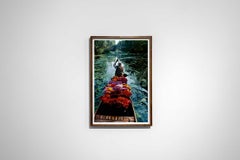
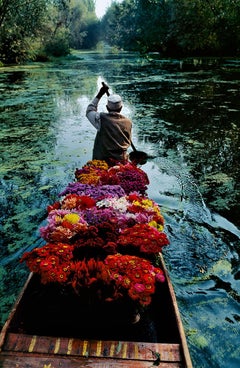
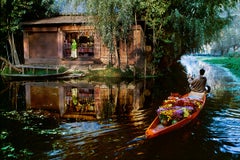
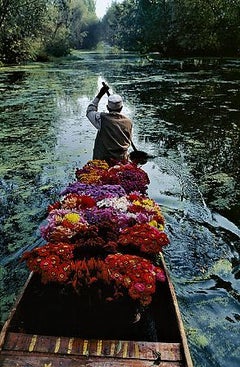
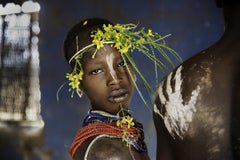
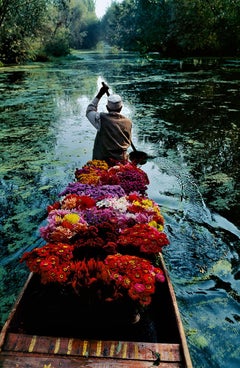
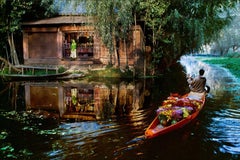
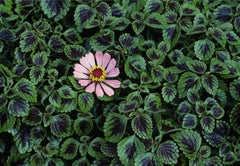
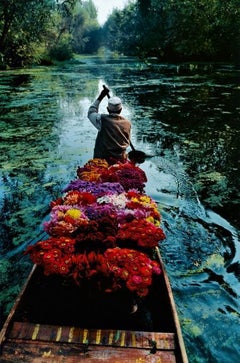
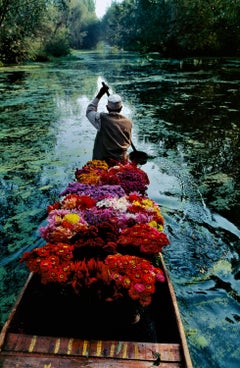
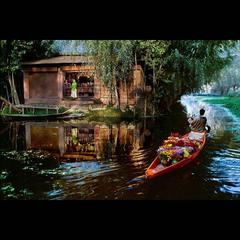
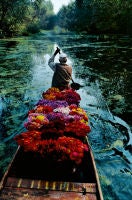
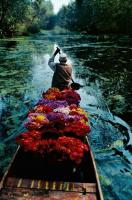
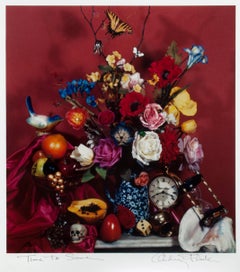
Find the exact steve mccurry flower you’re shopping for in the variety available on 1stDibs. Finding the perfect steve mccurry flower may mean sifting through those created during different time periods — you can find an early version that dates to the 20th Century and a newer variation that were made as recently as the 21st Century. Adding a steve mccurry flower to a room that is mostly decorated in warm neutral tones can yield a welcome change — find a piece on 1stDibs that incorporates elements of
black and more. Artworks like these — often created in
pigment print,
archival pigment print and
c print — can elevate any room of your home. If space is limited, you can find a small steve mccurry flower measuring 16 high and 20 wide, while our inventory also includes works up to 60 across to better suit those in the market for a large steve mccurry flower.
A steve mccurry flower can differ in price owing to various characteristics — the average selling price for items in our inventory is $7,333, while the lowest priced sells for $4,000 and the highest can go for as much as $9,500.
Steve McCurry is an American photographer who gained international acclaim for his arresting portrait of a young refugee known simply as Afghan Girl.
Originally published on the cover of National Geographic in 1985, the photograph shows a young Pashtun orphan, later identified as Sharbat Gula, who was living in a refugee camp near Peshawar, Pakistan, during the Soviet Union’s occupation of Afghanistan. The image is emblematic of McCurry’s work, which has brought him to war zones across the globe. Rather than focusing on the violence of the battlefield, McCurry seeks to capture the human face of conflict, distilling what is universal and recognizable in each portrait.
McCurry was born in Philadelphia and attended Penn State University, graduating cum laude with a degree in theater arts in 1974. After several years working at a newspaper in King of Prussia, Pennsylvania, he left to work as a freelancer in India, where he honed his skill for capturing unguarded moments in daily life. Just prior to the Soviet invasion of Afghanistan, in 1979, he crossed the border from Pakistan into Afghan rebel–controlled territory, wearing native garb to disguise himself, with rolls of film sewn into his clothing. The photographs he took there were among the first in the world to document the conflict, and his work was awarded the Robert Capa Gold Medal for “photographic reporting from abroad.”
Over the course of his career, McCurry has documented daily life alongside conflicts in Cambodia, the Philippines, the former Yugoslavia, Beirut, Iraq, Afghanistan and Tibet. Though his photos depict serious and sometimes frightening situations, his ability to connect with subjects and capture something of their personalities allows his images to transcend the documentarian distance of wartime journalism. The results are real portraits that happen to be set in tough situations. Welder in a Ship Breaking Yard, Mumbai, India (1994), for instance, reveals only the subject’s eyes, but they’re so intently fixed on McCurry’s lens that they seem to express volumes. Monk Running on Wall (2004) shows a young monk defying gravity as he skitters along an exterior wall of the Shaolin Monastery in Henan, China, over the heads of his friends. Like a Baroque painting, McCurry’s picture captures a moment of dynamic action that reveals something instantly recognizable in a subject from another part of the world.
Find original Steve McCurry photography on 1stDibs.
Color photography evokes emotion that can bring a viewer into the scene. It can transport one to faraway places or back into the past.
The first color photograph, taken in 1861, was more of an exercise in science than art. Photographer Thomas Sutton and physicist James Clerk Maxwell used three separate exposures of a tartan ribbon — filtered through red, green and blue — and composited them into a single image, resulting in the first multicolor representation of an object.
Before this innovation, photographs were often tinted by hand. By the 1890s, color photography processes were introduced based on that 1860s experiment. In the early 20th century, autochromes brought color photography to a commercial audience.
Now color photography is widely available, with these historic photographs documenting moments and scenes that are still vivid generations later. Photographers in the 20th and 21st centuries have offered new perspectives in the evolving field of modern color photography with gripping portraiture, snow-capped landscapes, stunning architecture and lots more.
In the voluminous collection of photography on 1stDibs, find vibrant full-color images by Slim Aarons, Helen Levitt, Gordon Parks, Stefanie Schneider, Steve McCurry and other artists. Bring visual interest to any corner of your home with color photography — introduce a salon-style gallery hang or another arrangement that best fits your space.