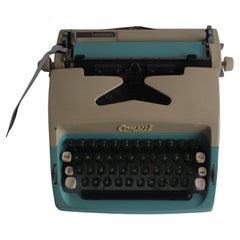
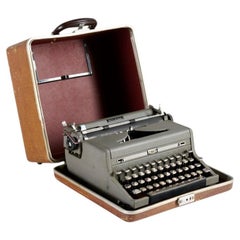
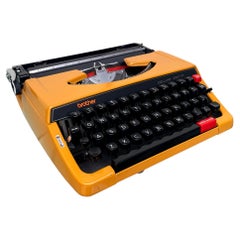
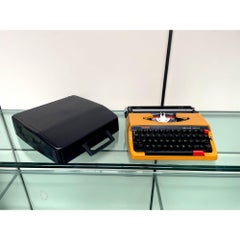
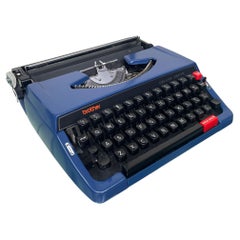
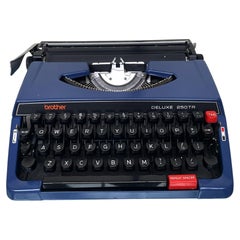
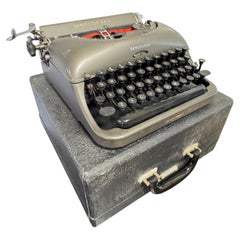
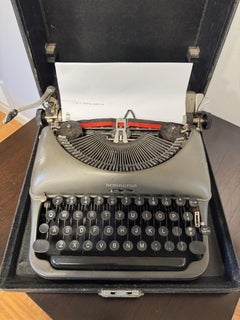
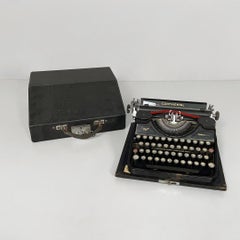
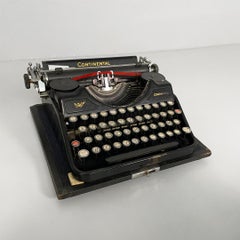
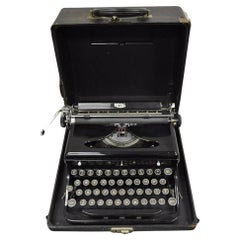
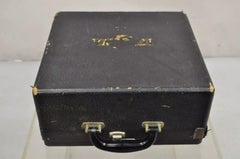
At 1stDibs, there are many versions of the ideal typewriter desk for your home. Each typewriter desk for sale was constructed with extraordinary care, often using
metal,
plastic and
steel. Your living room may not be complete without a typewriter desk — find older editions for sale from the 19th Century and newer versions made as recently as the 20th Century. A typewriter desk is a generally popular piece of furniture, but those created in
Mid-Century Modern,
Art Deco and
Industrial styles are sought with frequency. You’ll likely find more than one typewriter desk that is appealing in its simplicity, but
Ettore Sottsass,
Olivetti and
Perry King produced versions that are worth a look.
Whether you’ve carved out a space for a nifty home office or you prefer the morning commute, why not dress up your desk with antique and vintage desk accessories? To best tiptoe the line between desk efficiency and desk enjoyment, we suggest adding a touch of the past to your modern-day space.
Desks are a funny thing. Their basic premise has remained the same for quite literally centuries: a flat surface, oftentimes a drawer, and potentially a shelf or two. However, the contents that lay upon the desk? Well, the evolution has been drastic to say the least.
Thank the Victorians for the initial popularity of the paperweight. The Industrial Revolution offered the novel concept of leisure-time to Europeans, giving them more time to take part in the then crucial activity of letter writing. Decorative glass paperweight designs were all the rage, and during the mid-19th-century some of the most popular makers included the French companies of Baccarat, St. Louis and Clichy.
As paper was exceedingly expensive in the early to mid-19th-century, every effort was made to utilize a full sheet of it. Paper knives, which gave way to the modern letter opener, were helpful for cutting paper down to an appropriate size.
Books — those bound volumes of paper, you may recall — used to be common occurrences on desks of yore and where there were books there needed to be bookends. As a luxury item, bookend designs have run the gamut from incorporating ultra-luxurious materials (think marble and Murano glass) to being whimsical desk accompaniments (animal figurines were highly popular choices).
Though the inkwell’s extinction was ushered in by the advent of the ballpoint pen (itself quasi-obsolete at this point), there is still significant charm to be had from placing one of these bauble-like objets in a central spot on one’s desk. You may be surprised to discover the mood-boosting powers an antique — and purposefully empty — inkwell can provide.
The clamor for desk clocks arose as the Industrial Revolution transitioned labor from outdoors to indoors, and allowed for the mass-production of clock parts in factories. Naturally, elaborate designs soon followed and clocks could be found made by artisans and luxury houses like Cartier.
Find antique and vintage desk accessories today on 1stDibs.