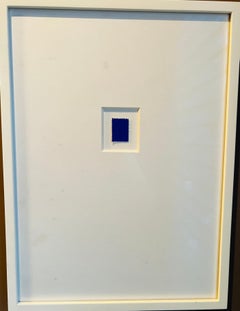
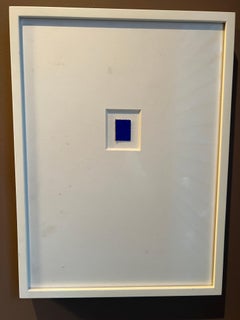
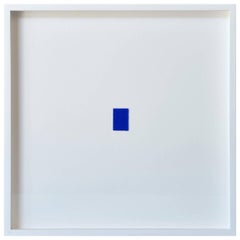
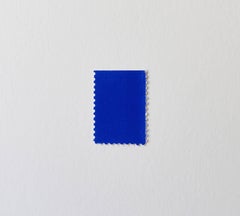
On 1stDibs, you can find the most appropriate yves klein stamp for your needs in our varied inventory. Find
abstract versions now, or shop for
abstract creations for a more modern example of these cherished works. If you’re looking for a yves klein stamp from a specific time period, our collection is diverse and broad-ranging, and you’ll find at least one that dates back to the 20th Century while another version may have been produced as recently as the 21st Century. Adding a yves klein stamp to a room that is mostly decorated in warm neutral tones can yield a welcome change — find a piece on 1stDibs that incorporates elements of
gray,
gold,
black,
beige and more. Creating a yves klein stamp has been a part of the legacy of many artists, but those crafted by
Arman,
Fernandez Arman,
Raphaël Jaimes-Branger,
Yves Klein and
Slim Aarons are consistently popular. Artworks like these — often created in
organic material,
resin and
plastic — can elevate any room of your home.
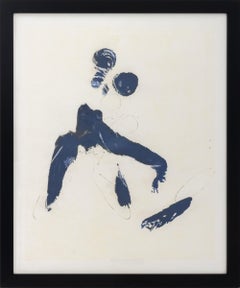
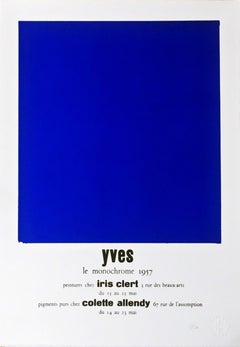
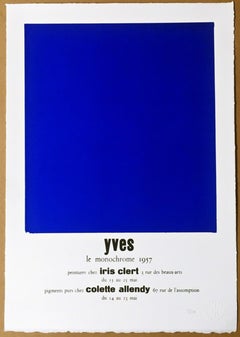
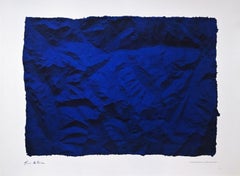
French artist Yves Klein is best known for his trademark ultramarine pigment, which he patented as International Klein Blue in 1961. “Blue … is beyond dimensions, whereas the other colors are not,” he said.
“All colors arouse specific ideas, while blue suggests at most the sea and the sky; and they, after all, are in actual, visible nature what is most abstract.”
Starting in the mid-1950s, Klein made retinal blue monochrome paintings (which would prove cornerstones of Minimalism) and the pigment would also feature prominently in his Anthropometry paintings, for which Klein smeared nude women with blue pigment and used them as human brushes on canvas, sometimes in elaborate public performances. Klein's work anticipated Conceptual art, performance art and environmental art, as in his selling of portions of empty space to collectors. For The Void (1958), he presented an empty gallery as an artwork, wearing a white tie and tails to show visitors around the blank walls.
Find authentic Yves Klein sculptures, prints and other art on 1stDibs.
Beginning in the early 20th century, abstract art became a leading style of modernism. Rather than portray the world in a way that represented reality, as had been the dominating style of Western art in the previous centuries, abstract paintings, prints and sculptures are marked by a shift to geometric forms, gestural shapes and experimentation with color to express ideas, subject matter and scenes.
Although abstract art flourished in the early 1900s, propelled by movements like Fauvism and Cubism, it was rooted in the 19th century. In the 1840s, J.M.W. Turner emphasized light and motion for atmospheric paintings in which concrete details were blurred, and Paul Cézanne challenged traditional expectations of perspective in the 1890s.
Some of the earliest abstract artists — Wassily Kandinsky and Hilma af Klint — expanded on these breakthroughs while using vivid colors and forms to channel spiritual concepts. Painter Piet Mondrian, a Dutch pioneer of the art movement, explored geometric abstraction partly owing to his belief in Theosophy, which is grounded in a search for higher spiritual truths and embraces philosophers of the Renaissance period and medieval mystics. Black Square, a daringly simple 1913 work by Russian artist Kazimir Malevich, was a watershed statement on creating art that was free “from the dead weight of the real world,” as he later wrote.
Surrealism in the 1920s, led by artists such as Salvador Dalí, Meret Oppenheim and others, saw painters creating abstract pieces in order to connect to the subconscious. When Abstract Expressionism emerged in New York during the mid-20th century, it similarly centered on the process of creation, in which Helen Frankenthaler’s expressive “soak-stain” technique, Jackson Pollock’s drips of paint, and Mark Rothko’s planes of color were a radical new type of abstraction.
Conceptual art, Pop art, Hard-Edge painting and many other movements offered fresh approaches to abstraction that continued into the 21st century, with major contemporary artists now exploring it, including Anish Kapoor, Mark Bradford, El Anatsui and Julie Mehretu.
Find original abstract paintings, sculptures, prints and other art on 1stDibs.