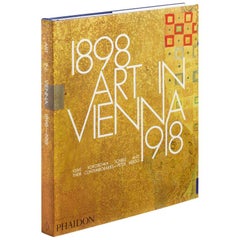
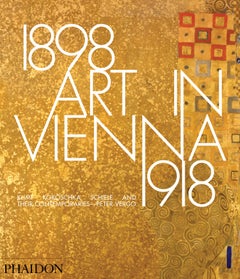
The rebel artists of Vienna overwhelmed the artistic establishment of Europe at the end of the 19th century, having seceded from the traditional Viennese institutions of Fine art and named themselves the Vienna Secession. Their works shocked a conservative public, but their daring sensibilities and dedication to the applied arts and architecture soon brought them an enthusiastic following and wealthy patronage. The boldly modernist paintings of Gustav Klimt, Egon Schiele, Oskar Kokoschka and others were matched by the buildings and applied designs of architects such as Joseph Maria Olbrich, who created the Secession Building as an architectural manifesto for the group. This Classic book, now updated and with additional colour illustrations and a completely new introductory chapter, brilliantly traces the course of this influential artistic movement.
Contents and sections:
Introduction
Vienna 1900
Secession
The Beginnings
The First Exhibition
The Dedication of the House: Second Exhibition
Ver Sacrum III–VI Exhibitions
The ‘Klimt Affair’ – The University Paintings
Exhibitions 1900–1902
Beethoven 1902
XVI–XVIII Exhibitions, 1903
The Split within the Secession
Architecture and the Applied Arts
The Ringstrasse and the Architecture of Historicisim
Otto Wagner, 1841–1918
Joseph Maria Olbrich, 1867–1908
Josef Hoffmann, 1870–1956
The Wiener Werkstätte
Palais Stoclet – The Stoclet Frieze
Kabarett Fledermaus
Alfred Roller, 1864–1935
Hoffmann’s Later Work
Adolf Loos, 1870–1933
Kunstschau 1908–1909: The Early Work of Kokoschka and Schiele
Kunstschau 1908
Oskar Kokoschka, 1886–1980
Richard Gerstl...
Category
21st Century and Contemporary Best-Selling Designs