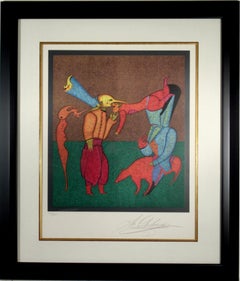
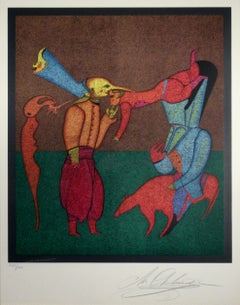
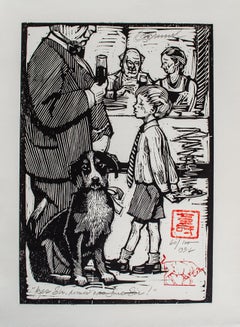
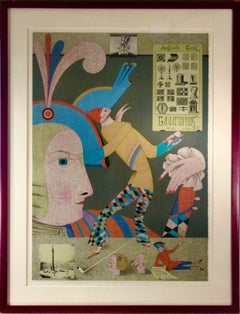
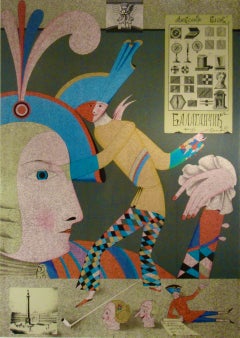
Arpad Basch Prints and Multiples

to
1
Overall Width
to
Overall Height
to
1
1
1,320
1,027
920
889
1
1
1
1
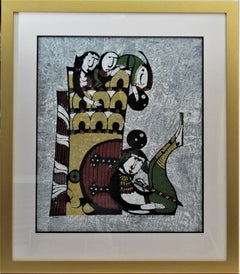
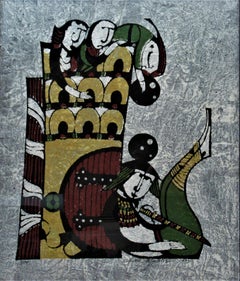
Artist: Arpad Basch
Related Items
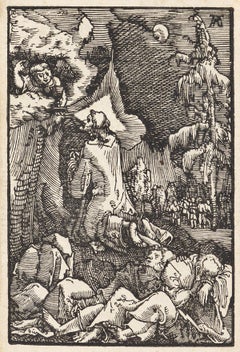
Christ on the Mount of Olives

Christ on the Mount of Olives

By Albrecht Altdorfer

Located in New York, NY

A brilliant and early impression of this woodcut. Dark, well-inked, with strong contrasts and no sign of wear. From "The Fall and Salvation of Mankind Through the Life and Passion of Christ."

Category

16th Century Renaissance Arpad Basch Prints and Multiples

Materials

Woodcut

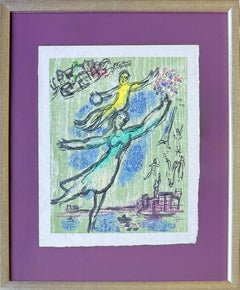
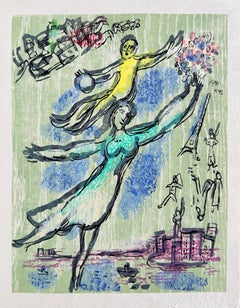
Poèmes, Planche IX, Original Woodcut, 1968, Japon Paper

Poèmes, Planche IX, Original Woodcut, 1968, Japon Paper

By Marc Chagall

Located in OPOLE, PL

Marc Chagall (1887-1985) - Poèmes, Planche IX Woodcut print from 1968. An unnumbered and unsigned impression from the total edition of 238; this impression is on Japon paper, one o...

Category

1960s Modern Arpad Basch Prints and Multiples

Materials

Woodcut

Purgatory Canto 24 from the Divine Comedy

Purgatory Canto 24 from the Divine Comedy

By Salvador Dalí­

Located in Columbia, MO

Salvador Dalí (1904–1989) was one of the most recognizable figures of 20th-century art, known for his eccentric persona and for pushing Surrealism into the cultural mainstream. A pai...

Category

20th Century Surrealist Arpad Basch Prints and Multiples

Materials

Woodcut

L'atelier de Cannes Lithograph, Modern Style, Plate Signed, 1958

L'atelier de Cannes Lithograph, Modern Style, Plate Signed, 1958

By Pablo Picasso

Located in OPOLE, PL

Pablo Picasso (1881-1973) - L'atelier de Cannes Lithograph from 1958. On Arches paper. Edition of 250 impressions. Dimensions of work: 44.8 x 33.4 cm. Plate signed. It's an enha...

Category

1950s Modern Arpad Basch Prints and Multiples

Materials

Lithograph

Rare 1922 German Jewish Judaica Zion Woodcut Woodblock Print Hermann Fechenbach

Rare 1922 German Jewish Judaica Zion Woodcut Woodblock Print Hermann Fechenbach

By Hermann Israel Fechenbach

Located in Surfside, FL

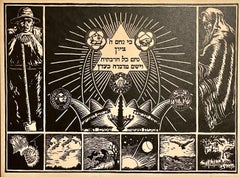
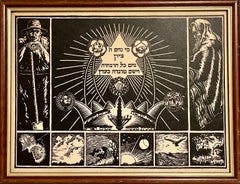
Title: Zion Subject: Various biblical images depicting Creation and prayer 1922 Medium: woodcut Frame: 14" x 18" Image: 12.5" x 16.75" Provenance: owned and signed verso by Peter Keil. Central panel shows the Jewish star over a crown, with inscription in Hebrew: "When God comforts Zion, He will comfort all its ruins and make its deserts look like Eden," and "You have sanctified the seventh day, the goal of creation of Heaven and Earth." This is flanked by a Palestinian farmer pioneer on the left and a Jew praying on the right. The lower tier shows six vignettes of the days of creation from Genesis. Hermann Fechenbach was born in 1897 in Württemberg, Germany. He grew up in Bad Mergentheim where his parents had an inn, which served as a meeting place for the local Jewish community. He left school early and through family connections with clothing retailers received training in window dressing. His skill with brush writing was quickly recognised by a big firm in Dortmund where he was responsible for the displays in 10 large windows. He received his conscription papers in 1916 and recalls “being as patriotic as any other fool”. In August 1917 he was involved in a grenade attack in which he was the sole survivor. With serious injuries to both legs he struggled to safety and was eventually transported to a front line “slaughterhouse” where the first of a series of amputations was performed which led to the loss of his left leg. As a result of his injuries his father dropped his opposition to him becoming an artist. His formal art education started in 1918 with training at a Stuttgart handcraft school for invalids. He attended the Academies in Stuttgart and Munich to learn painting and restoration for 3 years. He was influenced at this time by Max Liebermann. He has been compared to Kathe Kollwitz and was a contemporary of Jakob Steinhardt and hermann Struck. In 1923 he went to Florence for a year. While in Florence he started to produce a series of miniature wood engravings to illustrate the stories of Genesis. This was followed by periods in Pisa, Venice, Vienna and Amsterdam. In 1924 he returned to Stuttgart to paint in the contemporary style “Die Neue Sachlichkeit”. (The New Objectivity was a movement in German art that arose during the 1920s Weimar republic as a reaction against expressionism. The term was coined by Gustav Friedrich Hartlaub, the director of the Kunsthalle in Mannheim, who used it as the title of an art exhibition staged in 1925 to showcase artists who were working in a post-expressionist spirit. These artists—who included Max Beckmann, Otto Dix, George Grosz, Christian Schad, Rudolf Schlichter and Jeanne Mammen) Every spring and autumn he exhibited at the “Kunstgebit” which served as the showcase for all serious artists of the period. His professional status “Kunstmaler und Grafiker” was recognised by Berlin in 1926. Practically all his work from this period was sold following exhibition. In 1926 he collaborated with an architect friend to build a bungalow in Hohenheim, a non-Jewish area and a suburb of Stuttgart. Hermann alternately lived in his country bungalow and his town studio, producing portraits for sale or barter and wood engravings for his own pleasure. In 1930 he married a non-Jewish professional photographer – Greta Batze. They had a studio in Stuttgart, which was used to teach art to a group of 12 students. In 1933 the Nazi influence removed his name from the official state register together with the right to exhibit. By spending most of his time in his bungalow out of the Jewish quarter the Fechenbachs escaped being registered by the Nazis for some years. They were ostracised and abused by their non-Jewish neighbours. Hermann made weekly visits to friends in town to teach them the practical skills they would need assuming they were to escape from Germany. His energies were directed towards protection and survival. Ultimately the Nazi persecution forced the Fechenbachs to flee their homeland. They moved to Palestine for 3 months in 1938, but found the political and physical environment unsustainable. Greta arrived in England penniless in January 1939 to work as a domestic servant and to find a guarantor for her husband. Hermann arrived in May 1939. They moved to Blackheath a few months later. Hermann resumed his painting and engraving as a means of earning a living. He raised enough money to get his parents out of Germany to join his brothers in Argentina but was unable to save his twin sister Rosa who died in a Nazi concentration camp. In 1940 Hermann was interned in Bury as a suspect alien. He protested about his treatment by starting a hunger strike. Because of his persistence he was moved to a prison in Liverpool. From Liverpool he was moved to the Hutchinson Camp in the Isle of Man with fellow artist Kurt Schwitters. Arrangements were made for Greta to be accommodated near by. While interned he commenced work on “Refugee Impressions”, a series of linocut prints (no wood was available). In 1941 when released from internment the Fechenbachs came under the sponsorship of Dr. Bela Horovitz, the Austrian art publisher who in turn made an introduction to Professor Tancred Borenius. They were offered lodgings with a family in Oxford. Hermann had his first public exhibition for many years in a small gallery in Oxford in 1942. A second exhibition of oils, pencil drawings, coloured linocut and woodblock prints held later in the year was opened by the mayor of Oxford and critically acclaimed. In 1944 the first London exhibition took place at the Anglo-Palestinian club in Piccadilly. There were two exhibitions at the Ben Uri Art gallery during this period. In 1948 a second exhibition at the Anglo Palestinian club was inaugurated by a member of the Rothschild family and several members of Parliament. This was a great success. In 1944 the Fechenbachs moved to a top floor studio flat in Colet Gardens. Open exhibitions were held each Spring at the Embankment from 1946 to 1951. Movietone News produced a short feature on the artist, which was shown in cinemas in England and Germany. In 1969 he published the Genesis story in a hard back volume containing 137 prints. He started to research the fate of the entire Jewish community of Bad Mergentheim during the period of the second world war, liaising with historian Dr. Paul Sauer and Professor Max Miller, historian and theologian. In 1972 Kohlhammer published his partly autobiographical book “The last Jews of Mergentheim”. He exhibited at the Anglo-Palestinian Club & the Ben Uri Gallery in the 1940s. His works only came to prominence during the last year of his life when he exhibited at Blond Fine Art. Peter Keil part of the Junge Wilde. In 1978, the Junge Wilde painting style arose in the German-speaking world in opposition to established avant garde, minimal art and conceptual art. It was linked to the similar Transavanguardia movement in Italy, USA (neo-expressionism) and France (Figuration Libre). They were also known as the Neue Wilde. Artists included; Austria: Siegfried Anzinger, Erwin Bohatsch, Herbert Brandl, Gunter Damisch, Hubert Scheibl, Hubert Schmalix...

Category

1980s Impressionist Arpad Basch Prints and Multiples
Materials

Woodcut

Blind Botanist
Blind Botanist

Ben ShahnBlind Botanist, 1963

$2,100

H 26.75 in W 20.5 in

Blind Botanist

By Ben Shahn

Located in New York, NY

This 1963 lithograph, printed in color, is a fine example of Ben Shahn’s long preoccupation with the theme of the blind botanist and illustrates his con...

Category

Late 20th Century Modern Arpad Basch Prints and Multiples
Materials

Lithograph

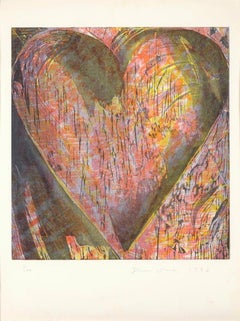
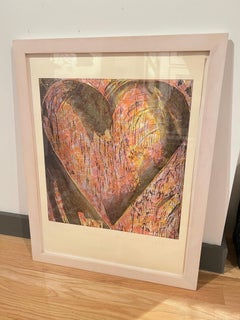
Untitled, Jim Dine
Untitled, Jim Dine

Jim DineUntitled, Jim Dine, 1996

$4,000

H 26.125 in W 19.5 in

Untitled, Jim Dine

By Jim Dine

Located in New York, NY

A familiar and iconic motif by the artist, this color woodcut was created by Jim Dine in 1996, is hand-signed in pencil and numbered. Measuring 26 1/8 x 19 ½ inches (66.4 x 49.5 cm...

Category

20th Century Contemporary Arpad Basch Prints and Multiples
Materials

Woodcut

Original "Real Circuo Artistico' Gran Cabalgata vintage poster  Barcelona

Original "Real Circuo Artistico' Gran Cabalgata vintage poster Barcelona

Located in Spokane, WA

Original Real Circulo Artistico Gran Cabalgata de Barcelona vintage poster. A fun and uplifting image with smiles, parties, and flowers. Real Circulo Artistico is an institution ...

Category

1960s American Modern Arpad Basch Prints and Multiples
Materials

Lithograph

Original Holiday on Ice of 1957 linen-backed large format vintage poster

Original Holiday on Ice of 1957 linen-backed large format vintage poster

Located in Spokane, WA

Original Vintage 1957 "Holiday on Ice" Poster. Sizew: 60" x 43.5", archival linen-backed, Grade A- condition. Capture the glamour and excitement of a bygone era with this authent...

Category

1950s American Modern Arpad Basch Prints and Multiples
Materials

Offset

Adorable Tim Engelland Farmhouse Pig Woodcut

Adorable Tim Engelland Farmhouse Pig Woodcut

By Tim Engelland

Located in New York, NY

Tim Engelland (American, 1950-2012) Untitled, 1996 Woodcut 7 1/2 x 8 1/2 in. Signed and dated lower right: T. Engelland, 1996 Numbered lower left: 102/200 A lifelong artist, Engelland specialized in oil portraits and landscapes, and also worked extensively in woodcuts and linocuts. He was born on Jan. 5, 1950, in Ames, Iowa, the son of Charles Wilbur “Will” Engelland and Patricia Fairman Engelland.. Tim grew up in Terre Haute, IN, attending Fairbanks Elementary School and Indiana State University’s Laboratory School. He knew he wanted to be an artist from an early age, and was mentored by Lab School’s John Laska, graduating in 1968. He received a BFA from Temple University’s Tyler School of Art; was a Norfolk Fellow at Yale University; and received his MFA from Cornell University, teaching there for two years after graduation. He spent the majority of his career, from 1976-2004, at Deerfield Academy, a prestigious preparatory school in Deerfield, Mass. There he taught art and photography, coached basketball and lacrosse, and served as faculty resident. When the school began accepting female students, Tim designed The Deerfield Girl, a bronze statue to accompany The Deerfield Boy statue...

Category

1990s Contemporary Arpad Basch Prints and Multiples
Materials

Woodcut

Happy Birthday Liberty, 100th Birthday of the Statue of Liberty. Large serigraph

Happy Birthday Liberty, 100th Birthday of the Statue of Liberty. Large serigraph

By Hiro Yamagata

Located in San Francisco, CA

This artwork titled "Happy Birthday Liberty, 100th Birthday of the Statue of Liberty" 1986 is an original color serigraph on thick paper by renown artist Hiro Yamagata (Japanese, b. ...

Category

Late 20th Century Modern Arpad Basch Prints and Multiples
Materials

Screen

Jean Cocteau - Olé - Original Lithograph

Jean Cocteau - Olé - Original Lithograph

By Jean Cocteau

Located in Collonge Bellerive, Geneve, CH

Jean Cocteau - Olé - Original Lithograph 1934 Signed and dated in the plate Numbered in pencil Edition : /200 Dimensions: 50 x 33 cm Provenance : Succession Dermit, Cocteau's heir

Category

1930s Modern Arpad Basch Prints and Multiples
Materials

Lithograph

Arpad Basch prints and multiples for sale on 1stDibs.

Find a wide variety of authentic Arpad Basch prints and multiples available for sale on 1stDibs. If you’re browsing the collection of prints and multiples to introduce a pop of color in a neutral corner of your living room or bedroom, you can find work that includes elements of orange and other colors. You can also browse by medium to find art by Arpad Basch in woodcut print and more. Much of the original work by this artist or collective was created during the 20th century and is mostly associated with the modern style. Not every interior allows for large Arpad Basch prints and multiples, so small editions measuring 5 inches across are available. Arpad Basch prints and multiples prices can differ depending upon medium, time period and other attributes. On 1stDibs, the price for these items starts at $77 and tops out at $77, while the average work can sell for $77.