August Mongin Art

to
1
Overall Width
to
Overall Height
to
1
1
1
1
1
1
1
10,819
2,842
2,494
1,414
Artist: August Mongin
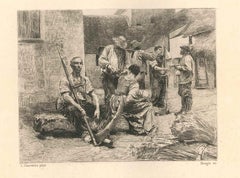
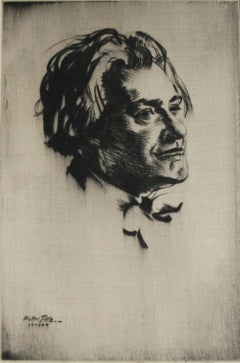
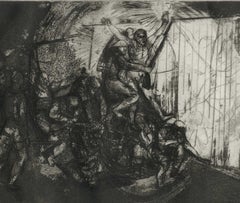
The Reaper's Salary - Original Etching After Léon August Lhermitte - End of 1800

The Reaper's Salary - Original Etching After Léon August Lhermitte - End of 1800

By August Mongin

Located in Roma, IT

The Reapers' Salary is an interesting black and white etching on paper realized by August Mongin (1843-1911), after the homonym artwork by Léon August Lhermitte (1882), as it is repo...

Category

Late 19th Century Modern August Mongin Art

Materials

Etching

Related Items
Polo, colour etching, horses, circa 1950

Polo, colour etching, horses, circa 1950

By Louis Claude

Located in Melbourne, Victoria

Titled 'Polo' and signed 'Louis Claude' in pencil below the image. Printed in Paris for the Paris Etching Society, New York. 465mm by 595mm (pla...

Category

1950s Modern August Mongin Art

Materials

Etching

Chas Laborde - Paris - Capucine's Boulevard - Original Etching

Chas Laborde - Paris - Capucine's Boulevard - Original Etching

By Chas (Charles) Laborde

Located in Collonge Bellerive, Geneve, CH

Chas Laborde - Paris - Capucine's Boulevard - Original Etching Dimensions : 13 x 10". Paper : Rives vellum. Edition : 225 copies. 1927 From Tableaux de Paris, Emile-Paul Freres, Paris Chas LABORDE Charles Laborde was born in Buenos Aires on August 8, 1886. He was the youngest of the five sons of Adolphe-Sylvestre Laborde-Pinou, a Basque-Bearne millionaire who had made a fortune selling spirits to the Indians and luxury goods imported from France to wealthy Argentines. The family returned to France when Charles was six months old. His mother died when he was two. He spent his childhood at their family château d’Escout outside Oloron-Sainte-Marie in the Pyrenees. His brothers went to a boarding-school, his father was often in Paris on business, and little Charles was left to his devices. Though it was a lonely childhood, he was a darling of his generous and magnanimous father. Charles got his early drawing skills from a village artist and found support in his brother Jean-Felix. Charles frequently accompanied his father visiting artisans and helped him choose de luxe objects to be sold in Argentine. He first attended the Rollin college in Paris, then a lyceum in Pau, where he lived with full board and lodging after his father’s death in 1901. From childhood Charles wanted to be an artist and tried several pseudonyms for himself: Ch. Laborde, Carlos Laborde,Carlos Edrobal and Carl Lab. He started wearing a velvet suit and a large hat. At 17, the timid shortsighted teenager wearing big glasses was expelled from college for smoking and drinking alcohol and went to Paris into the custody of his elder brother Jean-Felix, who carried on his father’s business. Charles enrolled in the prestigious l’Académie Julian, studying under Henri Royer and Marcel Baschet. Simultaneously he was a pupil of William Bouguereau and Luc-Olivier Merson at l’École des Beaux-Arts. The latter was famous for being the designer of the 50 and 100 franc banknotes, and he believed that he was teaching a “little Daumier”. In England, where he went every year from 1905 to 1914 with the family of his friend Cooper, a classmate at l’Académie Julian, he found not only his pseudonym Chas (short for Charley), but also the land of his dreams. Peculiarities of London and its inhabitants were reflected in drawings of William Hogarth and Thomas Rowlandson, whose album The Microcosm of London (1808) prompted Charles to make his London Streets Scenes (1928). Owing to those trips Charles took a liking to the atmosphere of England and its reserved and terse humor. In 1905 the château d’Escout and the Buenos Aires Commercial Fund were sold. After coming into inheritance, Laborde became financially independent and obtained an atelier in Montmartre at 11 bis Rue des Saules. His neighbors were de la Butte, Francis Carco and Pierre Mac Orlan, who sympathized with the easy-going young man with a positive attitude to life. His friend Pierre Falke...

Category

1920s Modern August Mongin Art

Materials

Etching

The Loop II (the artist's memories of days at Chicago's Art Institute)

The Loop II (the artist's memories of days at Chicago's Art Institute)

By Richard Gilbert

Located in New Orleans, LA

The Loop II was created in a small edition of 15. The Loop is a vibrant area featuring eclectic eateries, shops, theaters and parks. Comprised mostly of high-rises, it’s also home to the 108-story Willis Tower. The iconic “Cloud Gate...

Category

1990s Modern August Mongin Art

Materials

Etching

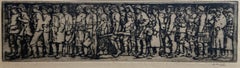
Scarborough, Etching, Modern Landscape Print, Early 20th Century

Scarborough, Etching, Modern Landscape Print, Early 20th Century

By Nelson Dawson

Located in New Orleans, LA

This impression is signed and annotated as etched and printed by the artist. It is numbered No. 56. Scarborough is a resort town on England’s North Sea coast. Its 2 bays with sandy...

Category

Early 20th Century Modern August Mongin Art
Materials

Etching

Edmond Céria - Paris, Quais de Orfèvres - Original Etching

Edmond Céria - Paris, Quais de Orfèvres - Original Etching

By Edmond Céria

Located in Collonge Bellerive, Geneve, CH

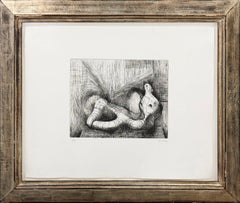
Charles Martin - The Eiffel Tower - Original Lithograph Dimensions : 13 x 10". Paper : Rives vellum. Edition : 225 copies. 1927 From Tableaux de Paris, Emile-Paul Freres, Pari...

Category

1920s Modern August Mongin Art
Materials

Etching

Moreau - Paris, At The Cinema - Original Etching

Moreau - Paris, At The Cinema - Original Etching

By Luc-Albert Moreau

Located in Collonge Bellerive, Geneve, CH

Moreau - Paris, At The Cinema - Original Etching Dimensions : 13 x 10". Paper : Rives vellum. Edition : 225 copies. 1927 From Tableaux de Paris, Emile-Paul Freres, Paris

Category

1920s Modern August Mongin Art

Materials

Etching

The Loop III (the artist's memories of days at Chicago's Art Institute)

The Loop III (the artist's memories of days at Chicago's Art Institute)

By Richard Gilbert

Located in New Orleans, LA

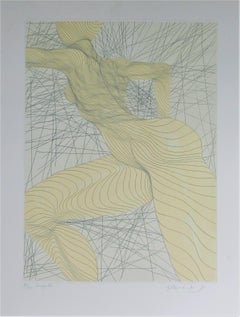
The Loop III was created in a small edition of 15. The Loop is a vibrant area featuring eclectic eateries, shops, theaters and parks. Comprised mostly of high-rises, it’s also home to the 108-story Willis Tower. The iconic “Cloud Gate...

Category

1990s Modern August Mongin Art
Materials

Etching

Monica Nude with Matisse

Monica Nude with Matisse

By Tom Wesselmann

Located in New York, NY

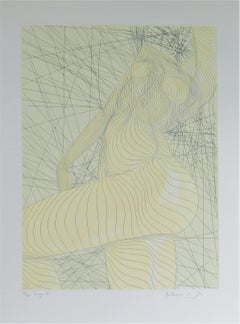
A very good impression of this etching and aquatint. Signed 75/75 in pencil by Wesselmann.

Category

1990s Modern August Mongin Art
Materials

Etching, Aquatint

André Derain - Ovid's Heroides - Original Etching

André Derain - Ovid's Heroides - Original Etching

By André Derain

Located in Collonge Bellerive, Geneve, CH

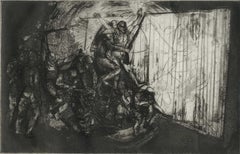
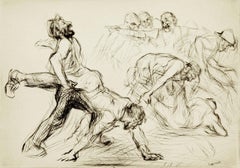
André Derain - Ovid's Heroides Original Etching Edition of 134 Dimensions: 32 x 25 cm Ovide [Marcel Prevost], Héroïdes, Paris, Société des Cent-une, 1938 Andre Derain was born in 1...

Category

1930s Modern August Mongin Art
Materials

Etching

André Derain - Ovid's Heroides - Original Etching

André Derain - Ovid's Heroides - Original Etching

By André Derain

Located in Collonge Bellerive, Geneve, CH

André Derain - Ovid's Heroides Original Etching Edition of 134 Dimensions: 32 x 25 cm Ovide [Marcel Prevost], Héroïdes, Paris, Société des Cent-une, 1938 Andre Derain was born in 1...

Category

1930s Modern August Mongin Art
Materials

Etching

André Derain - Ovid's Heroides - Original Etching

André Derain - Ovid's Heroides - Original Etching

By André Derain

Located in Collonge Bellerive, Geneve, CH

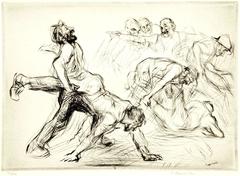
André Derain - Ovid's Heroides Original Etching Edition of 134 Dimensions: 32 x 25 cm Ovide [Marcel Prevost], Héroïdes, Paris, Société des Cent-une, 1938 Andre Derain was born in 1...

Category

1930s Modern August Mongin Art
Materials

Etching

André Derain - Ovid's Heroides - Original Etching

André Derain - Ovid's Heroides - Original Etching

By André Derain

Located in Collonge Bellerive, Geneve, CH

André Derain - Ovid's Heroides Original Etching Edition of 134 Dimensions: 32 x 25 cm Ovide [Marcel Prevost], Héroïdes, Paris, Société des Cent-une, 1938 Andre Derain was born in 1880 in Chatou, an artist colony outside Paris. In 1898, he enrolled in the Academie Carriere in Paris where he met Matisse. He attended art school and in 1900, set up a studio with Maurice deVlaminck. After his military service from 1900-1904, Derain exhibited his work at the Salon des Independants and then at the Salon d'Automne with Matisse, Vlaminck and others, thus creating the movement of Fauvism.He worked with Henri Matisse in 1905 at Collioure, and participated in the 1905 Salon d’Automne with Matisse, Vlaminck, and Braque, the exhibition in which this group was labeled as Fauves, or Wild Beasts. Along with Vlaminck, Derain was one of the first artists to collect the tribal art of Africa which was influential to many of the artists of the early 20th century. In 1906, Derain met Picasso and his dealer, who purchased Derain's entire studio, creating newfound financial success. During this time, he was hired for the illustrations for works by Guillaume Apollinaire and Andre Breton. After World War I, his friend's Cubism movement affected his art, along with influence from Classicism and African Art. Derain stayed in Paris during most of the Occupation, where he was esteemed by the Nazis because of his artistic integrity. Hitler's Foreign Minister commissioned him to paint a family portrait, but he politely refused. His popularity began to decline after the war because of disagreement over new artistic movements. He later lost most of his eyesight due to illness, which may have been the reason he was hit by a truck in 1954, dying from shock at the age of 74. Derain’s Fauve paintings are typically bright with intense color. Influenced by the work of Cézanne as well as the early Cubist paintings of Picasso and Braque’s, Derain’s style changed and by 1912, the paintings became more traditional and structured. For the remainder of his career, he continued to investigate different compositional methods including the perspective of Cézanne and the pointillism of Seurat. He also designed ballet sets and made a number of sculptures. At the turn of the century, Andre Derain exhibited at the radical Fauve Salon d’Automne (1905) and was one of the founding members of the Fauvist movement together with his life-long friends Matisse and Vlaminck. The works he produced in this period, often under the guidance of Matisse, have been counted among the masterpieces of Fauvism. From around 1918, Derain turned his back on the avant-garde and had begun to explore some of the more traditional genres of Western art, including landscapes. His main source of inspiration once the Fauves group had dispersed was found in the Louvre, where he admired the early Renaissance works in particular. Talking of his frequent visits there, he once said, ‘That seemed to me then, the true, pure absolute painting.’ His work evolved through many styles and, most significantly, turned back to the past, particularly after 1922 when Lenin had publicly pronounced his disdain for abstract art. Derain built up an immense and fascinating collection of paintings, sculpture and objets d’art throughout his life which aided his experimentation and was reflected in his work between 1930 and 1945. During these years, his painting technique displayed the most avenues of invention, using a repertoire of primitivist motifs. His eclectic collection was constantly changing. In 1930 he sold his African collection in exchange for bronzes of antiquity and the Renaissance which indicated a real change of interest in the objects, as did his later pursuit of Greek ceramic painting and his enthusiasm for grand cycles of literary and antique themes...

Category

1930s Modern August Mongin Art
Materials

Etching

August Mongin art for sale on 1stDibs.

Find a wide variety of authentic August Mongin art available for sale on 1stDibs. You can also browse by medium to find art by August Mongin in etching and more. Much of the original work by this artist or collective was created during the 19th century and is mostly associated with the modern style. Not every interior allows for large August Mongin art, so small editions measuring 12 inches across are available. Customers who are interested in this artist might also find the work of Auguste Lançon, Pierre Puvis de Chavannes, and Paul Gavarni. August Mongin art prices can differ depending upon medium, time period and other attributes. On 1stDibs, the price for these items starts at $125 and tops out at $125, while the average work can sell for $125.

Artists Similar to August Mongin