Ben-Zion Weinman Art

to
21
21
20
3
2
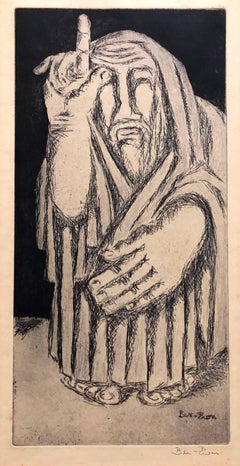
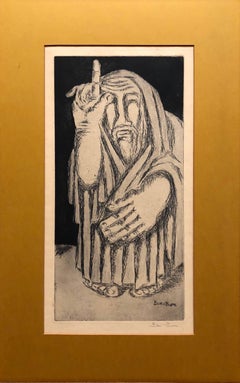
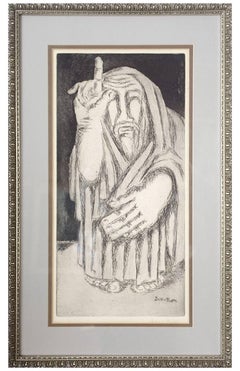
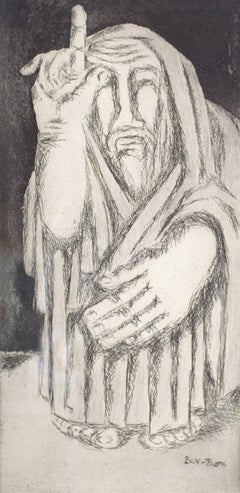
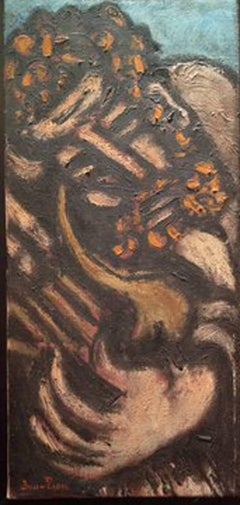
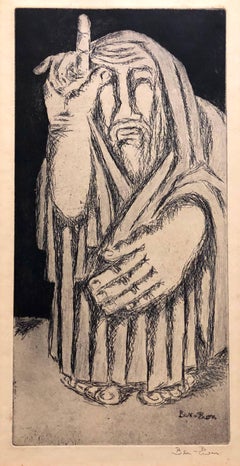
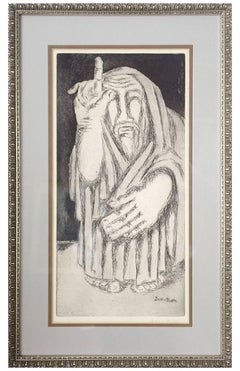
Biblical Prophet Etching American Modernist WPA Artist

Biblical Prophet Etching American Modernist WPA Artist

By Ben-Zion Weinman

Located in Surfside, FL

Born in 1897, Ben-Zion Weinman celebrated his European Jewish heritage in his visual works as a sculptor, painter, and printmaker. Influenced by Spinoza, Knut Hamsun, and Wladyslaw Reymont, as well as Hebrew literature, Ben-Zion wrote poetry and essays that, like his visual work, attempt to reveal the deep “connection between man and the divine, and between man and earth.” An emigrant from the Ukraine, he came to the US in 1920. He wrote fairy tales and poems in Hebrew under the name Benzion Weinman, but when he began painting he dropped his last name and hyphenated his first, saying an artist needed only one name. Ben-Zion was a founding member of “The Ten: An Independent Group” The Ten” a 1930’s avant-garde group, Painted on anything handy. Ben-Zion often used cabinet...

Category

Mid-20th Century Expressionist Ben-Zion Weinman Art

Materials

Etching

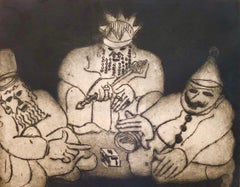
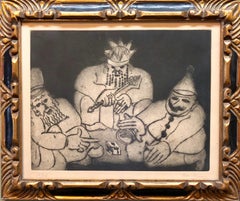
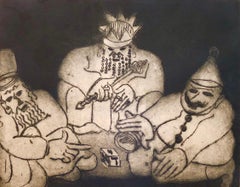
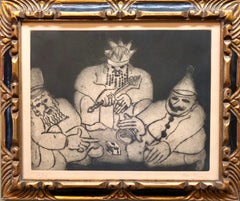
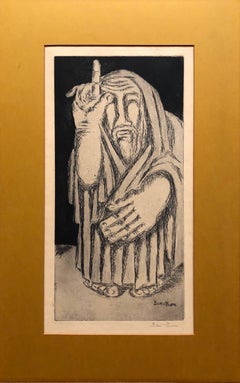
Purim Holiday Scene Judaica Aquatint Etching American Modernist WPA Artist

Purim Holiday Scene Judaica Aquatint Etching American Modernist WPA Artist

By Ben-Zion Weinman

Located in Surfside, FL

Born in 1897, Ben-Zion Weinman celebrated his European Jewish heritage in his visual works as a sculptor, painter, and printmaker. Influenced by Spinoza, Knut Hamsun, and Wladyslaw Reymont, as well as Hebrew literature, Ben-Zion wrote poetry and essays that, like his visual work, attempt to reveal the deep “connection between man and the divine, and between man and earth.” An emigrant from the Ukraine, he came to the US in 1920. He wrote fairy tales and poems in Hebrew under the name Benzion Weinman, but when he began painting he dropped his last name and hyphenated his first, saying an artist needed only one name. Ben-Zion was a founding member of “The Ten: An Independent Group” The Ten” a 1930’s avant-garde group, Painted on anything handy. Ben-Zion often used cabinet...

Category

Mid-20th Century Expressionist Ben-Zion Weinman Art

Materials

Etching

American Modernist Oil Painting Expressionist Vase, Flowers WPA Artist Ben ZIon

American Modernist Oil Painting Expressionist Vase, Flowers WPA Artist Ben ZIon

By Ben-Zion Weinman

Located in Surfside, FL

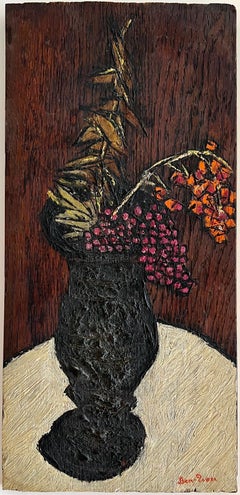
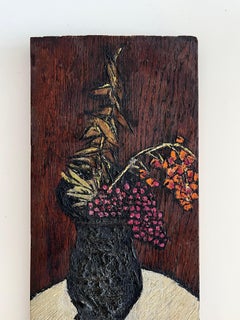
Ben-Zion (1897-1987) Flower Piece with Black Vase Oil on board, Hand signed 'Ben-Zion ' lower right, with the artist 's label and label from Duveen-Graham gallery, NY. 16 x 7 3/4 in., unframed as intended, Born in 1897, Ben-Zion Weinman celebrated his European Jewish heritage in his visual works as a sculptor, painter, and printmaker. Influenced by Spinoza, Knut Hamsun, and Wladyslaw Reymont, as well as Hebrew literature, Ben-Zion wrote poetry and essays that, like his visual work, attempt to reveal the deep “connection between man and the divine, and between man and earth.” An emigrant from the Ukraine, he came to the US in 1920. He wrote fairy tales and poems in Hebrew under the name Benzion Weinman, but when he began painting he dropped his last name and hyphenated his first, saying an artist needed only one name. Ben-Zion was a founding member of “The Ten: An Independent Group” The Ten” a 1930’s avant-garde group, Painted on anything handy. Ben-Zion often used cabinet doors (panels) in his work. Other members of group included Ilya Bolotowsky, Lee Gatch, Adolf Gottlieb, Louis Harris, Yankel Kufeld, Marcus Rothkowitz (later known as Mark Rothko), Louis Schanker, and Joseph Solman. Over the course of the group's existence, seventeen artists exhibited as members of The Ten at nine different shows. The group's nine shows were held at galleries and locations around New York City, including one international exhibition in Paris. David Burliuk, Lee Gatch, John Graham, Earl Kerkam, Karl Knaths, Edgar Levy, Jean Liberté...

Category

Mid-20th Century Expressionist Ben-Zion Weinman Art

Materials

Oil, Wood Panel

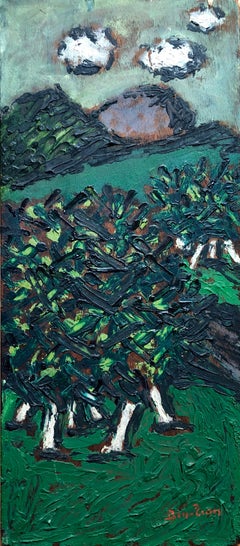
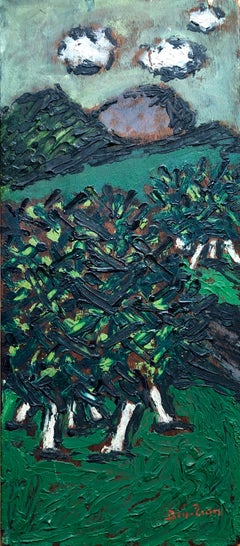
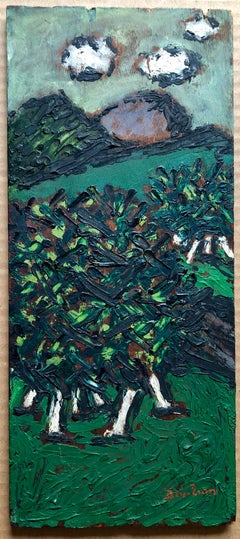
American Modernist Oil Painting Gestural Landscape WPA Artist Group of 10

American Modernist Oil Painting Gestural Landscape WPA Artist Group of 10

By Ben-Zion Weinman

Located in Surfside, FL

Born in 1897, Ben-Zion Weinman celebrated his European Jewish heritage in his visual works as a sculptor, painter, and printmaker. Influenced by Spinoza, Knut Hamsun, and Wladyslaw Reymont, as well as Hebrew literature, Ben-Zion wrote poetry and essays that, like his visual work, attempt to reveal the deep “connection between man and the divine, and between man and earth.” An emigrant from the Ukraine, he came to the US in 1920. He wrote fairy tales and poems in Hebrew under the name Benzion Weinman, but when he began painting he dropped his last name and hyphenated his first, saying an artist needed only one name. Ben-Zion was a founding member of “The Ten: An Independent Group” The Ten” a 1930’s avant-garde group, Painted on anything handy. Ben-Zion often used cabinet doors...

Category

Mid-20th Century Expressionist Ben-Zion Weinman Art

Materials

Oil, Wood Panel

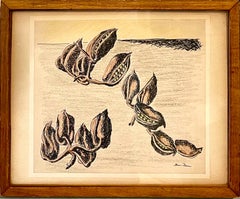
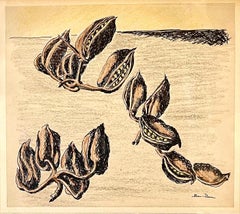
Expressionist Ink, Pastel, Crayon Drawing Jewish American Modernist Ben Zion WPA

Expressionist Ink, Pastel, Crayon Drawing Jewish American Modernist Ben Zion WPA

By Ben-Zion Weinman

Located in Surfside, FL

Expressionist ink and pastel crayon drawing of beans (carobs, flowers?) in pods Hand signed. Born in 1897, Ben-Zion Weinman celebrated his European Jewish heritage in his visual wo...

Category

Mid-20th Century Expressionist Ben-Zion Weinman Art

Materials

Paper, Oil Crayon, Pastel, Ink

Abstract Expressionist Rabbi Watercolor Painting Jewish American Modernist WPA

Abstract Expressionist Rabbi Watercolor Painting Jewish American Modernist WPA

By Ben-Zion Weinman

Located in Surfside, FL

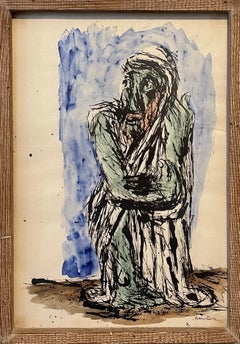
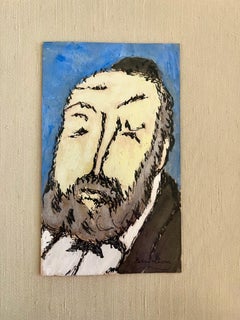
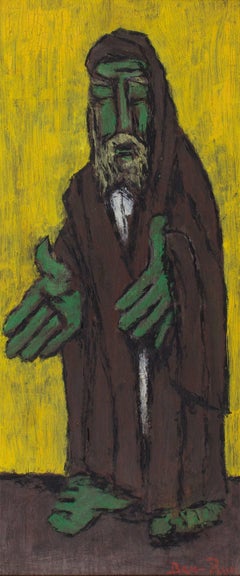
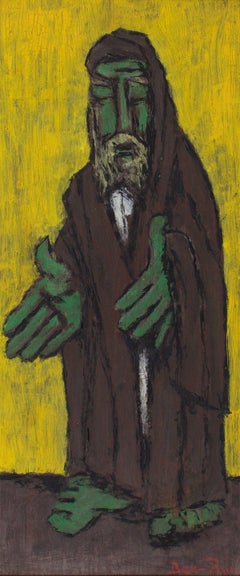
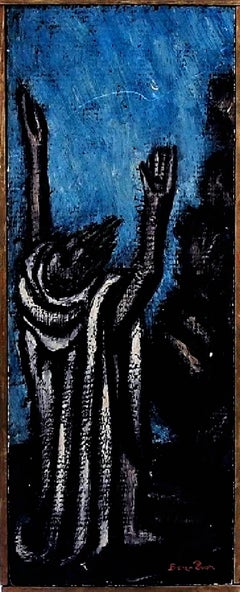
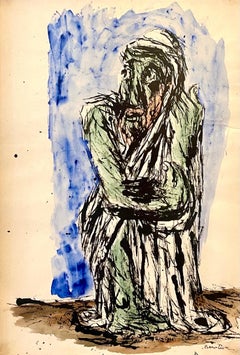
Watercolor painting of standing prophet or Rabbi, Judaica artwork Born in 1897, Ben-Zion Weinman celebrated his European Jewish heritage in his visual works as a sculptor, painter, ...

Category

Mid-20th Century Expressionist Ben-Zion Weinman Art

Materials

Paper, Watercolor

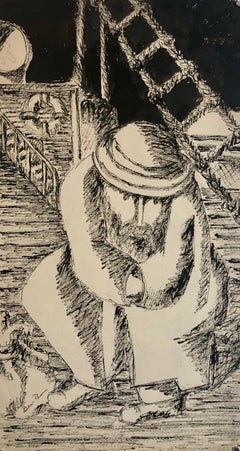
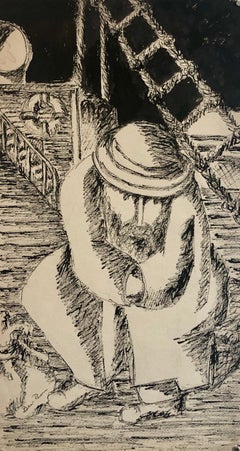
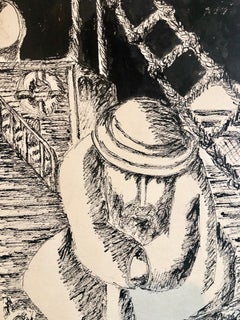
Modernist Judaica Jewish Ink Drawing Painting "New Immigrant" Off the Boat WPA

Modernist Judaica Jewish Ink Drawing Painting "New Immigrant" Off the Boat WPA

By Ben-Zion Weinman

Located in Surfside, FL

An ink drawing Judaic painting by modern artist Ben-Zion Weinman. It depicts a portrait of an old Jewish man. Coming over from Europe on a ship crossing. The work is signed "Ben-Zion". Born in 1897, Ben-Zion Weinman celebrated his European Jewish heritage in his visual works as a sculptor, painter, and printmaker. Influenced by Spinoza, Knut Hamsun, and Wladyslaw Reymont, as well as Hebrew literature, Ben-Zion wrote poetry and essays that, like his visual work, attempt to reveal the deep “connection between man and the divine, and between man and earth.” An emigrant from the Ukraine, he came to the US in 1920. He wrote fairy tales and poems in Hebrew under the name Benzion Weinman, but when he began painting he dropped his last name and hyphenated his first, saying an artist needed only one name. In 1920 he settled in America, where he found little interest in his writing. He began teaching Hebrew to support himself and then in the early 1930s returned to painting. He used his art to comment on the rise of fascism in Europe, events he felt could not be adequately explored with words. Largely self-taught, Ben-Zion visited the museums of New York City to learn his new trade. His first painting on a large scale, Friday Evening (1933, Jewish Museum, New York), depicts a Sabbath dinner table as recalled from his family home. Ben-Zion supported himself by working odd jobs until the establishment of the Works Progress Administration's Federal Art Project. Under the auspices of the wpa, Ben-Zion thrived and galleries began to show his work. In 1936, after his first one-man show at the Artists' Gallery in New York Ben-Zion was a founding member of “The Ten: An Independent Group” The Ten” a 1930’s...

Category

1940s American Modern Ben-Zion Weinman Art

Materials

Watercolor, Gouache

Expressionist Judaica Havdalah Oil Painting Jewish American Modernist Ben Zion

Expressionist Judaica Havdalah Oil Painting Jewish American Modernist Ben Zion

By Ben-Zion Weinman

Located in Surfside, FL

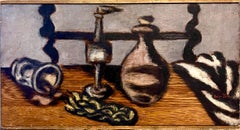
Ben Zion Oil Painting of still life Havdalah scene with braided candle, spice tower box and kiddush cup. Hand signed lower right. Born in 1897, Ben-Zion Weinman celebrated his Eur...

Category

Mid-20th Century Expressionist Ben-Zion Weinman Art

Materials

Oil, Wood Panel

Expressionist Color Drawing Cobalt Glass Vintage Frame Modernist Ben Zion WPA

Expressionist Color Drawing Cobalt Glass Vintage Frame Modernist Ben Zion WPA

By Ben-Zion Weinman

Located in Surfside, FL

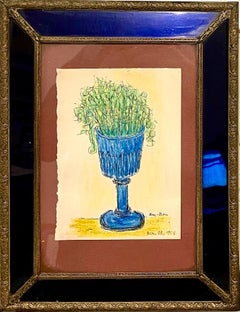
Expressionist ink and pastel crayon drawing of flowers in vase. Framed in a vintage cobalt blue glass original frame Hand signed and dated Framed it measures 13.5 X 10.5 The actual ...

Category

1950s Expressionist Ben-Zion Weinman Art

Materials

Paper, Oil Crayon, Pastel, Ink

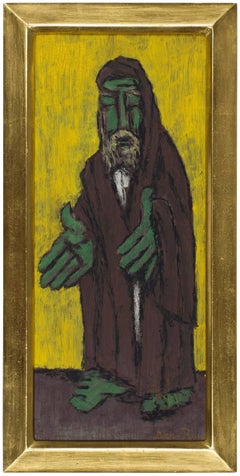
Modernist Rabbi Judaica Bold Color "School of 10"

Modernist Rabbi Judaica Bold Color "School of 10"

By Ben-Zion Weinman

Located in Surfside, FL

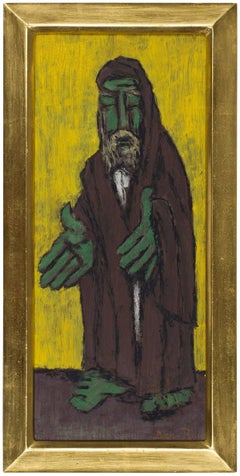
Dimensions w/Frame: 16" x 8" x 1 1/2" Born in 1897, Ben-Zion Weinman celebrated his European Jewish heritage in his visual works as a sculptor, painter, and printmaker. Influenced b...

Category

20th Century Fauvist Ben-Zion Weinman Art

Materials

Coating, Oil, Board

Biblical Prophet
Biblical Prophet

Biblical Prophet

By Ben-Zion Weinman

Located in Surfside, FL

Born in 1897, Ben-Zion Weinman celebrated his European Jewish heritage in his visual works as a sculptor, painter, and printmaker. Influenced by Spinoza, Knut Hamsun, and Wladyslaw R...

Category

Mid-20th Century Expressionist Ben-Zion Weinman Art

Materials

Etching

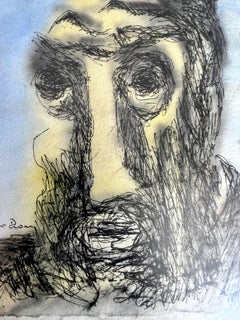
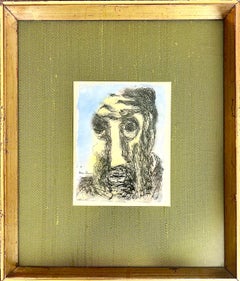
Ben ZIon Expressionist Judaica Rabbi Watercolor Painting Jewish Modernist WPA

Ben ZIon Expressionist Judaica Rabbi Watercolor Painting Jewish Modernist WPA

By Ben-Zion Weinman

Located in Surfside, FL

Frame measures 13.5 X 11.5 Paper measures 6.5 X 4 inches Hand signed lower right Watercolor painting of prophet or Rabbi, Judaica artwork Born in 1897, Ben-Zion Weinman celebrated h...

Category

Mid-20th Century Expressionist Ben-Zion Weinman Art

Materials

Paper, Watercolor

Ben ZIon Expressionist Judaica Rabbi Watercolor Painting Jewish Modernist WPA

Ben ZIon Expressionist Judaica Rabbi Watercolor Painting Jewish Modernist WPA

By Ben-Zion Weinman

Located in Surfside, FL

Frame measures 13.5 X 11.5 Paper measures 6.5 X 5 inches Hand signed lower right Watercolor painting of prophet or Rabbi, Judaica artwork Born in 1897, Ben-Zion Weinman celebrated h...

Category

Mid-20th Century Expressionist Ben-Zion Weinman Art

Materials

Paper, Watercolor

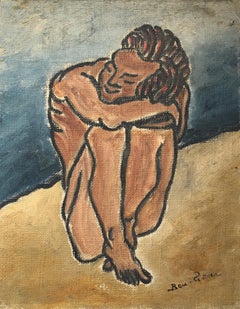
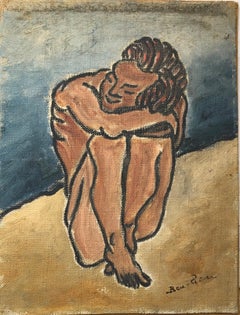
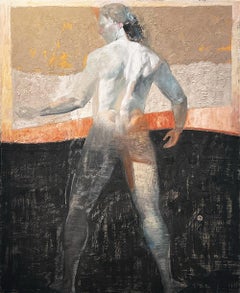
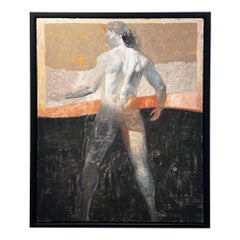
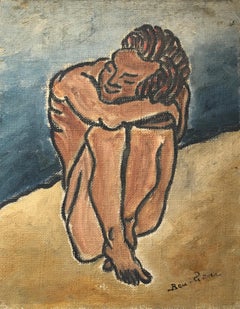
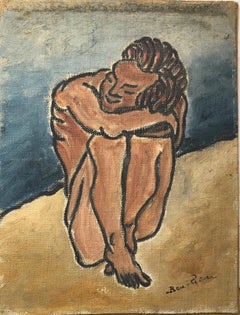
American Modernist Oil Painting Nude Male on Beach WPA Artist Group of 10

American Modernist Oil Painting Nude Male on Beach WPA Artist Group of 10

By Ben-Zion Weinman

Located in Surfside, FL

Born in 1897, Ben-Zion Weinman celebrated his European Jewish heritage in his visual works as a sculptor, painter, and printmaker. Influenced by Spinoza, Knut Hamsun, and Wladyslaw Reymont, as well as Hebrew literature, Ben-Zion wrote poetry and essays that, like his visual work, attempt to reveal the deep “connection between man and the divine, and between man and earth.” An emigrant from the Ukraine, he came to the US in 1920. He wrote fairy tales and poems in Hebrew under the name Benzion Weinman, but when he began painting he dropped his last name and hyphenated his first, saying an artist needed only one name. Ben-Zion was a founding member of “The Ten: An Independent Group” The Ten” a 1930’s avant-garde group, Painted on anything handy. Ben-Zion often used cabinet...

Category

Mid-20th Century Expressionist Ben-Zion Weinman Art

Materials

Oil, Board

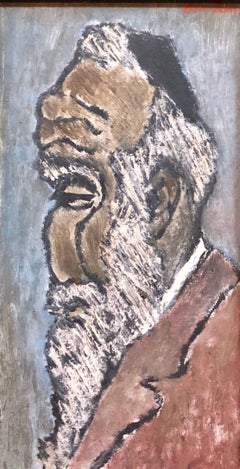
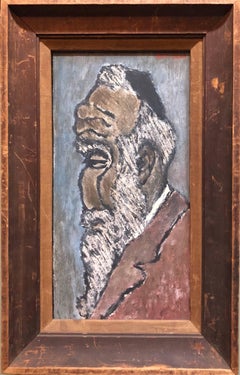
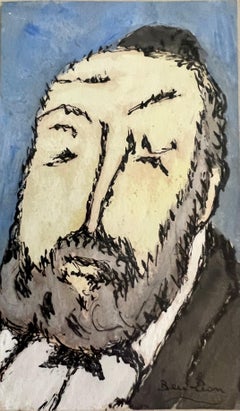
Modernist Judaica Oil Painting "Old Jew" Jewish Rabbi at Prayer

Modernist Judaica Oil Painting "Old Jew" Jewish Rabbi at Prayer

By Ben-Zion Weinman

Located in Surfside, FL

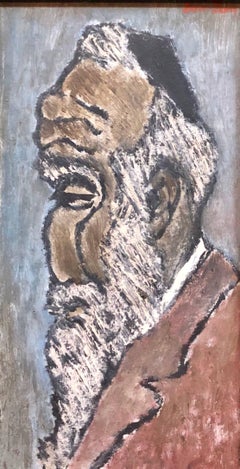
An oil on board Judaic painting by modern artist Ben-Zion Weinman. It depicts a portrait in profile of an old Jew. The work is signed "Ben-Zion". Born in 1897, Ben-Zion Weinman celebrated his European Jewish heritage in his visual works as a sculptor, painter, and printmaker. Influenced by Spinoza, Knut Hamsun, and Wladyslaw Reymont, as well as Hebrew literature, Ben-Zion wrote poetry and essays that, like his visual work, attempt to reveal the deep “connection between man and the divine, and between man and earth.” An emigrant from the Ukraine, he came to the US in 1920. He wrote fairy tales and poems in Hebrew under the name Benzion Weinman, but when he began painting he dropped his last name and hyphenated his first, saying an artist needed only one name. Ben-Zion was a founding member of “The Ten: An Independent Group” The Ten” a 1930’s avant...

Category

1940s American Modern Ben-Zion Weinman Art

Materials

Oil, Board

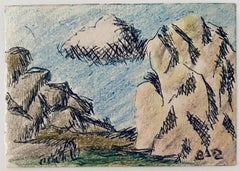
Pastel, Ink Drawing Rocks And Cloud Landscape Jewish American Modernist WPA

Pastel, Ink Drawing Rocks And Cloud Landscape Jewish American Modernist WPA

By Ben-Zion Weinman

Located in Surfside, FL

Miniature Landscape Provenance: Virginia Field, Arts administrator; New York, N.Y. Assistant director for Asia House gallery. (she was friends with John von Wicht and Andy Warhol) Born in 1897, Ben-Zion Weinman...

Category

Mid-20th Century Expressionist Ben-Zion Weinman Art

Materials

Pastel, Ink, Watercolor

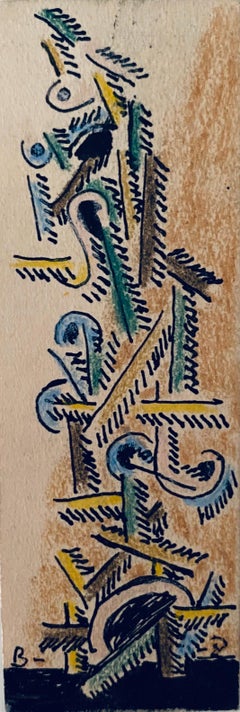
Abstract Drawing Watercolor Painting Totem Column Jewish American Modernist WPA

Abstract Drawing Watercolor Painting Totem Column Jewish American Modernist WPA

By Ben-Zion Weinman

Located in Surfside, FL

Miniature Abstract Totem. Signed with initials. Provenance: Virginia Field, Arts administrator; New York, N.Y. Assistant director for Asia House gallery. (she was friends with John v...

Category

Mid-20th Century Expressionist Ben-Zion Weinman Art

Materials

Ink, Watercolor

MAN PLAYING LYRE
MAN PLAYING LYRE

MAN PLAYING LYRE

By Ben-Zion Weinman

Located in Portland, ME

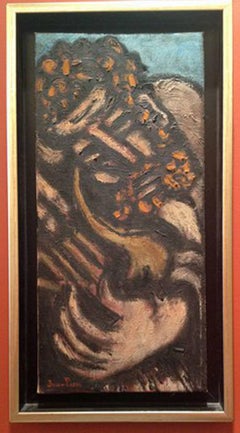
Ben-Zion. MAN PLAYING LYRE. Oil on canvas, not dated. Signed. 17 x 8 inches. In very good condition. A powerful, expressionistic image. Born Ben-Zion Weinman in Ukraine, 1897, ...

Category

Mid-20th Century Ben-Zion Weinman Art

Materials

Oil

Related Items
America impressionist portrait young boy 1937 Modern Figurative Oil Painting

America impressionist portrait young boy 1937 Modern Figurative Oil Painting

Located in Buffalo, NY

A fantastic modern portrait of a young boy. This work is signed what appears to be Paul Sellers and dated 1937, but we have not found information on the artist. The work dated 1936...

Category

1930s American Modern Ben-Zion Weinman Art

Materials

Oil, Board

"View in the Court of Rue Du' Jardinet"

Alvin Robert Raffel"View in the Court of Rue Du' Jardinet", Circa 1935

$577Sale Price|23% Off

H 12 in W 10 in D 0.25 in

"View in the Court of Rue Du' Jardinet"

By Alvin Robert Raffel

Located in Southampton, NY

Here for your consideration is a oil on academy board painting by the American artist, Alvin Raffel. Signed and titled verso. Circa 1930's. Condition is good. Small puncture in the ...

Category

1930s American Modern Ben-Zion Weinman Art

Materials

Oil

Studio di mano (study of hand)  – Florentine School 18th century

Studio di mano (study of hand) – Florentine School 18th century

Located in Middletown, NY

Red chalk on cream laid paper, 7 1/4 x 9 3/8 inches (182 x 236 mm), the full sheet. In very good condition with minor toning and two small nicks in the top sheet edge. Some modern no...

Category

Early 18th Century Italian School Ben-Zion Weinman Art

Materials

Crayon, Laid Paper

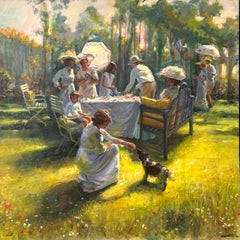
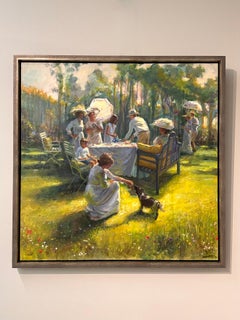
Party!- 21st Century Contemporary Impressionistic Painting of a Garden

Party!- 21st Century Contemporary Impressionistic Painting of a Garden

By Keimpe van der Kooi

Located in Nuenen, Noord Brabant

Keimpe van der Kooi Garden Party 122 x 122 cm Framed: 132 x 132 cm ( This frame is included) Oil on wood panel This Painting is made by Dutch Artist Keimpe van der Kooi. The impre...

Category

2010s Contemporary Ben-Zion Weinman Art

Materials

Oil, Wood Panel

Still-life with Skull, 21st Century Contemporary Classical Still-life Painting

Still-life with Skull, 21st Century Contemporary Classical Still-life Painting

By Ksenya Istomina

Located in Nuenen, Noord Brabant

Still-life with skull 50 x 80 cm Oil on wood panel Framed (included 62 x 92 cm Ksenya Istomina graduated in 2018 at the 'Imperial Academy of Arts in St Petersburg'. Since her sta...

Category

2010s Contemporary Ben-Zion Weinman Art

Materials

Oil, Wood Panel

French Contemporary Art by M.-P. Autonne - La Valse des Nénuphars

French Contemporary Art by M.-P. Autonne - La Valse des Nénuphars

By Marie-Pierre Autonne

Located in Paris, IDF

Acrylic & oil on wooden panel Marie-Pierre Autonne is a French artist born in 1960 who lives & works in Angers, France. She studied at Penninghen in Paris, France. She worked for se...

Category

2010s Contemporary Ben-Zion Weinman Art

Materials

Oil, Acrylic, Wood Panel

Revelation, abstract female Figure, back view, Paint strokes, colorful

Revelation, abstract female Figure, back view, Paint strokes, colorful

By Tom Bennett

Located in Brooklyn, NY

Conremporay figurative painting created with heavy impasto and agresssive, active brush strokes featuring a semi abstracted female figure viewd from the back. A mixture of representa...

Category

2010s Expressionist Ben-Zion Weinman Art

Materials

Canvas, Oil

"Erste Beruhrung" First Stirrings

"Erste Beruhrung" First Stirrings

By Ernst Neuschul

Located in Brecon, Powys

Oil on canvas, signed and dated 'EN [19]63' lower right, titled and dated to stretcher, numbered 33 and with paper label 34 to stretcher, From the family of the artist by direct des...

Category

1960s Expressionist Ben-Zion Weinman Art

Materials

Oil, Canvas

"Georgia Moonshiner, c. 1935" by Athos Menaboni (1895-1990) American WPA Era Oil

"Georgia Moonshiner, c. 1935" by Athos Menaboni (1895-1990) American WPA Era Oil

Located in Yardley, PA

A fantastic WPA-era painting of a Georgia moonshiner by famed Italian-American artist Athos Menaboni (1895-1990). This work depicts an older man sporting a brown hat, brown jacket, ...

Category

1930s American Modern Ben-Zion Weinman Art

Materials

Masonite, Oil

Marc Chagall, Tchitchikov the Customs Officer, from Dead Souls, 1923–1927

Marc Chagall, Tchitchikov the Customs Officer, from Dead Souls, 1923–1927

By Marc Chagall

Located in Southampton, NY

This exquisite etching by Marc Chagall (1887–1985), titled Tchitchikov douanier (Tchitchikov the Customs Officer), originates from the celebrated folio Nicolas Gogol, Les Ames mortes...

Category

1920s Expressionist Ben-Zion Weinman Art

Materials

Etching

Marc Chagall, The Troika at Evening, from Dead Souls, 1923–1927

Marc Chagall, The Troika at Evening, from Dead Souls, 1923–1927

By Marc Chagall

Located in Southampton, NY

This exquisite etching by Marc Chagall (1887–1985), titled La troika au soir (The Troika at Evening), originates from the celebrated folio Nicolas Gogol, Les Ames mortes, Eaux-fortes...

Category

1920s Expressionist Ben-Zion Weinman Art

Materials

Etching

Wedgewood Eturia with Anemones- 21st Century Dutch Still-life painting

Wedgewood Eturia with Anemones- 21st Century Dutch Still-life painting

By Ingrid Smuling

Located in Nuenen, Noord Brabant

Ingrid Smuling Wedgewood Eturia with Anemones 25 x 30 cm olieverf, frame included in price. (Size with frame 34 x 39 cm) Ingrid Smuling, the Grand Lady of Still life painting is st...

Category

2010s Ben-Zion Weinman Art

Materials

Oil, Wood Panel

Previously Available Items
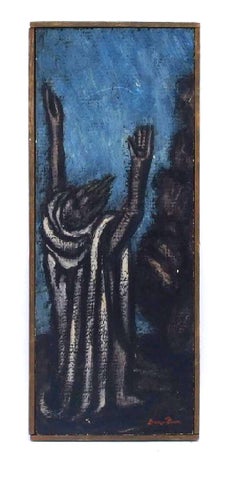
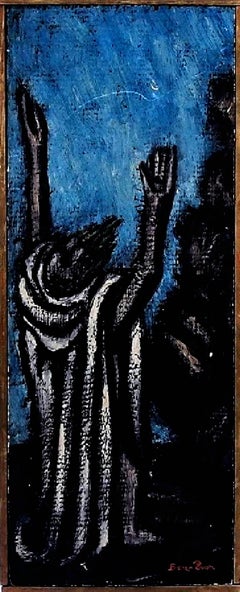
The Prophet, Modernist Judaica Oil Painting Biblical Jewish Rabbi at Prayer

The Prophet, Modernist Judaica Oil Painting Biblical Jewish Rabbi at Prayer

By Ben-Zion Weinman

Located in Surfside, FL

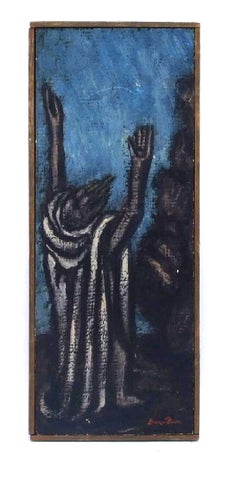
An oil on board Judaic painting by modern artist Ben-Zion Weinman. The work depicts a standing prophet with white robes raising his arms towards heaven. The work is signed "Ben-Zion" in the bottom right corner. The work is signed and dated "4/14/59" on verso. Provenance: Ex. Sotheby's Parke Bernet Born in 1897, Ben-Zion Weinman celebrated his European Jewish heritage in his visual works as a sculptor, painter, and printmaker. Influenced by Spinoza, Knut Hamsun, and Wladyslaw Reymont, as well as Hebrew literature, Ben-Zion wrote poetry and essays that, like his visual work, attempt to reveal the deep “connection between man and the divine, and between man and earth.” An emigrant from the Ukraine, he came to the US in 1920. He wrote fairy tales and poems in Hebrew under the name Benzion Weinman, but when he began painting he dropped his last name and hyphenated his first, saying an artist needed only one name. Ben-Zion was a founding member of “The Ten: An Independent Group” The Ten” a 1930’s avant-garde group, Painted on anything handy. Ben-Zion often used cabinet...

Category

1950s American Modern Ben-Zion Weinman Art

Materials

Oil

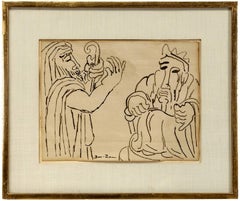
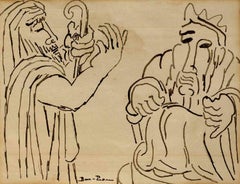
Biblical Scene, (2 Jewish Men) 1930s Modernist Ink Drawing

Biblical Scene, (2 Jewish Men) 1930s Modernist Ink Drawing

By Ben-Zion Weinman

Located in Surfside, FL

Born in 1897, Ben-Zion Weinman celebrated his European Jewish heritage in his visual works as a sculptor, painter, and printmaker. Influenced by Spinoza, Knut Hamsun, and Wladyslaw Reymont, as well as Hebrew literature, Ben-Zion wrote poetry and essays that, like his visual work, attempt to reveal the deep “connection between man and the divine, and between man and earth.” An emigrant from the Ukraine, he came to the US in 1920. He wrote fairy tales and poems in Hebrew under the name Benzion Weinman, but when he began painting he dropped his last name and hyphenated his first, saying an artist needed only one name. Ben-Zion was a founding member of “The Ten: An Independent Group” The Ten” a 1930’s avant-garde group, Painted on anything handy. Ben-Zion often used cabinet doors (panels) in his work. Other members of group included Ilya Bolotowsky, Lee Gatch, Adolf Gottlieb...

Category

Early 20th Century Ben-Zion Weinman Art

Materials

Paper, Ink

Modernist Rabbi Judaica Bold Color "School of 10"

Modernist Rabbi Judaica Bold Color "School of 10"

By Ben-Zion Weinman

Located in Surfside, FL

Dimensions w/Frame: 16" x 8" x 1 1/2" Born in 1897, Ben-Zion Weinman celebrated his European Jewish heritage in his visual works as a sculptor, painter, and printmaker. Influenced by Spinoza, Knut Hamsun, and Wladyslaw Reymont, as well as Hebrew literature, Ben-Zion wrote poetry and essays that, like his visual work, attempt to reveal the deep “connection between man and the divine, and between man and earth.” An emigrant from the Ukraine, he came to the US in 1920. He wrote fairy tales and poems in Hebrew under the name Benzion Weinman, but when he began painting he dropped his last name and hyphenated his first, saying an artist needed only one name. Ben-Zion was a founding member of “The Ten: An Independent Group” The Ten” a 1930’s avant-garde group, Painted on anything handy. Ben-Zion often used cabinet doors (panels) in his work. Other members of group included Ilya Bolotowsky, Lee Gatch, Adolf Gottlieb...

Category

20th Century Fauvist Ben-Zion Weinman Art

Materials

Board, Coating, Oil

Biblical Prophet
Biblical Prophet

Ben-Zion WeinmanBiblical Prophet

Sold

H 21.25 in W 13.25 in

Biblical Prophet

By Ben-Zion Weinman

Located in Surfside, FL

Born in 1897, Ben-Zion Weinman celebrated his European Jewish heritage in his visual works as a sculptor, painter, and printmaker. Influenced by Spinoza, Knut Hamsun, and Wladyslaw Reymont, as well as Hebrew literature, Ben-Zion wrote poetry and essays that, like his visual work, attempt to reveal the deep “connection between man and the divine, and between man and earth.” An emigrant from the Ukraine, he came to the US in 1920. He wrote fairy tales and poems in Hebrew under the name Benzion Weinman, but when he began painting he dropped his last name and hyphenated his first, saying an artist needed only one name. Ben-Zion was a founding member of “The Ten: An Independent Group” The Ten” a 1930’s avant-garde group, Painted on anything handy. Ben-Zion often used cabinet doors (panels) in his work. Other members of group included Ilya Bolotowsky, Lee Gatch, Adolf Gottlieb...

Category

Mid-20th Century Expressionist Ben-Zion Weinman Art

Materials

Etching

Expressionist Judaica Rabbis Oil Painting Jewish American WPA Modernist Ben Zion

Expressionist Judaica Rabbis Oil Painting Jewish American WPA Modernist Ben Zion

By Ben-Zion Weinman

Located in Surfside, FL

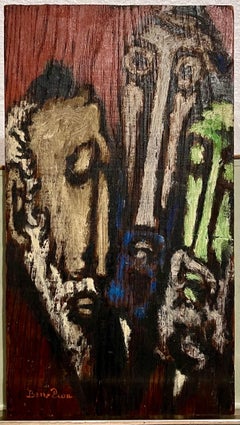
Rabbinical Discussion Hand signed lower left. Provenance: bears label verso for Summit Gallery Dimensions: H 14.25" x W 8" Born in 1897, Ben-Zion Weinman celebrated his European Jewish heritage in his visual works as a sculptor, painter, and printmaker. Influenced by Spinoza, Knut Hamsun, and Wladyslaw Reymont, as well as Hebrew literature, Ben-Zion wrote poetry and essays that, like his visual work, attempt to reveal the deep “connection between man and the divine, and between man and earth.” An emigrant from the Ukraine, he came to the US in 1920. He wrote fairy tales and poems in Hebrew under the name Benzion Weinman, but when he began painting he dropped his last name and hyphenated his first, saying an artist needed only one name. Ben-Zion was a founding member of “The Ten: An Independent Group” The Ten” a 1930’s avant-garde group, Painted on anything handy. Ben-Zion often used cabinet doors (panels) in his work. Other members of group included Ilya Bolotowsky, Lee Gatch, Adolph Gottlieb, Louis Harris, Yankel Kufeld, Marcus Rothkowitz (later known as Mark Rothko), Louis Schanker, and Joseph Solman. The Art of “The Ten” was generally described as expressionist, as this style offered the best link between modernism and social art. Their exhibition at the Mercury Gallery in New York held at the same time as the Whitney Annual Exhibition of Contemporary American Painting, included a manifesto concentrating on aesthetic questions and criticisms of the conservative definition of modern art imposed by the Whitney. Ben-Zion’s work was quickly noticed. The New York Sun said he painted “furiously” and called him “the farthest along of the lot.” And the triptych, “The Glory of War,” was described by Art News as “resounding.” By 1939, The Ten disbanded because most of the members found individual galleries to represent their work. Ben-Zion had his first one-man show at the Artist’s Gallery in Greenwich Village and J.B. Neumann, the highly esteemed European art dealer who introduced Paul Klee, (among others) to America, purchased several of Ben-Zion’s drawings. Curt Valentin, another well-known dealer, exhibited groups of his drawings and undertook the printing of four portfolios of etchings, each composed of Ben-Zion’s biblical themes. He worked as a WPA artist. Ben-Zion’s work is represented in many museums throughout the country including the Metropolitan, the Whitney, and the Museum of Modern Art in New York, the Art Institute of Chicago, the Philadelphia Museum of Art and the Phillips Collection, Washington. The Jewish Museum in New York opened in 1948 with a Ben-Zion exhibition. Ben-Zion consistently threaded certain subject matter—nature, still life, the human figure, the Rabbi, the Hebrew Bible, and the Jewish people—into his work throughout his life. "In all his work a profound human feeling remains. Sea and sky, even sheaves of wheat acquire a monolithic beauty and simplicity which delineates the transient as a reflection of the eternal. This sensitive inter- mingling of the physical and metaphysical is one of the most enduring features of Ben-Zion's works." (Excerpt from Stephen Kayser, “Biblical Paintings,” The Jewish Museum Catalogue, 1952). Mystical Imprints: Marc Chagall, Ben-Zion, and Ben Shahn presents the print work of three prominent 20th century Jewish artists born in the Russian Empire. Among these seventy pieces are etchings and lithographs from Chagall’s Bible series...

Category

Mid-20th Century Expressionist Ben-Zion Weinman Art
Materials

Oil, Wood Panel

Expressionist Miniature Drawing Wheat Stalks American Modernist Ben Zion WPA

Expressionist Miniature Drawing Wheat Stalks American Modernist Ben Zion WPA

By Ben-Zion Weinman

Located in Surfside, FL

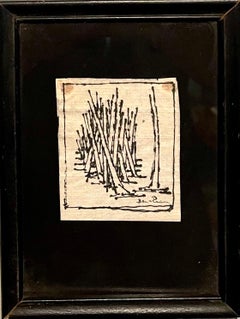
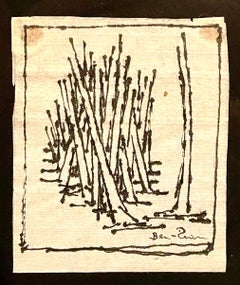
Expressionist ink drawing of wheat stalks There is an inscription "Happy New Year" on verso Hand signed Framed it measures 7.75 X 5.75 The actual paper is 3 X 3.5 Born in 1897, Ben-Zion Weinman celebrated his European Jewish heritage in his visual works as a sculptor, painter, and printmaker. Influenced by Spinoza, Knut Hamsun, and Wladyslaw Reymont, as well as Hebrew literature, Ben-Zion wrote poetry and essays that, like his visual work, attempt to reveal the deep “connection between man and the divine, and between man and earth.” An emigrant from the Ukraine, he came to the US in 1920. He wrote fairy tales and poems in Hebrew under the name Benzion Weinman, but when he began painting he dropped his last name and hyphenated his first, saying an artist needed only one name. Ben-Zion was a founding member of “The Ten: An Independent Group” The Ten” a 1930’s avant-garde group, Painted on anything handy. Ben-Zion often used cabinet doors (panels) in his work. Other members of group included Ilya Bolotowsky, Lee Gatch, Adolph Gottlieb, Louis Harris, Yankel Kufeld, Marcus Rothkowitz (later known as Mark Rothko), Louis Schanker, and Joseph Solman. The Art of “The Ten” was generally described as expressionist, as this style offered the best link between modernism and social art. Their exhibition at the Mercury Gallery in New York held at the same time as the Whitney Annual Exhibition of Contemporary American Painting, included a manifesto concentrating on aesthetic questions and criticisms of the conservative definition of modern art imposed by the Whitney. Ben-Zion’s work was quickly noticed. The New York Sun said he painted “furiously” and called him “the farthest along of the lot.” And the triptych, “The Glory of War,” was described by Art News as “resounding.” By 1939, The Ten disbanded because most of the members found individual galleries to represent their work. Ben-Zion had his first one-man show at the Artist’s Gallery in Greenwich Village and J.B. Neumann, the highly esteemed European art dealer who introduced Paul Klee, (among others) to America, purchased several of Ben-Zion’s drawings. Curt Valentin, another well-known dealer, exhibited groups of his drawings and undertook the printing of four portfolios of etchings, each composed of Ben-Zion’s biblical themes. He worked as a WPA artist. Ben-Zion’s work is represented in many museums throughout the country including the Metropolitan, the Whitney, and the Museum of Modern Art in New York, the Art Institute of Chicago, the Philadelphia Museum of Art and the Phillips Collection, Washington. The Jewish Museum in New York opened in 1948 with a Ben-Zion exhibition. Ben-Zion consistently threaded certain subject matter—nature, still life, the human figure, the Hebrew Bible, and the Jewish people—into his work throughout his life. "In all his work a profound human feeling remains. Sea and sky, even sheaves of wheat acquire a monolithic beauty and simplicity which delineates the transient as a reflection of the eternal. This sensitive inter- mingling of the physical and metaphysical is one of the most enduring features of Ben-Zion's works." (Excerpt from Stephen Kayser, “Biblical Paintings,” The Jewish Museum Catalogue, 1952). Mystical Imprints: Marc Chagall, Ben-Zion, and Ben Shahn presents the print work of three prominent 20th century Jewish artists born in the Russian Empire. Among these seventy pieces are etchings and lithographs from Chagall’s Bible series...

Category

1950s Expressionist Ben-Zion Weinman Art

Materials

Ink

Expressionist Color Drawing Cobalt Glass Vintage Frame Modernist Ben Zion WPA

Expressionist Color Drawing Cobalt Glass Vintage Frame Modernist Ben Zion WPA

By Ben-Zion Weinman

Located in Surfside, FL

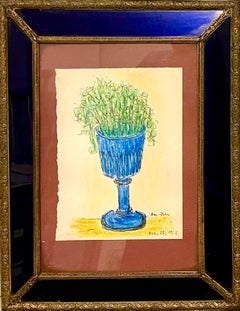
Expressionist ink and pastel crayon drawing of flowers in vase. Framed in a vintage cobalt blue glass original frame Hand signed and dated Framed it measures 13.5 X 10.5 The actual paper is 7.5 X 5.5 Born in 1897, Ben-Zion Weinman celebrated his European Jewish heritage in his visual works as a sculptor, painter, and printmaker. Influenced by Spinoza, Knut Hamsun, and Wladyslaw Reymont, as well as Hebrew literature, Ben-Zion wrote poetry and essays that, like his visual work, attempt to reveal the deep “connection between man and the divine, and between man and earth.” An emigrant from the Ukraine, he came to the US in 1920. He wrote fairy tales and poems in Hebrew under the name Benzion Weinman, but when he began painting he dropped his last name and hyphenated his first, saying an artist needed only one name. Ben-Zion was a founding member of “The Ten: An Independent Group” The Ten” a 1930’s avant-garde group, Painted on anything handy. Ben-Zion often used cabinet doors (panels) in his work. Other members of group included Ilya Bolotowsky, Lee Gatch, Adolph Gottlieb, Louis Harris, Yankel Kufeld, Marcus Rothkowitz (later known as Mark Rothko), Louis Schanker, and Joseph Solman. The Art of “The Ten” was generally described as expressionist, as this style offered the best link between modernism and social art. Their exhibition at the Mercury Gallery in New York held at the same time as the Whitney Annual Exhibition of Contemporary American Painting, included a manifesto concentrating on aesthetic questions and criticisms of the conservative definition of modern art imposed by the Whitney. Ben-Zion’s work was quickly noticed. The New York Sun said he painted “furiously” and called him “the farthest along of the lot.” And the triptych, “The Glory of War,” was described by Art News as “resounding.” By 1939, The Ten disbanded because most of the members found individual galleries to represent their work. Ben-Zion had his first one-man show at the Artist’s Gallery in Greenwich Village and J.B. Neumann, the highly esteemed European art dealer who introduced Paul Klee, (among others) to America, purchased several of Ben-Zion’s drawings. Curt Valentin, another well-known dealer, exhibited groups of his drawings and undertook the printing of four portfolios of etchings, each composed of Ben-Zion’s biblical themes. He worked as a WPA artist. Ben-Zion’s work is represented in many museums throughout the country including the Metropolitan, the Whitney, and the Museum of Modern Art in New York, the Art Institute of Chicago, the Philadelphia Museum of Art and the Phillips Collection, Washington. The Jewish Museum in New York opened in 1948 with a Ben-Zion exhibition. Ben-Zion consistently threaded certain subject matter—nature, still life, the human figure, the Hebrew Bible, and the Jewish people—into his work throughout his life. "In all his work a profound human feeling remains. Sea and sky, even sheaves of wheat acquire a monolithic beauty and simplicity which delineates the transient as a reflection of the eternal. This sensitive inter- mingling of the physical and metaphysical is one of the most enduring features of Ben-Zion's works." (Excerpt from Stephen Kayser, “Biblical Paintings,” The Jewish Museum Catalogue, 1952). Mystical Imprints: Marc Chagall, Ben-Zion, and Ben Shahn presents the print work of three prominent 20th century Jewish artists born in the Russian Empire. Among these seventy pieces are etchings and lithographs from Chagall’s Bible series...

Category

1950s Expressionist Ben-Zion Weinman Art

Materials

Paper, Oil Crayon, Pastel, Ink

Expressionist Ink, Pastel, Crayon Drawing Jewish American Modernist Ben Zion WPA

Expressionist Ink, Pastel, Crayon Drawing Jewish American Modernist Ben Zion WPA

By Ben-Zion Weinman

Located in Surfside, FL

Expressionist ink and pastel crayon drawing of beans (carobs, flowers?) in pods Hand signed. Born in 1897, Ben-Zion Weinman celebrated his European Jewish heritage in his visual works as a sculptor, painter, and printmaker. Influenced by Spinoza, Knut Hamsun, and Wladyslaw Reymont, as well as Hebrew literature, Ben-Zion wrote poetry and essays that, like his visual work, attempt to reveal the deep “connection between man and the divine, and between man and earth.” An emigrant from the Ukraine, he came to the US in 1920. He wrote fairy tales and poems in Hebrew under the name Benzion Weinman, but when he began painting he dropped his last name and hyphenated his first, saying an artist needed only one name. Ben-Zion was a founding member of “The Ten: An Independent Group” The Ten” a 1930’s avant-garde group, Painted on anything handy. Ben-Zion often used cabinet doors (panels) in his work. Other members of group included Ilya Bolotowsky, Lee Gatch, Adolph Gottlieb, Louis Harris, Yankel Kufeld, Marcus Rothkowitz (later known as Mark Rothko), Louis Schanker, and Joseph Solman. The Art of “The Ten” was generally described as expressionist, as this style offered the best link between modernism and social art. Their exhibition at the Mercury Gallery in New York held at the same time as the Whitney Annual Exhibition of Contemporary American Painting, included a manifesto concentrating on aesthetic questions and criticisms of the conservative definition of modern art imposed by the Whitney. Ben-Zion’s work was quickly noticed. The New York Sun said he painted “furiously” and called him “the farthest along of the lot.” And the triptych, “The Glory of War,” was described by Art News as “resounding.” By 1939, The Ten disbanded because most of the members found individual galleries to represent their work. Ben-Zion had his first one-man show at the Artist’s Gallery in Greenwich Village and J.B. Neumann, the highly esteemed European art dealer who introduced Paul Klee, (among others) to America, purchased several of Ben-Zion’s drawings. Curt Valentin, another well-known dealer, exhibited groups of his drawings and undertook the printing of four portfolios of etchings, each composed of Ben-Zion’s biblical themes. He worked as a WPA artist. Ben-Zion’s work is represented in many museums throughout the country including the Metropolitan, the Whitney, and the Museum of Modern Art in New York, the Art Institute of Chicago, the Philadelphia Museum of Art and the Phillips Collection, Washington. The Jewish Museum in New York opened in 1948 with a Ben-Zion exhibition. Ben-Zion consistently threaded certain subject matter—nature, still life, the human figure, the Hebrew Bible, and the Jewish people—into his work throughout his life. "In all his work a profound human feeling remains. Sea and sky, even sheaves of wheat acquire a monolithic beauty and simplicity which delineates the transient as a reflection of the eternal. This sensitive inter- mingling of the physical and metaphysical is one of the most enduring features of Ben-Zion's works." (Excerpt from Stephen Kayser, “Biblical Paintings,” The Jewish Museum Catalogue, 1952). Mystical Imprints: Marc Chagall, Ben-Zion, and Ben Shahn presents the print work of three prominent 20th century Jewish artists born in the Russian Empire. Among these seventy pieces are etchings and lithographs from Chagall’s Bible series...

Category

Mid-20th Century Expressionist Ben-Zion Weinman Art
Materials

Paper, Oil Crayon, Pastel, Ink

Expressionist Judaica Havdalah Oil Painting Jewish American Modernist Ben Zion

Expressionist Judaica Havdalah Oil Painting Jewish American Modernist Ben Zion

By Ben-Zion Weinman

Located in Surfside, FL

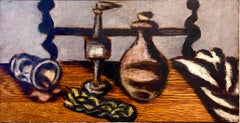
Oil Painting of still life Havdalah scene with braided candle, spice tower box and kiddush cup. Born in 1897, Ben-Zion Weinman celebrated his European Jewish heritage in his visual works as a sculptor, painter, and printmaker. Influenced by Spinoza, Knut Hamsun, and Wladyslaw Reymont, as well as Hebrew literature, Ben-Zion wrote poetry and essays that, like his visual work, attempt to reveal the deep “connection between man and the divine, and between man and earth.” An emigrant from the Ukraine, he came to the US in 1920. He wrote fairy tales and poems in Hebrew under the name Benzion Weinman, but when he began painting he dropped his last name and hyphenated his first, saying an artist needed only one name. Ben-Zion was a founding member of “The Ten: An Independent Group” The Ten” a 1930’s avant-garde group, Painted on anything handy. Ben-Zion often used cabinet doors (panels) in his work. Other members of group included Ilya Bolotowsky, Lee Gatch, Adolph Gottlieb, Louis Harris, Yankel Kufeld, Marcus Rothkowitz (later known as Mark Rothko), Louis Schanker, and Joseph Solman. The Art of “The Ten” was generally described as expressionist, as this style offered the best link between modernism and social art. Their exhibition at the Mercury Gallery in New York held at the same time as the Whitney Annual Exhibition of Contemporary American Painting, included a manifesto concentrating on aesthetic questions and criticisms of the conservative definition of modern art imposed by the Whitney. Ben-Zion’s work was quickly noticed. The New York Sun said he painted “furiously” and called him “the farthest along of the lot.” And the triptych, “The Glory of War,” was described by Art News as “resounding.” By 1939, The Ten disbanded because most of the members found individual galleries to represent their work. Ben-Zion had his first one-man show at the Artist’s Gallery in Greenwich Village and J.B. Neumann, the highly esteemed European art dealer who introduced Paul Klee, (among others) to America, purchased several of Ben-Zion’s drawings. Curt Valentin, another well-known dealer, exhibited groups of his drawings and undertook the printing of four portfolios of etchings, each composed of Ben-Zion’s biblical themes. He worked as a WPA artist. Ben-Zion’s work is represented in many museums throughout the country including the Metropolitan, the Whitney, and the Museum of Modern Art in New York, the Art Institute of Chicago, the Philadelphia Museum of Art and the Phillips Collection, Washington. The Jewish Museum in New York opened in 1948 with a Ben-Zion exhibition. Ben-Zion consistently threaded certain subject matter—nature, still life, the human figure, the Hebrew Bible, and the Jewish people—into his work throughout his life. "In all his work a profound human feeling remains. Sea and sky, even sheaves of wheat acquire a monolithic beauty and simplicity which delineates the transient as a reflection of the eternal. This sensitive inter- mingling of the physical and metaphysical is one of the most enduring features of Ben-Zion's works." (Excerpt from Stephen Kayser, “Biblical Paintings,” The Jewish Museum Catalogue, 1952). Mystical Imprints: Marc Chagall, Ben-Zion, and Ben Shahn presents the print work of three prominent 20th century Jewish artists born in the Russian Empire. Among these seventy pieces are etchings and lithographs from Chagall’s Bible series...

Category

Mid-20th Century Expressionist Ben-Zion Weinman Art
Materials

Oil, Wood Panel

Abstract Expressionist Rabbi Watercolor Painting Jewish American Modernist WPA

Abstract Expressionist Rabbi Watercolor Painting Jewish American Modernist WPA

By Ben-Zion Weinman

Located in Surfside, FL

Watercolor painting of standing prophet or Rabbi, Judaica artwork Born in 1897, Ben-Zion Weinman celebrated his European Jewish heritage in his visual works as a sculptor, painter, and printmaker. Influenced by Spinoza, Knut Hamsun, and Wladyslaw Reymont, as well as Hebrew literature, Ben-Zion wrote poetry and essays that, like his visual work, attempt to reveal the deep “connection between man and the divine, and between man and earth.” An emigrant from the Ukraine, he came to the US in 1920. He wrote fairy tales and poems in Hebrew under the name Benzion Weinman, but when he began painting he dropped his last name and hyphenated his first, saying an artist needed only one name. Ben-Zion was a founding member of “The Ten: An Independent Group” The Ten” a 1930’s avant-garde group, Painted on anything handy. Ben-Zion often used cabinet doors (panels) in his work. Other members of group included Ilya Bolotowsky, Lee Gatch, Adolf Gottlieb...

Category

Mid-20th Century Expressionist Ben-Zion Weinman Art
Materials

Paper, Watercolor

Abstract Expressionist Drawing Jewish American Modernist WPA, Group of Ten

Abstract Expressionist Drawing Jewish American Modernist WPA, Group of Ten

By Ben-Zion Weinman

Located in Surfside, FL

Miniature Abstract Drawing in New Years Card Provenance: Virginia Field, Arts administrator; New York, N.Y. Assistant director for Asia House gallery. (she was friends with John von...

Category

Mid-20th Century Expressionist Ben-Zion Weinman Art
Materials

Etching

Abstract Drawing Watercolor Painting Totem Column Jewish American Modernist WPA

Abstract Drawing Watercolor Painting Totem Column Jewish American Modernist WPA

By Ben-Zion Weinman

Located in Surfside, FL

Miniature Abstract Totem. Signed with initials. Provenance: Virginia Field, Arts administrator; New York, N.Y. Assistant director for Asia House gallery. (she was friends with John von Wicht and Andy Warhol) Born in 1897, Ben-Zion Weinman celebrated his European Jewish heritage in his visual works as a sculptor, painter, and printmaker. Influenced by Spinoza, Knut Hamsun, and Wladyslaw Reymont, as well as Hebrew literature, Ben-Zion wrote poetry and essays that, like his visual work, attempt to reveal the deep “connection between man and the divine, and between man and earth.” An emigrant from the Ukraine, he came to the US in 1920. He wrote fairy tales and poems in Hebrew under the name Benzion Weinman, but when he began painting he dropped his last name and hyphenated his first, saying an artist needed only one name. Ben-Zion was a founding member of “The Ten: An Independent Group” The Ten” a 1930’s avant-garde group, Painted on anything handy. Ben-Zion often used cabinet doors (panels) in his work. Other members of group included Ilya Bolotowsky, Lee Gatch, Adolf Gottlieb, Louis Harris, Yankel...

Category

Mid-20th Century Expressionist Ben-Zion Weinman Art
Materials

Ink, Watercolor

Ben-zion Weinman art for sale on 1stDibs.

Find a wide variety of authentic Ben-Zion Weinman art available for sale on 1stDibs. If you’re browsing the collection of art to introduce a pop of color in a neutral corner of your living room or bedroom, you can find work that includes elements of blue, orange and other colors. You can also browse by medium to find art by Ben-Zion Weinman in paint, oil paint, ink and more. Much of the original work by this artist or collective was created during the 20th century and is mostly associated with the Expressionist style. Not every interior allows for large Ben-Zion Weinman art, so small editions measuring 2 inches across are available. Customers who are interested in this artist might also find the work of Lucien Génin, Gail Foster, and Eve Nethercott. Ben-Zion Weinman art prices can differ depending upon medium, time period and other attributes. On 1stDibs, the price for these items starts at $450 and tops out at $6,500, while the average work can sell for $1,200.
Artists Similar to Ben-Zion Weinman