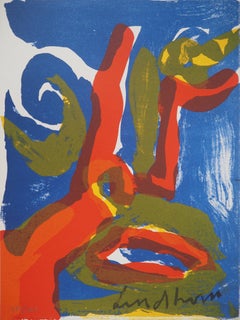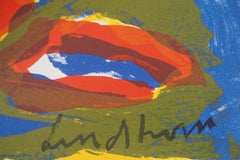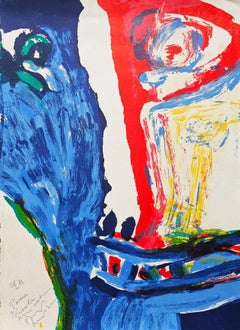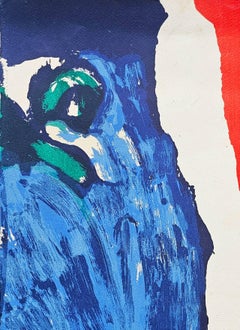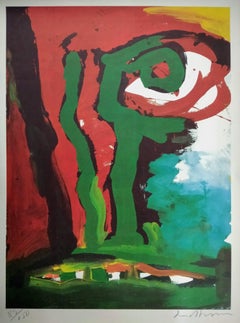
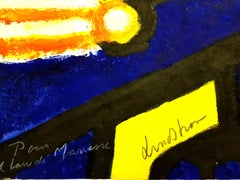
Bengt Lindström Art

Swedish, 1925-2008
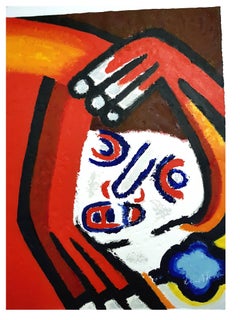
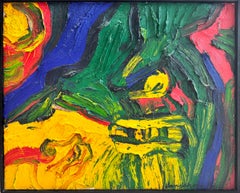
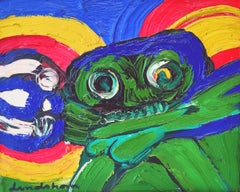
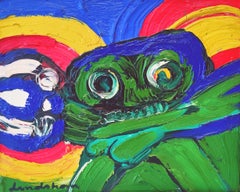
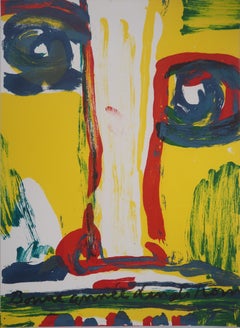
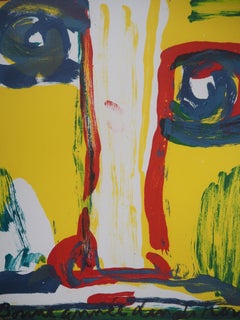
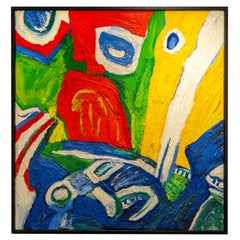
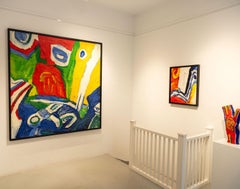
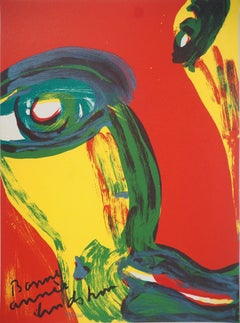
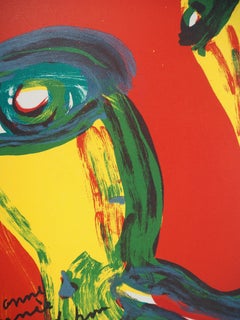
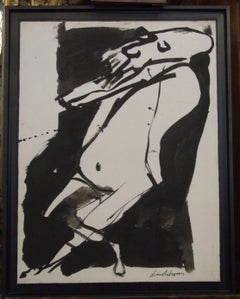
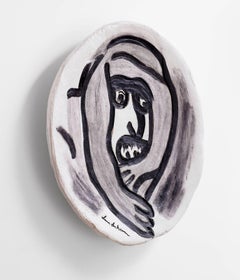
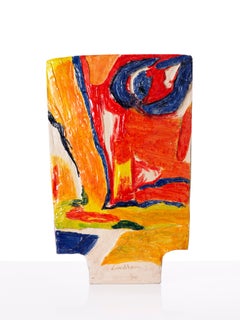
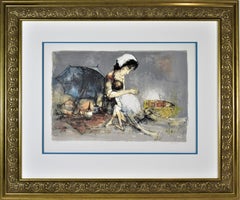
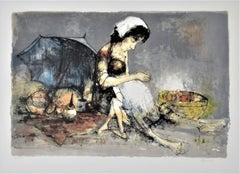
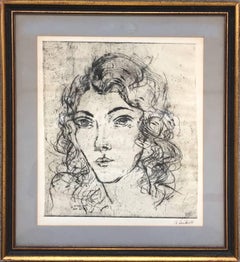
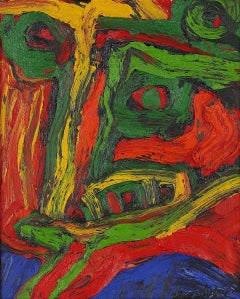
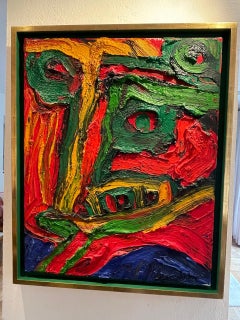
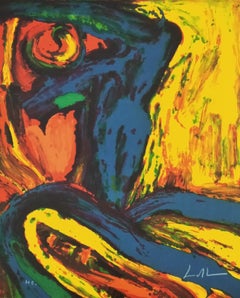
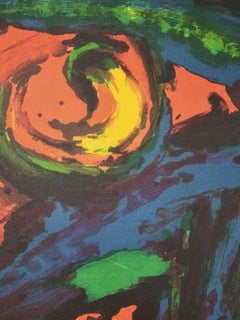
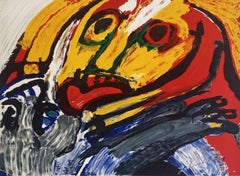
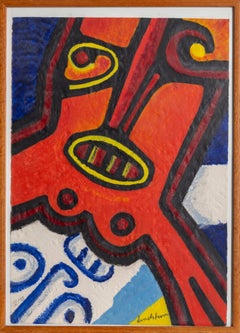
Bengt Lindström began his artistic training by attending the Stockholm Academy (1944-1945) and the Isaac Grünewald School of Painting. He then drew with Aksel Jorgensen in Copenhagen in 1946, before going to Chicago (1946-1947) and moving to Paris. There he worked in the studios of Fernand Léger and André Lhote. In 1949, he began to paint less figuratively and more colourfully. He had his first solo exhibition in Sweden in 1954 at the Gummesson Art Fair. From the 1950s onwards, he participated in several group exhibitions and salons in Paris (Réalités nouvelles; Salon d'octobre). Although he is often formally associated with Cobra painting and is a friend of Jorn, the artist claims to be more influenced by the Nordic painting of Nolde, Munch or Ensor. He is also influenced by folk art, Sami mythology and the shamans of the Far North.
to
5
2
15
1
3
Overall Width
to
Overall Height
to
24
1
1
9
1
6
8
6
5
4
2
19
5
14
14
5
5
4
3
3
2
2
2
2
1
1
1
12
6
4
4
4
29
11,691
2,885
2,492
1,605
6
3
25
1
Artist: Bengt Lindström
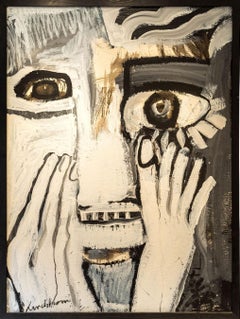
Bengt Lindstrom - Original Handsigned Engraving
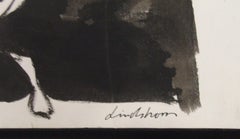
Bengt Lindstrom - Original Handsigned Engraving
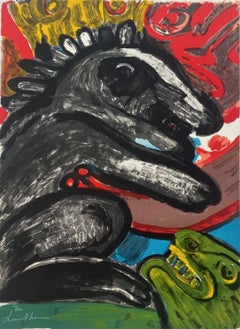
By Bengt Lindström

Located in Collonge Bellerive, Geneve, CH

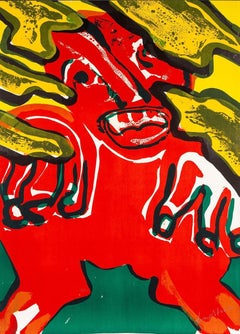
Bengt Lindström - Original Handsigned Engraving The Seven Deadly Sins. 76 x 56 cm Signed in pencil by Bengt Lindström Paris, ABCD, 1976. Original etching in color Limited edition 90 ex. This is the unique copy offered to Claude Manesse, The story of B. Lindström was collected by Frederick Towarnicki, assisted by Agathe Malet-Buisson. The engravings were drawn on the presses of Claude Manesse. Bengt Lindström (1925-2008) Bengt Lindström was born on September 3rd, 1925 in Storsjökapell, a small isolated village in the Swedish province of Norrland. The young child thus grew up in that vast, mythical and harsh expanse of mounts, glistening lakes and endless forests known as Lapland. His father was a primary school teacher who was fond of Lapps and who showed great interest in their ethnic group and culture. The child was only three days old when Lapp King Kroik, his godfather, administered the Baptism of the Earth, where the child is conveyed between two roots of a tree to grant him protection from the Gods. Lapps as well as local lumberjacks would occasionally abandon their silent ways to tell him and reveal the tales, legends and mysteries of the Great White North. 1935-1945 : He left Storsjökapell and headed to Härnösand, where he wrote short science-fiction novellas, became a renowned athlete and began to paint. 1944-1946 : Isaac Grünewald Art School in Stockholm, Sweden. Study drawing with Aksel Jörgensen at the Copenhagen Fine Arts School in Denmark. He realized his first two lithographs, Meditation and Le Modèle Etendu (The Stretched Model). 1947-1952 : He arrived in Paris. He travelled to Italy, where he visited Florence and Assisi, developing a deep fascination for Giotto and Cimabue. He was granted a scholarship by Swedish magazine Aftontidningen, which helped him move into a workshop in Arcueil, France. He began working on mosaics. 1953-1967 : He returned to Paris, once again taking up lithography and engraving, which holds a vital position in his work. He moved into a workshop in Rueil-Malmaison. This was the start of his collaboration with the Rive Gauche Gallery in Paris. London Tooth & Sons Gallery Director M. Cochrane purchased a large number of his works. He left the workshop in Rueil-Malmaison to settle in Savigny-sur-Orge, France. He began taking to figurative art with Masks, Gods and Monsters. He exhibited with the Nouvelle Figuration Group at the Mathias Feld Gallery. He also began working with the Ariel Gallery in Paris. 1968-1978 : Lindström completed a series of 10 lithographs about Scandinavian mythology. He also completed a series of drypoint works. An association with the Protée Gallery in Toulouse, France, led to exhibitions at the Protée Gallery II in Paris starting in 1984. He executed a large mural painting the Grand Hotel in Härnösand, Sweden. He also made two large frescoes for the Nacksta-Sundsvall covered market in Sweden. He took to sharing his working time between the workshop in Savigny-sur-Orge and the one in Sundsvall. He began collaboration that was to last several years with the ABCD Gallery in Paris, which provided exclusive publication for his engravings and strong ink work. Les Hommes du Nord (Men of the North) was the first of the major tapestries. He published a boxed set album, Eddan, Eddan, Eddan, illustrating Scandinavian mythology. Together with Jacques Putman, he completed two editions of bronze sculptures, Les Enfants Sauvages (The Wild Children). 1979-1982 : He worked on glass, making thirty dishes and goblets for renowned Swedish glassmaker Kosta Boda. He painted a car for Volvo, Sweden’s leading car manufacturer. Then, close to his birthplace, he painted gigantic tarpaulins over forty metres high, covering the slopes of the neighbouring Våladalen Mountain, as a protest against the building of a dam. This action caused a sensation and provoked fierce reactions. He also created small painted papier mâché sculptures, Têtes (Heads), as well as some gold and silver jewellery. 1983 : He exhibited seven monumental 3x2.5m works at the Art and History Museum in Stockholm: Les Grands Dieux Ase (The Great Aesir Gods), depicting the gods from Scandinavian mythology: Thor, Odin, Frej, Balder, Ymer, Loki and Unknown God, as well as acrylic paintings about the Valkyries. Les Grands Dieux was ultimately exhibited in a purpose-built chapel adjoining the Midlanda Contemporary Arts Centre in 1996. He completed Thor’s Hammer, a monumental sculpture. 1985-1990 : He lived also in the Alicante region, where Spanish friends found him a new workshop. While there he completed Novelda, an album of lithographs featuring poems by Spanish poet Paco Pastor. He completed a new mural, 5mx5m, for the Västeras Science Institute in Sweden. He then started working with the San Carlo Gallery in Milan, Italy, which coordinated all of the Italian events. Major exhibitions and retrospectives were held in Italy, Belgium, Luxembourg, Germany and Spain. He created two boxed set albums, containing series of 10 aquatints, Monde Autre et Chamanes (Otherworld and Shamans), featuring poems by Michel Perrin. 1991-1994 : He went back to working in black and white, completing some very-large-format works. In Murano, in association with the San Carlo Gallery, he created Grands Verres (Large Glasses), a series of large vases and sculptures made of crystal. He painted Kåtan Mimi, an 8x9m Lapp tent, for the town of Arjeplog in Swedish Lapland. He completed a couple of 2m-high painted polyester sculptures, Lui et Elle (Him and Her). He then made a new series of crystal glasses and sculptures in Murano, Italy. He completed Présence (Presence), a new 3.5x2.7m tapestry for the municipality of Timrå, Sweden. He started on the Grands Initiés (Great Insiders) series, all large format and mixed black and white techniques. He finished the strong series about Norse gods. 1995-1996 : He moved into a new workshop in Paris. A retrospective was held at the Sundsvall Museum in Sweden, and on that occasion he painted a monumental 700-m² canvass, Le Géant sur la montagne (The Giant on the Mountain), which was hung all summer long on the mountain slope facing the town. He went on to complete a suite of six silkscreen prints on the same theme. Then he inaugurated the Y, a monumental sculpture. Lindström then completed Temps Zéro (Zero Time), a watch made for Swatch. One of his works, L’hiver (Winter), made the cover of the first 1996 issue of Telerama, the leading French weekly. In association with Sydkraft Sweden, he painted a fresco for the municipality of Örebro on a 17m-high tank with a surface area of 3,000 m², located at the crossroads of major Swedish motorways, by the entrance to the Åbyverket industrial estate. He also created a 6.5m-high Tången sculpture made of painted concrete in Ånge, which was inaugurated on September 3rd in the presence of their Majesties the King and Queen of Sweden. 1997-1999 : He began working on ceramics in Albisolla, Italy. He also completed a new 30m-high fresco for the town of Örebro, located close to the tank he had painted in 1996 near Åbyverket. The year saw the inauguration of the Midlanda Contemporary Arts Centre in Sweden, which harbours the collection of the Bengt and Michèle Lindström Foundation, featuring the entire engravings collection (about 800 works), as well as a selection of paintings and sculptures. He completed a 4x10m mural in the lobby of the University of Eskilstuna, Sweden, and also completed two monumental frescoes on the Akkats dam and a mural on the power station facing Jokkmokk in Swedish Lapland. 2000-2003 : He painted all of the sides of a semi-articulated lorry for Scania, Sweden’s main truck manufacturer. In Italy, he completed a new series of crystal sculptures with Adriano Bérengo. He finished the Great Prophets, a series of 2x2m oil on canvass works. Swiss publisher Ides et Calendes published a small but luxurious monograph, with text by Françoise Monnin. A notebook was also published, Le Visage dans l’Art de Bengt Lindström (Faces in the Art of Bengt Lindström). He completed a substantial series of large blue acrylic paintings, Femmes (Women). 2003 : Bengt fell ill and was unable to paint, but the exhibitions went on. 2004 : Saw the release of the film by Dag Jonzon and Hans Östbom, produced by Dell’arte AB and Östbom Filmbild, about the life of Bengt Lindström. Entitled Lindström - Le Diable de la couleur et de la forme (Lindström – The Colour and Form Devil), the film was produced thanks to support from Film Västernorrland, Länsstyrelsen Västernorrland and Sveriges Television. It was broadcast on Swedish television channels. That same year, the Midlanda Contemporary Arts Centre was closed as a result of municipal policy. 2005-2007 : The 6m-high sculpture Le Loup (The Wolf), made for PEAB, was inaugurated in Botkyrka-Stockholm. Lindström – The Colour and Form Devil was screened at the Paris Swedish Cultural Centre and released on DVD. The Michèle and Bengt Lindström Foundation was donated and transferred to the Länsmuseet i Västernorrland in Härnösand, Sweden, where a special room was prepared to host Les Grands Dieux Ase. Edition of the 1998 Ceramics, created in association with Francis Dellile’s ”La Tuilerie” workshop. The Bengt Lindström Collection was inaugurated at, Murberget, the Länsmuseet i Västernorrland in Härnösand, Sweden. He illustrated Sinfonietta för Juliana, a collection of poems by Italian poet and art critic Sebastiano Grasso. On January 29th, 2008, Bengt Lindström passed away at his home in Sweden. 2008-2012 : The Fondation Krimaro presents the first volume of the works of Bengt Lindström in his collection. Numerous exhibitions-tribute to the work are presented in major cities in Europe. 2012 : Retrospective - Black and White in the engravings - Museum of Härnösand, Murberget, Sweden. Main exhibitions 1952 Fair Réalités Nouvelles – New realities, Paris, France. 1953 Craven Gallery, Paris, France. 1954 Gummeson Gallery, Stockholm, Sweden. Fair Salon d’Octobre, Paris, France. 1958 Breteau Gallery, Paris, France. 1959 Autour du Spontanéisme – Around the sontaneity, Stockholm, Sweden. L’Europe Nouvelle – The new Europe, LaUnited Statesnne, Switzerland. 1960 Rive Gauche Gallery, Paris, France. 1961 Tooth Gallery, London, England. Le Zodiaque Gallery, Brussels, Belgium. Fair Salon de Mai, Paris, France. 1962 Nouvelle Figuration – New Figuration , Mathias Fels Gallery, Paris, France, 1964 Nord-Sud – North-South, in several cities in Sweden. Ariel Gallery, Paris, France, 15 artists of my generation. Museum of Fine Arts in Gent, Belgium, Figuration-Défiguration – Figuration – Disfigurement. 1965 Rive Gauche Gallery. Paris, France. Nord Gallery, Lille, France. Birch Gallery, Copenhagen, Denmark. 1966 Museum of Modern Art, Gothenburg, Sweden. 1967 Veranneman Gallery, Brussels, Belgium. Carnegie Institute, Pittsburgh, United States. Seibu Gallery, Tokyo, Japan, 23 peintres in Paris. 1968 Ariel Gallery, Paris, France, followed by six exhibitions until 1976. 1969 La Pochade Gallery, Paris, France. Protée Gallery, Toulouse, France, who exhibited him in Paris, Gallery Protée II, from 1984. 1973 Galliera Museum, Paris, France. 1974 Gallery 111, Lisbon, Portugal. 1982 Gallery Protée-Arco, Madrid, Spain and Fair Foire de Cologne, Germany. 1983 Historia Museum, Stockholm, Sweden, The Ase gods and the Valkyries. 1984 Gallery Arcano XXI, Lisbon, Portugal. Gallery Christian Cheneau, Paris, France. Museum Château comtal, Carcassonne, France. 1985 Gallery Italia, Alicante, Spain. 1986 Gallery Sala Gaspar, Barcelona, Spain. Gallery Juan Mordo-Arco, Madrid, Spain. Gallery Italia, Alicante, Spain. Museum of Salamanca, Salamanca, Spain. Gallery Three Continents, New-York, United States. Gallery Protée, Toulouse France, Autour du Roi Lear – Around King Lear. 1987 Gallery Kostel, Paris, France. Gallery Zwirner, Cologne, Germany. Gallery Leu, Rottach-Egern, Germany. 1988 Maison du Lot, Figeac, France. Gallery Protée, Paris, France. Gallery Michèle Sadoun, Paris, France 1989 Gallery Michèle Sadoun, Paris, France, La terre des ancêtres - The Land pf the ancestors. Gallery Protée, Paris, France, Nomads. Gallery Raab, London, England. 1990 Gallery Michèle Sadoun, Paris, France. Centre Culturel de Brest, France. 1991 Gallery Michèle Sadoun, Paris, France. 1992 Archotèque, Saint-Denis, La Réunion, France. Museum of Vesoul, Vesoul, France. Gallery San Carlo, Milan, Italy. 1993 Gallery 111, Lisbon, Portugal. Tonnellerie du Cognac Monnet...
Category

1970s Modern Bengt Lindström Art

Materials

Engraving
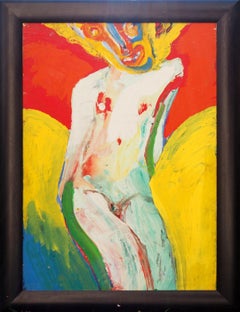
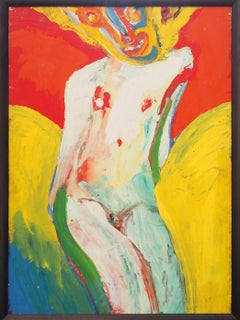
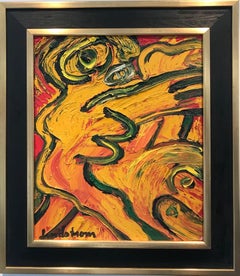
Seated Woman - Original oil painting

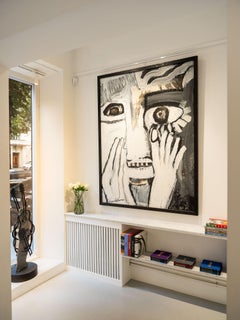
Seated Woman - Original oil painting

By Bengt Lindström

Located in Paris, IDF

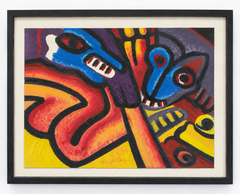
Bengt Lindström Seated woman Original oil painting Unsigned On paper applied on wood panel 107 x 77 cm (c. 42 x 31 in) Presented in black wood frame 123 x 93 cm (c. 49 x 37 in) Ver...

Category

Late 20th Century Expressionist Bengt Lindström Art

Materials

Oil

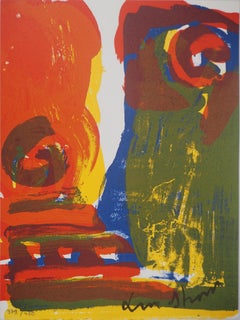
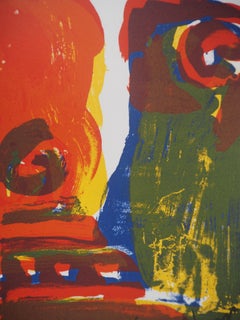
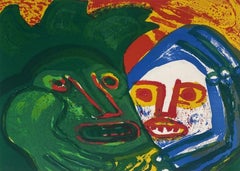
Ancestor Face - Original lithograph

Ancestor Face - Original lithograph

By Bengt Lindström

Located in Paris, IDF

Bengt Lindström (1925-2008) Ancestor Face Original Lithograph Printed signature in the plate Numbered / 400 ex On vellum 31 x 22.5 cm (c. 12 x 9 in) Excellent condition

Category

Late 20th Century Expressionist Bengt Lindström Art

Materials

Lithograph

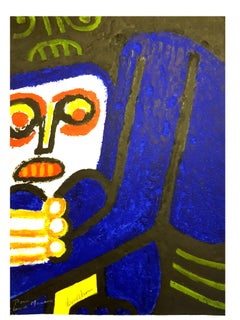
Expressionist Blue Face - Original lithograph

Expressionist Blue Face - Original lithograph

By Bengt Lindström

Located in Paris, IDF

Bengt Lindström (1925-2008) Expressionist Blue Face Original Lithograph Printed signature in the plate Numbered / 400 ex On vellum 31 x 22.5 cm (c. 12 x 9 in) Excellent condition

Category

Late 20th Century Expressionist Bengt Lindström Art

Materials

Lithograph

Le Visage, Original Lithograph, Modern, 1970, Signed, Excellent

Le Visage, Original Lithograph, Modern, 1970, Signed, Excellent

By Bengt Lindström

Located in OPOLE, PL

Bengt Lindström (1925-2008) - Le Visage Lithograph from 1970. On Arches Paper. Dimensions of work: 74 x 54 cm. Hand signed. The work is in Excellent condition.

Category

1970s Surrealist Bengt Lindström Art

Materials

Lithograph

Bengt Lindström (1925–2008) - Colour lithograph on Arches paper - 1977

Bengt Lindström (1925–2008) - Colour lithograph on Arches paper - 1977

By Bengt Lindström

Located in Varese, IT

Colour lithograph on Arches paper, edited in 1977. Limited edition of 150 copies, numbered as 126/150 in lower left corner. Hand-signed in pencil by artist in lower right corner. Pa...

Category

1970s Abstract Expressionist Bengt Lindström Art

Materials

Paper, Lithograph

Bengt Lindström (1925–2008) - Colour lithograph on Arches paper - 1977

Bengt Lindström (1925–2008) - Colour lithograph on Arches paper - 1977

By Bengt Lindström

Located in Varese, IT

Colour lithograph on Arches paper, edited in 1977. Limited edition of 150 copies, numbered as 126/150 in lower left corner. Hand-signed in pencil by artist in lower right corner. Pa...

Category

1970s Abstract Expressionist Bengt Lindström Art

Materials

Paper, Lithograph

Bengt Lindström – Colorful Expressionist Figures – Embossed Etching

Bengt Lindström – Colorful Expressionist Figures – Embossed Etching

By Bengt Lindström

Located in Sant Celoni, ES

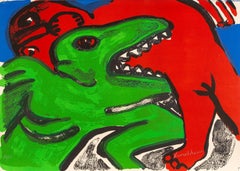
Bengt Lindström – Colorful Expressionist Figures – Embossed Etching – 50 × 65 cm Embossed color print on paper. Signed in pencil and numbered 13/50. Artwork: 50 × 65 cm (19.7 × 25.6 ...

Category

Late 20th Century Expressionist Bengt Lindström Art

Materials

Etching, Embossed Print

Bengt Lindstrom - Original Handsigned Engraving
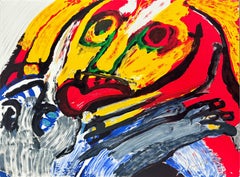
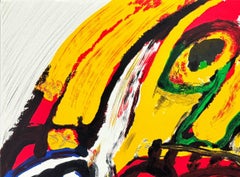
Bengt Lindstrom - Original Handsigned Engraving
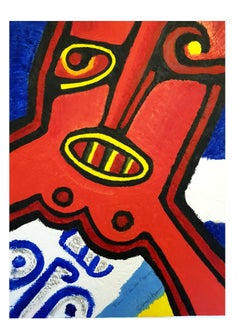
By Bengt Lindström

Located in Collonge Bellerive, Geneve, CH

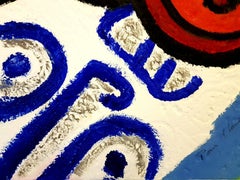
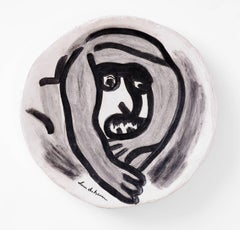
Bengt Lindström - Original Handsigned Engraving The Seven Deadly Sins. 76 x 56 cm Signed in pencil by Bengt Lindström Paris, ABCD, 1976. Original etching in color Limited edition 90 ex. This is the unique copy offered to Claude Manesse, The story of B. Lindström was collected by Frederick Towarnicki, assisted by Agathe Malet-Buisson. The engravings were drawn on the presses of Claude Manesse. Bengt Lindström (1925-2008) Bengt Lindström was born on September 3rd, 1925 in Storsjökapell, a small isolated village in the Swedish province of Norrland. The young child thus grew up in that vast, mythical and harsh expanse of mounts, glistening lakes and endless forests known as Lapland. His father was a primary school teacher who was fond of Lapps and who showed great interest in their ethnic group and culture. The child was only three days old when Lapp King Kroik, his godfather, administered the Baptism of the Earth, where the child is conveyed between two roots of a tree to grant him protection from the Gods. Lapps as well as local lumberjacks would occasionally abandon their silent ways to tell him and reveal the tales, legends and mysteries of the Great White North. 1935-1945 : He left Storsjökapell and headed to Härnösand, where he wrote short science-fiction novellas, became a renowned athlete and began to paint. 1944-1946 : Isaac Grünewald Art School in Stockholm, Sweden. Study drawing with Aksel Jörgensen at the Copenhagen Fine Arts School in Denmark. He realized his first two lithographs, Meditation and Le Modèle Etendu (The Stretched Model). 1947-1952 : He arrived in Paris. He travelled to Italy, where he visited Florence and Assisi, developing a deep fascination for Giotto and Cimabue. He was granted a scholarship by Swedish magazine Aftontidningen, which helped him move into a workshop in Arcueil, France. He began working on mosaics. 1953-1967 : He returned to Paris, once again taking up lithography and engraving, which holds a vital position in his work. He moved into a workshop in Rueil-Malmaison. This was the start of his collaboration with the Rive Gauche Gallery in Paris. London Tooth & Sons Gallery Director M. Cochrane purchased a large number of his works. He left the workshop in Rueil-Malmaison to settle in Savigny-sur-Orge, France. He began taking to figurative art with Masks, Gods and Monsters. He exhibited with the Nouvelle Figuration Group at the Mathias Feld Gallery. He also began working with the Ariel Gallery in Paris. 1968-1978 : Lindström completed a series of 10 lithographs about Scandinavian mythology. He also completed a series of drypoint works. An association with the Protée Gallery in Toulouse, France, led to exhibitions at the Protée Gallery II in Paris starting in 1984. He executed a large mural painting the Grand Hotel in Härnösand, Sweden. He also made two large frescoes for the Nacksta-Sundsvall covered market in Sweden. He took to sharing his working time between the workshop in Savigny-sur-Orge and the one in Sundsvall. He began collaboration that was to last several years with the ABCD Gallery in Paris, which provided exclusive publication for his engravings and strong ink work. Les Hommes du Nord (Men of the North) was the first of the major tapestries. He published a boxed set album, Eddan, Eddan, Eddan, illustrating Scandinavian mythology. Together with Jacques Putman, he completed two editions of bronze sculptures, Les Enfants Sauvages (The Wild Children). 1979-1982 : He worked on glass, making thirty dishes and goblets for renowned Swedish glassmaker Kosta Boda. He painted a car for Volvo, Sweden’s leading car manufacturer. Then, close to his birthplace, he painted gigantic tarpaulins over forty metres high, covering the slopes of the neighbouring Våladalen Mountain, as a protest against the building of a dam. This action caused a sensation and provoked fierce reactions. He also created small painted papier mâché sculptures, Têtes (Heads), as well as some gold and silver jewellery. 1983 : He exhibited seven monumental 3x2.5m works at the Art and History Museum in Stockholm: Les Grands Dieux Ase (The Great Aesir Gods), depicting the gods from Scandinavian mythology: Thor, Odin, Frej, Balder, Ymer, Loki and Unknown God, as well as acrylic paintings about the Valkyries. Les Grands Dieux was ultimately exhibited in a purpose-built chapel adjoining the Midlanda Contemporary Arts Centre in 1996. He completed Thor’s Hammer, a monumental sculpture. 1985-1990 : He lived also in the Alicante region, where Spanish friends found him a new workshop. While there he completed Novelda, an album of lithographs featuring poems by Spanish poet Paco Pastor. He completed a new mural, 5mx5m, for the Västeras Science Institute in Sweden. He then started working with the San Carlo Gallery in Milan, Italy, which coordinated all of the Italian events. Major exhibitions and retrospectives were held in Italy, Belgium, Luxembourg, Germany and Spain. He created two boxed set albums, containing series of 10 aquatints, Monde Autre et Chamanes (Otherworld and Shamans), featuring poems by Michel Perrin. 1991-1994 : He went back to working in black and white, completing some very-large-format works. In Murano, in association with the San Carlo Gallery, he created Grands Verres (Large Glasses), a series of large vases and sculptures made of crystal. He painted Kåtan Mimi, an 8x9m Lapp tent, for the town of Arjeplog in Swedish Lapland. He completed a couple of 2m-high painted polyester sculptures, Lui et Elle (Him and Her). He then made a new series of crystal glasses and sculptures in Murano, Italy. He completed Présence (Presence), a new 3.5x2.7m tapestry for the municipality of Timrå, Sweden. He started on the Grands Initiés (Great Insiders) series, all large format and mixed black and white techniques. He finished the strong series about Norse gods. 1995-1996 : He moved into a new workshop in Paris. A retrospective was held at the Sundsvall Museum in Sweden, and on that occasion he painted a monumental 700-m² canvass, Le Géant sur la montagne (The Giant on the Mountain), which was hung all summer long on the mountain slope facing the town. He went on to complete a suite of six silkscreen prints on the same theme. Then he inaugurated the Y, a monumental sculpture. Lindström then completed Temps Zéro (Zero Time), a watch made for Swatch. One of his works, L’hiver (Winter), made the cover of the first 1996 issue of Telerama, the leading French weekly. In association with Sydkraft Sweden, he painted a fresco for the municipality of Örebro on a 17m-high tank with a surface area of 3,000 m², located at the crossroads of major Swedish motorways, by the entrance to the Åbyverket industrial estate. He also created a 6.5m-high Tången sculpture made of painted concrete in Ånge, which was inaugurated on September 3rd in the presence of their Majesties the King and Queen of Sweden. 1997-1999 : He began working on ceramics in Albisolla, Italy. He also completed a new 30m-high fresco for the town of Örebro, located close to the tank he had painted in 1996 near Åbyverket. The year saw the inauguration of the Midlanda Contemporary Arts Centre in Sweden, which harbours the collection of the Bengt and Michèle Lindström Foundation, featuring the entire engravings collection (about 800 works), as well as a selection of paintings and sculptures. He completed a 4x10m mural in the lobby of the University of Eskilstuna, Sweden, and also completed two monumental frescoes on the Akkats dam and a mural on the power station facing Jokkmokk in Swedish Lapland. 2000-2003 : He painted all of the sides of a semi-articulated lorry for Scania, Sweden’s main truck manufacturer. In Italy, he completed a new series of crystal sculptures with Adriano Bérengo. He finished the Great Prophets, a series of 2x2m oil on canvass works. Swiss publisher Ides et Calendes published a small but luxurious monograph, with text by Françoise Monnin. A notebook was also published, Le Visage dans l’Art de Bengt Lindström (Faces in the Art of Bengt Lindström). He completed a substantial series of large blue acrylic paintings, Femmes (Women). 2003 : Bengt fell ill and was unable to paint, but the exhibitions went on. 2004 : Saw the release of the film by Dag Jonzon and Hans Östbom, produced by Dell’arte AB and Östbom Filmbild, about the life of Bengt Lindström. Entitled Lindström - Le Diable de la couleur et de la forme (Lindström – The Colour and Form Devil), the film was produced thanks to support from Film Västernorrland, Länsstyrelsen Västernorrland and Sveriges Television. It was broadcast on Swedish television channels. That same year, the Midlanda Contemporary Arts Centre was closed as a result of municipal policy. 2005-2007 : The 6m-high sculpture Le Loup (The Wolf), made for PEAB, was inaugurated in Botkyrka-Stockholm. Lindström – The Colour and Form Devil was screened at the Paris Swedish Cultural Centre and released on DVD. The Michèle and Bengt Lindström Foundation was donated and transferred to the Länsmuseet i Västernorrland in Härnösand, Sweden, where a special room was prepared to host Les Grands Dieux Ase. Edition of the 1998 Ceramics, created in association with Francis Dellile’s ”La Tuilerie” workshop. The Bengt Lindström Collection was inaugurated at, Murberget, the Länsmuseet i Västernorrland in Härnösand, Sweden. He illustrated Sinfonietta för Juliana, a collection of poems by Italian poet and art critic Sebastiano Grasso. On January 29th, 2008, Bengt Lindström passed away at his home in Sweden. 2008-2012 : The Fondation Krimaro presents the first volume of the works of Bengt Lindström in his collection. Numerous exhibitions-tribute to the work are presented in major cities in Europe. 2012 : Retrospective - Black and White in the engravings - Museum of Härnösand, Murberget, Sweden. Main exhibitions 1952 Fair Réalités Nouvelles – New realities, Paris, France. 1953 Craven Gallery, Paris, France. 1954 Gummeson Gallery, Stockholm, Sweden. Fair Salon d’Octobre, Paris, France. 1958 Breteau Gallery, Paris, France. 1959 Autour du Spontanéisme – Around the sontaneity, Stockholm, Sweden. L’Europe Nouvelle – The new Europe, LaUnited Statesnne, Switzerland. 1960 Rive Gauche Gallery, Paris, France. 1961 Tooth Gallery, London, England. Le Zodiaque Gallery, Brussels, Belgium. Fair Salon de Mai, Paris, France. 1962 Nouvelle Figuration – New Figuration , Mathias Fels Gallery, Paris, France, 1964 Nord-Sud – North-South, in several cities in Sweden. Ariel Gallery, Paris, France, 15 artists of my generation. Museum of Fine Arts in Gent, Belgium, Figuration-Défiguration – Figuration – Disfigurement. 1965 Rive Gauche Gallery. Paris, France. Nord Gallery, Lille, France. Birch Gallery, Copenhagen, Denmark. 1966 Museum of Modern Art, Gothenburg, Sweden. 1967 Veranneman Gallery, Brussels, Belgium. Carnegie Institute, Pittsburgh, United States. Seibu Gallery, Tokyo, Japan, 23 peintres in Paris. 1968 Ariel Gallery, Paris, France, followed by six exhibitions until 1976. 1969 La Pochade Gallery, Paris, France. Protée Gallery, Toulouse, France, who exhibited him in Paris, Gallery Protée II, from 1984. 1973 Galliera Museum, Paris, France. 1974 Gallery 111, Lisbon, Portugal. 1982 Gallery Protée-Arco, Madrid, Spain and Fair Foire de Cologne, Germany. 1983 Historia Museum, Stockholm, Sweden, The Ase gods and the Valkyries. 1984 Gallery Arcano XXI, Lisbon, Portugal. Gallery Christian Cheneau, Paris, France. Museum Château comtal, Carcassonne, France. 1985 Gallery Italia, Alicante, Spain. 1986 Gallery Sala Gaspar, Barcelona, Spain. Gallery Juan Mordo-Arco, Madrid, Spain. Gallery Italia, Alicante, Spain. Museum of Salamanca, Salamanca, Spain. Gallery Three Continents, New-York, United States. Gallery Protée, Toulouse France, Autour du Roi Lear – Around King Lear. 1987 Gallery Kostel, Paris, France. Gallery Zwirner, Cologne, Germany. Gallery Leu, Rottach-Egern, Germany. 1988 Maison du Lot, Figeac, France. Gallery Protée, Paris, France. Gallery Michèle Sadoun, Paris, France 1989 Gallery Michèle Sadoun, Paris, France, La terre des ancêtres - The Land pf the ancestors. Gallery Protée, Paris, France, Nomads. Gallery Raab, London, England. 1990 Gallery Michèle Sadoun, Paris, France. Centre Culturel de Brest, France. 1991 Gallery Michèle Sadoun, Paris, France. 1992 Archotèque, Saint-Denis, La Réunion, France. Museum of Vesoul, Vesoul, France. Gallery San Carlo, Milan, Italy. 1993 Gallery 111, Lisbon, Portugal. Tonnellerie du Cognac Monnet...
Category

1970s Modern Bengt Lindström Art

Materials

Engraving
Untitled
Untitled

Untitled

By Bengt Lindström

Located in Paris, FR

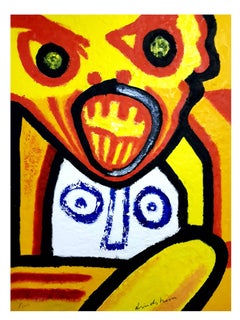
Oil on canvas Image dimensions : 80.00 cm. x 100.00 cm. (31.5 in. x 39.37 in.) Handsigned by the artist in pencil Certificate of authenticity by Comité Lindström Circa 1990 Bengt...

Category

1990s Abstract Bengt Lindström Art

Materials

Oil

Untitled
Untitled

Untitled

By Bengt Lindström

Located in Paris, FR

Bengt Lindström (1925-2008), a Swedish painter close to the Sami people in Lapland, developed a powerful, chtonian, colorful and profoundly matierist style. Here, the vigor of the im...

Category

Late 20th Century Abstract Bengt Lindström Art

Materials

Paper, Oil, Vellum

Totem Portrait in Yellow - Original lithograph

Totem Portrait in Yellow - Original lithograph

By Bengt Lindström

Located in Paris, IDF

Bengt Lindström (1925-2008) Totem Portrait in Yellow Original Lithograph Printed signature in the plate Numbered / 500 ex On vellum 31 x 22.5 cm (c. 12 x 9 in) Excellent condition

Category

Late 20th Century Expressionist Bengt Lindström Art

Materials

Lithograph

Le roi Gylfi et l’Origine

Le roi Gylfi et l’Origine

By Bengt Lindström

Located in Östermalm, Stockholms län

Artwork size: 200x190 cm Frame size: 205x196 cm Signed by the artist, titled at the verso. Free shipment worldwide. Bengt Lindström was a big man from the central parts of the No...

Category

1990s Contemporary Bengt Lindström Art

Materials

Canvas, Oil

Fauvist Portrait in Red - Original lithograph

Fauvist Portrait in Red - Original lithograph

By Bengt Lindström

Located in Paris, IDF

Bengt Lindström (1925-2008) Fauvist Portrait in Red Original Lithograph Printed signature in the plate Numbered / 500 ex On vellum 31 x 22.5 cm (c. ...

Category

Late 20th Century Expressionist Bengt Lindström Art

Materials

Lithograph

Polka, 1965 - gouache, 63x48 cm., framed

Polka, 1965 - gouache, 63x48 cm., framed

By Bengt Lindström

Located in Nice, FR

By the swedish painter Bengt Lindstrom, an abstract gouache painting on canvas from the sixties. It is signed and it is certified by the Lindstrom Committee. Framed Bengt Lindström commence sa formation artistique en fréquentant l'académie de Stockholm (1944-1945) et l'école de peinture d'Isaac Grünewald (en). Il dessine ensuite chez Aksel Jorgensen...

Category

1960s Abstract Bengt Lindström Art

Materials

Gouache

Friends

Friends

By Bengt Lindström

Located in Paris, FR

Lithograph, 1978 Handsigned by the artist in pencil and numbered 10/100 Publisher : Jacques Putman (Paris) Printer : Clot Bramsen (Paris) This lithograph reveals the artist's proxim...

Category

1970s Abstract Bengt Lindström Art

Materials

Lithograph

No title

No title

By Bengt Lindström

Located in Paris, FR

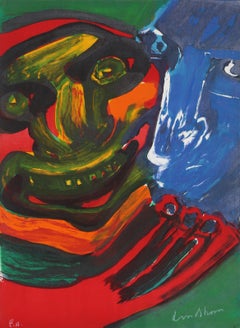
Lithograph Handsigned by the artist in pencil and annotated EA Artist proof 76.00 cm. x 56.00 cm. 29.92 in. x 22.05 in. (paper) 76.00 cm. x 56.00 cm. 29.92 in. x 22.05 in. (image) Arches Paper This lithograph in a beautiful vertical format by the Swedish artist is inspired by Scandinavian mythology...

Category

1990s Abstract Bengt Lindström Art

Materials

Lithograph

Bouddha
Bouddha

Bouddha

By Bengt Lindström

Located in Östermalm, Stockholms län

Artwork size: 190x140 cm Frame size: 198x149x4 cm Signed by the artist, titled at the verso. (Reproduced in the book Lindström Fragments Editions at page 12) Free shipment worldwid...

Category

1990s Contemporary Bengt Lindström Art

Materials

Canvas, Paper, Acrylic

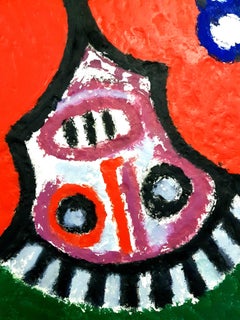
Bengt Lindstrom - Original Handsigned Engraving
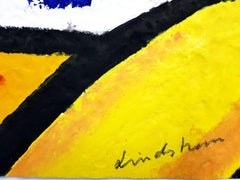
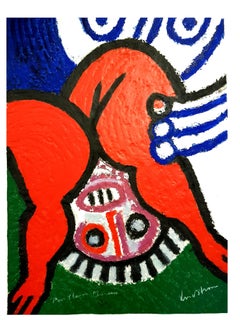
Bengt Lindstrom - Original Handsigned Engraving
By Bengt Lindström

Located in Collonge Bellerive, Geneve, CH

Bengt Lindström - Original Handsigned Engraving The Seven Deadly Sins. 76 x 56 cm Signed in pencil by Bengt Lindström Paris, ABCD, 1976. Original etching in color Limited edition 90 ex. This is the unique copy offered to Claude Manesse, The story of B. Lindström was collected by Frederick Towarnicki, assisted by Agathe Malet-Buisson. The engravings were drawn on the presses of Claude Manesse. Bengt Lindström (1925-2008) Bengt Lindström was born on September 3rd, 1925 in Storsjökapell, a small isolated village in the Swedish province of Norrland. The young child thus grew up in that vast, mythical and harsh expanse of mounts, glistening lakes and endless forests known as Lapland. His father was a primary school teacher who was fond of Lapps and who showed great interest in their ethnic group and culture. The child was only three days old when Lapp King Kroik, his godfather, administered the Baptism of the Earth, where the child is conveyed between two roots of a tree to grant him protection from the Gods. Lapps as well as local lumberjacks would occasionally abandon their silent ways to tell him and reveal the tales, legends and mysteries of the Great White North. 1935-1945 : He left Storsjökapell and headed to Härnösand, where he wrote short science-fiction novellas, became a renowned athlete and began to paint. 1944-1946 : Isaac Grünewald Art School in Stockholm, Sweden. Study drawing with Aksel Jörgensen at the Copenhagen Fine Arts School in Denmark. He realized his first two lithographs, Meditation and Le Modèle Etendu (The Stretched Model). 1947-1952 : He arrived in Paris. He travelled to Italy, where he visited Florence and Assisi, developing a deep fascination for Giotto and Cimabue. He was granted a scholarship by Swedish magazine Aftontidningen, which helped him move into a workshop in Arcueil, France. He began working on mosaics. 1953-1967 : He returned to Paris, once again taking up lithography and engraving, which holds a vital position in his work. He moved into a workshop in Rueil-Malmaison. This was the start of his collaboration with the Rive Gauche Gallery in Paris. London Tooth & Sons Gallery Director M. Cochrane purchased a large number of his works. He left the workshop in Rueil-Malmaison to settle in Savigny-sur-Orge, France. He began taking to figurative art with Masks, Gods and Monsters. He exhibited with the Nouvelle Figuration Group at the Mathias Feld Gallery. He also began working with the Ariel Gallery in Paris. 1968-1978 : Lindström completed a series of 10 lithographs about Scandinavian mythology. He also completed a series of drypoint works. An association with the Protée Gallery in Toulouse, France, led to exhibitions at the Protée Gallery II in Paris starting in 1984. He executed a large mural painting the Grand Hotel in Härnösand, Sweden. He also made two large frescoes for the Nacksta-Sundsvall covered market in Sweden. He took to sharing his working time between the workshop in Savigny-sur-Orge and the one in Sundsvall. He began collaboration that was to last several years with the ABCD Gallery in Paris, which provided exclusive publication for his engravings and strong ink work. Les Hommes du Nord (Men of the North) was the first of the major tapestries. He published a boxed set album, Eddan, Eddan, Eddan, illustrating Scandinavian mythology. Together with Jacques Putman, he completed two editions of bronze sculptures, Les Enfants Sauvages (The Wild Children). 1979-1982 : He worked on glass, making thirty dishes and goblets for renowned Swedish glassmaker Kosta Boda. He painted a car for Volvo, Sweden’s leading car manufacturer. Then, close to his birthplace, he painted gigantic tarpaulins over forty metres high, covering the slopes of the neighbouring Våladalen Mountain, as a protest against the building of a dam. This action caused a sensation and provoked fierce reactions. He also created small painted papier mâché sculptures, Têtes (Heads), as well as some gold and silver jewellery. 1983 : He exhibited seven monumental 3x2.5m works at the Art and History Museum in Stockholm: Les Grands Dieux Ase (The Great Aesir Gods), depicting the gods from Scandinavian mythology: Thor, Odin, Frej, Balder, Ymer, Loki and Unknown God, as well as acrylic paintings about the Valkyries. Les Grands Dieux was ultimately exhibited in a purpose-built chapel adjoining the Midlanda Contemporary Arts Centre in 1996. He completed Thor’s Hammer, a monumental sculpture. 1985-1990 : He lived also in the Alicante region, where Spanish friends found him a new workshop. While there he completed Novelda, an album of lithographs featuring poems by Spanish poet Paco Pastor. He completed a new mural, 5mx5m, for the Västeras Science Institute in Sweden. He then started working with the San Carlo Gallery in Milan, Italy, which coordinated all of the Italian events. Major exhibitions and retrospectives were held in Italy, Belgium, Luxembourg, Germany and Spain. He created two boxed set albums, containing series of 10 aquatints, Monde Autre et Chamanes (Otherworld and Shamans), featuring poems by Michel Perrin. 1991-1994 : He went back to working in black and white, completing some very-large-format works. In Murano, in association with the San Carlo Gallery, he created Grands Verres (Large Glasses), a series of large vases and sculptures made of crystal. He painted Kåtan Mimi, an 8x9m Lapp tent, for the town of Arjeplog in Swedish Lapland. He completed a couple of 2m-high painted polyester sculptures, Lui et Elle (Him and Her). He then made a new series of crystal glasses and sculptures in Murano, Italy. He completed Présence (Presence), a new 3.5x2.7m tapestry for the municipality of Timrå, Sweden. He started on the Grands Initiés (Great Insiders) series, all large format and mixed black and white techniques. He finished the strong series about Norse gods. 1995-1996 : He moved into a new workshop in Paris. A retrospective was held at the Sundsvall Museum in Sweden, and on that occasion he painted a monumental 700-m² canvass, Le Géant sur la montagne (The Giant on the Mountain), which was hung all summer long on the mountain slope facing the town. He went on to complete a suite of six silkscreen prints on the same theme. Then he inaugurated the Y, a monumental sculpture. Lindström then completed Temps Zéro (Zero Time), a watch made for Swatch. One of his works, L’hiver (Winter), made the cover of the first 1996 issue of Telerama, the leading French weekly. In association with Sydkraft Sweden, he painted a fresco for the municipality of Örebro on a 17m-high tank with a surface area of 3,000 m², located at the crossroads of major Swedish motorways, by the entrance to the Åbyverket industrial estate. He also created a 6.5m-high Tången sculpture made of painted concrete in Ånge, which was inaugurated on September 3rd in the presence of their Majesties the King and Queen of Sweden. 1997-1999 : He began working on ceramics in Albisolla, Italy. He also completed a new 30m-high fresco for the town of Örebro, located close to the tank he had painted in 1996 near Åbyverket. The year saw the inauguration of the Midlanda Contemporary Arts Centre in Sweden, which harbours the collection of the Bengt and Michèle Lindström Foundation, featuring the entire engravings collection (about 800 works), as well as a selection of paintings and sculptures. He completed a 4x10m mural in the lobby of the University of Eskilstuna, Sweden, and also completed two monumental frescoes on the Akkats dam and a mural on the power station facing Jokkmokk in Swedish Lapland. 2000-2003 : He painted all of the sides of a semi-articulated lorry for Scania, Sweden’s main truck manufacturer. In Italy, he completed a new series of crystal sculptures with Adriano Bérengo. He finished the Great Prophets, a series of 2x2m oil on canvass works. Swiss publisher Ides et Calendes published a small but luxurious monograph, with text by Françoise Monnin. A notebook was also published, Le Visage dans l’Art de Bengt Lindström (Faces in the Art of Bengt Lindström). He completed a substantial series of large blue acrylic paintings, Femmes (Women). 2003 : Bengt fell ill and was unable to paint, but the exhibitions went on. 2004 : Saw the release of the film by Dag Jonzon and Hans Östbom, produced by Dell’arte AB and Östbom Filmbild, about the life of Bengt Lindström. Entitled Lindström - Le Diable de la couleur et de la forme (Lindström – The Colour and Form Devil), the film was produced thanks to support from Film Västernorrland, Länsstyrelsen Västernorrland and Sveriges Television. It was broadcast on Swedish television channels. That same year, the Midlanda Contemporary Arts Centre was closed as a result of municipal policy. 2005-2007 : The 6m-high sculpture Le Loup (The Wolf), made for PEAB, was inaugurated in Botkyrka-Stockholm. Lindström – The Colour and Form Devil was screened at the Paris Swedish Cultural Centre and released on DVD. The Michèle and Bengt Lindström Foundation was donated and transferred to the Länsmuseet i Västernorrland in Härnösand, Sweden, where a special room was prepared to host Les Grands Dieux Ase. Edition of the 1998 Ceramics, created in association with Francis Dellile’s ”La Tuilerie” workshop. The Bengt Lindström Collection was inaugurated at, Murberget, the Länsmuseet i Västernorrland in Härnösand, Sweden. He illustrated Sinfonietta för Juliana, a collection of poems by Italian poet and art critic Sebastiano Grasso. On January 29th, 2008, Bengt Lindström passed away at his home in Sweden. 2008-2012 : The Fondation Krimaro presents the first volume of the works of Bengt Lindström in his collection. Numerous exhibitions-tribute to the work are presented in major cities in Europe. 2012 : Retrospective - Black and White in the engravings - Museum of Härnösand, Murberget, Sweden. Main exhibitions 1952 Fair Réalités Nouvelles – New realities, Paris, France. 1953 Craven Gallery, Paris, France. 1954 Gummeson Gallery, Stockholm, Sweden. Fair Salon d’Octobre, Paris, France. 1958 Breteau Gallery, Paris, France. 1959 Autour du Spontanéisme – Around the sontaneity, Stockholm, Sweden. L’Europe Nouvelle – The new Europe, LaUnited Statesnne, Switzerland. 1960 Rive Gauche Gallery, Paris, France. 1961 Tooth Gallery, London, England. Le Zodiaque Gallery, Brussels, Belgium. Fair Salon de Mai, Paris, France. 1962 Nouvelle Figuration – New Figuration , Mathias Fels Gallery, Paris, France, 1964 Nord-Sud – North-South, in several cities in Sweden. Ariel Gallery, Paris, France, 15 artists of my generation. Museum of Fine Arts in Gent, Belgium, Figuration-Défiguration – Figuration – Disfigurement. 1965 Rive Gauche Gallery. Paris, France. Nord Gallery, Lille, France. Birch Gallery, Copenhagen, Denmark. 1966 Museum of Modern Art, Gothenburg, Sweden. 1967 Veranneman Gallery, Brussels, Belgium. Carnegie Institute, Pittsburgh, United States. Seibu Gallery, Tokyo, Japan, 23 peintres in Paris. 1968 Ariel Gallery, Paris, France, followed by six exhibitions until 1976. 1969 La Pochade Gallery, Paris, France. Protée Gallery, Toulouse, France, who exhibited him in Paris, Gallery Protée II, from 1984. 1973 Galliera Museum, Paris, France. 1974 Gallery 111, Lisbon, Portugal. 1982 Gallery Protée-Arco, Madrid, Spain and Fair Foire de Cologne, Germany. 1983 Historia Museum, Stockholm, Sweden, The Ase gods and the Valkyries. 1984 Gallery Arcano XXI, Lisbon, Portugal. Gallery Christian Cheneau, Paris, France. Museum Château comtal, Carcassonne, France. 1985 Gallery Italia, Alicante, Spain. 1986 Gallery Sala Gaspar, Barcelona, Spain. Gallery Juan Mordo-Arco, Madrid, Spain. Gallery Italia, Alicante, Spain. Museum of Salamanca, Salamanca, Spain. Gallery Three Continents, New-York, United States. Gallery Protée, Toulouse France, Autour du Roi Lear – Around King Lear. 1987 Gallery Kostel, Paris, France. Gallery Zwirner, Cologne, Germany. Gallery Leu, Rottach-Egern, Germany. 1988 Maison du Lot, Figeac, France. Gallery Protée, Paris, France. Gallery Michèle Sadoun, Paris, France 1989 Gallery Michèle Sadoun, Paris, France, La terre des ancêtres - The Land pf the ancestors. Gallery Protée, Paris, France, Nomads. Gallery Raab, London, England. 1990 Gallery Michèle Sadoun, Paris, France. Centre Culturel de Brest, France. 1991 Gallery Michèle Sadoun, Paris, France. 1992 Archotèque, Saint-Denis, La Réunion, France. Museum of Vesoul, Vesoul, France. Gallery San Carlo, Milan, Italy. 1993 Gallery 111, Lisbon, Portugal. Tonnellerie du Cognac Monnet...

Category

1970s Modern Bengt Lindström Art

Materials

Engraving

Le gourmand
Le gourmand

Le gourmand

By Bengt Lindström

Located in Östermalm, Stockholms län

Free shipment worldwide. Edition of 12 ex. Signed/Numbered. Bengt Lindström was a big man from the central parts of the Norrland province, born in Storsjö Kapell on 3 September 1925...

Category

1990s Contemporary Bengt Lindström Art

Materials

Ceramic

L'esprit du feu
L'esprit du feu

L'esprit du feu

By Bengt Lindström

Located in Östermalm, Stockholms län

Free shipment worldwide. Edition of 12 ex. Signed/Numbered. Bengt Lindström was a big man from the central parts of the Norrland province, born in Storsjö Kapell on 3 September 1925...

Category

Early 2000s Contemporary Bengt Lindström Art

Materials

Ceramic

Chasse de nuit
Chasse de nuit

Chasse de nuit

By Bengt Lindström

Located in Östermalm, Stockholms län

Free shipment worldwide. Ceramics. Edition: 20 ex.

Category

Bengt Lindström Art

Materials

Ceramic

Bengt Lindstrom - Original Handsigned Engraving

Bengt Lindstrom - Original Handsigned Engraving

By Bengt Lindström

Located in Collonge Bellerive, Geneve, CH

Bengt Lindström - Original Handsigned Engraving The Seven Deadly Sins. 76 x 56 cm Signed in pencil by Bengt Lindström Paris, ABCD, 1976. Original etching in color Limited edition 90 ex. This is the unique copy offered to Claude Manesse, The story of B. Lindström was collected by Frederick Towarnicki, assisted by Agathe Malet-Buisson. The engravings were drawn on the presses of Claude Manesse. Bengt Lindström (1925-2008) Bengt Lindström was born on September 3rd, 1925 in Storsjökapell, a small isolated village in the Swedish province of Norrland. The young child thus grew up in that vast, mythical and harsh expanse of mounts, glistening lakes and endless forests known as Lapland. His father was a primary school teacher who was fond of Lapps and who showed great interest in their ethnic group and culture. The child was only three days old when Lapp King Kroik, his godfather, administered the Baptism of the Earth, where the child is conveyed between two roots of a tree to grant him protection from the Gods. Lapps as well as local lumberjacks would occasionally abandon their silent ways to tell him and reveal the tales, legends and mysteries of the Great White North. 1935-1945 : He left Storsjökapell and headed to Härnösand, where he wrote short science-fiction novellas, became a renowned athlete and began to paint. 1944-1946 : Isaac Grünewald Art School in Stockholm, Sweden. Study drawing with Aksel Jörgensen at the Copenhagen Fine Arts School in Denmark. He realized his first two lithographs, Meditation and Le Modèle Etendu (The Stretched Model). 1947-1952 : He arrived in Paris. He travelled to Italy, where he visited Florence and Assisi, developing a deep fascination for Giotto and Cimabue. He was granted a scholarship by Swedish magazine Aftontidningen, which helped him move into a workshop in Arcueil, France. He began working on mosaics. 1953-1967 : He returned to Paris, once again taking up lithography and engraving, which holds a vital position in his work. He moved into a workshop in Rueil-Malmaison. This was the start of his collaboration with the Rive Gauche Gallery in Paris. London Tooth & Sons Gallery Director M. Cochrane purchased a large number of his works. He left the workshop in Rueil-Malmaison to settle in Savigny-sur-Orge, France. He began taking to figurative art with Masks, Gods and Monsters. He exhibited with the Nouvelle Figuration Group at the Mathias Feld Gallery. He also began working with the Ariel Gallery in Paris. 1968-1978 : Lindström completed a series of 10 lithographs about Scandinavian mythology. He also completed a series of drypoint works. An association with the Protée Gallery in Toulouse, France, led to exhibitions at the Protée Gallery II in Paris starting in 1984. He executed a large mural painting the Grand Hotel in Härnösand, Sweden. He also made two large frescoes for the Nacksta-Sundsvall covered market in Sweden. He took to sharing his working time between the workshop in Savigny-sur-Orge and the one in Sundsvall. He began collaboration that was to last several years with the ABCD Gallery in Paris, which provided exclusive publication for his engravings and strong ink work. Les Hommes du Nord (Men of the North) was the first of the major tapestries. He published a boxed set album, Eddan, Eddan, Eddan, illustrating Scandinavian mythology. Together with Jacques Putman, he completed two editions of bronze sculptures, Les Enfants Sauvages (The Wild Children). 1979-1982 : He worked on glass, making thirty dishes and goblets for renowned Swedish glassmaker Kosta Boda. He painted a car for Volvo, Sweden’s leading car manufacturer. Then, close to his birthplace, he painted gigantic tarpaulins over forty metres high, covering the slopes of the neighbouring Våladalen Mountain, as a protest against the building of a dam. This action caused a sensation and provoked fierce reactions. He also created small painted papier mâché sculptures, Têtes (Heads), as well as some gold and silver jewellery. 1983 : He exhibited seven monumental 3x2.5m works at the Art and History Museum in Stockholm: Les Grands Dieux Ase (The Great Aesir Gods), depicting the gods from Scandinavian mythology: Thor, Odin, Frej, Balder, Ymer, Loki and Unknown God, as well as acrylic paintings about the Valkyries. Les Grands Dieux was ultimately exhibited in a purpose-built chapel adjoining the Midlanda Contemporary Arts Centre in 1996. He completed Thor’s Hammer, a monumental sculpture. 1985-1990 : He lived also in the Alicante region, where Spanish friends found him a new workshop. While there he completed Novelda, an album of lithographs featuring poems by Spanish poet Paco Pastor. He completed a new mural, 5mx5m, for the Västeras Science Institute in Sweden. He then started working with the San Carlo Gallery in Milan, Italy, which coordinated all of the Italian events. Major exhibitions and retrospectives were held in Italy, Belgium, Luxembourg, Germany and Spain. He created two boxed set albums, containing series of 10 aquatints, Monde Autre et Chamanes (Otherworld and Shamans), featuring poems by Michel Perrin. 1991-1994 : He went back to working in black and white, completing some very-large-format works. In Murano, in association with the San Carlo Gallery, he created Grands Verres (Large Glasses), a series of large vases and sculptures made of crystal. He painted Kåtan Mimi, an 8x9m Lapp tent, for the town of Arjeplog in Swedish Lapland. He completed a couple of 2m-high painted polyester sculptures, Lui et Elle (Him and Her). He then made a new series of crystal glasses and sculptures in Murano, Italy. He completed Présence (Presence), a new 3.5x2.7m tapestry for the municipality of Timrå, Sweden. He started on the Grands Initiés (Great Insiders) series, all large format and mixed black and white techniques. He finished the strong series about Norse gods. 1995-1996 : He moved into a new workshop in Paris. A retrospective was held at the Sundsvall Museum in Sweden, and on that occasion he painted a monumental 700-m² canvass, Le Géant sur la montagne (The Giant on the Mountain), which was hung all summer long on the mountain slope facing the town. He went on to complete a suite of six silkscreen prints on the same theme. Then he inaugurated the Y, a monumental sculpture. Lindström then completed Temps Zéro (Zero Time), a watch made for Swatch. One of his works, L’hiver (Winter), made the cover of the first 1996 issue of Telerama, the leading French weekly. In association with Sydkraft Sweden, he painted a fresco for the municipality of Örebro on a 17m-high tank with a surface area of 3,000 m², located at the crossroads of major Swedish motorways, by the entrance to the Åbyverket industrial estate. He also created a 6.5m-high Tången sculpture made of painted concrete in Ånge, which was inaugurated on September 3rd in the presence of their Majesties the King and Queen of Sweden. 1997-1999 : He began working on ceramics in Albisolla, Italy. He also completed a new 30m-high fresco for the town of Örebro, located close to the tank he had painted in 1996 near Åbyverket. The year saw the inauguration of the Midlanda Contemporary Arts Centre in Sweden, which harbours the collection of the Bengt and Michèle Lindström Foundation, featuring the entire engravings collection (about 800 works), as well as a selection of paintings and sculptures. He completed a 4x10m mural in the lobby of the University of Eskilstuna, Sweden, and also completed two monumental frescoes on the Akkats dam and a mural on the power station facing Jokkmokk in Swedish Lapland. 2000-2003 : He painted all of the sides of a semi-articulated lorry for Scania, Sweden’s main truck manufacturer. In Italy, he completed a new series of crystal sculptures with Adriano Bérengo. He finished the Great Prophets, a series of 2x2m oil on canvass works. Swiss publisher Ides et Calendes published a small but luxurious monograph, with text by Françoise Monnin. A notebook was also published, Le Visage dans l’Art de Bengt Lindström (Faces in the Art of Bengt Lindström). He completed a substantial series of large blue acrylic paintings, Femmes (Women). 2003 : Bengt fell ill and was unable to paint, but the exhibitions went on. 2004 : Saw the release of the film by Dag Jonzon and Hans Östbom, produced by Dell’arte AB and Östbom Filmbild, about the life of Bengt Lindström. Entitled Lindström - Le Diable de la couleur et de la forme (Lindström – The Colour and Form Devil), the film was produced thanks to support from Film Västernorrland, Länsstyrelsen Västernorrland and Sveriges Television. It was broadcast on Swedish television channels. That same year, the Midlanda Contemporary Arts Centre was closed as a result of municipal policy. 2005-2007 : The 6m-high sculpture Le Loup (The Wolf), made for PEAB, was inaugurated in Botkyrka-Stockholm. Lindström – The Colour and Form Devil was screened at the Paris Swedish Cultural Centre and released on DVD. The Michèle and Bengt Lindström Foundation was donated and transferred to the Länsmuseet i Västernorrland in Härnösand, Sweden, where a special room was prepared to host Les Grands Dieux Ase. Edition of the 1998 Ceramics, created in association with Francis Dellile’s ”La Tuilerie” workshop. The Bengt Lindström Collection was inaugurated at, Murberget, the Länsmuseet i Västernorrland in Härnösand, Sweden. He illustrated Sinfonietta för Juliana, a collection of poems by Italian poet and art critic Sebastiano Grasso. On January 29th, 2008, Bengt Lindström passed away at his home in Sweden. 2008-2012 : The Fondation Krimaro presents the first volume of the works of Bengt Lindström in his collection. Numerous exhibitions-tribute to the work are presented in major cities in Europe. 2012 : Retrospective - Black and White in the engravings - Museum of Härnösand, Murberget, Sweden. Main exhibitions 1952 Fair Réalités Nouvelles – New realities, Paris, France. 1953 Craven Gallery, Paris, France. 1954 Gummeson Gallery, Stockholm, Sweden. Fair Salon d’Octobre, Paris, France. 1958 Breteau Gallery, Paris, France. 1959 Autour du Spontanéisme – Around the sontaneity, Stockholm, Sweden. L’Europe Nouvelle – The new Europe, LaUnited Statesnne, Switzerland. 1960 Rive Gauche Gallery, Paris, France. 1961 Tooth Gallery, London, England. Le Zodiaque Gallery, Brussels, Belgium. Fair Salon de Mai, Paris, France. 1962 Nouvelle Figuration – New Figuration , Mathias Fels Gallery, Paris, France, 1964 Nord-Sud – North-South, in several cities in Sweden. Ariel Gallery, Paris, France, 15 artists of my generation. Museum of Fine Arts in Gent, Belgium, Figuration-Défiguration – Figuration – Disfigurement. 1965 Rive Gauche Gallery. Paris, France. Nord Gallery, Lille, France. Birch Gallery, Copenhagen, Denmark. 1966 Museum of Modern Art, Gothenburg, Sweden. 1967 Veranneman Gallery, Brussels, Belgium. Carnegie Institute, Pittsburgh, United States. Seibu Gallery, Tokyo, Japan, 23 peintres in Paris. 1968 Ariel Gallery, Paris, France, followed by six exhibitions until 1976. 1969 La Pochade Gallery, Paris, France. Protée Gallery, Toulouse, France, who exhibited him in Paris, Gallery Protée II, from 1984. 1973 Galliera Museum, Paris, France. 1974 Gallery 111, Lisbon, Portugal. 1982 Gallery Protée-Arco, Madrid, Spain and Fair Foire de Cologne, Germany. 1983 Historia Museum, Stockholm, Sweden, The Ase gods and the Valkyries. 1984 Gallery Arcano XXI, Lisbon, Portugal. Gallery Christian Cheneau, Paris, France. Museum Château comtal, Carcassonne, France. 1985 Gallery Italia, Alicante, Spain. 1986 Gallery Sala Gaspar, Barcelona, Spain. Gallery Juan Mordo-Arco, Madrid, Spain. Gallery Italia, Alicante, Spain. Museum of Salamanca, Salamanca, Spain. Gallery Three Continents, New-York, United States. Gallery Protée, Toulouse France, Autour du Roi Lear – Around King Lear. 1987 Gallery Kostel, Paris, France. Gallery Zwirner, Cologne, Germany. Gallery Leu, Rottach-Egern, Germany. 1988 Maison du Lot, Figeac, France. Gallery Protée, Paris, France. Gallery Michèle Sadoun, Paris, France 1989 Gallery Michèle Sadoun, Paris, France, La terre des ancêtres - The Land pf the ancestors. Gallery Protée, Paris, France, Nomads. Gallery Raab, London, England. 1990 Gallery Michèle Sadoun, Paris, France. Centre Culturel de Brest, France. 1991 Gallery Michèle Sadoun, Paris, France. 1992 Archotèque, Saint-Denis, La Réunion, France. Museum of Vesoul, Vesoul, France. Gallery San Carlo, Milan, Italy. 1993 Gallery 111, Lisbon, Portugal. Tonnellerie du Cognac Monnet...

Category

1970s Modern Bengt Lindström Art

Materials

Engraving

Untitled
Untitled

Untitled

By Bengt Lindström

Located in Barcelona, CT

The painting is being offered with a work and authenticity certificate

Category

1980s Abstract Bengt Lindström Art

Materials

Lithograph

Related Items
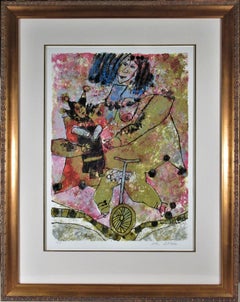
La Princesse et le Bouffon

Théo TobiasseLa Princesse et le Bouffon, 1978

$1,750

H 42 in W 33.25 in D 1.15 in

La Princesse et le Bouffon

By Théo Tobiasse

Located in San Francisco, CA

Artist: Theo Tobiasse (French/Israeli, 1927-2012) Title: La Princesse et le Bouffon Year: 1978 Medium: Color lithograph Edition: Numbered 60/175 in pencil Paper: Wove Image siz...

Category

Mid-20th Century Expressionist Bengt Lindström Art

Materials

Lithograph

Steet Vendor with Little Girl

Steet Vendor with Little Girl

By Jean Jansem

Located in San Francisco, CA

Artist: Jean Jansem (French/Armenian, 1920-2013) Title: Street Vendor with Little Girl Year: c. 1960 Medium: Color lithograph Edition: Numbered 144/200 in pencil Paper: Arches p...

Category

Mid-20th Century Expressionist Bengt Lindström Art

Materials

Lithograph

Untitled: Head of A Woman 2

Untitled: Head of A Woman 2

By George Zachary Constant

Located in New York, NY

George Zachary Constant (American/Greek 1892-1978), "Untitled: Head Of A Woman No. 2", Portrait/ Figurative Etching and Drypoint signed on Paper, 12.50 x 8.75 (15.25 x 11.50 Framed),...

Category

Early 20th Century Modern Bengt Lindström Art

Materials

Drypoint, Etching

L'Écuyère (The Horsewoman) /// Pablo Picasso Lithograph Circus Modern Abstract

L'Écuyère (The Horsewoman) /// Pablo Picasso Lithograph Circus Modern Abstract

By Pablo Picasso

Located in Saint Augustine, FL

Artist: Pablo Picasso (Spanish, 1881-1973) Title: "L'Écuyère (The Horsewoman)" *Unsigned edition, though signed by Picasso in the plate (printed signature) lower right Year: 1960 Med...

Category

1960s Modern Bengt Lindström Art

Materials

Lithograph

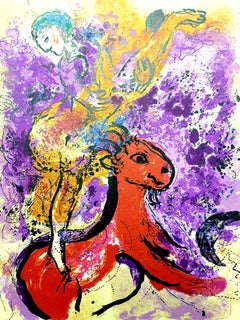
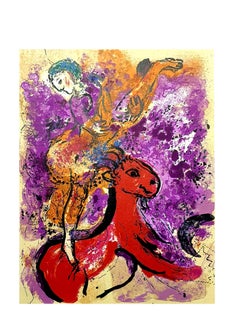
Marc Chagall - The Red Rider - Original Lithograph

Marc Chagall - The Red Rider - Original Lithograph

By Marc Chagall

Located in Collonge Bellerive, Geneve, CH

Marc Chagall - Original Lithograph The Red Rider From the unsigned, unnumbered lithograph printed in the literary review XXe Siecle 1957 See Mourlot 191 Dimensions: 32 x 24 cm Publisher: G. di San Lazzaro. Marc Chagall (born in 1887) Marc Chagall was born in Belarus in 1887 and developed an early interest in art. After studying painting, in 1907 he left Russia for Paris, where he lived in an artist colony on the city’s outskirts. Fusing his own personal, dreamlike imagery with hints of the fauvism and cubism popular in France at the time, Chagall created his most lasting work—including I and the Village (1911)—some of which would be featured in the Salon des Indépendants exhibitions. After returning to Vitebsk for a visit in 1914, the outbreak of WWI trapped Chagall in Russia. He returned to France in 1923 but was forced to flee the country and Nazi persecution during WWII. Finding asylum in the U.S., Chagall became involved in set and costume design before returning to France in 1948. In his later years, he experimented with new art forms and was commissioned to produce numerous large-scale works. Chagall died in St.-Paul-de-Vence in 1985. The Village Marc Chagall was born in a small Hassidic community on the outskirts of Vitebsk, Belarus, on July 7, 1887. His father was a fishmonger, and his mother ran a small sundries shop in the village. As a child, Chagall attended the Jewish elementary school, where he studied Hebrew and the Bible, before later attending the Russian public school. He began to learn the fundamentals of drawing during this time, but perhaps more importantly, he absorbed the world around him, storing away the imagery and themes that would feature largely in most of his later work. At age 19 Chagall enrolled at a private, all-Jewish art school and began his formal education in painting, studying briefly with portrait artist Yehuda Pen. However, he left the school after several months, moving to St. Petersburg in 1907 to study at the Imperial Society for the Protection of Fine Arts. The following year, he enrolled at the Svanseva School, studying with set designer Léon Bakst, whose work had been featured in Sergei Diaghilev's Ballets Russes. This early experience would prove important to Chagall’s later career as well. Despite this formal instruction, and the widespread popularity of realism in Russia at the time, Chagall was already establishing his own personal style, which featured a more dreamlike unreality and the people, places and imagery that were close to his heart. Some examples from this period are his Window Vitebsk (1908) and My Fianceé with Black Gloves (1909), which pictured Bella Rosenfeld, to whom he had recently become engaged. The Beehive Despite his romance with Bella, in 1911 an allowance from Russian parliament member and art patron Maxim Binaver enabled Chagall to move to Paris, France. After settling briefly in the Montparnasse neighborhood, Chagall moved further afield to an artist colony known as La Ruche (“The Beehive”), where he began to work side by side with abstract painters such as Amedeo Modigliani and Fernand Léger as well as the avant-garde poet Guillaume Apollinaire. At their urging, and under the influence of the wildly popular fauvism and cubism, Chagall lightened his palette and pushed his style ever further from reality. I and the Village (1911) and Homage to Apollinaire (1912) are among his early Parisian works, widely considered to be his most successful and representative period. Though his work stood stylistically apart from his cubist contemporaries, from 1912 to 1914 Chagall exhibited several paintings at the annual Salon des Indépendants exhibition, where works by the likes of Juan Gris, Marcel Duchamp and Robert Delaunay were causing a stir in the Paris art world. Chagall’s popularity began to spread beyond La Ruche, and in May 1914 he traveled to Berlin to help organize his first solo exhibition, at Der Sturm Gallery. Chagall remained in the city until the highly acclaimed show opened that June. He then returned to Vitebsk, unaware of the fateful events to come. War, Peace and Revolution In August 1914 the outbreak of World War I precluded Chagall’s plans to return to Paris. The conflict did little to stem the flow of his creative output, however, instead merely giving him direct access to the childhood scenes so essential to his work, as seen in paintings such as Jew in Green (1914) and Over Vitebsk (1914). His paintings from this period also occasionally featured images of the war’s impact on the region, as with Wounded Soldier (1914) and Marching (1915). But despite the hardships of life during wartime, this would also prove to be a joyful period for Chagall. In July 1915 he married Bella, and she gave birth to a daughter, Ida, the following year. Their appearance in works such as Birthday (1915), Bella and Ida by the Window (1917) and several of his “Lovers” paintings give a glimpse of the island of domestic bliss that was Chagall’s amidst the chaos. To avoid military service and stay with his new family, Chagall took a position as a clerk in the Ministry of War Economy in St. Petersburg. While there he began work on his autobiography and also immersed himself in the local art scene, befriending novelist Boris Pasternak, among others. He also exhibited his work in the city and soon gained considerable recognition. That notoriety would prove important in the aftermath of the 1917 Russian Revolution when he was appointed as the Commissar of Fine Arts in Vitebsk. In his new post, Chagall undertook various projects in the region, including the 1919 founding of the Academy of the Arts. Despite these endeavors, differences among his colleagues eventually disillusioned Chagall. In 1920 he relinquished his position and moved his family to Moscow, the post-revolution capital of Russia. In Moscow, Chagall was soon commissioned to create sets and costumes for various productions at the Moscow State Yiddish Theater, where he would paint a series of murals titled Introduction to the Jewish Theater as well. In 1921, Chagall also found work as a teacher at a school for war orphans. By 1922, however, Chagall found that his art had fallen out of favor, and seeking new horizons he left Russia for good. Flight After a brief stay in Berlin, where he unsuccessfully sought to recover the work exhibited at Der Sturm before the war, Chagall moved his family to Paris in September 1923. Shortly after their arrival, he was commissioned by art dealer and publisher Ambroise Vollard to produce a series of etchings for a new edition of Nikolai Gogol's 1842 novel Dead Souls. Two years later Chagall began work on an illustrated edition of Jean de la Fontaine’s Fables, and in 1930 he created etchings for an illustrated edition of the Old Testament, for which he traveled to Palestine to conduct research. Chagall’s work during this period brought him new success as an artist and enabled him to travel throughout Europe in the 1930s. He also published his autobiography, My Life (1931), and in 1933 received a retrospective at the Kunsthalle in Basel, Switzerland. But at the same time that Chagall’s popularity was spreading, so, too, was the threat of Fascism and Nazism. Singled out during the cultural "cleansing" undertaken by the Nazis in Germany, Chagall’s work was ordered removed from museums throughout the country. Several pieces were subsequently burned, and others were featured in a 1937 exhibition of “degenerate art” held in Munich. Chagall’s angst regarding these troubling events and the persecution of Jews in general can be seen in his 1938 painting White Crucifixion. With the eruption of World War II, Chagall and his family moved to the Loire region before moving farther south to Marseilles following the invasion of France. They found a more certain refuge when, in 1941, Chagall’s name was added by the director of the Museum of Modern Art (MOMA) in New York City to a list of artists and intellectuals deemed most at risk from the Nazis’ anti-Jewish campaign. Chagall and his family would be among the more than 2,000 who received visas and escaped this way. Haunted Harbors Arriving in New York City in June 1941, Chagall discovered that he was already a well-known artist there and, despite a language barrier, soon became a part of the exiled European artist community. The following year he was commissioned by choreographer Léonide Massine to design sets and costumes for the ballet Aleko, based on Alexander Pushkin’s “The Gypsies” and set to the music of Pyotr Ilyich Tchaikovsky. But even as he settled into the safety of his temporary home, Chagall’s thoughts were frequently consumed by the fate befalling the Jews of Europe and the destruction of Russia, as paintings such as The Yellow Crucifixion...

Category

1950s Surrealist Bengt Lindström Art

Materials

Lithograph

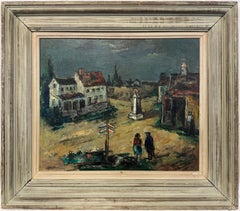
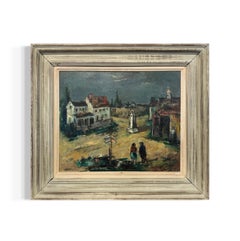
“Crossroads, c. 1940” WPA Polish-American Expressionist Modernist Oil Signed

“Crossroads, c. 1940” WPA Polish-American Expressionist Modernist Oil Signed

By Sol Wilson

Located in Yardley, PA

“Crossroads, c. 1940” by Sol Wilson (Polish-American, 1896-1974). This expressive painting by Wilson depicts a moody village crossroads rendered with his signature textured brushwor...

Category

1940s Expressionist Bengt Lindström Art

Materials

Oil, Board

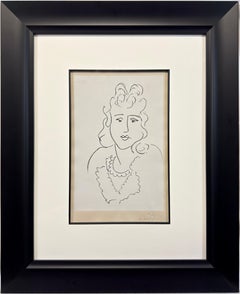
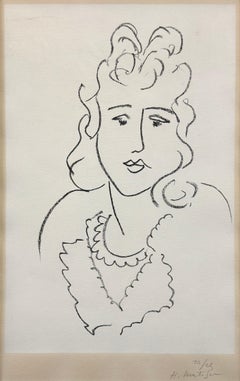
"Buste de Femme" 1942-43 by Henri Matisse Signed Lithograph /25 French Modernist

"Buste de Femme" 1942-43 by Henri Matisse Signed Lithograph /25 French Modernist

By Henri Matisse

Located in Yardley, PA

About this work: Created in 1942-43, this work belongs to one of the most fertile periods of Matisse’s career as a printmaker and draftsman. By this time, Matisse had long since mast...

Category

1940s Modern Bengt Lindström Art

Materials

Lithograph, Chine Colle

Iron Cross
Iron Cross

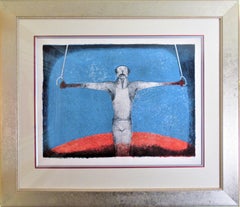
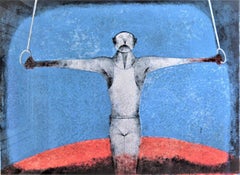
Rufino TamayoIron Cross, 1988

$5,100

H 42 in W 49 in D 1.75 in

Iron Cross

By Rufino Tamayo

Located in San Francisco, CA

Artist: Rufino Tamayo Title: Iron Cross Year: 1988 Medium: Color lithograph Edition: Numbered CCXLV/CCC in pencil Paper: Wove Image size: 22.5 x 30...

Category

1980s Expressionist Bengt Lindström Art

Materials

Lithograph

Maximilien Luce La Cueilleuse de Fruits

Maximilien Luce La Cueilleuse de Fruits

By Maximilien Luce

Located in Dallas, TX

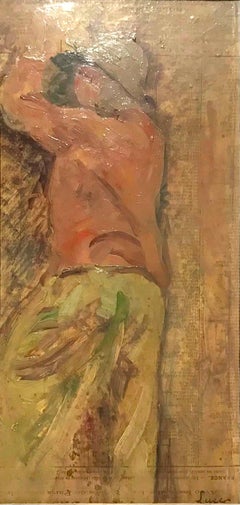
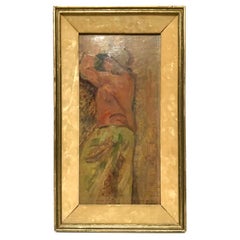
Maximilien Luce (French, 1858-1941) La Cueilleuse de Fruits oil on newsprint laid down to board signed Luce (lower right) Sight: 13 1/2 x 6 1/2 in. (34.3 x 16.5cm) Frame: 17.5 x 10 I...

Category

1880s Expressionist Bengt Lindström Art

Materials

Oil, Newsprint

Jeune Fille au Chat
Jeune Fille au Chat

Jeune Fille au Chat

By Léonard Tsuguharu Foujita

Located in New York, NY

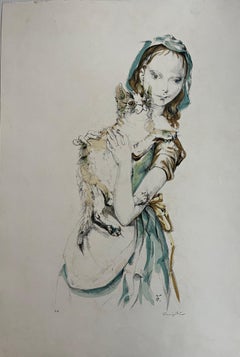
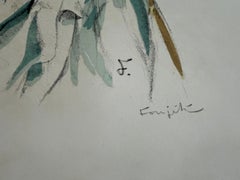
A very good impression of this color lithograph. Artist's proof, aside from the edition of 220. Signed and inscribed "E.A." in pencil by Foujita. Printed by the Guilde de la Gravure,...

Category

1950s Modern Bengt Lindström Art

Materials

Color, Lithograph

Is that Gun Loaded?  NRA original vintage gun safety poster

Is that Gun Loaded? NRA original vintage gun safety poster

Located in Spokane, WA

Original “Is that Gun LOADED?” vintage National Rifle Association of America vintage poster. Archival linen backed in excellent condition, mint, and ready to frame. Printed in 1946 on a thick cardboard stock. Excellent condition, vibrant green and reds. 22 x 14 inches. NO paper loss, no tears. These are images of the exact poster you will receive. The poster shows a careless man incorrectly holding a rifle pointing towards another person. The men’s camping gear...

Category

1940s American Modern Bengt Lindström Art

Materials

Lithograph

Previously Available Items
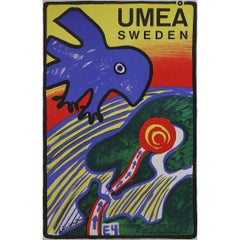
Original travel poster for Umeå, Sweden, designed by Bengt Lindstrom

Original travel poster for Umeå, Sweden, designed by Bengt Lindstrom

By Bengt Lindström

Located in PARIS, FR

This striking original travel poster for Umeå, Sweden, designed by the renowned Swedish artist Bengt Lindström, is a bold and dynamic representation of the northern Swedish city. Lin...

Category

1970s Bengt Lindström Art

Materials

Paper, Lithograph

Untitled - Screen Print by Bengt Lindström - 1970s

Untitled - Screen Print by Bengt Lindström - 1970s

By Bengt Lindström

Located in Roma, IT

Untitled is an artwork realized by Bengt Lindstrom (1925 - 2008). Screen Print. Cm 78,00 x 57,00. 7/100. Hand signed and numbered. Good conditions Bengt Lindström was born in Storsjökappel, a small village in Norrland, Sweden, on 3 September 1925. A few days after his birth, his godfather, the leader of the local Lapps, administered the baptism of the earth to him, making him pass through the roots of a dead tree, to order to ensure the protection of the gods against the dangers of life. The child grows up in this immense, harsh and mysterious land covered with lakes and forests where the legends and myths of the Great North hover. At ten years old his parents sent him to school in Härnösand, where he undertook scientific studies and where he began to paint. In 1944 he enrolled at the School of Fine Arts in Stockholm and in 1945 he moved to the School of Fine Arts in Copenhagen, at Aksel Jørgensen. In 1946 he was in Chicago where he attended courses at the Art Institute for a year. In 1947 he arrived in Paris, near Fernanad Léger, then in Montparnasse, at the André Lothe Academy where he met Marie-Louise Boudriot whom he married in 1951. In 1949 he visited Florence and Assisi, remaining fascinated by the frescoes of Giotto and Cimabue. In 1950, a scholarship from a Swedish newspaper allowed him to open his first atelier in the Marne Valley. First group exhibition in 1953 at the Craven Gallery in Paris. First individual exhibition in 1954 at Gummesons Konstgalleri in Stockholm. From these years onwards he usually stays between France and Sweden. In 1955 he also began to try his hand at lithography. In 1958 he exhibited in Paris at the Galerie Breteau, where the "masks", the "gods" and the "monsters" appeared for the first time. In 1959 he participated in “L’Europe nouvelle” in Lausanne. In 1961 he exhibited at the Tooth Gallery in London in a collective exhibition and with a solo exhibition at the Galerie le Zodiaque in Brussels. In 1965 he exhibited in Paris at the Galerie Rive Gauche, in Lille at the Galerie Nord and in Copenhagen at the Galerie Birch. In 1966 he exhibited at the Konstmuseum in Gothenburg. In 1967 he exhibited at the Carnegie Institute in Pittsburgh and at the Galerie Seibu in Tokyo. From 1968 to 1976 he exhibited annually at the Galerie Ariel for which he created a series of lithographs on Scandinavian mythology...

Category

1970s Contemporary Bengt Lindström Art

Materials

Screen

Personage
Personage

Bengt LindströmPersonage, 1980

Sold

H 35.04 in W 28.75 in

Personage

By Bengt Lindström

Located in Östermalm, Stockholms län

Artwork size: 81x65 cm Frame size 89x73 cm Signed by the artist. Certificate of authenticity is issued by Comité Bengt Lindström in Paris. Free shipment worldwide. Bengt Lindstr...

Category

1980s Contemporary Bengt Lindström Art

Materials

Canvas, Oil

Le Lai de la Lance, Lithograph Portfolio by Bengt Lindstrom

Le Lai de la Lance, Lithograph Portfolio by Bengt Lindstrom

By Bengt Lindström

Located in Long Island City, NY

Translating to "The Lay of the Lance" this vibrant and brutal series of four lithographs accompanied by fragments of Viking poems, translated into French. They tell the story of a ki...

Category

1970s Bengt Lindström Art

Materials

Lithograph

Untitled
Untitled

Bengt LindströmUntitled, 1985

Sold

H 20.48 in W 17.33 in

Untitled

By Bengt Lindström

Located in Barcelona, CT

The painting is being offered with a work and authenticity certificate

Category

1980s Abstract Bengt Lindström Art

Materials

Lithograph, Paper, Ink

The man and his dog

The man and his dog

By Bengt Lindström

Located in Paris, FR

Lithograph, 1990 Handsigned by the artist in pencil Edition : 100 Printer : Grapholith 56.00 cm. x 76.00 cm. 22.05 in. x 29.92 in. (paper) 56.00 cm. x 76.00 cm. 22.05 in. x 29.92 i...

Category

1990s Abstract Bengt Lindström Art

Materials

Lithograph

Creatures - Original Oil Painting by Bengt Lindström - 1980

Creatures - Original Oil Painting by Bengt Lindström - 1980

By Bengt Lindström

Located in Roma, IT

Creatures is an original contemporary artwork realized in 1980 by the Contemporary artist Bengt Lindström (Storsjökapell, 1925 - 2008). Original oil painting on canvas. Hand-signed by the artist on the lower margin in black oil painting: Lindström. Excellent conditions. Beautiful expressionist painting depicting the deformed faces of zoomorphic figures. The work is a classical example of Nordic painting...

Category

1980s Contemporary Bengt Lindström Art

Materials

Canvas, Oil

Jeu de l’été
Jeu de l’été

Jeu de l’été

By Bengt Lindström

Located in Östermalm, Stockholms län

Artwork size: 46x38 cm Frame size: 62x54 cm Signed by the artist. Free shipment worldwide. Bengt Lindström was a big man from the central parts of the Norrland province, born in S...

Category

1980s Contemporary Bengt Lindström Art

Materials

Canvas, Oil

LA FEMME ET L'ENFANT

Bengt LindströmLA FEMME ET L'ENFANT

Sold

H 25.75 in W 20.25 in

LA FEMME ET L'ENFANT

By Bengt Lindström

Located in Aventura, FL

Hand signed and numbered carborundum etching. Artwork is in excellent condition. Certificate of Authenticity included. All reasonable offers will be considered.

Category

1970s Contemporary Bengt Lindström Art

Materials

Etching, Paper

Bengt Lindstrom - Original Handsigned Engraving

Bengt Lindstrom - Original Handsigned Engraving

By Bengt Lindström

Located in Collonge Bellerive, Geneve, CH

Bengt Lindström - Original Handsigned Engraving The Seven Deadly Sins. 76 x 56 cm Signed in pencil by Bengt Lindström Paris, ABCD, 1976. Original etching in color Limited edition 90 ex. This is the unique copy offered to Claude Manesse, The story of B. Lindström was collected by Frederick Towarnicki, assisted by Agathe Malet-Buisson. The engravings were drawn on the presses of Claude Manesse. Bengt Lindström (1925-2008) Bengt Lindström was born on September 3rd, 1925 in Storsjökapell, a small isolated village in the Swedish province of Norrland. The young child thus grew up in that vast, mythical and harsh expanse of mounts, glistening lakes and endless forests known as Lapland. His father was a primary school teacher who was fond of Lapps and who showed great interest in their ethnic group and culture. The child was only three days old when Lapp King Kroik, his godfather, administered the Baptism of the Earth, where the child is conveyed between two roots of a tree to grant him protection from the Gods. Lapps as well as local lumberjacks would occasionally abandon their silent ways to tell him and reveal the tales, legends and mysteries of the Great White North. 1935-1945 : He left Storsjökapell and headed to Härnösand, where he wrote short science-fiction novellas, became a renowned athlete and began to paint. 1944-1946 : Isaac Grünewald Art School in Stockholm, Sweden. Study drawing with Aksel Jörgensen at the Copenhagen Fine Arts School in Denmark. He realized his first two lithographs, Meditation and Le Modèle Etendu (The Stretched Model). 1947-1952 : He arrived in Paris. He travelled to Italy, where he visited Florence and Assisi, developing a deep fascination for Giotto and Cimabue. He was granted a scholarship by Swedish magazine Aftontidningen, which helped him move into a workshop in Arcueil, France. He began working on mosaics. 1953-1967 : He returned to Paris, once again taking up lithography and engraving, which holds a vital position in his work. He moved into a workshop in Rueil-Malmaison. This was the start of his collaboration with the Rive Gauche Gallery in Paris. London Tooth & Sons Gallery Director M. Cochrane purchased a large number of his works. He left the workshop in Rueil-Malmaison to settle in Savigny-sur-Orge, France. He began taking to figurative art with Masks, Gods and Monsters. He exhibited with the Nouvelle Figuration Group at the Mathias Feld Gallery. He also began working with the Ariel Gallery in Paris. 1968-1978 : Lindström completed a series of 10 lithographs about Scandinavian mythology. He also completed a series of drypoint works. An association with the Protée Gallery in Toulouse, France, led to exhibitions at the Protée Gallery II in Paris starting in 1984. He executed a large mural painting the Grand Hotel in Härnösand, Sweden. He also made two large frescoes for the Nacksta-Sundsvall covered market in Sweden. He took to sharing his working time between the workshop in Savigny-sur-Orge and the one in Sundsvall. He began collaboration that was to last several years with the ABCD Gallery in Paris, which provided exclusive publication for his engravings and strong ink work. Les Hommes du Nord (Men of the North) was the first of the major tapestries. He published a boxed set album, Eddan, Eddan, Eddan, illustrating Scandinavian mythology. Together with Jacques Putman, he completed two editions of bronze sculptures, Les Enfants Sauvages (The Wild Children). 1979-1982 : He worked on glass, making thirty dishes and goblets for renowned Swedish glassmaker Kosta Boda. He painted a car for Volvo, Sweden’s leading car manufacturer. Then, close to his birthplace, he painted gigantic tarpaulins over forty metres high, covering the slopes of the neighbouring Våladalen Mountain, as a protest against the building of a dam. This action caused a sensation and provoked fierce reactions. He also created small painted papier mâché sculptures, Têtes (Heads), as well as some gold and silver jewellery. 1983 : He exhibited seven monumental 3x2.5m works at the Art and History Museum in Stockholm: Les Grands Dieux Ase (The Great Aesir Gods), depicting the gods from Scandinavian mythology: Thor, Odin, Frej, Balder, Ymer, Loki and Unknown God, as well as acrylic paintings about the Valkyries. Les Grands Dieux was ultimately exhibited in a purpose-built chapel adjoining the Midlanda Contemporary Arts Centre in 1996. He completed Thor’s Hammer, a monumental sculpture. 1985-1990 : He lived also in the Alicante region, where Spanish friends found him a new workshop. While there he completed Novelda, an album of lithographs featuring poems by Spanish poet Paco Pastor. He completed a new mural, 5mx5m, for the Västeras Science Institute in Sweden. He then started working with the San Carlo Gallery in Milan, Italy, which coordinated all of the Italian events. Major exhibitions and retrospectives were held in Italy, Belgium, Luxembourg, Germany and Spain. He created two boxed set albums, containing series of 10 aquatints, Monde Autre et Chamanes (Otherworld and Shamans), featuring poems by Michel Perrin. 1991-1994 : He went back to working in black and white, completing some very-large-format works. In Murano, in association with the San Carlo Gallery, he created Grands Verres (Large Glasses), a series of large vases and sculptures made of crystal. He painted Kåtan Mimi, an 8x9m Lapp tent, for the town of Arjeplog in Swedish Lapland. He completed a couple of 2m-high painted polyester sculptures, Lui et Elle (Him and Her). He then made a new series of crystal glasses and sculptures in Murano, Italy. He completed Présence (Presence), a new 3.5x2.7m tapestry for the municipality of Timrå, Sweden. He started on the Grands Initiés (Great Insiders) series, all large format and mixed black and white techniques. He finished the strong series about Norse gods. 1995-1996 : He moved into a new workshop in Paris. A retrospective was held at the Sundsvall Museum in Sweden, and on that occasion he painted a monumental 700-m² canvass, Le Géant sur la montagne (The Giant on the Mountain), which was hung all summer long on the mountain slope facing the town. He went on to complete a suite of six silkscreen prints on the same theme. Then he inaugurated the Y, a monumental sculpture. Lindström then completed Temps Zéro (Zero Time), a watch made for Swatch. One of his works, L’hiver (Winter), made the cover of the first 1996 issue of Telerama, the leading French weekly. In association with Sydkraft Sweden, he painted a fresco for the municipality of Örebro on a 17m-high tank with a surface area of 3,000 m², located at the crossroads of major Swedish motorways, by the entrance to the Åbyverket industrial estate. He also created a 6.5m-high Tången sculpture made of painted concrete in Ånge, which was inaugurated on September 3rd in the presence of their Majesties the King and Queen of Sweden. 1997-1999 : He began working on ceramics in Albisolla, Italy. He also completed a new 30m-high fresco for the town of Örebro, located close to the tank he had painted in 1996 near Åbyverket. The year saw the inauguration of the Midlanda Contemporary Arts Centre in Sweden, which harbours the collection of the Bengt and Michèle Lindström Foundation, featuring the entire engravings collection (about 800 works), as well as a selection of paintings and sculptures. He completed a 4x10m mural in the lobby of the University of Eskilstuna, Sweden, and also completed two monumental frescoes on the Akkats dam and a mural on the power station facing Jokkmokk in Swedish Lapland. 2000-2003 : He painted all of the sides of a semi-articulated lorry for Scania, Sweden’s main truck manufacturer. In Italy, he completed a new series of crystal sculptures with Adriano Bérengo. He finished the Great Prophets, a series of 2x2m oil on canvass works. Swiss publisher Ides et Calendes published a small but luxurious monograph, with text by Françoise Monnin. A notebook was also published, Le Visage dans l’Art de Bengt Lindström (Faces in the Art of Bengt Lindström). He completed a substantial series of large blue acrylic paintings, Femmes (Women). 2003 : Bengt fell ill and was unable to paint, but the exhibitions went on. 2004 : Saw the release of the film by Dag Jonzon and Hans Östbom, produced by Dell’arte AB and Östbom Filmbild, about the life of Bengt Lindström. Entitled Lindström - Le Diable de la couleur et de la forme (Lindström – The Colour and Form Devil), the film was produced thanks to support from Film Västernorrland, Länsstyrelsen Västernorrland and Sveriges Television. It was broadcast on Swedish television channels. That same year, the Midlanda Contemporary Arts Centre was closed as a result of municipal policy. 2005-2007 : The 6m-high sculpture Le Loup (The Wolf), made for PEAB, was inaugurated in Botkyrka-Stockholm. Lindström – The Colour and Form Devil was screened at the Paris Swedish Cultural Centre and released on DVD. The Michèle and Bengt Lindström Foundation was donated and transferred to the Länsmuseet i Västernorrland in Härnösand, Sweden, where a special room was prepared to host Les Grands Dieux Ase. Edition of the 1998 Ceramics, created in association with Francis Dellile’s ”La Tuilerie” workshop. The Bengt Lindström Collection was inaugurated at, Murberget, the Länsmuseet i Västernorrland in Härnösand, Sweden. He illustrated Sinfonietta för Juliana, a collection of poems by Italian poet and art critic Sebastiano Grasso. On January 29th, 2008, Bengt Lindström passed away at his home in Sweden. 2008-2012 : The Fondation Krimaro presents the first volume of the works of Bengt Lindström in his collection. Numerous exhibitions-tribute to the work are presented in major cities in Europe. 2012 : Retrospective - Black and White in the engravings - Museum of Härnösand, Murberget, Sweden. Main exhibitions 1952 Fair Réalités Nouvelles – New realities, Paris, France. 1953 Craven Gallery, Paris, France. 1954 Gummeson Gallery, Stockholm, Sweden. Fair Salon d’Octobre, Paris, France. 1958 Breteau Gallery, Paris, France. 1959 Autour du Spontanéisme – Around the sontaneity, Stockholm, Sweden. L’Europe Nouvelle – The new Europe, LaUnited Statesnne, Switzerland. 1960 Rive Gauche Gallery, Paris, France. 1961 Tooth Gallery, London, England. Le Zodiaque Gallery, Brussels, Belgium. Fair Salon de Mai, Paris, France. 1962 Nouvelle Figuration – New Figuration , Mathias Fels Gallery, Paris, France, 1964 Nord-Sud – North-South, in several cities in Sweden. Ariel Gallery, Paris, France, 15 artists of my generation. Museum of Fine Arts in Gent, Belgium, Figuration-Défiguration – Figuration – Disfigurement. 1965 Rive Gauche Gallery. Paris, France. Nord Gallery, Lille, France. Birch Gallery, Copenhagen, Denmark. 1966 Museum of Modern Art, Gothenburg, Sweden. 1967 Veranneman Gallery, Brussels, Belgium. Carnegie Institute, Pittsburgh, United States. Seibu Gallery, Tokyo, Japan, 23 peintres in Paris. 1968 Ariel Gallery, Paris, France, followed by six exhibitions until 1976. 1969 La Pochade Gallery, Paris, France. Protée Gallery, Toulouse, France, who exhibited him in Paris, Gallery Protée II, from 1984. 1973 Galliera Museum, Paris, France. 1974 Gallery 111, Lisbon, Portugal. 1982 Gallery Protée-Arco, Madrid, Spain and Fair Foire de Cologne, Germany. 1983 Historia Museum, Stockholm, Sweden, The Ase gods and the Valkyries. 1984 Gallery Arcano XXI, Lisbon, Portugal. Gallery Christian Cheneau, Paris, France. Museum Château comtal, Carcassonne, France. 1985 Gallery Italia, Alicante, Spain. 1986 Gallery Sala Gaspar, Barcelona, Spain. Gallery Juan Mordo-Arco, Madrid, Spain. Gallery Italia, Alicante, Spain. Museum of Salamanca, Salamanca, Spain. Gallery Three Continents, New-York, United States. Gallery Protée, Toulouse France, Autour du Roi Lear – Around King Lear. 1987 Gallery Kostel, Paris, France. Gallery Zwirner, Cologne, Germany. Gallery Leu, Rottach-Egern, Germany. 1988 Maison du Lot, Figeac, France. Gallery Protée, Paris, France. Gallery Michèle Sadoun, Paris, France 1989 Gallery Michèle Sadoun, Paris, France, La terre des ancêtres - The Land pf the ancestors. Gallery Protée, Paris, France, Nomads. Gallery Raab, London, England. 1990 Gallery Michèle Sadoun, Paris, France. Centre Culturel de Brest, France. 1991 Gallery Michèle Sadoun, Paris, France. 1992 Archotèque, Saint-Denis, La Réunion, France. Museum of Vesoul, Vesoul, France. Gallery San Carlo, Milan, Italy. 1993 Gallery 111, Lisbon, Portugal. Tonnellerie du Cognac Monnet...

Category

1970s Modern Bengt Lindström Art

Materials

Engraving

Bengt Lindstrom - Original Handsigned Engraving

Bengt Lindstrom - Original Handsigned Engraving

By Bengt Lindström

Located in Collonge Bellerive, Geneve, CH

Bengt Lindström - Original Handsigned Engraving The Seven Deadly Sins. 76 x 56 cm Signed in pencil by Bengt Lindström Paris, ABCD, 1976. Original etc...

Category

1970s Modern Bengt Lindström Art

Materials

Engraving

Bengt Lindström art for sale on 1stDibs.

Find a wide variety of authentic Bengt Lindström art available for sale on 1stDibs. If you’re browsing the collection of art to introduce a pop of color in a neutral corner of your living room or bedroom, you can find work that includes elements of red, blue, orange and other colors. You can also browse by medium to find art by Bengt Lindström in lithograph, ceramic, engraving and more. Much of the original work by this artist or collective was created during the 20th century and is mostly associated with the modern style. Not every interior allows for large Bengt Lindström art, so small editions measuring 9 inches across are available. Customers who are interested in this artist might also find the work of John Hultberg, René Gruau, and Olivier Attar. Bengt Lindström art prices can differ depending upon medium, time period and other attributes. On 1stDibs, the price for these items starts at $222 and tops out at $19,468, while the average work can sell for $1,367.