Carlo Quattrucci Art

to
6
6
4
4
1
1
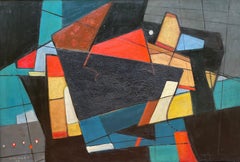
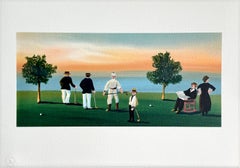
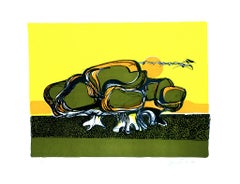
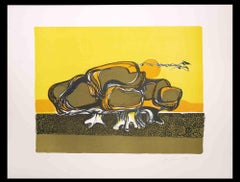
Turtle - Original Lithograph by Carlo Quattrucci - 1971

Turtle - Original Lithograph by Carlo Quattrucci - 1971

By Carlo Quattrucci

Located in Roma, IT

Turtle is an original artwork realized by Carlo Quattrucci in 1971. Hand Signed and dated on the lower right margin. Numbered on the lower left. Edition of 70 pieces plus some Arti...

Category

1970s Contemporary Carlo Quattrucci Art
Materials

Lithograph

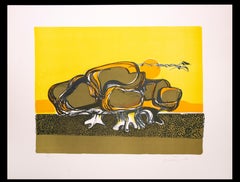
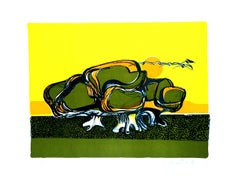
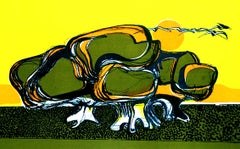
Turtle - Original Lithograph by Carlo Quattrucci - 1971

Turtle - Original Lithograph by Carlo Quattrucci - 1971

By Carlo Quattrucci

Located in Roma, IT

Turtle is an original artwork realized by Carlo Quattrucci in 1971. Hand Signed and dated on the lower right margin. Numbered on the lower left. Edition of 70 pieces plus some Arti...

Category

1970s Contemporary Carlo Quattrucci Art
Materials

Lithograph

Related Items
Toco Toucan Tucano
Toco Toucan Tucano

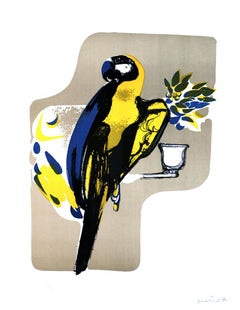
Katherine BernhardtToco Toucan Tucano, 2020

$4,599Sale Price|25% Off

H 29.93 in W 23.63 in

Toco Toucan Tucano

By Katherine Bernhardt

Located in London, GB

Toco Toucan Toucano (2020) Edition of 150 Nine colour lithographic print on Somerset Velvet 300 gsm. Signed, numbered, and dated by the artist Katherine Bernhardt is a contemporar...

Category

2010s Contemporary Carlo Quattrucci Art
Materials

Lithograph

Rodeo Queen by Luis Jimenez

Rodeo Queen by Luis Jimenez

By Luis Alfonso Jimenez

Located in Phoenix, AZ

Rodeo Queen, 1981 Edition 36/50 Signed lower left, Inscribed: for the "Rose" 82. Provenance: Print was a gift to Rozanne Charington, companion and model for "Rodeo Queen", "Rose Tattoo" and "Jimenez at Adeliza's Candy Store". Lithograph on paper 42 ½ × 29 in. (107.3 × 73.7 cm) Luis Alfonso Jimenez Born, 1940, El Paso, Texas, died 2006, Hondo, New Mexico. Statement: Luis Jimenez, in his work, celebrates the vitality of life. . . . Jimenez es un hijo de la frontera; he knows its people and the landscape. It is the transformation of these people into art that is his most important contribution to the art of this vast region which stretches between Mexico and the United States. His subject matter utilizes the popular images of the cultura del norte, and a large part of it is depicted and transformed in the rough and tumble world of la frontera. He is also a son of el norte, and so he uses its materials and explores its emerging, popular myths. The tension and attraction of Jimnez’s work is that he always creates within the space of his two worlds, the Mexicano and the Americano. He constantly shows us the irony of the two forces which repel, while showing us glimpses of the synthesis he seeks. What a gift it has been to us for this talented artist to reflect on the soul of our region. He gives meaning to our existence and history. Rudolfo Anaya (passage chosen by the artist), A View from La Frontera, Man on Fire: Luis Jimenez, pp. 1, 3, 6Biography: Luis Jimenez was born in Texas to parents who had emigrated from Mexico to the United States; he would later dedicate his 1989 sculpture Border Crossing to his father, who had entered the country illegally. The elder Jimenez was a neon sign designer in El Paso, and Luis worked with him as a youth. His experience working in the neon shop and his fascination with U.S. car culture would both become major influences on his art career. Jimenez studied architecture at the University of Texas, Austin (UTA), and also took art courses in which he first created sculptures with wood, steel, and fiberglass, choosing the latter because of its association with U.S. popular culture. He subsequently became one of the artists who made fiberglass an acceptable medium in the 1960s. In 1964 Jimenez received his B.S. in art from UTA, and he continued his studies at the Universidad Nacional Autonoma de Mexico in Mexico City. In 1966 he moved to New York City and worked as an assistant to sculptor Seymour Lipton. Jimenez began to exhibit his art while in New York and in 1972 moved to New Mexico to focus on creating public sculptures, even as he maintained his diverse output of drawings, prints, and lithographs. Drawing on his early experiences, Jimenez creates works that come from a border perspective, one that draws upon the hybridity bred by culture clashes. Often socially and politically informed, his works speak not only in regional terms, those germane to the southwestern United States, but to broader, more global issues as well. They exhibit a profoundly Chicano aesthetic and sensibility, one that is informed by Mexican and Mexican American traditions, North American popular culture, Chicano cultural icons, and images and themes unique to the Southwest. Death, sexuality, and the struggle of the common people are frequent themes. Inspired by authors who write in an autobiographical style, Jimenez creates works that function as personal narrative yet are also able to make statements about culture in more global terms. His use of bold colors and lines, a legacy from his fathers work as a neon sign maker, lends a dynamic sensuality to his work, one that is particularly evident in his monumental fiberglass and acrylic urethane sculptural works Many of Jimenez's works correspond to scholar Toms Ybarra-Fraustos definition of the Chicano aesthetic of rasquachismo, a lowbrow sensibility that appeals to the working class in that it applies to objects that subvert expressions of the mainstream or dominant culture. Creating art that speaks to the people, Jimenez is able to transform regional and culturally specific myths and symbols into globally recognized and relevant icons. Exhibitions: In addition to his personal work, Jimenez has been commissioned for numerous public art projects. In 1999 his sculpture Southwest Piet was designated a National Treasure by First Lady Hillary Clinton. The many exhibitions featuring his work have included Human Concern/Personal Torment (Whitney Museum of American Art, New York, 1969). The First International Motorcycle Art Show (Phoenix Art Museum, Phoenix, AZ, 1973). Three Texas Artists (Centre Cultural Americaine, USIS, Paris, 1977), Recent Trends in Collecting (Smithsonian Institution, Washington, DC, 1982). Committed to Print (Museum of Modern Art, New York, 1989) Printmaking in Texas: The 1980s (Modern Art Museum, Fort Worth, TX. Laguna Gloria Art Museum, Austin, 1990. The Whitney Biennial (Whitney Museum of American Art, New York, 1991) Man On Fire: Luis Jimnez (Albuquerque Museum of Art, NM, 1994-95). 47th Annual Purchase Exhibition (American Academy of Arts and Letters, New York, 1995). Traveling solo exhibition, Working Class Heroes: Images from the Popular Culture (1997-2000). Jiménez Collier Gallery has been in continuous operation for over 40 years. Originally located just off Main Street in downtown Scottsdale, Arizona, we have moved to Phoenix to accommodate and showcase our large inventory including: • Original works by Maynard Dixon, Lon Megargee, Ed Mell, Fritz Scholder, Bill Schenck, Bill Lesch, Luis Jimenez, Greg Singley, Dan Budnik, and other 20th century Western, WPA and Contemporary Southwestern artists. • The Fine Art Estate of Lon Megargee • Vintage rodeo...

Category

1980s Contemporary Carlo Quattrucci Art
Materials

Lithograph

Judy Chicago offset lithograph poster (Hand signed and inscribed) feminist art

Judy Chicago offset lithograph poster (Hand signed and inscribed) feminist art

By Judy Chicago

Located in New York, NY

Accidents, Injuries and other Calamities poster Judy Chicago (Hand signed and inscribed), 1988 Offset lithograph on thin board (signed and inscribed by Judy Chicago) 26 × 20 1/4 inch...

Category

1980s Contemporary Carlo Quattrucci Art
Materials

Lithograph, Offset, Pencil

Hand of Africa - Mandela, Former South African President, Signed Artwork, Hand

Hand of Africa - Mandela, Former South African President, Signed Artwork, Hand

By Nelson Mandela

Located in Knowle Lane, Cranleigh

Nelson Mandela, Hand of Africa, Signed Limited Edition Lithograph Many people are unaware that Nelson Mandela turned his hand to art in his 80's as a way of leaving a legacy for his ...

Category

Early 2000s Contemporary Carlo Quattrucci Art
Materials

Lithograph

La Pique (The Pike) Lithograph, French School, Unsigned Proof, 1950

La Pique (The Pike) Lithograph, French School, Unsigned Proof, 1950

By Pablo Picasso

Located in Fairlawn, OH

La Pique (The Pike) Lithograph, 1950 Original lithograph drawn with chalk and "frottage textures" transferred to stone, 1950. Unsigned printer's proof Inscribed on the verso in Mourl...

Category

1950s French School Carlo Quattrucci Art

Materials

Lithograph

"Pensive (Thoughtful)" Print 40 x 30 inch Ed. of 50 by Gerard Marti

"Pensive (Thoughtful)" Print 40 x 30 inch Ed. of 50 by Gerard Marti

By Gerard Marti

Located in Culver City, CA

"Pensive (Thoughtful)" Print 40 x 30 inch Ed. of 50 by Gerard Marti Lithograph Not framed. Ships rolled in tube Signed and numbered by the artist. “Pensive” is an elegant evening ...

Category

21st Century and Contemporary Contemporary Carlo Quattrucci Art
Materials

Lithograph

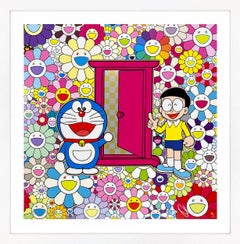
I Am The Last Of My Kind

I Am The Last Of My Kind

By Tracey Emin

Located in London, GB

Published by the Royal Academy

Category

2010s Contemporary Carlo Quattrucci Art
Materials

Lithograph, Offset

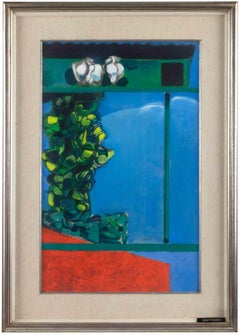
Leonardo Nierman Abstract Oil Painting on Board titled 'Prophesy' 1960s Mexico

Leonardo Nierman Abstract Oil Painting on Board titled 'Prophesy' 1960s Mexico

By Leonardo Nierman

Located in Dallas, TX

Dramatic abstract oil painting on board by renowned Mexican artist Leonardo Nierman, titled Prophesy. The composition rises with intense vertical energy, evoking a sense of cosmic tu...

Category

Mid-20th Century Modern Carlo Quattrucci Art

Materials

Oil

Reve de Cirque (Circus Dream)

Reve de Cirque (Circus Dream)

By Marc Chagall

Located in Fairlawn, OH

Reve de Cirque (Circus Dream) Color lithograph, 1966 Unsigned (as issued) Pubished in XXe Siecle, Paris, Volume XXVI Publisher: Gualtieri di San Lazzaro (1904-1974). Printer: Mourlo...

Category

1960s French School Carlo Quattrucci Art

Materials

Lithograph

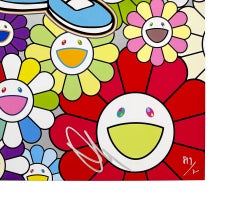
Curled Up

Tracey EminCurled Up, 2022

$8,000

H 23.6 in W 30 in

Curled Up

By Tracey Emin

Located in Calabasas, CA

Artist: Tracey Emin Title: Curled Up Year: 2022 Medium: Screenprint on Rives BFK paper, deckled edges Edition: 100; signed, titled, dated and numbered in pencil Sheet: 23 3/5 × 30 i...

Category

2010s Contemporary Carlo Quattrucci Art
Materials

Lithograph

Lumber Workers (Cuidad del Carmen, State of Campeche)

Lumber Workers (Cuidad del Carmen, State of Campeche)

By Alfredo Zalce

Located in Fairlawn, OH

Lumber Workers (Cuidad del Carmen, State of Campeche) Color lithograph on wove paper, c. 1945 Signed lower right in pencil From: Mexican Art - A Portfolio of Mexican People and Places Edition: 250 Published by Associated American Artist and Taller Grafica de Popular (TGP) This print is one of two supplemental color lithographs from a portfolio of ten black-and-white lithographs showing images of Mexican people engaged in daily activities, primarily labor and crafting, by ten different mid-century Mexican political printmakers and members of the Taller de Gráfica Popular print collective, printed on cream wove paper, each signed in pencil at lower right. This image depicts the lumber industry in Campeche, one of the 31 states, located in Southeast Mexico, it is bordered by the states of Tabasco to the south west, Yucatán to the north east, and Quintana Roo to the east, and to the southeast by the Orange Walk district of Belize. Campeche was part of the province of Yucatán but split off in the mid-19th century, mostly due to political friction with city of Mérida. Today, much of the state’s economic comeback is due to the finding of petroleum offshore in the 1970s, which has made the coastal cities of Campeche and Ciudad del Carmen important economic centers. The state has important Mayan and colonial sites but they are not as well known or visited as others in the Yucatán. (Courtesy Annex Galleries) Condition: Excellent Slight toning around the sheet edges Image size: 11 3/8 x 14 1/8 inches Sheet size: 15 x 17 3/4 inches Reference: AAA Index 928 Alfredo Zalce Torres (12 January 1908 – 19 January 2003) was a Mexican artist and contemporary of Diego Rivera, David Siqueiros and other better-known muralists. He worked principally as a painter, sculptor, and engraver, also taught, and was involved in the foundation of a number of institutions of culture and education. He is perhaps best known for his mural painting, typically imbued with ”fervent social criticism”. He is acclaimed as the first artist to borrow the traditional material of coloured cement as the medium for a ”modern work of art”. Publicity-shy, he is said to have turned down Mexico's Premio Nacional de Ciencias y Artes before finally accepting it in 2001. Before his death, Sotheby's described him as ”the most important living Mexican artist up to date”. Early life A number of episodes from his childhood have been used to cast light on his future artistic career. Born in Pátzcuaro, Michoacán in 1908, as an infant he lived in Tacubaya during the Mexican Revolution; his school was near where the rival forces of Victoriano Huerta and Emiliano Zapata met in battle. One day he saw a dead body; he says that instead of fear his attitude was that of contemplation. According to a friend and prominent collector of his works, the young Alfredo began to draw aged six or seven, but chose to do so upon the linoleum floor of his home; nevertheless both his parents praised him. While at primary school, he regularly drew on the blackboard to accompany his teachers and illustrate their lessons, as encouragement to his fellow pupils. Between 1924 and 1927 he studied at the Escuela Nacional de Artes Plásticas in Mexico City, where formative influences included Mateo Saldaña, Germán Gedovius and Diego Rivera.[3] He was soon on friendly terms with Diego Rivera as well as Rufino Tamayo, David Siqueiros, José Clemente Orozco and Frida Kahlo. As the oldest of three children, he took responsibility for the family after the death of his father; while a student, he studied in the mornings and worked in the afternoons so as to be able to provide financial support. He undertook further studies at the Escuela de Talla Directa and the Taller de Litografía of Emilio Amero. Career Much of Zalce's career was spent in teaching and cultural activities. He first went to Zacatecas to teach art but, since the Cristero War had ended only shortly before, the school was not permitted to operate owing to lingering political tensions. He taught drawing at various primary schools for the Secretariat of Education from 1932 to 1935. In 1944, he became a teacher at the La Esmeralda and Escuela Nacional de Artes Plásticas. He moved to Morelia in 1950 and became the director of the Escuela de Pintura y Escultura. He also worked as a professor at the Universidad Autónoma de Nuevo León and the Escuela Popular de Bellas Artes.[3] Besides teaching, he illustrated books with academic and social themes. He was a founder or cofounder of the Escuela de Pintura of Tabasco, the Taller de Gráfica Popular, the Escuela de Pintura of Taxco in Guerrero, the Taller de Artes Plásticas in Uruapan and the Escuela de Pintura y Artesanías in Morelia. He was also a founder of the Liga de Escritores y Artistas Revolucionarios in 1933; one of its first missions was to oppose the favourable attitude at the time of many in Mexico towards Adolf Hitler. In 1930, he created a mural for the primary school in Ayotla, State of Mexico. In 1932, he worked in ”fresco” at the Escuela para Mujeres in Mexico City. He painted murals in the former Talleres Gráficos de la Nación in 1936; again in collaboration with Leopoldo Méndez at the Escuela Normal de Puebla in 1938; and at the Palacio de Gobierno and the Cámera de Diputados in Michoacán with Ángel Bracho...

Category

1940s American Modern Carlo Quattrucci Art
Materials

Lithograph

Carlo Quattrucci art for sale on 1stDibs.

Find a wide variety of authentic Carlo Quattrucci art available for sale on 1stDibs. If you’re browsing the collection of art to introduce a pop of color in a neutral corner of your living room or bedroom, you can find work that includes elements of orange, yellow and other colors. You can also browse by medium to find art by Carlo Quattrucci in lithograph and more. Much of the original work by this artist or collective was created during the 20th century and is mostly associated with the contemporary style. Not every interior allows for large Carlo Quattrucci art, so small editions measuring 20 inches across are available. Customers who are interested in this artist might also find the work of Felix Labisse, Harry Schaare, and Gianni Testa. Carlo Quattrucci art prices can differ depending upon medium, time period and other attributes. On 1stDibs, the price for these items starts at $88 and tops out at $368, while the average work can sell for $239.

Artists Similar to Carlo Quattrucci