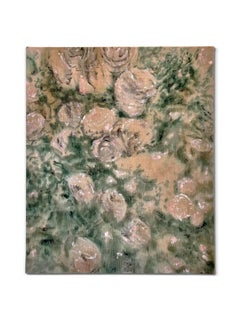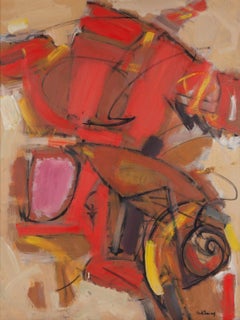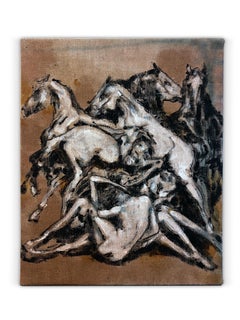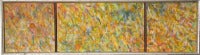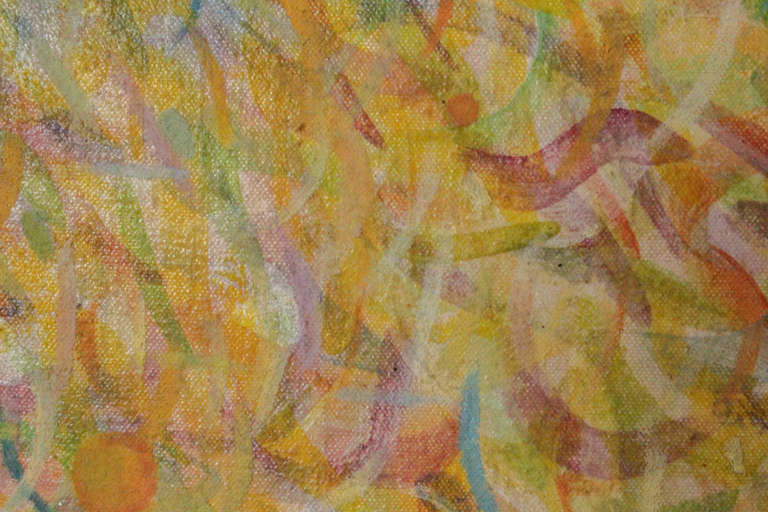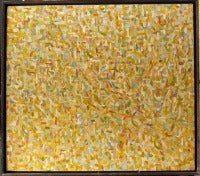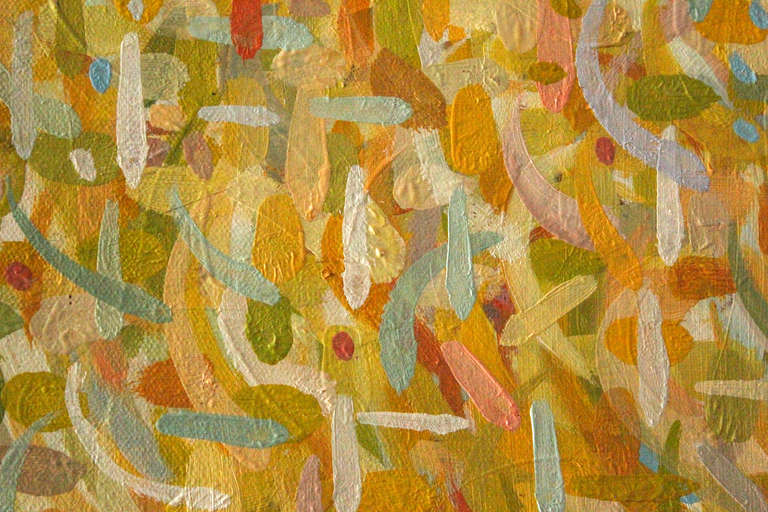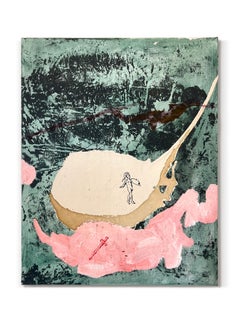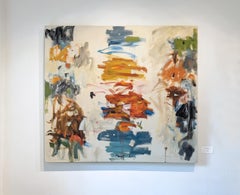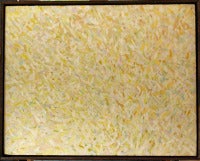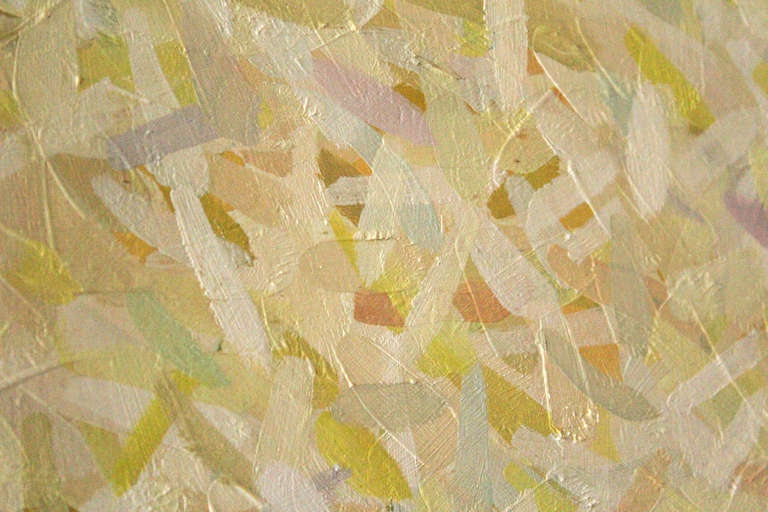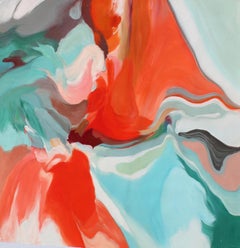
Composición b
By Casares Palma
Located in Barcelona, CT
The painting is being offered with a work and authenticity certificate
2010s Abstract Casares Palma Paintings
Oil
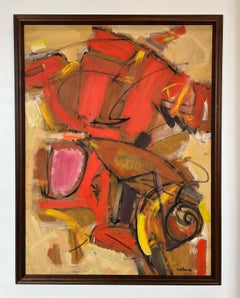
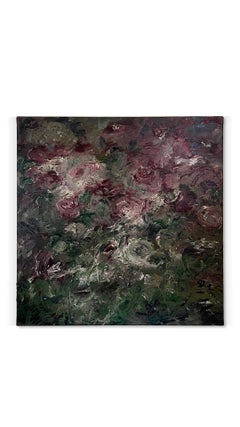
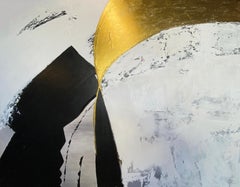
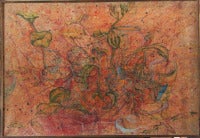
Composición b
By Casares Palma
Located in Barcelona, CT
The painting is being offered with a work and authenticity certificate
Oil
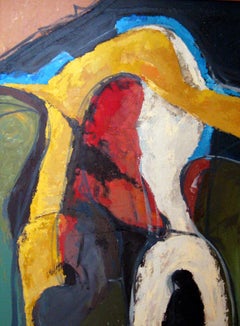
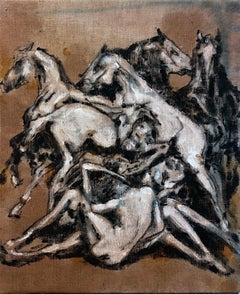
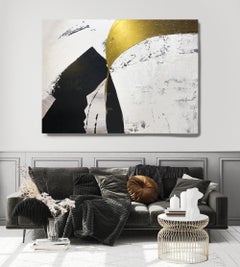
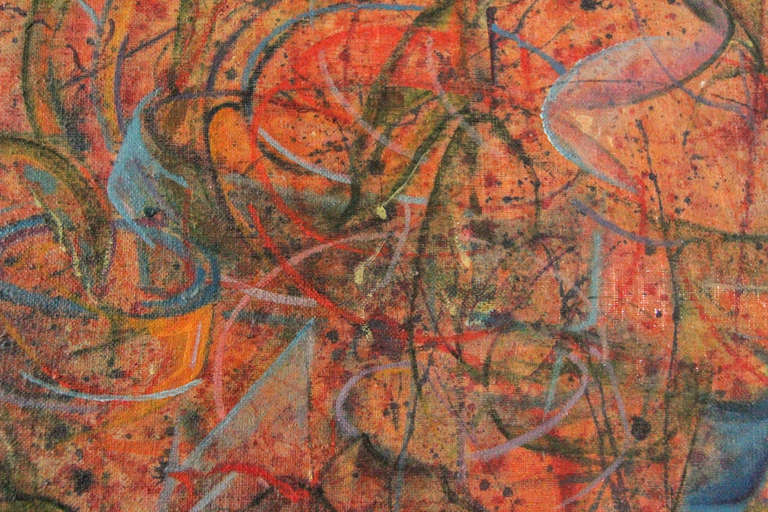
Composición A
By Casares Palma
Located in Barcelona, CT
The painting is being offered with a work and authenticity certificate
Oil
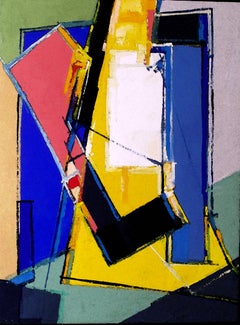
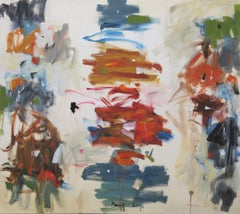
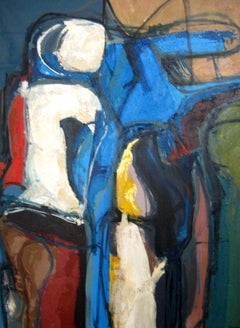
Mañana y Portal
By Casares Palma
Located in Barcelona, CT
The painting is being offered with a work and authenticity certificate
Oil
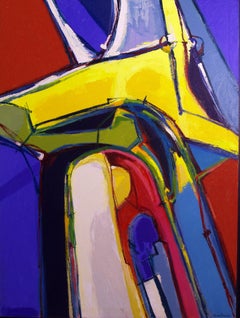
$12,340
Fuerza II
By Casares Palma
Located in Barcelona, CT
The painting is being offered with a work and authenticity certificate
Oil
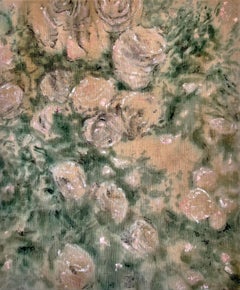
"Figure Composition"
By Vaclav Vytlacil
Located in Lambertville, NJ
Signed Lower Right Vaclav Vytlacil (1892-1984) He was born to Czechoslovakian parents in 1892 in New York City. Living in Chicago as a youth, he took classes at the School of the Art Institute of Chicago, returning to New York when he was 20. From 1913 to 1916, he enjoyed a scholarship from the Art Students League, and worked with John C. Johansen (a portraitist whose expressive style resembled that of John Singer Sargent), and Anders Zorn. He accepted a teaching position at the Minneapolis School of Art in 1916, remaining there until 1921. This enabled him to travel to Europe to study Cézanne’s paintings and works of the Old Masters. He traveled to Paris, Prague, Dresden, Berlin, and Munich seeking the works of Titian, Cranach, Rembrandt, Veronese, and Holbein, which gave him new perspective. Vytlacil studied at the Royal Academy of Art in Munich, settling there in 1921. Fellow students were Ernest Thurn and Worth Ryder, who introduced him to famous abstractionist Hans Hofmann. He worked with Hofmann from about 1922 to 1926, as a student and teaching assistant. During the summer of 1928, after returning to the United States, Vytlacil gave lectures at the University of California, Berkeley, on modern European art. Soon thereafter, he became a member of the Art Students League faculty. After one year, he returned to Europe and successfully persuaded Hofmann to teach at the League as well. He spent about six years in Europe, studying the works of Matisse, Picasso, and Dufy. In 1935, he returned to New York and became a co-founder of the American Abstract Artists group in 1936. He later had teaching posts at Queens College in New York; the College of Arts and Crafts in Oakland, California; Black Mountain College in North Carolina; and the Art Students League. His paintings exhibit a clear inclination toward modernism. His still lives and interiors from the 1920s indicate an understanding of the art of Cézanne. In the 1930s, his works displayed two very different kinds of art at the same time. His cityscapes and landscapes combine Cubist-inspired spatial concerns with an expressionistic approach to line and color. Vytlacil also used old wood, metal, cork, and string in constructions, influenced by his friend and former student, Rupert Turnbull. He eventually ceased creating constructions as he considered them too limiting. The spatial challenges of painting were still his preference. During the 1940s and 1950s, his works indicated a sense of spontaneity not felt in his earlier work. He married Elizabeth Foster in Florence, Italy, in 1927 and they lived and worked in Positano, Italy for extended periods of time. Later on, they divided their time between homes in Sparkill, New York and Chilmark, Massachusetts, where Vyt, as he was affectionately called, taught at the Martha's Vineyard Art...
Board, Oil
"Positano Coast"
By Vaclav Vytlacil
Located in Lambertville, NJ
Vaclav Vytlacil (Vas-lav Vit-la-chil) was born in New York City in 1892 to Czech parents, but was raised in Chicago. He was an artist since boyhood, becoming the youngest student to ...
Board, Oil
"Green Hat"
By Gershon Benjamin
Located in Lambertville, NJ
Ashley John is proud to offer this artwork by: Gershon Benjamin (1899 - 1985) Gershon Benjamin is a painter of portraits, landscapes, still lives, and the urban scene. He had a pro...
Canvas, Oil
$2,625
H 32 in W 24 in
AWH 167 - Original Figurative Abstract Still Life Oil Painting
By Bernhard Zimmer
Located in Los Angeles, CA
Bernhard Zimmer has created a positive stir at major international art fairs (Art Basel, Kunst Köln, etc.). His lively and mysterious compositions pique the taste of the serious art ...
Canvas, Mixed Media, Oil
$1,500
H 24 in W 31.38 in D 0.25 in
Impasto Geometric Abstraction - Mixed Media in Encaustic and Oil Paint, Signed
Located in Soquel, CA
Impasto Geometric Abstraction - Mixed Media in Encaustic and Oil Paint, Signed Bold mixed media piece signed by Pat Ellis. This piece combines elements of geometric abstraction and ...
Fiberboard, Oil, Encaustic, Wax Crayon
"Circus Act"
By Vaclav Vytlacil
Located in Lambertville, NJ
Vaclav Vytlacil (1892-1984) He was born to Czechoslovakian parents in 1892 in New York City. Living in Chicago as a youth, he took classes at the School of the Art Institute of ...
Board, Oil
$1,150
H 13.25 in W 9.25 in
Constantin Karahalios Abstract Expressionist Oil Painting Blue 1960 Mid Century
Located in Buffalo, NY
A vibrant and captivating abstract painting by Greek artist Constantin Karahalios featuring incredible texture and color. A custom frame presentation would be included in the price....
Canvas, Oil
“Lightride”
By Syd Solomon
Located in Southampton, NY
Here for your consideration is a great example of the artwork of the well known American artist, Syd Solomon. Signed top left. Titled and dated verso 1978. The painting is oil and acrylic paint on mounted synthetic canvas. Condition is excellent. Overall framed measurements are 44.75 by 24.5 inches. Provenance: A Sarasota, Florida collector. SYD SOLOMON BIOGRAPHY American 1917-2004 Written by Dr. Lisa Peters/Berry Campbell Gallery “Here, in simple English, is what Syd Solomon does: He meditates. He connects his hand and paintbrush to the deeper, quieter, more mysterious parts of his mind- and he paints pictures of what he sees and feels down there.” --Kurt Vonnegut Jr. from Palm Sunday, 1981 Syd Solomon was born near Uniontown, Pennsylvania, in 1917. He began painting in high school in Wilkes-Barre, where he was also a star football player. After high school, he worked in advertising and took classes at the Art Institute of Chicago. Before the attack on Pearl Harbor, he joined the war effort and was assigned to the First Camouflage Battalion, the 924th Engineer Aviation Regiment of the US Army. He used his artistic skills to create camouflage instruction manuals utilized throughout the Army. He married Ann Francine Cohen in late 1941. Soon thereafter, in early 1942, the couple moved to Fort Ord in California where he was sent to camouflage the coast to protect it from possible aerial bombings. Sent overseas in 1943, Solomon did aerial reconnaissance over Holland. Solomon was sent to Normandy early in the invasion where his camouflage designs provided protective concealment for the transport of supplies for men who had broken through the enemy line. Solomon was considered one of the best camoufleurs in the Army, receiving among other commendations, five bronze stars. Solomon often remarked that his camouflage experience during World War II influenced his ideas about abstract art. At the end of the War, he attended the École des Beaux-Arts in Paris. Because Solomon suffered frostbite during the Battle of the Bulge, he could not live in cold climates, so he and Annie chose to settle in Sarasota, Florida, after the War. Sarasota was home to the John and Mable Ringling Museum of Art, and soon Solomon became friends with Arthur Everett “Chick” Austin, Jr., the museum’s first Director. In the late 1940s, Solomon experimented with new synthetic media, the precursors to acrylic paints provided to him by chemist Guy Pascal, who was developing them. Victor D’Amico, the first Director of Education for the Museum of Modern Art, recognized Solomon as the first artist to use acrylic paint. His early experimentation with this medium as well as other media put him at the forefront of technical innovations in his generation. He was also one of the first artists to use aerosol sprays and combined them with resists, an innovation influenced by his camouflage experience. Solomon’s work began to be acknowledged nationally in 1952. He was included in American Watercolors, Drawings and Prints at the Metropolitan Museum of Art, New York. From 1952–1962, Solomon’s work was discovered by the cognoscenti of the art world, including the Museum of Modern Art Curators, Dorothy C. Miller and Peter Selz, and the Whitney Museum of American Art’s Director, John I. H. Baur. He had his first solo show in New York at the Associated American Artists Gallery in 1955 with “Chick” Austin, Jr. writing the essay for the exhibition. In the summer of 1955, the Solomons visited East Hampton, New York, for the first time at the invitation of fellow artist David Budd...
Canvas, Oil, Acrylic, Board
Untitled (First Theme)
By Burgoyne Diller
Located in Lambertville, NJ
Ashley John is proud to offer this artwork by: Burgoyne A Diller (1906 - 1965) Recognized as the first American painter to embrace the tenets of Neo-Plasticism, Burgoyne Diller mad...
Canvas, Oil
$1,489
H 15 in W 22 in
Abstract American Geometric Oil Painting Martin Rosenthal 60 Mid Century Modern
By Martin Rosenthal
Located in Buffalo, NY
An original abstract oil painting by American artist Martin Rosenthal signed by the artist and created in the late 1950's, early 1960's. This colorful dynamic work comes housed in a...
Paper, Oil
"Vineyard Fishing Boat"
By Vaclav Vytlacil
Located in Lambertville, NJ
Signed and Dated Lower Right Vaclav Vytlacil (1892-1984) He was born to Czechoslovakian parents in 1892 in New York City. Living in Chicago as a youth, he took classes at the ...
Board, Oil
“Dune Watch”
By Syd Solomon
Located in Southampton, NY
Here for your consideration is a very well executed early abstract painting by the well known American artist, Syd Solomon. Oil paint on birch ply panel. Signed middle bottom. Signed, titled and dated 1966 verso. The painting was done in East Hampton, New York where Syd Solomon spent his summers. Condition is excellent. Overall framed measurements are 26 by 31.5 inches. Provenance: A Sarasota, Florida collector. Syd Solomon was born near Uniontown, Pennsylvania, in 1917. He began painting in high school in Wilkes-Barre, where he was also a star football player. After high school, he worked in advertising and took classes at the Art Institute of Chicago. Before the attack on Pearl Harbor, he joined the war effort and was assigned to the First Camouflage Battalion, the 924th Engineer Aviation Regiment of the US Army. He used his artistic skills to create camouflage instruction manuals utilized throughout the Army. He married Ann Francine Cohen in late 1941. Soon thereafter, in early 1942, the couple moved to Fort Ord in California where he was sent to camouflage the coast to protect it from possible aerial bombings. Sent overseas in 1943, Solomon did aerial reconnaissance over Holland. Solomon was sent to Normandy early in the invasion where his camouflage designs provided protective concealment for the transport of supplies for men who had broken through the enemy line. Solomon was considered one of the best camoufleurs in the Army, receiving among other commendations, five bronze stars. Solomon often remarked that his camouflage experience during World War II influenced his ideas about abstract art. At the end of the War, he attended the École des Beaux-Arts in Paris. Because Solomon suffered frostbite during the Battle of the Bulge, he could not live in cold climates, so he and Annie chose to settle in Sarasota, Florida, after the War. Sarasota was home to the John and Mable Ringling Museum of Art, and soon Solomon became friends with Arthur Everett “Chick” Austin, Jr., the museum’s first Director. In the late 1940s, Solomon experimented with new synthetic media, the precursors to acrylic paints provided to him by chemist Guy Pascal, who was developing them. Victor D’Amico, the first Director of Education for the Museum of Modern Art, recognized Solomon as the first artist to use acrylic paint. His early experimentation with this medium as well as other media put him at the forefront of technical innovations in his generation. He was also one of the first artists to use aerosol sprays and combined them with resists, an innovation influenced by his camouflage experience. Solomon’s work began to be acknowledged nationally in 1952. He was included in American Watercolors, Drawings and Prints at the Metropolitan Museum of Art, New York. From 1952–1962, Solomon’s work was discovered by the cognoscenti of the art world, including the Museum of Modern Art Curators, Dorothy C. Miller and Peter Selz, and the Whitney Museum of American Art’s Director, John I. H. Baur. He had his first solo show in New York at the Associated American Artists Gallery in 1955 with “Chick” Austin, Jr. writing the essay for the exhibition. In the summer of 1955, the Solomons visited East Hampton, New York, for the first time at the invitation of fellow artist David Budd...
Oil, Board