Charles E. Chambers Art

American, 1883-1941

The work of American realist painter and illustrator Charles Edward Chambers is characterized by such an exceptional mastery of color and composition that, in his day, his refined figurative paintings may have fooled collectors into thinking he was a graduate of the Académie des Beaux-Arts. 

Born in 1883 in Ottumwa, Iowa, Chambers studied at the School of the Art Institute of Chicago and the Art Students League of New York under Canadian-American painter George Bridgman. Another of his teachers was illustrator Fanny Munsell (later his wife), who influenced his style and technique. Munsell secured illustration work for a range of magazines, including Cosmopolitan and Women’s Home Companion, before she died in 1920.

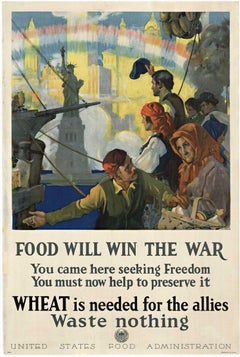
Chambers learned to modify his painting technique so that his work was primed for reproduction on a mass scale. He gained recognition as a classical figurative painter and illustrator during World War I when, in 1917, he illustrated a well-known poster for the U.S. Food Administration titled Food Will Win The War. He was also a regular contributor as an illustrator at the time to Harper’s Monthly and created covers for Redbook magazine.

Throughout the 1920s and 1930s, Chambers kept busy with editorial assignments and advertising campaigns. While it’s true that Art Nouveau posters were plastered everywhere along the streets of Paris during the early years of the Belle Époque, poster art continued to remain very relevant in the Art Deco years, too. While creating illustrations for authors such as Pearl Buck, W. Somerset Maugham, Faith Baldwin and Louis Bromfield, Chambers earned advertising commissions from the decades’ prominent companies and brands. These included painting portraits of famous musicians Sergei Rachmaninoff, Alfred Cortot and Ignacy Jan Paderewski for Steinway & Sons and designing billboard ads and posters for cigarette company Chesterfield and soap manufacturer Palmolive.

Today, Chambers’s works remain favorites among collectors of vintage 20th-century art.

Find original Charles Edward Chambers paintings and prints on 1stDibs.

to
1
7
1
Overall Width
to
Overall Height
to
8
2
2
2
8
7
5
3
2
1
1
1
1
1
1
1
1
1
1
1
1
1
1
8

Use search to find more

8
11,946
2,896
2,541
1,646

Use search to find more

Artist: Charles E. Chambers
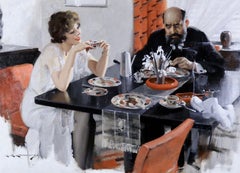
Story illustration for “Appearance and Reality” by Somerset Maugham

Story illustration for “Appearance and Reality” by Somerset Maugham

By Charles E. Chambers

Located in Fort Washington, PA

Story illustration for “Appearance and Reality” by W. Somerset Maugham, published in Cosmopolitan, November 1934, pages 22-23. Described as "A masterfully witty story of manners and...

Category

1930s Charles E. Chambers Art

Materials

Canvas, Oil

Family Escape
Family Escape

Family Escape

By Charles E. Chambers

Located in Fort Washington, PA

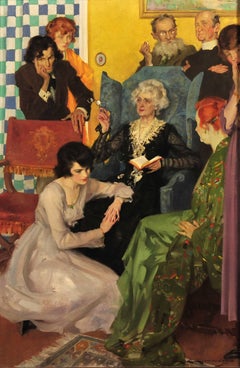
Date: 1917 Medium: Oil on Board Dimensions: 32.00" x 21.00" Signature: Signed Lower Right Story illustration: Group of people gathered around seated old woman. “Isn't it quite as i...

Category

1910s Charles E. Chambers Art

Materials

Oil, Board

She Answers The Question

She Answers The Question

By Charles E. Chambers

Located in Fort Washington, PA

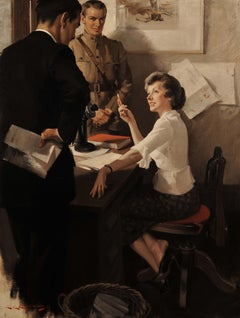
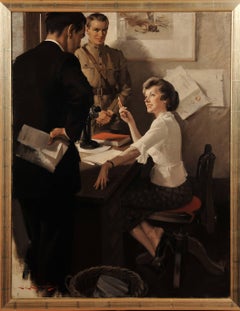
Image of two men standing in front of woman seated at desk. Charles Edward Chambers was born in Ottumwa, Iowa, studied at the Chicago Art Institute, and later the Art Students Lea...

Category

1920s Charles E. Chambers Art

Materials

Canvas, Oil

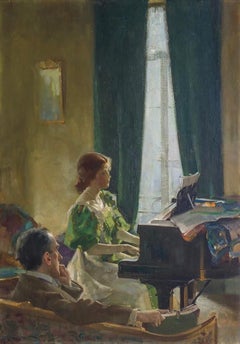
“I was playing Chopin, with an ache in my heart.” Illustration for Harper’s Mag

“I was playing Chopin, with an ache in my heart.” Illustration for Harper’s Mag

By Charles E. Chambers

Located in Fort Washington, PA

Story illustration for “The High Cost of Conscience” by Beatrice Witt Ravenel for Harper’s Magazine, published January 1919. Year: 1918 Dimensions: 30.00" x 21.00", Framed 35.5" x ...

Category

20th Century Charles E. Chambers Art

Materials

Canvas, Oil

Original "Food Will Win The War" vintage World War 1 poster

Original "Food Will Win The War" vintage World War 1 poster

By Charles E. Chambers

Located in Spokane, WA

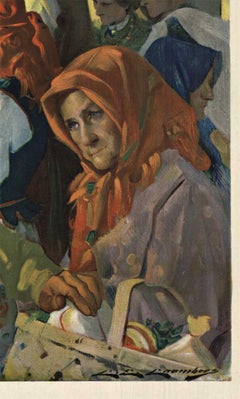
Original World War 1 vintage poster: Food Will Wn the War. Arhival linen backed. PRINTER: Rusling Wood Litho., New York Bright and in good condition. There is some marks down the left side of the poster, possible ink from when the poster was printed. This poster calls on immigrants to do their part in the war effort. It depicts recent immigrants standing near a sailing ship with the Statue of Liberty and a rainbow stretched across the New York City skyline in the background. The text reads: You came here seeking Freedom. You must now help preserve it. Wheat is needed by the allies. Waste nothing. The generosity and compassion of the American people and the great agricultural resources of the North American continent would be called upon... Twenty million Americans signed pledges of membership in the Food Administration...

Category

1910s American Realist Charles E. Chambers Art

Materials

Lithograph

Couple with Chauffeur

Couple with Chauffeur

By Charles E. Chambers

Located in Fort Washington, PA

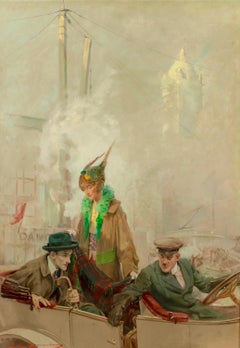
Couple in a car with a Chauffeur Signed lower left. Charles Edward Chambers was born in Ottumwa, Iowa, studied at the Chicago Art Institute, and later the Art Students League in ...

Category

20th Century Other Art Style Charles E. Chambers Art

Materials

Canvas, Oil

“Wang the Tiger had his own port…” Story illustration for Sons by Pearl S. Buck

“Wang the Tiger had his own port…” Story illustration for Sons by Pearl S. Buck

By Charles E. Chambers

Located in Fort Washington, PA

Date: 1932 Medium: Oil on Canvas Dimensions: 24.00" x 33.00" Signature: Signed Lower Left Story illustration for “Sons” by Pearl S. Buck, published in Cosmopolitan, October 1932, pages 66-67. "Sons" serves as the poignant sequel to Buck's story The Good Earth...

Category

1930s Charles E. Chambers Art

Materials

Canvas, Oil

"Ringmaster"
"Ringmaster"

"Ringmaster"

By Charles E. Chambers

Located in Fort Washington, PA

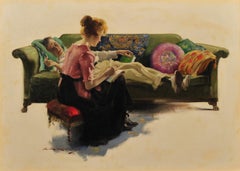
Story illustration, image of man on couch, woman in chair writing Charles Edward Chambers was born in Ottumwa, Iowa, studied at the Chicago Art Institute, and later the Art Students League in New York with George Bridgman. His illustrations were extremely skillful, marked by subtlety of value and color. He early learned to adapt his method of painting for the best possible reproduction, and to insure fidelity of printing, he often followed the assignments through to the hands of the engraver who made the plates. Chambers divided his time almost equally between editorial and advertising assignments. Among his advertising commissions was an outstanding series of portraits of musicians for Steinway & Sons. His distinctive illustrations for billboards, notably for Chesterfield and Palmolive Soap...

Category

1920s Other Art Style Charles E. Chambers Art

Materials

Canvas, Oil

Related Items
1943 War Period Textured Still Life Of Table With Oranges And Bottle

1943 War Period Textured Still Life Of Table With Oranges And Bottle

Located in Frederiksberg C, DK

A charming and decorative composition painted in 1943 by Danish artist Evan Wulff. This stilleben painting unveils a rustic table adorned simply with a wine bottle and two oranges. T...

Category

1940s Post-War Charles E. Chambers Art

Materials

Cotton Canvas, Oil

Vintage Oil Painting "Strings and Brass" Symphony Oil Painting c.1989

Vintage Oil Painting "Strings and Brass" Symphony Oil Painting c.1989

Located in San Francisco, CA

Vintage Oil Painting "Strings and Brass" Symphony Oil Painting c.1989 Original oil on canvas Canvas dimensions 24" wide x 16" high The simple maple frame measures 25" wide x 17" h...

Category

Late 20th Century Charles E. Chambers Art

Materials

Canvas, Oil

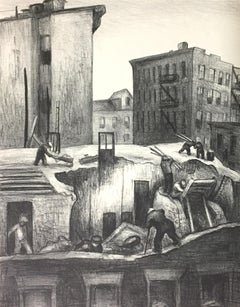
Ann Nooney, (Demolition with Windows, NYC)

Ann Nooney, (Demolition with Windows, NYC)

By Ann Nooney

Located in New York, NY

The dimensions are for the image; there are large margins. This lithograph is signed in pencil. A native New Yorker, Ann Nooney (1900-1970) recorded the urban scene while on the Wo...

Category

1930s American Realist Charles E. Chambers Art

Materials

Lithograph

Pair of 19th Century "Gambling" Oil Paintings After Adriaen van Ostade

Pair of 19th Century "Gambling" Oil Paintings After Adriaen van Ostade

Located in San Francisco, CA

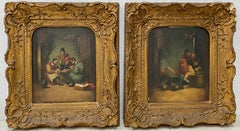
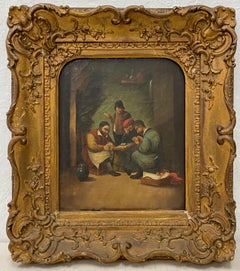
Pair of 19th Century "Gambling" Oil Paintings After Adriaen van Ostade Each painting shows men gambling in a cellar Original oil on canvas Dimensions 10" wide x 12" high The orna...

Category

Mid-19th Century Dutch School Charles E. Chambers Art

Materials

Canvas, Oil

“Still Life, 1936” by Katharine "Kitty" Duff Church British Modern Oil Signed

“Still Life, 1936” by Katharine "Kitty" Duff Church British Modern Oil Signed

Located in Yardley, PA

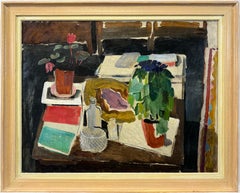
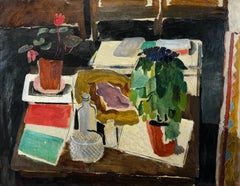
“Still Life, 1936” by Katharine "Kitty" Duff Church (British, 1910-1999). This large, early painting by Katherine Church is among her finest canvases of the period. Characterized by its bold color palette, simplified forms, and expressive brushwork, this composition centers around a tabletop adorned with various objects: potted plants, a ceramic dish, bottles, and what appear to be books or papers. The two potted plants provide contrasting elements: on the left, what appears to be a cyclamen with red blossoms and delicate leaves, and on the right, a lush green plant with darker foliage. These plants, painted with loose, textured strokes, add an organic quality to the otherwise structured arrangement. The tabletop is cluttered yet thoughtfully composed, featuring additional objects like a clear, faceted glass bowl, a small bottle, and books or pads in striking red and green. The dynamic use of color blocks and the juxtaposition of shapes (round pots against rectangular books) create a sense of rhythm and harmony. The background is darker and less defined, emphasizing the brightly lit tabletop. Church's brushwork is gestural and modernist, leaning toward abstraction, challenging traditional still life conventions. This painting reflects Church’s interest in balancing everyday objects with bold artistic expression. It conveys both the simplicity and complexity of daily life, transforming an ordinary moment into a vibrant and engaging work of art. This work is oil on canvas and is signed and dated in the lower right. It is housed in its original gessoed frame and retains various labels and inscriptions on the reverse. Size: 28.25 inches tall by 36 inches wide (painting) 34 inches tall by 42 inches wide by 2 inches deep (frame) Provenance: Private collection, NY; Acquired from the above About the artist: Born in Highgate, north London, Katharine Church, known as ‘Kitty’ amongst friends and family, always wanted to paint. She trained at the Royal Academy of Arts between 1930-1933 and at the Slade between 1933 and 1934. In her early years Kitty exhibited regularly at the Royal Academy. Her first solo exhibition was in 1933 at the Wertheim Gallery. Other artists who exhibited there included Christopher Wood, Victor Pasmore and Cedric Morris. Kitty also showed with the New English Art Club, the London Group and between 1937-1947 her work was exhibited at the influential Lefevre Gallery, which supported avant-garde artists such as Henry Moore, Ben Nicholson and Barbara Hepworth. In 1954 the artist was invited to take part in the Figures in their setting exhibition held at the Tate Gallery. Henry Tonks and Philip Wilson Steer had a strong influence on Kitty’s early work, but it was her friendship with Ivon Hitchens that liberated her painting technique. In 1936 Kitty married Anthony West, the son of writers Rebecca West and H.G. Wells. The couple initially lived in London before moving to Quarry Farm, Chicksgrove, Tisbury, near Salisbury, where they brought up their children Caroline and Edmund. There they hosted many of their friends, including the New Zealand painter Frances Hodgkins. Other regular visitors before the War included John and Mywafany Piper, Ralph and Frances Partridge, Noel and Catharine Carrington, Julian Trevelyan and Mary Fedden. For many of those who visited Kitty would organise painting expeditions. After the war Kitty and Anthony separated, with Anthony moving to the United States. Anthony West moved to the United States to work as a journalist for The New Yorker. In the early years after their parting Kitty visited most years with the children. In the 1960s Kitty purchased Sutton House and ran the Hambledon Gallery at Blandford Forum. There she promoted the work of her early art-school friends Mary Fedden and Julian Trevelyan, alongside work by the Pipers, John Craxton...

Category

1930s Modern Charles E. Chambers Art

Materials

Canvas, Oil

America! America!
America! America!

James FetherolfAmerica! America!, 1973

$400

H 22 in W 29.8 in D 0.01 in

America! America!

Located in San Francisco, CA

This artwork titled "America! America" is a color lithograph after noted American artist James Fetherolf, 1925-1994. It is hand signed at the lower rig...

Category

Late 20th Century American Realist Charles E. Chambers Art

Materials

Lithograph

Georgian Contemporary Art by Ilia Menabde - AR.4

Georgian Contemporary Art by Ilia Menabde - AR.4

Located in Paris, IDF

Oil on cardboard Ilia Menabde is a Georgian painter born in 2003 who lives and works in Tbilisi, Georgia. His practice explores the relationship between memory, time, place, and con...

Category

2010s Contemporary Charles E. Chambers Art

Materials

Oil, Cardboard

"Woman Reading in an Interior" Vaclav Vytlacil, Loose Brushwork Portrait

"Woman Reading in an Interior" Vaclav Vytlacil, Loose Brushwork Portrait

By Vaclav Vytlacil

Located in New York, NY

Vaclav Vytlacil Woman Reading in an Interior, circa 1915 Signed lower right Oil on canvas 16 x 20 inches As a child, Vytlacil had taken art classes at the Art Institute of Chicago....

Category

1910s Impressionist Charles E. Chambers Art

Materials

Canvas, Oil

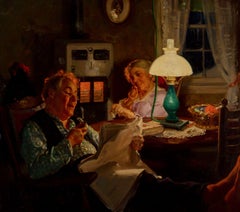
A Quiet Hour, Early 20th-Century Dutch Oil Painting

A Quiet Hour, Early 20th-Century Dutch Oil Painting

By Bernard De Hoog

Located in Cheltenham, GB

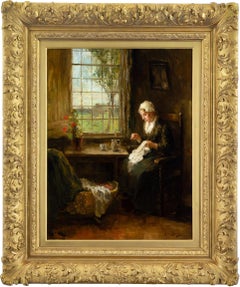
This sublime early 20th-century oil painting by Dutch artist Bernard De Hoog (1867-1943) celebrates one of life's quietest luxuries - an hour of uninterrupted contentment. Seated be...

Category

1920s English School Charles E. Chambers Art

Materials

Canvas, Oil

"The Slope Near the Bridge" Paul Sample, Mid-Century, American Snowy Landscape

"The Slope Near the Bridge" Paul Sample, Mid-Century, American Snowy Landscape

By Paul Sample

Located in New York, NY

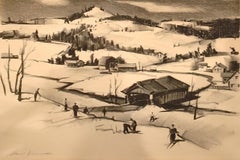
Paul Sample The Slope Near the Bridge, 1950 Signed in pencil lower left Lithograph on wove paper Image 8 15/16 x 12 15/16 inches Sheet 11 5/16 x 15 1/16 inches From the edition of 25...

Category

1950s American Realist Charles E. Chambers Art

Materials

Paper, Lithograph
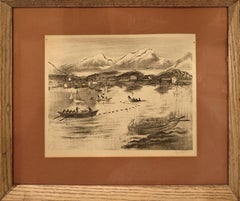
"Fishing Village" Joe Jones, Mid-Century, American Life, Small Town Scene

"Fishing Village" Joe Jones, Mid-Century, American Life, Small Town Scene

By Joe Jones

Located in New York, NY

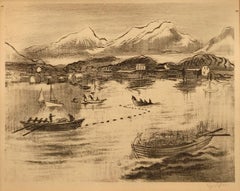
Joe Jones Fishing Village, 1949 Signed in pencil lower right margin Lithograph on wove paper Image 9 5/16 x 12 9/16 inches Sheet 12 x 15 15/16 inches From the edition of 250 The initial details of Jones' career are sparse, and this is intentional. The young artist was engaged in a process of self-reinvention, crafting a persona. When he submitted a work to the Sixteen Cities Exhibition at New York City's Museum of Modern Art in 1933, he briefly characterized himself: "Born St. Louis, 1909, self-taught. " Jones intentionally portrayed himself to the art community as an authentic working-class figure, backed by a compelling history. He was the youngest of five children in a family led by a one-armed house painter from St. Louis, a Welsh immigrant, and his German American spouse. At the age of ten, Jones found himself in a Missouri reformatory due to authorities' concerns over his graffiti activities. After completing elementary school, he traveled by freight car to California and back, even being arrested for vagrancy in Pueblo, Colorado. Returning to St. Louis, he attempted to settle down by working alongside his father. Yet, Jones felt a profound restlessness and was drawn toward a more elevated artistic pursuit in his late teenage years. He discovered a local collective of budding artists that formed St. Louis’s "Little Bohemia," sharing a studio and providing mutual support until he managed to secure his own modest workspace in a vacant garage. Jones’s initial creations comprised still lifes, landscapes, and poignant portraits of those close to him. These subjects were not only accessible but also budget-friendly, as hiring models was beyond his means. He depicted himself, his father, mother, and eventually, his wife. In December 1930, at the age of 21, Jones wed Freda Sies, a modern dancer and political activist who was four years older than him. By 1933, Jones had started gaining noteworthy local recognition through a solo exhibition at the Artists’ Guild of Saint Louis. Of the twenty-five paintings on display, one, titled River Front (private collection, previously with Hirschl and Adler Galleries), was selected to illustrate a feature article about his show in The Art Digest (February 15, 1933, p. 9). Shortly before this exhibition, a young surgeon named Dr. Robert Elman took an interest in Jones’s art, purchasing several pieces and forming a group of potential patrons committed to providing the emerging artist with a monthly stipend in exchange for art. This group was officially known as the "Co-operative Art Society," but it was informally dubbed the "Joe Jones Club. " Jones became an active participant in the St. Louis artistic scene, particularly within its bohemian segments. He embraced modernism and was a founding member of the "New Hat" movement in 1931, a playful rebellion against the conservative and traditional mainstream art establishment. The summer of 1933 marked a significant shift in Jones’s journey. Sponsored by a dedicated ally, Mrs. Elizabeth Green, Jones, along with Freda and Green, embarked on an eastward road trip. In Washington, D. C., they explored the Corcoran Gallery of Art, the Freer Gallery (part of the Smithsonian Institution), the Library of Congress, and Mount Vernon. Following this whirlwind of art and American culture, they made their way to New York, where they visited various museums and galleries, including a stop at The New School for Social Research, which featured notable contemporary murals by fellow Missourian Thomas Hart Benton and the politically active Mexican artist, José Clemente Orozco. From June through August, Jones and Freda resided in the artist colony of Provincetown, Massachusetts, later returning home via Detroit to see Diego Rivera’s Detroit Industry mural housed at the Detroit Institute of Fine Arts. While Elizabeth Green allegedly hoped that Jones would refine his artistic skills under the guidance of Charles Hawthorne or Richard Miller in Provincetown, Jones followed a different path. Rather than pursuing conservative mentors, he connected with an engaging network of leftist intellectuals, writers, and artists who dedicated their time to reading Marx and applying his theories to the American landscape. Jones's reaction to the traditional culture of New England was captured in his statement to a reporter from the St. Louis Post Dispatch: “Class consciousness . . . that’s what I got of my trip to New England. Those people [New Englanders] are like the Chinese—ancestor worshipers. They made me realize where I belong” (September 21, 1933). The stark social divisions he witnessed there prompted him to embrace his working-class identity even more fervently. Upon returning to St. Louis, he prominently identified himself as a Communist. This newfound political stance created friction with some of his local supporters. Many of his middle-class advocates withdrew their backing, likely influenced not only by Jones’s politics but also by his flamboyant and confrontational demeanor. In December 1933, Jones initiated a complimentary art class for unemployed individuals in the Old Courthouse of St. Louis, the same location where the Dred Scott case was deliberated and where slave auctions formerly took place. Concurrently, the St. Louis Art League was offering paid courses. Emphasizing the theme of social activism, with a studio adorned with Soviet artwork, Jones’s institution operated for just over a year before being removed from the courthouse by local officials. The school’s political focus and unconventional teaching practices, along with its inclusion of a significant number of African American students during a period marked by rigid racial segregation, certainly contributed to its challenges. Under Jones’s guidance, the class created a large chalk pastel mural on board, measuring 16 by 37 feet, titled Social Unrest in St. Louis. Mural painting posed no challenge for the former housepainter, who was adept at handling large wall surfaces. His first significant commission in St. Louis in late 1931 was a mural that celebrated the city’s industrial and commercial fortitude for the local radio station, KMOX. This mural, aimed at conveying optimism amid severe economic hardship, showcased St. Louis's strengths in a modernist approach. When Jones resumed mural work in late 1933, his worldview had evolved considerably. The mural produced for the school in the courthouse, conceived by Jones, featured scenes of modern St. Louis selected to highlight political messages. Jones had observed the technique of utilizing self-contained scenes to craft visual narratives in the murals he encountered in the East. More locally, this compositional strategy was commonly employed by the renowned Missouri artist...

Category

1940s American Realist Charles E. Chambers Art

Materials

Paper, Lithograph
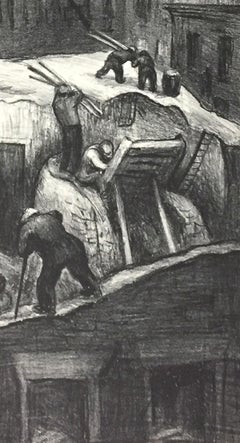
Tennis (Tennis Tournament)

Tennis (Tennis Tournament)

By George Wesley Bellows

Located in Palm Desert, CA

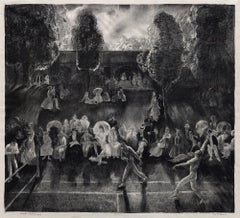
A lithograph by George Bellows. “Tennis (Tennis Tournament)” is a realistic lithograph on paper in black and white by American Realist, George Bellows. Bellows’ depictions of sportin...

Category

1920s American Realist Charles E. Chambers Art

Materials

Lithograph
Still Life with Decanter by Philadelphia Artist Larry Day, 1962

Still Life with Decanter by Philadelphia Artist Larry Day, 1962

Located in Philadelphia, PA

Larry Day (American, 1921-1998) Still Life with Decanter Oil on canvas, 33 3/4 x 41 3/ 4 inches FRAMED: 41 x 49 inches (approx.) Signed at lower right: “Day” Exhibition label on str...

Category

1960s Realist Charles E. Chambers Art

Materials

Canvas, Oil

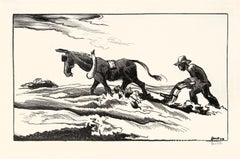
'Plowing It Under' — WPA Era American Regionalism, Signed Lithograph
'Plowing It Under' — WPA Era American Regionalism, Signed Lithograph
By Thomas Hart Benton

Located in Myrtle Beach, SC

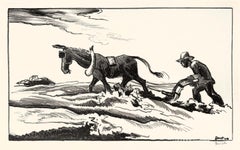
Thomas Hart Benton, 'Goin' Home', lithograph, 1937, edition 250, Fath 14. Signed in pencil. Signed in the stone, lower right. A fine, richly-inked impression, on off-white, wove pape...

Category

1930s American Realist Charles E. Chambers Art

Materials

Lithograph
Previously Available Items
Elderly Couple
Elderly Couple

Elderly Couple

By Charles E. Chambers

Located in Fort Washington, PA

Signature: Signed Lower Left Framed: 36.00" x 41.00"

Category

20th Century Charles E. Chambers Art
Materials

Canvas, Oil

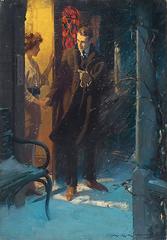
Couple Parting on Porch in Snow

Couple Parting on Porch in Snow

By Charles E. Chambers

Located in Fort Washington, PA

Date: 1915 Medium: Oil on Canvas Dimensions: 30.00" x 21.00" Signature: Signed Lower Right Couple parting on porch in snow. “They had formed a little code of leave-taking” Story illustration: “The Turmoil”, author: Booth Tarkington...

Category

1910s Charles E. Chambers Art

Materials

Canvas, Oil

Charles E. Chambers art for sale on 1stDibs.

Find a wide variety of authentic Charles E. Chambers art available for sale on 1stDibs. You can also browse by medium to find art by Charles E. Chambers in oil paint, paint, canvas and more. Not every interior allows for large Charles E. Chambers art, so small editions measuring 20 inches across are available. Customers who are interested in this artist might also find the work of Coby Whitmore, Henry Soulen, and Benton Clark. Charles E. Chambers art prices can differ depending upon medium, time period and other attributes. On 1stDibs, the price for these items starts at $1,100 and tops out at $29,000, while the average work can sell for $15,500.

Artists Similar to Charles E. Chambers