Claudio Verna Art

Italian, b. 1937
Claudio Verna was born in Guardiagrele, in the province of Chieti, in 1937. From 1942 to 1956 he studied in Umbria, then at the University of Florence, where he graduated with a thesis on “Figurative Arts in Industrial Civilisation” and where he held his first major exhibitions. In 1961, he moved to Rome. For a few years, he renounced exhibitions in order to experiment and define the thought and tools of his research in total autonomy. In 1967, he returned to exhibiting, now definitively convinced of the “ancient and inalienable” reasons for painting. This was the period of the so-called “Analytical Painting”, aimed at a reflection on making art today and on the relationship with modern tradition. For a few years, he renounced exhibitions in order to experiment and define the thought and tools of his research in total autonomy. In 1967, he returned to exhibiting, now definitively convinced of the “ancient and inalienable” reasons for painting. This was the period of the so-called Analytical Painting, aimed at a reflection on making art today and on the relationship with the modern tradition. Having reached expressive maturity, Verna's painting “articulates between the polarities of extreme rigour and intense emotional abandon”. The absolute protagonist of the paintings is colour and its ability to take on the maximum values of saturation and light. After his debut at the Galleria Numero in Florence in 1960, he held over a hundred solo exhibitions in Italy and abroad, including the Venice Biennale in 1970 and 1980, and anthological exhibitions in the Museums of Gibellina in 1988, Spoleto in 1994, Ferrara in 1997, Conegliano in 1998, Treviso in 2000, L'Aquila in 2007 and the Fondazione Mudima in Milan in 2012. At the same time, he has taken part in numerous group exhibitions and international shows in Düsseldorf, London, Philadelphia, Copenhagen, Rotterdam, Stockholm, Darmstadt, Cologne, Moscow, Leningrad, Grenoble, Nice, Prague, Buenos Aires, São Paulo, Rio de Janeiro and in numerous Italian cities, receiving various awards. In 2008, the Accademia Nazionale dei Lincei awarded him the “Antonio Feltrinelli” Prize for painting. He was appointed National Academician of the Accademia di San Luca. In 2010, the Catalogo Ragionato of his work edited by Volker W. Feierabend and Marco Meneguzzo was published by Silvana Editoriale (MI).
to
1
4
1
Overall Width
to
Overall Height
to
6
1
3
1
3
1
1
5
1
1
1
1
1
1
1
1
4
1
1
1
1
6
10,998
2,844
2,494
1,427
1
2
4
Artist: Claudio Verna
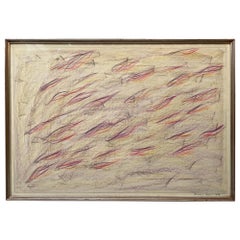
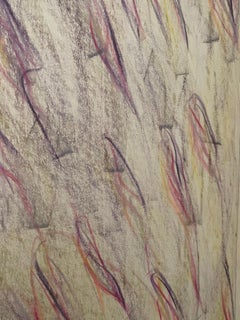
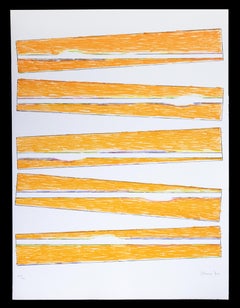
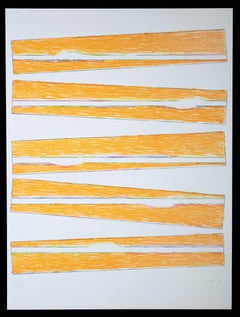
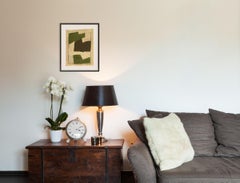
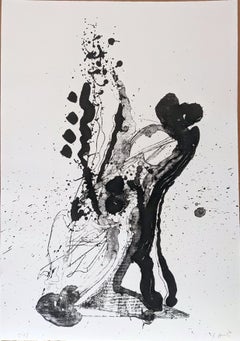
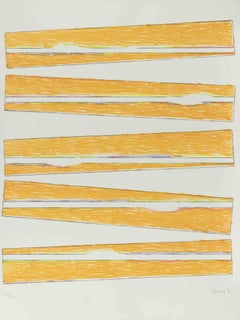
Claudio Verna Signed and Certified Pastel on Paper

Claudio Verna Signed and Certified Pastel on Paper

By Claudio Verna

Located in Roma, IT

Claudio Verna pastel on paper signed and dated 1980 registered and certified by the Claudio Verna Archive.  The drawing was analyzed by the Claudio Verna Archive directly. Based on ...

Category

1980s Modern Claudio Verna Art

Materials

Paper, Pastel

Related Items
Belfast I from "Belfast I + II" - Contemporary, Woodcut, Black and White

Belfast I from "Belfast I + II" - Contemporary, Woodcut, Black and White

By Christiane Baumgartner

Located in Köln, DE

Baumgartner deals with contrasts in her work. This is already evident in her choice of technique. Christiane Baumgartner uses one of the oldest techniques in the art of printing, the...

Category

Early 2000s Contemporary Claudio Verna Art

Materials

Woodcut

Winter Trees — Sōsaku Hanga Japanese Woodblock Print

Winter Trees — Sōsaku Hanga Japanese Woodblock Print

Located in Myrtle Beach, SC

Hajime Namiki, 'Tree Scene 159', color woodcut, edition 200, 2022. Signed in pencil and with the artist’s red seal. Titled, numbered '37/200' and dated, in pencil. A very fine impres...

Category

21st Century and Contemporary Contemporary Claudio Verna Art

Materials

Woodcut

Tree 8

Alex KatzTree 8, 2022

$28,000

H 39.75 in W 39.25 in

Tree 8

By Alex Katz

Located in Miami, FL

Technical Information: Alex Katz Tree 8 2022 Woodcut and Lithograph 39 3/4 x 39 1/4 in. Edition of 60 Pencil signed and numbered

Category

21st Century and Contemporary Contemporary Claudio Verna Art

Materials

Lithograph, Woodcut

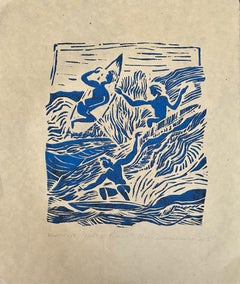
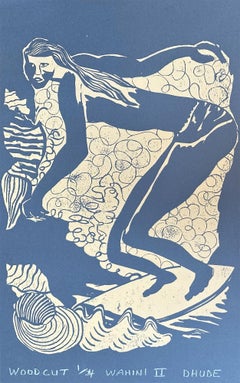
Wahini #2 - Surfing Art - Figurative - Woodcut Print By Marc Zimmerman

Wahini #2 - Surfing Art - Figurative - Woodcut Print By Marc Zimmerman

By Marc Zimmerman

Located in Carmel, CA

Wahini #2 - Surfing Art - Figurative - Woodcut Print By Marc Zimmerman Limited Edition 01/04 This masterwork is exhibited in the Zimmerman Gallery, Carmel CA. Immerse yourself in ...

Category

2010s Contemporary Claudio Verna Art

Materials

Woodcut

Galerie Maeght Murales et Peintures

Galerie Maeght Murales et Peintures

By Joan Miró

Located in Fairlawn, OH

Galerie Maeght Murales et Peintures Color lithograph poster, 1961 Unsigned as issued Large edition Published by Maeght Editeur Imprimeur Reference #13 from J. Corredor-Matheos, "Miro's Posters', 1980 Condition: Framed Colors fresh Image/sheet size: 25 x 19 inches Frame size: 34 x 27...

Category

1960s Abstract Claudio Verna Art

Materials

Lithograph

Untitled
Untitled

Untitled

By Alexander Calder

Located in Fairlawn, OH

Untitled Color lithograph, 1959 Unsigned (as issued) From: Derriere Le Miroir, No. 113, 1959 Publisher: Editions Pierre a Feu Editor: A. Maeght Small edition as it appeared in the ma...

Category

1950s Abstract Claudio Verna Art

Materials

Lithograph

Derriere Le Miroir-No. 190-Page 14-15

Derriere Le Miroir-No. 190-Page 14-15

By Alexander Calder

Located in Fairlawn, OH

Derriere Le Miroir-No. 190-Page 14-15 Color lithograph, 1971 Unsigned (as issued) From: Derriere Le Miroir, No. 190, 1971 Publisher: Aime Maeght, Paris Printer: L’Imprimerie Arts, Pa...

Category

1970s Abstract Claudio Verna Art

Materials

Lithograph

Lithographie originale pour XXe Siecle, No. 20

Lithographie originale pour XXe Siecle, No. 20

By Max Ernst

Located in Fairlawn, OH

Lithographie originale pour XXe Siecle, No. 20 Color lithograph, 1962 Unsigned (as issued) From: XXe Siecle, No. 20, Christmas Publisher: G. di San Lazzaro, Paris. Printer: Mourlot? Large edition: c. 1500? Condition: Excellent/Mint usual glue on reverse from binding in book Image/Sheet size: 12 3/16 x 9 1/2 inches New series of XXe Siecle Back in Paris in 1949, Gualtieri di San Lazzaro resumed 20TH century publishing in 1951. It hosts many of the most important writers and art critics of the 1950s and 1960s, including Alain Bosquet , Genevieve Bonnefoi, Camille Bourniquel , Georges Borgeaud, Marcel Brion , Georges Boudaille, Jacques Brosse , Michel Butor , Jean Cassou , Denys Chevalier, Pierre Courthion, Hubert Damisch , Pierre Descargues, Bernard Dorival , Jacques Dupin , Mircea Eliade , Jean-Louis Ferrier , Pierre Francastel , André Frenaud , Roger Van Gindertael...

Category

1960s Abstract Claudio Verna Art

Materials

Lithograph

Untitled (Martha Jackson Gallery Poster)

Untitled (Martha Jackson Gallery Poster)

By Walasse Ting

Located in Fairlawn, OH

Untitled (Martha Jackson Gallery Poster) Lithograph, 1960 Signed and dated in red crayon by the artist Edition 90 (63/90) 1st state before letters for the poster created for the Martha Jackson Gallery, Ting Exhibition, April 23-May 31, 1960 Printed on wove paper with a ”JAPAN' watermark Edition: 90 Provenance: Martha Jackson Gallery, New York Anderson Gallery David K. Anderson Collection (label) Walasse Ting (Chinese: 丁雄泉, 13 October 1929 – May 17, 2010)[1] was a Chinese-American visual artist and poet. His colorful paintings have attracted critical admiration and a popular following. Common subjects include nude women and cats, birds and other animals. He was born on 13 October 1929 in Shanghai, left China in 1946 and lived for a while in Hong Kong, then settled in Paris in 1952.[2] There, he associated with artists such as Karel Appel, Asger Jorn, and Pierre Alechinsky, members of the avant-garde group CoBrA. Ting started his career as an artist in Paris in the 1950s, where he became friends with artists such as Sam Francis and Pierre Alechinsky. His early works were influenced by the CoBrA group, a European art movement known for its use of expressive, childlike imagery. In the 1960s, Ting moved to New York City and became associated with the Pop Art movement. Ting is perhaps best known for his series of paintings featuring women, which he called "Cat Women...

Category

1960s Abstract Claudio Verna Art

Materials

Lithograph

Derriere Le Miroir-Page 9

Derriere Le Miroir-Page 9

By Alexander Calder

Located in Fairlawn, OH

Derriere Le Miroir-Page 9 Color lithograph, 1973 From: Derriere Le Miroir, No. 201, January 1973 Unsigned (as issued) Publisher: Maeght Editeur, Paris Printer: L’Imprimerie Arte, Adr...

Category

1970s Abstract Claudio Verna Art

Materials

Lithograph

Abstract Vases and Jugs Pastel 20th Modernist Century Drawing

Abstract Vases and Jugs Pastel 20th Modernist Century Drawing

By Jacqueline Boisselot

Located in Cirencester, Gloucestershire

Still Life Abstract by Jacqueline Boisselot, French late 20th century size: 25.5 x 19.75 inches pastel drawing on thin paper, unframed condition: very good and ready to enjoy proven...

Category

Late 20th Century Modern Claudio Verna Art

Materials

Pastel

Lumber Workers (Cuidad del Carmen, State of Campeche)

Lumber Workers (Cuidad del Carmen, State of Campeche)

By Alfredo Zalce

Located in Fairlawn, OH

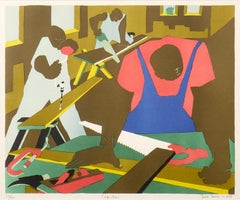
Lumber Workers (Cuidad del Carmen, State of Campeche) Color lithograph on wove paper, c. 1945 Signed lower right in pencil From: Mexican Art - A Portfolio of Mexican People and Places Edition: 250 Published by Associated American Artist and Taller Grafica de Popular (TGP) This print is one of two supplemental color lithographs from a portfolio of ten black-and-white lithographs showing images of Mexican people engaged in daily activities, primarily labor and crafting, by ten different mid-century Mexican political printmakers and members of the Taller de Gráfica Popular print collective, printed on cream wove paper, each signed in pencil at lower right. This image depicts the lumber industry in Campeche, one of the 31 states, located in Southeast Mexico, it is bordered by the states of Tabasco to the south west, Yucatán to the north east, and Quintana Roo to the east, and to the southeast by the Orange Walk district of Belize. Campeche was part of the province of Yucatán but split off in the mid-19th century, mostly due to political friction with city of Mérida. Today, much of the state’s economic comeback is due to the finding of petroleum offshore in the 1970s, which has made the coastal cities of Campeche and Ciudad del Carmen important economic centers. The state has important Mayan and colonial sites but they are not as well known or visited as others in the Yucatán. (Courtesy Annex Galleries) Condition: Excellent Slight toning around the sheet edges Image size: 11 3/8 x 14 1/8 inches Sheet size: 15 x 17 3/4 inches Reference: AAA Index 928 Alfredo Zalce Torres (12 January 1908 – 19 January 2003) was a Mexican artist and contemporary of Diego Rivera, David Siqueiros and other better-known muralists. He worked principally as a painter, sculptor, and engraver, also taught, and was involved in the foundation of a number of institutions of culture and education. He is perhaps best known for his mural painting, typically imbued with ”fervent social criticism”. He is acclaimed as the first artist to borrow the traditional material of coloured cement as the medium for a ”modern work of art”. Publicity-shy, he is said to have turned down Mexico's Premio Nacional de Ciencias y Artes before finally accepting it in 2001. Before his death, Sotheby's described him as ”the most important living Mexican artist up to date”. Early life A number of episodes from his childhood have been used to cast light on his future artistic career. Born in Pátzcuaro, Michoacán in 1908, as an infant he lived in Tacubaya during the Mexican Revolution; his school was near where the rival forces of Victoriano Huerta and Emiliano Zapata met in battle. One day he saw a dead body; he says that instead of fear his attitude was that of contemplation. According to a friend and prominent collector of his works, the young Alfredo began to draw aged six or seven, but chose to do so upon the linoleum floor of his home; nevertheless both his parents praised him. While at primary school, he regularly drew on the blackboard to accompany his teachers and illustrate their lessons, as encouragement to his fellow pupils. Between 1924 and 1927 he studied at the Escuela Nacional de Artes Plásticas in Mexico City, where formative influences included Mateo Saldaña, Germán Gedovius and Diego Rivera.[3] He was soon on friendly terms with Diego Rivera as well as Rufino Tamayo, David Siqueiros, José Clemente Orozco and Frida Kahlo. As the oldest of three children, he took responsibility for the family after the death of his father; while a student, he studied in the mornings and worked in the afternoons so as to be able to provide financial support. He undertook further studies at the Escuela de Talla Directa and the Taller de Litografía of Emilio Amero. Career Much of Zalce's career was spent in teaching and cultural activities. He first went to Zacatecas to teach art but, since the Cristero War had ended only shortly before, the school was not permitted to operate owing to lingering political tensions. He taught drawing at various primary schools for the Secretariat of Education from 1932 to 1935. In 1944, he became a teacher at the La Esmeralda and Escuela Nacional de Artes Plásticas. He moved to Morelia in 1950 and became the director of the Escuela de Pintura y Escultura. He also worked as a professor at the Universidad Autónoma de Nuevo León and the Escuela Popular de Bellas Artes.[3] Besides teaching, he illustrated books with academic and social themes. He was a founder or cofounder of the Escuela de Pintura of Tabasco, the Taller de Gráfica Popular, the Escuela de Pintura of Taxco in Guerrero, the Taller de Artes Plásticas in Uruapan and the Escuela de Pintura y Artesanías in Morelia. He was also a founder of the Liga de Escritores y Artistas Revolucionarios in 1933; one of its first missions was to oppose the favourable attitude at the time of many in Mexico towards Adolf Hitler. In 1930, he created a mural for the primary school in Ayotla, State of Mexico. In 1932, he worked in ”fresco” at the Escuela para Mujeres in Mexico City. He painted murals in the former Talleres Gráficos de la Nación in 1936; again in collaboration with Leopoldo Méndez at the Escuela Normal de Puebla in 1938; and at the Palacio de Gobierno and the Cámera de Diputados in Michoacán with Ángel Bracho...

Category

1940s American Modern Claudio Verna Art

Materials

Lithograph

Claudio Verna art for sale on 1stDibs.

Find a wide variety of authentic Claudio Verna art available for sale on 1stDibs. If you’re browsing the collection of art to introduce a pop of color in a neutral corner of your living room or bedroom, you can find work that includes elements of yellow, orange and other colors. You can also browse by medium to find art by Claudio Verna in lithograph, woodcut print and more. Much of the original work by this artist or collective was created during the 20th century and is mostly associated with the abstract style. Not every interior allows for large Claudio Verna art, so small editions measuring 1 inch across are available. Customers who are interested in this artist might also find the work of Luigi Gheno, Mauro Reggiani, and Riccardo Licata. Claudio Verna art prices can differ depending upon medium, time period and other attributes. On 1stDibs, the price for these items starts at $111 and tops out at $512, while the average work can sell for $333.

Artists Similar to Claudio Verna